Authors
News Type
News
Date
Paragraphs

The Stanford Japan Barometer (henceforth SJB), a public opinion survey on various topics including Japanese society, politics, and economy, is led by Stanford sociologist Kiyoteru Tsutsui, the deputy director of Shorenstein APARC and director of the Center’s Japan Program, and political scientist Charles Crabtree of Dartmouth College. SJB is one of the largest online surveys of its kind in Japan.

In fall 2024, SJB conducted a survey on gender and sexuality, including on the topic of optional separate surnames for married couples, as the LDP presidential election reignited the debate about this issue in Japanese society. SJB previously conducted a similar survey on the topic in 2022. Surname selection has also reemerged as a policy issue due to the growth of the opposition to the ruling LDP in the October 2024 subsequent general election for the Lower House of the National Diet (Japan's Parliament).

Below is an English translation of a recent GLOBE+ feature story on SJB's latest survey that sheds light on Japanese voters' views on this issue. This is the fifth installment in a series GLOBE+, an international news outlet run by the Asahi Shimbun, is publishing jointly with APARc’s Japan Program on SJB's work. You can read an English translation of parts 1-3 and part 4 in the series. The translation was initially generated via DeepL. The following translation was edited for accuracy and style.


Sign up for APARC's newsletters to receive our scholars' research updates >


Views on a Dual-Surname Option for Spouses


The issue came into renewed focus when former Environment Minister Shinjiro Koizumi, one of the candidates in the LDP presidential election held in September 2024, pledged to implement a selective married couple surname system. SJB therefore conducted another survey from September 25 to October 2, 2024, on the same themes as those used in the November 2022 survey on selective surname system, same-sex marriage, female Diet members, and outside directors. There were 9769 respondents, a little more than 1,000 more than in the previous survey.

The Japanese government has regularly been surveying this issue but as a result of changing the survey questions and the way they were asked between 2017 and 2021, support for the selective surname system dropped from a record high of 42.5% in the 2017 survey to record low of only 28.9% in 2021. For that reason, in SJB’s November 2022 survey and fall 2024 survey, respondents were randomly assigned to either of the two methods of asking questions from the government's 2017 and 2021 surveys.

The results showed that, among respondents assigned to the 2021 method, 26% preferred to “maintain the current system of married couples with the same family name,” 38% preferred to “maintain the current system of married couples with the same family name and establish a legal system for the use of the maiden name as a common name,” and 36% preferred to “introduce an optional system of married couples with different family names.”

On the other hand, among those assigned to the 2017 system, 21% said that “married couples should always take the same surname as long as they are married, and there is no need to change the current law,” 59% said that “if a married couple wishes to take the surname they had before their marriage, it would be acceptable if the law is changed to allow each couple to take the surname they had before their marriage,” and 20% and 20% said "Even if married couples wish to keep their maiden surnames, they should always have the same surname, but I don't mind changing the law to allow people who change their surnames due to marriage to use their maiden surnames as aliases.” In other words, 59% favored optional separate surnames for married couples.

Thus, the 2021 method of asking the question was more likely to result in fewer people supporting selective married couples. This is similar to Japan Barometer's previous 2022 survey, and it can be said that the government's 2021 survey showed less support for selective surnames because of the change in the framing of the survey questions.

As in the 2022 survey, SJB asked about optional separate surnames for married couples under certain assumptions, so as to reveal under what conditions public opinion would be swayed toward selective surnames. In SJB’s 2022 survey, respondents’ opposition was strongest when the precondition suggested separate surnames could weaken family ties or harm children and society. In the latest survey of fall 2024, however, no statistically significant causal relationship was observed, suggesting that public opinion on this issue has matured and no longer changes even when preconditions are added.

Furthermore, the 2024 survey introduced a new question about whether individuals would prefer to retain their maiden name if a dual-surname option for spouses was allowed. Among female respondents, 21.3% said they would “likely choose to do so,” 23.5% were “undecided,” and 55.2% said they “would not likely choose to do so.”

Commenting on these findings, Professor Tsutsui said: “Many older individuals and already-married women are accustomed to the current system, making it unlikely they would opt for separate surnames. The fact that only about 20% of the respondents would choose to change their surname could be a basis for some kind of legislation, since 20% of women feel inconvenienced. Furthermore, since the majority of women do not choose to have separate surnames, it is unlikely that the family system will collapse rapidly, as some conservatives worry. This may be a result that encourages the implementation of legal reform.”

Attitudes Toward Gender Equality


The survey also explored attitudes toward women’s advancement in society. As in the 2022 survey, respondents evaluated hypothetical political candidates for the Diet based on six attributes: age (from 32 to 82 in 10-year increments), gender, marital status, number of children, level of education, and professional background (10 types, including Ministry of Finance, Ministry of Economy, Trade and Industry, and Ministry of Foreign Affairs bureaucrats, corporate executives, governors, and local assembly members).

Two “candidate images” were created by randomly combining six attributes, and the respondents were asked to choose one in a two-choice format. The same question was repeated 10 times with different choices, and the responses obtained from all survey targets were tabulated and analyzed. The reason for the complexity of the method is that, from a statistical point of view, this allows the researchers to get closer to the “true feelings” (public opinion) of the respondents.

The combination of attributes that received the most responses, i.e., the “ideal candidate image” in respondents' minds, was the same as in 2022: female gender, ages 32 and 42, and occupation as governor or corporate executive. This aligns with the findings from the 2022 survey, indicating strong expectations for female leaders in their 30s and 40s. Indeed, Japan’s October 2024 Diet election mirrored these results, with a record 15.7% of women elected.

Views on Same-Sex Marriage


In addition, support for same-sex marriage remained high overall, with 43.7% in favor, 38.9% neutral, and 17.3% opposed. Support for same-sex marriage increased most when the following preconditions were added: "From the standpoint of human rights and gender equality, it is unfair to not recognize same-sex marriage," and "For gay people, not having their marital relationship recognized causes various inconveniences, such as inconveniences and disadvantages in their professional and daily lives, and a sense of denial of their identity."

On the other hand, when members of Parliament and outside directors were asked about their preferred combination of attributes, the least supported of the attributes of marriage was “people in homosexual relationships.”

“Married” was the most popular, as were “never married” and “divorced,” with the least support for those in a homosexual relationship.

“While there is a growing understanding of same-sex marriage in the private sphere, there seems to be a tendency for people to choose those who are within the traditional family system for roles holding public responsibility,” said Tsutsui.

Read More

Social research concept: Hand with magnifying glass over Montessori knobbed cylinders-like people conveying the idea of a community.
News

Stanford Japan Barometer Unveils Insights into Japanese Public Opinion on Same-Sex Marriage and Marital Surname Choices

A new installment of the Asahi Shimbun’s GLOBE+ series highlights Stanford Japan Barometer findings about Japanese public opinion on recognizing same-sex unions and legalizing a dual-surname option for married couples. Co-developed by Stanford sociologist Kiyoteru Tsutsui and Dartmouth College political scientist Charles Crabtree, the public opinion survey tracks evolving Japanese attitudes on political, economic, and social issues and unveils how question framing changes the results of public opinion polls.
Stanford Japan Barometer Unveils Insights into Japanese Public Opinion on Same-Sex Marriage and Marital Surname Choices
Japan's Ambassador to the US Shigeo Yamada, Consul General Yo Osumi, and Kiyoteru Tsutsui, posing on the front steps of Encina Hall, Stanford.
News

Japanese Ambassador to the US Visits Stanford for Dialogue on U.S.-Japan Relations and Global Security

In a recent visit by a delegation from Japan's Embassy to the United States and Consulate-General of Japan in San Francisco, Ambassador Shigeo Yamada and Stanford experts discussed pressing issues affecting U.S.-Japan relations, regional security, and the international legal order. Hosted by APARC's Japan Program, the visit highlighted the role of academic institutions in informing policy and global cooperation.
Japanese Ambassador to the US Visits Stanford for Dialogue on U.S.-Japan Relations and Global Security
Walking Out: America’s New Trade Policy in the Asia-Pacific and Beyond
News

Walking Out: New Book Unravels the Shift in America's Trade Policy and Its Global Consequences

A new book by APARC Visiting Scholar Michael Beeman offers a timely analysis of the shift in United States' foreign trade policy, examines its recent choices to “walk out” on the principles that had defined the global trade system it had created, and offers recommendations for a redefined and more productive trade policy strategy.
Walking Out: New Book Unravels the Shift in America's Trade Policy and Its Global Consequences
Hero Image
A woman using smartphone while walking on busy street in Tokyo, Japan.
All News button
1
Subtitle

Approximately 20 percent of Japanese women are likely to choose a different surname if a dual-surname option for married couples is introduced, according to the latest survey of the Stanford Japan Barometer. A new installment in the Asahi Shimbun’s GLOBE+ series features these and other Japan Barometer survey results.

Date Label
-
15Jan2025 "Developments in China and Japan-China-U.S. Relations" Webinar event graphic featuring headshot photos of Akio Takahara, Thomas Fingar, and Kiyoteru Tsutsui


How stable is politics in today's China? Many observers inside and outside the country were stunned by the sudden dismissal in December of Miao Hua, the head of the powerful political work department of the PLA and a member of the Central Military Commission. Takahara will discuss the state of Chinese politics and look into what we can expect of China's response to the 2nd Trump Administration.

This webinar event is co-hosted by the Walter H. Shorenstein Asia-Pacific Research Center Japan Program and the Consulate General of Japan in San Francisco


Speaker:

square headshot photo of Akio Takahara

Akio Takahara is Distinguished Visiting Professor at the Tokyo Woman’s Christian University and former Professor of Contemporary Chinese Politics at the Graduate School of Law and Politics at The University of Tokyo. From April to July 2024, he is also serving as Senior Fellow of the Mercator Institute for China Studies (MERICS). He received his DPhil in 1988 from Sussex University, and later spent several years as Visiting Scholar at the Consulate-General of Japan in Hong Kong, the Japanese Embassy in Beijing, Harvard University, Peking University, the Mercator Institute for China Studies, and the Australian National University. Before joining The University of Tokyo, he taught at J. F. Oberlin University and Rikkyo University. He served as President of the Japan Association for Asian Studies, and as Secretary General of the New Japan-China Friendship 21st Century Committee. Akio was Dean of the Graduate School of Public Policy at The University of Tokyo from 2018 to 2020, and Director of the Japan International Cooperation Agency (JICA) Ogata Sadako Research Institute for Peace and Development from 2020 to 2023. He currently serves as Senior Adjunct Fellow of the Japan Institute of International Affairs, Distinguished Research Fellow of the Japan Forum on International Relations, Senior Research Adviser of the Japan International Cooperation Agency (JICA) Ogata Sadako Research Institute for Peace and Development, and Trustee of the Sasakawa Peace Foundation. His publications in English include The Politics of Wage Policy in Post-Revolutionary China, (Macmillan, 1992), Japan-China Relations in the Modern Era, (co-authored, Routledge, 2017), and “How do smaller countries in the Indo-Pacific region proactively interact with China? An introduction”, Journal of Contemporary East Asia Studies, DOI: 10.1080/24761028.2024.2309439, 26 January 2024.


Discussant:

Thomas Fingar

Thomas Fingar is a Shorenstein APARC Fellow in the Freeman Spogli Institute for International Studies at Stanford University. He was the inaugural Oksenberg-Rohlen Distinguished Fellow from 2010 through 2015 and the Payne Distinguished Lecturer at Stanford in 2009.

From 2005 through 2008, he served as the first deputy director of national intelligence for analysis and, concurrently, as chairman of the National Intelligence Council. Fingar served previously as assistant secretary of the State Department’s Bureau of Intelligence and Research (2000-01 and 2004-05), principal deputy assistant secretary (2001-03), deputy assistant secretary for analysis (1994-2000), director of the Office of Analysis for East Asia and the Pacific (1989-94), and chief of the China Division (1986-89). Between 1975 and 1986 he held a number of positions at Stanford University, including senior research associate in the Center for International Security and Arms Control.

Moderator:

Square portrait photo of Kiyoteru Tsutsui

Kiyoteru Tsutsui is the Henri H. and Tomoye Takahashi Professor and Senior Fellow in Japanese Studies at Shorenstein APARC, the Director of the Japan Program and Deputy Director at APARC, a senior fellow of the Freeman Spogli Institute for International Studies, and Professor of Sociology, all at Stanford University. Tsutsui received his bachelor’s and master’s degrees from Kyoto University and earned an additional master’s degree and Ph.D. from Stanford’s sociology department in 2002. Tsutsui’s research interests lie in political/comparative sociology, social movements, globalization, human rights, and Japanese society. His most recent publication, Human Rights and the State: The Power of Ideas and the Realities of International Politics (Iwanami Shinsho, 2022), was awarded the 2022 Ishibashi Tanzan Award and the 44th Suntory Prize for Arts and Sciences.




Kiyoteru Tsutsui

Online via Zoom Webinar

Akio Takahara Distinguished and Visiting Professor Main Speaker Tokyo Woman's Christian University

Freeman Spogli Institute for International Studies
Stanford University
Encina Hall, C-327
Stanford, CA 94305-6055

(650) 723-9149 (650) 723-6530
0
Shorenstein APARC Fellow
Affiliated Scholar at the Stanford Center on China's Economy and Institutions
tom_fingar_vert.jpg PhD

Thomas Fingar is a Shorenstein APARC Fellow in the Freeman Spogli Institute for International Studies at Stanford University. He was the inaugural Oksenberg-Rohlen Distinguished Fellow from 2010 through 2015 and the Payne Distinguished Lecturer at Stanford in 2009.

From 2005 through 2008, he served as the first deputy director of national intelligence for analysis and, concurrently, as chairman of the National Intelligence Council. Fingar served previously as assistant secretary of the State Department’s Bureau of Intelligence and Research (2000-01 and 2004-05), principal deputy assistant secretary (2001-03), deputy assistant secretary for analysis (1994-2000), director of the Office of Analysis for East Asia and the Pacific (1989-94), and chief of the China Division (1986-89). Between 1975 and 1986 he held a number of positions at Stanford University, including senior research associate in the Center for International Security and Arms Control.

Fingar is a graduate of Cornell University (A.B. in Government and History, 1968), and Stanford University (M.A., 1969 and Ph.D., 1977 both in political science). His most recent books are From Mandate to Blueprint: Lessons from Intelligence Reform (Stanford University Press, 2021), Reducing Uncertainty: Intelligence Analysis and National Security (Stanford University Press, 2011), The New Great Game: China and South and Central Asia in the Era of Reform, editor (Stanford University Press, 2016), Uneasy Partnerships: China and Japan, the Koreas, and Russia in the Era of Reform (Stanford, 2017), and Fateful Decisions: Choices that will Shape China’s Future, co-edited with Jean Oi (Stanford, 2020). His most recent article is, "The Role of Intelligence in Countering Illicit Nuclear-Related Procurement,” in Matthew Bunn, Martin B. Malin, William C. Potter, and Leonard S Spector, eds., Preventing Black Market Trade in Nuclear Technology (Cambridge, 2018)."

Selected Multimedia

CV
Date Label
Discussant
Panel Discussions
Date Label
Paragraphs

Highlights
 

  • We study how employment, tasks, and productivity change with robot adoption.
  • Unlike manufacturing, little is known about these issues in the service sector. 
  • We study Japanese nursing homes using original facility-level panel data.
  •  We find the share of nursing tasks performed by robots increases with adoption. 
  • Employment, retention, care quality, and productivity increase with robot adoption.


Summary
 

How do employment, tasks, and productivity change with robot adoption? Unlike manufacturing, little is known about these issues in the service sector, where robot adoption is expanding. As a first step towards filling this gap, we study Japanese nursing homes using original facility-level panel data that includes the different robots used and the tasks performed. We find that robot adoption is accompanied by an increase in employment and retention and the relationship is strongest for non-regular care workers and monitoring robots. The share of specific tasks performed by robots increases with the adoption of the respective type of robot, leading to reallocation of care worker effort to “human touch” tasks that support quality care. Robots are associated with improved quality (reduction in restraint use and pressure ulcers) and productivity.

All Publications button
1
Publication Type
Journal Articles
Publication Date
Journal Publisher
Labour Economics
Authors
Yong Suk Lee
Toshiaki Iizuka
Karen Eggleston
1
Visiting Scholar at APARC, 2025
joong_seop_kim.jpg Ph.D.

Joong-Seop Kim joined the Walter H. Shorenstein Asia-Pacific Research Center (APARC) as visiting scholar for the 2025 calendar year. He currently serves as Emeritus Professor in the Department of Sociology at Gyeongsang National University in Korea. While at APARC, he conducted research on human rights and racism in East Asia.

He has written and edited numerous books and articles on social movements, human rights, and historical sociology. His notable publications include The Hyongpyong (Egalitarian) Movement in Retrospect: Commemorating the Centennial Anniversary of the Hyongpyongsa (2025); Hyongpyong Movement and the Era of Human Rights (co-ed., 2023); Localization of Human Rights: For the Implementation of Human Rights in Everyday Life (2016); Toward an Egalitarian Society: A Comparison between Korean Hyongpyongsa and Japanese Suiheisha (2015); The Korean Paekjong under Japanese Rule: The Quest for Equality and Human Rights (2003, in English); Hyongpyong Movement (2001, 2003 in Japanese); The Era of Social Movements: Historical Sociology of Local Community under Japanese Colonial Rule (2012); The Outlook for Human Rights in the Era of Globalization (co-ed., 2004; 2004 in Japanese); A Study of Hyongpyong Movement: Social History of Paekjong Under Japanese Rule (1994). (All works are in Korean unless otherwise indicated.)

After earning his BA and MA from Yonsei University in Korea, he completed his PhD at Hull University in the United Kingdom in 1989.


Date Label
Paragraphs
Cover of the working paper "Korean Cuisine Gone Global," showing a bowl of noodles.

To understand the transformation of Korean food from an “ethnic curiosity” into one of the world’s hottest cuisines, the Korea Program at Shorenstein APARC brought together culinary experts and  academics at the conference “Korean Cuisine Gone Global.” Held on April 11, 2024, the scholars offered insights into the transformation of Korean cuisine, the role of race and place in its success story, and new directions in studying food and Korean culture. Their papers are collected in this volume.

The conference also featured celebrity chef Judy Joo, a renowned television star, an international restaurateur, and owner of the famed Seoul Bird, and Ryu Soo-young, an acclaimed actor turned culinary maestro. 

About the Contributors

Rebecca Jo Kinney is an interdisciplinary teacher and scholar of American Studies and Ethnic Studies, and an associate professor at the School of Cultural Studies at Bowling Green State University. Kinney’s award-winning first book, Beautiful Wasteland: The Rise of Detroit as America’s Postindustrial Frontier (University of Minnesota Press, 2016), argues that contemporary stories told about Detroit’s potential for rise enable the erasure of white supremacist systems. Her research has appeared in American Quarterly, Food, Culture & Society, Verge: Studies in Global Asia, Radical History Review, and Race&Class, among other journals. Her second book, Mapping AsiaTown Cleveland: Race and Redevelopment in the Rust Belt, is forthcoming from Temple University Press in 2025. She is working on a third book, Making Home in Korea: The Transnational Lives of Adult Korean Adoptees, based on research undertaken while a Fulbright Scholar in South Korea. 

Robert Ji-Song Ku is an associate professor of Asian and Asian American Studies at Binghamton University (SUNY) and the managing editor of Foundations and Futures: Asian American and Pacific Islander Multimedia Textbook of the Asian American Studies Center at UCLA. His teaching and research interests include Asian American studies, food studies, and transnational and diasporic Korean popular culture. Prior to Binghamton, he taught at Cal Poly, San Luis Obispo, and Hunter College (CUNY). He is the author of Dubious Gastronomy: Eating Asian in the USA (University of Hawai‘i Press, 2014) and co-editor of Eating More Asian America: A Food Studies Reader (NYU Press, forthcoming 2025), the sequel to Eating Asian America (NYU Press, 2013). He is also co-editor of Pop Empires: Transnational and Diasporic Flows of India and Korea (University of Hawai‘i Press, 2019) and Future Yet to Come: Sociotechnical Imaginaries in Modern Korea (University of Hawai‘i Press, 2021), as well as the Food in Asia and the Pacific series for the University of Hawai‘i Press. Born in Korea, he grew up in Hawai‘i and currently lives in Culver City, California. 

Jooyeon Rhee is an associate professor of Asian Studies and Comparative Literature and director of the Penn State Institute for Korean Studies. She specializes in modern Korean literature and culture. Her main research concerns Korean popular literature, with particular emphasis on transnational literary exchanges and interactions. Currently, she is writing her second book on cultural imaginations of crime and deviance manifested in late colonial Korean detective fiction. Her other research interests include diasporic art and literature and food studies. 

Dafna Zur (editor) is an associate professor of Korean literature and culture in the Department of East Asian Languages and Cultures and director of the Center for East Asian Studies at Stanford. Her first book, Figuring Korean Futures: Children’s Literature in Modern Korea (2017), interrogates the contradictory political visions made possible by children’s literature in colonial and postcolonial Korea. Her second project explores sound, science, and space in the children’s literature of North and South Korea. She has published articles on North Korean popular science and science fiction, translations in North Korean literature, the Korean War in children’s literature, childhood in cinema, children’s poetry and music, and popular culture. Zur’s translations of Korean fiction have appeared in wordwithoutborders.org, Modern Korean Fiction : An Anthology, and the Asia Literary Review

All Publications button
1
Publication Type
Working Papers
Publication Date
Subtitle

Papers from Shorenstein APARC’s Korea Program Conference

Authors
Dafna Zur
Authors
Michael Breger
News Type
News
Date
Paragraphs

Donald Trump’s decisive victory in the 2024 U.S. presidential election has reignited debates about the United States' role in a world increasingly defined by geopolitical tensions, economic uncertainty, and democratic recession. The return of Trump to the White House will have profound implications for Asia. To assess the stakes for the region, APARC convened a panel of experts who weighed in on the potential risks and opportunities the second Trump administration’s policies may pose for Asian nations and how regional stakeholders look at their future with the United States. Another panel, organized by APARC’s China Program, focused on what’s ahead for U.S.-China relations.

High Stakes for the Asia-Pacific

APARC’s panel, The 2024 U.S. Presidential Elections: High Stakes for Asia, examined how the return of Trump’s political ideology and the macroeconomic effects of his foreign policy will affect Asia.

“We are witnessing the solidification of Trumpism as an influential political ideology,” stated APARC and Korea Program Director Gi-Wook Shin at the opening of the discussion, “one that has begun to transcend traditional  American conservatism. Trumpism — marked by a blend of economic nationalism, nativism, and a strongman approach to leadership —could have a huge impact not only in American society but also on the liberal global order.”

According to Shin, Trump’s policies, particularly his focus on unilateralism and economic self-interest, could significantly alter the political and economic dynamics of the Asia-Pacific region.

Political scientist Francis Fukuyama, the Olivier Nomellini Senior Fellow at the Freeman Spogli Institute, argued that Trump’s victory was no longer an anomaly but part of a larger trend of working-class voters shifting allegiance from the Democratic to the Republican Party. Fukuyama expressed concerns about Trump’s aggressive economic policies, including imposing broad tariffs on allies and adversaries alike, and warned that such policies could result in inflation, trade tensions, and long-term economic instability. In addition, he asserted that Trump’s reluctance to engage in foreign conflicts could undermine the United States’ commitments to security alliances, particularly in Asia.

APARC Deputy Director and Japan Program Director Kiyoteru Tsutsui emphasized the broader geopolitical implications of Trump’s policies, noting that Trump’s "America First" approach could further erode the international liberal order. He suggested that Japan would face significant challenges navigating the unpredictability of Trump’s foreign policies. According to Tsutsui, “There might be greater pressure to line up with the United States in dealing with China economically, which would  put a great deal of strain on the Japanese economy.” Such an alignment might also muddle Japan’s own diplomatic and security interests.

Gita Wirjawan, a visiting scholar with Stanford's Precourt Institute for Energy and former visiting scholar at APARC, focused on the stakes for Southeast Asia. Wirjawan argued that Trump’s economic policies, such as protectionism and prioritizing economic growth over democratic principles, could embolden right-wing populist movements in Southeast Asia. He suggested that parts of Southeast Asia could be a natural beneficiary of a reallocation of financial capital from the U.S. as companies diversify supply chains by establishing operations outside China in response to Trump’s planned tariffs. Yet, growing economic inequality in Southeast Asia, particularly in urban areas, could fuel the rise of similar nationalist policies, undermining efforts to promote inclusive, democratic development.

Shin highlighted the challenges South Korea might face under a second Trump presidency. Trump will likely demand higher defense payments from South Korea, potentially straining the U.S.-ROK alliance. This could put President Yoon in a tough spot, especially as trilateral U.S.-Japan-Korea cooperation has been progressing well but faces uncertainty. Economically, South Korean firms may struggle if U.S. policies like the Inflation Reduction Act and CHIPS Act are rolled back, as subsidies were crucial for their investments in the U.S. On North Korea, Shin noted that Trump may resume summit diplomacy with Kim Jong Un, leaving South Korea sidelined and potentially sparking an arms race in Northeast Asia. 

The panelists all emphasized that Asia, with its diverse political landscapes, would need to navigate a new era of economic nationalism and geopolitical unpredictability, with potential challenges to economic stability and democratic norms.

A Focus on U.S.-China Relations 

The second panel, "Crossroads of Power: U.S.-China Relations in a New Administration," focused specifically on the evolving dynamics of U.S.-China relations in the wake of the election. Moderated by APARC China Program Director Jean Oi, the discussion featured Shorenstein APARC Fellow Thomas Fingar, and Peking University's Yu Tiejun, the APARC's China Policy Fellow during fall 2024. The panelists analyzed the potential trade, security, and diplomacy shifts between the two global superpowers, particularly in light of Washington's bipartisan consensus on China. 

Central to the discussion was the continuity of U.S. policy toward China under the first Trump administration and the Biden administration. Examples of this continuity included recent tariff increases on Chinese imports, a new U.S. Department of the Treasury program to screen U.S. outbound foreign investments in key sectors, and tighter export controls on critical technologies like quantum computing and advanced semiconductors. The panelists explored the economic and strategic ramifications, noting that these policies could disrupt existing trade patterns. 

Another area of concern was China’s uneven implementation of the 2020 Phase One  trade deal it negotiated with the U.S., in which China had committed to domestic reforms and $200 billion of additional U.S. imports. This failure could buttress the new administration’s plan to increase tariffs, complicating diplomatic efforts between Washington and Beijing. Fingar noted that while China has made efforts to diversify its supply chains, these changes might not be enough to shield it from the effects of U.S. economic policies, which could include escalating tariffs or additional restrictions on Chinese exports. 

The conversation also touched on broader geopolitical considerations, particularly concerning China’s role in the ongoing war in Ukraine. The panelists discussed the potential for cooperation or de-escalation in U.S.-China relations, with China’s positioning on the war serving as both a point of contention and a possible avenue for diplomatic engagement. 

Underscoring the deepening complexities in U.S.-China relations post-election, the panelists highlighted the uncertainty surrounding U.S. foreign policy under a second Trump administration, particularly regarding the role of people-to-people exchanges in fostering mutual understanding.

Both events emphasized the multifaceted consequences of Trump’s return to power for Asia and the global international order. While the discussions highlighted the challenges posed by the rise of economic nationalism, trade tensions, and shifting security priorities, they also pointed to potential areas of cooperation and the evolving dynamics of global diplomacy.


In the Media


From Center Fellow Oriana Skylar Mastro:

What a Second Trump Term Means for the World
OnPoint – WBUR, Nov 12 (interview)

Race to the White House: How the US Election Will Impact Foreign Policy
UBS Circle One, October 23 (interview)

From Visiting Scholar Michael Beeman:

On Korea-U.S. Economic Cooperation in the Era of Walking Out
Yonhap News, Nov 20 (featured)

Trump Looking for Trade 'Reset' with Most Countries: Ex-USTR Official
Nikkei, Nov 16 (interview)

How Southeast Asia Can Weather the Trump Trade Typhoon
The Economist, Nov 14 (quoted)

Read More

Gi-Wook Shin, Evan Medeiros, and Xinru Ma in conversation at the Center for Strategic and International Studies.
News

Stanford Next Asia Policy Lab Engages Washington Stakeholders with Policy-Relevant Research on US-China Relations and Regional Issues in Asia

Lab members recently shared data-driven insights into U.S.-China tensions, public attitudes toward China, and racial dynamics in Asia, urging policy and academic communities in Washington, D.C. to rethink the Cold War analogy applied to China and views of race and racism in Asian nations.
Stanford Next Asia Policy Lab Engages Washington Stakeholders with Policy-Relevant Research on US-China Relations and Regional Issues in Asia
Chris Buckley delivers remarks at the 2024 Shorenstein Journalism Award.
News

Shorenstein Journalism Award Winner Chris Buckley Considers How Historical Memory Determines China’s Present

In the era of Xi Jinping, the Chinese Communist Party has reasserted control over the recollection and retelling of the past as vital sources for shaping Chinese national identity and global power projection, says Chris Buckley, the chief China correspondent for The New York Times and the recipient of the 2024 Shorenstein Journalism Award.
Shorenstein Journalism Award Winner Chris Buckley Considers How Historical Memory Determines China’s Present
group of people standing on steps of Encina Hall at the 2024 Trans-Pacific Sustainability Dialogue
News

Driving Climate-Resilient Infrastructure and Inclusive Industrialization: Highlights from the Third Annual Trans-Pacific Sustainability Dialogue

Held at Stanford and hosted by the Shorenstein Asia-Pacific Research Center, the third annual Dialogue convened global leaders, academics, industry experts, and emerging experts to share best practices for advancing Sustainable Development Goal 9 in support of economic growth and human well-being.
Driving Climate-Resilient Infrastructure and Inclusive Industrialization: Highlights from the Third Annual Trans-Pacific Sustainability Dialogue
Hero Image
Donald Trump
All News button
1
Subtitle

APARC recently hosted two panels to consider what a second Trump presidency might mean for economic, security, and political dynamics across Asia and U.S. relations with Asian nations.

Date Label
Paragraphs

Shorenstein APARC's annual report for the academic year 2023-24 is now available.

Learn about the research, publications, and events produced by the Center and its programs over the last academic year. Read the feature sections, which look at the historic meeting at Stanford between the leaders of Korea and Japan and the launch of the Center's new Taiwan Program; learn about the research our faculty and postdoctoral fellows engaged in, including a study on China's integration of urban-rural health insurance and the policy work done by the Stanford Next Asia Policy Lab (SNAPL); and catch up on the Center's policy work, education initiatives, publications, and policy outreach. Download your copy or read it online below.

All Publications button
1
Publication Type
Annual Reports
Publication Date
Authors
-
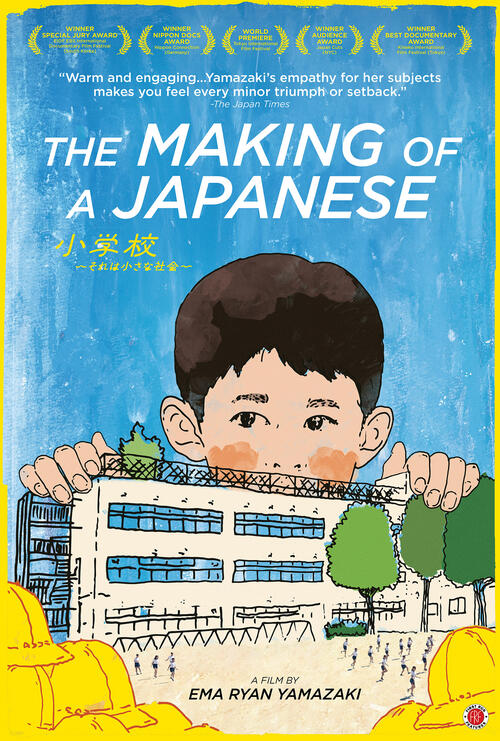
Flyer for "The Making of a Japanese" documentary screening and discussion with speaker portraits.
Image
instruments_of_a_beating_heart_poster


In this documentary film of a large Japanese elementary school located in a Tokyo suburb, Ema Ryan Yamazaki weaves together scenes from 700-plus hours of films to tell a story of how a Japanese elementary school instills distinctly Japanese characteristics in children. Long seen with curiosity and suspicion from western eyes, Japanese ways of teaching discipline and responsibility at elementary schools have received much accolade in recent years, becoming a model to be exported. What happens at a Japanese elementary school that would turn many unsuspecting 6-year-olds into well-disciplined 12-year-olds, and what might be the possible costs and benefits of such an education system? A critically acclaimed young documentary filmmaker, Ema Ryan Yamazaki, who is known for "Monkey Business: The Adventures of Curious George’s Creators" and "Koshien: Japan’s Field of Dreams," will join us for a viewing of her latest documentary and a discussion.

Instruments of a Beating Heart (New York Times Op-Docs version of Ema's Japanese Elementary school project, 23 minutes)

First graders in a Tokyo public elementary school are presented with a challenge for the final semester: to form an orchestra and perform “Ode to Joy” at a school ceremony. The film examines the Japanese educational system’s tenuous balance between self-sacrifice and personal growth as it teaches the next generation to become part of society.


Speaker:

Image
ema_ryan_yamazaki_headshot

Raised in Osaka by a Japanese mother and British father, Ema Ryan Yamazaki grew up navigating between Japanese and Western cultures. Having studied filmmaking at New York University, she uses her unique storytelling perspective as an insider and outsider in Japan. In 2017, Ema’s first feature documentary, MONKEY BUSINESS: THE ADVENTURES OF CURIOUS GEORGE’S CREATORS was released worldwide after raising over $186,000 on Kickstarter. In 2019, Ema’s second feature documentary about the phenomenon of high school baseball in Japan, KOSHIEN: JAPAN’S FIELD OF DREAMS, premiered at DOC NYC. In 2020, the film aired on ESPN, and was released theatrically in Japan. It was a New York Times recommendation for international streaming and featured on the Criterion Channel. Ema's latest documentary feature, THE MAKING OF A JAPANESE, follows one year in a Japanese public school. The film premiered at the Tokyo International Film Festival in 2023 and is currently playing festivals around the world, with a release set in Japan for December 2024. 


Discussant:

mariko yoshihara yang

Mariko Yang-Yoshihara is an Instructor and Education Researcher at the Stanford Program on International and Cross-Cultural Education (SPICE). She is also a Visiting Professor at Tohoku University in the Department of Management Science and Technology. Mariko earned her Ph.D. in political science from Stanford, and her research interests include innovation policy, research management, and STEAM (STEM + arts/humanities) education. Since 2009, she has designed curricula for educational and professional development and taught courses on qualitative methods and design thinking. In 2016, she co-founded SKY Labo, a nonprofit promoting STEAM education in Japan. SKY Labo’s inquiry-based program received official recognition from Japan’s Gender Equality Bureau in 2019 and won the Semi-Grand Prix of the Nissan Foundation’s Rikajyo Ikusei Sho (Award Promoting the Next Generation of Women in STEM) in 2022.


Moderator:

Image
Square portrait photo of Kiyoteru Tsutsui

Kiyoteru Tsutsui is the Henri H. and Tomoye Takahashi Professor and Senior Fellow in Japanese Studies at Shorenstein APARC, the Director of the Japan Program and Deputy Director at APARC, a senior fellow of the Freeman Spogli Institute for International Studies, and Professor of Sociology, all at Stanford University. Tsutsui received his bachelor’s and master’s degrees from Kyoto University and earned an additional master’s degree and Ph.D. from Stanford’s sociology department in 2002. Tsutsui’s research interests lie in political/comparative sociology, social movements, globalization, human rights, and Japanese society. His most recent publication, Human Rights and the State: The Power of Ideas and the Realities of International Politics (Iwanami Shinsho, 2022), was awarded the 2022 Ishibashi Tanzan Award and the 44th Suntory Prize for Arts and Sciences.
Kiyoteru Tsutsui

Stanford Alumni Center, Fisher Conference Center
Lane/Lyons/Lodato Room
326 Galvez St., Stanford, CA

Ema Ryan Yamazaki Documentary Filmmaker
Mariko Yang-Yoshihara Instructor and Education Researcher Discussant Stanford Program on International and Cross-Cultural Education (SPICE)
Date Label
Authors
Noa Ronkin
News Type
News
Date
Paragraphs

On September 13, 2024, the Japan Program at APARC welcomed to Stanford a delegation from the Embassy of Japan in the United States and the Consulate-General of Japan in San Francisco, including Ambassador Shigeo Yamada and Consul General Yo Osumi. The visit included a discussion of the Japanese diplomats with Stanford faculty members. Moderated by Japan Program Director Kiyoteru Tsutsui, the discussion focused on current issues affecting U.S.-Japan relations, regional and global security, and opportunities for strengthening U.S.-Japan academic exchange.

Yamada, who assumed his post as Ambassador Extraordinary and Plenipotentiary of Japan to the United States of America in December 2023, shared his experiences serving in the Abe and Kishida administrations and reflected on Japan’s concerns regarding the Russia-Ukraine war. He emphasized that Russia's aggression is a threat to the rule of law and represents a broader threat in East Asia. He expressed his hope that bilateral efforts will continue to counter these challenges.

The September 27 Liberal Democratic Party presidential election in Japan and the forthcoming November presidential election in the United States were also a major topic of conversation. Ambassador Yamada voiced his optimism, stating that regardless of the election outcomes, the strong foundation of the U.S.-Japan alliance will remain a constant. This bilateral relationship, he noted, is essential to navigating future geopolitical shifts.


Sign up for APARC newsletters to receive our experts' analysis and commentary.

Delegation from the Embassy of Japan in the US and the Consulate-General of Japan in San Francisco meet with Stanford scholars in a conference room.
Ambassador Yamada, Consul General Osumi, and members of their delegation meet with Stanford scholars.

Stanford faculty members posed questions to Ambassador Yamada, touching on topics ranging from Japan-U.S.-Republic of Korea trilateral relations to the future of NATO’s role in Asia security. Ambassador Yamada underscored his belief in the growing strength of the Japan-Korea relationship, particularly among younger generations.

Ambassador Yamada and Consul General Osumi expressed a desire to deepen collaboration with academic institutions like Stanford and cultivate environments where Japanese scholars can thrive in global research ecosystems. In this context, the Ambassador addressed the decline in Japan’s global standing in science and technology research. He noted that, while Japan once led the way in innovation, there is a concern that the nation’s researchers are not sufficiently engaging with their international counterparts, including those in the United States.

A highlight of the discussion was the participation of Miku Yamada, a recent graduate of the Ford Dorsey Master's in International Policy Program at the Freeman Spogli Institute for International Studies now serving as Second Secretary at the Embassy of Japan in Washington, DC. Yamada described how her experience at Stanford has shaped her career path and shared her passion for inspiring other Japanese students to pursue academic and research opportunities abroad.

The visit reaffirmed the commitment of Japan and the United States to maintaining a strong bilateral relationship, with continued emphasis on academic partnerships as a means of fostering mutual understanding and addressing global challenges. Ambassador Yamada expressed his enthusiasm for continued engagement with Stanford scholars and sharing their insights to inform U.S.-Japan policy discussions.

Read More

Walking Out: America’s New Trade Policy in the Asia-Pacific and Beyond
News

Walking Out: New Book Unravels the Shift in America's Trade Policy and Its Global Consequences

A new book by APARC Visiting Scholar Michael Beeman offers a timely analysis of the shift in United States' foreign trade policy, examines its recent choices to “walk out” on the principles that had defined the global trade system it had created, and offers recommendations for a redefined and more productive trade policy strategy.
Walking Out: New Book Unravels the Shift in America's Trade Policy and Its Global Consequences
side view encina hall
News

Open Faculty Positions in Japanese Politics and Foreign Policy, Korean Studies, and Taiwan Studies

Stanford University seeks candidates for a new faculty position in Japanese politics and foreign policy, a faculty position in Korean Studies, and a new faculty position on Taiwan. All three appointments will be at the Freeman Spogli Institute for International Studies and affiliated with Shorenstein APARC.
Open Faculty Positions in Japanese Politics and Foreign Policy, Korean Studies, and Taiwan Studies
Social research concept: Hand with magnifying glass over Montessori knobbed cylinders-like people conveying the idea of a community.
News

Stanford Japan Barometer Unveils Insights into Japanese Public Opinion on Same-Sex Marriage and Marital Surname Choices

A new installment of the Asahi Shimbun’s GLOBE+ series highlights Stanford Japan Barometer findings about Japanese public opinion on recognizing same-sex unions and legalizing a dual-surname option for married couples. Co-developed by Stanford sociologist Kiyoteru Tsutsui and Dartmouth College political scientist Charles Crabtree, the public opinion survey tracks evolving Japanese attitudes on political, economic, and social issues and unveils how question framing changes the results of public opinion polls.
Stanford Japan Barometer Unveils Insights into Japanese Public Opinion on Same-Sex Marriage and Marital Surname Choices
Hero Image
Japan's Ambassador to the US Shigeo Yamada, Consul General Yo Osumi, and Kiyoteru Tsutsui, posing on the front steps of Encina Hall, Stanford.
All News button
1
Subtitle

In a recent visit by a delegation from Japan's Embassy to the United States and Consulate-General of Japan in San Francisco, Ambassador Shigeo Yamada and Stanford experts discussed pressing issues affecting U.S.-Japan relations, regional security, and the international legal order. Hosted by APARC's Japan Program, the visit highlighted the role of academic institutions in informing policy and global cooperation.

Date Label
Authors
News Type
News
Date
Paragraphs

Stanford University seeks candidates for three faculty positions in Asian Studies. All three appointments will be at the Freeman Spogli Institute for International Studies (FSI) and affiliated with the Walter H. Shorenstein Asia-Pacific Research Center (APARC). The deadline for submissions is November 30, 2024. Read on for more information about each position. Candidates should submit their applications via the Stanford Faculty Positions website.


Faculty Appointment in Japanese Politics and Foreign Policy

Stanford University seeks candidates for a new faculty position in the politics and foreign policy of Japan. The successful candidate will have expertise in politics, policy studies, diplomacy, security studies, international relations, or global affairs relating to Japan and the Indo-Pacific region, and will be expected to advance research and education on Japanese politics and foreign policy, in the Japan Program of APARC. This is an open-rank search.

The new faculty member will be appointed as a Senior Fellow or Center Fellow in FSI, affiliated with APARC. Senior Fellows at Stanford University are full members of the Professoriate and Academic Council, with a rank equivalent to tenured associate or full professor. Center Fellows at Stanford University are also members of the Professoriate and the Academic Council, with a rank equivalent to tenure-track assistant professor. Center Fellows are appointed for a fixed term of years with the possibility of promotion to Senior Fellow.

For more information and to apply, view the job posting on the Stanford Faculty Positions website > 


Faculty Appointment in Korean Studies

Stanford University seeks candidates for a faculty position in Korean Studies. The successful candidate will be expected to advance research and education on Korea, in the Korea Program of APARC.

The new faculty member will be appointed as Center Fellow in FSI, affiliated with APARC. Center Fellows at Stanford University are the equivalent rank of tenure-track assistant professor. They are members of the Professoriate and the Academic Council, eligible to serve as principal investigators, and accrue sabbatical. Center Fellows are appointed for a fixed term of years with the possibility of promotion to Senior Fellow.

For more information and to apply, view the job posting on the Stanford Faculty Positions website >


Faculty Appointment in Taiwan Studies

Stanford University seeks candidates for a new faculty position on Taiwan. The successful candidate will have expertise in policy studies, social sciences, international relations, or global affairs relating to Taiwan, and will be expected to advance research and education on Taiwan studies, in the newly established Taiwan Program of APARC. This is an open-rank search.

The new faculty member will be appointed as a Senior Fellow or Center Fellow in FSI, affiliated with APARC. Senior Fellows at Stanford University are full members of the Professoriate and Academic Council, with a rank equivalent to tenured associate or full professor. Center Fellows at Stanford University are also members of the Professoriate and the Academic Council, with a rank equivalent to tenure-track assistant professor. Center Fellows are appointed for a fixed term of years with the possibility of promotion to Senior Fellow.

For more information and to apply, view the job posting on the Stanford Faculty Positions website >

Read More

Stanford building with palm trees and architectural details on the foreground and text "Call for Applications: Fall 2025 Fellowships" and APARC logo.
News

Stanford’s Asia-Pacific Research Center Invites Applications for Fall 2025 Asia Studies Fellowships

The Center offers multiple fellowships for Asia researchers to begin in Autumn quarter 2025. These include postdoctoral fellowships on Asia-focused health policy, contemporary Japan, and the Asia-Pacific region, postdoctoral fellowships and visiting scholar positions with the Stanford Next Asia Policy Lab, a visiting scholar position on contemporary Taiwan, and fellowships for experts on Southeast Asia.
Stanford’s Asia-Pacific Research Center Invites Applications for Fall 2025 Asia Studies Fellowships
Paul Y. Chang, FSI Senior Fellow
News

Korea Expert Paul Y. Chang Joins FSI as Senior Fellow

A leading sociologist of Korea, Professor Chang’s scholarship has influenced a number of subfields such as democratization, social movements, political repression, and demographic transition.
Korea Expert Paul Y. Chang Joins FSI as Senior Fellow
Kiyoteru Tsutsui
News

The Inter-University Center for Japanese Language Studies Welcomes Kiyoteru Tsutsui as Executive Director

Tsutsui, whose research focuses on social movements, human rights, political sociology, and Japanese society, joins the IUC as it recently celebrated its 60th anniversary.
The Inter-University Center for Japanese Language Studies Welcomes Kiyoteru Tsutsui as Executive Director
Hero Image
side view encina hall
All News button
1
Subtitle

Stanford University seeks candidates for a new faculty position in Japanese politics and foreign policy, a faculty position in Korean Studies, and a new faculty position on Taiwan. All three appointments will be at the Freeman Spogli Institute for International Studies and affiliated with Shorenstein APARC.

Date Label
Subscribe to Japan