Walter. H. Shorenstein
Asia-Pacific Research Center
616 Serra St C332
Stanford University
Stanford, CA 94305-6055

(650) 725-0938 (650) 723-6530
0
Visiting Associate Professor
YuanFangchen_WEB.jpg MA, PhD

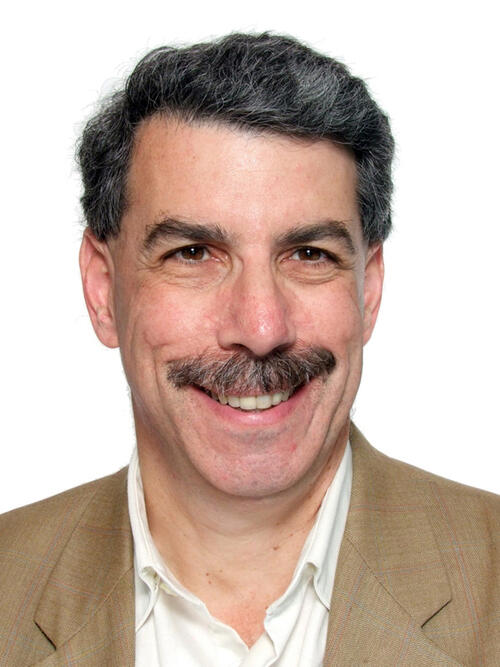
Fangcheng Yuan joins the Walter H. Shorenstein Asia-Pacific Research Center (Shorenstein APARC) during the 2011–12 academic year from the Institute of Political Science at Central China Normal University where he serves as an associate professor.

His research interests encompass Sino-foreign local governance; current reforms and innovations in contemporary rural China; and a comparative study of rural governance in Mainland China and Taiwan. During his time at Shorenstein APARC, Yuan will conduct research on community reconstruction: current reforms and innovations in China’s rural primary-level management system. He will contribute to a forthcoming research report on the subject.

Yuan is an editor of the Journal of Socialist Research, and contributes articles regularly to publications including CASS Journal of Political Science and Journal of Public Administration. He is also the author of Making Service Work (2008); Breakthrough: Xian’an Reform and the Transformation of China's Rural Grass-roots Governance (2009); and Working in Grass-Roots: A Close Observation of the Reforming of Rural China (2011).

Yuan holds a PhD and an MA in Chinese and foreign political systems from the Institute of Political Science at Central China Normal University, and a BA in political science from Wuhan University.

Paragraphs

What kind of a health care system do China’s 1.3 billion turn to when ill, injured, or in need of care? This article provides a brief overview of how China’s health system has transformed alongside China’s society and economy since the Mao era, including how the current system is financed, organized, regulated, and being reformed. It first provides a brief description of the Mao-era health system and China’s demographic and epidemiologic transitions. Then it gives an overview of China’s contemporary health care system, including the dramatic expansion of health insurance over the last eight years and the progress of national health system reforms initiated in 2009.

A condensed and revised version of this paper is published in The Milken Institute Review 2012 second quarter: 16-27. 

Published: Eggleston, Karen. "Health care for 1.3 billion: An overview of China’s health system." (2012).

All Publications button
1
Publication Type
Working Papers
Publication Date
Journal Publisher
Asia Health Policy Program working paper # 28
Authors
Karen Eggleston
-

At present, the tobacco industry produces some six trillion cigarettes worldwide every year. Six trillion cigarettes per annum, each ready to release smoke filled with highly addictive nicotine and powerful carcinogens. A third of all these sticks were produced in China last year. In 2011, the world’s largest cigarette maker by volume, the China National Tobacco Corporation, contributed an all-time high of U.S. $214 billion in profits and taxes to the Chinese government, up 22 percent year-on-year. Currently the greatest cause of preventable death in the world, the cigarette is likely to kill ten times as many people in the 21st century as it did in the 20th century, epidemiologists tell us, with China bearing the largest burden. Until now, much global health research and intervention has focused with limited success on the cigarette consumer—addressing how one or another variable prompts people to take up or quit smoking, whether the cue for the consumer is biological, psychological, spatial, financial or symbolic. What though of the industrial sources of tobacco-related diseases? Where are the six trillion cigarettes that are released into circulation each year manufactured? Where are they rolled, wrapped, and boxed for shipment? This presentation will introduce the Cigarette Citadels Project, an innovative application of participatory GIS. With special attention given to China’s network of cigarette factories, Matthew Kohrman will explain how the Cigarette Citadels Project not only reveals conceptual roadblocks in public health policy but also lacuna in social theory pertaining to the state and the politics of life.


Matthew Kohrman joined Stanford’s faculty in 1999. His research and writing bring multiple methods to bear on the ways health, culture, and politics are interrelated. Focusing on the People's Republic of China, he engages various intellectual terrains such as governmentality, gender theory, political economy, critical science studies, and embodiment. His first monograph, Bodies of Difference: Experiences of Disability and Institutional Advocacy in the Making of Modern China, examines links between the emergence of a state-sponsored disability-advocacy organization and the lives of Chinese men who have trouble walking. In recent years, Kohrman has been conducting research projects aimed at analyzing and intervening in the biopolitics of cigarette smoking and production. These projects expand upon analytical themes of Kohrman’s disability research and engage in novel ways techniques of public health.

This event is part of the China's Looming Challenges series

Philippines Conference Room

Stanford University
Department of Anthropology
Building 50, Central Quad
Stanford, California 94305-2034

(650) 723-3421 (650) 725-0605
0
Associate Professor of Anthropology
Senior Fellow, by courtesy, at the Freeman Spogli Institute for International Studies
Faculty Affiliate at the Walter H. Shorenstein Asia-Pacific Research Center
Faculty Affiliate at the Stanford Center on China's Economy and Institutions
matthewkohrman-vert.jpeg

Matthew Kohrman joined Stanford’s faculty in 1999. His research and writing bring multiple methods to bear on the ways health, culture, and politics are interrelated. Focusing on the People's Republic of China, he engages various intellectual terrains such as governmentality, gender theory, political economy, critical science studies, and embodiment. His first monograph, Bodies of Difference: Experiences of Disability and Institutional Advocacy in the Making of Modern China, examines links between the emergence of a state-sponsored disability-advocacy organization and the lives of Chinese men who have trouble walking. In recent years, Kohrman has been conducting research projects aimed at analyzing and intervening in the biopolitics of cigarette smoking and production. These projects expand upon analytical themes of Kohrman’s disability research and engage in novel ways techniques of public health.

Date Label
Matthew Kohrman Associate Professor of Anthropology and Senior Fellow Speaker FSI
Seminars
-

Richard Nixon’s visit to China in Feb. 1972 reshaped the global balance of power and opened the door to the establishment of relations between China and the United States.

It was also a milestone in the history of journalism. Since the communist revolution of 1949, Beijing had barred virtually all U.S. reporters from China. For the Nixon trip, however, it agreed to accept nearly 100 journalists, and to allow the most dramatic events—Nixon’s arrival in Beijing, Zhou Enlai’s welcoming banquet, and visits to the Great Wall and the Forbidden City—to be televised live.

The coverage was arguably as important as the details of the diplomacy. It profoundly transformed American and international perceptions of a long-isolated China, generated the public support Nixon needed to change U.S. policy, and laid the groundwork for Beijing’s gradual move to open China to greater international media coverage.

While the outlines of the Nixon trip are familiar, the behind-the-scenes story of how that momentous event was covered is much less well known. The U.S.-China Institute at the University of Southern California has produced a new documentary film: Assignment: China—The Week that Changed the World.

The Walter H. Shorenstein Asia-Pacific Research Center will present a special screening of Assignment: China, followed by commentary from the film’s reporter and narrator Mike Chinoy, who is currently a senior fellow at the U.S.-China Institute and formerly CNN’s senior Asia correspondent and Beijing bureau chief. Shorenstein Distinguished Fellow Michael Armacost will provide insight into the historical significance of Nixon’s 1972 visit.

About the Film

Assignment: China—The Week that Changed the World contains remarkable and previously unreleased footage of the Nixon visit, interviews with Chinese officials, people who worked for Nixon, as well as many of the journalistic luminaries who accompanied the president. These include Dan Rather and Bernard Kalb of CBS, Ted Koppel and Tom Jarriel of ABC, Barbara Walters of NBC, Max Frankel of the New York Times, Stanley Karnow of the Washington Post, photographer Dirck Halstead of UPI, and many others.

Reported and narrated by Mike Chinoy, the film offers a fascinating and previously untold perspective on one of the most important historical moments of the 20th century.

Speakers

Mike Chinoy Mike Chinoy

Mike Chinoy
Senior Fellow, U.S.-China Institute, University of Southern California

Image

Michael H. Armacost
Shorenstein Distinguished Fellow, Shorenstein Asia-Pacific Research Center, Stanford University

Philippines Conference Room

Mike Chinoy Speaker U.S.-China Institute, University of Southern California
0
Former Shorenstein APARC Fellow
Michael_Armacost.jpg PhD

Michael Armacost (April 15, 1937 – March 8, 2025) was a Shorenstein APARC Fellow at the Walter H. Shorenstein Asia-Pacific Research Center (Shorenstein APARC) from 2002 through 2021. In the interval between 1995 and 2002, Armacost served as president of Washington, D.C.'s Brookings Institution, the nation's oldest think tank and a leader in research on politics, government, international affairs, economics, and public policy. Previously, during his twenty-four-year government career, Armacost served, among other positions, as undersecretary of state for political affairs and as ambassador to Japan and the Philippines.

Armacost began his career in academia, as a professor of government at Pomona College. In 1969, he was awarded a White House Fellowship and was assigned to the Secretary and Deputy Secretary of State. Following a stint on the State Department's policy planning and coordination staff, he became a special assistant to the U.S. ambassador in Tokyo from 1972 to 74, his first foreign diplomatic post. Thereafter, he held senior Asian affairs and international security posts in the State Department, the Defense Department, and the National Security Council. From 1982 to 1984, he served as U.S. ambassador to the Philippines and was a key force in helping the country undergo a nonviolent transition to democracy. In 1989, President George Bush tapped him to become ambassador to Japan, considered one of the most important and sensitive U.S. diplomatic posts abroad.

Armacost authored four books, including, Friends or Rivals? The Insider's Account of U.S.–Japan Relations (1996), which draws on his tenure as ambassador, and Ballots, Bullets, and Bargains: American Foreign Policy and Presidential Elections (2015). He also co-edited, with Daniel Okimoto, the Future of America's Alliances in Northeast Asia, published in 2004 by Shorenstein APARC. Armacost served on numerous corporate and nonprofit boards, including TRW, AFLAC, Applied Materials, USEC, Inc., Cargill, Inc., and Carleton College, and he currently chairs the board of The Asia Foundation.  

A native of Ohio, Armacost graduated from Carleton College and earned his master's and doctorate degrees in public law and government from Columbia University. He received the President's Distinguished Service Award, the Defense Department's Distinguished Civilian Service Award, the Secretary of State's Distinguished Services Award, and the Japanese government’s Grand Cordon of the Order of the Rising Sun.

Date Label
Michael H. Armacost Speaker Shorenstein APARC, Stanford University
Seminars
Date Label
Authors
Henry S. Rowen
News Type
News
Date
Paragraphs
China's economy has averaged an impressive 9 percent annual growth over the past 30 years. In a recent Policy Review article, Henry S. Rowen says that as a result of this growth major political and economic changes are possible in China before 2020.
Hero Image
GuangZhouRailstation NEWSFEED
Guangzhou's glittering South Railway Station, Dec. 2011. Located in China's Pearl River Delta, the city has grown exponentially in recent decades.
Flickr/Xiaofan Luo
All News button
1
Authors
News Type
Q&As
Date
Paragraphs

Since Kim Jong Il’s death on Dec. 17, North Korea has a young new leader: Kim’s 28-year-old son Kim Jong Un. What does the new leadership hold in store for the future of the Korean Peninsula, U.S.-Korea relations, and the stability of Northeast Asia? David Straub, who attended the seventh U.S.-Korea West Coast Strategic Forum in Seoul just days before Kim’s death, shares highlights from the Forum and offers insight into the current North Korea situation.

Straub is associate director of the Korean Studies Program at Stanford University and a retired senior U.S. foreign service official with over 30 years of Northeast Asia experience.

The U.S.-Korea West Coast Strategic Forum is held semi-annually, alternating between Stanford and the Sejong Institute in Seoul.

The West Coast Forum opened with a discussion about the current situation in North Korea. After Kim Jong Il’s death, how much do you think that picture will change?

Most Forum experts believe there will be relative stability in North Korea for some time to come.

The reason Kim Jong Il chose Kim Jong Un as his successor is because he is the least controversial person in North Korea to succeed him. Anyone else would be the object of great suspicion and jealousy within the elite there.

North Korea has already had one succession—from founder Kim Il Sung to his son Kim Jong Il—and that went smoothly. The succession from Kim Jong Il to his youngest son Kim Jong Un is natural within that context—it is a dynastic succession. As with other dynastic successions, the easiest person to accept is normally someone who represents a continuation of the person in power.

Do you foresee possible areas for improvement in relations between North and South Korea or for negotiations over North Korea’s nuclear program?

Apr. 15 is the 100th anniversary of Kim Il Sung’s birth, which is going to be a large celebration. North Korea probably will want to commemorate it without a lot of distractions. The North Korean leadership also wants to provide more food and supplies to its people, and provocations toward South Korea would make it harder to get international aid. 

A number of Forum experts are concerned that North Korea might conduct another nuclear or long-range missile test this year. Most tests so far have not been fully successful, so from a military and technology perspective they probably want to try again. North Korea has been slapped with international trade sanctions for its previous tests, but China has always stepped in to help. Sanctions will probably not deter the North Koreans from conducting future tests.

As far as inter-Korean relations are concerned, it is unlikely that North Korea will take any major new initiatives toward the South. The leadership does not like conservative South Korean President Lee Myung-bak because he came into office saying that he would not continue giving large-scale aid to North Korea until it abandoned its nuclear weapons program. That was contrary to the Sunshine Policy of his two progressive predecessors.

President Lee’s term is almost up, and South Korea will hold a hold a presidential election on Dec. 19 this year. North Korea probably hopes that the progressives will win the election and restore the Sunshine Policy.

Will North Korea be a major issue for debate in South Korea’s upcoming 2012 presidential election?

Current polling shows that North Korea is the top concern of only 8 percent of the South Korean electorate. As in the past, the main issues for voters there are the economy, their standard of living, and social welfare issues. North Korea will not be the top issue unless something very dramatic happens between now and the election. On the other hand, if the race is close, feelings about North Korea policy could help to decide the outcome.

Among South Korean citizens, is there more fear or hope—or maybe a mixture of both—about North Korea’s new leadership?

Recent opinion polls show that 80 percent of South Koreans feel that North Korea will not give up its nuclear weapons. There is not much reason for optimism. That being said, most South Koreans are concerned about North Korea’s 2010 attack of Yeonpyeong Island and hope for improved relations. And, of course, Kim Jong Un is a different leader and most South Koreans hope he will move in a more positive direction. But they feel it is unlikely to happen in the next few years—if ever.

Does uncertainty over the future of North Korea have the potential to impact or strengthen any aspects of the U.S.-South Korea alliance?

This year, the U.S. and South Korean administrations will likely focus on managing the North Korean situation and continue to prioritize the U.S.-South Korea alliance. The two countries closely cooperate on North Korea policy.

The real question for the alliance in terms of North Korea policy will be who is elected as president in both countries. If a progressive South Korean candidate wins, that person will probably pursue some variation of the Sunshine Policy. Especially if a Republican is elected in the United States, we may see echoes of the difficult U.S.-South Korea relationship we had during the George W. Bush administration.

If President Obama is re-elected, another South Korean Sunshine Policy would also pose challenges. The administration has taken a very firm position that the United States will not significantly improve relations with North Korea until it gives up its nuclear weapons program. South Korea’s Sunshine Policy focuses on embracing North Korea in the hope that relations will improve over time and that North Korea will eventually voluntarily give up its nuclear weapons in that long-term context. 

China, the country in Northeast Asia with the most influence over North Korea, recently issued a statement in support of Kim Jong Un. Does this signify any major change in relations between these two countries?

The Chinese government has particular interest in North Korea. China is focused on developing its own economy, including the relatively poor northeastern area that borders North Korea. The last thing China wants is instability on the Korean Peninsula, which would detract from its economic development.

China does not believe it can force North Korea to give up its nuclear weapons without risking instability. In the absence of progress in the Six Party negotiations over North Korea’s nuclear program, China has unilaterally increased economic and diplomatic support for North Korea. Its support is independent of who serves as the North Korean leader.

China tried very hard to get Kim Jong Il to open up the North Korean economy more, but did not succeed, primarily because Kim feared that doing so would also allow in more outside information and undermine his regime. China probably hopes that the younger Kim Jong Un may eventually have not only the power but also the desire to reform the economy.  

Hero Image
KIS HomecomingYeowatzup NEWSFEED
A mosaic in Pyongyang depicts North Korean founder Kim Il Sung's homecoming.
Flickr/Yeowatzup
All News button
1
-

The Democratic Party of Japan (DPJ) came to power loudly proclaiming an end to the old deference to bureaucrats and favored interest groups. Two and a half years later, it has backtracked on many of its bold promises. In the face of daunting financial challenges and obstreperous opposition parties, Prime Minister Noda seeks, still somewhat unsteadily, to establish a new balance between strong leadership and artful compromise with allies and enemies alike.  

Gregory W. Noble is Professor in the Institute of Social Science at the University of Tokyo, where his research focuses on comparative political economy in East Asia.  After receiving his Ph.D. from Harvard University’s Department of Government, he taught at the University of California and the Australian National University before moving to Tokyo. Among his publications are Collective Action in East Asia: How Ruling Parties Shape Industrial PolicyThe Asian Financial Crisis and the Structure of Global Finance(co-edited with John Ravenhill); “Fiscal crisis and party strategies”; “The decline of particularism in Japanese politics”; “Japanese and American perspectives on regionalism in East Asia”; “What can Taiwan (and the U.S.) Expect from Japan”; “The Chinese Auto Industry as Challenge, Opportunity and Partner”; “Executioner or Disciplinarian: WTO Accession and the Chinese Auto Industry” (with Richard F. Doner and John Ravenhill]; “Power Politics: Elections and Electricity Regulation in Taiwan,” (with Stephan Haggard).


Special Japan Studies Program and CEAS Series: Winter-Spring 2011-12


Philippines Conference Room

Gregory Noble Professor Speaker Institute of Social Science, University of Tokyo
Seminars
-

While Chernobyl, and now Fukushima, are household words, far fewer people have heard of Maiak in the southern Urals and Hanford in eastern Washington State where Soviet and American engineers built plutonium plants to fuel the Cold War nuclear arsenal. Within nuclear "buffer zones," plant managers, who were pushed to produce as much plutonium as quickly as possible, polluted freely, liberally and disastrously. During the plutonium disasters that ensued, each plant issued over 200 million curies of radioactive isotopes into the surrounding environment, at least twice the amount released at Chernobyl. Under cover of nuclear security and powered by generous corporate welfare, plant managers employed influential public relations campaigns, restricted medical research, deployed temporary, migrant workers as ‘"jumpers" for the dirtiest work, and generally denied the existence and hazards of radioactive contamination. This was the house plutonium built. Kate Brown argues these histories are important because they supplied models, staff, blueprints and subsequent ready-made disasters for Chernobyl and Fukushima.

Kate Brown is an associate professor of history at the University of Maryland, Baltimore County. She is the author of a Biography of No Place: From Ethnic Borderland to Soviet Heartland (Harvard 2004), which won the American Historical Association’s George Louis Beer Prize for the Best Book in International European History. Brown is a 2009 Guggenheim Fellow and is working on a book called Plutopolia, a tandem history of the world’s first plutonium cities, to be published by Oxford University Press in 2012.

---------

Special Japan Studies Program and CEAS Series: Winter-Spring 2011-12

Looking Back, Looking Forward: Japan's March 11 Disasters One Year Later

The earthquake, tsunami, and nuclear disaster that hit Japan in March 2011 had both immediate catastrophic consequences and long term repercussions. Fundamental areas of Japan’s environment, economy, society, and collective national psyche were deeply affected, giving rise to a broad range of urgent issues. These include economic debates about how to meet the country’s energy demands with nuclear power plants offline, and what path to take for the country’s energy future; political crises, including criticism of the government’s disaster response; the psychological challenges of coping with trauma and grief; a daunting environmental clean-up; and social developments, including a new wave of civil society activism. This series brings together scholars and activists from a wide range of specialties to take stock of how the Japanese have been affected by the disasters, and to assess the efforts of residents, volunteers, and policy makers to recover and move forward.

Philippines Conference Room

Kate Brown Associate Professor of History Speaker University of Maryland, Baltimore County (UMBC)
Seminars
-

The triple disasters in Japan in March 2011 have created overwhelming trauma in the stricken areas for people of all ages. The mental health needs are immense, both immediate and long term, and ripple out into Japanese society. Members of the Nichibei Care Network, a group of mental health professionals in the Bay Area who organized to assist relief activities, will offer their reflections on the trauma suffered. They will also report on the heroic efforts that are taking place daily as people rebuild lives through compassion and caring.

---------

Special Japan Studies Program and CEAS Series: Winter-Spring 2011-12

Looking Back, Looking Forward: Japan's March 11 Disasters One Year Later

The earthquake, tsunami, and nuclear disaster that hit Japan in March 2011 had both immediate catastrophic consequences and long term repercussions. Fundamental areas of Japan’s environment, economy, society, and collective national psyche were deeply affected, giving rise to a broad range of urgent issues. These include economic debates about how to meet the country’s energy demands with nuclear power plants offline, and what path to take for the country’s energy future; political crises, including criticism of the government’s disaster response; the psychological challenges of coping with trauma and grief; a daunting environmental clean-up; and social developments, including a new wave of civil society activism. This series brings together scholars and activists from a wide range of specialties to take stock of how the Japanese have been affected by the disasters, and to assess the efforts of residents, volunteers, and policy makers to recover and move forward.

Philippines Conference Room

William Masuda Reverend Speaker Palo Alto Buddhist Temple
Stephen Murphy-Shigematsu Speaker Stanford School of Medicine
George Kitahara Kich, PhD Psychologist and Litigation Consultant and Adjunct Faculty Speaker California Institute of Integral Studies
Mio Yamashita Art Therapist/Marriage and Family Therapist Speaker
Seminars
-

Since the triple tragedy of March 11, 2011, we have seen a number of changes in what we sometimes refer to as "civil society" in Japan. In particular, we have seen the emergence of new forms of social capital and social strategies generated through the disaster response, including: real time flows of information over digital networks; the mobilization of various non-governmental actors and agencies in the immediate relief effort; emergence of the "volunteer" as a new cultural citizen; different patterns of contact, cooperation, and competition among previously unrelated groups and individuals in the rebuilding effort; and dispersed political opposition movements that have generated the largest protests since the 1970's AMPO demonstrations. Based on David H. Slater's volunteer relief work and disaster-focused ethnographic research, this talk will begin to document the range, depth, and limitations of these changes in terms of their disaster relief efficacy, but mostly on their possible longer-term effect on the shifting shape of civil society in post 3/11 Japan.

---------

Special Japan Studies Program and CEAS Series: Winter-Spring 2011-12

Looking Back, Looking Forward: Japan's March 11 Disasters One Year Later

The earthquake, tsunami, and nuclear disaster that hit Japan in March 2011 had both immediate catastrophic consequences and long term repercussions. Fundamental areas of Japan’s environment, economy, society, and collective national psyche were deeply affected, giving rise to a broad range of urgent issues. These include economic debates about how to meet the country’s energy demands with nuclear power plants offline, and what path to take for the country’s energy future; political crises, including criticism of the government’s disaster response; the psychological challenges of coping with trauma and grief; a daunting environmental clean-up; and social developments, including a new wave of civil society activism. This series brings together scholars and activists from a wide range of specialties to take stock of how the Japanese have been affected by the disasters, and to assess the efforts of residents, volunteers, and policy makers to recover and move forward.

Philippines Conference Room

David H. Slater Associate Professor of Anthropology and Japanese Studies Speaker Sophia University, Japan
Seminars
Subscribe to Northeast Asia