-

The pace of China-U.S. strategic competition has accelerated in the Asia-Pacific, causing heightened concern among U.S. allies and partners in the region over China’s economic expansion, Belt and Road Initiative, and maritime ambitions that challenge U.S. dominance in the region.  Even U.S. allies as reliable as Australia are wondering openly about the capacity of the U.S. to balance Chinese influence.  The Trump administration’s isolationist rhetoric, abandonment of TPP, withdrawal from the Paris Climate Accords, and “flinch” during the recent trade war has increased this concern.  China meanwhile has demonstrated increased sophistication in diplomacy and in neutralizing historical U.S. advantages.  The new frontiers of cyber and space are the most likely domains in which these challenges will play out from a security perspective.  The choices that the U.S. makes in these realms in the next two years may establish a course for the region that cannot be corrected later.

Image
amb jeffrey bleich 8x10

Ambassador Jeffrey Bleich is the former US ambassador to Australia and Special Counsel to President Obama in the White House.  He is currently a partner at Dentons and CEO of Dentons Diplomatic Solutions, where he focuses on privacy and data security, internal investigations, market access, and cross-border disputes involving the Indo-Pacific region.

As ambassador, his term was marked by the US "rebalance" to the Asia­ Pacific, with Australia being the focal point for that shift. His efforts included overseeing record growth in trade and investment between the US and Australia, bringing the Defense Trade Cooperation Treaty into force, establishing new alliance agreements for satellites and cybersecurity, executing a new space cooperation agreement that supported the Mars Curiosity rover landing, leading joint US-Australia efforts in Afghanistan’s Uruzgan province, and promoting regional human rights efforts. For his federal service, Amb. Bleich has received numerous awards, including the highest civilian honors awarded by the Director of National Intelligence and the United States Navy. In 2014, he received the State Department's highest award for a non-career ambassador, the Sue Cobb Prize for Exemplary Diplomatic Service.


Amb. Bleich currently serves as Chair of the Fulbright Foreign Scholarship Board (appointed by President Obama) and as a member of the East-West Center (appointed by Secretary Kerry). He also serves by appointment of the Governor on the Governor's 11-member International Trade and Investment Council. He was formerly the President of the State Bar of California, and the Chair of the California State University Board of Trustees, and currently serves on the Board of Stanford’s Center For the Advanced Study of Behavior Science, and the Board of Amherst College.  He has been elected as a life member to both the American Law Institute and the Council on Foreign Relations.  


Amb. Bleich received his B.A. from Amherst College (with high honors), M.P.P. from Harvard (with highest honors), and J.D. from U.C. Berkeley (with highest honors) where he also served as Editor-in-Chief of the California Law Review.  He clerked for Judge Abner Mikva of the DC Circuit, Chief Justice William Rehnquist of the U.S. Supreme Court, and Judge Howard Holtzmann of the Iran-U.S. Claims Tribunal in the Hague, before becoming a partner at Munger Tolles & Olson.  Amb. Bleich has been regularly listed among the Daily Journal's Top 100 attorneys in California, honored as a California Lawyer Attorney of the Year and listed in Lawdragon 500 and in America's Best Lawyers as a top “Bet the Company” lawyer.

p.p1 {margin: 0.0px 0.0px 0.0px 0.0px; font: 12.0px Calibri; color: #414141} span.s1 {font-kerning: none}

This event is part of the China Program’s Colloquia Series entitled "A New Cold War?: Sharp Power, Strategic Competition, and the Future of U.S.-China Relations " sponsored by Shorenstein APARC's China Program.

A New Cold War?: Sharp Power, Strategic Competition, and the Future of U.S.-China Relations
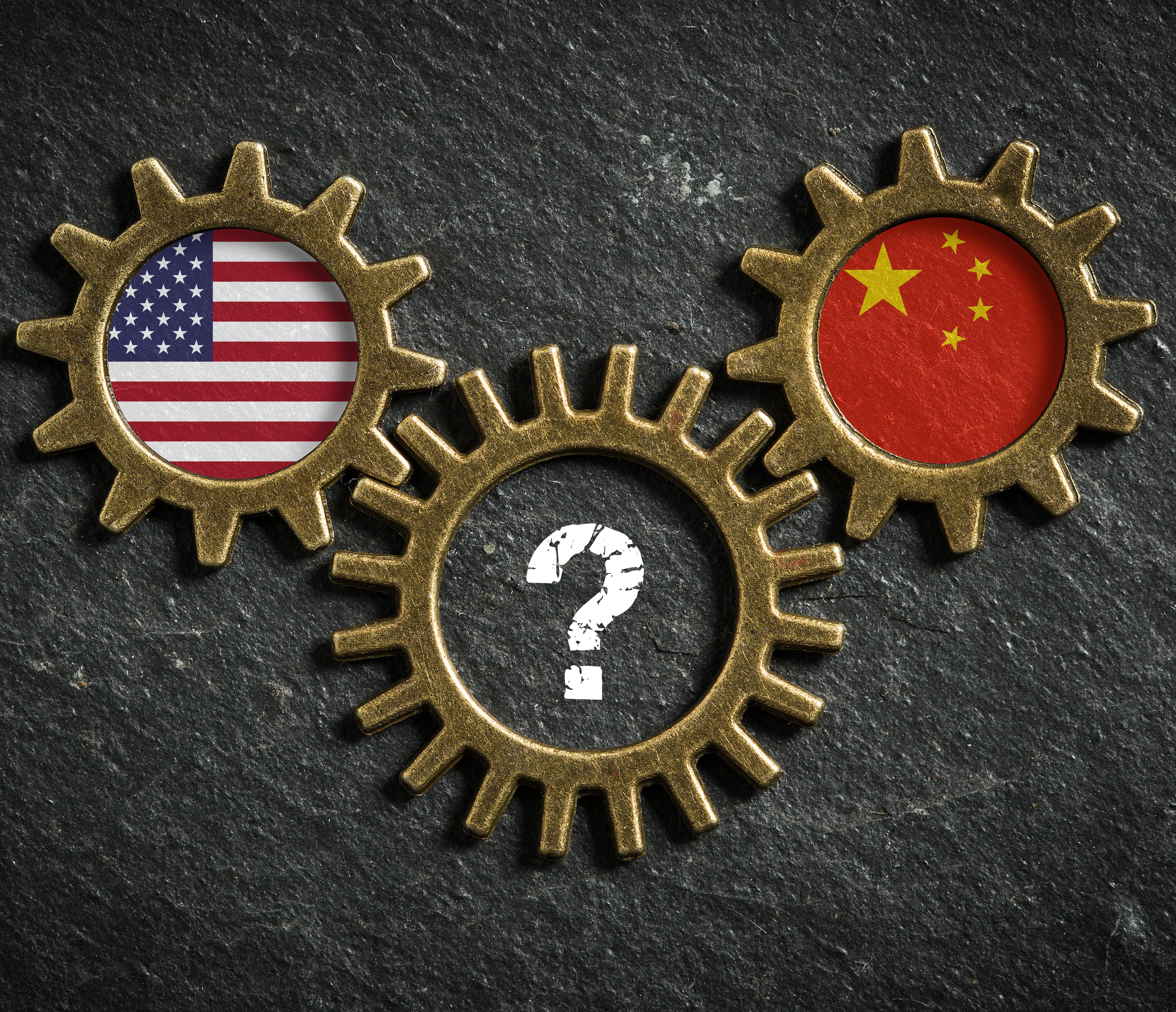
Trade conflict has exploded. The media is rife with stories of China’s unfair trade practices, cyber theft, IP theft and forced technology transfers. Who will first scale the commanding heights of technological supremacy? Who will be the first mover in AI, robotics and biotechnology? What are the implications of Beijing’s ambitious infrastructure projects, including its Belt and Road Initiative? How is China’s “sharp power” deployed, and what are its implications for political and civic life in the U.S.? Can the Trump administration and Beijing’s leadership reach agreement on our trade disputes? Are these just the beginning salvos of an increasingly turbulent future? As U.S. policy towards China sharply veers away from “constructive engagement” to “strategic competition,” the Stanford China Program will host a series of talks by leading experts to explore the current state of our bilateral relations, its potential future, and their implications for the world order.

https://aparc.fsi.stanford.edu/china/research/new-cold-war-sharp-power-strategic-competition-and-future-us-china-relations


Philippines Conference Room Encina Hall, 3rd Floor 616 Serra Mall, Stanford, CA 94305


Amb. Jeffrey Bleich <i>Dentons</i><br><br>
Lectures
News Type
Commentary
Date
Paragraphs
APARC's Direcror of the Southeast Asia Program Donald K. Emmerson, Center Fellow Thomas Fingar, and Oksenberg-Rohlen Fellow David M. Lampton spoke with The New Silk Road Project as part of a series of conversations that explores China’s Belt and Road Initiative (BRI) from various perspectives. The New Silk Road Project is a student-led research project that aims to better understand and raise awareness of China’s BRI by documenting its land-based component and compiling interviews with leading academics. 
 
Listen to the complete interviews below.
 
Donald K. Emmerson discusses Chinese investment in ASEAN, multilateralism, and the possibility of building the Kra Canal across Thailand to help offset China’s Malacca Dilemma:
 
 
Thomas Fingar discusses how Chinese policies and priorities interact with the goals and actions of other countries in Central and South Asia:
 
 
David M. Lampton discusses China’s development of high-speed railway networks in Southeast Asia:
 

Hero Image
Chinese construction workers in Colombo, Sri Lanka
Chinese Construction workers on site at a shopping mall that is part of the Chinese managed Shangri-La retails and office complex in Colombo, Sri Lanka. For China, the relation with Sri Lanka is a critical link for its Belt and Road Initiative.
Paula Bronstein/Getty Images
All News button
1
-


EMERGING ISSUES IN CONTEMPORARY ASIA

A Special Seminar Series


RSVP required by February 8, 2019 to: https://goo.gl/forms/dht3i9iX06mGpNyC3

VALID STANFORD ID CARD MUST BE PRESENTED UPON ARRIVAL


ABSTRACT: Most North Korean refugees and defectors live in South Korea, but in the past decade a growing number have moved beyond the Korean peninsula to create exile communities in North America, Europe, and other locations around the world. These movements have contributed to the emergence of a new and more globally distributed North Korean diaspora. What factors have shaped the emergence of this diaspora, and what effect is it likely to have?  I find that contestation over conceptions of citizenship, at both the level of the individual and the level of government policy, have combined to shape the migration and resettlement of North Korean defectors and refugees over time and across geographic space. I then draw on a comparison with other authoritarian diasporas and extra-territorial opposition movements to show how changing North Korean resettlement patterns are likely to have significant geopolitical implications--not just for the individuals and families that migrate out of North Korea, but for American and international security and human rights policies toward North Korea.  

Image
Sheena Greitens
PROFILE: Sheena Chestnut Greitens is an Assistant Professor of Political Science at the University of Missouri, and co-director of the university’s Institute for Korean Studies. She is also a non-resident senior fellow at the Brookings Institution and an adjunct fellow with the Korea Chair at Center for Strategic and International Studies.  Dr. Greitens holds a Ph.D. from Harvard  University, M.Phil. from Oxford University, where she studied as a Marshall Scholar, and a B.A. from Stanford University. Greitens’ research focuses on security, East Asia, and the politics of democracy and dictatorship. Her work on China and North Korea has appeared in academic journals and edited volumes in English, Chinese, and Korean, and in major media outlets, and she has previously testified to Congress on security issues in the Asia-Pacific. Her first book, Dictators & Their Secret Police (Cambridge, 2016) received the 2017 Best Book Award from both the International Studies Association and the Comparative Democratization section of the American Political Science Association, and an honorable mention from APSA’s Politics and History section. She is currently working on a book manuscript on the geopolitical implications of North Korean defector and refugee resettlement.  

Sheena Greitens Assistant Professor of Political Science at the University of Missouri and co-director of the university’s Institute for Korean Studies
-

EMERGING ISSUES IN CONTEMPORARY ASIA

A Special Seminar Series


RSVP required by January 29, 2019 to: https://goo.gl/forms/0bPqyoTQwub8WaRo2

VALID STANFORD ID CARD MUST BE PRESENTED UPON ARRIVAL


ABSTRACT: How does North Korea think about coercion—that is, threats and the use of force to achieve political goals? The answer affects not only the kinds of “sticks” to employ as part of North Korea policy, but the potential cost of using sticks or pressure at all. In this presentation, Jackson argues that part of North Korean strategic culture—specifically its beliefs about coercion—helps explain a durable pattern in its foreign policy and crisis bargaining history: generating deliberate friction with adversaries despite the risk of its own destruction. This presentation will explain the offensive and reputational underpinnings of how North Korea thinks about coercion, detail how this aspect of North Korean strategic culture helps us make sense of its foreign policy history, and explore the implication of this set of beliefs for recent North Korea policy. It will argue that the policy of “maximum pressure,” and its “strategic patience” antecedent, both contained implicit assumptions about North Korean behavior at odds with the historical record— assumptions that were blind to the risks of blowback they were generating.

Image
PROFILE: Van Jackson is a senior lecturer in international relations at Victoria University of Wellington, the defense and strategy fellow at the Centre for Strategic Studies, and a global fellow at the Woodrow Wilson International Center for Scholars. He is also a senior editor with War on the Rocks and an associate editor with the Texas National Security Review. Jackson's first book, with Cambridge University Press, was Rival Reputations: Coercion and Credibility in U.S.-North Korea Relations (2016). His second book, just out and also with Cambridge University Press, is On the Brink: Trump, Kim and the Threat of Nuclear War (2018). He is a former Council on Foreign Relations International Affairs Fellow. From 2009-2014, Jackson held positions in the Office of the Secretary of Defense (OSD) as a strategist and policy adviser focused on the Asia-Pacific, senior country director for Korea, and working group chair of the U.S.–Republic of Korea Extended Deterrence Policy Committee. He was a contributor to the 2013 Strategic Choices Management Review, the 2014 Quadrennial Defense Review, and OSD’s implementation of the U.S. policy of rebalancing to the Asia-Pacific. He started his career as a Korean linguist in the U.S. Air Force.


Philippines Conference Room Encina Hall, 3rd Floor 616 Serra Mall, Stanford, CA 94305


Van Jackson Senior Lecturer, Victoria University of Wellington; Defence and Strategy Fellow, Centre for Strategic Studies Wilson Center; Global Fellow, Woodrow Wilson International Center for Scholars
Seminars
0
andrew_kim.jpg

Sung Hyun "Andrew" Kim was a visiting scholar at the Walter H. Shorenstein Asia-Pacific Research Center (APARC) through December 2019. Previously he was William J. Perry visiting scholar at APARC. Kim, who retired from the Central Intelligence Agency in 2018 as a senior intelligence officer after 28 years of service, was assistant director of the CIA's Korea Mission Center, where he helped secure the foundation for the Trump-Kim summit of June 2018.  At Stanford, he will contribute to studies of current North Korea diplomacy in comparison to previous negotiations with the DPRK, a research scope that he refers to as "U.S.-DPRK summit of the century and the tide of history."  Kim will also participate in policy engagement regarding North Korea issues through Shorenstein APARC and its Korea Program.

Kim established the CIA's Korea Mission Center in April 2017 in response to a presidential initiative to address North Korea's longstanding threat to global security. As part of his role as head of the Mission Center, he managed and guided CIA Korean analysts in providing strategic and tactical analytic products for a range of policymakers. He accompanied CIA Director and then Secretary of State Mike Pompeo to Pyongyang in meeting with the North Korean leader Kim Jong Un several times. Formerly he served as the Agency's associate deputy director for operations and technology, leading all efforts to update operational technology and incorporate a state-of-the-art doctrine into CIA training curricula.

Earlier in his career, Kim served as the CIA's chief of station in three major East Asian cities, while also managing the intelligence relationship with politically and militarily complicated foreign countries and advancing U.S. interests. In recognition of his many contributions, Kim was honored by the Agency with the Director's Award (2018), Presidential Rank Award (2012), and the Donovan Award (1990). He speaks fluent Korean, Japanese, and Mandarin Chinese.

Visiting Scholar at APARC
-

The 11th Annual Koret Workshop

A dramatic opening created by the unique strategic outlooks and personalities of Moon Jae-in, Kim Jong Un and Donald Trump instigated a series of highly symbolic summits in the early months of 2018. The process kicked off by those summits has bogged down, however, as the necessary compromises for an agreement between the United States and North Korea have proved elusive. This year's Koret Workshop will therefore invite experts from a variety of areas in order to reflect on what the stumbling blocks have been as well as prospects for overcoming them. Conference participants will work towards better understanding and supporting potential emerging solutions to the persistent conflict on the Korean Peninsula.

The workshop will consist of three sessions:

Session I: Assessments of Summit Diplomacy

Session II: Challenges and Opportunities in Media Coverage

Session III: Prospects and Pitfalls in the Near-Term

NOTE: During the conference, a keynote address is open to the general public. Please click here to register for the public event on March 15.
 
The annual Koret Workshop is made possible through the generous support of the Koret Foundation.

Bechtel Conference Center
Encina Hall, 616 Serra Street
Stanford University

Conferences
-

Image
andray book cover

The stories of North Korea and Myanmar (Burma) are two of Asia’s most difficult. For decades they were infamous as the region’s most militarized and repressed, self-isolated and under sanctions by the international community while, from Singapore to Japan, the rest of Asia saw historic wealth creation. Andray Abrahamian, author of the recent book North Korea and Myanmar: Divergent Paths (McFarland, 2018), examines and compares the recent histories of North Korea and Myanmar, asking how both became pariahs and why Myanmar has been able to find a path out of isolation while North Korea has not. 

Abrahamian finds that both countries were faced with severe security threats following decolonization. Myanmar was able to largely take care of its main threats in the 1990s and 2000s, allowing it the space to address the reasons for its pariah status. North Korea's response to its security threat has been to develop nuclear weapons, which in turn perpetuates and exacerbates its isolation and pariah status. In addition, Pyongyang has developed a state ideology and a coercive apparatus unmatched by Myanmar, insulating its decision makers from political pressures and issues of legitimacy to a greater degree.

Dr. Andray Abrahamian is currently the 2018-19 Koret Fellow in Korea Program at Stanford. He is a member of the US National Committee on North Korea and an Adjunct Fellow at Pacific Forum and at Griffith University. Working for a non-profit, Choson Exchange, has taken him to the DPRK nearly 30 times; he has also lived in Myanmar.

Philippines Conference Room Encina Hall, 3rd Floor 616 Serra Mall, Stanford, CA 94305
0
Lecturer
Koret Fellow, 2018-19
andray_abrahamian.jpg Ph.D.
Andray Abrahamian was the 2018-19 Koret Fellow at Stanford University. He is also an Honorary Fellow at Macquarie University, Sydney and an Adjunct Fellow at the Griffith Asia Institute. He is an advisor to Choson Exchange, a non-profit that trains North Koreans in economic policy and entrepreneurship. He was previously Executive Director and Research Director for Choson Exchange. That work, along with supporting sporting exchanges and a TB project, has taken him to the DPRK nearly 30 times. He has also lived in Myanmar, where he taught at Yangon University and consulted for a risk management company. He has conducted research comparing the two countries, resulting in the publication of "North Korea and Myanmar: Divergent Paths" (McFarland, 2018). Andray has published extensively and offers expert commentary on Korea and Myanmar, including for US News, Reuters, the New York Times, Washington Post, Lowy Interpreter and 38 North.  He has a PhD in International Relations from the University of Ulsan, South Korea and an M.A. from the University of Sussex where he studied media discourse on North Korea and the U.S.-ROK alliance, respectively. Andray speaks Korean, sometimes with a Pyongyang accent.
<i>2018-19 Koret Fellow, APARC, Stanford University</i>
Seminars
News Type
Commentary
Date
Paragraphs


In a recent interview with Korea Times, Gi-Wook Shin, director of APARC, said "only a drastic measure [by North Korea] can resolve the current stalemate." Shin also urged Moon administration to rework its North Korea policy.

Read the full interview in Korean language here.

All News button
1
News Type
News
Date
Paragraphs

The Korea Program at Walter H. Shorenstein Asia-Pacific Research Center at Stanford University (APARC) welcomes affiliation requests from those applying for the Korea Foundation’s KF Fellowship for Postdoctoral Research. 

Eligibility:

Scholars with a recent PhD in a subject related to Korea within five years who do not currently hold a regular faculty position are eligible to apply. Applicants must have citizenship or permanent residency in a country outside Korea.

Per Korea Foundation postdoctoral fellowship policy, the fellowship recipient may not conduct research at the university from which a PhD was obtained. Thus Stanford PhD applicants are not eligible to apply for this fellowship with affiliation with Stanford University.

Applicants must have confirmation of degree conferral by July 1, 2019. The appointment period of the KF-APARC Korea Program Postdoctoral Fellowship at Stanford University is from September 1, 2019 to August 31, 2020. Research fields supported by this fellowship are in the humanities and social sciences. This fellowship cannot be combined with other sources including other fellowships and grants.

If the KF fellowship stipend does not meet Stanford University’s postdoctoral salary requirement then APARC Korea Program will supplement the stipend to meet the Stanford minimum requirement.  If selected, KF-APARC Korea Program Postdoctoral Fellow will also be eligible for health benefits available at Stanford University to postdoctoral fellows.

Application Process:

The applicant will need to prepare two applications.

1) Application submission to Stanford University: Deadline Monday, January 20, 2019

Applicants will submit the following application materials in PDF format through a Stanford application portal.

-       Curriculum Vitae
-       Research Proposal (no longer than 5 typed pages, double-spaced)
-       Copy of degree conferral (if already obtained)

In addition, applicants will arrange three letters of recommendation to be directly emailed to kfaparc-postdoc@stanford.edu.

Your application to Stanford University will not be considered complete until we have received ALL of the requested materials. 

2) Application submission to Korea Foundation:

The applicant is advised to check the KF Postdoctoral Fellowship portal, http://apply.kf.or.kr, early January to submit the application to Korea Foundation.

For details of the application materials required by the Korea Foundation, you will have to visit the KF Fellowship portal.

Notification process: Applicants will be notified of APARC’s decision by the end of January. Affiliations with Stanford University will be contingent on the applicant being awarded the KF Postdoctoral Fellowship announced by the Korea Foundation in April/May. Please note that selection by Stanford University does not guarantee selection by the Korea Foundation. APARC will, however, advise the Korea Foundation of its selection. We ask the applicants to contact the APARC Korea Program manager at hjahn@stanford.edu to confirm whether or not they will be coming to APARC, as soon as they are notified of the Korea Foundation’s decision.

All News button
1
News Type
News
Date
Paragraphs

Shorenstein APARC's annual overview of the Center's 2017-18 activities  is now available to download

Feature sections look at the Center's seminars, conferences, and other activities in response to the North Korean crisis, research and events related to China's past, present, and future, and several Center research initiatives focused on technology and the changing workforce.

The overview highlights recent and ongoing Center research on Japan's economic policies, innovation in Asia, population aging and chronic disease in Asia, and talent flows in the knowledge economy, plus news about Shorenstein APARC's education and policy activities, publications, and more.

Hero Image
2017 18 center overview full
All News button
1
Subscribe to Northeast Asia