Authors
Lisa Griswold
News Type
News
Date
Paragraphs

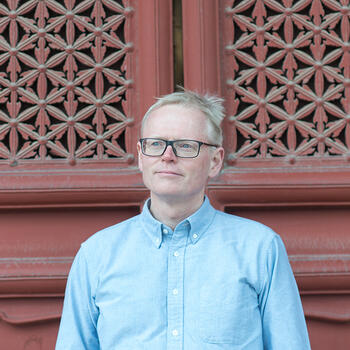
Ian Johnson, a veteran journalist with a focus on Chinese society, religion and history, is the 2016 recipient of the Shorenstein Journalism Award. The award, given annually by the Walter H. Shorenstein Asia-Pacific Research Center, is conferred to a journalist who produces outstanding reporting on Asia and has contributed to greater understanding of the complexities of Asia. He will deliver a keynote speech and participate in a panel discussion on May 1, 2017, at Stanford.

“Ian Johnson is one of those rare writers who has not only watched China’s evolution over the long haul, but who is also deeply steeped in the culture and politic of both Europe and the United States as well,” said Orville Schell, the Arthur Ross Director at the Asia Society of New York’s Center on U.S.-China Relations and jury member for the award. “This cross-cultural grounding has imbued his work on China with a humanistic core that, because it is always implicit rather than explicit, is all the more persuasive.”

Ian Buruma, the Paul W. Williams Professor of Democracy, Human Rights, and Journalism at Bard College and jury member for the award, added further praise, “Ian Johnson is one of the finest journalists in the English language. He writes about China with extraordinary insight, deep historical knowledge and a critical spirit tempered by rare human sympathy. His work on China is further enriched by wider interests, such as the problems of Islamist extremism in the West, specifically Germany, where he lives when he is not writing from China.”

The Shorenstein award, now in its 15th year, originally in partnership with the Shorenstein Center on Press, Politics and Public Policy at Harvard, was created to honor American journalists who through their writing have helped Americans better understand Asia. In 2011, the award was broadened to encompass Asian journalists who pave the way for press freedom, and have aided in the growth of mutual understanding across the Pacific. Recent recipients of the award include Yoichi Funabashi, former editor-in-chief of the Asahi Shimbun; Jacob Schlesinger of the Wall Street Journal; and Aung Zaw, founder of the Irrawaddy, a Burmese publication.

Johnson has spent over half of the past 30 years in the Greater China region, first as a student in Beijing from 1984-85, and then in Taipei from 1986-88. He later worked as a newspaper correspondent in China, from 1994-96 with Baltimore's The Sun, and then from 1997-2001 with the Wall Street Journal, covering macroeconomics, China’s social issues and World Trade Organization accession.

Johnson returned to China in 2009, where he now lives and writes for the New York Times and freelances for the New York Review of Books, the New Yorker and National Geographic. He also teaches and leads a fellowship program at the Beijing Center for Chinese Studies.

Johnson has also worked in Germany, serving as the Wall Street Journal’s Germany bureau chief and senior writer. Early on in his career, he covered the fall of the Berlin Wall and German unification, and later returned to head coverage on areas including the introduction of the euro and Islamist terrorism.

Johnson has been twice nominated for the Pulitzer Prize and won in 2001 for his coverage of the Chinese government’s suppression of the Falun Gong spiritual movement and its implications of that campaign for the future. He is also the author of two books, Wild Grass (Pantheon, 2004) which examines China’s civil society and grassroots protest, and A Mosque in Munich (Houghton Mifflin Harcourt, 2010). His next book, The Souls of China: The Return of Religion after Mao (Pantheon, April 2017) explores the resurgence of religion and value systems in China.

Additional details about the panel discussion and the award are listed below.


About the Panel Discussion and Award Ceremony

A keynote speech will be delivered by Shorenstein Journalism Award winner Ian Johnson, followed by a panel discussion with Orville Schell, the Arthur Ross Director at the Asia Society of New York’s Center on U.S.-China Relations, and Xueguang Zhou, professor of sociology at Stanford; moderated by Daniel C. Sneider, associate director for research at Shorenstein APARC.

May 1, 2017, from 12:00 – 1:30 p.m. (PDT)

Bechtel Conference Center, Encina Hall, 616 Serra Street, Stanford, CA 94305

The keynote speech and panel discussion are open to the public. The award ceremony will take place in the evening for a private audience.

To RSVP for the panel discussion, please visit this page.


About the Shorenstein Journalism Award

The Shorenstein Journalism Award honors a journalist not only for excellence in their field of reporting on Asia, but also for their promotion of a free, vibrant media and for the future of relations between Asia and the United States. Originally created to identify American and Western journalists for their work in and on Asia, the award now also recognizes Asian journalists who have contributed significantly to the development of independent media in Asia. The award is presented annually and includes a prize of $10,000.

The award is named after Walter H. Shorenstein, the philanthropist, activist and businessman who endowed two institutions that are focused respectively on Asia and the press - the Walter H. Shorenstein Asia-Pacific Research Center at Stanford and the Joan Shorenstein Center on Press, Politics and Public Policy in the Kennedy School of Government at Harvard.

Past recipients of the award include: Yoichi Funabashi, formerly of the Asahi Shimbun (2015); Jacob Schlesinger of the Wall Street Journal (2014), Aung Zaw of the Irrawaddy (2013), Barbara Demick of the Los Angeles Times (2012), Caixin Media of China (2011), Barbara Crossette of the New York Times (2010), Seth Mydans of the New York Times (2009), Ian Buruma (2008), John Pomfret of the Washington Post (2007), Melinda Liu of Newsweek (2006), Nayan Chanda of the Far Eastern Economic Review (2005), Don Oberdofer of the Washington Post (2004), Orville Schell (2003), and Stanley Karnow (2002).

A jury selects the award winner. The 2016 jury comprised of:

Ian Buruma, the Paul W. Williams Professor of Democracy, Human Rights, and Journalism at Bard College, is a noted Asia expert who frequently contributes to publications including the New York Times, the New York Review of Books and the New Yorker. He is a recipient of the Shorenstein Journalism Award and the international Erasmus Prize (both in 2008).

Nayan Chanda is the director of publications and the editor of YaleGlobal Online Magazine at the Yale Center for the Study of Globalization. For nearly thirty years, Chanda was at the Hong Kong-based magazine, Far Eastern Economic Review. He writes the ‘Bound Together’ column in India’s Business World and is the author of Bound Together: How Traders, Preachers, Adventurers and Warrior Shaped Globalization. Chanda received the Shorenstein Journalism Award in 2005.

Susan Chira is a senior correspondent and editor on gender issues and former deputy executive editor and foreign editor at the New York Times. Chira has extensive experience in Asia, including serving as Japan correspondent for the Times in the 1980s. During her tenure as foreign editor, the Times won the Pulitzer Prize four times for international reporting on Afghanistan, Russia, Africa and China.

Donald K. Emmerson is a well-respected Indonesia scholar and director of Shorenstein APARC’s Southeast Asia Program and a research fellow for the National Asia Research Program. Frequently cited in international media, Emmerson also contributes to leading publications, such as Asia Times and International Business Times.

Orville Schell is the Arthur Ross Director at the Asia Society of New York’s Center on U.S.-China Relations and former jury member for the Pulitzer Prize for international reporting. Schell has written extensively on China and was awarded the 1997 George Peabody Award for producing the groundbreaking documentary The Gate of Heavenly Peace. He received the Shorenstein Journalism Award in 2003.

Daniel C. Sneider is the associate director for research at Shorenstein APARC, writing on Asian security issues, wartime historical memory and U.S policy in Asia. He also frequently contributes to publications such as Foreign Policy, Asia Policy and Slate. Sneider had three decades of experience as a foreign correspondent serving in India, Japan and Russia for the Christian Science Monitor and as the national and foreign editor of the San Jose Mercury News and a syndicated columnist on foreign affairs for Knight-Ridder.

For more information about the award, please visit this page.

Hero Image
ij 2 Courtesy of Ian Johnson
All News button
1
News Type
Commentary
Date
Paragraphs

In an op-ed for The Diplomat, Stanford assistant professor Phillip Y. Lipscy says the Trump presidency offers Japanese Prime Minister Shinzo Abe an opportunity to realize his vision of a more prominent Japan, yet the depth of the bilateral relationship and ability to deliver hinge on how much the two leaders can compromise on economic and security interests.

Read the piece here.

Hero Image
abe trump whitehouse
U.S. President Donald Trump and Japanese Prime Minister Shinzo Abe walk together at the White House on Feb. 10, 2017.
Chip Somodevilla/Getty Images
All News button
1
Paragraphs

Scholars at Stanford's Shorenstein Asia-Pacific Research Center in the Freeman Spogli Institute for International Studies assess the strategic situation in East Asia to be unsettled, unstable, and drifting in ways unfavorable for American interests. These developments are worrisome to countries in the region, most of which want the United States to reduce uncertainty about American intentions by taking early and effective steps to clarify and solidify U.S. engagement. In the absence of such steps, they will seek to reduce uncertainty and protect their own interests in ways that reduce U.S. influence and ability to shape regional institutions. This 23-page report entitled “President Trump’s Asia Inbox” suggests specific steps to achieve American economic and security interests.

All Publications button
1
Publication Type
Policy Briefs
Publication Date
Journal Publisher
Shorenstein Asia-Pacific Research Center
Authors
Gi-Wook Shin
Michael H. Armacost
Takeo Hoshi
Thomas Fingar
Kathleen Stephens
Donald K. Emmerson
-

The U.S.-Japan relationship has grown from strength to strength, benefitting both countries in terms of diplomacy, security and trade. Now, at a time when China is moving forward with its policy of expansionism in the East and South China Seas, and North Korea continues to threaten both the U and Japanese mainland, how can the two countries best work together to ensure regional stability? At this seminar, up-and-coming scholars from Japan and the United States will explore the potential opportunities and challenges for the U.S.-Japan relationship under the new Trump administration.


Panelists:

Phillip Lipscy
The Thomas Rohlen Center Fellow at the Freeman Spogli Institute for International Studies and Assistant Professor of Political Science at Stanford University. His fields of research include international and comparative political economy, international security, and the politics of East Asia, particularly Japan.

Satoru Mori
Professor, Hosei University.  Former official at the Ministry of Foreign Affairs of Japan, Dr. Mori holds a PhD in Law from the University of Tokyo. His research interests include contemporary American diplomacy, especially with Asian countries.  Previously he was a visiting researcher at Princeton University and George Washington University. He has delivered remarks at the U.S. Department of State, CSIS, the Carnegie Endowment for International Peace and other symposiums in the U.S.

Shino Watanabe
Associate Professor, Sophia University.  Dr. Watanabe obtained her PhD in International Relations from the University of Virginia, followed by a Master’s degree from Tufts University. She also studied at School of International Studies, Peking University in China.  Her main research interests are Chinese foreign policy and international relations of East Asia. She published a number of articles on China’s foreign economic policy and foreign relations.

Moderated by Daniel Sneider, Associate Director, Shorenstein Asia-Pacific Research Center, Stanford University


*Refreshments will be served*

Panel Discussions
-

In the two decades since the countries of Central Asia declared independence, China has become one of their main partners, eclipsing many other actors. This has impacted the international relations of the new states, and structured their economic development. China's influence in the region has, however, raised many questions, ranging from issues of national integrity to economic stability and geopolitical policies.

In terms of economics, hydrocarbons and trade are at the forefront of Chinese activity in the region. Beijing has become a key positive element in the development of a service economy and new technologies, while China's geographical proximity has supported regional development and the insertion of Central Asian countries into world markets. However, Beijing also has played a negative role by using the local economies as mere sources for raw materials and by destroying, through dominating competition, the already very fragile post-Soviet industrial fabric.

On the geopolitical level, how does Central Asia handle its relations with a diverse array of international actors and thus competing interests in order to achieve a positive balance? Central Asian governments have been playing a careful balancing game between the two main actors, Beijing and Moscow. However, many Central Asians argue for countering what they see as an impasse in their countries' partnerships with Russia and China by developing relations with other actors, particularly Muslim countries (such as Turkey, Iran or the UAE) and Western countries. This presentation will address questions at both the economic and geopolitical levels, where Beijing has made it possible to act as a catalyst for political debates about the choices made by Central Asia governments. 


Image
Peyrouse

Sebastien Peyrouse is the Research Professor of International Affairs at the Elliott School of International Affairs of The George Washington University. He was a doctoral and postdoctoral Fellow at the French Institute for Central Asia Studies in Tashkent (1998-2000 and 2002-2005), a Research Fellow at the Slavic Research Center, Hokkaido University in Sapporo (2006), and a Research Fellow at the Woodrow Wilson International Center for Scholars in Washington (2006-2007). In 2008-2012, he was a Senior Research Fellow with the Central Asia-Caucasus Institute & Silk Road Studies Program (SAIS, Johns Hopkins University, Washington D.C.) and with the Institute for Security and Development Policy (Stockholm). He is an Associated Scholar with the Institute for International and Strategic Relations (IRIS, Paris), and with the Fundación para las Relaciones Internacionales y el Diálogo Exterior (FRIDE, Madrid) and a member of the Brussels-based EUCAM (Europe-Central Asia Monitoring). 

p.p1 {margin: 0.0px 0.0px 0.0px 0.0px; font: 16.0px Garamond; -webkit-text-stroke: #000000} span.s1 {font-kerning: none}

Dr. Peyrouse is the author of Turkmenistan. Strategies of Power, Dilemmas of Development (M. E. Sharpe, 2011), and the co-author of The 'Chinese Question' in Central Asia. Domestic Order, Social Changes, and the Chinese Factor (Hurst, Columbia University Press, 2012) and of Globalizing Central Asia. Geopolitics and the Challenges of Economic Development (M.E. Sharpe, 2012). He has also co-edited China and India in Central Asia. A new "Great Game"? (Palgrave Macmillan, 2010), and Mapping Central Asia: Indian Perceptions and Strategies (Ashgate, 2011). His articles have appeared in Europe Asia Studies, Problems of Post-Communism, Nationalities Papers, China Perspectives, Religion, State & Society, Journal of Church and State. He has authored or co-authored seven books on Central Asia in French.


This event is co-sponsored by the Shorenstein APARC's China Program and The Forum for American/Chinese Exchange at Stanford (FACES).

This event is part of the winter colloquia series entitled "China: Going Global" sponsored by Shorenstein APARC's China Program.

Image

China: Going Global

Beijing’s new Silk Road initiative links old trade corridors from Asia to Africa and Europe. Many perceive that President Xi Jinping’s “One Belt, One Road” initiative as well as China’s many other trade, investment and finance projects transcend their economic calculus and reflect Beijing’s geopolitical ambitions to reposition China’s standing on the global stage. The China Program brings leading experts to explore the drivers and motivators of China’s international initiatives, their reach and scope as well as the implications of China’s increasing activism on the world stage.

http://aparc.fsi.stanford.edu/research/china-going-global

Sebastien Peyrouse <i>Research Professor of International Affairs, Elliott School of International Affairs, The George Washington University</i>
Seminars
-
The benefits of screening depend on whether information changes individual behaviors. We study the National Health Screening Program in Korea which provides free general health screening to individuals aged over 40. We apply a regression discontinuity design to estimate behavioral responses to information about one’s risk classifications for diabetes, obesity, and high cholesterol. We find evidence of weight loss around the high risk threshold for diabetes, where risk information is combined with prompting for a secondary examination and medical treatment. However, we find no differences around other risk classification thresholds, where risk information is not combined with such prompting.
 
Image
kim portrait
Hyuncheol Bryant Kim
is an applied micro-economist with broad interests in  health economics, development economics, public economics, education economics, and labor economics. The main goal of Prof.Kim's research is to understand the impact and behavioral responses to the public intervention programs in both developed and developing countries. Prof.Kim has been investigating various public intervention programs such as cancer screening, general health screening, long-term care insurance, girls' education support program, HIV/AIDS prevention programs such as male circumcision and HIV testing, mother and child health program as well as job opportunity and internship program on employment.


Hyuncheol Bryant Kim Lois and Mel Tukman Assistant Professor, Department of Policy Analysis and Management (PAM), Cornell University
Seminars
-

Rennie Moon explores a new framework for higher education official development assistance (ODA) with a focus on the transnational bridging benefits of social capital. She first explains why and how a transnational social capital approach can improve the current focus on human resources and local bridges in higher education development. She then illustrates its merits by examining, 1) the transnational bridging potential of social capital formed by foreign students currently studying in Korea; and 2) the actual transnational social capital contributions of foreign professionals who returned home after completing a Korean higher education ODA program. In doing so, she directs particular attention to the value of transnational social capital in promoting development cooperation and public diplomacy. She concludes by discussing how this approach has conceptual importance and practical implications for development cooperation in higher education.

Image
rennie moon 0
Moon is the 2016-17 Koret Fellow in the Korea Program at the Walter H. Shorenstein Asia-Pacific Research Center, and an associate professor at the Underwood International College at Yonsei University in Seoul, South Korea. With a background in international comparative education and sociology, her research has concentrated on globalization and education, brain/talent flows, diversity and social tolerance and official development assistance in higher education. Moon, a graduate of Stanford’s Graduate School of Education, Ph.D. ‘09, has collaborated with Stanford professor Gi-Wook Shin on a multiyear research project that examines diversity in higher education in East Asia. She co-edited the book Internationalizing Higher Education in Korea: Challenges and Opportunities in Comparative Perspective published in 2016. Her articles have appeared in academic journals including Comparative Education ReviewComparative EducationAustralian Journal of International Affairs, and Pacific AffairsAs a Korean-American scholar, Moon has written editorials and columns in both English and Korean on higher education in Korea and Asia for the Nikkei Asian Review, The Conversation, East Asia Forum, Australian Outlook, Dong-A Daily, MK News, and other media outlets. Moon holds her a doctorate and a master's degree in international comparative education from Stanford and a bachelor’s degree in French from Wellesley College.

Supported by the Koret Foundation, the Koret Fellowship brings professionals to Stanford to conduct research on contemporary Korean affairs. 

616 Serra StreetEncina Hall E301Stanford, CA94305-6055
(650) 723-9404 (650) 723-6530
0
rennie_moon.jpg Ph.D.

Rennie J. Moon joins the Walter H. Shorenstein Asia-Pacific Research Center as the 2016-17 Koret Fellow in the Korea Program.  Moon is an associate professor at the Underwood International College at Yonsei University in Seoul, South Korea. Her research explores the interrelationships among globalization, migration and citizenship, and internationalization of higher education.

Moon, a graduate of Stanford’s Graduate School of Education, Ph.D. ‘09, has collaborated with Stanford professor Gi-Wook Shin on a multiyear research project that examines diversity in higher education in East Asia. She co-edited the book Internationalizing Higher Education in Korea: Challenges and Opportunities in Comparative Perspective published earlier this year. Her articles have appeared in academic journals including Comparative Education ReviewComparative EducationAustralian Journal of International Affairs, and Pacific Affairs.

As a Korean-American scholar, Moon has written editorials and columns in both English and Korean on higher education in Korea and Asia for the Nikkei Asian Review, The Conversation, East Asia Forum, Australian Outlook, Dong-A Daily, MK News, and other media outlets.

Supported by the Koret Foundation, the Koret Fellowship brings professionals to Stanford to conduct research on contemporary Korean affairs. In 2015, the fellowship expanded its focus to include social, cultural and educational issues in North and South Korea, and aims to identify emerging scholars working on those areas.

During her fellowship, Moon will also give public talks and be a lead organizer of the Koret Workshop, an international conference held annually at Stanford.

Moon holds a doctorate and master’s degree in international comparative education from Stanford and a bachelor’s degree in French from Wellesley College.

Visiting Associate Professor
2016-2017 Koret Fellow
Rennie Moon <i>2016-17 Koret Fellow</i>, Shorenstein Asia-Pacific Research Center, Stanford University
Seminars
-

Since Abenomics launched corporate governance reforms as the third arrow of its policies mix, a series of reform measures were introduced such as the Stewardship Code, Corporate Governance Code, and the organization of JPX 400 by the Tokyo Stock Exchange. In this presentation, I firstly summarize recent changes of governance arrangements in Japanese firms, focusing on the trend of listing and de-listing, ownership changes, rapid deleveraging, the rise and fall of activism, gradual increase of independent directors, and modest use of high-powered incentives. I characterize these changes as a hybridization of corporate governance. Then, I suggest an agenda for how to fine tune hybrid structures: the reestablishment of mega-banks and client firms, the role of block shareholders, a new long-term commitment scheme post cross shareholding, the choice of management or monitoring boards, and the use of pay for performance associated with long-term employment.


Hideaki Mi

Image
yan xie zhen gong dao ying zhao
yajima is Director, Waseda Institute for Advanced Study(WIAS), Professor of Japanese Economy, Ph.D. in Commerce, Graduate School of Commerce, Waseda University. He teaches about the Japanese economy and corporate governance in Japan. He finished his Ph.D coursework at the University of Tokyo in economics, got a position as Research Associate at the University of Tokyo Institute of Social Sciences, and then moved to Waseda University. He stayed at Reischauer Institute of Japanese Studies, Harvard University, as a visiting scholar from 1992-94 and 2004-05. He was asked to consult by several institutions such as the World Bank, Hawaii University, Hebrew University, and Korean Development Institute. He was also appointed at numerous positions: Faculty Fellow, Research Institute of Economy, Trade & Industry, a Special Research Fellow of Policy Research Institute (Ministry of Finance), Research Fellow of EHESS (Paris), and an Adjunct Professor of Chung-Ang University (Seoul). He has written several books and numerous papers including: The Ownership of Japanese Corporations in the 20th Century, Review of Financial Studies, 2014, Benchmarking Business Unit Governance in Turbulent Times: The Case of Japanese Firms, Benchmarking: An International Journal, 2012, The Global Financial Crisis and the Evolution of Corporate Governance in Japan, laviedesidees.fr, 2009, Corporate Governance in Japan, Oxford University Press, 2007 (co-edited), Changes and Continuity in Japan, Routledge Curzon Press, 2002 (co-edited), Policies for Competitiveness, Oxford University Press, 1999 (co-edited).

Corporate Governance Reform in Japan
Download pdf
Hideaki Miyajima Director, Waseda Institute for Advanced Study and Professor, Waseda University
Seminars
-

Since assuming the presidency of the Philippines in June 2016 Rodrigo Duterte has been the focus of considerable international attention because of his brusque personality and two dramatically new policies: 1) a take-no-prisoners war on illegal drugs that has resulted in the deaths of over 6,000 alleged drug pushers and users; and 2) an abrupt distancing of relations with the United States coupled with an enthusiastic embrace of China. But considerably less attention is being paid to the Duterte government’s other policies or to the underlying political dynamics that will determine the efficacy of his government and, perhaps, the future of liberal democracy in the Philippines. The speaker will situate the Duterte government in the context of Philippine’s democratic experience, identify the political dynamics that are likely to determine its future, and assess the multiple threats to liberal democracy in the Philippines.

Image
david timberman 4x6
David Timberman is a political analyst and development practitioner with 30 years of experience analyzing and addressing political, governance and conflict-related challenges, principally in Southeast and South Asia.  As a Visiting Scholar at Stanford/APARC he is working on a book on the contemporary Philippine political economy.  During 2015-2016 he was a Visiting Professor of Political Science at De La Salle University in Manila. He has lived and worked in the Philippines, Indonesia and Singapore, including experiencing first-hand the democratic transitions in the Philippines (1986-1988) and Indonesia (1998-2001). He has written extensively on political and governance issues in the Philippines and has edited or co-edited multi-author volumes on the Philippines, Cambodia, and economic policy reform in Southeast Asia.


David G. Timberman 2016-2017 Lee Kong Chian NUS-Stanford Fellow on Contemporary Southeast Asia
Seminars
-

Due to venue capacity limits, we are no longer accepting RSVPs for this event.


India prides itself on being the "world's largest democracy". In some respects it is certifiably democratic; as in the regular conduct of free and fair elections. But in other respects there are deficits. One such area is freedom of expression. While Indian writers, artists and film-makers are certainly freer than their counterparts in totalitarian countries such as China, they are less free when compared to their colleagues in democracies such as Sweden or the United States. This lecture identifies eight distinct threats to freedom of expression in India, the most important of which are the presence of archaic colonial laws and the rise of identity politics.


Image
 Guha is a historian and biographer based in Bangalore. He has taught at the universities of Yale and Stanford, held the Arné Naess Chair at the University of Oslo, and been the Indo-American Community Visiting Professor at the University of California at Berkeley. In the academic year 2011-2012 he served as the Philippe Roman Professor of History and International Affairs at the London School of Economics.

Guha’s books include a pioneering environmental history, The Unquiet Woods (University of California Press, 1989), and an award-winning social history of cricket, A Corner of a Foreign Field (Picador, 2002). India after Gandhi (Macmillan/Ecco Press, 2007) was chosen as a book of the year by the Economist, the Washington Post, the Wall Street Journal, the San Francisco Chronicle, Time Out, and Outlook, and as a book of the decade in the Times of India, the Times of London, and The Hindu. His most recent book is Gandhi Before India (Knopf, 2014), which was chosen as a notable book of the year by the New York Times.

Apart from his books, Guha also writes a syndicated column, that appears in six languages in newspapers with a combined readership of some twenty mllion. Guha’s books and essays have been translated into more than twenty languages. The New York Times has referred to him as ‘perhaps the best among India’s non fiction writers’; Time Magazine has called him ‘Indian democracy’s pre-eminent chronicler’.

Ramachandra Guha’s awards include the Leopold-Hidy Prize of the American Society of Environmental History, the Daily Telegraph/Cricket Society prize, the Malcolm Adideshiah Award for excellence in social science research, the Ramnath Goenka Prize for excellence in journalism, the Sahitya Akademi Award, and the R. K. Narayan Prize. In 2009, he was awarded the Padma Bhushan, the Republic of India’s third highest civilian honour. In 2008, and again in 2013, Prospect Magazine nominated Guha as one of the world’s most influential intellectuals. In 2014, he was awarded an honorary doctorate in the humanities by Yale University. In 2015, he was awarded the Fukuoka Prize for contributions to Asian studies.


About the colloquia:

In 2014, Indian voters gave Narendra Modi and the BJP a mandate to accelerate India’s economic reforms and revitalize its foreign relations, in particular with the United States and with partners in East Asia. But the pace and depth of reforms and economic transformation have not met the high expectations, despite strong GDP performance. Economic growth remains uneven, job creation sluggish, and massive infrastructural and administrative problems continue to trouble many sectors of the economy. After twenty-five years of economic reforms, India’s potential as a new global industrial hub has still not been realized and its vast resources of labor and talent remain underdeveloped.

During the 2017 winter and spring quarters Shorenstein APARC and the Center for South Asia will host a series of lectures and discussions that explore what makes India democratic and dynamic, and the obstacles that prevent the country from realizing its enormous potential.

Also, in 2017, the next Global Entrepreneur Summit will be in India, sequel to the 2016 Stanford-hosted Summit. This colloquium will help prepare for that event by reaching out to scholars, students, interested stakeholders, business leaders and others in the Bay Area.

This colloquia is co-sponsored with the Stanford Center for South Asia 

Image
csa logorust cropped

Seminars
Subscribe to Asia-Pacific