-

In discussions of how Japan can harness Silicon Valley, and how Japan can accelerate its efforts to foster greater innovation and entrepreneurship, the endpoint is often “Japan’s education system needs to change.” However, the people discussing innovation, entrepreneurship, and harnessing Silicon Valley are rarely positioned to be able to take the next step and actively facilitate change. The Stanford Program on International and Cross-Cultural Education (SPICE) has begun offering an interactive online learning program called Stanford e-Japan to high schools in Japan and plans to expand into the college level.  Students not only learn content provided by Stanford scholars, but are also exposed to critical thinking, creative but structured intellectual inquiry, and formulating informed opinions about topics of great relevance to everyday life – all in English. SPICE and the Stanford Silicon Valley – New Japan Project are delighted to collaborate on building new relationships and content to directly begin influencing educational change in Japan. In this SV-NJ Public Forum series, SPICE director Gary Mukai and SV-NJ project leader Kenji Kushida will provide an overview of educational skills needed for the Japanese young people of today and tomorrow, and introduce the Stanford e-Japan program.


Image

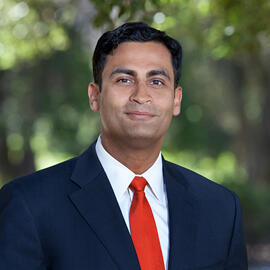
Dr. Gary Mukai is the director of the Stanford Program on International and Cross-Cultural Education (SPICE) at Stanford University. Prior to joining SPICE in 1988, he was a teacher in Gunma Prefecture, Japan, and in California public schools. Gary’s academic interests include curriculum and instruction, educational equity, and teacher professional development. He is a graduate of U.C. Berkeley and Stanford University. His curricular writings for U.S. schools include extensive work on Japan and the Japanese-American experience. In 2003, under his leadership, SPICE established the Reischauer Scholars Program, a distance-learning course on Japan and U.S.–Japan relations for high school students in the United States, and in 2015, SPICE launched Stanford e-Japan, a distance-learning course on the United States and U.S.–Japan relations for high school students in Japan. In 2007, he was the recipient of the Foreign Minister’s Commendation from the Japanese government for the promotion of mutual understanding between Japan and the United States, especially in the field of education. In 2015, he was selected as the recipient of the Stanford Alumni Award by the Asian American Activities Center Advisory Board. He has been a long-time interviewer of the Japan Exchange and Teaching (JET) Program and member of the JET Alumni Association of Northern California board. 

Kenji E. Kushida is a Japan Program Research Scholar at the Walter H. Shorenstein Asia-Pacific Research Center and an affiliated researcher at the Berkeley Roundtable on the International Economy. Kushida’s research interests are in the fields of comparative politics, political economy, and information technology. He has four streams of academic research and publication: political economy issues surrounding information technology such as Cloud Computing; institutional and governance structures of Japan’s Fukushima nuclear disaster; political strategies of foreign multinational corporations in Japan; and Japan’s political economic transformation since the 1990s. Kushida has written two general audience books in Japanese, entitled Biculturalism and the Japanese: Beyond English Linguistic Capabilities (Chuko Shinsho, 2006) and International Schools, an Introduction (Fusosha, 2008). Kushida holds a PhD in political science from the University of California, Berkeley. His received his MA in East Asian studies and BAs in economics and East Asian studies, all from Stanford University.

Agenda

4:15pm: Doors open
4:30pm-5:30pm: Talk and Discussion
5:30pm-6:00pm: Networking

RSVP Required

 
For more information about the Silicon Valley-New Japan Project please visit: http://www.stanford-svnj.org/


Gary Mukai, Director of the Stanford Program on International and Cross-Cultural Education (SPICE)
Kenji Kushida, Research Scholar, Shorenstein APARC Japan Program
Seminars
-

The format of this presentation is each of the four speakers will have approximately 15 minutes to present their research.  This will be followed by a short period of 5-10 minutes for any questions or comments from the audience. 


In this session of the Corporate Affiliates Research Presentations, the following will be presented:


Hareendra Bhaskaran, Reliance Life Sciences, "Big Data Analytics in Pharmaceutical Marketing"

Image
Big Data has changed the way we manage, analyze and leverage data in any industry. One of the most promising areas where Big Data can be applied to make a change is healthcare. In his research, Bhaskaran investigates the possibility of using big data in marketing of pharmaceutical companies. After analyzing how healthcare analytics have the potential to reduce cost of treatment, predict outbreaks of epidemics, avoid preventable diseases and improve quality of life in general, he explains how adoption of Big Data and analytic capabilities can meet the need of firms in the pharmaceutical and life sciences industries.


Takayuki Hayakawa, Japan Patent Office, "Patent System and Genetic Testing"

Image
Genetic testing technology has been developed in recent years along with the progress of biotechnology. The number of DNA patents has been increasing, and it is said that more than 20% of human genes have already been patented. Many academic researchers are opposed to DNA patents and concerned that some companies monopolize the human genes. Under such circumstances, the Supreme Court of the United States judged that the DNA patent is invalid because of patent ineligibility (Mayo Collaborative Services v. Prometheus Laboratories, Inc.). This case gave the impact to the patent practitioners and the biotechnology industry. In his research, Hayakawa investigated this case, the situation of the DNA patent prior to this case, and the influence this case has had on the patent.


Aki Takahashi, Nissoken, "How Design Thinking is Connected to Culture and How Design Thinking Can Become More Widespread in Japan"

Image
Global businesses are rapidly changing and establishing a new dynamic in developing new innovations.  As a result, Silicon Valley companies have been successful using the design thinking process from Stanford University.  Japanese universities and companies have started to focus on this design thinking method in an effort to understand how to utilize it to create successful innovations and results.  However, there are cultural differences between Japan and Silicon Valley where design thinking needs to be further evaluated.

Takahashi’s research focuses on culture and location in adjusting to becoming more innovative.  How can design thinking be effective in Japan? How do we overcome the cultural gap in design thinking? How do we change culture in business?  In her research, Takahashi addresses these questions and makes suggestions on how design thinking can be more widespread and influential for the success of future businesses in Japan.


Kensaku Yamada, Mitsubishi Electric, "New Technology about the Internet of Things"

Image
The Internet of Things (IoT) is the network of physical devices such as smartphone, home electronics, medical instruments, industrial robots and sensors. IoT can improve our life or our work efficiently by collecting and analyzing the data from physical devices. Although the annual growth rate of PC and server shipments, which has been representative of IT business until now, is expected to be negative, devices connected to the network by IoT are expected to have an annual growth rate of 20% or more in the future. Most IT vendors are interested in IoT for expanding their business. In his research, Yamada focuses on the industrial IoT that is introduced by manufacturers. He investigates how manufacturers use IoT and what effect they get by using IoT.


0
Corporate Affiliate Visiting Fellow, 2016-17
hareendra_bhaskaran.jpg

Hareendra Bhaskaran is a corporate affiliate visiting fellow at the Walter H. Shorenstein Asia-Pacific Research Center (Shorenstein APARC) for 2016-17.  Bhaskaran has 20 years of experience in handling sales and marketing of pharmaceutical products.  Currently, he is head of India Business at Reliance Life Sciences and is responsible for revenue targets, financial collectibles, recruitment & training of field force, identification & launch of new products, and planning & forecasting revenue for future years.  Bhaskaran received his degree in life sciences from the University of Madras in 1995.

Date Label
Reliance Life Sciences
0
Corporate Affiliate Visiting Fellow, 2016-17
takayuki_hayakawa.jpg MS

Takayuki Hayakawa is a corporate affiliate visiting fellow at the Walter H. Shorenstein Asia-Pacific Research Center (Shorenstein APARC) for 2016-17. Prior to joining Shorenstein APARC, he served as a Patent Examiner at the Japan Patent Office, where he was in charge of optical devices and medical devices.

Date Label
Japan Patent Office
0
Corporate Affiliate Visiting Fellow, 2015-17
aki_takahashi.jpg MBA

Aki Takahashi is a corporate affiliate visiting fellow at the Walter H. Shorenstein Asia-Pacific Research Center (Shorenstein APARC) for 2015-17.  Takahashi is the CEO of the Musashisakai Driving School in Tokyo as well as an assistant lecturerer with Nissoken.  For over 15 years, she has provided an operational excellence in the Japanese service industry from her experience and research.  While at Shorenstein APARC, Takahashi will research the ways Design Thinking is connected to culture and how Design Thinking can become more widespread in Japan.

Date Label
Nissoken
0
Corporate Affiliate Visiting Fellow, 2016-17
kensaku_yamada.jpg MS

Kensaku Yamada is a corporate affiliate visiting fellow at the Walter H. Shorenstein Asia-Pacific Research Center (Shorenstein APARC) for 2016-17.  He started his career as a software engineer for Mitsubishi Electric Corporation, Tokyo, Japan.  Yamada has been engaged in software product development for operating systems and database tools.  Recently, he designed a customer's system as a system integrator as well as provided many other companies with hardware products like PCs, servers, and network switches.  Yamada graduated from Niigata University with an M.S. in information engineering.


Date Label
Mitsubishi Electric
Seminars
News Type
News
Date
Paragraphs

The Korea Program Prize for Writing in Korean Studies recognizes and rewards outstanding examples of writing in an essay, term paper, or thesis produced during the current academic year in any discipline within the area of Korean studies, broadly defined. This competition is open to both undergraduate and graduate students. The prize will be awarded at a special ceremony in the fall, and the first place winner will receive a certificate and $1,000; Honorable mention winner(s) will receive a certificate.

Application Deadline: May 31, 2019
Eligible Students: All currently-enrolled Stanford students
Application Instructions: Submit the following items by email to John Groschwitz, CEAS Associate Director.

  • Current CV
  • One Korean studies paper/essay (minimum 20 pages double-spaced, Times 12pt., 1″ margins)
  • One recommendation letter from a Stanford professor (emailed by the professor directly to John Groschwitz)
 
Previous Prize Winners
 
2014: Benjamin Lokshin, "Speech Levels in DPRK Society” (pp 124-135)
2012: Jane Kim, "Globalization of Korean Food”  (pp 91-99)
Hero Image
Encina Headline
All News button
1
-

Professor Tetsuji Okazaki will present his research which examines the difference between the regime transition phase and consolidation phase, dividing government elites into the pre-Meiji-Restoration-born group and the post-Meiji-Restoration-born group. Using the newly constructed government elites’ data after the Meiji Restoration in Japan, his research shows that reformers’ strategies to recruit government elites and establish a new intra-elite hierarchy changed from the regime transition phase to its consolidation phase. Initially, in order to contend against the incumbent elites, reformers recruited talented activists from the non-elite strata and assigned them to higher-level positions based on their abilities. On achieving a transfer of power, however, reformers’ primary concern shifted to alleviating the dissatisfaction of the masses and the former elites. Therefore, while the barrier preventing access to the elite group keep lowering, which opened the way for non-elites to gain elite status, former elites are reintegrated into the elite group and the intra-elite hierarchy again comes to reflect the social stratum of the former regime.

Image
okazaki
Tetsuji Okazaki is Professor of Economics at the University of Tokyo. He has been the President of International Economic History Association (IEHA) since 2015. His recent publications include “The expanding empire and spatial distribution of economic activities: The case of Japan’s colonization of Korea during the pre-war period” (with Kentaro Nakajima) forthcoming in Economic History Review, 2017, “Measuring the extent and implications of corporate political connections in prewar Japan” (with Michiru Sawada) forthcoming in Explorations in Economic History, 2017, and “Acquisitions, productivity, and profitability: Evidence from the Japanese cotton spinning industry” (with Serguey, Braguinsky, Atsushi Ohyama,and Chad Syverson) American Economic Review, 105(7): 2086-2119, 2015

Tetsuji Okazaki Professor of Economics, University of Tokyo
Seminars
-

Expected dramatic shifts of foreign policy by leading democracies, including the U.S. and U.K., would shake a future of liberal international order, which has underpinned the stability even after the end of the Cold War. Since Mr. Donald Trump was elected as the 45th President of the U.S., abovementioned discourse is heard everywhere in Europe and Asia today.

It is not clear, if American leadership and military presence would in fact retreat, how American allies behave and whether they can work together to sustain the order. Among others, Japan has been the exceptionally strong believer of such postwar American leadership. It is doubtful that all American allies and friends share same views, having their own historical context with the U.S. and own ideas on order and principles. Hence, naturally they shall differ in losing the confidence on the durability of American leadership.

A new order will be shaped by many factors, but American allies’ perspectives should not be overlooked. Hegemon’s own reluctance for ruling is surely significant. So is other great power’s revisionism, making use of such strategic opportunities. However, American allies has the potential to shape the fate of the order: if they succeed in acting collectively, it shall underpin the global governance for a while, and ensue the order transformation process in rather slow and peaceful pace. 

Image
unknown

If they fail, it shall not only accelerate the U.S. retrenchment, but invite an emergence of divisive and competitive order. Sahashi shares the findings from the international study project which he leads, and argues the difficulty for US allies to unite themselves and the potential order transformation in the long term.

Ryo Sahashi is Associate Professor of International Politics and Director, Faculty of Law, Kanagawa University, Yokohama, and is leading the newly-launched international joint study “Worldviews on the United States.” From 2014-2015, he served as Visiting Associate Professor, Shorenstein APARC, Stanford University.


Ryo Sahashi Associate Professor, Kanagawa University
Seminars
-
Co-sponsored by the Center on Democracy, Development, and the Rule of Law and the Southeast Asia Program
 
The Philippines is typically characterized as a weak, even patrimonial, state in which powerful oligarchs and political families dominate politics and policymaking.  By implication, the elite should be able to easily suppress reform and the state should be unwilling or incapable of carrying out reforms.   Yet some efforts to achieve socioeconomic and governance reform have succeeded.  How and why is this the case?  And what does this suggest about the changing nature of the Philippine state?

This presentation will examine the dynamics and outcomes of three extended efforts at social, economic and governance reform in the Philippines:  1) agrarian reform; 2) liberalization of the telecommunications sector and 3) fiscal and budget reforms.

Theory and practice will be bridged in an examination of interlinked factors including the autonomy and capacity of the state, the limits on reform imposed by elite-dominated democracy, and the conditions and strategies that have enabled some reforms to succeed.
Particular questions to be addressed will include:
·       What are the political and institutional barriers to reform in the Philippines?  How have these changed over time?
·       How have these barriers been overcome in the cases of “successful” reform?  What does “successful” mean?  
·       How have attempts at reform strengthened or weakened the state?
·       Looking forward, will the typically partial or incremental character of reform result in transformational change, or deflect it?

David Timberman is a political analyst and development practitioner with 30 years of experience analyzing and addressing political, governance and conflict-related challenges, principally in Southeast and South Asia.  As a Visiting Scholar at Stanford/APARC he is working on a book on the contemporary Philippine political economy.  During 2015-2016 he was a Visiting Professor of Political Science at De La Salle University in Manila. He has lived and worked in the Philippines, Indonesia and Singapore, including experiencing first-hand the democratic transitions in the Philippines (1986-1988) and Indonesia (1998-2001). He has written extensively on political and governance issues in the Philippines and has edited or co-edited multi-author volumes on the Philippines, Cambodia, and economic policy reform in Southeast Asia.

David G. Timberman 2016-2017 Lee Kong Chian NUS-Stanford Fellow on Contemporary Southeast Asia
Seminars
-

Image
dsc 0004 bai jing sayuri
Dr. Sayuri SHIRAI is currently a professor of Keio University and is also a visiting scholar at the Asian Development Bank Institute. She was a Member of the Policy Board of the Bank of Japan (BOJ) from April 2011 to March 2016, who is responsible for making policy decisions. She also taught at Sciences Po in Paris in 2007–2008 and was an economist at the International Monetary Fund (IMF) from 1993 to 1998.

She is the author of numerous books on a variety of subjects including the People’s Republic of China’s exchange rate system, Japan’s macroeconomic policy, IMF policy, and the European debt crisis. Her most recent book (translated title: Unwinding Super-Easy Monetary Policy), published in August 2016, is about the monetary policies of the BOJ, the European Central Bank, and the Federal Reserve System. She regularly appears on CNBC, Bloomberg, Reuters, BBC, and features in many Japanese TV programs and newspapers, commenting on the Japanese economy and monetary policy. URL: http://www.sayurishirai.jp

Her most recent book in English is Mission Incomplete: Reflating Japan’s Economy published by the Asian Development Bank Institute in February 2017. It is a complete analysis of BOJ’s unconventional monetary easing from the late 1990s to the present. Free Download is available at https://www.adb.org/publications/mission-incomplete-reflating-japan-economy.

Sayuri Shirai Professor at Keio University and Visiting Scholar at Asian Development Bank Institute
Seminars
-

Speakers:  

Stefan Ma & Zheng Li Yau (Ministry of Health, Singapore)

Chao Quan (University of Hong Kong)

Wankyo Chung (Seoul National University)

Karen Eggleston & Katherine Hastings (Stanford University)

Hai Fang (Peking University)

Min Yu & Haibin Wu (Zhejiang CDC)

Jianqun Dong (China CDC)

As the demographic and epidemiological transitions continue to unfold into the second and third decades of the 21st century, health systems face the challenge of how best to promote healthy ageing, including reducing the complications associated with complex chronic diseases like diabetes. About 80% of people with diabetes live in low-to-middle income countries, with the largest increase in absolute numbers in East and South Asia.

This colloquium showcases research from an international collaboration studying “value for money” in controlling chronic disease, focusing on the case of diabetes. Presenters from ministries of health and distinguished universities throughout East Asia will provide brief summaries of the policy challenges their health systems face and how we are together assessing net value of diabetes management in the diverse institutional contexts of Beijing, Zhejiang, Hong Kong, Taiwan, Singapore, Japan, Korea, the US, and the Netherlands. 

RSVP required. To register, please email Lisa Lee (llee888@stanford.edu) or call Sanjiu Zhang (86-10-62744163). 

International Comparison of Net Value in Diabetes Management
Download pdf

Stanford Center at Peking University

Lee Jung Sen Building, Peking University

Beijing, China


Panel Discussions
-

The Asia Health Policy Program at Stanford’s Shorenstein Asia-Pacific Research Center (APARC), in collaboration with scholars from Stanford Health Policy's Center on Demography and Economics of Health and Aging, the Stanford Institute for Economic Policy Research, and the Next World Program, is holding its third annual conference on the economics of ageing. The conference is one of several activities planned in 2017 to mark the 10th anniversary of the Asia Health Policy Program.

The triumph of longevity can pose a challenge to the fiscal integrity of public and private pension systems and other social support programs disproportionately used by older adults. High-income countries offer lessons – frequently cautionary tales – for low- and middle-income countries about how to design social protection programs to be sustainable in the face of population ageing. Technological change and income inequality interact with population ageing to threaten the sustainability and perceived fairness of conventional financing for many social programs. Promoting longer working lives and savings for retirement are obvious policy priorities; but in many cases the fiscal challenges are even more acute for other social programs, such as insurance systems for medical care, long-term care, and disability. Reform of entitlement programs is also often politically difficult, further highlighting how important it is for developing countries putting in place comprehensive social security systems to take account of the macroeconomic implications of population ageing.

The objective of the conference is to explore the economics of ageing from the perspective of sustainable financing for longer lives. The conference will bring together researchers to present recent empirical and theoretical research on a range of topics in this area.

The first full day of the conference – April 24 – is open to the public. The lunchtime keynote speech on the second day of the conference – April 25 – is also open to the public; the remaining portions of that day are reserved for panelists only to encourage candid conversation in a closed-door setting.

Conference Agenda

April 24

7:45                             Breakfast

8:25                             Welcome         Gi-Wook Shin, Stanford University

                                                           Karen Eggleston, Stanford University


Session I: Long-term Care and Intergenerational Support

Chair: Gopi Shah Goda, Stanford University

8:30 – 9:30                   “Housing Assets and Access to Long Term Care Services and Supports: Evidence from the Housing Bubble Burst”

                                                            Richard Frank, Harvard University

                                                            Discussant: Tom Davidoff, University of British Columbia

9:30 – 10:30               “The Demand for Long-Term Care Insurance in Canada”

                                                            Pierre-Carl Michaud, HEC Montréal and RAND

                                                            Discussant: Chris Tonetti, Stanford Graduate School of Business

10:30 – 10:45              Coffee break

10:45 – 11:45             “The Price of the East Asian Miracle: Generational Cultural Shift and Elderly Suicide”

                                                            Hyejin Ku, University College London

                                                            Discussant: Hongbin Li, Tsinghua University and Stanford University

Session II:

Co-Chairs: John Shoven and Karen Eggleston, Stanford University

11:45 – 13:45              Lunch

Keynote panel: "The policy challenges of financing longevity: Perspectives from Japan and the US"

Hirotaka Unami, Senior Director for Policy Planning and Research, Minister's Secretariat, Ministry of Finance, Japan

Olivia S. Mitchell, International Foundation of Employee Benefit Plans Professor, as well as Professor of Insurance/Risk Management and Business Economics/Policy, Wharton School, University of Pennsylvania

Session III: Financial Planning and Health

Chair: David Canning, Harvard University

14:00 – 15:00              “Cognitive Decline and Household Financial Outcomes at Older Ages”

                                                            Marco Angrisani, University of Southern California

                                                            Discussant: Kathleen McGarry, UCLA

15:00 – 15:15              Break

15:15 – 16:15             “From Compression to Expansion of Morbidity: Upcoming Challenges for Health Care and Long Term Care in China”

                                                            Bei Lu, University of New South Wales

                        Discussant: Wang Feng, Fudan University and UC Irvine

16:40                           Closing


Apri1 25

11:45 – 13:00              Lunch

                                    Policy challenges of financing longevity: Perspectives from Singapore

Kelvin Bryan Tan, Ministry of Health, Singapore


Conferences
-

Reducing long working hours has been a high priority in the agenda to improve work conditions in Japan.  Towards this aim, the government has introduced legislation and policy measures, and corporations have modified their human resource policies to help employees strike better work-life balance.  Yet, working hours in Japan have remained virtually unchanged since the 1990s.  In this talk, I argue that the true causes of long working hours lie not in the “observable” barriers such as compensation schemes, public policy and law, but rather are embedded in “unobservable” or “unmeasurable” attributes such as social norms and work conventions.  Understanding this problem better requires an approach that accounts for both economic principles (which focus on monetary rewards and incentives) and sociological perspectives which pay closer attention to the social-institutional context.  I argue that long working hours in Japan stem from the institutional complementarities of the Japanese employment system and the cultural particularities underlying it.  I discuss the role of the input-driven society, work conventions that rely on signaling, internal labor market structure, group consciousness and hierarchy, ambiguous job functions, and the traditional gender division of labor.  I close by proposing measures to reduce working hours that follow from my analysis.


Image
b 145sq
Hiroshi Ono (Ph.D. Sociology, University of Chicago) is Professor of Human Resource Management at the Graduate School of International Corporate Strategy, Hitotsubashi University and Affiliated Professor of Sociology at Texas A&M University.  His research interests include economic sociology, work and labor markets, and happiness.  He has extensive international experience, having held professional and academic positions in the U.S., Japan and Sweden.  His work has won a number of awards such as the Best Paper Award from the Labor and Employment Relations Association, and Rosabeth Moss Kanter Top 20 Paper Award for Excellence in Work-Family Research.  He is the author of the book, Redistributing Happiness:  How Social Policies Shape Life Satisfaction (with Kristen Schultz Lee, 2016).  His papers have appeared in the American Sociological Review, Journal of Japanese and International Economies, Social Forces, Social Science Quarterly and Social Science Research, among others.

Hiroshi Ono Professor of Human Resource Management, Graduate School of International Corporate Strategy, Hitotsubashi University
Seminars
Subscribe to Asia-Pacific