“For seven decades our thinking about Indo-Asia-Pacific security and international cooperation issues has been underpinned by the narratives of a U.S.-led international order centered around the rule of law, economic openness, and multilateralism. Now this post-WWII order is being challenged.”
With that summation, APARC Director Gi-Wook Shin opened the symposium The Past, Present, and Future International Order in East Asia. Sponsored and organized by the Japan Institute for International Affairs (JIIA) and APARC’s Japan Program and U.S.-Asia Security Initiative , the day-long event gathered 20 experts across multiple fields, including international relations, political and diplomatic history in Asia, American foreign policy and history, Japan-PRC relations and politics, security interests in the Indo-Pacific region, and U.S.-Asia regional engagement.

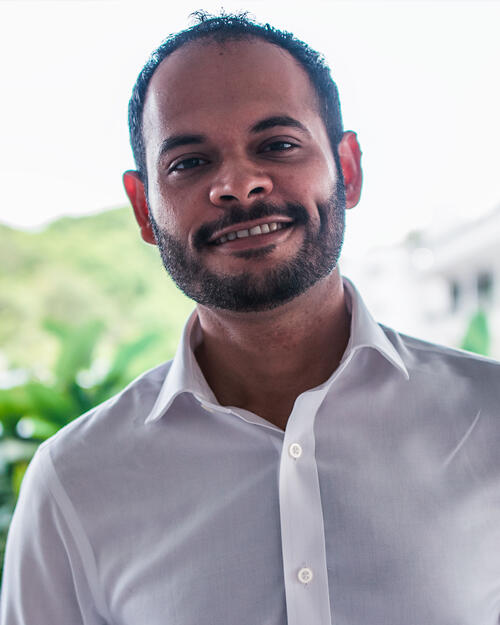
Japan Program Director, Takeo Hoshi (above, one of the Symposium leaders, launched the panel discussions by first expressing his gratitude to the participants and sponsors on behalf of the organizers and then by encouraging the audience to engage in the discussions following each panel.
At the Symposium, the participants explored the circumstances that shaped the establishment of the security architecture in East Asia; considered the forces that propelled its evolution; and debated possible futures for East Asia and the greater Indo-Pacific region.
A Wilsonian Dream

“Is the international order crumbling? Or, are the challenges it is undergoing a tentative deviation that can be fixed?” - Ambassador Kenichiro Sasae , JIIA President (pictured above).
The symposium’s first panel reviewed the evolution of diplomatic and security arrangements in East Asia, starting with the Versailles-Washington System, the international settlement inaugurated after World War I through the treaties signed in Paris in 1919-20 along with those signed in Washington in 1921-2. After World War II, the “San Francisco System,” the process of alliance formation and security cooperation that was initiated at the San Francisco Conference in September 1951, became the foundation of the U.S.-led regional order through the remainder of the twentieth century and continued to dominate international relations through the first two decades of the twenty-first.
Stanford historian David Kennedy explained that both systems are the products of Wilsonianism—a liberal internationalist ideology that has anchored the tradition of American diplomacy over the past century. The spirit of “Wilsonianism” is reflected in President Woodrow Wilson’s proclamation that “the world must be made safe for democracy,” a statement that he delivered in remarks presented in 1917 as he appeared before a joint session of Congress to ask for a declaration of war against Germany. The global cataclysm of World War II, said Kennedy, afforded the United States the capacity to shape the political will that would make the Wilsonian dream of an international order possible. This pivotal point in American history is referred to as a “Grotian moment” (named after Dutch jurist Hugo Grotius), a time when “new rules and doctrines emerged in rapid succession and with greater acceptance than previously possible.”
China figured prominently in both the Versailles-Washington System and the San Francisco System. Shin Kawashima of the University of Tokyo spoke about the Nine-Power Treaty, part of the 1922 Washington Conference, that affirmed China’s sovereignty, independence, and territorial integrity. Hsiao-ting Lin of the Hoover Institution stated that the treaty marked an internationalization of the U.S. open door policy regarding China, but that many in China viewed it and the broader framework of the Versailles-Washington System as Western imperialism.
In the aftermath of World War II, and particularly following the establishment of the People’s Republic of China and the outbreak of the Korean War, the United States became increasingly involved in East Asia. The signing of the peace treaty with Japan at the San Francisco Conference marked the beginning of the U.S. network of bilateral alliances, agreements, partnerships, and commitments in the region. The San Francisco System (also known as “hub and spokes” architecture) allowed the United States to develop exclusive relationships with the Republic of Korea, Japan, Taiwan (the Republic of China), and other Asian nations in the face of Communist forces. As Dr. Lin noted in his remarks, the U.S. regional security agreements and security cooperation arrangements also enabled the Republic of China (Taiwan) to gain independence and international recognition.
The Return of the Quad
In his keynote address, Shorenstein APARC Fellow Michael Armacost , who previously served as U.S. ambassador to Japan and the Philippines, spoke of the promise that the possible resurgence of the “Quad” might bring to increasing the stability of the Indo-Pacific region. The “Quad” is an informal grouping of maritime democracies that includes Australia, India, Japan, and the United States. The four countries collectively provided relief following the Indian Ocean tsunami in 2004 and met for a summit in 2007 only to dissolve a year later, due to Australia’s abrupt departure after the PRC expressed displeasure about the partnership.
But much has changed in the ensuing decade, Armacost observed, with the argument in favor of the Quad now more compelling than ever. Armacost said that in bringing together the four democracies with their naval capabilities and convergence around norms of freedom of navigation, maritime law, international security, and nuclear cooperation, there could be a path forward towards more comprehensive cooperation in the Indo-Pacific region at a time of increased geopolitical uncertainty and as a counterpoint to China’s aggressive expansion throughout this region. Armacost also wondered, however, if Japan was in fact ready to take a greater leadership role, and who could sustain leadership beyond Prime Minister Abe’s time in office.

Ken Jimbo, Keio University
Alliances and Anchor Lines
The afternoon sessions shifted focus to current Japanese, American, and Chinese interests and security concerns. APARC’s Oksenberg-Rohlen Fellow David M. Lampton discussed the intensifying U.S.-China rivalry, noting that the deterioration of the security relationship between the two countries is metastasizing into the economic, educational, and diplomatic spheres. Alliance management is bound to become increasingly important to the United States, he concluded, should the tension with the PRC intensifies further.
Tetsuo Kotani of JIIA described some ambivialence in Japan regarding the recently revised U.S. policies towards China. On the one hand, Japan welcomes America’s tougher approach to the People’s Republic of China; on the other hand, it is not pleased by the trade war between the two countries. Even while Japan recognizes that China is challenging the established international order, argued Kotani, it was still necessary for Japan to maintain engagement with its neighbor. He expressed his hope that the United States and Japan could reconcile their expectations of the PRC in East Asia and collaborate with other nations to strengthen regional stability.
James Schoff of the Carnegie Endowment for International Peace noted that United States had ample opportunity to address some of the more negative elements related to China’s rise, but that it chose instead to prioritize other issues and benefit from China’s economic growth. The United States ought to strengthen its alliances with Asian nations, said Schoff. Comparing alliance management to an anchor and chain, the U.S. national policies, he claimed, should be crafted and deployed in a manner that best fits the issue – i.e., an anchor and chain of different lengths for different areas. For instance, longer alliance anchor lines should be extended in the spheres of economy and diplomacy, while shorter lines are set in the areas of security and the intersection of economy, new technologies, and warfare.

Tom Christensen, Columbia University
Possible Futures
The Symposium concluded with an examination of alternative East Asia and Indo-Pacific security systems. Ryo Sahashi of the University of Tokyo presented four models that could replace the current arrangement: an enhancement of the San Francisco System, with U.S. continued commitment to the region, but with Japanese and Australian increased security roles; a “group of hedging nations,” where the U.S.-based architecture was not dissolved but lesser powers operated with greater autonomy; an “emerging Japan-China rivalry,” where, following U.S. retrenchment, Japan was to defend its vital interests through defense; and “Sinicization and resistance,” where a U.S. retrenchment coupled with Japan’s backing down resulted in China’s leadership prevailing in its illiberal order-building.
The panelists agreed that China’s regional economic dominance for the foreseeable future was undeniable. However, they noted that the implications of its continued influence were up for debate. Ambassador Sasae conveyed his hope that the region might yet see positive outcomes, while other panelists expressed their concern that the present trend of turbulence and threats to multilateralism would likely continue.
U.S.A.S.I. Director Karl Eikenberry provided closing remarks, taking time not only to underscore the significance of the current situation in Indo-Pacific security, but to reflect as well on the value of events like the Symposium to increase understanding of the region's possible futures.
"Whether or not we’re at the Grotian moment [i.e., a point of transformatio in wrold relations]," Ambassador Eikenbery said, "we do know there’s been some very significant changes over the last several decades—especially regarding the distribution of power in the Indo-Pacific and throughout the world. We are seeing a steady erosion of values and norms that we took for granted…”
“It is not clear if the San Francisco System will endure. I think it’s incumbent upon us to bring people like [the Symposium panelists] together…and consider possible alternatives.”
A complete symposium report will be made available in the coming months.



 Condoleezza Rice (right) listens on as Jean Oi addresses the audience