In the Classroom
-
CP_Nov2_Bill Kirby

America’s preeminence in higher education is relatively new, and there is no reason to assume that U.S. schools will continue to lead the world a century from now. Will China challenge its position in the twenty-first? The modern university was born in Germany. In the twentieth century, the United States leapfrogged Germany to become the global leader in higher education. Today, American institutions dominate nearly every major ranking of global universities. However, America’s supremacy in higher education is under great stress, particularly at its public universities. At the same time Chinese universities are on the ascent. Thirty years ago, Chinese institutions were reopening after the catastrophe of the Cultural Revolution; today they are some of the most innovative educational centers in the world. Will China threaten American primacy?

Please join us for the China Program’s Author Series.

The book is available for purchase here

Speaker

Image
William Kirby.jpg
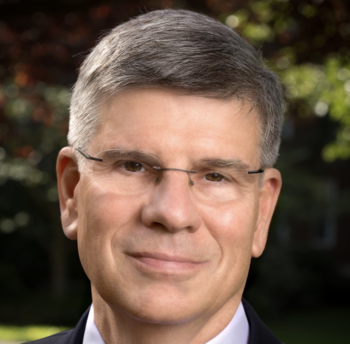
William C. Kirby is T. M. Chang Professor of China Studies at Harvard University and Spangler Family Professor of Business Administration at Harvard Business School. He is a University Distinguished Service Professor. Professor Kirby serves as Chairman of the Harvard China Fund and Faculty Chair of the Harvard Center Shanghai. At Harvard he has served as Director of the Fairbank Center for Chinese Studies, Chairman of the History Department, and Dean of the Faculty of Arts and Sciences. His current projects include case studies of trend-setting Chinese businesses and a comparative study of higher education in China, Europe, and the United States. His recent books include Can China Lead? (Harvard Business Review Press) and China and Europe on the New Silk Road (Oxford University Press). His latest book, Empires of Ideas: Creating Modern Universities from Germany to America to China (Harvard University Press), is now available.

Discussant

Image
Andrew G. Walder
Andrew G. Walder is the Denise O'Leary and Kent Thiry Professor at Stanford University, where he is also a senior fellow in the Freeman Spogli Institute for International Studies. Previously, he served as chair of the Department of Sociology, and as director of the Walter H. Shorenstein Asia-Pacific Research Center and of the Division of International, Comparative and Area Studies in the School of Humanities and Sciences.

Jean C. Oi

In-Person at Philippines Room, Encina Hall 3rd Floor

William C. Kirby
Seminars
Paragraphs
This study describes the current teacher training system in China, including the prevalence of teacher training, the types of training, training content and the ways that training is delivered. The paper presents subjective evaluations of training for principals and teachers using four diverse datasets. The results show that the National Teacher Training Project (NTTP) deviates from offi cial policy objectives in several respects. The subjects of training programs and training content are not fully compliant with policy objectives. In addition, training opportunities are offered to a smaller proportion of rural teachers than urban teachers. It is found that the proportion of teachers and principals satisfied with the NTTP is lower than that for other types of training. Therefore, measures should be taken to increase training opportunities for rural teachers and to ensure the quality of training for all teachers.his study describes the current teacher training system in China, including the
prevalence of teacher training, the types of training, training content and the ways that
training is delivered. The paper presents subjective evaluations of training for principals
and teachers using four diverse datasets. The results show that the National Teacher
Training Project (NTTP) deviates from offi cial policy objectives in several respects. The
subjects of training programs and training content are not fully compliant with policy
objectives. In addition, training opportunities are offered to a smaller proportion of rural
teachers than urban teachers. It is found that the proportion of teachers and principals
satisfied with the NTTP is lower than that for other types of training. Therefore,
measures should be taken to increase training opportunities for rural teachers and to
ensure the quality of training for all teachers
All Publications button
1
Publication Type
Journal Articles
Publication Date
Journal Publisher
China & World Economy
Authors
Subscribe to In the Classroom