Military
News Type
Commentary
Date
Paragraphs

Writing recently for the Center for Strategic International Studies (CSIS), Stanford scholar Donald Emmerson analyzed China’s stance on the South China Sea in the context of remarks given by Chinese State Councilor Yang Jiechi at a bilateral dialogue in Washington, D.C. on June 24.

In the past year, China has unsettled many countries with its island-building campaign in the disputed South China Sea, an area that has multiple claimants and whose waters are heavily used for international trade and commerce. Johnson South Reef, for example, is being enlarged and turned into what could be a military base. At the same time, China’s leaders continue to disregard rising demands to clarify their intentions in the South China Sea.

In the CSIS article, Emmerson offered an “edited" version of Yang’s statement to provide one reading of its “useful ambiguity” for China.

Emmerson said China’s participation is inevitably required to resolve the maritime disputes. But his reading of Yang’s remarks is not encouraging in that respect, as China behaves more and more as if it were part of the problem not the solution.

The full article is accessible on the CSIS blog, http://cogitasia.com/?s=emmerson.

Hero Image
19120651895 c6f855775c o
U.S. Secretary of State John Kerry listens as Chinese State Councilor Yang Jiechi delivers remarks at the Strategic Track Oceans Meeting in Washington, D.C., on June 24, 2015.
Flickr/U.S. Department of State
All News button
1
News Type
News
Date
Paragraphs

Stanford University’s Walter H. Shorenstein Asia-Pacific Research Center (APARC) is launching a U.S.-Asia Security Initiative spearheaded by a former top American diplomat to deepen dialogue on contemporary Asia-Pacific security issues and to further bridge American and Asian academics, government officials and industry leaders.

A new and uncertain multipolar system is emerging in Asia. The United States is and will remain a global power, but it is evident the post-Cold War international order is increasingly under strain. There is a pressing need for research about how developments in the Asia-Pacific region impact U.S. interests, and what the optimal strategies are to respond. Led by Karl Eikenberry, who served as U.S. ambassador to Afghanistan from 2009 to 2011, the initiative will look beyond simplistic notions of nations engaging harmoniously or competing against each other and explore a range of policy options.

Combining expertise from across Stanford University, the initiative will gather faculty and researchers from the Freeman Spogli Institute for International Studies (FSI), and take place under the auspices of Shorenstein APARC, a center focused on interdisciplinary research on contemporary issues of international cooperation, governance and security in the Asia-Pacific region.

Eikenberry, an Oksenberg-Rohlen Distinguished Fellow at Shorenstein APARC, retired from the U.S. Army as a lieutenant general after 35 years of service before taking the role as ambassador. At Stanford, he has returned to an early and longstanding interest in Asia, contributing to an urgent discussion about how the United States should respond regionally and globally to an increasingly strong China. The initiative is founded on the premise that there is a role for an institution that not only fosters groundbreaking research, but also serves to convene academic and governmental expertise from across the Asia-Pacific region in a dialogue aiming to inform policy and strategy.

“As China rises and Japan seeks a greater defense role in Asia, a number of questions are raised over the United States’ role in the region. This creates a great impetus for stakeholders to gather and develop an understanding of today’s perplexing security issues,” Eikenberry said.

“It’s an honor to lead this Stanford initiative and make possible opportunities for students, scholars, peers and leaders across the world.”

Before arriving at Stanford, Eikenberry’s Asia-related postings included assistant army, and later, defense attaché at the U.S. Embassy Beijing, operational assignments in the Republic of Korea and Hawaii, Director for Strategic Plans and Policy at U.S. Pacific Command, Senior Country Director for China at the Office of the Secretary of Defense, and two senior command tours in Afghanistan. He is a graduate of the U.S. Military Academy, holds master’s degrees from Harvard University and Stanford University, and has an advanced degree in Chinese history from Nanjing University.

The three-year initiative will build synergies with existing activities at Stanford, drawing scholars, government officials and industry leaders to engage at conferences and public seminars on important U.S.-Asia security themes. Understanding that inquiry is enlivened through interdisciplinary dialogue, participants will share best practices across multiple fields including diplomacy, military strategy and environmental risk.

“I can’t think of a better person to drive this initiative – Karl has a profound understanding of the economic, diplomatic and military complexities in the region. I have every confidence that it will develop into a robust, established project under his leadership,” said Gi-Wook Shin, director of Shorenstein APARC.

Launching July 1, 2015, the initiative aims to bolster local, national and global networks through several foundational components, including a core working group of experts from Stanford and peer institutions to provide new perspectives on U.S. policies in Asia; educational opportunities for Stanford students; and public programs that will bring intellectual and strategic leaders to Stanford to enrich the conversation on Asia-Pacific security.

The initiative seeks to operate as a focal point for academic scholarship on the west coast of the United States and offer practical steps that stakeholders can take to strengthen the security architecture and U.S. alliance commitments in the region. Outcomes from the initiative’s activities will include publications and policy reports, many of which will be offered open access online.

“As the Asia-Pacific region continues to rise, we see new threats but also greater opportunity to work together,” said Michael McFaul, director of FSI. “Stanford and FSI excel in offering practical solutions to policy challenges and can play a role in identifying strategies aimed at maintaining peace and stability in the region.”


Initiative inquires: Charlotte Lee, Shorenstein APARC, cplee@stanford.edu, (650) 725-6445

Media inquires: Lisa Griswold, Communications and Outreach Coordinator, Shorenstein APARC, lisagris@stanford.edu, (650) 736-0656

Hero Image
usnavy flickr uspacificfleet
In Sasebo, Japan, members from the maritime forces of India, Japan and the United States observe a trilateral naval field exercise in July 2014.
Flickr/U.S. Pacific Fleet
All News button
1
Authors
News Type
News
Date
Paragraphs

Karl Eikenberry recently returned from a visit to Rwanda where he lectured military and policy officials from across East Africa at the Rwanda Defence Force Command and Staff College (RDFCSC). Eikenberry, who is a retired lieutenant general from the U.S. Army and the former U.S. ambassador to Afghanistan, was able to apply his experience to help build the capacity of the military and armed forces in post-conflict countries in Africa.

Reflecting on the trip, Eikenberry discussed the role that the military plays in supporting the development of the rule of law in post-conflict societies and how academic institutions can support state-building efforts abroad through knowledge exchange and training programs.

Eikenberry is the William J. Perry Fellow in International Security at the Center for International Security and Cooperation at Stanford’s Freeman Spogli Institute for International Studies. He is also an affiliate of FSI’s Center on Democracy, Development and the Rule of Law as well as the Shorenstein Asia-Pacific Research Center.


What attracted you to this opportunity? 


Last summer, I had the opportunity to present on civil-military relations at the tenth annual Draper Hills Summer Program, organized by the Center on Democracy, Development, and the Rule of Law. Subsequently, I was asked by one of the participating fellows from Rwanda if I might visit the country to present to leaders of its armed forces on this same topic. I enthusiastically accepted the invitation extended by the Rwanda Defence Force Command and Staff College (RDFCSC), which opened just three-years ago, to lead a two-day seminar of 47 senior military and police officers from Rwanda, Tanzania, South Sudan, Burundi, Uganda, and Kenya.

We discussed strategy, security policy formulation and implementation, civil-military relations, and counterinsurgency warfare. These were topics relevant to my own professional experiences as a soldier and diplomat having served in post-conflict countries like Afghanistan. Given the challenges that several countries in the East African Community are facing in strengthening their political institutions, providing security for their populations, and improving their economies and peoples livelihoods, I thought I might be able to make a small contribution to the curriculum at the RDFCSC. I also hoped to learn from the faculty and students who have seen and accomplished a great deal over the course of their own 20-30 year careers.


What surprised you the most about the experience?


I was struck by the fact that many of the military officers participating in this 46-week masters degree course had served on multiple tours of duty in difficult multinational peace enforcement and peacekeeping missions in their own countries and the surrounding region. They had an extraordinary grasp of the political, security, and development problems that their civilian leaders were attempting to solve. Most realized that without regional cooperation that the prospects of their own country prospering were quite limited. So I was impressed with how they viewed security as having both national and collective dimensions. The students were keen to learn about the theory and practice of civil-military relations in democratic countries and some of the best learning resulted from exchanges among the students themselves.


What role can the military play in helping to advance democratic development in post-conflict societies like Rwanda, Burundi and South Sudan?


Militaries can play several important roles in post-conflict societies, especially those that have been traumatized by civil war fought along ethnic or sectarian lines. First, if the armed forces are inclusive, they can serve as a very visible reassurance to the people that reconciliation is not only possible, but is being practiced. Second, if the armed forces demonstrate a commitment to the rule of law, they can provide an example worthy of emulation to political authorities attempting to establish effective government institutions. Third - and last - capable popular national military forces can eventually suppress and replace the violent unaccountable militias whose existence obstructs social and economic development.  


What role can experts from Stanford and other leading academic institutions play in helping to support the development and capacity building of the military in post-conflict societies?


I was impressed with how eager the Rwandan and East Africa Community military officers were to learn about the influence of history, constitutional law, political culture, society, missions, and resources on the character of a nation’s civil-military relations. I think the Stanford CDDRL faculty and fellows can contribute much to the development and capacity building of militaries in post-conflict societies due to their breadth and depth of experience. CDDRL collectively has global expertise in political, security, and development issues and brings to the table skills that can prove helpful to those grappling with difficult but important state-building challenges, such as ordering civil-military relations in democratic countries. At the same time, CDDRL can learn much by exchanging views with those responsible for managing change, like the military and police officers whom I spent time with in Rwanda. 

Hero Image
eikenberry fixed
Karl Eikenberry lectures military and policy officials from across East Africa at the Rwanda Defence Force Command and Staff College (RDFCSC).
All News button
1
News Type
News
Date
Paragraphs


The threats, turmoil, and media circus surrounding the Hollywood satire "The Interview," in which bungling American journalists assassinate North Korean leader Kim Jong Un, have put the country in the international spotlight again. Often forgotten amid all this comedy, though, is the very unfunny fact that North Korea’s nuclear weapons program has been relentlessly expanding for a decade, and poses a real and deadly threat to the rest of Northeast Asia.

Senior Fellow Siegfried Hecker writes in this Bulletin of the Atomic Scientists piece that North Korea today may possess a nuclear arsenal of roughly 12 nuclear weapons, half likely fueled by plutonium and half by highly enriched uranium.

And in this related Q&A, David Straub, a Korea expert at FSI's Walter Shorenstein Asia-Pacific Research Center, answers questions about the Sony hacking after North Korea condemned "The Interivew."
Hero Image
interview
All News button
1
-

The Obama administration’s “rebalance” to Asia is about much more than China’s rise and changing role in the region, but US-China relations are an integral part of the new policy and the way it is perceived and characterized by others in the Asia-Pacific region.  The keynote address and comments by American and Chinese scholars with years of government experience will examine the objectives and implications of the “rebalance” and what it means for the United States, China, and US-China relations.

Keynote Speaker:

Kenneth LieberthalDr. Kenneth Lieberthal is a senior fellow in Foreign Policy and Global Economy and Development at Brookings. From 2009-2012, Lieberthal served as the director of the John L. Thornton China Center. Lieberthal was a professor at the University of Michigan for 1983-2009. He has authored 24 books and monographs and over 70 articles, mostly dealing with China. He also served as special assistant to the president for national security affairs and senior director for Asia on the National Security Council from August 1998 to October 2000. His government responsibilities encompassed U.S. policy toward Northeast, East and Southeast Asia. His latest book, Bending History: Barack Obama’s Foreign Policy (co-authored with Martin Indyk and Michael O’Hanlon), was published by the Brookings Press in March 2012. Leiberthal earned his B.A. from Darthmouth College, and his M.A. and Ph.D. from Columbia University


Panelists:

Mike ArmacostWelcome remarks - Dr. Michael Armacost is the Shorenstein Distinguished Fellow. He has been at the Walter H. Shorenstein Asia-Pacific Research Center (Shorenstein APARC) since 2002. In the interval between 1995 and 2002, Armacost served as president of Washington, D.C.'s Brookings Institution, the nation's oldest think tank and a leader in research on politics, government, international affairs, economics, and public policy. Previously, during his twenty-four year government career, Armacost served, among other positions, as undersecretary of state for political affairs and as ambassador to Japan and the Philippines. 


Jean OiPanel Chair - Professor Jean Oi is the William Haas Professor in Chinese Politics in the department of political science and a senior fellow of the Freeman Spogli Institute for International Studies at Stanford University. Oi is the founding director of the Stanford China Program at the Walter H. Shorenstein Asia-Pacific Research Center. She leads Stanford's China Initiative, and is the Lee Shau Kee Director of the Stanford Center at Peking University. Oi directed Stanford's Center for East Asian Studies from 1998 to 2005. A PhD in political science from the University of Michigan, Oi first taught at Lehigh University and later in the department of government at Harvard University before joining the Stanford faculty in 1997.


Karl EikenberryAmbassador Karl Eikenberry is the William J. Perry Fellow in International Security at CISAC, CDDRL, TEC, and Shorenstein APARC Distinguished Fellow; and Former U.S. Ambassador to Afghanistan and Retired U.S. Army Lt. General. Prior to his arrival at Stanford, he served as the U.S. Ambassador to Afghanistan from May 2009 until July 2011, where he led the civilian surge directed by President Obama to reverse insurgent momentum and set the conditions for transition to full Afghan sovereignty. Before appointment as Chief of Mission in Kabul, Ambassador Eikenberry had a thirty-five year career in the United States Army, retiring in April 2009 with the rank of Lieutenant General.  His military operational posts included commander and staff officer with mechanized, light, airborne, and ranger infantry units in the continental U.S., Hawaii, Korea, Italy, and Afghanistan as the Commander of the American-led Coalition forces from 2005-2007.


Cui LiruDr. CUI Liru is Senior Advisor to China Institute of Contemporary International Relations, a think-tank in China known for its comprehensive studies on current international affairs and prominent role in providing consulting services to the Chinese government and former President of China Institutes of Contemporary International Relations (CICIR). He is a member of the Committee of Foreign Affairs of the Chinese Peoples’ Political Consultative Conference (CPPCC) and also serves as a member of the Foreign Policy Consulting Committee of the Ministry of Foreign Affairs. He is Vice President of China National Association for International Studies (CNAIS) and serves as Senior Adviser to multiple institutions for the study of national security and foreign relations. As a senior researcher, his specialties cover U.S. foreign policy, U.S.-China relations, international security issues and Chinese foreign policy.

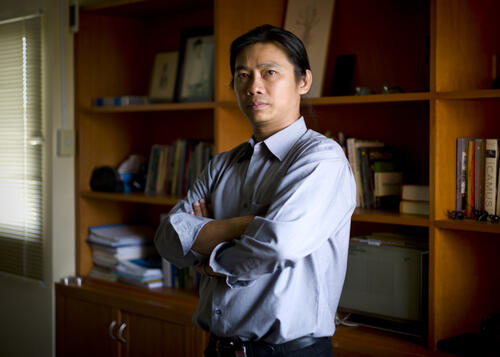
 

Tom Fingar


Professor Tom Fingar is the inaugural Oksenberg-Rohlen Distinguished Fellow. From May 2005 through December 2008, he served as the first deputy director of national intelligence for analysis and, concurrently, as chairman of the National Intelligence Council. He served previously as assistant secretary of the State Department’s Bureau of Intelligence and Research (2004–2005), principal deputy assistant secretary (2001–2003), deputy assistant secretary for analysis (1994–2000), director of the Office of Analysis for East Asia and the Pacific (1989–1994), and chief of the China Division (1986–1989). Between 1975 and 1986 he held a number of positions at Stanford University, including senior research associate in the Center for International Security and Arms Control.


The Oksenberg Lecture, held annually, honors the legacy of Professor Michel Oksenberg (1938-2001). A senior fellow at Shorenstein APARC and the Freeman Spogli Institute for International Studies, Professor Oksenberg served as a key member of the National Security Council when the United States normalized relations with China, and consistently urged that the United States engage with Asia in a more considered manner. In tribute, the Oksenberg Conference/Lecture recognizes distinguished individuals who have helped to advance understanding between the United States and the nations of the Asia-Pacific.

Please note: this event is off-the-record.

Bechtel Conference Center

Conferences
-

Since the democratization of Indonesia began in 1998, the country’s military has been undergoing major change. It has significantly altered or is preparing to change its organizational structure, doctrinal precepts, education and training formats, and personnel policies. Partly to acquire advanced weaponry, its budget has more than tripled in the past decade. Why? Is Indonesia preparing to become a regional military power? Answering a growing potential threat from China in the South China Sea? Compensating for the loss of military influence under democratic reform? And how will the military fare under new national leadership following this year’s elections?

Evan A. Laksmana is a doctoral candidate in political science at the Maxwell School, a researcher with the Centre for Strategic and International Studies (Jakarta), and a non-resident German Marshall Fund fellow. He has taught at the Indonesian Defense University (Jakarta) and has held research and visiting positions at the S. Rajaratnam School of International Studies (Singapore) and the Asia Pacific Center for Security Studies (Honolulu). Journals that have published his work include Asian Security, Contemporary Southeast Asia, Defence Studies, the Journal of the Indian Ocean Region, Harvard Asia Quarterly, and the Journal of Strategic Studies. He tweets @stratbuzz.

Daniel and Nancy Okimoto Conference Room

Evan A. Laksmana Fulbright Presidential Scholar, Maxwell School of Citizenship and Public Affairs Speaker Syracuse University
Seminars
-

WE ARE AT FULL CAPACITY - PLEASE ARRIVE EARLY FOR A SEAT

Image
The US-Japan alliance is the longest, most stable, and most indispensable alliance in the modern history of East Asia.  It has served as the foundation for the region's security structure for well over a half-century.  However, with China's emergence as a rising economic and military power, and given territorial disputes involving China, Japan, and South Korea, and with escalating nationalistic rhetoric and fundamental disagreements over historical interpretations of the Pacific War, the United States and Japan are now facing worrisome tensions and strains that could undermine the solidarity of the US-Japan alliance.  Is the time-tested US-Japan alliance capable of managing both the shifts in the regional balance of power, and the threat of conflict over disputed territories, and the rising thermometer of nationalistic sentiments?   

Ambassador Ryozo Kato, former Ambassador of Japan to the United States from 2001 - 08, the longest tenure of any Japanese Ambassador to the United States, and former Commissioner of Nippon Professional Baseball from 2008 - 2013, has had a long and distinguished career in the Ministry of Foreign Affairs of the Japanese Government. A graduate of Tokyo University Faculty of Law and Yale Law School, he served his country in Australia, Egypt, and the United States, in addition to multiple global assignments within the Ministry in Tokyo.

Positions which Ambassador Kato served in the United States include the Third Secretary in the Embassy (1967–1969), Minister in the Embassy (1987–1990), and Consul-General in San Francisco (1992–1994). He returned to Japan to serve as the Director-General of the Asian Affairs Bureau (1995–1997) and the Deputy-General of the Foreign Policy Bureau (1997–1999). After serving as the Deputy Minister for Foreign Affairs (1999–2001), he was appointed the Ambassador of Japan to the United States of America from 2001 to 2008. He has been recognized and respected on both sides of the Pacific for his outstanding understanding of the issues and his clarity in direction to resolve them.

Philippines Conference Room

Ryozo Kato former Ambassador of Japan to the United States Speaker
Seminars
-

The opening up of Myanmar (Burma) and the steps undertaken taken toward political reform in that formerly isolated dictatorship have been among Asia's most dramatic and least expected events.  But the establishment of full democracy is still on the agenda and faces many challenges.  How willing is the current government in Burma to allow a full and free exercise of political rights, including media freedom?  A panel of experts, including Aung Zaw, the editor and founder of The Irrawaddy and this year's recipient of the Shorenstein Award for Journalism in Asia, will address that question in discussing "Burma's Democracy:  How Real?"

Stanford University’s Walter H. Shorenstein Asia-Pacific Research Center (Shorenstein APARC) is pleased to announce Aung Zaw as the 2013 recipient of the Shorenstein Journalism Award. Zaw has been selected for his leadership in establishing independent media in Myanmar (Burma) and his dedication to integrity in reporting on Southeast Asia.

Image
 Aung Zaw

Aung Zaw is the founding editor-in-chief and executive director of The Irrawaddy, an independent Burmese media organization operating in Myanmar and northern Thailand. Zaw has been an active campaigner for democratic reform in Burma/Myanmar over the last two decades. He was awarded the 2010 Prince Claus Fund Award for journalism along with two journalists from Iran and Cuba – and is recognized for his active dedication to achieving democratic governance in Burma and his work to uphold press freedom.

Zaw studied Botany at Rangoon University. As a student activist in Burma, he was part of the 1988 protests in Rangoon against the Burmese military regime of General Ne Win. He was arrested and detained for a week in Rangoon’s notorious Insein prison where he was severely tortured during interrogation about his pro-democracy activities. Upon release Aung Zaw continued to work with the resistance movement until the military staged a coup in September that year and he was forced to leave the country for neighboring Thailand.

Two years later, Aung Zaw founded the Burma Information Group (BIG) in Bangkok, to document human rights violations in Burma. He began to write political commentaries for national newspapers in Thailand and internationally, and in late 1993 launched The Irrawaddy News Magazine in Bangkok, covering Burma affairs. He worked in Bangkok for two years producing The Irrawaddy Magazine until relocating to the more secure position in Chiang Mai in the north of Thailand.

In February 2012, Aung Zaw was able to return to his homeland for the first time in more than 20 years for a temporary visit as an independent journalist. By the end of 2012, The Irrawaddy was able to establish a media and news office in central Yangon, returning to Burma/Myanmar to practice independent journalism, whilst retaining a regional office in Thailand.

In 2013, the government lifted ban on The Irrawaddy and other exiled websites, the Irrawaddy English magazine and the Irrawaddy Dateline Current Affairs TV program is available for audiences in Myanmar. Aung Zaw writes for New York Times, International Herald Tribune, Time, The Guardian, Bangkok Post, The Nation and several publications in the Europe. His interviews have also appeared on CN, BBC and Al Jazeera. He is the author of the Face of Resistance and is a recent Visiting Scholar at UC Berkeley, School of Journalism.

Bechtel Conference Center

Aung Zaw 2013 Journalism Prize Winner and Founder and Editor, The Irrawaddy News Magazine Panelist
Nayan Chanda Director of Publications and the Editor of YaleGlobal Online Magazine Panelist Yale Center for the Study of Globalization
0
Senior Fellow Emeritus at the Freeman Spogli Institute for International Studies
Affiliated Faculty, CDDRL
Affiliated Scholar, Abbasi Program in Islamic Studies
aparc_dke.jpg PhD

At Stanford, in addition to his work for the Southeast Asia Program and his affiliations with CDDRL and the Abbasi Program in Islamic Studies, Donald Emmerson has taught courses on Southeast Asia in East Asian Studies, International Policy Studies, and Political Science. He is active as an analyst of current policy issues involving Asia. In 2010 the National Bureau of Asian Research and the Woodrow Wilson International Center for Scholars awarded him a two-year Research Associateship given to “top scholars from across the United States” who “have successfully bridged the gap between the academy and policy.”

Emmerson’s research interests include Southeast Asia-China-US relations, the South China Sea, and the future of ASEAN. His publications, authored or edited, span more than a dozen books and monographs and some 200 articles, chapters, and shorter pieces.  Recent writings include The Deer and the Dragon: Southeast Asia and China in the 21st Century (ed., 2020); “‘No Sole Control’ in the South China Sea,” in Asia Policy  (2019); ASEAN @ 50, Southeast Asia @ Risk: What Should Be Done? (ed., 2018); “Singapore and Goliath?,” in Journal of Democracy (2018); “Mapping ASEAN’s Futures,” in Contemporary Southeast Asia (2017); and “ASEAN Between China and America: Is It Time to Try Horsing the Cow?,” in Trans-Regional and –National Studies of Southeast Asia (2017).

Earlier work includes “Sunnylands or Rancho Mirage? ASEAN and the South China Sea,” in YaleGlobal (2016); “The Spectrum of Comparisons: A Discussion,” in Pacific Affairs (2014); “Facts, Minds, and Formats: Scholarship and Political Change in Indonesia” in Indonesian Studies: The State of the Field (2013); “Is Indonesia Rising? It Depends” in Indonesia Rising (2012); “Southeast Asia: Minding the Gap between Democracy and Governance,” in Journal of Democracy (April 2012); “The Problem and Promise of Focality in World Affairs,” in Strategic Review (August 2011); An American Place at an Asian Table? Regionalism and Its Reasons (2011); Asian Regionalism and US Policy: The Case for Creative Adaptation (2010); “The Useful Diversity of ‘Islamism’” and “Islamism: Pros, Cons, and Contexts” in Islamism: Conflicting Perspectives on Political Islam (2009); “Crisis and Consensus: America and ASEAN in a New Global Context” in Refreshing U.S.-Thai Relations (2009); and Hard Choices: Security, Democracy, and Regionalism in Southeast Asia (edited, 2008).

Prior to moving to Stanford in 1999, Emmerson was a professor of political science at the University of Wisconsin-Madison, where he won a campus-wide teaching award. That same year he helped monitor voting in Indonesia and East Timor for the National Democratic Institute and the Carter Center. In the course of his career, he has taken part in numerous policy-related working groups focused on topics related to Southeast Asia; has testified before House and Senate committees on Asian affairs; and been a regular at gatherings such as the Asia Pacific Roundtable (Kuala Lumpur), the Bali Democracy Forum (Nusa Dua), and the Shangri-La Dialogue (Singapore). Places where he has held various visiting fellowships, including the Institute for Advanced Study and the Woodrow Wilson International Center for Scholars. 


Emmerson has a Ph.D. in political science from Yale and a BA in international affairs from Princeton. He is fluent in Indonesian, was fluent in French, and has lectured and written in both languages. He has lesser competence in Dutch, Javanese, and Russian. A former slam poet in English, he enjoys the spoken word and reads occasionally under a nom de plume with the Not Yet Dead Poets Society in Redwood City, CA. He and his wife Carolyn met in high school in Lebanon. They have two children. He was born in Tokyo, the son of U.S. Foreign Service Officer John K. Emmerson, who wrote the Japanese Thread among other books.

Selected Multimedia

Date Label
Donald K. Emmerson Senior Fellow at FSI, Emeritus; Affiliated Faculty, CDDRL; Affiliated Scholar, Abbasi Program in Islamic Studies and Director, Southeast Asia Forum Panelist Stanford University
Daniel C. Sneider Associate Director for Research, Shorenstein Asia-Pacific Research Center Moderator Stanford University
Panel Discussions
Subscribe to Military