Military
Authors
News Type
News
Date
Paragraphs

From atomic bombs to harsh military occupations in the World War II period, the past is very much the present in the Asia Pacific region.

Stanford scholars are striving to help heal these wounds from yesteryear. Helping old enemies better understand each other today is the aim of the Divided Memories and Reconciliation project, a multi-year comparative study of the formation of historical memory regarding the wartime period in countries such as China, Japan, South Korea, Taiwan and the United States.

Left unattended, misguided wartime narratives may exacerbate current disputes to the point of armed conflict, said Daniel Sneider, associate director of research at Stanford's Shorenstein Asia-Pacific Research Center. He leads the Divided Memories project along with Gi-Wook Shin, a Stanford sociology professor and the Shorenstein center director.

Sneider points out the critical importance of textbooks and what is taught in schools – especially given the rise of nationalism among youth in China, Japan, Taiwan and South Korea.

"Dialogue among youth of the different nations is needed, along with an appreciation for the diversity of views and the complexity of history," he said.

Shin said, "Each nation in northeast Asia and even the U.S. has selective or divided memories of the past, and does not really understand the views of the other side."

Education and history

Launched in 2006, the Divided Memories project has published research findings, issued recommendations and convened conferences. In the early days, the researchers examined high school history textbooks in China, Japan, Korea, Taiwan and America.
Image
divided memories 1
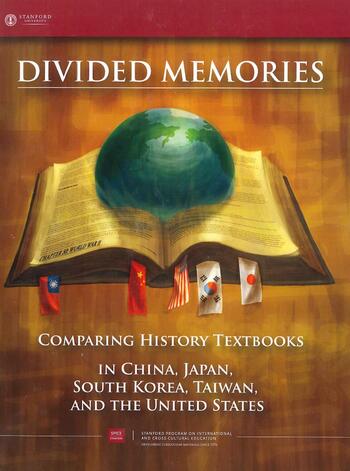
The outcome was the project's first book in 2011, History Textbooks and the Wars in Asia: Divided Memories, which suggests that an "introspective effort" to understand national narratives about WWII has the potential to bring about historical reconciliation in the region. Sneider describes it as the first comparative study of textbooks in the countries involved; it soon evolved into a classroom supplemental textbook published by the Stanford Program on International and Cross-Cultural Education.

"Formal education is a powerful force in shaping our historical understandings," Sneider noted. "We wanted to look at the textbooks that have the most impact and usage."

A 2014 book, Confronting Memories of World War II: European and Asian Legacies, which was co-edited by Shin, Sneider and Daniel Chirot, a sociologist with the University of Washington, compared successful European WWII reconciliations with lagging Asian efforts. Another book, Divided Lenses, published earlier this year, examined the impact of dramatic film and other forms of popular culture on wartime memory. A new book is due out this summer, Divergent Memories: Opinion Leaders and the Asia-Pacific War, which focuses on leaders in politics, the media and academia in Japan, China, South Korea and the U.S.

The Divided Memories project aims to generate discussions and collaborations among those who create "historical memories" – educators, policymakers and government leaders. One report that grew out of such dialogues included suggestions for reconciliation:

  • Create supplementary teaching materials on the issue. 
  • Launch dialogues among Asian, American and European historians. 
  • Offer educational forums for journalists, policymakers and students. 
  • Conduct museum exchanges and create new museums, such as one wholly dedicated to WWII reconciliation in Asia. 
  • Increase student exchanges among all the countries involved. 

History is reflected in today's geopolitics, as noted in the revived disputes by these nations over rival claims to islands in the South China Sea and elsewhere. Without resolution, these disagreements can flare up into military conflicts, Sneider wrote.

"The question of history taps into sensitive and deeply rooted issues of national identity," he noted.

Whether recounting Japanese atrocities in China, China's exaggerated account of its Communist fighters' role in World War II, or the U.S. decision to drop atomic bombs on Japan, no nation is immune to re-creating the past to further its own interests today, Sneider wrote.

For example, Divided Memories research on Chinese textbooks shows how the Chinese government in recent decades embarked on a "patriotic education" campaign to indoctrinate young people by exaggerating its role in Japan's WWII defeat. This narrative suits the nationalistic desires of a Chinese government no longer exclusively motivated by communist ideology, Sneider said.

One project of APARC and its Japan Program that was also an outgrowth of Divided Memories involved Stanford scholars urging Japanese Prime Minister Shinzo Abe to show "clear, heartfelt remorse" in a 2015 speech on the 70th anniversary of the end of WWII. A 15-page report featured hypothetical statements suggesting what Abe might say to make amends for Japanese actions in China and Korea.

"While we cannot claim to have directly influenced the prime minister, his statement did go further in the direction of an expression of remorse over the war and the need to continue to look clearly and honestly at the past than many expected," said Sneider.


Image
divided memories 2

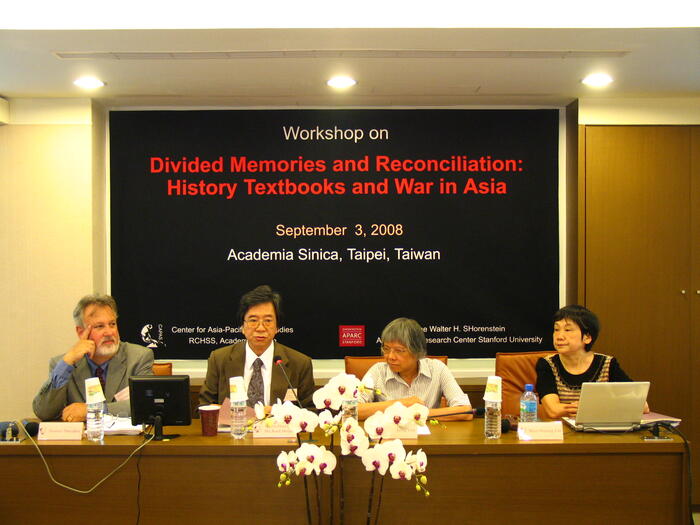
A workshop on history textbooks co-hosted by Shorenstein APARC and Academia Sinica's Center for Asia-Pacific Area Studies takes places in Taipei, Sept. 3, 2008.


Generations and grievances

Consciousness-raising on other fronts, however, is getting results, thanks to Stanford's Divided Memories project. A 2015 landmark agreement between Japan and South Korea over the WWII "comfort women" dispute was reached due to extensive U.S. involvement. Comfort women were women and girls who were forced into sexual slavery by the Imperial Japanese Army in occupied territories before and during World War II.

In an article, Sneider explained how the U.S. perceived that the dysfunctional relationship between South Korea and Japan over this issue, among others, threatened to undermine American strategic interests in Asia. 

Shin highlights the importance of U.S. involvement. "The U.S. is not just an outsider to historical and territorial disputes in the region," he said. "From a geopolitical perspective, the U.S. has done a wonderful job in reviving the devastated region into a prosperous one after 1945, but from a historical reconciliation perspective, the U.S. has done a poor job."

He suggests that America should "play a constructive role in promoting historical reconciliation" among the countries involved. And so, the Divided Memories project has included the United States in its efforts.

According to Sneider, Divided Memories is unique among all reconciliation projects for its emphasis on the inclusion of the U.S.; comparative analyses across countries; and real-world policy impacts. As part of the Shorenstein research center, it is housed within Stanford's Freeman Spogli Institute for International Studies.

"This project reflects what Stanford, our center and the Freeman Spogli Institute are all about – true interdisciplinary research and engagement," Sneider said.

Clifton Parker is a writer for the Stanford News Service.

Hero Image
divided memories reconciliation headline
Japanese soldiers in Shanghai, March 23, 1927 | A Stanford project encourages World War II reconciliation and historical accuracy about the conflict and its consequences in Japan, China, Korea, Taiwan and the United States. Progress has been made on classroom textbooks and scholarly discussions and exchanges.
Getty Images
All News button
1
Paragraphs

Writing for YaleGlobal Online, Donald Emmerson examines outcomes of the U.S.-Association for Southeast Asian Nations (ASEAN) Summit that took place at Sunnylands in Rancho Mirage, California, between Feb. 15-16, 2016. He says that ASEAN, with its timid stance on the South China Sea, risks irrelevance and Chinese dominance in that area.

All Publications button
1
Publication Type
Commentary
Publication Date
Journal Publisher
YaleGlobal Online
Authors
Donald K. Emmerson
News Type
News
Date
Paragraphs

Seventeen faculty members and researchers from Stanford’s Freeman Spogli Institute for International Studies were hosted at U.S. Pacific Command (USPACOM) Headquarters in Hawaii for an intensive orientation on Feb. 4-5. The visit aimed to advance collaboration and to offer a deeper understanding of USPACOM’s operations to Stanford scholars who study international security and Asia.

Admiral Harry B. Harris, Jr., Commander of USPACOM, together with his commanders and staff, welcomed the delegation. Harris’s meeting with Stanford faculty is the second in recent months. The USPACOM visit and earlier speech at Stanford Center at Peking University are part of a series of activities driven by the U.S.-Asia Security Initiative. Led by Ambassador Karl Eikenberry, the Initiative seeks to provide constructive interaction between academic and governmental experts on the many and diverse security challenges facing the Asia-Pacific region.

“Engaging deeply in conversations with those who are on the frontlines is incredibly valuable,” said trip participant Coit Blacker, FSI senior fellow and professor of international studies. “This is especially true for academics who focus much of their attention thinking about the prospects for international peace and security but not necessarily considering their direct application on a military-level.”


[[{"fid":"222122","view_mode":"crop_870xauto","fields":{"format":"crop_870xauto","field_file_image_description[und][0][value]":"","field_file_image_alt_text[und][0][value]":"","field_file_image_title_text[und][0][value]":"","field_credit[und][0][value]":"","field_caption[und][0][value]":"","field_related_image_aspect[und][0][value]":"","thumbnails":"crop_870xauto"},"type":"media","attributes":{"width":"870","style":"line-height: 1.538em;","class":"media-element file-crop-870xauto"}}]]

Image
pacom 3

Top: (Left) The Stanford delegation watches a demonstration of a 2-minute drill. / (Right) Karen Eggleston boards a UH-60 Blackhawk helpcopter enroute to the Lightning Academy with her colleagues. Bottom: The delegation takes a group photo on-site.


On the first day, FSI scholars spoke with military officers about the command’s strategies and challenges it faces, such as population aging and sovereignty disputes over the South China Sea. Discussions were followed with a tour of USS Michael Murphy, a guided missile destroyer which routinely conducts operations in the Western Pacific including the South China Sea.

Karen Eggleston, FSI senior fellow and director of the Asia Health Policy Program, was one of the discussants on the USPACOM trip. Her research focuses on health policy in Asia, specifically the effects of demographic change and urbanization.

“As a health economist, the visit yielded for me a behind-the-scenes sense of how members of the military respond to pandemics and humanitarian situations, and of the ongoing dialogue with their counterparts in Asian nations,” Eggleston said. “I think that kind of military-to-military engagement provides an area rich with questions and best practices that could in some ways be shared as a model among other nations.”

Other activities on the first day included a briefing by the U.S. Pacific Fleet command, informal presentations and dialogue between the Stanford participants and the USPACOM staff, and working with senior leaders of the U.S. Pacific Air Forces command.

On the second day, the group visited the U.S. Army’s installation at Schofield Barracks. There, they observed a command post simulation and field exercise including units of the 25th Infantry Division. Graduates from the U.S. Army’s jungle survival training school also shared their impressions of applying lessons in the field. Researchers from the Asia-Pacific Center for Strategic Studies (APCSS) joined the Stanford delegation later in the day. Both sides discussed research outcomes and avenues for future exchanges. The day concluded with an extensive tour of USS Mississippi, a Virginia-class attack submarine. FSI has long engaged military officers through a senior military fellows program. Started in 2009 by the Center for International Security and Cooperation, the program remains active today with five fellows conducting research at Stanford.

Lt. Col. Jose Sumangil, a 2015-16 U.S. Air Force Senior Military Fellow, participated in the Stanford delegation at USPACOM.

“The trip was an excellent opportunity to showcase how the U.S. ‘rebalance to Asia’ strategy is implemented on a day-to-day basis – for example, providing a look into the decision-making process that could occur should a situation arise in the South China Sea,” Sumangil said. “It’s incredibly important to build this kind of understanding among experts studying Asia, and I think we helped do that here.”

USPACOM is one of the largest U.S. military commands with four major service components (U.S. Pacific Fleet, U.S. Pacific Air Forces, U.S. Army Pacific, U.S. Marine Forces); it is tasked with protecting U.S. people and interests, and enhancing stability in the Asia-Pacific Region.

Hero Image
pacom headline
A Stanford delegation of 17 faculty members and researchers visited U.S. Pacific Command (USPACOM) Headquarters in Hawaii, Feb. 4-5, 2016.
All News button
1
Authors
News Type
News
Date
Paragraphs

An anti-poverty aid program that’s been implemented in the Philippines for nearly a decade is gaining attention for the progress it has made in not only helping the poor, but also for its role in decreasing political violence and insurgency.

Joe Felter, senior research scholar at Stanford’s Center for International Security and Cooperation (CISAC) and research fellow at the Hoover Institution, presented the results of his joint research on the program before senior political figures at a conference in the Philippine capital of Manila in January.

CISAC senior research scholar Joe Felter (left) joins Philippine President Benigno Aquino (right) and the Secretary of the Department of Social Welfare and Development Corazon “Dinky” Soliman (center) onstage at a conference in Manila. CISAC senior research scholar Joe Felter (left) joins Philippine President Benigno Aquino (right) and the Secretary of the Department of Social Welfare and Development Corazon “Dinky” Soliman (center) onstage at a conference on sustaining the gains of the conditional cash transfer program held in Manila in January, 2016.
Philippine President Benigno Aquino, and Secretary of the Department of Social Welfare and Development (DSWD) Corazon “Dinky” Soliman, were among the leaders in attendance at the Conference on Sustaining the Gains of the Conditional Cash Transfer Program.

“We worked for several years on this study and it was a privilege to provide these findings and results to senior officials in the Philippine government who are in a position to act on them,” said Felter. “It’s really gratifying to know that academic research can contribute to actual improvements in the conditions, livelihood and safety of those in need.”

The focus of the conference was on the conditional cash-transfer (CCT) anti-poverty aid program called Pantawid Pamilya. Administered by Soliman’s Department of Social Welfare and Development, the Philippines began deploying the program in 2007. It is similar to other CCT programs used in Brazil, Columbia, India, Indonesia and Mexico where households must meet certain income thresholds and basic health and education requirements to qualify for its benefits. CCT programs distribute cash payments to targeted poor households and are proving to be an increasingly popular tool for reducing poverty and improving livelihoods in poverty-affected areas.

The effect of aid on conflict

Felter and his colleagues conducted an analysis of the impact of aid on civil conflict that takes advantage of a randomized control trial (RCT) initiated in the Philippines by the World Bank in 2009 as part of an impact evaluation of the Pantawid Pamilya CCT program. Impact evaluations of CCT programs to date limit their findings to those areas the program was intended to address such as health, education, and employment. Published in the January 2016 Journal of Development Economics, the study estimates the effect of conditional cash transfer (CCT) programs on two other critical outcomes- civil conflict and insurgent influence.

CISAC senior research scholar Joe Felter shakes hands with Philippine President Benigno Aquino onstage at a conference in the Philippine capital of Manila. CISAC senior research scholar Joe Felter shakes hands with Philippine President Benigno Aquino onstage at a conference in the Philippine capital of Manila.
Conventional wisdom might tell you that increasing developmental aid to conflict-affected nations would uniformly help reduce the violence and stabilize these areas, but there is mixed evidence on the effect of aid on conflict. In fact, recent findings show some forms of development aid and the ways they are delivered can actually exacerbate conflict by creating opportunities for looting and incentives for strategic retaliation. That’s why the new findings by Felter and his colleagues are so important. They found the type of aid, or mechanism administered, may play a critical role in reducing conflict-related incidents.

“Considering the types of conflicts taking place around the globe, it is both timely and important to study how aid can be delivered in a manner that reduces poverty without exacerbating conflict,” said Felter. “Development aid can sometimes have the unintended effect of increasing conflict in civil wars when insurgents believe the successful implementation of government-sponsored development projects will boost support for the government and undermine their position.” 

Felter himself is no stranger to international conflict. He retired from the U.S. Army as a colonel in 2012 following a career as a Special Forces and foreign area officer that took him on missions to Central America, Southeast Asia, Afghanistan, and Iraq.  Now in academia, he uses data and rigorous quantitative methods to help those in the field better understand and more effectively and efficiently approach the challenges of stabilizing conflict areas through development aid and economic assistance. 

Despite the growing popularity of CCTs, and assessments of their effectiveness at reducing poverty and improving livelihood, there is limited evidence on how the payment programs affect the civil conflict often present in these poverty stricken areas. Felter, along with his coauthors Benjamin Crost of the University of Illinois, and Patrick Johnston of RAND Corporation, took advantage of the World Bank’s randomized experiment to identify the effect CCT programs had on conflict-related incidents and the influence of insurgent groups, even though the experiment was not originally designed to study the effect of Pantawid Pamilya on these outcomes. Their research compared these aspects of the CCT program’s impact in treatment villages to control villages in the Philippines from 2009-2011.

The Philippines is home to some of the world’s most protracted civil conflicts, including a separatist insurgency in Mindanao island with roots dating back to Spanish colonial times, and a decades long communist insurgency affecting nearly all of the country’s provinces across this archipelago.

“Studying the impact of conditional cash transfers on political violence and insurgent influence in the Philippines is especially instructive and generalizable because you have multiple, long-running insurgencies, each with distinct characteristics, and with an array of government sponsored aid programs implemented in these areas over time,” said Felter.

Two key findings resulted from the team’s analysis. First, the CCT program caused a substantial reduction in the number of conflict-related incidents in the villages where it was administered. Second, the program was effective at reducing insurgent influence in the treated villages. Significantly, their findings provide evidence that the effects of CCTs can differ from other types of aid interventions based on the type of aid provided and how it is implemented.

“That Pantawid Pamilya helped reduce the presence of rebel groups in the targeted villages is especially consequential.” Felter said. “A program that reduces violence by weakening insurgent influence is likely to have more beneficial long-term effects since insurgent influence can still undermine the rule of law and oppress citizens even without violence.”

Not all aid programs created equal

An effective aid program such as this can result in more than an economic boost for a village or community and a reduction in violence. It can also provide a psychological victory that enables the government to gain increased support from the local population – effectively “winning hearts and minds” – thus potentially enabling the government to gain better security through increased cooperation and information sharing about insurgents from the population. This is a win-win result, especially in regions where insurgents often gain support by exposing weaknesses of the government, not just through fear and coercion. Insurgents win when they are able to achieve legitimacy in the eyes of a local population whose own government is unable to provide for their basic needs.

However, a “winning hearts and minds” strategy for disbursing government aid can sometimes backfire depending on how these programs are carried out. For example, KALAHI-CIDSS, a large-scale community-driven development (CDD) infrastructure program took place in similar regions in the Philippines during the same time period as the Pantawid Pamilya experiment period. This aid program was also implemented by the DSWD, but in some cases led to different and unintended results. The CDD program was designed to empower the poorest Filipino municipalities through enhanced participation in community projects and training, but the way in which the projects were determined and the mechanisms they were delivered created incentives and opportunities for insurgents to attack the projects, resulting in increased local conflict in some cases where the program was implemented. CDD programs involve a series of public meetings and result in the implementation of widely publicized and often highly visible infrastructure projects. As a result, insurgents often attack these government “hearts and minds” initiatives that, if successful, threaten to shift popular support away from their rebel groups and towards the government.

In contrast to CDD programs, CCT programs disburse aid directly to its beneficiaries’ bank accounts, making it difficult for insurgents to anticipate when and where the transfers are occurring and inhibiting their capacity to disrupt and dismantle the program. The findings in Felter’s study provide preliminary evidence that the type of aid and mechanism in which it is delivered can be a major factor in determining its impact on civil conflict.

“The stakes are high in human and economic terms when it comes to stabilizing conflict areas and preventing a return of the deadly violence associated with civil wars and insurgency,” said Felter.

The results of this study provide rare empirical evidence that some forms of aid, and how it is implemented can reduce the intensity of civil conflict and the influence of the groups responsible for it. This evidence can help governments determine what type of aid to invest in to achieve their desired results.

“Distributing aid effectively and achieving maximum benefits from these investments is definitely a challenge and an area where more research is needed to better appreciate the many nuances and complexities of these efforts,” said Felter.

During the two-day conference in Manila, President Aquino noted how his administration had increased the CCT budget to cover close to 4.4 million poor households, up from 786,000 five years ago.

You can read Felter’s full paper in the January issue of the Journal of Development Economics.


Hero Image
joe felter philippines 2
All News button
1
News Type
News
Date
Paragraphs

David Shear, assistant secretary of defense for Asian and Pacific security affairs, visited Stanford on Jan. 22 for a daylong series of discussions on the state of U.S. defense strategy in the Asia-Pacific region.

Shear facilitated a closed-door dialogue with Stanford-based senior military fellows studying national security issues at the Freeman Spogli Institute for International Studies and the Hoover Institution.

Shear also met with faculty members of the Walter H. Shorenstein Asia-Pacific Research Center and the Center for International Security and Cooperation, and delivered a lecture to a packed audience at Encina Hall.

The events were sponsored by the U.S.-Asia Security Initiative led by Ambassador Karl Eikenberry. The initiative seeks to produce research outcomes and constructive interaction between academic and governmental experts on security challenges facing the Asia-Pacific region. More information about the initiative can be found here.

Hero Image
ds events v2
(L) David Shear, assistant secretary of defense for Asian and Pacific security affairs, listens to a question posed by an audience member; (R) Shear facilitates a closed-door dialogue with a cohort of Senior Military Fellows at Stanford.
All News button
1
Authors
News Type
News
Date
Paragraphs

Stanford nuclear experts said they were skeptical of North Korea’s claim that it had detonated a hydrogen bomb this week.

However, they said the test was an important step forward for North Korea’s nuclear program and would have a destabilizing effect on the entire region.

“I don’t believe it was a real hydrogen bomb, but my greatest concern is not so much whether or not they actually tested a hydrogen bomb, but rather that they tested at all,” said Siegfried Hecker, former director of Los Alamos National Laboratory and senior fellow at Stanford’s Center for International Security and Cooperation.

North Korean dictator Kim Jong-un has “a track record of exaggerated statements, hyperbole and outright lies,” according to Scott Sagan, Caroline S.G. Munro professor of Political Science.

“The propaganda machine in North Korea has made all sorts of claims about Kim Jong-un’s personal prowess and his history, and it is totally unsurprising that he might make exaggerated claims about North Korea’s military prowess,” Sagan said.

Former U.S. Secretary of Defense William J. Perry said he also doubted that North Korea had detonated a two-stage hydrogen bomb.

“Whether it’s a hydrogen bomb or not, it’s very dangerous, destabilizing development,” said Perry.

“It’s obvious they’re working to increase the capability and size of their nuclear arsenal and that represents a huge danger to the region and creates major instability and major concerns on the part of South Korea and Japan.”

Many North Korea watchers had been anticipating another nuclear test.

“We’ve thought that the North Koreans could test at any time – that the tunnels were ready, that they could do this at any time – so it would be a political decision, not a technical decision,” said Thomas Fingar, senior fellow at the Freeman Spogli Institute for International Studies.

Hecker said North Korea’s latest nuclear test would move the country closer to being able to miniaturize a nuclear warhead and mount it on a missile, extending the reach of their nuclear weapons.

“They will have achieved greater sophistication in their bomb design – that is the most worrisome aspect,” Hecker said.

“At this point, what makes their nuclear arsenal more dangerous is not so much explosive power of the bomb, but its size, weight and the ability to deliver it with missiles.”

On the diplomatic agenda, the U.S. and its allies will likely push for stronger sanctions in the wake of the tests, according to Kathleen Stephens, a former U.S. Ambassador to the Republic of Korea and William J. Perry fellow at Walter H. Shorenstein Asia-Pacific Research Center (APARC).

“In the UN the U.S., Japan and South Korea will likely look for another, and stronger, UN Security Council resolution, presumably with some efforts to attach to it some teeth and strengthen sanctions,” Stephens said.

The U.S. Congress is currently considering financial sanctions that would cut of all access to U.S. banks for any banks dealing with the North Koreans.

But financial sanctions would likely be less effective in dealing with North Korea than they had been with Iran, according to Fingar.

“It’s like hitting a masochist,” said Fingar.

“North Korea is relatively insulated from the external economy, where Iran wasn’t. Iran had a middle class, you could make sanctions hurt, they could have a real effect. You could make it hard for the North Koreans to buy luxury goods, but at the end of the day, is that going to bring down the regime?”

Financial sanctions against North Korea could have the unintended consequence of also hurting China, said David Straub, associate director of the Korea program at APARC.

“This could be problematic for China because many of the transactions that North Korea conducts would be going thorough Chinese banks, and the Chinese, understandably might not be happy about the US financial sanctions on them, in effect,” Straub said.

Perry recommended that the U.S. reinvigorate diplomatic talks with North Korea in collaboration with China, South Korea, Japan and Russia.

“I would not give up on negotiations with North Korea yet,” Perry said.

“What could have been done many years ago was following through on negotiations with North Korea at the turn of the Century, which were proceeding robustly in the last years of Clinton’s second term, but were abandoned by the Bush Administration...That was a geo-strategic error.”

But Hecker said those negotiations would be harder now.

“I have previously argued that we should focus on three “No’s” for three “Yes’s” – that is no more bombs, no better bombs (meaning no testing) and no export – in return for addressing the North’s security concerns, its energy shortage and its economic woes,” said Hecker.

“This could have worked when I first proposed it 2008 after one of my seven visits to North Korea. It will be more difficult now."

Hero Image
A protester burns banners depicting North Korean leader Kim Jong-un during an anti-North Korea rally in central Seoul, South Korea, January 7, 2016.
REUTERS/Kim Hong-Ji
All News button
1
Authors
News Type
Q&As
Date
Paragraphs

Former Los Alamos National Laboratory director Siegfried Hecker assesses North Korea’s claim to have detonated a hydrogen bomb in an underground nuclear test this week. Hecker is one of the world’s top experts on the North Korean nuclear program. He has visited North Korea seven times since 2004, and is the only Western scientist known to have ever been inside a North Korean uranium enrichment facility. He is currently a senior fellow at Stanford’s Center for International Security and Cooperation, and a research professor of Management Science and Engineering.

Do you believe that North Korea actually detonated a hydrogen bomb in its latest nuclear test?

I don’t believe it was a real hydrogen bomb, but my greatest concern is not so much whether or not they actually tested a hydrogen bomb, but rather that they tested at all. Since this test worked, they will have achieved greater sophistication in their bomb design – that is the most worrisome aspect. This is their fourth test – with each test they can learn a lot.

What makes a hydrogen bomb a more threatening weapon than a conventional atomic bomb?

A hydrogen bomb can be a hundred or a thousand-fold more powerful than a fission bomb. Certainly a blast of a megaton will be much more destructive than the Hiroshima bomb, but the more important part is the ability to deliver at long range and to do it accurately. That is what would threaten the United States and its allies most; even with the size of nuclear blasts they have already demonstrated.

White House officials say that initial data from nearby monitoring stations are not consistent with a hydrogen bomb test. How will we know for sure whether it was a hydrogen bomb or not?

The short answer is that we may never know. The telltale signs of a hydrogen bomb are very difficult to pick up in a deeply buried test. Typically hydrogen bombs have greater explosive power or yield. This test is currently believed to have resulted in a seismic tremor of 5.1 on the Richter earthquake scale. That would make it roughly equivalent to the third nuclear test in February 2013. At that time, North Korea claimed it tested a miniaturized atomic bomb – there was no mention of a hydrogen bomb. My estimate of the yield for the 2013 test is roughly 7 to 16 kilotons – which is in the range of the 13-kiloton Hiroshima blast. As far as destructiveness, a Hiroshima-scale explosion is bad enough. Detonated in Manhattan, it may kill as many as a quarter million people. The power of the 2013 and the current explosion is more consistent with fission bombs than hydrogen bombs.

Can you rule out the possibility that it was a hydrogen bomb?

I find it highly unlikely that the North tested a real hydrogen fusion bomb, but we know so little about North Korea’s nuclear weapons design and test results that we cannot completely rule it out. A modern hydrogen bomb is a two-stage device that uses a fission bomb to drive the second stage fusion device. A two-stage device is very difficult to design and construct, and is likely still beyond the reach of North Korea today. However, by comparison, China’s early nuclear weapon program progressed rapidly. It tested its first fission bomb in 1964 and less than three years later demonstrated a hydrogen bomb – and that was 50 years ago. North Korea has now been in the nuclear testing business for almost 10 years, so we can’t rule anything out for certain.

If it wasn’t a hydrogen bomb, what kind of bomb might it have been?

What may be more likely than a two-stage hydrogen bomb is that they took an intermediate step that utilizes hydrogen (actually hydrogen isotopes) fuel to boost the explosive yield of the fission bomb, a sort of turbocharging. Such a device has a fusion or “hydrogen” component, but is not a real hydrogen bomb. It allows miniaturization – that is making the bomb smaller and lighter. Moreover, it would be the first step toward eventually mastering a two-stage hydrogen bomb.

The most important aspect then is to miniaturize, whether it is a fission bomb, a boosted fission bomb, or a hydrogen bomb. The Nagasaki bomb weighed 5,000 kilograms. It was delivered in a specially equipped B-29 bomber. North Korea wants to demonstrate it has a deterrent. To do so, it needs to be able to credibly threaten the U.S. mainland or our overseas assets. For that, you have to make the bomb (more correctly, the warhead) small enough to mount on a missile. The smaller and lighter, the greater the reach. At this point, what makes their nuclear arsenal more dangerous is not so much explosive power of the bomb, but its size, weight and the ability to deliver it with missiles.

How close is North Korea to being able to credibly threaten a nuclear strike against the mainland United States?

North Korea is still a long way off from being able to strike the US mainland. It has only had one successful space launch. It needs a lot more, but it has a large effort in that direction.

Do you think North Korea conducted this test for political or technical reasons?

North Korea had very strong technical and military drivers for this test, as well as follow-on tests. The political environment is mostly what has constrained it from testing earlier and more often. However, this test demonstrates that Pyongyang is willing to weather the political storm this test will bring. It has done so for all previous tests.

What are your current estimates on the size of North Korea's stockpile of nuclear weapons and materials?

Much like in the area of sophistication of the bomb, we have little information of what North Korea actually possesses. The best we can do is to estimate how much bomb fuel, plutonium and highly enriched uranium, they may have produced and estimate how many bombs they can produce from that stockpile. My best estimate at this time is that they may have enough bomb fuel for 18 bombs with a capacity to make 6 to 7 more annually. That, combined with the increased sophistication they surely achieved with this test, paints a troublesome picture.

How should the U.S. respond?

I am concerned about we haven’t done to date. Washington has lost many opportunities we have had since North Korea began its nuclear weapon production in earnest in 2003. One thing that’s clear is that doing what we and the rest of the world have done so far – half-hearted diplomacy, ultimatums, and sanctions – have failed, so these are not the answer. I have previously argued that we should focus on three “No’s” for three “Yes’s” – that is no more bombs, no better bombs (meaning no testing) and no export – in return for addressing the North’s security concerns, its energy shortage and its economic woes. This could have worked when I first proposed it 2008 after one of my seven visits to North Korea. It will be more difficult now.

Hero Image
CISAC senior fellow Siegfried Hecker on a tour of North Korea's Yongbyon nuclear facility in 2008.
All News button
1
Authors
Lisa Griswold
News Type
News
Date
Paragraphs

Senior Military Fellow John Chu was promoted to the rank of colonel in the U.S. Army at Stanford last Friday, a position selectively afforded for distinguished service and leadership. Colleagues and Stanford affiliates attended the afternoon ceremony marking the occasion.

Lt. Gen. (Ret.) Karl Eikenberry led the proceedings and recognized Chu’s accomplishments in the Army and his tenure as a researcher at Stanford’s Freeman Spogli Institute for International Studies (FSI).

“We look over the course of John’s life and where he’s been, and it says so much good about him and the strengths of the United States of America,” Eikenberry said.

“As threats have changed, doctrine has changed and our national security has changed, John has continued to adapt. It says a great deal about him, our services and our country that he has been able to steadily make those shifts over the course of his career.”

Chu was born in Seoul, South Korea, and raised in the United States. He attended West Point and later achieved advanced degrees in environmental engineering and national security. Chu has had three tours of duty in Korea and served in Iraq as staff at the highest strategic level, among other posts.

At Stanford, Chu has been studying U.S. policy toward North Korea and strategic deterrence on the Korea Peninsula as a fellow at FSI’s Walter H. Shorenstein Asia-Pacific Research Center during the current academic year.

The fellowship program, supported by the U.S.-Asia Security Initiative and the Center for International Security and Cooperation, provides military officers an opportunity for self-directed study under the tutelage of Stanford scholars. The program started under former U.S. Secretary of Defense William Perry. Five fellows came to campus this year; their brief bios can be found here.

Chu thanked his wife of eighteen years, Tina, and expressed gratitude to everyone who guided him over the years.

“You are the real heroes – the people I’ve worked with throughout my career,” Chu said, addressing the audience. “It is you that really deserves all the recognition, for I would not be here today without the support of many.”

Chu expects to deploy to Afghanistan as his follow-on assignment.

Hero Image
csc 0152a
Senior Military Fellow John Chu (right) is promoted to colonel in the U.S. Army in a ceremony at Stanford on Dec. 11, 2015. Lt. Gen. (Ret.) Karl Eikenberry (left) led the proceedings.
All News button
1
News Type
News
Date
Paragraphs

South Korea must stand with the United States in the event of escalated tensions between China and the United States in the South China Sea, Stanford professor Gi-Wook Shin advised at a forum in Seoul on November 19th.

"Flexibility is necessary, but what's more important is…principle," said Shin, emphasizing the importance of South Korea’s alliance with the United States over its strategic partnership with China.

The full article (in English) may be viewed on the Yonhap News website.

Hero Image
14358811168 6d39e1f78a o
The U.S. and Philippine navies conduct a bilateral exercise in the South China Sea, June 2014.
Flickr/U.S. Navy
All News button
1
News Type
News
Date
Paragraphs

The leader of U.S. Pacific Command, Adm. Harry B. Harris, Jr., addressed U.S. nautical movements in the South China Sea while also calling for sustained military cooperation between China and the United States in a speech at Stanford Center at Peking University (SCPKU) on Tuesday.

Led by Ambassador Karl Eikenberry, a group of Stanford faculty and scholars from the Walter H. Shorenstein Asia-Pacific Research Center (APARC) listened to the speech from Stanford via an interactive, live videoconference at the Graduate School of Business. The speech was followed by a question and answer session, co-facilitated by Stanford professor Jean Oi in Beijing.

The admiral’s visit to SCPKU was part of a larger trip to China, which included discussions between senior Chinese and American military officials.

News media covered Admiral Harris’ remarks delivered at the SCPKU, which co-sponsored the event with Shorenstein APARC's U.S.-Asia Security Initiative. Articles appeared in the New York Times and Wall Street Journal (subscription may be required to view), among other publications.

Hero Image
image2
A group of faculty and scholars at Stanford participate in a videoconference with the leader of U.S. Pacific Command, Adm. Harry B. Harris, Jr., in Beijing on Nov. 3, 2015.
Ryan Blake
All News button
1
Subscribe to Military