Media
-

Image
joon nak choi 7 cropped
Why has Korean pop music (K-Pop) become so popular overseas? A wide variety of explanations have been proposed by academics, journalists and the fans themselves, ranging from superior training and product quality to the strategic usage of social media. Although some of these explanations have become widely-cited especially in the Korean media, whether or not they are actually correct remains largely unknown. To demystify why K-Pop has gained a following overseas, this study examines data on K-Pop concert booking overseas, from 2011 through 2014. The findings highlight the importance of cultural proximity, while casting doubt upon several other widely-cited explanations.

Joon Nak Choi is the 2015-2016 Koret Fellow in the Korea Program at Stanford's Shorenstein Asia-Pacific Research Center (APARC). A Stanford graduate and sociologist by training, Choi is an assistant professor at Hong Kong University of Science and Technology. His research and teaching areas include economic development, social networks, organizational theory, and global and transnational sociology, within the Korean context. He recently coauthored Global Talent: Skilled Labor as Social Capital in Korea which he developed the manuscript from 2010-11 while he was a William Perry postdoctoral fellow at APARC.

This event is made possible through the generous support of the Koret Foundation.

Shorenstein APARC
Encina Hall
Stanford University
Stanford, CA 94305-6055

0
joon_nak_choi_7_cropped.jpg

Joon Nak Choi is the 2015-2016 Koret Fellow in the Korea Program at Stanford University's Walter H. Shorenstein Asia-Pacific Research Center (Shorenstein APARC). A sociologist by training, Choi is an assistant professor at Hong Kong University of Science and Technology. His research and teaching areas include economic development, social networks, organizational theory, and global and transnational sociology, within the Korean context.

Choi, a Stanford graduate, has worked jointly with professor Gi-Wook Shin to analyze the transnational bridges linking Asia and the United States. The research project explores how economic development links to foreign skilled workers and diaspora communities.

Most recently, Choi coauthored Global Talent: Skilled Labor as Social Capital in Korea with Shin, who is also the director of the Korea Program. From 2010-11, Choi developed the manuscript while he was a William Perry postdoctoral fellow at Shorenstein APARC.

During his fellowship, Choi will study the challenges of diversity in South Korea and teach a class for Stanford students. Choi’s research will buttress efforts to understand the shifting social and economic patterns in Korea, a now democratic nation seeking to join the ranks of the world’s most advanced countries.
 
Supported by the Koret Foundation, the Koret Fellowship brings leading professionals to Stanford to conduct research on contemporary Korean affairs with the broad aim of strengthening ties between the United States and Korea. The fellowship has expanded its focus to include social, cultural and educational issues in Korea, and aims to identify young promising scholars working on these areas.


2015-2016 Koret Fellow
Visiting Scholar
2015 Koret Fellow 2015 Koret Fellow, Korea Program, APARC, Stanford
Seminars
Paragraphs

The breakthrough agreement on the comfort women issue between Japan and South Korea on Dec. 28, 2015, was the culmination of at least four years of negotiations between the two governments. South Korean President Park Geun-hye and Japanese Prime Minister Shinzo Abe pushed for the agreement; the Obama administration provided persistent pressure while resisting a mediation role. The danger of the agreement falling apart is apparent to officials in Washington and Seoul, and hopefully Tokyo too, writes Sneider.

All Publications button
1
Publication Type
Commentary
Publication Date
Journal Publisher
Toyo Keizai Online
Authors
Authors
Lisa Griswold
News Type
News
Date
Paragraphs

In a new book, David Straub explains why massive anti-American protests erupted across South Korea in 2002 and considers whether it could happen again.

South Korea is often seen as a pro-American ally, a model country that went from a poor, postwar nation into a maturing democracy in just four short decades.

But despite a historic alliance between South Korea and the United States, anti-Americanism flared throughout the Asian nation between 1999-2002 when a series of events and longstanding tensions aligned, according to Stanford researcher David Straub.

“It was a sort of venting of steam,” said Straub, an associate director at Stanford’s Walter H. Shorenstein Asia-Pacific Research Center.

“Many Koreans at the time were grossly overinterpreting issues and incidents involving the United States. And this was because they were viewing the U.S.-Korea relationship through a lens of historic victimization by other nations, including the United States,” he added.

Straub, who held a thirty-year diplomatic career in the State Department, headed the political section of the American embassy in Seoul during those years and was deeply involved in managing problems in the bilateral relationship.

Boiling point

Since the end of the Korean War, the United States Forces Korea (USFK) has been stationed in Seoul – now about 28,500 uniformed personnel.

In June 2002, a USFK vehicle struck two Korean students in a tragic accident. In December of that same year, after a U.S. court martial found the drivers of the vehicle not guilty of wrongdoing, hundreds of thousands of people protested in Seoul and other major Korean cities. Not only did activists partake but ordinary citizens too, he said.

Straub said the South Korean public had been “unintentionally primed” for such a reaction to the USFK traffic accident; it was the “spark that lit the firestorm” after years of escalation. A series of events led-up to the mass protests, they included:

  • A few months before the USFK traffic accident, a Korean athlete was disqualified at the Winter Olympics in Salt Lake City during a speed skating competition. American athlete Apolo Anton Ohno instead won gold after a disputed call.
  • A non-governmental organization in May 2000 revealed that USFK personnel dumped formaldehyde into a drain that ran into the Han River in Seoul.
  • In Sept. 1999, the Associated Press published its first investigative story examining the Nogun-ri incident of 1950, when hundreds of Korean refugees were killed in an alleged massacre by U.S. service members.

Asymmetry of attention

Straub said the shaping of Koreans’ views of Americans and fanning of tensions could be attributed in part to an “asymmetry of attention” on the part of the Korean and American publics to the U.S.-Korean relationship.

While the Korean public put tremendous focus on U.S.-Korean relations and the presence of U.S. military personnel in Korea, the American public was unaware of Korean attitudes and feelings, he said.

Similarly during the 1999-2002 period, Korean media reported hypercritical views of the United States and USFK, while the American media paid far less attention.

In negotiating with U.S. officials, South Korean officials would often allude to strong Korean public opinion and demand U.S. concessions. With no American public opinion on Korea issues to point to, U.S. officials were at a major disadvantage, Straub said.

U.S. officials would sometimes note opinions shared by members of Congress, he said, “however, for Korean officials, those claims weren’t as powerful as having a social movement literally on the front doorstep.”

In plain terms, the United States is much larger than South Korea. This very imbalance – which translates to military and economic power – added to Koreans’ assumption that they were “getting the worse end of the bargain,” he added.

“Most Koreans saw Korea as a victim of great powers,” Straub said. “It’s not just the media. It’s more than that, it was – and still is – a shared national narrative.”

Koreans’ sense of national vulnerability is magnified by their historic victimization to neighbors. South Koreans do not want to become a de facto tributary state of China or a colony of Japan again, he said.

Will anti-Americanism return?

USFK incidents were a main focus of Korean attention during the 1999-2002 period, and while there is always a possibility of problems arising, the intensity is gone now, Straub said.

“Some steam is under the lid again,” Straub said. “But I don’t think it’s nearly at the level like it was back then. I’m doubtful that we’d see an exact repeat.”

The media landscape in South Korea has improved and shifted away from its earlier position of “criticize the United States first and ask questions later,” Straub said.

Today, South Korea and the United States are in good standing at the government-level and among the people. President Obama and Korean President Park Geun-hye have an established rapport.   

What troubles Koreans now is North Korea, a Japan focused on collective defense, and the strategic rivalry between the United States and China and its possible implications for Korea, he said.

“South Korea being sandwiched between the United States and China – based on a perception that China is going to be the world’s dominant power – is a real worry for many Koreans,” Straub said, and a large number of Koreans – albeit still a minority – feel that their country must find a more equidistant ground between the two.

Most Koreans, however, still believe in the need for the continued presence of USFK personnel, at least for the time being, said Straub, and must be reassured of their strategic alliance with the United States.

Obama and Park are expected to meet in Washington in mid-October, and Straub said it will be used as an opportunity for both sides to reinforce the importance they attach to the alliance and to pressing North Korea to abandon its nuclear weapons and long-range missile programs.

Links to related articles

NK News: South Korean anti-Americanism dwindles, but roots remain: diplomat

NK News: South Korean anti-Americanism: a thing of the past?

Anti-Americanism in Democratizing South Korea, July 2015

Asia Times: American faces Seoul court over infamous unsolved murder

The Christian Science Monitor: South Korea: 20 years later, Californian son faces trial for Seoul murder

JoongAng Ilbo: Is anti-Americanism dead?

JoongAng Ilbo (Korean): 한미동맹은 빈틈없이 튼실한가 전 미국 국무부 한국과장의 진단

Hero Image
rtrpaj1
A South Korean protestor holds an American flag on which protesters left their footprints at a Seoul rally in June 2003.
Reuters/Lee Jae-Won
All News button
1
-

Abstract:

Both South Korea and Taiwan are considered consolidated democracies, but the two countries have developed very different sets of electoral campaign regulations. While both countries had highly restrictive election laws during their authoritarian eras, they have diverged after democratic transition. South Korea still restricts campaigning activities, including banning door-to-door canvassing, prohibiting pre-official period campaigning, and restricting the quantity and content of literature. Taiwan has removed most campaigning restrictions, except for finance regulations. This study explores the causes of these divergent trajectories through comparative historical process tracing, using both archival and secondary sources. The preliminary findings suggest that the incumbency advantage and the containment of the leftist or opposition parties were the primary causes of regulation under the soft and hard authoritarian regimes of South Korea and Taiwan. The key difference was that the main opposition party as well as the ruling party in South Korea enjoyed the incumbency advantage but that opposition forces in Taiwan did not. As a result, the opposition in Taiwan fought for liberalization of campaign regulations, but that in South Korea did not. Democratization in Taiwan was accompanied by successive liberalizations in campaign regulation, but in South Korea the incumbent legislators affiliated with the ruling and opposition parties were both interested in limiting campaigning opportunities for electoral challengers.


Bio:

Dr. Jong-sung You is a senior lecturer in the Department of Political and Social Change, Australian National University. His research interests include comparative politics and the political economy of inequality, corruption, social trust, and freedom of expression. He conducts both cross-national quantitative studies and qualitative case studies, focusing on Korea and East Asia. He recently published a book entitled Democracy, Inequality and Corruption: Korea, Taiwan and the Philippines Compared with Cambridge University Press. His publications have appeared at American Sociological Review, Political Psychology, Journal of East Asian Studies, Journal of Contemporary Asia, Asian Perspective, Trends and Prospects, and Korean Journal of International Studies. He obtained his Ph.D. in Public Policy from Harvard University and taught at UC San Diego. Before pursuing an academic career, he fought for democracy and social justice in South Korea.


Jong-sung You Senior Lecturer College of Asia and the Pacific, Australia National University
Seminars
0
Corporate Affiliate Visiting Fellow, 2015-16
hideaki_tamori.jpg Ph.D.

Hideaki Tamori is a corporate affiliate visiting fellow at the Walter H. Shorenstein Asia-Pacific Research Center (Shorenstein APARC) for 2015-16.  Prior to joining Shorenstein APARC, Tamori worked as a computer engineer and researcher for The Asahi Shimbun, the national leading newspaper in Japan.  He developed some applications such as a web-based DTP system and augmented reality application for newspapers.  While at Stanford, Tamori is researching the technology necessary for future media, especially the natural language processing and security.  He received his Ph.D. in Information Science from Hokkaido University.

Date Label
0
Corporate Affiliate Visiting Fellow, 2015-16
tsuneo_sasai.jpg

Tsuneo Sasai is a corporate affiliate visiting fellow at the Walter H. Shorenstein Asia-Pacific Research Center (Shorenstein APARC) for 2015-16.  He has worked as a news reporter for The Asahi Shimbun, the national leading newspaper in Japan, for ten years, focused mainly on covering economic policy and business news.  His specialty is the financial sector, such as financial institutions, the Financial Services Agency, and the Bank of Japan.   Sasai also conducted investigative reporting with a record of success in breaking stories, in the fields of corporate management and financial scandal.  His research at Stanford will examine how financial systems in Silicon Valley play a role in developing startups.

Date Label
Authors
Lisa Griswold
News Type
Commentary
Date
Paragraphs

The Walter H. Shorenstein Asia-Pacific Research Center honored Wall Street Journal reporter Jacob Schlesinger with the Shorenstein Journalism Award last Monday. Schlesinger received the award, which includes a $10,000 cash prize, for his work on Japan that spans nearly three decades.

Since 2002, the annual award has sought to recognize journalists who are outstanding in their field of reporting on the Asia-Pacific, and whose work has helped enhance Western understanding of the region. A jury selects the finalist, which alternates each year between an American and Asian journalist.

At an evening ceremony, Stanford professor Gi-Wook Shin presented Schlesinger with the award surrounded by supporters and friends including Michael Armacost and John Roos '77, (J.D. ‘80), two former U.S. ambassadors to Japan, who both came to know Schlesinger personally during their diplomatic posts.

Earlier in the day, Schlesinger delivered a keynote speech on Japan’s economy and the media. Stanford economist Takeo Hoshi and Shorenstein APARC associate director Daniel Sneider joined him on the panel, along with New York Times deputy executive editor Susan Chira.

Schlesinger was a visiting fellow at Shorenstein APARC at Stanford's Freeman Spogli Institute for International Studies. Under the advisory of then-Shorenstein APARC director Daniel Okimoto, he worked on a book manuscript at Stanford which became Shadow Shoguns: The Rise and Fall of Japan’s Postwar Political Machine.

“No foreign journalist has covered Japan longer, or understood its political economy more deeply, than Jacob M. Schlesinger…” Okimoto said in the award announcement.

Schlesinger is based at the Journal’s Tokyo bureau as Senior Asia Economics Correspondent and Central Banks Editors, Asia, and tweets with the handle @JMSchles.

He answered a few questions for Shorenstein APARC about Japan’s political and economic climate, as well as the changing face of media there.

Image

Schlesinger spoke on a panel with Stanford's Daniel Sneider and Takeo Hoshi, and The New York Times's Susan Chira, followed by a private evening reception.

You’ve covered Japan for the Wall Street Journal for nearly a decade on the ground, in the late 1980s and early 90s and again since 2009. What has changed, or remained the same?

When I first covered Japan in the late ‘80s and early ‘90s, there was huge interest in -- and also a fair amount of mistrust and hostility toward -- Japan. Americans feared that Japan’s economy was going to somehow “defeat” ours (though I don’t think that notion ever really made sense), and constantly accused Japan of unfairly taking advantage of the global free trade system, exporting heavily to us while keeping its market closed to our goods.

After the bubble burst, and, more recently, Japan’s trade surplus disappeared, the anger toward Japan dissipated. But so, in some ways, did the interest. There are far fewer foreign correspondents today in Japan than there were when I was first there 25 years ago.

I think that the rise of Prime Minister of Japan Shinzo Abe, and Abenomics, has revived interest in Japan a bit, but in different ways. People want to know if Japan will rebound, in part as a counterweight to China, which has really surged in economic and political influence in the time since I was last in Japan. That perhaps may be one of the biggest changes -- the fact that so much is now seen through the prism of China. For a time China simply overshadowed Japan but now it has actually, in some ways, revived interest in it. 

What are the greatest challenges you’ve found in explaining the state of the Japanese economy and U.S.-Japan relations?

As I say, one challenge has been in getting people interested, and in explaining to them why it matters. China in particular has become such a big story that Americans sometimes lose sight of Japan's significance as well.

Another challenge is that Japan is a country where change, even big change, often happens in slow, subtle, steady steps. Japanese rhetoric tends to downplay the dramatic and to cast things in indirect terms, which can make it harder to describe statements and developments in ways that are accurate, and will seem interesting to readers.

Can you describe Abenomics and its current status?

Abenomics is Prime Minister Abe's program to try and end Japan's long slump, sometimes branded the “lost decades.” The most concrete and effective action to date has been a much more aggressive policy of monetary stimulus, following Abe's shake-up at the Bank of Japan (the nation’s central bank), where he imposed new leadership. That might be able to lift short-term growth. But Abe’s ambition to raise Japanese growth over the long-run – to a pace near that enjoyed by the United States and other advanced economies – requires extensive structural reforms. Abe has talked a lot about implementing such reforms, but has so far been rather timid in what he has proposed and pursued.

Abenomics also hit a deep pothole in 2014, when Abe decided to proceed with a plan to raise the sales tax, a policy aimed at reducing Japan’s very large outstanding government debt. The depressing impact of the tax basically offset the gains from the Bank of Japan’s stimulus, and Japan last year fell into recession.

It now appears that Japan is slowly pulling out of the recession, and, to ensure that his stimulus polices now work at full force, Abe has delayed plans for a second tax hike that had been scheduled for this year. That may set back long-held goals to reduce government debt, but it should help the chief Abenomics goal of exiting the long deflationary slump.

I'd say overall that Abenomics has a decent chance of lifting Japanese growth a bit higher than it would otherwise have been, but that a dramatic change in Japan’s fortunes would probably require a more dramatic change in policies, something Abe has promised but hasn’t really shown signs of seriously pursuing.

Recently, the United States invited Prime Minister Abe for a state visit (in addition to leaders of other Asian nations). What issues would likely top the agenda?

Both countries are hoping, overall, that the visit will deepen ties between the two governments at a time of great change and challenge in Asia. Whatever one might think of Prime Minister Abe and his agenda, this visit does offer a special opportunity to expand relations, simply because he has now been in office long enough to make multiple trips to Washington as prime minister -- a rare feat over the past quarter century of Japan's notorious carousel politics. The Japanese government is eager for Abe to be able to address a session of the U.S. Congress, which could carry great symbolic significance. He would be the first Japanese leader to do so in more than half a century, since Prime Minister Hayato Ikeda in the early 1960s. That's a pretty long gap, when you consider that Japan has, over that period, long been hailed as one of America's most important allies.

In terms of specific issues, the chief economic agenda item is the Trans-Pacific Partnership free trade pact. It's an ambitious project attempting to set the economic rules for the Pacific economies for the 21st century. And while 12 countries are included, the United States and Japan are by far the biggest, and both sides are hoping that a bilateral agreement by the time Abe meets President Obama could give the broader deal sufficient momentum to be concluded this year.

On the military front, the United States and Japan are updating the terms of their mutual defense pact and hope to do so in ways that will give Japan's military more latitude to participate in joint operations.

While not part of the official agenda, Americans will be eager to hear what Abe has to say about history issues as the world marks the 70th anniversary of the end of World War II.

Abe and his aides have repeatedly challenged some of the established views of Japan and its behavior during the war, including recently directly asking the American publisher McGraw-Hill to change its account of so-called “comfort women,” women forced into prostitution under Japan's war-time military. Such statements and actions have irritated many Americans and stoked anger in China and South Korea. American officials in particular are concerned about deteriorating relations between Japan and South Korea -- the two principle U.S. military allies in Asia -- and are eager for Abe to try and do more to bridge the gap, particularly on history issues. 

Newspapers have played a large role in Japanese society; the nation boasts one of the highest readerships in the world. Where do you see the future of news media in Japan?

Japan, as you say, has one of the most -- perhaps the most -- literate and well-informed populations in the world. News readership and news viewership is extremely high. People are extremely knowledgeable about current events.

Oddly, for a country that is also very tech literate, digital media has been relatively slow to catch on in Japan. Most people still get their main news from print papers, or magazines, and there has not been -- at least not yet -- a real surge in new, credible online-only, or online-originated media sources to challenge the mainstream media, the way platforms like Politico, the Huffington Post, or BuzzFeed have popped up in the United States.

The Japanese media has also suffered from some serious setbacks to its credibility in recent years. There was tremendous soul-searching after the 2011 Fukushima nuclear disaster about whether the Japanese press had done enough, either before the accident, or in the immediate aftermath, to cover aggressively the flaws and mistakes in the country's nuclear energy policies.

More recently, over the past year there have been damaging battles, in varying degrees, over the accuracy, and independence, of three of the country's largest, and most-respected news organizations, the Asahi Shimbun newspaper, the Yomiuri Shimbun newspaper, and the NHK national broadcaster. I worry that the result, fair or not, could prompt further erosion in the credibility of the Japanese media. That's potentially a big problem at a time of great change, great political and policy debate -- and when the political opposition is so weak that the media arguably has a heightened role at this moment as a check on power.

You were a visiting scholar at Shorenstein APARC. How did your time at the Center impact your work?

The Center was a tremendous opportunity for me in so many ways. It is rare for a journalist to be able to break out of the steady deadline pressures of a newsroom, and soak up an academic atmosphere. Being at Shorenstein APARC was a fantastic way to do that. It offered the best elements of an ivory tower, without feeling isolated. It gave me chances to interact with policymakers there as visiting fellows, as well as some of the top experts in the field who were based there.

I have to give particular thanks to Dan Okimoto, who ran Shorenstein APARC at the time and Jim Raphael, who was director of research. When I was at Shorenstein APARC, I was researching and writing a book on Japanese politics. The feedback from Dan, Jim and others made it a much better work. But beyond the book, the depth and perspective that I gained from my immersion at Shorenstein APARC has helped shape my writing since then.

Hero Image
award shot
Stanford professor Gi-Wook Shin (Right) presented the 2014 Shorenstein Journalism Award to Wall Street Journal reporter Jacob Schlesinger (Left).
Rod Searcey
All News button
1
Date Label
Authors
Lisa Griswold
News Type
News
Date
Paragraphs

Tokyo-based reporter Jacob Schlesinger will receive award for his journalistic work and achievements spanning three decades

Stanford University’s Walter H. Shorenstein Asia-Pacific Research Center (APARC) is pleased to announce Wall Street Journal reporter Jacob Schlesinger as the 2014 recipient of the Shorenstein Journalism Award.

Schlesinger has been selected for his excellence in reporting on Japan’s economy, trade and politics, over a more than three-decade career in journalism. A Japan watcher since the late 1980s, Schlesinger incisively covered the nation at its economic height, the ‘boom’ period, through its ‘bust,’ as the financial system collapsed in the 1990s, and now, into an era that has seen signs of economic revival.

Commenting on the selection of Schlesinger for the award, Professor Daniel Okimoto, one of the leading American experts on Japanese political economy and a former director of Shorenstein APARC, said:

 “Through the years, followers of Japan have had the benefit of being kept informed by a succession of first-rate journalists based in Tokyo, such as Bill Emmott (The Economist), author of “The Sun Also Sets,” and Gillian Tett (Financial Times), author of “Saving the Sun.” No foreign journalist has covered Japan longer, or understood its political economy more deeply, than Jacob M. Schlesinger (Wall Street Journal), author of “Shadow Shoguns.”

The Shorenstein Journalism Award, launched in 2002, is given to journalists who are outstanding in their reporting on Asia, and who have contributed significantly to Western understanding of the region. The award was originally designed to honor distinguished American journalists for their work on Asia, but since 2011, Shorenstein APARC re-envisioned the award to encompass Asian journalists who pave the way for press freedom, and have aided in the growth of mutual understanding between Asia and the United States. The award alternates between Western and Asian journalists.

The most recent award recipients were Aung Zaw, the founder of Burmese publication the Irrawaddy, and a pioneer of press freedom in that country, and Barbara Demick, the Los Angeles Times correspondent in Beijing and the author of ground-breaking studies of life in North Korea.

Schlesinger has covered Japan for the Wall Street Journal for nearly a decade. He is currently the Senior Asia Economics Correspondent and Central Banks Editor – Asia for the Journal, based in Tokyo. He came first to Japan as a reporter in the late 1980s, covering tech, trade and politics, and then reporting on Japan’s stock market crash and financial crisis, and the fallout that carried on through the mid-1990s, a period known as “the lost decade.”

Schlesinger then worked for 13 years in the Journal’s bureau in Washington DC, covering politics and the U.S. economy. He was part of the Journal’s team that was awarded a Pulitzer Prize in 2003 for the “What’s Wrong” series about the causes and consequences of the late-1990s financial bubble.

Schlesinger returned to Japan as the Japan editor/Tokyo bureau chief in 2009, overseeing the coverage of the historic transfer of power to the Democratic Party of Japan, and the triple disaster of the massive earthquake of March 2011 and the tsunami and Fukushima nuclear disaster that resulted. He has since closely followed the return to power of the conservative Liberal Democratic Party, and its leader Shinzo Abe, and his administration’s economic stimulus policy, known as ‘Abenomics,’ as well as growing tensions within the region.

Schlesinger is the author of the book, “Shadow Shoguns: The Rise and Fall of Japan’s Postwar Political Machine,” widely recognized as one of the most important works on Japan’s politicians, parties and the dramatic changes in its political order. Published in 1997, the book was hailed by Foreign Affairs as “a fascinating and penetrating tale.” He wrote the book while a visiting fellow at Shorenstein APARC.

Schlesinger will receive the award at a special ceremony at Stanford’s Bechtel Conference Center on March 9. He will also lead a panel discussion earlier that day examining the coverage of Japan’s economy, from boom to bust and back again, with Susan Chira, a former Tokyo correspondent and now deputy executive editor of The New York Times and Professor Takeo Hoshi, a prominent economist and director of Stanford’s Japan Program.

Please click here for the full press release.

Contact: Lisa Griswold, communications coordinator at Shorenstein APARC, with any questions about the award or the March 9 events.

Hero Image
Wall Street Journal's Jacob Schlesinger (at Left) interviews World Bank President Jim Yong Kim at the 2012 Tokyo Annual Meetings of the International Monetary Fund and World Bank.
World Bank/Ryan Rayburn
All News button
1
News Type
News
Date
Paragraphs

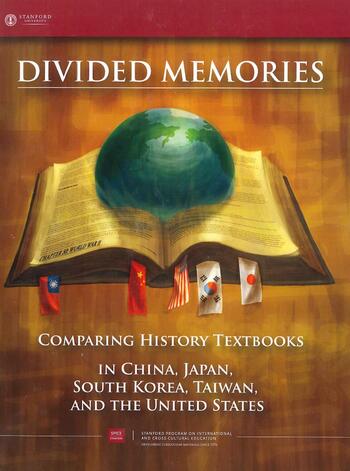
Yves Russell, reviewing Shorenstein APARC's Divided Memories: History Textbooks and the Wars in Asia for the 2014/2 issue of China Perspectives, says that the volume "makes two major contributions to existing literature on the problem of history textbooks in East Asia" with its parallel excerpts from textbooks on eight controversial themes and its "inclusion of American textbooks" in the debate on historical memories in Asia. Russell continues to note that "one of the book's great strengths [is showing that] Japanese textbooks do not highlight patriotism, revisionism, or nationalism or seek to justify the war—rather the contrary." 

Divided Memories is just one of the outputs of a multi-year history project on the effects of historical memories on postwar reconciliation. Most recently released was Wartime History Issues in Asia: Pathways to Reconciliation Final Report, a summary report of a Track II dialogue on the continuing impact of wartime history issues.

Hero Image
tangguantun
A Japanese postcard depicts the Japanese army entering Tangguantun, southwest of Tianjin, following the Marco Polo Bridge Incident of 1937.
All News button
1
Subscribe to Media