Red Stage, or Bringing the Authoritarian Streak Out
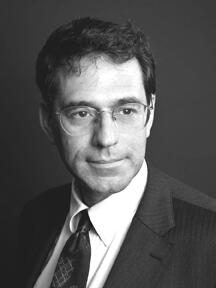
Who watches over the party-state? In this talk, Maria Repnikova examines the uneasy partnership between critical journalists and the state in China. More than a passive mouthpiece or a dissident voice, the media in China also plays a critical oversight role, one more frequently associated with liberal democracies than with authoritarian systems. Chinese central officials cautiously endorse media supervision as a feedback mechanism, as journalists carve out space for critical reporting by positioning themselves as aiding the agenda of the central state. By comparing media politics in the Soviet Union, contemporary Russia and China, her talk will highlight the distinctiveness of Chinese journalist-state relations, as well as renewed pressures facing journalists in the Xi era.
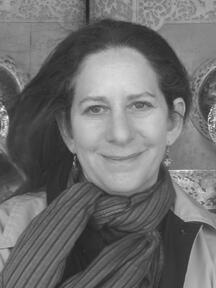
[[{"fid":"229579","view_mode":"crop_870xauto","fields":{"format":"crop_870xauto","field_file_image_description[und][0][value]":"","field_file_image_alt_text[und][0][value]":false,"field_file_image_title_text[und][0][value]":false,"field_credit[und][0][value]":"","field_caption[und][0][value]":"","thumbnails":"crop_870xauto","alt":"","title":""},"type":"media","field_deltas":{"7":{"format":"crop_870xauto","field_file_image_description[und][0][value]":"","field_file_image_alt_text[und][0][value]":false,"field_file_image_title_text[und][0][value]":false,"field_credit[und][0][value]":"","field_caption[und][0][value]":"","thumbnails":"crop_870xauto","alt":"","title":""}},"link_text":null,"attributes":{"style":"margin-left: 0px; margin-right: 15px; padding: 0px; float: left; height: 350px; width: 250px;","class":"media-element file-crop-870xauto","data-delta":"7"}}]]Maria Repnikova is a scholar of political communication in illiberal contexts, with a focus on Chinese media politics. She is currently an Assistant Professor of Global Communication and a Director of the Center for Global Information Studies at Georgia State University. Maria's work examines critical journalism, political propaganda, cyber nationalism, and global media branding in China, drawing on comparisons to Russia. Her work appeared in the China Quarterly, New Media & Society, Journal of Contemporary China, as well as in Foreign Affairs and Foreign Policy, amongst other venues. Her book, Media Politics in China: Improvising Power Under Authoritarianism, was just published by Cambridge University Press. Maria was a post-doctoral fellow at the Annenberg School for Communication. Maria holds a PhD in Politics from Oxford University, where she was a Rhodes Scholar.
China has undergone historic economic, social and cultural transformations since its Opening and Reform. Leading scholars explore expanding repertoires of control that this authoritarian regime – both central and local – are using to manage social fissures, dislocation and demands. What new strategies of governance has the Chinese state devised to manage its increasingly fractious and dynamic society? What novel mechanisms has the state innovated to pre-empt, control and de-escalate contention? China Program’s 2018 Winter Colloquia Series highlights cutting-edge research on contemporary means that various levels of the Chinese state are deploying to manage both current and potential discontent from below.
This talk focuses on the fundamental tensions inherent in governing China. Using examples from bureaucratic personnel management and social media controls, Prof. Zhou Xueguang will explore institutional responses and practices in state policymaking and implementation as governing entities in China have encountered changes and challenges of recent years. The talk will draw from Prof. Zhou’s recent book of the same title (published in Chinese, 中国国家治理的制度逻辑).
One of Zhou Xueguang's current research projects is a study of the rise of the bureaucratic state in China. He studies patterns of career mobility and personnel flow among different government offices to understand intra-organizational relationships in the Chinese bureaucracy.
His recent publications examine the role of bureaucracy in public goods provision in rural China (Modern China, 2011), interactions among peasants, markets and capital (China Quarterly, 2011), multiple logics in village elections (Chinese Social Science 2010, with Ai Yun), and collusion among local governments in policy implementation (Research in the Sociology of Organizations 2011, with Ai Yun and Lian Hong; Modern China, 2010).
China has undergone historic economic, social and cultural transformations since its Opening and Reform. Leading scholars explore expanding repertoires of control that this authoritarian regime – both central and local – are using to manage social fissures, dislocation and demands. What new strategies of governance has the Chinese state devised to manage its increasingly fractious and dynamic society? What novel mechanisms has the state innovated to pre-empt, control and de-escalate contention? China Program’s 2018 Winter Colloquia Series highlights cutting-edge research on contemporary means that various levels of the Chinese state are deploying to manage both current and potential discontent from below.
Shorenstein APARC
Stanford University
Encina Hall, E301
Stanford, CA 94305-6055
Xueguang Zhou is the Kwoh-Ting Li Professor in Economic Development, a professor of sociology, and a Freeman Spogli Institute for International Studies senior fellow. His main area of research is on institutional changes in contemporary Chinese society, focusing on Chinese organizations and management, social inequality, and state-society relationships.
One of Zhou's current research projects is a study of the rise of the bureaucratic state in China. He works with students and colleagues to conduct participatory observations of government behaviors in the areas of environmental regulation enforcement, in policy implementation, in bureaucratic bargaining, and in incentive designs. He also studies patterns of career mobility and personnel flow among different government offices to understand intra-organizational relationships in the Chinese bureaucracy.
Another ongoing project is an ethnographic study of rural governance in China. Zhou adopts a microscopic approach to understand how peasants, village cadres, and local governments encounter and search for solutions to emerging problems and challenges in their everyday lives, and how institutions are created, reinforced, altered, and recombined in response to these problems. Research topics are related to the making of markets, village elections, and local government behaviors.
His recent publications examine the role of bureaucracy in public goods provision in rural China (Modern China, 2011); interactions among peasants, markets, and capital (China Quarterly, 2011); access to financial resources in Chinese enterprises (Chinese Sociological Review, 2011, with Lulu Li); multiple logics in village elections (Social Sciences in China, 2010, with Ai Yun); and collusion among local governments in policy implementation (Research in the Sociology of Organizations, 2011, with Ai Yun and Lian Hong; and Modern China, 2010).
Before joining Stanford in 2006, Zhou taught at Cornell University, Duke University, and Hong Kong University of Science and Technology. He is a guest professor at Peking University, Tsinghua University, and the People's University of China. Zhou received his Ph.D. in sociology from Stanford University in 1991.
Hye Sung Kim joins the Walter H. Shorenstein Asia-Pacific Research Center (Shorenstein APARC) during the 2017–18 academic year from MBC (Munhwa Broadcasting Corporation), one of the leading South Korean TV and radio network companies. During her career as a reporter at MBC, she reported from Baghdad in 2004 on the war in Iraq, and also covered North Korean issues in a weekly news magazine program Unification Observatory in 2013-14.
Kim's research interests focus mainly on inter-Korean relations and the interactions between the powerful nations surrounding the Korean peninsula. During her research period at Shorenstein APARC, Kim will study this subject with a view as a journalist.
Kim received a BA in Aesthetics with minor in International Relations from the Seoul National University.
Protecting freedom of expression is essential to vibrant democracies and to meet the needs of people now and into the future, Indian historian Ramachandra Guha said at a Stanford event seeking to draw people together for policy-relevant discussions about India’s growth following 25 years of reforms.
Guha’s remarks were part of a colloquium titled “Eight Threats to Freedom of Expression in India,” and one in a series, co-hosted by the Shorenstein Asia-Pacific Research Center (APARC) and Center for South Asia.
The colloquia, which continue this spring, are motivated by an opportunity to garner reflections and expertise from Kathleen Stephens, the William J. Perry Fellow in the Freeman Spogli Institute, who served as chargé d'affaires at the U.S. Embassy New Delhi in 2014.
“As I was preparing to go to India, I read Ram’s extraordinary book India after Gandhi, which provided much-needed historical, cultural and political context,” Stephens said. “When I visited Bangalore, we met and instantly clicked as we talked about U.S.-India relations. It’s a pleasure to welcome him back to Stanford.”
Guha, a renowned author and scholar, has written numerous critically acclaimed books about India’s history and culture as well as social ecology, and is a frequent commentary contributor to publications such as The Telegraph and Hindustan Times. In 2000, Guha was a visiting professor at Stanford, where he taught courses on the politics and culture of South Asia and cross-cultural perspectives on the global environmental debate.
India is often referred to as the world’s largest democracy for its population size of 1.3 billion and system of governance since partition and independence in 1947. Guha said that, while India is “solidly and certifiably democratic,” there are serious flaws, including growing threats to freedom of expression of Indian artists, filmmakers and writers.
Indian society, Guha said, has become too sensitive to criticism, wherein “somebody will take objection” to any message. This kind of environment has encouraged newspaper editors to self-censor, for example, and led public figures to, at times, neglect to protect artists, filmmakers and writers.
In total, Guha detailed eight threats to freedom of expression in contemporary India: 1) archaic colonial laws affecting the first amendment, 2) imperfections in the judicial system, 3) rising importance of identity politics, 4) complicity of the police force, 5) pusillanimity of politicians, 6) dependence of media on government-sponsored advertisements, 7) dependence of media on commercially-sponsored advertisements and 8) ideologically–driven writers.
Would an absence of those threats imply freedom of expression? Responding to the question from the audience, Guha lamented that the answer wasn’t simple. His task was to offer a diagnosis of the challenges, he said, and not provide instruction on how to solve them, but in general, focused efforts bear change.
“Building democracies is about quiet persistent work,” Guha said of next steps in the process to extinguish threats to freedom of expression. “I think quiet persistent work in repairing our institutions, modernizing our laws and improving civil society institutions can still mitigate some of the threats.”
Guha expressed optimism about India’s civil society, noting an expansion in the supply of non-governmental organizations working on social issues and private philanthropists funding projects in that sector. But he tempered: “we could do more.”
Stephens ended the event by thanking Guha for leading the discussion, and referenced America’s first president George Washington, who at the end of his term in office, called upon citizens to be “‘anxious, jealous guardians of our democracy.’”
“And, I see that today in Ram and in the many people here – very jealous, anxious and passionate guardians of our democracy – who we can learn a lot from,” she said.
Emerging technologies, stemming from the heart of Silicon Valley and extending to Asia and beyond, have pushed the bounds of how stories are told by journalists and the way in which readers interact with them. The Shorenstein Journalism Award, an annual prize given by the Shorenstein Asia-Pacific Research Center (APARC), celebrates 15 years of recognizing distinguished journalists for their innovative and responsible journalism amid social and technological change.
The prize began with “the idea of a media award for a person who has the most significant impact on the relationship with Asia-Pacific nations in the United States,” according to Walter H. Shorenstein, who spoke about his twin interests of Asia and the press in a 2010 oral history project interview and was the benefactor after whom the center is named.
Shorenstein APARC and Harvard’s Shorenstein Center on Media, Politics and Public Policy jointly presented the award for six years. Shorenstein APARC has continued the initiative, and each year, brings the award winner to Stanford to talk with the broader campus community, and since 2011, has alternated between a recipient from the West, who has mainly addressed an American audience, and a recipient from Asia.
The prize seeks to inspire the next generation of U.S. journalists focused on Asia, as well as Asian journalists, who pave the way for press freedom in their countries.
Award winners have explored a multitude of topics over the years, from human rights in North Korea to the rise of democracy in Indonesia and from the U.S.-Japan alliance to gender equality in India. And this year adds an additional view on China; veteran journalist Ian Johnson will address religion and value systems in a panel discussion on May 1 with Xueguang Zhou, Stanford professor of sociology, and Orville Schell, director of the Asia Society's Center on U.S.-China Relations, moderated by Daniel C. Sneider, Shorenstein APARC associate director for research.
To mark the award’s tenure, Shorenstein APARC asked award alumni to answer the question, “What do you think the future holds for journalism in/about Asia?” Their responses are below.
Barbara Crossette is the U.N. correspondent for The Nation and a columnist for India Abroad. She received the Shorenstein Journalism Award in 2010.
Journalism in Asia has had a long history of covering revolutions and wars. However, peace has reigned over Asia for near on 40 years. Yet, the peace and stability in Asia looks increasingly precarious. Asia too is not immune to populist nationalism. In this climate, Asia could yet again become the battleground for dislocation, revolution and war. Journalism, on top of reacting to potential crises, will be critical for proactively finding ways to prevent and defuse crises in the region.
Yoichi Funabashi is the chairman of the Rebuild Japan Initiative Foundation. He received the Shorenstein Journalism Award in 2015.
Ian Buruma is a writer and the Paul W. Williams Professor of Democracy, Human Rights, and Journalism at Bard College. He received the Shorenstein Journalism Award in 2008.
Seth Mydans is a contributing writer for the New York Times. He received the Shorenstein Journalism Award in 2009.
Barbara Demick is the Los Angeles Times’ bureau chief in New York and was formerly bureau chief in Beijing and in Seoul. She is the author of Nothing to Envy: Ordinary Lives in North Korea and Logavina Street: Life and death in a Sarajevo Neighborhood. She received the Shorenstein Journalism Award in 2012.
Aung Zaw is the founder and editor-in-chief of The Irrawaddy. He received the Shorenstein Journalism Award in 2013.
Jacob Schlesinger is a senior Washington correspondent for the Wall Street Journal. He received the Shorenstein Journalism Award in 2014.
Orville Schell is the Arthur Ross Director of the Center on U.S.-China Relations at the Asia Society in New York, and former dean of the School of Journalism at the University of California, Berkeley. He received the Shorenstein Journalism Award in 2003.
John Pomfret was a foreign correspondent with the Washington Post for many years. He is the author of The Beautiful Country and the Middle Kingdom: America and China from 1776 to the Present. He received the Shorenstein Journalism Award in 2007.
Ian Johnson, a veteran journalist with a focus on Chinese society, religion and history, is the 2016 recipient of the Shorenstein Journalism Award. The award, given annually by the Walter H. Shorenstein Asia-Pacific Research Center, is conferred to a journalist who produces outstanding reporting on Asia and has contributed to greater understanding of the complexities of Asia. He will deliver a keynote speech and participate in a panel discussion on May 1, 2017, at Stanford.
“Ian Johnson is one of those rare writers who has not only watched China’s evolution over the long haul, but who is also deeply steeped in the culture and politic of both Europe and the United States as well,” said Orville Schell, the Arthur Ross Director at the Asia Society of New York’s Center on U.S.-China Relations and jury member for the award. “This cross-cultural grounding has imbued his work on China with a humanistic core that, because it is always implicit rather than explicit, is all the more persuasive.”
Ian Buruma, the Paul W. Williams Professor of Democracy, Human Rights, and Journalism at Bard College and jury member for the award, added further praise, “Ian Johnson is one of the finest journalists in the English language. He writes about China with extraordinary insight, deep historical knowledge and a critical spirit tempered by rare human sympathy. His work on China is further enriched by wider interests, such as the problems of Islamist extremism in the West, specifically Germany, where he lives when he is not writing from China.”
The Shorenstein award, now in its 15th year, originally in partnership with the Shorenstein Center on Press, Politics and Public Policy at Harvard, was created to honor American journalists who through their writing have helped Americans better understand Asia. In 2011, the award was broadened to encompass Asian journalists who pave the way for press freedom, and have aided in the growth of mutual understanding across the Pacific. Recent recipients of the award include Yoichi Funabashi, former editor-in-chief of the Asahi Shimbun; Jacob Schlesinger of the Wall Street Journal; and Aung Zaw, founder of the Irrawaddy, a Burmese publication.
Johnson has spent over half of the past 30 years in the Greater China region, first as a student in Beijing from 1984-85, and then in Taipei from 1986-88. He later worked as a newspaper correspondent in China, from 1994-96 with Baltimore's The Sun, and then from 1997-2001 with the Wall Street Journal, covering macroeconomics, China’s social issues and World Trade Organization accession.
Johnson returned to China in 2009, where he now lives and writes for the New York Times and freelances for the New York Review of Books, the New Yorker and National Geographic. He also teaches and leads a fellowship program at the Beijing Center for Chinese Studies.
Johnson has also worked in Germany, serving as the Wall Street Journal’s Germany bureau chief and senior writer. Early on in his career, he covered the fall of the Berlin Wall and German unification, and later returned to head coverage on areas including the introduction of the euro and Islamist terrorism.
Johnson has been twice nominated for the Pulitzer Prize and won in 2001 for his coverage of the Chinese government’s suppression of the Falun Gong spiritual movement and its implications of that campaign for the future. He is also the author of two books, Wild Grass (Pantheon, 2004) which examines China’s civil society and grassroots protest, and A Mosque in Munich (Houghton Mifflin Harcourt, 2010). His next book, The Souls of China: The Return of Religion after Mao (Pantheon, April 2017) explores the resurgence of religion and value systems in China.
Additional details about the panel discussion and the award are listed below.
About the Panel Discussion and Award Ceremony
A keynote speech will be delivered by Shorenstein Journalism Award winner Ian Johnson, followed by a panel discussion with Orville Schell, the Arthur Ross Director at the Asia Society of New York’s Center on U.S.-China Relations, and Xueguang Zhou, professor of sociology at Stanford; moderated by Daniel C. Sneider, associate director for research at Shorenstein APARC.
May 1, 2017, from 12:00 – 1:30 p.m. (PDT)
Bechtel Conference Center, Encina Hall, 616 Serra Street, Stanford, CA 94305
The keynote speech and panel discussion are open to the public. The award ceremony will take place in the evening for a private audience.
To RSVP for the panel discussion, please visit this page.
About the Shorenstein Journalism Award
The Shorenstein Journalism Award honors a journalist not only for excellence in their field of reporting on Asia, but also for their promotion of a free, vibrant media and for the future of relations between Asia and the United States. Originally created to identify American and Western journalists for their work in and on Asia, the award now also recognizes Asian journalists who have contributed significantly to the development of independent media in Asia. The award is presented annually and includes a prize of $10,000.
The award is named after Walter H. Shorenstein, the philanthropist, activist and businessman who endowed two institutions that are focused respectively on Asia and the press - the Walter H. Shorenstein Asia-Pacific Research Center at Stanford and the Joan Shorenstein Center on Press, Politics and Public Policy in the Kennedy School of Government at Harvard.
Past recipients of the award include: Yoichi Funabashi, formerly of the Asahi Shimbun (2015); Jacob Schlesinger of the Wall Street Journal (2014), Aung Zaw of the Irrawaddy (2013), Barbara Demick of the Los Angeles Times (2012), Caixin Media of China (2011), Barbara Crossette of the New York Times (2010), Seth Mydans of the New York Times (2009), Ian Buruma (2008), John Pomfret of the Washington Post (2007), Melinda Liu of Newsweek (2006), Nayan Chanda of the Far Eastern Economic Review (2005), Don Oberdofer of the Washington Post (2004), Orville Schell (2003), and Stanley Karnow (2002).
A jury selects the award winner. The 2016 jury comprised of:
Ian Buruma, the Paul W. Williams Professor of Democracy, Human Rights, and Journalism at Bard College, is a noted Asia expert who frequently contributes to publications including the New York Times, the New York Review of Books and the New Yorker. He is a recipient of the Shorenstein Journalism Award and the international Erasmus Prize (both in 2008).
Nayan Chanda is the director of publications and the editor of YaleGlobal Online Magazine at the Yale Center for the Study of Globalization. For nearly thirty years, Chanda was at the Hong Kong-based magazine, Far Eastern Economic Review. He writes the ‘Bound Together’ column in India’s Business World and is the author of Bound Together: How Traders, Preachers, Adventurers and Warrior Shaped Globalization. Chanda received the Shorenstein Journalism Award in 2005.
Susan Chira is a senior correspondent and editor on gender issues and former deputy executive editor and foreign editor at the New York Times. Chira has extensive experience in Asia, including serving as Japan correspondent for the Times in the 1980s. During her tenure as foreign editor, the Times won the Pulitzer Prize four times for international reporting on Afghanistan, Russia, Africa and China.
Donald K. Emmerson is a well-respected Indonesia scholar and director of Shorenstein APARC’s Southeast Asia Program and a research fellow for the National Asia Research Program. Frequently cited in international media, Emmerson also contributes to leading publications, such as Asia Times and International Business Times.
Orville Schell is the Arthur Ross Director at the Asia Society of New York’s Center on U.S.-China Relations and former jury member for the Pulitzer Prize for international reporting. Schell has written extensively on China and was awarded the 1997 George Peabody Award for producing the groundbreaking documentary The Gate of Heavenly Peace. He received the Shorenstein Journalism Award in 2003.
Daniel C. Sneider is the associate director for research at Shorenstein APARC, writing on Asian security issues, wartime historical memory and U.S policy in Asia. He also frequently contributes to publications such as Foreign Policy, Asia Policy and Slate. Sneider had three decades of experience as a foreign correspondent serving in India, Japan and Russia for the Christian Science Monitor and as the national and foreign editor of the San Jose Mercury News and a syndicated columnist on foreign affairs for Knight-Ridder.
For more information about the award, please visit this page.
This discussion will be based on the authors' recently published book, Taiwan's Democracy Challenged: The Chen Shui-bian Years, Lynne Rienner Publishing (2016).
Abstract
At the end of Chen Shui-bian’s two terms as the president of Taiwan, his tenure was widely viewed as a disappointment, if not an outright failure. Today, the Chen years (2000-2008) are remembered mostly for relentless partisan fighting over cross-Strait relations and national identity questions, prolonged political gridlock, and damaging corruption scandals—as an era that challenged, rather than helped consolidate, Taiwan’s young democracy and squandered most of the promise with which it began.
Yet as Taiwan’s Democracy Challenged: The Chen Shui-bian Years documents, this conventional narrative obscures a more complex and more positive story. The chapters here cover the diverse array of ways in which democratic practices were deepened during this period, including the depoliticization of the military and intelligence forces, the ascendance of an independent and professional judicial system, a strengthened commitment to constitutionalism and respect for the rule of law, and the creation of greater space for civil society representatives in the policy-making process. Even the conventional wisdom about unprecedented political polarization during this era is misleading: while elite politics became more divided and acrimonious, mass public opinion on cross-Strait relations and national identity was actually converging.
Not all developments were so positive: strong partisans on both sides of the political divide remained only weakly committed to democratic principles, the reporting of news organizations became more sensationalist and partisan, and the Taiwanese state’s exceptional autonomy from sectoral interests and vaunted capacity for long-term planning deteriorated. But on the whole, the authors argue, these years were not squandered. By the end of the Chen Shui-bian era, Taiwan’s democracy was firmly consolidated.
This event is sponsored by the Taiwan Democracy Project in the Center on Democracy, Development, and the Rule of Law. It is free and open to the public, and lunch will be served. Please RSVP by October 31.
CISAC Central Conference Room, Encina Hall 2nd Floor
Kharis Templeman is the former project manager of the Taiwan Democracy and Security Project in the U.S.-Asia Security Initiative at the Shorenstein Asia-Pacific Research Center (APARC). He currently serves as advisor to the Taiwan Democracy and Security Project. A fluent Mandarin speaker, he has lived, worked and traveled extensively in both Taiwan and the People’s Republic of China.
His research includes projects on party system institutionalization and partisan realignments, electoral integrity and manipulation in East Asia, the politics of defense spending in Taiwan, and the representation of Taiwan’s indigenous minorities. His most recent publication is “The China Model: How Successful Is the Chinese Regime?” a review essay in the Taiwan Journal of Democracy. He is also the editor (with Larry Diamond and Yun-han Chu) of Taiwan’s Democracy Challenged: The Chen Shui-bian Years (2016, Lynne Rienner Publishing). Other work has appeared in Comparative Political Studies and the APSA Comparative Democratization Newsletter.
Dr. Templeman currently serves as coordinator of the American Political Science Association Conference Group on Taiwan Studies (CGOTS) and as a regional manager for the Varieties of Democracy (V-Dem) Project. He holds a BA (2003) from the University of Rochester and a PhD (2012) in political science from the University of Michigan.