Public Health
Paragraphs

In this article, I consider what a casual observer can see of a notorious product’s primary place of fabrication. Few products have been criticized in recent years more than cigarettes. Meanwhile, around the world, the factories manufacturing cigarettes rarely come under scrutiny. What have been the optics helping these key links in the cigarette supply chain to be overlooked? What has prompted such optics to be adopted and to what effect? I address these questions using a comparative approach and drawing upon new mapping techniques, fieldwork, and social theory. I argue that a corporate impulse to hide from public health measures, including those of tobacco control, is not the only force to be reckoned with here. Cigarette factory legibility has been coproduced by multiple processes inherent to many forms of manufacturing. Cigarette makers, moreover, do not always run from global tobacco control. Nor have they been avoiding all other manifestations of biopolitics. Rather, in various ways, cigarette makers have been embracing biopolitical logics, conditioning them, and even using them to manage factory legibility. Suggestive of maneuvers outlined by Butler (2009) and Povinelli (2011) such as “norms of recognizability” and “arts of disguise,” cigarette factory concealment foregrounds the role of infrastructural obfuscation in the making of what Berlant (2007) calls “slow death.” Special focus on manufacturing in China illustrates important variations in the public optics of cigarette factories. The terms cloak and veil connote these variations. Whereas tactics currently obscuring cigarette manufacturing facilities generally skew toward an aesthetic of the opaque cloak in much of the world, there are norms of recognizability and arts of disguise applied to many factories across China that are more akin to a diaphanous, playful veil. I conclude with a discussion of how this article’s focus on factory legibility gestures toward novel forms of intervention for advocates working at tackling tobacco today, offering them an alternative political imaginary in what is one of the world’s most important areas of public policy making.

All Publications button
1
Publication Type
Journal Articles
Publication Date
Journal Publisher
Anthropological Quarterly
Authors
Matthew Kohrman
Number
4
News Type
News
Date
Paragraphs

The Walter H. Shorenstein Asia-Pacific Research Center (APARC), in pursuit of training the next generation of scholars on contemporary Asia, has selected three postdoctoral fellows for the 2016-17 academic year. The cohort includes two Shorenstein Postdoctoral Fellows and one Developing Asia Health Policy Fellow; they carry a broad range of interests from hospital reform to the economic consequences of elite politics in Asia.

The fellows will begin their year of academic study and research at Stanford this fall.

Shorenstein APARC has for more than a decade sponsored numerous junior scholars who come to the university to work closely with Stanford faculty, develop their dissertations for publication, participate in workshops and seminars, and present their research to the broader community. In 2007, the Asia Health Policy Program began its fellowship program to specifically support scholars undertaking comparative research on Asia health and healthcare policy.

The 2016-17 fellows’ bios and their research plans are listed below:


Shorenstein Postdoctoral Fellows


Image
aditya dasgupta   photo
Aditya "Adi" Dasgupta is completing his doctorate in the Department of Government at Harvard University. At Stanford, he will work on converting his dissertation on the historical decline of single-party dominance and transformation of distributive politics in India into a book manuscript. More broadly, his research interests include the comparative economic history of democratization and distributive politics in emerging welfare states, which he studies utilizing formal models and natural experiments. He received a Bachelor of Arts from Cambridge University and a Master of Science from Oxford University and has worked at the Public Defender Service in Washington D.C., his hometown.


Image
dong zhang photo2
Dong Zhang is a political scientist whose research interests include political economy of development, with focus on the economic consequences of elite politics, and on the historical origins of long-run economic development. His dissertation examines the political logic of sustaining state capitalism model in weakly institutionalized countries with a primary focus on China. At Stanford, Zhang will develop his dissertation into a book manuscript and pursue other research projects on comparative political economy and authoritarian politics. He will receive his doctorate in political science from Northwestern University in 2016. Zhang holds bachelor’s degrees in public policy and economics, and a master’s degree in public policy from Peking University, Beijing.


Developing Asia Health Policy Postdoctoral Fellow


Image
ngando pic
Ngan Do is strongly interested in health system related issues, especially health financing, human resources for health, and health care service delivery. Do implemented comparison studies at regional level as well as participated in fieldwork in Cambodia, Lao, the Philippines, Korea and Vietnam. At Stanford, she will work on the public hospital reforms in Asia, focusing on dual practice of public hospital physicians and provider payment reforms. Do achieved her doctorate in health policy and management at the College of Medicine, Seoul National University. She earned her master’s degree in public policy at the KDI School of Public Policy and Management in Seoul, and her bachelor’s degree in international relations at the Diplomacy Academy of Vietnam (previously the Institute for International Relations).


Hero Image
160105 3244
All News button
1
Authors
Lisa Griswold
News Type
News
Date
Paragraphs
Myanmar’s historic election last year brought an end to more than 50 years of military rule, ushering in the National League for Democracy party led by Aung San Suu Kyi. A new administration brings with it an opportunity to rehabilitate the country’s fragile health system, experts wrote in the Lancet.
 
In the editorial, Stanford health economist Karen Eggleston and co-authors Thant Sun Htoo, Ngoc Minh Pham and Phyu Phyu Thin Zaw call for innovative leadership in Myanmar’s public healthcare system, which is currently facing substantial challenges and inequalities. Creating policies that equitably allocate health resources should be a key goal of the administration that has set out to achieve universal health coverage by 2030. This would not only work to raise public health but also build much-needed trust between the population and government, they said.
 
Pham and Zaw are both former visiting fellows of the Asia Health Policy Program, who spent the 2014-15 academic year working on research activities at the Walter H. Shorenstein Asia-Pacific Research Center. Last July, Zaw wrote an op-ed in The Diplomat highlighting a doctor-led campaign against the “militarization” of the Ministry of Health called the “Black Ribbon Movement.” The movement is comprised of doctors and healthcare staff who are protesting the appointment of military staff to top health administration positions.
 
The Lancet's focus on healthcare in Myanmar coincided with the global commemoration of Universal Health Coverage Day, an annual day that urges greater action toward ensuring equal access to essential health services worldwide: http://universalhealthcoverageday.org/.

The Stanford Program on International and Cross-Cultural Education also interviewed Zaw while at Stanford. In this video released on March 10, Zaw highlights the changes Myanmar has already undertaken to reform its healthcare sytem and the challenges the country still faces.


Hero Image
rtr34r42
Myanmar pro-democracy leader Aung San Suu Kyi attends a parliamentary meeting at the Lower House of Parliament in Naypyitaw, July 9, 2012.
Reuters/Soe Zeya Tun
All News button
1
Paragraphs

Myanmar (Burma) is undergoing a complex political and economic transformation, from a long civil war and military regime to a peace process and democratisation. Since 2011, the Myanmar Ministry of Health has started to rehabilitate the fragile health system, setting the goal of achieving universal health coverage by 2030. To achieve this target, Myanmar will have to face substantial challenges; arguably one of the most important difficulties is how to allocate limited health-care resources equitably and effectively.

All Publications button
1
Publication Date
Journal Publisher
The Lancet
Authors
Phyu Phyu Thin Zaw
Pham Ngoc Minh
Karen Eggleston
Number
10008
Authors
Lisa Griswold
News Type
News
Date
Paragraphs

China announced plans to discontinue its “one-child policy” in October, relaxing over three decades of controversial family planning policies and changing to a universal two-child policy. This new policy is a step forward, but China’s population aging and gender imbalance will create challenges for decades, according to a leading Stanford health researcher.

“China has reached a certain level of social and economic development where low fertility and population aging have become norms,” said Karen Eggleston, a senior fellow in the Freeman Spogli Institute (FSI) and director of the Asia Health Policy Program. “Similar trends are seen in Japan and South Korea, and governments are struggling to catch up.”


[[{"fid":"214529","view_mode":"crop_870xauto","fields":{"format":"crop_870xauto","field_file_image_description[und][0][value]":"","field_file_image_alt_text[und][0][value]":false,"field_file_image_title_text[und][0][value]":false,"field_credit[und][0][value]":"Rod Searcey","field_caption[und][0][value]":"","field_related_image_aspect[und][0][value]":"0","thumbnails":"crop_870xauto"},"type":"media","field_deltas":{"1":{"format":"crop_870xauto","field_file_image_description[und][0][value]":"","field_file_image_alt_text[und][0][value]":false,"field_file_image_title_text[und][0][value]":false,"field_credit[und][0][value]":"Rod Searcey","field_caption[und][0][value]":"","field_related_image_aspect[und][0][value]":"0","thumbnails":"crop_870xauto"}},"link_text":null,"attributes":{"width":"870","style":"margin-bottom: 30px; margin-left: 15px; float: right; width: 250px; height: 285px;","class":"media-element file-crop-870xauto","data-delta":"1"}}]]


The policy change comes amid concerns of potential labor shortages and a burgeoning aging population that could pressure the Chinese economy for years to come. 

The country has had record growth – China’s GDP growth rate averaged 8.6 percent over the past five years – which is now slowing. That trend coupled with China’s rising life expectancy reinforces the need for a healthy, economically productive population to support the elderly, experts say.

“Demographers who study China knew a policy change was coming, but not when,” said Eggleston. “The policy was strategically announced with the Five Year Plan – a sort of developmental roadmap for the country.”

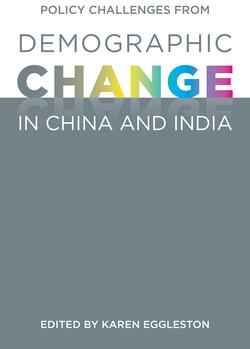
A forthcoming book, Policy Challenges from Demographic Change in China and India, edited by Eggleston examines the policy challenges posed by demographic change in China and India, from family planning to social pensions systems that support the elderly. One chapter looks exclusively at population policy, sex ratio and fertility in China.

A spur to action?

A shift to a consistent, nationwide two-child policy is a step in the right direction, Eggleston said, and it is unlikely to translate to a boom in the birthrate.

Some areas of the country and specific couples already enjoyed a two-child policy due to local policy differences and an earlier national policy easing. In 2013, the Chinese government allowed couples with a husband or wife from a single-child family to have a second child.

Chinese cities that never had a one-child policy to begin with, like Hong Kong and Macau, have very low fertility. A recent article in China Journal noted that, despite the ubiquity of the one-child policy campaign, China’s rapid economic development since 1980 deserves the “lion’s share of credit” for reduced births as the country’s total fertility rate has declined.

“The real question is how responsive the Chinese will be,” Eggleston said. “It’s not clear that there will be a noticeable response in the short or medium-term.”

Implementation of the policy will take time, but China will work “quite expeditiously” to apply such policies so that people’s expectations are met. Alongside legal change of China’s varying local policies, it’s expected that China will employ several public education campaigns and its cadre of family planning staff as conduits for disseminating the new national policy, Eggleston said.


Image
Chinese Family Planning Poster

A 1986 poster highlights China's one-child policy.

Credit: Flickr/Collection Stefan R. Landsberger, International Institute of Social History (Amsterdam).


But other factors are at play, too, such as urbanization and changes in labor force participation.

“Young and middle-aged couples will be thinking twice about having another child because of education expense, job demands and the need to support aging parents,” Eggleston said.

paper published by Eggleston and three other scholars in the Journal of Labor & Development analyzed how employment of females from rural areas affected fertility, using data from a survey of 2,355 married women in China. The survey examined “off-farm” employment, which was defined as travel to another village, town or city for work.

The researchers found that off-farm employment for those women reduced the probability of having more than one child by 54.8 percent and the probability of preferring more than one child by 49.6 percent. An earlier blog piece on VoxEU highlighted those research outcomes.

Another aspect of China’s demographic change is gender imbalance. Male preference has long been a cultural factor in China and, with the pressures of the one-child policy, a cause behind its skewed population.

That reality will not dramatically change soon, Eggleston said. Even if the end to the one-child policy brought the sex ratio at birth back to normal levels, the existing imbalance of the younger population will create millions of “forced bachelors” among poorer men who cannot find brides, as well as a whole set of related issues.

Choice restored

What the policy assuredly does, though, is remove a barrier. Many Chinese women who before did not have the opportunity to give birth to a second child, now have that opportunity.


[[{"fid":"221573","view_mode":"crop_870xauto","fields":{"format":"crop_870xauto","field_file_image_description[und][0][value]":"","field_file_image_alt_text[und][0][value]":false,"field_file_image_title_text[und][0][value]":false,"field_credit[und][0][value]":"","field_caption[und][0][value]":"","field_related_image_aspect[und][0][value]":"","thumbnails":"crop_870xauto"},"type":"media","field_deltas":{"3":{"format":"crop_870xauto","field_file_image_description[und][0][value]":"","field_file_image_alt_text[und][0][value]":false,"field_file_image_title_text[und][0][value]":false,"field_credit[und][0][value]":"","field_caption[und][0][value]":"","field_related_image_aspect[und][0][value]":"","thumbnails":"crop_870xauto"}},"link_text":null,"attributes":{"width":"870","style":"margin-right: 15px; padding: 10px; float: left; height: 321px; width: 230px;","class":"media-element file-crop-870xauto","data-delta":"3"}}]]


“This is a crucial arena of choice restored to the Chinese,” Eggleston wrote of the 2013 policy relaxation in a brief presented at the Federal Reserve Bank of Kansas City.

Previously, the absence of such a freedom led some couples to face substantial fines from the government, depending on the local variation of the one-child policy.

“Regardless of the new policy, demographic trends point to the importance of investing in child education, nutrition and skill development,” Eggleston said.

A similar message is carried in a chapter in Policy Challenges, co-authored by Sanghyop Lee and Qiulin Chen, who suggest that putting resources toward human capital development – education and health – can offset the destabilizing effects of demographic transition.

Research being done by FSI’s Rural Education Action Program led by Stanford professor Scott Rozelle works to directly inform education, health and nutrition policy in China.

Spending more on education – particularly for women and girls – is win-win. It complements pro-employment policies, and boosts productivity for women and the economy as a whole, Eggleston said.

Hero Image
beijing woman ballons
A woman in Beijing, China, holds children's balloons.
Flickr/Michael Abshear
All News button
1
Paragraphs

Objective: This study focuses on Hangzhou, a Chinese city with a population of nine million urban and rural residents, to examine the successful development and innovation experience of its primary health care service system during the new health reform in China since 2009 and then disseminate the findings through international third parties.

Methods: Measures such as data analysis, study of documents and regulations, fieldwork, and expert discussions were used to systematically investigate primary health care in Hangzhou. The findings will have a profound practical impact on the health reform for nine million rural and urban residents throughout Hangzhou’s municipal boroughs.

Results: Community health services in Hangzhou are characterized as follows: They are government led; they are guaranteed with enough financing, personnel, facilities, and regulation; supported by the unified information platform; general practitioners have been assigned the key role of health ‘gatekeepers’; they provide primary care combined with basic public health services; there are integrated urban and rural health services and insurance coverage; and there is health care‐pension‐nursing integration and general practitioner ‐ contracted ‘smart’ services. Preliminary data collection and analysis indicate that the basic health status of Hangzhou residents is superior to that of residents of China as a whole, and some health indicators in Hangzhou are comparable to those in Western developed countries.

Conclusion: It is reasonable to believe that the primary health care level in China, including Hangzhou, will be further developed and promoted with indexed performance evaluations and more effective implementation of additional measures.

All Publications button
1
Publication Type
Journal Articles
Publication Date
Journal Publisher
Family Medicine and Community Health
Authors
Feng Lin
Encina Hall E301616 Serra StreetStanford, CA94305-6055
(650) 724-5321 (650) 723-6530
0
darika_saingam.jpg Ph.D.

Darika Saingam joins the Walter H. Shorenstein Asia-Pacific Research Center as the Developing Asia Health Policy Postdoctoral Fellow for the 2015-16 year.  Saingam’s research interests are public health, substance abuse, drug policy and Southeast Asia. While at Shorenstein APARC, she will research the evolution of substance-abuse control measures and related policy in Thailand.  Saingam seeks to identify potentially effective policy directions suitable for Thailand, and other developing countries in Southeast and East Asia.

Saingam completed her doctorate in epidemiology at the Prince of Songkla University in 2012, and has served as a researcher at the University’s epidemiology unit since, as well as a researcher at the Thailand Substance Abuse Academic Network since 2014.

2015-16 Developing Asia Health Policy Postdoctoral Fellow
Paragraphs

The conference report from the workshop, Community Health Services and Primary Health Care Reform in China, held on June 18, 2015 at the Stanford Center at Peking University. The report is written in both Chinese and English.

The workshop focused on the importance of community health services and primary health care reform in China and what clinicians and policymakers are doing to improve health outcomes. Researchers and clinicians from China and the United States discussed the policy challenges to improving China’s health care system at the community and grassroots level. Key themes included China’s local experiences, innovations in Hangzhou, and how the private sector might play a role in strengthening community health in China.

All Publications button
1
Publication Type
Commentary
Publication Date
Journal Publisher
ACON Primary Care Research Center and the Shorenstein Asia-Pacific Research Center
News Type
Q&As
Date
Paragraphs

Demographic change is fast becoming one of the most globally significant trends of the 21st century. Declining fertility rates and rising life expectancy -- two of the patterns triggering demographic change -- will cause vast socioeconomic strains, especially in the Asia-Pacific region, which has some of the world's most populous countries. Stanford health researcher Karen Eggleston says comparison and cross-collaboration are needed to induce creative solutions.

In an interview with the Office of International Affairs, Eggleston discusses her research approaches and partnerships in the study of healthcare systems and health policy in the Asia-Pacific region. She leads a multiyear research initative that examines comparative policy responses to demographic change in East Asia. Eggleston says the goal is to help move global health policy to a place where everyone has an "equal opportunity for a healthier and longer life."

The Q&A may be viewed in full by clicking here.

Analyzing demographic change in China, Japan and South Korea is the focus of the book Aging Asiaan outcome of a conference between the Walter H. Shorenstein Asia-Pacific Research Center and the Stanford Center on Longevity.

Eggleston also coedited a special issue of the Journal of the Economics of Ageing with David Bloom, a professor at Harvard University, looking at a range of economic issues related to population change in China and India.

Hero Image
dsc 4402 online
Karen Eggleston (left) confers with a healthcare worker at a primary care clinic in Hangzhou, China.
Robin Yao
All News button
1
Subscribe to Public Health