Biofuels
-

This event will offer simultaneous translation between Japanese and English. 
当イベントは日本語と英語の同時通訳がついています。

This is a virtual event. Please click here to register and generate a link to the talk. 
The link will be unique to you; please save it and do not share with others.
当イベントはZoomウェビナーで行われます。ウェビナーに参加するためには、こちらのリンクをクリックし、事前登録をして下さい。

March 1, 5-6:30 p.m. California time/ March 2, 10-11:30 a.m. Japan time

This event is part of the 2022 Japan Program Winter webinar series, The Future of Social Tech: U.S.-Japan Partnership in Advancing Technology and Innovation with Social Impact


The challenges of climate change require solutions on multiple fronts, one of which is technological innovation. Attempts for innovation for new energy sources have been ongoing in many parts of the world, and Japan has produced a number of new technologies. This session will focus on two of the most promising innovations coming out of Japan, biofuel and hydrogen energy, and assess their promises and challenges, highlighting technological, regulatory, and business aspects of developing new technologies. Where do these technologies fit in the energy portfolio that would address the issues of climate change and what can Japan and the United States do to collaboratively solve the key problems in advancing these technologies further? Three leading experts in the field will discuss these questions that would shape the future of climate change. 


Panelists

Image
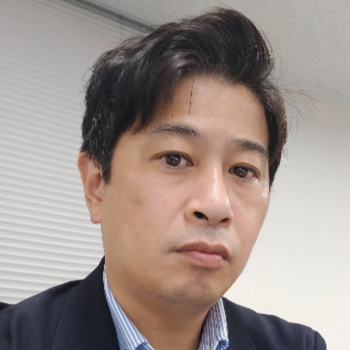
Headshot photo of Mitsuru Izumo
Mitsuru Izumo is a graduate of the University of Tokyo, having specialised in agricultural structural
management. In 2005, he established Euglena Co., Ltd. to harness the properties of microalgae
Euglena. Euglena Co., Ltd. became the world’s first biotechnology company that succeeded in the
outdoor mass cultivation of Euglena. Currently, Euglena Co., Ltd upholds “Sustainability First” as
their philosophy and has developed the manufacture and sale of foods and cosmetics as the
healthcare domain, the biofuel business, the bioinformatics business, and the social business in
Bangladesh by leveraging Euglena and other advanced technologies.


Image
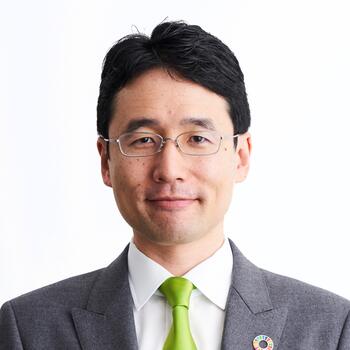
Headshot photo of Eiji Ohira
Eiji Ohira is the Director General of the New Energy and Industrial Technology Development Organization (NEDO)’s Fuel Cell and Hydrogen Technology Office In this capacity, he is responsible for the overall strategy, execution and coordination of NEDO’s research, development and demonstration project on fuel cell and hydrogen.

He has also coordinated fuel cell and hydrogen activities with international stakeholders, through International Energy Agency’s Technology Collaboration Program (IEA TCP: Advanced Fuel Cell & Hydrogen), and International Partnership for Hydrogen and Fuel Cells in the Economy (IPHE). 

He joined the NEDO in 1992, just after graduation from the Tokyo University of Science. He served as a visiting scholar at the Massachusetts Institute of Technology in 1997-1998.


Moderator

Image
Headshot photo of Kate Hardin
Kate Hardin, Deloitte Executive Director for Energy and Industrials Research, has worked in the energy industry for 25 years.  She currently leads Deloitte research on the impact of the energy transition on the energy and industrial manufacturing sectors. Before that, Kate led integrated coverage of transportation decarbonization and the implications for the oil, gas, and power sectors.  Kate has also developed global energy research for institutional investors and has led analysis of Russian and European energy developments.  Kate recently served as an expert in residence at Yale’s Center for Business and Environment, and she is also a member of the Council on Foreign Relations.  


Image
Shorenstein APARC Winter 2022 Speaker Series Icon with text "New Frontiers: Technology, Politics, and Society in the Asia-Pacific"
This event is part of the 2022 Winter webinar series, New Frontiers: Technology, Politics, and Society in the Asia-Pacific, sponsored by the Walter H. Shorenstein Asia-Pacific Research Center.

Via Zoom Webinar
Register:  https://bit.ly/3LuNa94


Mitsuru Izumo <br>Founder and President, Euglena Co Ltd.<br><br>
Eiji Ohira <br>Director General of Fuel Cell and Hydrogen Technology Office, Japan New Energy and Industrial Technology Development Organization (NEDO) <br><br>
Kate Hardin <br>Executive Director, Deloitte Research Center for Energy & Industrials
Panel Discussions
Authors
News Type
Q&As
Date
Paragraphs

For several decades, Southeast Asia’s tracts of dense, old-growth rainforest have served as fertile ground for lumber, and much land has been converted to agriculture. Now, palm oil plantations are being planted where forests once stood.

In 2011, Indonesia, one of the region’s most prosperous countries, instituted a two-year moratorium on clearing new areas of forest, which is set to expire this May and has been criticized as having several loopholes. Other countries, including Cambodia and Myanmar, are losing forests rapidly.

Out of concern for climate change, international initiatives such as Reduced Emissions from Deforestation and forest Degradation (REDD+) have aimed to promote conservation and sustainable development in countries with significant forest cover. But these efforts do not always support local needs, and can inadvertently have negative impacts.

Tim Forsyth, a Lee Kong Chian NUS-Stanford Distinguished Fellow, speaks about the gap between conservation efforts and economic and social development in Southeast Asia. He is visiting Stanford this quarter from the London School of Economics and Political Science where he is a reader in environment and development at the Department of International Development.

What major types of forest management do we see across Southeast Asia today?

A number of countries have put laws in place to restrict illegal logging, and have established national park areas. These are usually old-growth rainforests that restrict logging and agriculture. The problem with national parks is that they put so many restrictions on land use that the vulnerable populations living around them either suffer or are forced to cut other trees. I have spent some years working in poorer villages in Indonesia and Thailand on the edge of protected forests, and usually conservation policies avoid the fact that people need to get livelihoods somehow. Government policy should acknowledge how these people are vulnerable to changes in crop prices and the availability of land, or else these people might be forced into breaking the rules of national parks.

There is also production forest, which usually includes forest plantations. These can include softwoods such as pine, or hardwoods such as teak — and increasingly oil palm for food and biofuels. Forest plantations are attractive to governments and businesses because they earn money and can provide timber for construction and exports. Sometimes, plantations also gain carbon credits, although this is not a lot of money so far. In terms of conservation, destroying old-growth forest and replacing it with a monoculture plantation is not good for biodiversity. It also does not benefit those local people who want to harvest forest products or use part of the land for agriculture.

Finally, there are community forests that are supposed to be places where people can grow food, live, and have forest cover. The definition of “community forest,” however, varies from place to place. In Thailand, for example, the way the government defines it is not very different from a conservation area, and consequently there is not much space for agriculture. The Philippines, on the other hand, is more decentralized and local people can shape the nature of the forest landscape more. Corruption, however, is a problem.

Is there an ideal model that successfully supports sustainable development? How does your research approach this issue?

There has been much progress in collaborations that involve willing governments, international advisors, and local actors — often in accordance with an international agreement such as the Convention on Biological Diversity. These collaborations are more useful than a single actor working alone, and they acknowledge a wider range of objectives.

A new initiative is Reducing Emissions from Deforestation and forest Degradation (REDD+). This is meant to encourage governments to slow down deforestation by rewarding them financially through carbon credits. But REDD+ has a number of challenges. The main problem is that the value of the credits is so low at the moment. REDD+ also overemphasizes forest cover, rather than forest quality. This means that if a satellite image of a country shows a lot of forest cover, that is good according to REDD+. But this gives no indication as to the biodiversity or the diversity of livelihoods inside a forest. It is a green light to all of the people who want fast-growing tree plantations, which makes them money and supplies them with wood for construction. In addition, it keeps a government happy because it supplies their country with timber and tax revenue, but this is not necessarily what you would call sustainable development.

There are elements of good models in different places, and it really depends on one’s viewpoint. Nepal offers a good example of community forestry because, in principle, it aims to engage local people more effectively and equally, and so can combine local development with the protection of national forests. From a development perspective, some forms of conservation can hurt poorer people and actually undermine conservation efforts. Therefore, in my work, I try to promote policy that acknowledges the needs of the more vulnerable populations. My research tries to make climate change policy more relevant to development processes in Southeast Asia. In my current project, I am seeing how policy recommendations about forests can be reshaped and reinterpreted locally in developing countries in order to address local interests. My goal is to understand how expert knowledge about climate change can be governed more effectively in order to enhance both development and conservation in Asia with better outcomes for everybody.

Image
What can people do in their everyday lives to help combat climate change?

The practical problem of dealing with forest destruction and climate change in Southeast Asia is also a function of social and economic trends. As countries become more prosperous, more and more people live in megacities, drive cars, live in air-conditioned apartments, and frequent shopping malls.

A couple of years ago in Bangkok, I took lots of photographs of t-shirts printed with global warming messages and of people carrying reusable bags. When I was there recently, all of these things had disappeared. In other words, there is a tendency for people to think of conservation efforts as a fashion trend.

I do not think that any city in Asia is doing enough. We have to start planning cities in ways that use fewer greenhouse gases, and also to encourage people to realize that they can be real agents of change. At the moment, many urban citizens believe they can implement climate change policy by managing rural and forested landscapes. Instead, they need to realize the problems of these approaches, and to see what they can do themselves.

Hero Image
Sumatra TF compressed Mar07 LOGO
Tim Forsyth stands in a cleared section of national parkland in Sumatra, Indonesia.
Courtesy Tim Forsyth
All News button
1
-

On Thursday, September 24, 2009, the Stanford Program on Regions of Innovation and Entrepreneurship (SPRIE) at the Shorenstein Asia-Pacific Research Center will be convening a Silicon Valley Leaders Forum. 

This public forum will bring together area researchers and thought leaders to discuss the turbulent changes the Valley is experiencing and address the question of whether the fundamental drivers that have enabled the region to be an innovative and entrepreneurial world leader will continue to be in play in coming years. 

This event will serve as the kickoff for SPRIE's latest research project on Silicon Valley's next phase of transformation, a further and updated exploration of the ideas in The Silicon Valley Edge.

The first part of the day will feature a lineup of Silicon Valley luminaries, and the afternoon will close with a panel focused on changes in the venture capital industry. 

Lunch will be served and paid registration is required for this event.

Schedule:

8:00 a.m. - 8:30 a.m.Registration
8:30 a.m. - 9:30 a.m.

"Stanford and its (changing) relationships with Silicon Valley"

  • John Hennessy, President, Stanford University
9:30 a.m. - 10:30 a.m.

"Change is the Medium of Opportunity: Channeling Silicon Valley's Strengths to Lead on the Challenges of the 21st Century"

  • James C. Morgan, Chairman Emeritus, Applied Materials 
10:30 – 10:45 a.m.Break
10:45 -11:45 a.m.

"The Entrepreneur and The Cloud—Silicon Valley Rejuvenated"

  • John Seely Brown, Independent Co-Chairman, Deloitte Center for Edge Innovation 
11:45 a.m. – 1:00 p.m.Lunch
1:00 p.m. – 2:00 p.m.

"Silicon Valley's Innovation Engine:  Are We a Resilient Region?"

  • Doug Henton, Chairman and CEO, Collaborative Economics, and lead for the Joint Venture: Silicon Valley Network 2010 Index of Silicon Valley
2:00 – 3:30 pm

Venture Capital Panel 

  • Neal Bhadkamkar, Monitor Ventures
  • Bob Patterson, Peninsula Ventures 
  • Marianne Wu, Mohr Davidow

Keynote speakers:

Image
hennessy web

John L. Hennessy joined Stanford's faculty in 1977 as an assistant professor of electrical engineering. He rose through the academic ranks to full professorship in 1986 and was the inaugural Willard R. and Inez Kerr Bell Professor of Electrical Engineering and Computer Science from 1987 to 2004.

From 1983 to 1993, Dr. Hennessy was director of the Computer Systems Laboratory, a research and teaching center operated by the Departments of Electrical Engineering and Computer Science that fosters research in computer systems design. He served as chair of computer science from 1994 to 1996 and, in 1996, was named dean of the School of Engineering. As dean, he launched a five-year plan that laid the groundwork for new activities in bioengineering and biomedical engineering. In 1999, he was named provost, the university's chief academic and financial officer. As provost, he continued his efforts to foster interdisciplinary activities in the biosciences and bioengineering and oversaw improvements in faculty and staff compensation. In October 2000, he was inaugurated as Stanford University's 10th president. In 2005, he became the inaugural holder of the Bing Presidential Professorship.
 

Image
morgan web

James C. Morgan is chairman emeritus of Applied Materials.  He previously served as chairman of the board from 1987 to 2009 and as chief executive officer from 1977 to 2003. Prior to joining Applied Materials as president in 1976, he was a senior partner with WestVen Management, a private venture capital partnership affiliated with the Bank of America Corporation. Prior to WestVen, he was with Textron, a leading diversified manufacturing company.

With one of the longest tenures of any FORTUNE 500 CEO, Mr. Morgan has an extensive history in business and philanthropy.  Mr. Morgan is a recipient of the 1996 National Medal of Technology for his industry leadership and for his vision in building Applied Materials into the world's leading semiconductor equipment company, a major exporter and a global technology pioneer which helps enable the Information Age. Awarded by the President of the United States, the Medal of Technology recognizes technological innovators who have made lasting contributions to America's competitiveness and standard of living.  Among his many honors, Mr. Morgan is a recent recipient of the prestigious Semiconductor Industry Association Robert N. Noyce Award, the highest honor bestowed by the SIA, for outstanding achievement and leadership in support of the U.S. semiconductor industry, and the Spirit of Silicon Valley Lifetime Achievement Award from the Silicon Valley Leadership Group, for his ethics, community engagement and business success.

Image
jsb web

John Seely Brown is the Independent Co-Chairman of the Deloitte Center for Edge Innovation.  In addition, he is a Visiting Scholar and Advisor to the Provost at USC.

Prior to that he was the Chief Scientist of Xerox Corporation and the director of its Palo Alto Research Center (PARC)--a position he held for nearly two decades.  While head of PARC, Brown expanded the role of corporate research to include such topics as organizational learning, knowledge management, complex adaptive systems, and nano/mems technologies.  He was a cofounder of the Institute for Research on Learning (IRL).  His personal research interests include the management of radical innovation, digital youth culture, digital media, and new forms of communication and learning.  

John, or as he is often called--JSB-- is a member of the National Academy of Education and a Fellow of the American Association for Artificial Intelligence and of AAAS and a Trustee of the MacArthur Foundation.  He serves on numerous public boards (Amazon, Corning, and Varian Medical Systems) and private boards of directors.  He has published over 100 papers in scientific journals and was awarded the Harvard Business Review's 1991 McKinsey Award for his article, "Research that Reinvents the Corporation" and again in 2002 for his article "Your Next IT Strategy."  

In 2004 he was inducted in the Industry Hall of Fame. 

With Paul Duguid he co-authored the acclaimed book The Social Life of Information (HBS Press, 2000) that has been translated into 9 languages with a second addition in April 2002, and with John Hagel he co-authored the book The Only Sustainable Edge which is about new forms of collaborative innovation.  It also provides a novel framework for understanding what is really happening in off-shoring in India and China and how each are inventing powerful news ways to innovate, learn and accelerate capability building.

JSB received a BA from Brown University in 1962 in mathematics and physics and a PhD from University of Michigan in 1970 in computer and communication sciences.  In May of 2000 Brown University awarded him an honorary Doctor of Science Degree.  It was followed by an Honorary Doctor of Science in Economics conferred by the London Business School in July 2001. And in May of 2004 he received an Honorary Doctor of Humane Letters from Claremont Graduate School. In 2005, he received an honorary doctorate from University of Michigan and delivered their commencement speech. 

Image
henton

Doug Henton has more than 30 years of experience in innovation and economic development at the national, regional, state, and local levels. Doug is nationally recognized for his work in bringing industry, government, education, research, and community leaders together around specific collaborative projects to improve regional competitiveness.

Doug is a consultant to the California Economic Strategy Panel, California's state economic strategy process linked to innovation, industry clusters, and regions. He has worked extensively in California to help develop regional economic and innovation strategies for Silicon Valley, Sonoma, Sacramento, Santa Barbara, San Diego, the Central Valley, and others. He was primary consultant to the Fresno's Regional Jobs Initiative, which used the clusters of opportunity methodology to identifying promising areas for development. Doug has also consulted with the California Partnership for the San Joaquin Valley, advising on economic development strategies. He has worked with the Great Valley Center on identifying promising areas for economic development, including renewable energy. In addition, Doug has worked with Next 10 on the continued development of the California Green Innovation Index.

He has also been consultant to several other state and regional agencies and organizations, including the Massachusetts Technology Collaborative, Chicago Metropolis 2020, the Potomac Conference, and Arizona Partnership for a New Economy. He has assisted Oregon with its current strategy for economic development, and has advised governors in New York, Ohio, Washington, and others on their economic and workforce policies.

Doug holds a Bachelor's degree in Political Science and Economics from Yale University and a Master of Public Policy degree from the University of California, Berkeley.


Venture Capital Panelists:
 

Image
bhadkamkar web

Neal Bhadkamkar is a co-founder of Monitor Venture Partners, L.P. (MVP), an early stage venture capital fund affiliated with The Monitor Group. MVP invests in seed and first round companies that are commercializing technologies in markets where Monitor Group's knowledge and client base can be used to reduce market risk. He is currently on the boards of Nanostellar, a catalyst company based on nano-scale materials design, and Verdezyne, a "green chemistry" company based on synthetic biology. He is also a board observer at Matisse Networks, which designs, manufactures and sells metro-area Ethernet switches based on Ring Optical Burst Switching.

Prior to establishing MVP, Neal was VP of Engineering and Manufacturing at Zowie Intertainment, an Interval Research spin-off that made "smart-toys". At Zowie he oversaw the design and manufacture of custom ASICs, firmware, game software, plastic parts and the final product using a supply chain that spanned five countries. Before Zowie, Neal was at Paul Allen's Interval Research Corporation, initially as a member of the research staff and later as the head of Interval's commercialization activity, in which role he managed the transition of research projects into commercial ventures. Earlier in his career Neal was a management consultant with the Boston Consulting Group and with the Monitor Group, and was a Research Associate at the Harvard Business School.

Neal has a PhD. in Electrical Engineering from Stanford University, an MBA from Harvard Business School, and a Bachelor of Technology degree from the Indian Institute of Technology, Delhi. Neal lives in Palo Alto, California with his wife and three children.

Image
patterson web

Bob Patterson is a Silicon Valley venture capitalist with Peninsula Ventures. He is now pursuing on a full time basis a career begun in the 70's while practicing international corporate law with Squire, Sanders & Dempsey. Educated in Physics and Nuclear Engineering at  UCLA and the U.S. Navy, before attending Stanford Law School and the Stanford GSB Executive Program, his legal and business career has focused on technology based entrepreneurship and the study of the science of capital formation for entrepreneurial based businesses, both domestically and internationally.


Image
wu web

Marianne Wu is a Partner at MDV where she focuses on Cleantech investments. These typically involve significant technology or business model breakthroughs applied to large, evolving markets such as solar, biofuels and chemicals, clean coal, energy efficiency, smart grid, and water treatment and management. She leverages over 15 years of technology development and business experience to help entrepreneurs build meaningful, successful businesses. At MDV, she is on the Board of Laurus Energy and works closely with Zeachem and Catilin. 

Marianne has been named one of Top 10 Women in Cleantech and one of Silicon Valley's Women of Influence. She is on the Advisory Committees of the Cleantech Open, Western Governors' Association, SdForum and Astia. She is a member of the Hua Yuan Science and Technology Association (HYSTA) VC Group and Environmental Entrepreneurs.

Prior to joining MDV, Marianne was VP Marketing at ONI Systems where she was responsible for product strategy and market development. Earlier in her career, Marianne was a consultant at McKinsey and Company where she advised major technology clients on strategic and operational issues. Marianne has conducted state-of-the-art research in materials, devices, and systems at Stanford University and started her career as a design engineer at Nortel Networks where she developed high-speed networking technologies. 

Marianne earned both her doctoral and master's degrees from the School of Engineering at Stanford University and her bachelor's in Applied Science at the University of British Columbia.

Bechtel Conference Center

John Hennessy President, Stanford University Speaker
James C. Morgan Chairman Emeritus, Applied Materials Speaker
John Seely Brown Independent Co-Chairman, Deloitte Center for Edge Innovation Speaker
Doug Henton Chairman and CEO, Collaborative Economics Speaker
Workshops
Paragraphs

A concept note about setting up an international program for studying the effects of the emergence of biofuels on global poverty and food security. 

The recent global expansion of biofuels production is an intense topic of discussion in both the popular and academic press. Much of the debate surrounding biofuels has focused on narrow issues of energy efficiency and fossil fuel substitution, to the exclusion of broader questions concerning the effects of large-scale biofuels development on commodity markets, land use patterns, and the global poor. There is reason to think these effects will be very large. The majority of poor people living in chronic hunger are net consumers of staple food crops; poor households spend a large share of their budget on starchy staples; and as a result, price hikes for staple agricultural commodities have the largest impact on poor consumers. For example, the rapidly growing use of corn for ethanol in the U.S. has recently sent corn prices soaring, boosting farmer incomes domestically but causing riots in the streets of Mexico City over tortilla prices. Preliminary analysis suggests that such price movements, which directly threaten hundreds of millions of households around the world, could be more than a passing phenomenon. Rapid biofuels development is occurring throughout the developed and developing world, transforming commodity markets and increasingly linking food prices to a volatile energy sector. Yet there remains little understanding of how these changes will affect global poverty and food security, and an apprehension on the part of many governments as to whether and how to participate in the biofuels revolution.

We propose an international collaborative effort to:

  • Understand and quantify the effects of expanding biofuels production on agricultural commodity markets, food security, and poverty;
  • Develop training programs and policy tools to harness the benefits and mitigate the damages from such expansion on both local and global scales; and
  • Build an international network of scholars and government officials devoted to studying and managing biofuels development and its social consequences
All Publications button
1
Publication Type
Working Papers
Publication Date
Authors
Scott Rozelle
Subscribe to Biofuels