History
News Type
Commentary
Date
Paragraphs

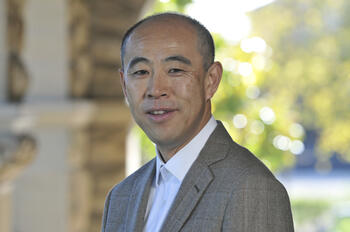
Daniel Sneider, associate director for research at the Walter H. Shorenstein Asia-Pacific Research Center, provides an in-depth analysis of how the agreement on the “comfort women” issue between Japan and South Korea was reached late last year. In Japanese publication Toyo Keizai Online, Sneider writes that – after at least four years of negotiations between the two governments – political leadership in Seoul and Tokyo as well as pressure from the Obama administration can be credited for the breakthrough.

Read the article in English and Japanese.

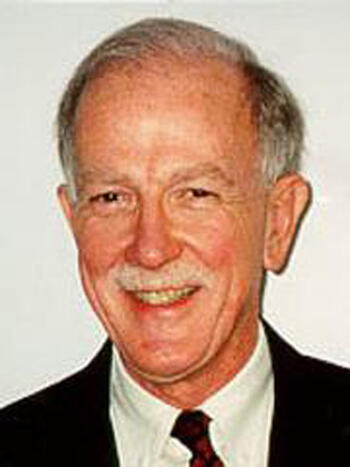
Earlier in December, David Straub, associate director for the Korea Program, said the agreement is a sign of progress. He said it vindicates the victims and is a positive development for Korea-Japan relations. 

Read his comments in reporting done by Yonhap News and Voice of America.

Hero Image
rtx2080d
South Korean Foreign Minister Yun Byung-Se (Right) shakes hands with his Japanese counterpart Fumio Kishida (Left) during their meeting at the Foreign Ministry in Seoul Dec. 28, 2015.
Reuters/Jung Yeon-je/Pool
All News button
1
Paragraphs

The breakthrough agreement on the comfort women issue between Japan and South Korea on Dec. 28, 2015, was the culmination of at least four years of negotiations between the two governments. South Korean President Park Geun-hye and Japanese Prime Minister Shinzo Abe pushed for the agreement; the Obama administration provided persistent pressure while resisting a mediation role. The danger of the agreement falling apart is apparent to officials in Washington and Seoul, and hopefully Tokyo too, writes Sneider.

All Publications button
1
Publication Type
Commentary
Publication Date
Journal Publisher
Toyo Keizai Online
Authors
Authors
Lisa Griswold
News Type
News
Date
Paragraphs

Marking seventy years since the end of World War II, Japanese Prime Minister Shinzo Abe expressed “profound grief” on Friday for his country’s actions. While pointing to short comings in the statement, the Stanford scholars said the prime minister’s words represented a genuine effort to reflect on the past and provided opportunities to improve relations in the region.

The highly anticipated statement, issued on behalf of the Japanese cabinet, was closely followed by its East Asian neighbors who have raised concerns over Japan’s views of the wartime era.

Leaders of South Korea and China have said Japan has not apologized fully for crimes committed during WWII and each dispute historical narratives seen in the others’ textbooks, popular culture and other domains.

Advancing historical reconciliation in East Asia is a key research area of the Walter H. Shorenstein Asia-Pacific Research Center. The center leads a research project, Divided Memories and Reconciliation, which has produced numerous articles and books, including a ground breaking comparative study of high school history textbooks in China, Japan, South Korea, Taiwan and the United States.

In May 2014, the center convened an international conference “Pathways to Reconciliation” on historical issues, co-sponsored by the Trilateral Cooperation Secretariat, the governmental organization promoting Japan-China-South Korea trilateral cooperation.

Earlier this year, the Japan Program asked Stanford scholars to write their own version of the 70th anniversary statement as if they were the prime minister of Japan. The scholars’ statements were compiled into a report, published in May 2015.

Eight scholars contributed to the exercise in an effort “to understand the diversity of reasonable views on the issue of Japan’s responsibility for the cruel and violent war and Japan’s role in building a peaceful and prosperous world,” the introduction stated.

Themes that emerged in the report included a need for Abe to show heartfelt remorse about Japan’s actions during WWII and its desire to work toward a peaceful future.

Three noted Japan experts who contributed to that report offered their analysis of the prime minister’s statement issued yesterday in Tokyo.


Below are brief summaries of their analysis, you may click on each link to expand in full.


Image
Response by Peter Duus

Duus recognizes that Abe’s statement offers a reiteration of the statements made by Prime Ministers Murayama and Koizumi by including four key words – aggression, colonial rule, apology and remorse. Unlike past statements, however, Abe’s begins by putting war in the historical context and offers a more explicit statement of the victims of the war, not only the three million Japanese but also citizens of China, Southeast Asia and the Pacific islands. The statement can be viewed as “a small but important step toward a truce in the history wars that have raged in East Asia for the last three decades,” he says. However, Abe's attempt at reconciliation will have little effect if he does not rein in contrary actions by neo-nationalists in his own party.

Peter Duus is the William H. Bonsall Professor of Japanese History, emeritus; and a senior fellow, by courtesy, Hoover Institution, Stanford University.


Image

Response by Takeo Hoshi

Hoshi notes that Abe’s statement mentions past apologies expressed by the Japanese government, but has no explicit apology from the current administration. He says there are two surprising elements about the statement. The first is the length – it is much larger than predecessors Murayama and Koizumi at 1,664 words in English and 3,970 characters in Japanese. The second is the emphasis on history rather than on forward-looking components. He says it is commendable that Abe provided an expanded view of history. Hoshi notes that it is nearly impossible to satisfy everyone’s views in such a statement, as scholars witnessed firsthand when working on the Japan Program project.

Takeo Hoshi is the Henri H. and Tomoye Takahashi Senior Fellow in Japanese Studies in the Freeman Spogli Institute for International Studies; a professor (by courtesy) of finance at the Graduate School of Business; and director of the Japan Program at the Shorenstein Asia-Pacific Research Center, Stanford University.


Image
Response by Daniel Sneider

Sneider says Abe’s statement must be judged on following criteria: that it is a valid effort to draw lessons from Japan’s wartime past and that it contributes to the improvement of relations in Northeast Asia. He says the statement advances these goals, but there remain a few caveats. Sneider says the version of history communicated “will not satisfy many people, including many historians,” but that it does move away from the idea that revisionist Japan was in a war of self-defense not aggression. To move Japan, China and South Korea toward reconciliation, the prime minister and his cabinet must embrace the spirit of the statement in full and open the door to convening a long-delayed trilateral summit.

A version of this essay was also published by Nippon in Japanese and English.

Daniel Sneider is the associate director for research at the Shorenstein Asia-Pacific Research Center, Stanford University.

Hero Image
abe flickr csis
Shinzo Abe, Prime Minister of Japan.
Flickr/CSIS
All News button
1
News Type
Commentary
Date
Paragraphs

Two key challenges facing Northeast Asia are how to tame the power of nationalism and create shared memories of history, Stanford professor Gi-Wook Shin wrote in The Diplomat

Shin, director of the Shorenstein Asia-Pacific Research Center (APARC), urged action on the 70th anniversary of the end of World War II. Northeast Asians should use the commemoration as an “opportune occasion to reflect on their unfortunate past to learn lessons,” only then can the region become more peaceful and prosperous.

Shin and Daniel Sneider, Shorenstein APARC’s associate director for research, lead the Divided Memories and Reconciliation research project which examines memories of the wartime experience in Northeast Asia and what steps can be taken to reconcile disputes over history.

One of their latest outcomes is the book Confronting Memories of World War II: European and Asian Legacies (April 2015), edited with University of Washington professor Daniel Chirot, that studies how wartime narratives are interpreted, memorialized and used in Europe and Asia.

The full article in The Diplomat can be accessed by clicking here.

Hero Image
yasukuni reuters
Men dressed as Japanese imperial army soldiers march at the Yasukuni Shrine in August 2011, on the anniversary of the end of World War II.
Reuters/Issei Kato
All News button
1
Paragraphs
anti americanism cover

Americans think of South Korea as one of the most pro-American of countries, but in fact many Koreans hold harsh and conspiratorial views of the United States. If not, why did a single U.S. military traffic accident in 2002 cause hundreds of thousands of Koreans to take to the streets for weeks, shredding and burning American flags, cursing the United States, and harassing Americans? Why, too, the death threats against American athlete Apolo Ohno and massive cyberattacks against the United States for a sports call made at the Utah Winter Olympics by an Australian referee? 

These are just two of the incidents detailed in David Straub’s book, the story of an explosion of anti-Americanism in South Korea from 1999 to 2002. Straub, a Korean-speaking senior American diplomat in Seoul at the time, reviews the complicated history of the United States’ relationship with Korea and offers case studies of Korean anti-American incidents during the period that make clear why the outburst occurred, how close it came to undermining the United States’ alliance with Korea, and whether it could happen again.   

Anti-Americanism in Democratizing South Korea is recommended reading for officials, military personnel, scholars, students, and business people interested in anti-Americanism, U.S.-Korean relations, and U.S. foreign policy and military alliances.

David Straub has been associate director of the Korea Program at Stanford University’s Walter H. Shorenstein Asia-Pacific Research Center since 2008, following a thirty-year diplomatic career focused on U.S. relations with Korea and Japan.

Desk, examination, or review copies can be requested through Stanford University Press.

All Publications button
1
Publication Type
Books
Publication Date
Authors
David Straub
Book Publisher
Shorenstein APARC
-

The Obama administration’s “rebalance” to Asia is about much more than China’s rise and changing role in the region, but US-China relations are an integral part of the new policy and the way it is perceived and characterized by others in the Asia-Pacific region.  The keynote address and comments by American and Chinese scholars with years of government experience will examine the objectives and implications of the “rebalance” and what it means for the United States, China, and US-China relations.

Keynote Speaker:

Kenneth LieberthalDr. Kenneth Lieberthal is a senior fellow in Foreign Policy and Global Economy and Development at Brookings. From 2009-2012, Lieberthal served as the director of the John L. Thornton China Center. Lieberthal was a professor at the University of Michigan for 1983-2009. He has authored 24 books and monographs and over 70 articles, mostly dealing with China. He also served as special assistant to the president for national security affairs and senior director for Asia on the National Security Council from August 1998 to October 2000. His government responsibilities encompassed U.S. policy toward Northeast, East and Southeast Asia. His latest book, Bending History: Barack Obama’s Foreign Policy (co-authored with Martin Indyk and Michael O’Hanlon), was published by the Brookings Press in March 2012. Leiberthal earned his B.A. from Darthmouth College, and his M.A. and Ph.D. from Columbia University


Panelists:

Mike ArmacostWelcome remarks - Dr. Michael Armacost is the Shorenstein Distinguished Fellow. He has been at the Walter H. Shorenstein Asia-Pacific Research Center (Shorenstein APARC) since 2002. In the interval between 1995 and 2002, Armacost served as president of Washington, D.C.'s Brookings Institution, the nation's oldest think tank and a leader in research on politics, government, international affairs, economics, and public policy. Previously, during his twenty-four year government career, Armacost served, among other positions, as undersecretary of state for political affairs and as ambassador to Japan and the Philippines. 


Jean OiPanel Chair - Professor Jean Oi is the William Haas Professor in Chinese Politics in the department of political science and a senior fellow of the Freeman Spogli Institute for International Studies at Stanford University. Oi is the founding director of the Stanford China Program at the Walter H. Shorenstein Asia-Pacific Research Center. She leads Stanford's China Initiative, and is the Lee Shau Kee Director of the Stanford Center at Peking University. Oi directed Stanford's Center for East Asian Studies from 1998 to 2005. A PhD in political science from the University of Michigan, Oi first taught at Lehigh University and later in the department of government at Harvard University before joining the Stanford faculty in 1997.


Karl EikenberryAmbassador Karl Eikenberry is the William J. Perry Fellow in International Security at CISAC, CDDRL, TEC, and Shorenstein APARC Distinguished Fellow; and Former U.S. Ambassador to Afghanistan and Retired U.S. Army Lt. General. Prior to his arrival at Stanford, he served as the U.S. Ambassador to Afghanistan from May 2009 until July 2011, where he led the civilian surge directed by President Obama to reverse insurgent momentum and set the conditions for transition to full Afghan sovereignty. Before appointment as Chief of Mission in Kabul, Ambassador Eikenberry had a thirty-five year career in the United States Army, retiring in April 2009 with the rank of Lieutenant General.  His military operational posts included commander and staff officer with mechanized, light, airborne, and ranger infantry units in the continental U.S., Hawaii, Korea, Italy, and Afghanistan as the Commander of the American-led Coalition forces from 2005-2007.


Cui LiruDr. CUI Liru is Senior Advisor to China Institute of Contemporary International Relations, a think-tank in China known for its comprehensive studies on current international affairs and prominent role in providing consulting services to the Chinese government and former President of China Institutes of Contemporary International Relations (CICIR). He is a member of the Committee of Foreign Affairs of the Chinese Peoples’ Political Consultative Conference (CPPCC) and also serves as a member of the Foreign Policy Consulting Committee of the Ministry of Foreign Affairs. He is Vice President of China National Association for International Studies (CNAIS) and serves as Senior Adviser to multiple institutions for the study of national security and foreign relations. As a senior researcher, his specialties cover U.S. foreign policy, U.S.-China relations, international security issues and Chinese foreign policy.


Tom Fingar


Professor Tom Fingar is the inaugural Oksenberg-Rohlen Distinguished Fellow. From May 2005 through December 2008, he served as the first deputy director of national intelligence for analysis and, concurrently, as chairman of the National Intelligence Council. He served previously as assistant secretary of the State Department’s Bureau of Intelligence and Research (2004–2005), principal deputy assistant secretary (2001–2003), deputy assistant secretary for analysis (1994–2000), director of the Office of Analysis for East Asia and the Pacific (1989–1994), and chief of the China Division (1986–1989). Between 1975 and 1986 he held a number of positions at Stanford University, including senior research associate in the Center for International Security and Arms Control.


The Oksenberg Lecture, held annually, honors the legacy of Professor Michel Oksenberg (1938-2001). A senior fellow at Shorenstein APARC and the Freeman Spogli Institute for International Studies, Professor Oksenberg served as a key member of the National Security Council when the United States normalized relations with China, and consistently urged that the United States engage with Asia in a more considered manner. In tribute, the Oksenberg Conference/Lecture recognizes distinguished individuals who have helped to advance understanding between the United States and the nations of the Asia-Pacific.

Please note: this event is off-the-record.

Bechtel Conference Center

Conferences
-

The China-Japan-South Korea-U.S. dialogue on wartime history issues will be conducted on a closed door, background basis, structured to allow for extended discussion along with opportunities for social interaction aimed at creating a long-term network of interested parties. The format, based on Shorenstein APARC’s experience in conducting a multi-year trans-Asian dialogue, will utilize Stanford scholars as resource persons who will frame a series of focused discussions with initial presentations, based on our research, aimed at stimulating constructive dialogue. The participant list includes academic experts from each country; some outside experts; Stanford University participants and representatives of the Trilateral Cooperation Secretariat.

Stanford University

Conferences
Subscribe to History