Society

FSI researchers work to understand continuity and change in societies as they confront their problems and opportunities. This includes the implications of migration and human trafficking. What happens to a society when young girls exit the sex trade? How do groups moving between locations impact societies, economies, self-identity and citizenship? What are the ethnic challenges faced by an increasingly diverse European Union? From a policy perspective, scholars also work to investigate the consequences of security-related measures for society and its values.

The Europe Center reflects much of FSI’s agenda of investigating societies, serving as a forum for experts to research the cultures, religions and people of Europe. The Center sponsors several seminars and lectures, as well as visiting scholars.

Societal research also addresses issues of demography and aging, such as the social and economic challenges of providing health care for an aging population. How do older adults make decisions, and what societal tools need to be in place to ensure the resulting decisions are well-informed? FSI regularly brings in international scholars to look at these issues. They discuss how adults care for their older parents in rural China as well as the economic aspects of aging populations in China and India.

-

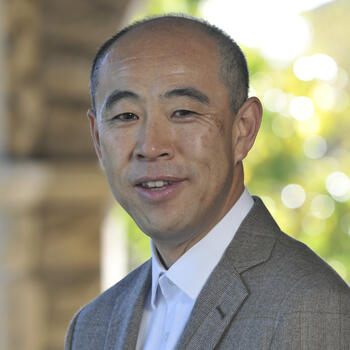
Professor Jaeho Yeom, president of the elite Korea University in Seoul and a Stanford Political Science PhD will examine the historical development, current changes, and future course of East Asian universities. Drawing on his own experience at Korea University, where his initiatives include the "pioneering intellectuals" program to encourage and support student creativity, President Yeom will examine many aspects of higher education, including shifts in educational methodologies, demographics, the pressures of globalization, and changes in government and private funding. 

Professor Jaeho Yeom earned a PhD in political science at Stanford University for his research on Japanese industrial policy for high technology. He has taught public administration at Korea University since 1990. He was Executive Vice President of Korea University before being appointed President in March 2015. President Yeom has also taught or conducted research in Japan, Australia, China, and the United Kingdom. He served as an expert member of the Korean Presidential Commission of Science and Technology Policy and a board member of the Korea Science and Engineering Foundation. He also served as president of The Korean Association for Policy Studies in 2007 and of The Korean Association for Contemporary Japanese Studies in 2008. Currently, he is chairperson of the Policy Advisory Committee of the Ministry of Foreign Affairs and Trade, member of Public Service Evaluation Committee, and Editor in Chief of Asian Research Policy. President Yeom is the author of numerous books and studies, including Future Strategy for Test, Research, and Evaluation of Food and Drug (2011, NIFDS).

Jaeho Yeom <i>President, Korea University</i>
Lectures
-

Image
global talent cover
Co-authored by Gi-Wook Shin and Joon Nak Choi, Published by Stanford University Press

Global Talent seeks to examine the utility of skilled foreigners beyond their human capital value by focusing on their social capital potential, especially their role as transnational bridges between host and home countries. Gi-Wook Shin (Stanford University) and Joon Nak Choi (Hong Kong University of Science and Technology) build on an emerging stream of research that conceptualizes global labor mobility as a positive-sum game in which countries and businesses benefit from building ties across geographic space, rather than the zero-sum game implied by the "global war for talent" and "brain drain" metaphors.

"Advanced economies like Korea face a growing mismatch between low birth rates and increasing demand for skilled labor. Shin and Choi use original, comprehensive data and a global outlook to provide careful, accessible and persuasive analysis. Their prescriptions for Korea and other economies challenged by high-level labor shortages will amply reward readers of this landmark study."  —Mark Granovetter, Professor of Sociology, Stanford University

The book empirically demonstrates its thesis by examination of the case of Korea: a state archetypical of those that have been embracing economic globalization while facing a demographic crisis—and one where the dominant narrative on the recruitment of skilled foreigners is largely negative. It reveals the unique benefits that foreign students and professionals can provide to Korea, by enhancing Korean firms' competitiveness in the global marketplace and by generating new jobs for Korean citizens rather than taking them away. As this research and its key findings are relevant to other advanced societies that seek to utilize skilled foreigners for economic development, the arguments made in this book offer insights that extend well beyond the Korean experience.


Books will be available for purchase at the event or  purchase online


Gi-Wook Shin is the director of the Walter H. Shorenstein Asia-Pacific Research Center; the Tong Yang, Korea Foundation, and Korea Stanford Alumni Chair of Korean Studies; the founding director of the Korea Program; a senior fellow of the Freeman Spogli Institute for International Studies; and a professor of sociology, all at Stanford University. As a historical-comparative and political sociologist, his research has concentrated on social movements, nationalism, development, and international relations.

Shin is the author/editor of more than a dozen books and numerous articles. His recent books include Global Talent: Skilled Labor as Social Capital in Korea (2015), Criminality, Collaboration, and Reconciliation: Europe and Asia Confronts the Memory of World War II (2014); New Challenges for Maturing Democracies in Korea and Taiwan (2014); Asia’s Middle Powers? (2013); Troubled Transition: North Korea's Politics, Economy, and External Relations (2013); History Textbooks and the Wars in Asia: Divided Memories (2011); South Korean Social Movements: From Democracy to Civil Society (2011); One Alliance, Two Lenses: U.S.-Korea Relations in a New Era (2010); Cross Currents: Regionalism and Nationalism in Northeast Asia (2007); Rethinking Historical Injustice and Reconciliation in Northeast Asia (2006); and Ethnic Nationalism in Korea: Genealogy, Politics, and Legacy (2006). Due to the wide popularity of his publications, many of them have been translated and distributed to Korean audiences. His articles have appeared in academic journals including American Journal of Sociology, Comparative Studies in Society and History, Political Science Quarterly, International Sociology, Nations and Nationalism, Pacific Affairs, and Asian Survey. Shin is currently writing a book on historical memories of the Asia-Pacific wars with Daniel Sneider. 


Joon Nak Choi is an associate professor in the Department of Management at Hong Kong University of Science and Technology. Prior to joining HKUST, he was a Postdoctoral Fellow at the Shorenstein Asia-Pacific Research Center at Stanford University. He earned his Ph.D and M.A in Sociology at Stanford  University and his B.A. in Economics and International Relations from Brown University. His ongoing research continues to focus upon the effects of social and political capital, especially in Korea.


Hwy-Chang Moon joined the Walter H. Shorenstein Asia-Pacific Research Center (Shorenstein APARC) for the 2015-2016 academic year. During his time at Shorenstein APARC, Moon will be working on a research project titled, “The Global Strategy of Korean Firms in Silicon Valley.”

Moon received his PhD from the University of Washington and is currently a professor of international business strategy in the Graduate School of International Studies at Seoul National University in South Korea, where he also served as the Dean. He has previously taught at the University of Washington, University of the Pacific, State University of New York at Stony Brook, Helsinki School of Economics, Keio University, and Hitotsubashi University. Moon has also consulted for several multinational companies, international organizations, and governments (e.g., Malaysia, Dubai, Azerbaijan, and the Guangdong Province of China).


Shorenstein APARC
Encina Hall E301
616 Jane Stanford Way
Stanford, CA 94305-6055
(650) 724-8480 (650) 723-6530
0
Senior Fellow at the Freeman Spogli Institute for International Studies
Professor of Sociology
William J. Perry Professor of Contemporary Korea
Professor, by Courtesy, of East Asian Languages & Cultures
Gi-Wook Shin_0.jpg PhD

Gi-Wook Shin is the William J. Perry Professor of Contemporary Korea in the Department of Sociology, senior fellow at the Freeman Spogli Institute for International Studies, and the founding director of the Korea Program at the Walter H. Shorenstein Asia-Pacific Research Center (APARC) since 2001, all at Stanford University. In May 2024, Shin also launched the Taiwan Program at APARC. He served as director of APARC for two decades (2005-2025). As a historical-comparative and political sociologist, his research has concentrated on social movements, nationalism, development, democracy, migration, and international relations.

In Summer 2023, Shin launched the Stanford Next Asia Policy Lab (SNAPL), which is a new research initiative committed to addressing emergent social, cultural, economic, and political challenges in Asia. Across four research themes– “Talent Flows and Development,” “Nationalism and Racism,” “U.S.-Asia Relations,” and “Democratic Crisis and Reform”–the lab brings scholars and students to produce interdisciplinary, problem-oriented, policy-relevant, and comparative studies and publications. Shin’s latest book, The Four Talent Giants, a comparative study of talent strategies of Japan, Australia, China, and India to be published by Stanford University Press in the summer of 2025, is an outcome of SNAPL.

Shin is also the author/editor of twenty-seven books and numerous articles. His books include The Four Talent Giants: National Strategies for Human Resource Development Across Japan, Australia, China, and India (2025)Korean Democracy in Crisis: The Threat of Illiberalism, Populism, and Polarization (2022); The North Korean Conundrum: Balancing Human Rights and Nuclear Security (2021); Superficial Korea (2017); Divergent Memories: Opinion Leaders and the Asia-Pacific War (2016); Global Talent: Skilled Labor as Social Capital in Korea (2015); Criminality, Collaboration, and Reconciliation: Europe and Asia Confronts the Memory of World War II (2014); New Challenges for Maturing Democracies in Korea and Taiwan (2014); History Textbooks and the Wars in Asia: Divided Memories (2011); South Korean Social Movements: From Democracy to Civil Society (2011); One Alliance, Two Lenses: U.S.-Korea Relations in a New Era (2010); Cross Currents: Regionalism and Nationalism in Northeast Asia (2007);  and Ethnic Nationalism in Korea: Genealogy, Politics, and Legacy (2006). Due to the wide popularity of his publications, many have been translated and distributed to Korean audiences. His articles have appeared in academic and policy journals, including American Journal of SociologyWorld DevelopmentComparative Studies in Society and HistoryPolitical Science QuarterlyJournal of Asian StudiesComparative EducationInternational SociologyNations and NationalismPacific AffairsAsian SurveyJournal of Democracy, and Foreign Affairs.

Shin is not only the recipient of numerous grants and fellowships, but also continues to actively raise funds for Korean/Asian studies at Stanford. He gives frequent lectures and seminars on topics ranging from Korean nationalism and politics to Korea's foreign relations, historical reconciliation in Northeast Asia, and talent strategies. He serves on councils and advisory boards in the United States and South Korea and promotes policy dialogue between the two allies. He regularly writes op-eds and gives interviews to the media in both Korean and English.

Before joining Stanford in 2001, Shin taught at the University of Iowa (1991-94) and the University of California, Los Angeles (1994-2001). After receiving his BA from Yonsei University in Korea, he was awarded his MA and PhD from the University of Washington in 1991.

Selected Multimedia

Director of the Korea Program and the Taiwan Program, Shorenstein Asia-Pacific Research Center
Director of Stanford Next Asia Policy Lab, APARC
Date Label
Senior Fellow at the Freeman Spogli Institute for International Studies; Professor of Sociology; Director of the Shorenstein Asia-Pacific Research Center; Director of the Korea Program, Stanford University

Shorenstein APARC
Encina Hall
Stanford University
Stanford, CA 94305-6055

0
joon_nak_choi_7_cropped.jpg

Joon Nak Choi is the 2015-2016 Koret Fellow in the Korea Program at Stanford University's Walter H. Shorenstein Asia-Pacific Research Center (Shorenstein APARC). A sociologist by training, Choi is an assistant professor at Hong Kong University of Science and Technology. His research and teaching areas include economic development, social networks, organizational theory, and global and transnational sociology, within the Korean context.

Choi, a Stanford graduate, has worked jointly with professor Gi-Wook Shin to analyze the transnational bridges linking Asia and the United States. The research project explores how economic development links to foreign skilled workers and diaspora communities.

Most recently, Choi coauthored Global Talent: Skilled Labor as Social Capital in Korea with Shin, who is also the director of the Korea Program. From 2010-11, Choi developed the manuscript while he was a William Perry postdoctoral fellow at Shorenstein APARC.

During his fellowship, Choi will study the challenges of diversity in South Korea and teach a class for Stanford students. Choi’s research will buttress efforts to understand the shifting social and economic patterns in Korea, a now democratic nation seeking to join the ranks of the world’s most advanced countries.
 
Supported by the Koret Foundation, the Koret Fellowship brings leading professionals to Stanford to conduct research on contemporary Korean affairs with the broad aim of strengthening ties between the United States and Korea. The fellowship has expanded its focus to include social, cultural and educational issues in Korea, and aims to identify young promising scholars working on these areas.


2015-2016 Koret Fellow
Visiting Scholar
Assistant Professor, Department of Management, Hong Kong University of Science and Technology
Encina Hall E301616 Serra StreetStanford, CA 94305-6055
(650) 723-6530
0
hwychangmoon_2.jpg PhD

Hwy-Chang Moon has joined the Walter H. Shorenstein Asia-Pacific Research Center (Shorenstein APARC) for the 2015-2016 academic year. During his time at Shorenstein APARC, he will be working on a research project entitled, “The Global Strategy of Korean Firms in Silicon Valley," and will also teach a course on Korean economy and business in the fall quarter.

Moon is a professor of international business strategy at the Graduate School of International Studies (GSIS), Seoul National University, where he also served as the dean of GSIS.

Professor Moon is the editor-in-chief of the Journal of International Business and Economy, and has published numerous articles and books on topics covering international business strategy, cross-cultural management and economic development in East Asia with a focus on South Korea. He frequently provides his perspectives on global economy and business through interviews and televised debates, and his writings appear regularly in South Korean newspapers. The New York Times and NHK World TV have also asked for his perspectives on these topics.

Professor Moon received a PhD from the University of Washington, and has previously taught at the University of Washington, University of the Pacific, State University of New York at Stony Brook, Helsinki School of Economics, Keio University, and Hitotsubashi University. He has also consulted several multinational companies, international organizations, and governments (e.g., Malaysia, Dubai, Azerbaijan, and the Guangdong Province of China).

Visiting Professor
Visiting Scholar, Shorenstein Asia-Pacific Research Center, Stanford University
Seminars
-

Image
china under mao cover
Perspicacious scholarship by the preeminent American historical sociologist working on the People’s Republic of China. A balanced, critical account of events of baffling complexity, and a sophisticated analysis of uniquely solid empirical data. If reading is indeed the basics for all learning, then this is the book to read in order to learn why Mao in the end accomplished so little of what he had hoped to achieve after 1949 and why his legacy remains so controversial.”
—Michael Schoenhals, Lund University


China’s Communist Party seized power in 1949 after a long period of guerrilla insurgency followed by full-scale war, but the Chinese revolution was just beginning. China Under Mao narrates the rise and fall of the Maoist revolutionary state from 1949 to 1976—an epoch of startling accomplishments and disastrous failures, steered by many forces but dominated above all by Mao Zedong.

Mao’s China, Andrew Walder argues, was defined by two distinctive institutions established during the first decade of Communist Party rule: a Party apparatus that exercised firm (sometimes harsh) discipline over its members and cadres; and a socialist economy modeled after the Soviet Union. Although a large national bureaucracy had oversight of this authoritarian system, Mao intervened strongly at every turn. The doctrines and political organization that produced Mao’s greatest achievements—victory in the civil war, the creation of China’s first unified modern state, a historic transformation of urban and rural life—also generated his worst failures: the industrial depression and rural famine of the Great Leap Forward and the violent destruction and stagnation of the Cultural Revolution.

Misdiagnosing China’s problems as capitalist restoration and prescribing continuing class struggle against imaginary enemies as the solution, Mao ruined much of what he had built and created no viable alternative. At the time of his death, he left China backward and deeply divided.

Books will be available for purchase at the event

Andrew G. Walder, Author, has long specialized on the sources of conflict, stability, and change in communist regimes and their successor states. His publications on China have ranged from the political and economic organization of the Mao era to changing patterns of stratification, social mobility, and political conflict in the post-Mao era. Another focus of his research has been on the political economy of Soviet-type economies and their subsequent reform and restructuring. His current research focuses on popular political mobilization in late-1960s China and the subsequent collapse and rebuilding of the Chinese party-state.

Walder joined the Stanford faculty the fall of 1997. He received his PhD in sociology at the University of Michigan in 1981 and taught at Columbia University before moving to Harvard in 1987. As a professor of sociology, he served as chair of Harvard's MA Program on Regional Studies-East Asia for several years. From 1995 to 1997, he headed the Division of Social Sciences at the Hong Kong University of Science and Technology. From 1996 to 2006, as a member of the Hong Kong Government's Research Grants Council, he chaired its Panel on the Humanities, Social Sciences, and Business Studies.

Thomas P. Bernstein, Discussant, earned his PhD from Columbia University, 1970. He joined the faculty of the Department of Political Science and of the East Asian Institute in 1975, having previously taught at Yale and Indiana Universities. He retired in December 2007.  He is a specialist on comparative politics, with a focus on China as well as on communist systems generally. He has written on the collectivization of agriculture in the Soviet Union and China and on the two famines that each country experienced in the l930's and late l950's. Publications on China include a book on Chinese youth (Yale University Press, 1977), which was translated into China in 1993, as well as articles and  book chapters on the Mao era, China’s growth without political liberalization, prospects for democratization, and on education. His recent writings have focused on various aspects of state-peasant relations in China’s reform period. Together with Professor Xiaobo Lu, he co-authored Taxation without Representation in Contemporary Rural China (Cambridge University Press, 2003). In recent years, he has resumed work on Sino-Soviet relations and comparisons. In 2010, he published a co-edited book with Hua-yu Li, China Learns from the Soviet Union, 1949-Present (Lexington Book). And he has written on reform and authoritarian rule in contemporary China and Russia. Prior to retirement, he served on various editorial boards, including Comparative Politics and China Quarterly.  He has held various fellowships, including a Guggenheim. He served as Chair of the Department of Political Science from 1986-l989 and again from 1991 to l994.

Shorenstein APARC
Stanford University
Encina Hall E301
Stanford, CA 94305-6055

(650) 723-4560 (650) 723-6530
0
Senior Fellow at the Freeman Spogli Institute for International Studies
Denise O'Leary and Kent Thiry Professor
walder_2019_2.jpg PhD

Andrew G. Walder is the Denise O'Leary and Kent Thiry Professor at Stanford University, where he is also a senior fellow in the Freeman Spogli Institute for International Studies. Previously, he served as Chair of the Department of Sociology, Director of the Walter H. Shorenstein Asia-Pacific Research Center, and Head of the Division of International, Comparative and Area Studies in the School of Humanities and Sciences.

Walder has long specialized in the sources of conflict, stability, and change in communist regimes and their successor states. His publications on Mao-era China have ranged from the social and economic organization of that early period to the popular political mobilization of the late 1960s and the subsequent collapse and rebuilding of the Chinese party-state. His publications on post-Mao China have focused on the evolving pattern of stratification, social mobility, and inequality, with an emphasis on variation in the trajectories of post-state socialist systems. His current research is on the growth and evolution of China’s large modern corporations, both state and private, after the shift away from the Soviet-inspired command economy.

Walder joined the Stanford faculty in 1997. He received his Ph.D. in sociology at the University of Michigan in 1981 and taught at Columbia University before moving to Harvard in 1987. From 1995 to 1997, he headed the Division of Social Sciences at the Hong Kong University of Science and Technology.

Walder has received fellowships and grants from the Guggenheim Foundation, the National Science Foundation, the National Academy of Sciences, the Henry Luce Foundation, the Ford Foundation, the Social Science Research Council, and the Center for Advanced Study in the Behavioral Sciences. His books and articles have won awards from the American Sociological Association, the Association for Asian Studies, and the Social Science History Association. He is an elected member of the American Academy of Arts and Sciences.

His recent and forthcoming books include  Fractured Rebellion: The Beijing Red Guard Movement  (Harvard University Press, 2009);  China Under Mao: A Revolution Derailed  (Harvard University Press, 2015);  Agents of Disorder: Inside China’s Cultural Revolution  (Harvard University Press, 2019); and  A Decade of Upheaval: The Cultural Revolution in Feng County  (Princeton University Press, 2021) (with Dong Guoqiang); and Civil War in Guangxi: The Cultural Revolution on China’s Southern Periphery (Stanford University Press, 2023).  

His recent articles include “After State Socialism: Political Origins of Transitional Recessions.” American Sociological Review  80, 2 (April 2015) (with Andrew Isaacson and Qinglian Lu); “The Dynamics of Collapse in an Authoritarian Regime: China in 1967.”  American Journal of Sociology  122, 4 (January 2017) (with Qinglian Lu); “The Impact of Class Labels on Life Chances in China,”  American Journal of Sociology  124, 4 (January 2019) (with Donald J. Treiman); and “Generating a Violent Insurgency: China’s Factional Warfare of 1967-1968.” American Journal of Sociology 126, 1 (July 2020) (with James Chu).

Director Emeritus of the Shorenstein Asia-Pacific Research Center
Director Emeritus of the Division of International, Comparative and Area Studies
Faculty Affiliate at the Stanford Center on China's Economy and Institutions
Faculty Fellow at the Stanford Center at Peking University, July to November of 2013
Graduate Seminar Instructor at the Stanford Center at Peking University, August to September of 2017
Senior Fellow at the Freeman Spogli Institute for International Studies, Denise O'Leary and Kent Thiry Professor of Sociology, Stanford University
Thomas P. Bernstein Professor Emeritus of Government, Columbia University
Seminars
Paragraphs

"'Critical Engagement': British Policy toward the DPRK" examines the United Kingdom's policy toward the Democratic People's Republic of Korea (DPRK). The policy known as "critical engagement" has been applied for over 14 years. 

"UK efforts are not going to have the immediate result we all want. However, they do show...that it is possible to carry out engagement and hopefully reduce the chasm between DPRK thinking and the rest of the world," author Mike Cowin writes. He suggests that the British approach is similar to that advised by a Stanford research team in Tailored Engagement.

Cowin wrote an earlier policy paper on relations between the DPRK and the European Union in March 2015.

Mike Cowin is the 2014-15 Pantech Fellow in the Korea Program at the Walter H. Shorenstein Asia-Pacific Research Center. Before coming to Stanford, he served as the deputy head of mission at the British Embassy in Pyongyang, North Korea. He has also served in the British embassies in Seoul from 2003 to 2007, and in Tokyo from 1992 to 1997.

All Publications button
1
Publication Type
Policy Briefs
Publication Date
Authors
Mike Cowin
News Type
News
Date
Paragraphs

North Korea fired off short-range missiles last Tuesday close to the arrival of U.S. Secretary of Defense Ashton Carter to the region. Carter, who was on his inaugural trip to Asia as the newly confirmed Secretary of Defense, said the launch was a sign of the region’s continued tensions.

The United States consistently expresses concern over North Korea’s nuclear and missile capabilities, yet attempts to resume the Six-Party Talks, the negotiations to denuclearize North Korea which began in 2003, have been unsuccessful. The United Kingdom, although not an official participant in the Talks, has had diplomatic relations with North Korea since 2000, setting itself apart from many in the West, and from Japan which do not have formal diplomatic ties with the country. 

In a new policy brief, Mike Cowin, the 2014-15 Pantech Fellow at the Walter H. Shorenstein Asia-Pacific Research Center (APARC), discusses lesser-known channels of engagement between the United Kingdom and North Korea. 

Image

Cowin is the former deputy head of mission at the British Embassy Pyongyang, and implemented many of the programs he describes in the paper, "Critical Engagement": British Policy Towards the DPRK.

Typically small-scale and led largely in collaboration with European NGOs, the Embassy’s initiatives span from humanitarian aid – providing water supplies and sewage systems – to exchanges – hosting visiting delegations of North Korean paralympic athletes and English teachers.

The Embassy also works to build a stronger understanding of modern Britain in North Korea. They have shown films such as Wallace and Grommit and Philomena at the Pyongyang International Film Festival, and supplemented reading materials in the Grand People’s Study House, a central library in Pyongyang.

Cowin says that it’s not easy to construct these exchanges, but if established, they provide small steps in the right direction, and help set the stage for critical engagement in the future. The United Kingdom’s approach shares commonalities with the suggestions made by a Stanford research team in Tailored Engagement, he says.

“The United Kingdom’s efforts are not going to have the immediate result we all want. However, they do show that the DPRK is not completely isolated from the Western world and that it is possible to carry out engagement,” he says.

Cowin is also the author of an earlier policy brief on relations between North Korea and the European Union.

Hero Image
pyongyang international film festival
Presenters on stage at the 13th annual Pyongyang International Film Festival in North Korea.
Mike Cowin
All News button
1
-

Abstract:

Enhancing corporate governance has been an emphasis in Abenomics economic reform.  The Stewardship Code established in 2014 has defined principles that institutional investors should follow to enhance the long-term investment return for their beneficiaries.  The institutional investors are now expected to engage "constructively" with the investee companies to increase the corporate value, including discussion on corporate governance changes.  Another related development in 2014 was the introduction of JPX Nikkei Index 400, which is a new stock price index calculated from the stock prices of 400 companies with "high appeal to investors."  Following this, many Japanese companies started to improve their corporate governance and accounting practices to increase their chances to be among the 400 companies.  Now Corporate Governance Code, which defines principles for effective corporate governance, is being developed, adding another impetus for Japanese companies to change.  We invite two business leaders in Japan who have been leading the change.  Kazuhiko Toyama was a member of the committee that drafted the Corporate Governance Code.  Masaaki Tanaka has been pushing the corporate governance reform at Mitsubishi UFJ Financial Group (MUFG), the largest financial institution in Japan.

Speaker Bios:

Image
hoshi takeo 1

Takeo Hoshi is Henri and Tomoye Takahashi Senior Fellow at the Freeman Spogli Institute for International Studies (FSI), Professor of Finance (by courtesy) at the Graduate School of Business, and Director of the Japan Program at the Walter H. Shorenstein Asia-Pacific Research Center (S-APARC), all at Stanford University. Hoshi is also Visiting Scholar at Federal Reserve Bank of San Francisco, Research Associate at the National Bureau of Economic Research (NBER) and at the Tokyo Center for Economic Research (TCER), and Senior Fellow at the Asian Bureau of Finance and Economic Research (ABFER). His main research interest includes corporate finance, banking, monetary policy and the Japanese economy. He received 2006 Enjoji Jiro Memorial Prize of Nihon Keizai Shimbun-sha, and 2005 Japan Economic Association Nakahara Prize. His book Corporate Financing and Governance in Japan: The Road to the Future co-authored with Anil Kashyap received the Nikkei Award for the Best Economics Books in 2002. B.A., University of Tokyo (1983). Ph.D. (Economics), Massachusetts Institute of Technology (1988).


Image
masa tanaka

Masaaki (Masa) Tanaka is Representative Director and Deputy President of Mitsubishi UFJ Financial Group, Inc. (MUFG), the largest financial group in Japan.  He assumed this position in 2012 after serving as CEO for the Americas for the Bank of Tokyo-Mitsubishi UFJ, (BTMU), one of the wholly owned subsidiaries and the principal revenue-generating entity of MUFG from 2010 to 2012, and President and CEO of Union Bank, BTMU’s West Coast subsidiary, from 2007 to 2010.  Mr. Tanaka also serves on the Board of Morgan Stanley since 2011, and currently serves as Vice Chairman of the Board of Councilors of the U.S. Japan Council. In Mr. Tanaka’s current assignment, he directly reports to CEO with general responsibility to oversee all business groups of MUFG, including overseas business.  His responsibility also includes oversight over corporate functions, including corporate governance, strategic and financial planning, and enterprise risk management.  He oversees highly complex business operation with global reach and is responsible for ensuring compliance with all regulatory requirements.  Mr. Tanaka holds a law degree from the University of Tokyo and a Master of Laws Degree from the University of Michigan Law School.


Image
igpi 0003 gao jie xiang du

Kazuhiko Toyama is CEO of Industrial Growth Platform, Inc.  He has started his career with BCG and later became one of the founding members of Corporate Directions, Inc. (CDI), a Tokyo-based independent management consulting firm, eventually becoming its CEO. In 2003, he was appointed to lead Industrial Revitalization Corporation of Japan (IRCJ), a government-backed restructuring fund, as COO. In 2007, when IRCJ was dissolved, he founded Industrial Growth Platform, Inc. (IGPI), which he currently runs as its CEO. He graduated from Faculty of Law of the University of Tokyo and holds an MBA from Stanford University. He has passed the Japanese National Bar Examination. 
Vice Chairperson of KEIZAI DOYUKAI (Japan Association of Corporate Executives), Expert member of Council on Economic Fiscal Policy (MOF), Member of The Tax Commission (CAO), Member of Committee for National University Corporation Evaluation, Department of Innovation Program (MEXT), Member of the Council of Experts Concerning the Corporate Governance Code (FSA), Outside director of OMRON Corporation and Pia Corporation.

Bechtel Conference Rm
Encina Hall 
616 Serra St.
Stanford, CA 94305-6055

0
Former Henri H. and Tomoye Takahashi Senior Fellow in Japanese Studies at the Freeman Spogli Institute for International Studies
Former Professor, by courtesy, of Finance at the Graduate School of Business
takeo_hoshi_2018.jpg PhD

Takeo Hoshi was Henri and Tomoye Takahashi Senior Fellow at the Freeman Spogli Institute for International Studies (FSI), Professor of Finance (by courtesy) at the Graduate School of Business, and Director of the Japan Program at the Shorenstein Asia-Pacific Research Center (APARC), all at Stanford University. He served in these roles until August 2019.

Before he joined Stanford in 2012, he was Pacific Economic Cooperation Professor in International Economic Relations at the Graduate School of International Relations and Pacific Studies (IR/PS) at University of California, San Diego (UCSD), where he conducted research and taught since 1988.

Hoshi is also Visiting Scholar at Federal Reserve Bank of San Francisco, Research Associate at the National Bureau of Economic Research (NBER) and at the Tokyo Center for Economic Research (TCER), and Senior Fellow at the Asian Bureau of Finance and Economic Research (ABFER). His main research interest includes corporate finance, banking, monetary policy and the Japanese economy.

He received 2015 Japanese Bankers Academic Research Promotion Foundation Award, 2011 Reischauer International Education Award of Japan Society of San Diego and Tijuana, 2006 Enjoji Jiro Memorial Prize of Nihon Keizai Shimbun-sha, and 2005 Japan Economic Association-Nakahara Prize.  His book titled Corporate Financing and Governance in Japan: The Road to the Future (MIT Press, 2001) co-authored with Anil Kashyap (Booth School of Business, University of Chicago) received the Nikkei Award for the Best Economics Books in 2002.  Other publications include “Will the U.S. and Europe Avoid a Lost Decade?  Lessons from Japan’s Post Crisis Experience” (Joint with Anil K Kashyap), IMF Economic Review, 2015, “Japan’s Financial Regulatory Responses to the Global Financial Crisis” (Joint with Kimie Harada, Masami Imai, Satoshi Koibuchi, and Ayako Yasuda), Journal of Financial Economic Policy, 2015, “Defying Gravity: Can Japanese sovereign debt continue to increase without a crisis?” (Joint with Takatoshi Ito) Economic Policy, 2014, “Will the U.S. Bank Recapitalization Succeed? Eight Lessons from Japan” (with Anil Kashyap), Journal of Financial Economics, 2010, and “Zombie Lending and Depressed Restructuring in Japan” (Joint with Ricardo Caballero and Anil Kashyap), American Economic Review, December 2008.

Hoshi received his B.A. in Social Sciences from the University of Tokyo in 1983, and a Ph.D. in Economics from the Massachusetts Institute of Technology in 1988.

Former Director of the Japan Program at the Shorenstein Asia-Pacific Research Center
CV
Masaaki Tanaka
Kazuhiko Toyama
Panel Discussions
News Type
News
Date
Paragraphs

Gi-Wook Shin, director of Stanford’s Shorenstein Asia-Pacific Research Center, presented the policy report Tailored Engagement at the Korea Foundation for Advanced Studies in late March. The event in Seoul coincided with the public release of the report in Korean.

Shin delivered a keynote lecture on the study which offers steps that South Korea can take to establish sustainable dialogue with North Korea. The report is an outcome of a longstanding research project seeking to understand the future domestic and global implications of North Korea’s situation.

Shin’s lecture was followed by remarks from Korea Program Associate Director David Straub and a panel discussion among four other experts. The panelists shared their observations on the current political climate in and around the Korean Peninsula.

Video from the event is available below:

Gi-Wook Shin’s lecture (in Korean)

David Straub’s remarks (in English)

Panel discussion (in Korean)

More than 320 people attended the event including students, policymakers and academics. The event marked the second occasion in Seoul where the Stanford team presented the report. In late 2014, they briefed the Special Committee on Inter-Korean Relations, Exchange and Cooperation of the South Korean National Assembly. An article about the briefing can be accessed here.

Shin is a professor of sociology, director of Shorenstein APARC, and a senior fellow at the Freeman Spogli Institute for International Studies. Straub is the associate director of the Korea Program at Shorenstein APARC.

Hero Image
profile shin Korea Foundation for Advanced Studies
All News button
1
News Type
News
Date
Paragraphs

Fei Yan, a postdoctoral fellow at the Walter H. Shorenstein Asia-Pacific Research Center, has been awarded a prize from the China and Inner Asia Council (CIAC) for his paper on political rivalries during China’s Cultural Revolution. The award aims to recognize emerging scholarship and foster intellectual exchange among experts working on China and Inner Asia topics, according to the award website.

Yan was presented the award at the Association for Asian Studies Annual Conference on March 27. CIAC released the following statement:

“In his paper, Fei Yan offers a new interpretation of the factional rivalries that wracked China's provinces during the early years of the Cultural Revolution. His focus is on the dispute between the so-called ‘radical’ Red Flag faction and the so-called ‘conservative’ East Wind faction that came to a head in Guangzhou in 1967. Making use of previously unavailable archival sources, he offers a meticulous and detailed description of the extent to which this split was based less on deep ideological differences and more on intense power rivalries and disagreements over tactics.”

Yan specializes in Chinese politics and political culture, and comparative social policy within transitional economies and authoritarian settings. He will join the Department of Political Science at Tsinghua University as an assistant professor this fall.

Hero Image
fei yan Rod Searcey
All News button
1
-

Monday, May 4, 2015

4:30pm – 5:45pm Seminar
5:45pm - 6:15pm Reception


Image
mori ma
Masako Mori (Liberal Democratic Party) is in her second term as a member of House of Councillors of Japan’s Diet (roughly equivalent of U.S. Senate).  She represents Fukushima prefecture.  From December 2012 to September 2014, she served as Minister in charge of Support for Women's Empowerment and Child-Rearing, Minister of State for Consumer Affairs and Food Safety, Minister of State for Declining Birthrate and for Gender Equality in the Cabinet led by Prime Minister Shinzo Abe.  As a central policy maker in Abe Administration’s “womenomics,” she will discuss the progress on women’s empowerment in Japan and the road ahead.


Bechtel Conference Center
Encina Hall
616 Serra St., 1st floor
Stanford University
Stanford, CA 94305

Masako Mori Member of House of Councillors of Japan's Diet
Seminars
Subscribe to Society