Human Rights
-

Abstract:

The Wild Lily movement was a student demonstration in 1990 calling for democracy through direct election. 24 years later, the Sunflower movement was driven by a coalition of students and civic groups that were discontent with the Taiwanese government's handling of China relations. We discuss the general trajectory of student movements and the subsequent rise of numerous 'Third Force' parties that represent a new way for civic engagement in politics. 

Speaker Bio:

Dr. Fan Yun (范雲), PhD, is associate professor of sociology at the National Taiwan University. She is a politician, sociology scholar, feminist theorist, and former chairperson of the Social Democratic Party in Taiwan. After graduating from NTU with a B.A. and M.A. in Sociology, she received her PhD in Sociology from Yale University. She was president of the student association at NTU, assistant research fellow at Academia Sinica, commander for the Wild Lily student movement, and chairperson for the Awakening Foundation for women's rights. Her research interests include social movement, collective action, gender politics, identity politics, civil society and democracy. She has participated in social movement since the Wild Lily student movement in 1990, and was participant and witness to the trajectory of Taiwan’s transition into modern civil society and democracy.

Bechtel Conference Room

Encina Hall, 1st Floor

616 Serra St., Stanford, CA

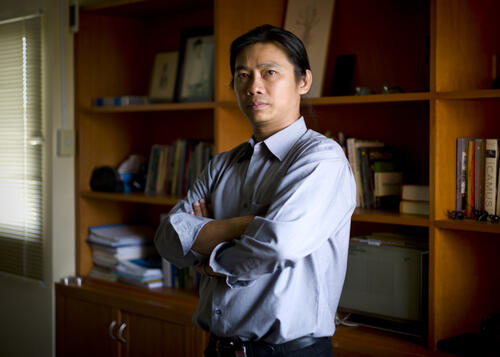
Fan Yun Associate Professor of Sociology Keynote Speaker National Taiwan University
Lectures
-


"The Controversy Over South Korean Wartime Operational Control: The Real Issues"

Speaker: Nam-soo Park2014-15 Visiting Scholar, Lieutenant General (Ret.)

South Korean Lt. Gen. (retired) Nam-soo Park will address the controversy in South Korea (ROK) over the indefinite, “conditions-based” postponement last year of Seoul’s planned reassumption of wartime operational control (opcon) over its own forces. Since the Korean War, the U.S. commander in South Korea has been assigned wartime operational control over most South Korean military units, but U.S. and Korean leaders agreed in 2007 that Seoul would resume wartime opcon over all its forces by 2012. That decision was based on progressives’ concerns that U.S. exercise of opcon over South Korean forces diminished Seoul’s sovereignty and disadvantaged it in negotiations with North Korea. Conservatives and some military leaders, however, pushed for postponement in the belief that ROK military forces were not adequately prepared for the change and that it might increase the likelihood of a further reduction in U.S. forces in South Korea. Lt. Gen. Park will share his views on this controversy over opcon change.


"The Use of Domestic and International Law: Against North Korean Subversion and Human Rights Violations"

Speaker: Dong Hyuk Chin, 2014-15 Visiting Scholar from Kim & Chang Law Firm

Visiting scholar Dong Hyuk Chin will discuss issues of criminal law related  to North Korea, including the application of the controversial National Security Law in South Korea in the case of individuals and organizations suspected of supporting Pyongyang, and the international community's consideration of the North Korean regime's human rights violations and crimes against humanity. Chin is a former South Korean prosecutor with experience handling cases involving the National Security Law; he also established comprehensive plans for national security-related administration while serving in the Public Security Affairs Division of the Ministry of Justice and District Prosecutor's Office. In his talk, he will review the South Korean Constitutional Court's recent dissolution of a political party accused of supporting North Korea; share his personal experience prosecuting a criminal case involving the National Security Law; and discuss the United Nation's Commission of Inquiry into North Korea's human rights situations and the UN General Assembly's referral of North Korean crimes against humanity to the International Criminal Court.

Philippines Conference Room

Encina Hall, 3rd floor

Shorenstein APARC616 Serra StreetEncina Hall E301Stanford, CA 94305-6055
(650) 723-6530
0
nam-soo_park.jpg

Lieutenant General (Ret) Park, Nam-soo joins the Walter H. Shorenstein Asia-Pacific Research Center (Shorenstein APARC) during the 2014-2015 academic year.  At Shorenstein APARC, General Park's research will focus on ROK-U.S. strategic responses to North Korean threats, the future of the ROK-U.S. alliance, and the establishment of peace on the Korean Peninsula.

As a career officer, General Park held varied military staff and field positions. His final assignment (2012-2013) was as superintendent of the Korea Military Academy (KMA), and he commanded the Capital Defense Command in 2011. Earlier, he was the director of Combat Readiness Inspection and the deputy chief of staff for Joint Operations with the Joint Chiefs of Staff (2010-2011). General Park also served as the director of Defense Reform Planning and Coordination, and later as the director of Management Reform at the Ministry of National Defense (2006-2008). After retirement, he served as a chair professor of Soegyung University in Seoul, and he is also a senior research fellow with the Korea Research Institute for Strategy (KRIS). He received a BA in literature from KMA and an MA in security assurance from Kyonggi University.


Visiting Scholar
Shorenstein APARC616 Serra StreetEncina Hall, E301Stanford, CA 94305-6055
(650) 723-6530
0
Visiting Scholar
dong-hyuk_chin.jpg

Dong Hyuk Chin joins the Walter H. Shorenstein Asia-Pacific Research Center during the 2014–15 academic year from the Kim & Chang Law Office in Korea. Chin is a senior attorney at Kim & Chang's Labor and Employment Group and White Collar Defense Practice Group. He served as a public prosecutor for 7 years, and has handled cases of the National Security Act and established comprehensive plans for a national security-related administration while in Public Security Affairs division of the Ministry of Justice and District Prosecutor’s Office.

Chin's research interests include the influence and meaning of criminal cases related to North Korean issues and the role of the jurists in preparation for the unification of Korea.

Chin graduated from the Judicial Research and Training Institute of the Supreme Court of Korea and holds a BA in law from the Seoul National University.

Seminars
News Type
News
Date
Paragraphs

The human rights situation in North Korea has gained considerable attention lately, due in part to an official report released by the United Nations last year. The landmark report condemned North Korea for systematic and widespread human rights violations.

Now for three weeks in March, the UN human rights council meets in Geneva for its regular session. North Korea’s human rights situation is a top agenda item, marked by a rare appearance by North Korean Foreign Minister Ri Su Young. In Dec. 2014, the UN General Assembly urged the Security Council to take up the situation of North Korea, including a possible referral of those responsible for prosecution in the International Criminal Court.

Looking beyond UN – U.S. – North Korea engagement, the European Union and its members have long-raised similar concerns. In a new policy brief “North Korean Human Rights: A Long Journey with Little Progress,” Mike Cowin details the human rights situation and institutions involved from a British perspective.

“The DPRK will need to make considerable efforts if it is to undermine more than a handful of the hundreds of testimonies of abuse that have been collected and brought to the world’s attention,” writes Cowin, a former deputy chief of mission at the British Embassy in Pyongyang.

Cowin is the Pantech Fellow in the Korea Program at the Walter H. Shorenstein Asia-Pacific Research Center. Before coming to Stanford, he also served in the embassies in Seoul from 2003 to 2007, and in Tokyo from 1992 to 1997.

The EU and North Korea have held seemingly incompatible positions for the past 11 years, and the March council meetings are unlikely to change that impasse. However, Cowin suggests that the EU should seek ways to have more impact.

“Perhaps the EU, which has often led the world on human rights, could find some way to talk with the DPRK, establishing a mutually acceptable way to restart engagement,” he writes.

Cowin says restarting engagement may take the form of quiet, long-term confidence building.

The Korea Program has published additional works focused on human rights in North Korea, including a paper that looks at living with disabilities in North Korea by Katharina Zellweger and an op-ed by Gi-Wook Shin calling for international consensus on the North Korea problem. Engaging North Korea is also a research focus of the Korea Program, which last year produced a policy paper on North-South Korean relations and the prospect for unification.

Hero Image
un hrc 28th session Flickr/United Nations
All News button
1
Paragraphs
Cover of the book "Crossing Heaven's Border," showing a defector looking at North Korea across the border with China.

From 2007 to 2011 South Korean filmmaker and newspaper reporter Hark Joon Lee lived among North Korean defectors in China, filming an award-winning documentary on their struggles. Crossing Heaven’s Border is the firsthand account of his experiences there, where he witnessed human trafficking, the smuggling of illicit drugs by North Korean soldiers, and a rare successful escape from North Korea by sea.

As Lee traces the often tragic lives of North Korean defectors who were willing to risk everything for their hopes, he journeys to Siberia in pursuit of hidden North Korean lumber mills; to Vietnam, where defectors make desperate charges into foreign embassies; and along the 10,000-kilometer escape route for defectors stretching from China to Laos and to Thailand. 
 

Desk, examination, or review copies can be requested through Stanford University Press.

All Publications button
1
Publication Type
Books
Publication Date
Authors
Book Publisher
Shorenstein APARC
Authors
Gi-Wook Shin
News Type
Commentary
Date
Paragraphs

Last spring two North Korean defectors visited Stanford University from Seoul to share their experiences in the North. Hosted by Stanford's Korean Student Association, the event was held to increase awareness of North Korean human rights issues in the Stanford intellectual community. In fact, the Association hosts "North Korean Human Rights Night" every year. Stanford is not alone in this; many other leading American universities across the country, often also led by Korean American students, convene similar gatherings.

In the summer of 2012, Silicon Valley IT giant Google, a Stanford progeny and neighbor, hosted a conference on how technology can be used to disrupt illicit global networks, such as trafficking in human beings, human organs, and weapons. Ten North Korean defectors, ranging from former elite party members to forgotten orphans, flew in from Seoul to participate. They shared their extraordinary stories of survival amid excruciatingly painful quests for freedom.

Growing pressure on Pyongyang

These two stories are not isolated episodes. They reflect a recent trend of the international community paying dramatically more attention to North Korean human rights issues. Most notably, last month the United Nations General Assembly passed a resolution to put North Korean human rights violations on the U.N. Security Council's agenda, despite objections from China and Russia. International pressure has been intensifying on Pyongyang since the release last year of a U.N. report documenting a network of political prisons in the North and atrocities that include murder, enslavement, torture, rape and forced abortions.

While concerns about North Korean human rights are longstanding at the U.N., this was the first time the U.N. Security Council ever debated the isolated country's human rights situation. In the past the international community focused primarily on curbing North Korea's nuclear programs. Now human rights in North Korea have become a matter rivaling the nuclear issue in seriousness and global attention. Its importance appears likely to continue to grow in the coming years.

That the human rights situation in North Korea is appalling was never a secret. Defectors have produced some searing accounts of life in the North Korean gulag. Why then did the international community largely ignore it until recently?

Partly this was a product of the priority given to security issues. But it also has to do with the closed nature of the regime and Cold War dynamics that made many people in the international community doubt that the situation could be as bad as some asserted. Pyongyang made it virtually impossible for foreign journalists to report out of the country, much less obtain video that could dramatize the situation of the ordinary people of North Korea for an international audience.

Moreover, some Western observers suspected that those focusing on North Korea's human rights situation were trying to demonize the regime for political and strategic purposes. Others, such as China and Russia, stayed away from supporting international criticism of North Korea's human rights situation, apparently for fear of opening up their own human rights situation to heightened international scrutiny. In any event, with few practical means to address the North Korean human rights situation, the international community paid little heed to the problem until the end of the cold war.

Unspeakable atrocities

Then, the great famine in North Korea in the mid-1990s led to many more North Koreans leaving their country and seeking temporary relief in China. More than ever they traveled on to the South and brought their life stories with them. One consequence has been an enormous increase in the amount of information available about circumstances inside North Korea, not least due to the flow of information into the country and the use of cell phones and other technology to get reports out. Along with changing international norms about human rights, this contributed to a dramatic growth during the past decade in the number of people, organizations and states throughout the world actively focusing on human rights in North Korea. In South Korea alone, there are many NGOs, often led by North Korean refugees, that work on North Korean human rights issues.

In a logical conclusion to these developments, a special United Nations Commission of Inquiry in February 2014 published a report detailing what it called "unspeakable atrocities" in North Korea. The head of the inquiry sent a letter to Kim Jong Un, warning, in effect, that Kim himself might be brought before the International Criminal Court. While the U.N. Security Council has not yet taken concrete action, the fact that it placed North Korea's human rights record on its agenda means that, theoretically at least, it can now at any point take the next step of referring these crimes against humanity to the International Criminal Court.

How, then, should we deal with the human rights situation in North Korea? While it is not difficult to condemn the current condition on moral and ethical grounds, it is much more challenging to adequately address it in practical terms, especially when the Democratic People's Republic of Korea reacts extremely negatively on such condemnation and uses it as a reason for not engaging on this issue.

For instance, the North Korean human rights situation remains one of the most divisive issues between conservatives and progressives in South Korea. South Korean conservatives advocate a very active program of publicizing and condemning North Korea's human rights situation. Many support steps such as taking the matter before the International Court of Justice with the aim of charging North Korea's leaders with crimes against humanity. Conservatives argue not only that this is the morally correct approach but also that it would put increased pressure on the regime to reform, if not contribute to its collapse.

South Korean progressives, on the other hand, while acknowledging the seriousness of the situation, are adamant that focusing on it will not serve to improve the situation. Instead, they say, by making the regime feel even less secure, it would actually worsen the human rights situation in North Korea as well as hurt efforts to improve inter-Korean relations. Progressives therefore argue South Korea should instead focus for the time being on state-to-state dialogue while providing aid to the North. This would reassure Pyongyang, they say, and eventually contribute to its taking its own reform measures, including improving the human rights situation.

As a result of these very different views, the Republic of Korea has adopted significantly different policies depending on whether a progressive or a conservative leader occupies the Blue House. When progressives Kim Dae-jung and Roh Moo-hyun were president, the ROK often abstained on votes in UN bodies addressing North Korea's human rights situation. In contrast, conservative governments voted in favor of international criticism of North Korea's human rights situation and sometimes took the lead in raising the issue.

A coordinated effort

Meanwhile, South Korea's National Assembly has for years been unable to pass a North Korean human rights bill at all. Progressives favor "human rights" legislation that deals primarily with providing humanitarian aid to the North, consistent with their perspective on the problem's roots, while conservatives have drafted a bill that focuses on human rights along the lines of the United States' North Korea Human Rights Act, first passed in 2004.

For its part, the U.S. itself became focused on human rights only about a generation ago. It was not until the administration of President Jimmy Carter (1977-81) that the U.S. embraced an activist policy placing international human rights near the top of its foreign agenda. Before then, the U.S. fiercely criticized communist states, but mostly because of the nature of their regimes rather than their human rights practices per se.

Today democratic governments throughout the world routinely criticize aspects of the human rights situations even in friendly and allied countries, not just in those of adversaries. Actions on behalf of human rights that in earlier decades would have been deemed unacceptable "interference in domestic affairs" now enjoy international legitimacy and broad support. Concepts such as the "responsibility to protect (R2P)," which many Japanese have promoted, assert that national sovereignty is not absolute and that the international community must intervene to stop situations where the regime is unable to protect its people.

While concern is well-taken that a focus on the North Korean human rights situation would burden any engagement effort with Pyongyang and, moreover, would not improve the lives of the people of North Korea in the short- to mid-term, we cannot ignore the human rights situation. Any policy toward the North must take into account that the North Korean human rights issue has developed dramatically in recent years.

For South Korea, this requires a principled but nuanced approach. It has long been the primary center for research on North Korean human rights, with the Korea Institute for National Unification producing its annual White Paper since 1996, but it needs to establish a bipartisan body to develop programs to effectively address those areas most in need. It should also support all important and accurate criticism of North Korea's human rights situation at the United Nations and other international organizations.

However, South Korea may not take the lead in addressing North Korea's human rights abuses, while increasing the humanitarian provision of nutritional assistance and public health services in North Korea without linkage to the nuclear issue. Such an approach would deprive North Korea of the argument that South Korea is not actually concerned about human rights but is using the issue as a weapon against Pyongyang.

Like other aspects of North Korea policy, the human rights problem is extremely troubling yet enormously difficult to address effectively. The international community must share its wisdom and its resources to develop and implement principled, pragmatic, long-term approaches to the challenges that Pyongyang presents, especially the human rights situation. Leaders of the international community as a whole but above all South Korea's neighbors should support and participate in such a coordinated effort. This is in fact an area in which Japan and South Korea can easily cooperate more.


Shin recently coauthored the policy report, "Tailored Engagement: Toward an Effective and Sustainable Inter-Korean Relations Policy," released at a hearing of the Korean National Assembly's special committee on inter-Korean relations. This Nikkei Asian Review article was originally carried on Jan. 20 and reposted with permission.

Hero Image
617644 2
The United Nations Security Council met to discuss the situation in North Korea on Dec. 22, 2014.
United Nations
All News button
1
Paragraphs

"People with Disabilities in a Changing North Korea" details the situation that people with disabilities face in the Democratic People's Republic of North Korea (DPRK). Despite its reputation as a repressive, closed society where human rights are routinely abused, there are in fact institutions in the DPRK that work to address the needs of the disabled, and a number of non-governmental organizations providing aid to disabled people are active in the country. In this paper, Katharina Zellweger attempts to provide "an informed and balanced view of what it means to live with disabilities in North Korea and current work to assist the disabled."

Katharina Zellweger, a senior aid worker with over thirty years of experience working in Asia, twenty of those years focused on aiding North Korea, was the Pantech Fellow at Shorenstein Asia-Pacific Research Center's Korea Program from 2011 to 2013.

All Publications button
1
Publication Type
Working Papers
Publication Date
Journal Publisher
Shorenstein Asia-Pacific Research Center
Authors
Number
978-1-931368-37-7
-

In the next 20 years, the middle class in Asia is projected to swell from 600 million to 3.2 billion.  If managed successfully, this could not merely be the single largest reduction in poverty in human history, but it could also substantially improve the fortunes of many non-Asian nations, especially the U.S.   Ambassador Bleich’s remarks will discuss the planning of America’s economic, diplomatic, and security rebalance to Asia, its progress to date, and the challenges that will ultimately determine whether Asia rises peacefully and successfully or whether it fails to meet its promise or worse.  Ambassador Bleich will address in particular the choice of Australia as the focal point for the rebalance, and how the U.S. alliance with Australia and leveraging of that relationship with other allies and partners in Southeast Asia are critical elements of ensuring a successful Indo-Pacific century.

Ambassador Jeffrey Bleich served as United States Ambassador to Australia from 2009-2013. His tenure in Australia was marked by a commitment to expanding Australia and the United States’ broad alliance by promoting security, advancing free trade, promoting human rights and expanding collaboration in education, space, energy and technology. He recently received the State Department's highest award for a non-career ambassador, the Sue Cobb Prize for Exemplary Diplomatic Service. Immediately prior to his nomination for ambassador in 2009, Ambassador Bleich served as Special Counsel to President Obama in the White House.

Ambassador Bleich recently rejoined Munger Tolles & Olson as a partner resident in the San Francisco office and will focus on international and domestic litigation and counseling, with a particular focus on privacy and data security, investigations, trade and cross-border disputes.

Ambassador Bleich received his law degree in 1989 from the University of California at Berkeley, Boalt Hall School of Law, where he was editor-in-chief of the California Law Review and Order of the Coif. He graduated from Amherst College magna cum laude with a B.A. in political science and holds a masters degree from Harvard University’s School of Government. He has also been awarded honorary doctorates from both U.S. and Australian universities.

Philippines Conference Room

Jeffrey Bleich Former Ambassador to Australia Speaker
Seminars
Date Label
-

The opening up of Myanmar (Burma) and the steps undertaken taken toward political reform in that formerly isolated dictatorship have been among Asia's most dramatic and least expected events.  But the establishment of full democracy is still on the agenda and faces many challenges.  How willing is the current government in Burma to allow a full and free exercise of political rights, including media freedom?  A panel of experts, including Aung Zaw, the editor and founder of The Irrawaddy and this year's recipient of the Shorenstein Award for Journalism in Asia, will address that question in discussing "Burma's Democracy:  How Real?"

Stanford University’s Walter H. Shorenstein Asia-Pacific Research Center (Shorenstein APARC) is pleased to announce Aung Zaw as the 2013 recipient of the Shorenstein Journalism Award. Zaw has been selected for his leadership in establishing independent media in Myanmar (Burma) and his dedication to integrity in reporting on Southeast Asia.

Image
 Aung Zaw

Aung Zaw is the founding editor-in-chief and executive director of The Irrawaddy, an independent Burmese media organization operating in Myanmar and northern Thailand. Zaw has been an active campaigner for democratic reform in Burma/Myanmar over the last two decades. He was awarded the 2010 Prince Claus Fund Award for journalism along with two journalists from Iran and Cuba – and is recognized for his active dedication to achieving democratic governance in Burma and his work to uphold press freedom.

Zaw studied Botany at Rangoon University. As a student activist in Burma, he was part of the 1988 protests in Rangoon against the Burmese military regime of General Ne Win. He was arrested and detained for a week in Rangoon’s notorious Insein prison where he was severely tortured during interrogation about his pro-democracy activities. Upon release Aung Zaw continued to work with the resistance movement until the military staged a coup in September that year and he was forced to leave the country for neighboring Thailand.

Two years later, Aung Zaw founded the Burma Information Group (BIG) in Bangkok, to document human rights violations in Burma. He began to write political commentaries for national newspapers in Thailand and internationally, and in late 1993 launched The Irrawaddy News Magazine in Bangkok, covering Burma affairs. He worked in Bangkok for two years producing The Irrawaddy Magazine until relocating to the more secure position in Chiang Mai in the north of Thailand.

In February 2012, Aung Zaw was able to return to his homeland for the first time in more than 20 years for a temporary visit as an independent journalist. By the end of 2012, The Irrawaddy was able to establish a media and news office in central Yangon, returning to Burma/Myanmar to practice independent journalism, whilst retaining a regional office in Thailand.

In 2013, the government lifted ban on The Irrawaddy and other exiled websites, the Irrawaddy English magazine and the Irrawaddy Dateline Current Affairs TV program is available for audiences in Myanmar. Aung Zaw writes for New York Times, International Herald Tribune, Time, The Guardian, Bangkok Post, The Nation and several publications in the Europe. His interviews have also appeared on CN, BBC and Al Jazeera. He is the author of the Face of Resistance and is a recent Visiting Scholar at UC Berkeley, School of Journalism.

Bechtel Conference Center

Aung Zaw 2013 Journalism Prize Winner and Founder and Editor, The Irrawaddy News Magazine Panelist
Nayan Chanda Director of Publications and the Editor of YaleGlobal Online Magazine Panelist Yale Center for the Study of Globalization
0
Senior Fellow Emeritus at the Freeman Spogli Institute for International Studies
Affiliated Faculty, CDDRL
Affiliated Scholar, Abbasi Program in Islamic Studies
aparc_dke.jpg PhD

At Stanford, in addition to his work for the Southeast Asia Program and his affiliations with CDDRL and the Abbasi Program in Islamic Studies, Donald Emmerson has taught courses on Southeast Asia in East Asian Studies, International Policy Studies, and Political Science. He is active as an analyst of current policy issues involving Asia. In 2010 the National Bureau of Asian Research and the Woodrow Wilson International Center for Scholars awarded him a two-year Research Associateship given to “top scholars from across the United States” who “have successfully bridged the gap between the academy and policy.”

Emmerson’s research interests include Southeast Asia-China-US relations, the South China Sea, and the future of ASEAN. His publications, authored or edited, span more than a dozen books and monographs and some 200 articles, chapters, and shorter pieces.  Recent writings include The Deer and the Dragon: Southeast Asia and China in the 21st Century (ed., 2020); “‘No Sole Control’ in the South China Sea,” in Asia Policy  (2019); ASEAN @ 50, Southeast Asia @ Risk: What Should Be Done? (ed., 2018); “Singapore and Goliath?,” in Journal of Democracy (2018); “Mapping ASEAN’s Futures,” in Contemporary Southeast Asia (2017); and “ASEAN Between China and America: Is It Time to Try Horsing the Cow?,” in Trans-Regional and –National Studies of Southeast Asia (2017).

Earlier work includes “Sunnylands or Rancho Mirage? ASEAN and the South China Sea,” in YaleGlobal (2016); “The Spectrum of Comparisons: A Discussion,” in Pacific Affairs (2014); “Facts, Minds, and Formats: Scholarship and Political Change in Indonesia” in Indonesian Studies: The State of the Field (2013); “Is Indonesia Rising? It Depends” in Indonesia Rising (2012); “Southeast Asia: Minding the Gap between Democracy and Governance,” in Journal of Democracy (April 2012); “The Problem and Promise of Focality in World Affairs,” in Strategic Review (August 2011); An American Place at an Asian Table? Regionalism and Its Reasons (2011); Asian Regionalism and US Policy: The Case for Creative Adaptation (2010); “The Useful Diversity of ‘Islamism’” and “Islamism: Pros, Cons, and Contexts” in Islamism: Conflicting Perspectives on Political Islam (2009); “Crisis and Consensus: America and ASEAN in a New Global Context” in Refreshing U.S.-Thai Relations (2009); and Hard Choices: Security, Democracy, and Regionalism in Southeast Asia (edited, 2008).

Prior to moving to Stanford in 1999, Emmerson was a professor of political science at the University of Wisconsin-Madison, where he won a campus-wide teaching award. That same year he helped monitor voting in Indonesia and East Timor for the National Democratic Institute and the Carter Center. In the course of his career, he has taken part in numerous policy-related working groups focused on topics related to Southeast Asia; has testified before House and Senate committees on Asian affairs; and been a regular at gatherings such as the Asia Pacific Roundtable (Kuala Lumpur), the Bali Democracy Forum (Nusa Dua), and the Shangri-La Dialogue (Singapore). Places where he has held various visiting fellowships, including the Institute for Advanced Study and the Woodrow Wilson International Center for Scholars. 


Emmerson has a Ph.D. in political science from Yale and a BA in international affairs from Princeton. He is fluent in Indonesian, was fluent in French, and has lectured and written in both languages. He has lesser competence in Dutch, Javanese, and Russian. A former slam poet in English, he enjoys the spoken word and reads occasionally under a nom de plume with the Not Yet Dead Poets Society in Redwood City, CA. He and his wife Carolyn met in high school in Lebanon. They have two children. He was born in Tokyo, the son of U.S. Foreign Service Officer John K. Emmerson, who wrote the Japanese Thread among other books.

Selected Multimedia

Date Label
Donald K. Emmerson Senior Fellow at FSI, Emeritus; Affiliated Faculty, CDDRL; Affiliated Scholar, Abbasi Program in Islamic Studies and Director, Southeast Asia Forum Panelist Stanford University
Daniel C. Sneider Associate Director for Research, Shorenstein Asia-Pacific Research Center Moderator Stanford University
Panel Discussions
-

Koret Distinguished Lecture Series: Lecture II

If East Asia is to make its anticipated much greater contribution to the world political and economic order in the coming years, the states and the peoples of the region will have to make continuous efforts to maintain and increase respect for the common values of humanity. Key to this is building mutual trust through historical reconciliation and rectification, which is necessary to ensure regional peace and prosperity and contribute to the global good. In the process of constructing a "civil consensus" resting on such universal human values as democracy, human rights, development cooperation, environmental protection, and ensuring peace, we must consider the role that the intellectual community in Asia should play alongside other world citizens. In his talk, President Oh will re-examine the responsibility of education in general and universities in particular in cultivating future world citizens who share the goal of upholding humanity’s common values. 

Dr. Oh received his BA in Political Science from Seoul National University, and his MPA and PhD in Public Administration from New York University.

The Koret Distinguished Lecture Series was established in 2013 with the generous support of the Koret Foundation

Philippines Conference Room

Oh Yeon-Cheon President, Seoul National University Speaker
Lectures
Subscribe to Human Rights