Trade
-

Making Money: How Taiwanese Industrialists Embraced the Global Economy is a record of a thirty-year research project that Gary G. Hamilton and Kao Cheng-shu began in 1987.  A distinguished sociologist and university administrator in Taiwan, Kao and his research team (which included Prof. Hamilton during his frequent visits to Taiwan) interviewed over 800 owners and managers of Taiwanese firms in Taiwan, China, and Vietnam.  Some were re-interviewed over ten times during this period.  The length of this project allows them a vantage point to challenge the conventional interpretations of Asian industrialization and to present a new interpretation of the global economy that features an enduring alliance between, on the one hand, American and European retailers and merchandisers and, on the other hand, Asian contract manufacturers, with Taiwanese industrialists becoming the most prominent contract manufacturers in the past forty years.


Image
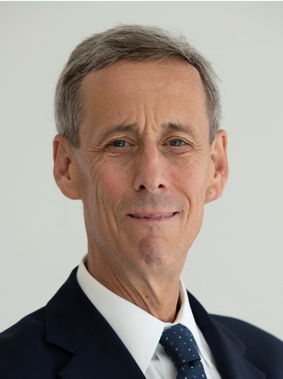
Gary Hamilton
Gary G. Hamilton is a Professor Emeritus of International Studies and Sociology at the University of Washington.  He specializes in historical/comparative sociology, economic sociology, with a special emphasis on Asian societies. He is an author of numerous articles and books, including most recently Emergent Economies, Divergent Paths, Economic Organization and International Trade in South Korea and Taiwan (with Robert Feenstra) (Cambridge University Press, 2006), Commerce and Capitalism in Chinese Societies (London: Routledge, 2006), The Market Makers: How Retailers Are Changing the Global Economy (co-editor and contributor, Oxford University Press, 2011; paperback 2012), and Making Money: How Taiwanese Industrialists Embraced the Global Economy (with Kao Cheng-shu, Stanford University Press, 2018).


This event is organized by the Taiwan Democracy and Security Project, part of the U.S.-Asia Security Initiative at Shorenstein APARC. Formerly the Taiwan Democracy Project at CDDRL.

Gary G. Hamilton <i>Professor Emeritus of International Studies and Sociology, University of Washington</i>
Lectures
News Type
News
Date
Paragraphs

Commenting on President Trump's twelve-day trip to Asia, FSI senior fellow and director of the Southeast Asia Program at Shorenstein Asia-Pacific Research Center Donald K. Emmerson noted that Trump "failed . . . to significantly alter the calculus brings to bear on North Korea."

Trump's approach to foreign policy, one based on forming personal relationships, might have caused him to get the mistaken idea "that he had made a real impact and everybody was getting along," Emmerson suggested.

Emmerson likewise questioned any substantial trade-related results coming out of the trip, saying that many touted achievements were either "already on the table" or were non-binding memoranda of understanding.

That said, Emmerson stressed that if in time President Trump were to realize the dearth of interest in bilateral trade deals, and that the "U.S. is making China great again," he could shift U.S. policy.

The full article is available from the Sinclair Broadcast Group.

Hero Image
xi and trump
Presidents Trump and Xi take part in a business event in Beijing during Trump's twelve-day Asia tour.
WhiteHouse.gov
All News button
1
News Type
News
Date
Paragraphs

Former U.S. ambassador to South Korea Kathleen Stephens spoke on "Bloomberg Daybreak: Asia" about President Trump's Asia trip on the eve of his arrival in China.

Stephens noted that in canceling a trip to the DMZ--more or less a presidential tradition on visits to Korea--Trump did the "right thing" by instead focusing on the "must-do" on this first trip of reassuring South Koreans on the U.S. commitment to its alliance with the Republic of Korea.

Both North Korean and Trump administration rhetoric seems to have cooled off in recent days; Stephens noted that Trump seems to have "gotten the message" about the importance of the relationship with South Korea and the level of nervousness in the country. 

Ambassador Stephens commented on the feasibility of beginning talks with North Korea and what additional pressure might be required to get the North to the table. She noted that if denuclearizing were a precondition for talks, they wouldn't happen.

She speculated on what President Trump might ask the Chinese to do to up the pressure on North Korea, for example, cutting off oil exports. She also suggested that when it comes to talking about trade, the emphasis might be on announcing deals and Trump might act as "salesman-in-chief."

The full interview is available on Bloomberg TV.

All News button
1
-

Image
The third of the “Tom Plate on Asia” series, Yo-Yo Diplomacy compiles the compelling and insightful columns on Asia by award-winning journalist Tom Plate over the past two years. From tensions in the South China Sea to China’s stock market turbulence and Hong Kong’s bookseller saga, the veteran columnist continues to examine the rise of Asia and the role of America in this dynamic and diverse region.

The collection is enlivened with thoughtful retrospectives and personal comments providing vivid backstories. The result is an informative and readable anthology that would prove valuable not only political and current affairs commentators, but also to the layperson wishing to learn more about pivotal developments in the Asia-Pacific region.

Tom Plate is a university professor, a veteran columnist focused on Asia and America, and an educational innovator. A Los Angeles resident, this full-time Clinical Professor and Distinguished Scholar of Asian and Pacific Studies at Loyola Marymount University has orchestrated live interactive seminars with major universities across Asia, as part of LMU’s path-finding Asia Media International Center. He teaches courses on the United Nations, and on Asia and on its media, and is the author of 13 books, including the bestsellers Confessions of an American Media Man (2007) and four volumes in the ‘Giants of Asia’ series; and The Fine Art of the Political Interview (2015), all published by Marshall Cavendish Editions. 


Born in New York, he was educated at Amherst College, where he was Phi Beta Kappa, and Princeton University, where he was awarded his professional degree in public and international affairs. He has received a number of major journalistic recognitions, including from the American Society of Newspaper Editors its annual Deadline Writing Award.


Books will be available for sale at the event


Philippines Conference Room

Encina Hall, 3rd Floor, Central

Professor Tom Plate <i>Asian and Pacific Studies, Loyola Marymount University</i>
Seminars
Date Label
-

- To RSVP please click here -

Please note that this event will take place in Beijing, P.R.C. at the Stanford Center at Peking University.


Some of the world’s most critical flashpoints are concentrated in the Asia-Pacific today. The 2017 Lee Shau Kee World Leaders Forum will examine East Asia’s geopolitical volatilities in the context of China’s rapid rise while assessing the evolving role of the United States in the region. The Forum will first include remarks by the Director of FSI and former U.S. Ambassador to the Russian Federation, Michael A. McFaul, on the historical origins and contemporary consequences of President Trump’s worldview. A panel discussion will follow with leading policy experts, including the Director of the U.S.-Asia Security Initiative, Shorenstein APARC, and former U.S. Ambassador to Afghanistan, Karl Eikenberry; Associate Professor and Vice President of the Institute of International and Strategic Studies at Peking University, Yu Tiejun; William J. Perry Fellow in the Korea Program at Shorenstein APARC and former U.S. Ambassador to South Korea, Kathleen Stephens; Executive Director of the China Center for Collaborative Studies of the South China Sea and Dean of the School of International Relations at Nanjing University, Zhu Feng; and Shorenstein APARC Fellow at FSI and former chairman of the National Intelligence Council and Assistant Secretary of State of Intelligence and Research, Thomas Fingar.  The expert panel will examine the current state of U.S.-China relations in this increasingly turbulent region.


The Lee Shau Kee World Leaders Forum is an annual event established to raise public understanding of the complex issues China and other countries face in the course of rapid development. The purpose of the Lee Shau Kee World Leaders Forum is to foster engagement among government, academic, private sector and civil society leaders on pressing challenges of global importance that demand creative and innovative solutions.

This year’s event also marks the Tenth Anniversary of the China Program and the Fifth Anniversary of the Stanford Center at Peking University.


Agenda


2:00-2:15 PM                     Welcome remarks

2:15-3:15 PM                     Keynote Address: The Historical Origins and Contemporary Consequences of

                                               President Trump's Worldview, Ambassador Michael A. McFaul

3:15-3:30 PM                     Break

3:30-5:30 PM                     Panel Discussion: The United States, China, and the Asia-Pacific Region

                                                Amb. Karl Eikenberry

                                                Dr. Yu Tiejun

                                                Amb. Kathleen Stephens

                                                Dr. Zhu Feng

                                                Dr. Thomas Fingar


Please note that this event will take place in Beijing, P.R.C. at the Stanford Center at Peking University.

Stanford Center at Peking University (SCPKU),

The Lee Jung Sen Building,

Langrun Yuan, Peking University, Beijing, P.R.C.

<br><a href="https://fsi.stanford.edu/people/karl_eikenberry">Karl Eikenberry</a> <br><i>Former U.S. Ambassador to Afghanistan (2009-2011); Lt. Gen. of U.S. Army (retired); Director, U.S.-Asia Security Initiative, Shorenstein APARC</i>
<br><a href="https://aparc.fsi.stanford.edu/people/kathleen_stephens">Kathleen Stephens</a> <br><i>Former U.S. Ambassador to the Republic of Korea (2008-2011); William J. Perry Fellow, Shorenstein APARC</i>
<br>Yu Tiejun <br><i>Associate Professor and Vice President of the Institute of International and Strategic Studies, Peking University</i>
<br><a href="https://aparc.fsi.stanford.edu/people/thomas_fingar">Thomas Fingar</a> <br><i>Former chairman, National Intelligence Council; Former Assistant Secretary of State for Intelligence and Research; Shorenstein APARC Fellow</i>
<br>Zhu Feng <br><i>Executive Director, China Center for Collaborative Studies of the South China Sea; Director, Institute of International Studies, Nanjing University</i>
<br><a href="http://cddrl.fsi.stanford.edu/people/michael_a_mcfaul">Michael McFaul</a> <br><i>Former U.S. Ambassador to the Russian Federation (2012-2014); Director of FSI</i>
Panel Discussions
-

Drawing on his latest book, Cracking the China Conundrum: Why Conventional Economic Wisdom is Wrong (Oxford University Press, 2017), Yukon Huang will highlight the reform challenges that China's leadership, recently anointed at the 19th Party Congress, will face. These include dealing with negative global opinions of the country, surging debt levels, a prolonged growth slowdown, entrenched corruption, trade and investment tensions and pressures for political liberalization. Dr. Huang argues that many of the mainstream assumptions for addressing these issues are misguided and that the related policy prescriptions are, therefore, flawed.


A book signing will follow. Copies of Dr. Huang's book will be available for purchase


[[{"fid":"228512","view_mode":"crop_870xauto","fields":{"format":"crop_870xauto","field_file_image_description[und][0][value]":"","field_file_image_alt_text[und][0][value]":false,"field_file_image_title_text[und][0][value]":false,"field_credit[und][0][value]":"","field_caption[und][0][value]":"","thumbnails":"crop_870xauto","alt":"","title":""},"type":"media","field_deltas":{"5":{"format":"crop_870xauto","field_file_image_description[und][0][value]":"","field_file_image_alt_text[und][0][value]":false,"field_file_image_title_text[und][0][value]":false,"field_credit[und][0][value]":"","field_caption[und][0][value]":"","thumbnails":"crop_870xauto","alt":"","title":""}},"link_text":null,"attributes":{"style":"margin-left: 0px; margin-right: 15px; padding: 0px; float: left; height: 262px; width: 200px;","class":"media-element file-crop-870xauto","data-delta":"5"}}]]Yukon Huang is currently a senior fellow at the Carnegie Endowment for International Peace, Asia Program. He was formerly the World Bank’s Country Director for China. His research focuses on China’s economy and its regional and global impact. He is a featured commentator for the Financial Times on China, and his articles are seen frequently in the Wall Street Journal, Bloomberg, Foreign Affairs, National Interest and Caixin. He has authored or co-authored East Asian Visions: Perspectives on Economic Development (2006); Reshaping Economic Geography in East Asia (2009); and International Migration and Development in East Asia and the Pacific (2014). His latest book is Cracking the China Conundrum: Why Conventional Economic Wisdom is Wrong (2017). He has a Ph.D. in economics from Princeton University and a B.A. from Yale University.

Philipppines Conference Room
 Encina Hall, 3rd Floor
 616 Serra Street
 Stanford, CA 94305

Yukon Huang <i>Senior Fellow</i>, Carnegie Endowment for International Peace, Asia Program
Lectures
-

Abstract 

Scholars have credited a model of state-led capitalism called the developmental state with producing the first wave of the East Asian economic miracle. Using historical evidence based on original archival research, this talk offers a geopolitical explanation for the origins of the developmental state. In contrast to previous studies that have emphasized colonial legacies or domestic political factors, I argue that the developmental state was the legacy of the rivalry between the United States and Communist China during the Cold War. Responding to the acute tensions in Northeast Asia in the early postwar years, the United States supported emergency economic controls in Japan, South Korea, and Taiwan to enforce political stability. In response to the belief that the Communist threat would persist over the long term, the U.S. strengthened its clients by laying the foundations of a capitalist, export-oriented economy under bureaucratic guidance. The result of these interventions was a distinctive model of state-directed capitalism that scholars would later characterize as a developmental state.

I verify this claim by examining the rivalry between the United States and the Chinese Communists and demonstrating that American threat perceptions caused the U.S. to promote unorthodox economic policies among its clients in Northeast Asia. In particular, I examine U.S. relations with the Chinese Nationalists on Taiwan, where American efforts to create a bulwark against Communism led to the creation of an elite economic bureaucracy for administering U.S. economic aid. In contrast, the United States decided not to create a developmental state in the Philippines because the Philippine state was not threatened by the Chinese Communists. Instead, the Philippines faced a domestic insurgency that was weaker and comparatively short-lived. As a result, the U.S. pursued a limited goal of maintaining economic stability instead of promoting rapid industrialization. These findings shed new light on the legacy of statism in American foreign economic policy and highlight the importance of geopolitics in international development.


Bio

Image
James Lee

James Lee is a Ph.D. Candidate in the Department of Politics at Princeton University. He specializes in International Relations with a focus on U.S. foreign policy in East Asia and relations across the Taiwan Strait. James also serves as the Senior Editor for Taiwan Security Research, an academic website that aggregates news and commentary on the economic and political dimensions of Taiwan's security.


This event is co-sponsored by the Taiwan Democracy Project in the Center on Democracy, Development, and the Rule of Law (CDDRL) and the U.S.-Asia Security Initiative in the Shorenstein Asia-Pacific Research Center (APARC), both part of the Freeman Spogli Institute for International Studies.

James Lee Ph.D. Candidate Princeton University
Lectures
News Type
Commentary
Date
Paragraphs

South Korean President Moon Jae-in and U.S. President Donald Trump recently held a summit in Washington, their first face-to-face meeting in a time of heightened tensions on the Korean Peninsula. Experts from the Shorenstein Asia-Pacific Research Center offered insights in a series of publications and press interviews.

In advance of the summit, William J. Perry Fellow Kathleen Stephens spoke on Bloomberg television about the challenges facing the United States and South Korea, and how those challenges would be prioritized during the bilateral meeting.

Moon would be bringing the message that the U.S.-South Korea alliance is a “strong one and that he remains committed to it,” and that, “only by working transparently and closely together” could the two countries address areas of concern, Stephens said.

“Only when Washington and Seoul are able to talk very frankly to each other and come up with a coordinated plan do we have any chance of making some progress on North Korea,” she added.

Stephens joined the program from Seoul, where a group of Shorenstein APARC faculty and fellows participated in a public seminar and the Korea-U.S. West Coast Strategic Forum, a biannual conference that seeks to foster dialogue about issues affecting the Korean Peninsula and the U.S.-South Korea alliance.

The seminar, held in conjunction with The Sejong Institute, received press coverage; such articles can be read on the Voice of America website (in Korean) and Sisa Journal website (in Korean).

In an analysis piece for Tokyo Business Today, Associate Director for Research Daniel Sneider assessed the outcomes of the summit between Moon and Trump, suggesting that their meeting was satisfactory – without signs of major discord.

“For the most part, this display of calculated pragmatism worked well. There was no visible daylight between the two leaders over how to handle the North and THAAD totally disappeared from the summit talk, at least in public and in the joint statement issued by the two governments.”

The summit, however, may prove to be a “temporary gain,” Sneider added. “Beneath the smiles, there was plenty of evidence of the gaps, and even the tensions, that exist between a progressive government in Seoul, one that echoes the views of its ideological predecessors of a decade ago, and a nationalist, conservative regime in Washington.”

Read the piece in English and Japanese.

Days after the summit, North Korea test-launched an intercontinental ballistic missile (ICBM), which the United States and South Korea followed by hosting joint military exercises.

Stephens spoke on WBUR radio about the ICBM test launch and the initial reactions of the Trump administration.

“If [President Trump’s] agenda is to take stronger defensive measures against North Korea, I think he will find strong partners in Japan and South Korea,” she said, noting that other measures, such as diplomacy and economic sanctions, have also been used to affect pressure on the regime.

Responding to a question about China’s relationship with North Korea, Stephens said Beijing has not exhausted all possible tools in its efforts to persuade Pyongyang to slow or abandon its nuclear and missile activities. This is because China fears a collapse of the regime and “takes a long view” in its calculus, she said.

This news item has been updated.

Hero Image
trump moon summit
U.S. President Donald Trump and South Korean President Moon Jae-in come out from the Oval Office to deliver joint statements in the Rose Garden at the White House on June 30, 2017, in Washington, DC.
Getty Images - Alex Wong
All News button
1
Paragraphs

In the days leading up to the Washington summit between South Korean President Moon Jae-in and U.S. President Donald Trump, the tension in Seoul was hard to escape. Fears of an open clash between the two leaders, of a handshake that went on too long, or of a hostile early morning tweet directed at Moon were widespread. But when a senior national security advisor to Moon met a group of American visitors after the first day of talks, he was visibly relieved. The dinner between Moon and U.S. President Donald Trump went so well, he recounted with a slight smile, that it was extended 35 minutes.

All Publications button
1
Publication Type
Commentary
Publication Date
Journal Publisher
Toyo Keizai Online (Tokyo Business Today)
Authors
Subscribe to Trade