
As Nuclear Threats Resurge, Documentary Chronicles Multigenerational Human Toll of Atomic Bombings
As Nuclear Threats Resurge, Documentary Chronicles Multigenerational Human Toll of Atomic Bombings
The documentary Atomic Echoes captures the voices and untold stories of the last remaining American atomic veterans and Japanese survivors of the Hiroshima and Nagasaki bombings, bearing witness to the enduring psychological and physical trauma of nuclear warfare.

On March 2, 2026, the Japan Program at the Shorenstein Asia-Pacific Research Center presented a screening of the documentary Atomic Echoes: Untold Stories from World War II, followed by a conversation with its producers, Karin Tanabe and Victoria Kelly. The film explores the lasting human toll of the Hiroshima and Nagasaki atomic bombings, offering a fresh perspective on the nuclear age and its enduring consequences. The event was held just two days after the United States, jointly with Israel, launched military strikes on Iran, citing as justification the collapse of denuclearization negotiations, and as the post-WWII international order gives way to a multipolar geopolitical environment with fewer guardrails against nuclear proliferation.
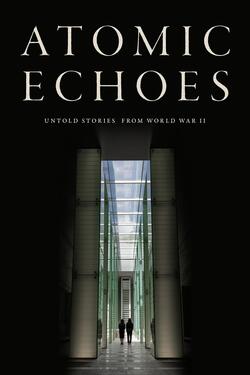
Atomic Echoes illuminates a largely untold aspect of the atomic bombings, namely, that the scars of nuclear warfare run deep for both Japanese survivors and American veterans, as well as their descendants. The documentary weaves together stories rarely heard in tandem, of Japanese atomic bomb survivors (hibakusha) and American atomic veterans deployed in the immediate aftermath of the bombings, who have lived with radiation-related illnesses, psychological trauma, and decades of government-enforced silence.
The film recounts those human stories through the dual perspective of Tanabe and Kelly, two friends connected by family histories on opposite sides of World War II. Tanabe, a novelist and journalist, is a Japanese American nisei whose grandmother’s uncle, Morito Tatsuo, dedicated his life to peacebuilding in his roles as Japan’s postwar minister of education and the first president of Hiroshima University. Kelly, an author of fiction and poetry, is the granddaughter of a U.S. Navy medic who was one of the first American troops to enter Nagasaki after the atomic bombing. He suffered from post-traumatic stress disorder and died young from PTSD-related alcoholism.
Working with production company Blue Chalk Media ahead of the 80th anniversary of the atomic bombings, Tanabe and Kelly embarked on an emotional journey to uncover their family legacies, seek answers from historians, and shed light on untold stories of the last remaining American atomic veterans and Japanese survivors.
Sign up for APARC newsletters to receive event invitations and guest speakers' insights >

Trauma on Opposite Sides of the War
The project began after Tanabe and Kelly, who met through their shared publisher, watched the 2023 film Oppenheimer together. Tanabe felt the film should have shown images of the devastating aftermath of the dropping of the atomic bombs in Hiroshima and Nagasaki, and Kelly revealed her grandfather's experience. What started as a writing project evolved into a documentary.
Speaking to the Stanford community, both producers emphasized how much of this history remains unknown to American audiences, and even to those directly connected to it. Tanabe expressed concern about gaps in American education. “In U.S. schools, only the mushroom cloud of the bomb is shown,” says Tanabe. "We wanted to show the human suffering from the bomb, [...] the children who had leukemia.”
Japanese survivors of the atomic bombings have endured lifelong health problems caused by severe injuries and radiation exposure, as well as profound psychological trauma stemming from the immense loss and destruction they experienced. At the same time, much of the American public remains unaware of the wounds carried by the American atomic veterans.
At least 60,000 American soldiers were stationed in Hiroshima and Nagasaki during the first three months after the bombings, and approximately 200,000 passed through the two cities in the first six months. American atomic veterans who witnessed the aftermath of the bombings have experienced radiation-related illnesses, post-traumatic stress disorders, and government censorship.
This aspect of history is also unfamiliar to many in Japan. For example, Kelly noted that members of the Japanese news crew that followed the filmmakers during production were unaware of the existence of American atomic survivors. "The idea that there are American atomic survivors who suffered this trauma is a new thing.”
Centering the Human Experience
Rather than focusing on the geopolitics of World War II, “we wanted to focus on the human experience of it," Tanabe said.
This approach led to emotionally challenging interviews with the documentary’s subjects. Tanabe recalled interviewing a 99-year-old American veteran for six hours, during most of which he cried as he confronted his trauma.
Kelly described how the trauma of nuclear warfare also extends across generations. Her grandfather's suffering following his experience in Nagasaki and his related untimely death impacted his entire family. In this context, she also invoked a U.S. veteran interviewee who could not have children due to radiation exposure. “He should have children around him, but instead it was his nephew taking care of him.”
Reflecting on how the making of the film changed them, Tanabe spoke about encountering extraordinary histories carried by ordinary people. "These are people we just pass by on the street, [...] and think about the amount of history they are sitting on." She shared how she and Kelly felt they were racing against time to preserve the voices and stories of centenarians before it was too late.
In Japan, Kelly noted, young people are being appointed as "memory keepers" to carry forward survivors’ testimonies. Tanabe asserted that “It’s time for the United States to tell this story.”
Urgent Relevance
Atomic Echoes began airing on public television stations nationwide in August 2025. It is also available for streaming on PBS platforms. The film's release comes at a pivotal juncture for global nuclear security.
After decades of relative success at preventing a nuclear arms race, the underlying framework for arms control is eroding. In the past few years, several treaties that limited nuclear arsenals expired, including, as recently as February 4, 2026, the New Strategic Arms Reduction Treaty (START), the last remaining nuclear arms control agreement between the United States and Russia, which capped strategic nuclear warheads and established extensive verification systems. Between Russia’s aggression, China’s growing nuclear capabilities, and the U.S. retreat from the postwar world order it had previously championed, many countries might seek nuclear weapons.
Atomic Echoes offers a timely reminder of the human cost of nuclear warfare and its enduring consequences that ripple across generations and borders.
For more information about the film, visit atomicechoesfilm.com.


