FSI researchers consider international development from a variety of angles. They analyze ideas such as how public action and good governance are cornerstones of economic prosperity in Mexico and how investments in high school education will improve China’s economy.
They are looking at novel technological interventions to improve rural livelihoods, like the development implications of solar power-generated crop growing in Northern Benin.
FSI academics also assess which political processes yield better access to public services, particularly in developing countries. With a focus on health care, researchers have studied the political incentives to embrace UNICEF’s child survival efforts and how a well-run anti-alcohol policy in Russia affected mortality rates.
FSI’s work on international development also includes training the next generation of leaders through pre- and post-doctoral fellowships as well as the Draper Hills Summer Fellows Program.
Global Talent seeks to examine the utility of skilled foreigners beyond their human capital value by focusing on their social capital potential, especially their role as transnational bridges between host and home countries. Gi-Wook Shin (Stanford University) and Joon Nak Choi (Hong Kong University of Science and Technology) build on an emerging stream of research that conceptualizes global labor mobility as a positive-sum game in which countries and businesses benefit from building ties across geographic space, rather than the zero-sum game implied by the "global war for talent" and "brain drain" metaphors.
"Advanced economies like Korea face a growing mismatch between low birth rates and increasing demand for skilled labor. Shin and Choi use original, comprehensive data and a global outlook to provide careful, accessible and persuasive analysis. Their prescriptions for Korea and other economies challenged by high-level labor shortages will amply reward readers of this landmark study." —Mark Granovetter, Professor of Sociology, Stanford University
The book empirically demonstrates its thesis by examination of the case of Korea: a state archetypical of those that have been embracing economic globalization while facing a demographic crisis—and one where the dominant narrative on the recruitment of skilled foreigners is largely negative. It reveals the unique benefits that foreign students and professionals can provide to Korea, by enhancing Korean firms' competitiveness in the global marketplace and by generating new jobs for Korean citizens rather than taking them away. As this research and its key findings are relevant to other advanced societies that seek to utilize skilled foreigners for economic development, the arguments made in this book offer insights that extend well beyond the Korean experience.
The human rights situation in North Korea has gained considerable attention lately, due in part to an official report released by the United Nations last year. The landmark report condemned North Korea for systematic and widespread human rights violations.
Now for three weeks in March, the UN human rights council meets in Geneva for its regular session. North Korea’s human rights situation is a top agenda item, marked by a rare appearance by North Korean Foreign Minister Ri Su Young. In Dec. 2014, the UN General Assembly urged the Security Council to take up the situation of North Korea, including a possible referral of those responsible for prosecution in the International Criminal Court.
Looking beyond UN – U.S. – North Korea engagement, the European Union and its members have long-raised similar concerns. In a new policy brief “North Korean Human Rights: A Long Journey with Little Progress,” Mike Cowin details the human rights situation and institutions involved from a British perspective.
“The DPRK will need to make considerable efforts if it is to undermine more than a handful of the hundreds of testimonies of abuse that have been collected and brought to the world’s attention,” writes Cowin, a former deputy chief of mission at the British Embassy in Pyongyang.
Cowin is the Pantech Fellow in the Korea Program at the Walter H. Shorenstein Asia-Pacific Research Center. Before coming to Stanford, he also served in the embassies in Seoul from 2003 to 2007, and in Tokyo from 1992 to 1997.
The EU and North Korea have held seemingly incompatible positions for the past 11 years, and the March council meetings are unlikely to change that impasse. However, Cowin suggests that the EU should seek ways to have more impact.
“Perhaps the EU, which has often led the world on human rights, could find some way to talk with the DPRK, establishing a mutually acceptable way to restart engagement,” he writes.
Cowin says restarting engagement may take the form of quiet, long-term confidence building.
The Korea Program has published additional works focused on human rights in North Korea, including a paper that looks at living with disabilities in North Korea by Katharina Zellweger and an op-ed by Gi-Wook Shin calling for international consensus on the North Korea problem. Engaging North Korea is also a research focus of the Korea Program, which last year produced a policy paper on North-South Korean relations and the prospect for unification.
The thirteenth session of the Korea-U.S. West Coast Strategic Forum, held in Seoul on December 11, 2014, convened senior South Korean and American policymakers, scholars and regional experts to discuss North Korea policy and recent developments in the Korean peninsula. Hosted by the Korea Program at the Walter H. Shorenstein Asia-Pacific Research Center at Stanford University, the Forum is also supported by the Korea National Diplomatic Academy.
Sony Pictures Entertainment was set to release a satirical comedy, “The Interview,” in late 2014, but a cyberattack hit the organization that leaked corporate information, leading the company to initially pull the film and opening up a string of theories over who was behind the attack and how to respond.
Speculation began to mount as a clearer picture of the unprecedented hacking, both comprehensive and large in size, began to emerge. The breach is thought to be retribution for Sony’s production of the film, which carries a plot to assassinate North Korean leader Kim Jong-un.
Then, a threat was directed at movie theaters and moviegoers planning to screen and see “The Interview.” The message warned those against involvement ahead of the film’s Dec. 25 opening, indicating a “bitter fate” and alluding to the 9/11 attacks in the United States.
An unknown group, The Guardians of Peace “GOP,” claimed responsibility for the cyberattack. Media and those familiar with North Korea began to point blame on the country, which had already publicly condemned the film last June and has a history of cybercrime. Responding to accusations, top North Korean leadership rejected any involvement in the attack.
Image
The White House responded as Sony canceled the film’s New York premiere and said it would discontinue distribution. Following his year-end press conference, President Barack Obama condemned the hacking, citing the Federal Bureau of Investigation’s conclusion that North Korea was behind the attack. The President said the United States would respond “proportionally,” and on Jan. 2, signed an Executive Order that put into action a series of sanctions imposed by the Department of the Treasury.
David Straub, a Korea expert at Stanford University, answered questions about the Sony hacking and its policy implications for the United States and North-South Korean relations. Straub is the associate director of the Korea Program at the Walter H. Shorenstein Asia-Pacific Research Center. He formerly served as the State Department’s Korean affairs director.
What do we know about the Sony hacking? Who’s responsible?
Based on many types of evidence, including confidential information, U.S. government officials appear to be quite confident that North Korea did in fact conduct this operation. There’s still some disagreement in the media and among tech experts over who is responsible. They’ve cited a number of reasons but the main one is that the FBI’s official statement attributing the attack to North Korea provided evidence that they believe is far from conclusive. I myself am not a technical expert, but based upon my following North Korea for many years – the attack strikes me as being very likely to have been a North Korean operation. The FBI statement noted that the Sony attack is similar to an attack that the North Koreans conducted against South Korean banks and media outlets in March 2013. In that attack, many South Korean banks had their hard drives completely wiped clean. It was a hugely destructive attack and very similar to what happened to Sony.
Does North Korea’s response to the Sony hack coincide with past behavior?
In addition to the 2013 South Korean bank cyberattack, the North Koreans apparently sank a South Korean naval vessel in 2010, killing 46 sailors. In both instances, the North Koreans denied that they did it, expressed outrage over being accused, demanded that the South Koreans produce proof, said that they could prove that they didn’t do it, and then requested that the South Koreans conduct a joint investigation. These same demands are being made in response to the U.S. blaming Pyongyang for the Sony cyberattack. It couldn’t be more similar. More generally, the North Korean regime is very calculating. They know they can’t win an outright military confrontation with South Korea, much less the United States, so what they do is try to find a weak link and go after it in a way in which they have plausible deniability – a situation where it’s very difficult for the attacked party to prove who did it.
Describe North Korea’s hacking capabilities.
North Korea is a very secretive country, so it’s hard to be completely certain of their cyber capabilities. However, according to many accounts, the North Korean government has established professional hacking schools and units over the years, resulting in hundreds if not thousands of trained hackers. North Korea has engaged in a number of attacks in the past, the most prominent one was the attack on South Korean banks in March 2013. But also, a few years ago, North Korea conducted less sophisticated attacks on major U.S. government websites.
Why would they conduct an attack?
The North Koreans appear to have both the capability and the motivation to attack Sony. The nation’s entire political system rests on a cult of personality – now a cult of family, actually – that began with the founder of the regime, Kim Il-sung, and extends to his grandson today, leader Kim Jong-un, who has been in power since Dec. 2011. It’s the only thing holding the political system together at this point. The cult of personality is so strong that any direct criticism of the top leader is something that North Koreans will compete among each other to reject. From this standpoint, it seems very likely that they would feel they had to prevent the showing of a movie that features an assassination of Kim Jong-un. And, the hackers had plenty of time to prepare for and implement the attack because everyone knew well ahead of when the movie would be released.
The United States placed new financial sanctions on North Korea. What impact will the sanctions have?
President Obama made it clear that the U.S. government would respond at a time, in a place, and in a manner of its own choosing. Not all measures taken would be made public. So far, the first publically announced measure was the President’s Executive Order on Jan. 2 imposing additional sanctions on a number of North Korean agencies and officials. This in itself is unlikely to have major consequences because most of those entities were already sanctioned. But, the Executive Order states that the sanctions are being implemented not only because of the cyberattack against Sony, but more generally because of North Korea’s actions and policies, including its serious human rights abuses. So in a sense, the North Koreans got the United States to expand its reasons for sanctioning them.
President Obama addresses the Sony hacking, saying the United States will "respond proportionally," at his year-end press briefing on Dec. 19.
President Obama addresses the Sony hacking at his year-end press briefing on Dec. 19. Photo credit: WhiteHouse.gov
What other steps will the United States likely take?
President Obama left open the possibility that North Korea might be returned to the U.S. State Sponsors of Terrorism list, from which the nation was removed in 2008. I think it was a mistake to remove North Korea from that list in the first place. It was done to promote progress on the nuclear talks, which eventually failed, and ignored a number of terroristic actions that North Korea has committed in recent years. Another possibility, which is being pushed by Republicans in Congress, is to increase financial sanctions that mirror the type that were successfully implemented in Iran.
How will the U.S. response influence cybersecurity policy going forward?
The attack on Sony is a huge wakeup call to American businesses, and even to the U.S. government. It’s the first attack of this size on a company located in the United States. It got tremendous profile in the media and the President has been personally engaged in responding. Nearly everyone has heard about it, so U.S. companies are now going to be focused much more on cybersecurity because it has exposed some potential vulnerabilities – a “if North Korea can do it, presumably others can too” mentality. Moreover, if an attack can be executed on a film company, it could also be done to other businesses and even to elements of U.S. critical infrastructure.
How do you view North Korean leader Kim Jong-un’s possible offer to meet with South Korean leadership this year?
Kim Jong-un said that he was open to the possibility of a summit with South Korea in his annual New Year’s address, although he made no specific proposal. He made clear that the summit would be conditional on actions to be taken in advance by South Korea. Among these, Kim demanded ending U.S.-South Korean military exercises and halting the flow of propaganda-filled balloons sent over the border into the North by non-governmental activist groups in the South. Moreover, North Korea has a history of expanding its conditions later, without any warning. So, I think one has to be skeptical. The signal is unfortunately less likely to be a sincere effort toward real, sustained dialogue, and more likely to be a North Korean propaganda effort devised to confuse, divert and divide international public opinion. That said, South Korea has acted entirely appropriately in welcoming the signal and reiterating its own offer of high-level talks. Let’s hope for the best.
David Straub also participated in an interview with Public Radio International on Jan. 1 about the prospect for North-South talks, the audio can be accessed on the PRI website.
Hero Image
"The Interview," a Sony Pictures film starring actors Seth Rogen and James Franco about a fictional plot to assasinate North Korean leader Kim Jong-un, releases in theaters. | Reuters/Kevork Djansezian
During the past five decades, the South Korean economy has achieved stellar success. The country has been transformed from an impoverished, war-stricken, agrarian society into an industrial powerhouse. Today Korea has the world’s 14th-largest economy and per capita GDP of $28,000. Yet the economy is now at a crossroads. Korea is losing its dynamism and facing serious challenges, including a rapidly aging society, declining working age population, reduced potential growth rate, increasing demand for welfare expenditures, worsening inequality, and fewer decent jobs. Moreover, the prospect of unification poses not only opportunities but also challenges. Kyung Wook Hur will discuss Korea’s urgent need to find new engines of growth and take other steps to meet these challenges to the future of the Korean economy.
From May 2010 to May 2013, Kyung Wook Hur was Ambassador of the Permanent Delegation of Korea to the Organization for Economic Co-operation and Development (OECD), where he also served as chair of the OECD Pension Budget and Reserve Fund Management Board, co-chair of the Working Group on OECD Development Strategy, and chair of the Informal Reflection Group on China. He was Korea’s Vice Minister of Strategy and Finance from January 2009 to May 2010 and Secretary to the President for National Agenda from March 2008 to January 2009. During a career in the Korean government that began in 1979, he focused on macroeconomic policies, international financial policy, economic policy coordination, and budget planning. Outside of the Korean government, he also worked for various international financial organizations, including the World Bank (as a Young Professional), the International Finance Corporation, and the International Monetary Fund.
Currently Ambassador Hur is a visiting professor at both the Korea Development Institute’s School of Public Policy and Management and Seoul National University’s Graduate School of International Studies, and an advisor to the ASEAN +3 Macroeconomic Research Office (AMRO). He is also a Chartered Financial Analyst.He received a BA in business administration from Seoul National University and an MBA from Stanford University.
The Koret Distinguished Lecture Series is made possible through the generous support of the Koret Foundation.
Philippines Conference RoomEncina Hall, 3rd floor616 Serra StreetStanford University
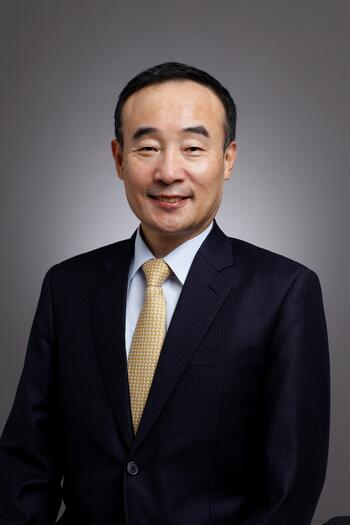
Kyung Wook Hur, <i>former ROK Ambassador to OECD </i>
Former ROK Ambassador to OECD
A unified Korea is likely but it won’t come easily, said Stanford professor Gi-Wook Shin, in a recent interview with NK News. The most plausible scenario is reunification following a breakdown of the North Korean regime and eventual South Korean absorption of the North.
“Of course, I cannot predict the timing of such an occurrence, but it is likely that it will happen in the not-too-distant future,” said Shin, director of the Walter H. Shorenstein Asia-Pacific Research Center, in a Q&A among a panel of experts on inter-Korean relations.
In the event of unification, Shin says he is convinced it will be on South Korean terms. He said he doubts that the North Korean government, led by leader Kim Jong-Un and the ruling Worker’s Party of Korea, would find a role in South Korea’s democratic system.
Shin heads a multiyear research project focused on understanding the domestic and global implications of North Korea’s future. Earlier this year, he coauthored a policy brief assessing the situation and policy context on the Korean Peninsula. The report recommends steps that the South Korean government can take to engage North Korea toward the ultimate goal of Korean unification and a sustainable security environment in Northeast Asia.
In conversation with Shorenstein APARC, Yong Lee, the SK Center Fellow, discusses his initial draw to architecture and urbanism, and the nexus of public policy and economics. Lee highlights some of his recent research activities focused on international sanctions on North Korea and educational policy as it relates to migration and housing patterns in South Korea.
Your background is quite multifaceted, including years working in architecture and a master’s of public policy in addition to a doctorate in economics. How do all of these areas fit together to inform your research?
It took a while for me to figure out what I wanted to pursue as a career. As a high school student in Korea I had to choose a track that focused on either the physical sciences or the humanities/social sciences. At that age, it’s hard to know what you want to be. Simply because my father was an engineer, I chose the physical sciences track. When it was time to apply for college (one actually had to determine a major when applying for college back then), I became interested in international relations and wanted to become a diplomat. But given my training in the hard sciences and the fact that one had to choose a major when applying, I had to decide on a science or engineering major. After browsing through the library a few architecture books caught my eye, and I opted for architectural engineering as my major.
I truly enjoyed my six years of architectural training but after working for an architectural firm for several years in Seoul, I realized I was more interested in the abstract ideas of architecture and urbanism and less of the actual design process that goes on in an architectural firm. I searched for my next career, became interested in urban and development policy, and pursued a master’s of public policy at Duke University. However, then I realized that economics would allow me to rigorously analyze the policy questions I was interested in. Fortunately, Brown University accepted me as a Ph.D. student and I eventually became an economist. It was through this search process, that I developed an interdisciplinary interest in policy relevant questions. My personal choices constrained by education policy, comparatively experiencing Korea’s transition while living between Korea and the United States each decade since the 1980s, and my interest in architecture and cities have shaped my research interest in economic development and growth with a focus on education, firms and cities. And now being at FSI, I can immerse myself in international studies, something I had wanted to pursue all along. By joining Stanford, I think I finally discovered what I had wanted to do.
One of your research streams looks at the effects of sanctions on domestic populations, looking at the case study of North Korea. How did you derive data about the closed-off regime? What are your key findings?
Research on North Korea is challenging because of the dearth of data. I had been interested in how sanctions impact the domestic population, but to examine this question one would need regional level data within in North Korea. I decided to use the satellite night-lights data, which in recent years has been used as an alternative means to measure economic activity. I found that sanctions actually increase urban-rural inequality. An additional sanctions index increases the urban-rural luminosity gap by about 1 percent. However, if I focus on the more central urban areas the gap increases to about 2.6 percent. Since urban areas are more than ten times brighter than rural areas, the results imply that the gap further increases by 1 to 2.6 percent with additional sanctions. Furthermore, I find that the urban areas actually get brighter while the rural areas get darker.
Another of your research focuses on the impact of 1970s education policy in South Korea on intergenerational mobility and migration. Can you explain this phenomenon? Does the case of South Korea relate to reform experiences in other countries?
Students in South Korea traditionally had to take an entrance exam to enter high schools. After the exam, high schools would choose students based on the exam scores. Given the variation in school quality, a hierarchy of high schools had existed and students who performed well would enter the top tier high schools. This system was heavily criticized since wealthier families could tutor children to prepare for the entrance exam. Eventually in the mid-1970s, the South Korean government abolished the exam-based system and moved to a school district based system where students would attend high schools based on residential location. By moving away from an exam system to a district system, policymakers hoped that educational opportunities would alleviate the persistence of inequality. However, what I find is that, to the contrary, the district system generated substantial sorting of households by income. Now wealthier households could simply move to districts and cities with the prestigious high schools. Given that the purchase of housing is purely determined by income, school quality became even more segregated by income and actually exacerbated the persistence of inequality across generations. This transition is now happening in several Chinese cities and in the United States – the sorting across school districts by educational outcome has created highly segregated towns. The Korea experiment allowed me to examine not just an equilibrium outcome, but also the transition when the policy changed.
In the coming year, you’ll be teaching courses related to the economies of East Asia. Can you provide an outlook on this?
I’ll be teaching an International Policy Studies course titled, “Economic Growth, Development, and Challenges of East Asia,” in the spring. The course will focus on China, Japan, and Korea, but also draw on Southeast Asian countries, when relevant. I will cover the rapid economic growth in recent decades and development policies pursued. However, I will also cover the current major economic challenges these countries face, some of which are rising income inequality, entrepreneurship, and an aging workforce. I hope to add to our rich set of courses by providing an economics and empirical viewpoint.
Tell us something we don’t know about you.
I sometimes split my sleep. That is, I go to bed to sleep for a few hours and then wake up in the middle of the dark, do some reading or work, and then sleep for one or two hours before I start my morning routine. It started during my high school years and it has stuck with me for quite a while now. Don’t worry, though. I sleep fine most of the time. I just sometimes enjoy the dead of the night.
The North Korean regime has adjusted to international sanctions by shifting that economic pain away from cities to the countryside, new Stanford research using satellite night lights data shows.
U.S. policy toward North Korea has been based on the expectation that economic sanctions could deter North Korea from developing nuclear weapons or change the behavior of the regime, according to Yong Suk Lee, a Stanford economist at the Freeman Spogli Institute for International Studies.
Since 1950, both the United States and the global community have adopted a series of economic sanctions against North Korea. The latest came in 2013 when the United Nations approved restrictions on banking, travel and trade in response to North Korea's underground nuclear test and threat to launch nuclear strikes against the United States and South Korea.
In a working paper, Lee examined how North Korea's Communist rulers have adapted to the increasingly tougher sanctions through the years.
"North Korea is one of many autocratic regimes that refuse to yield to sanctions, and its isolation and hereditary dictatorship make it a particularly good example to study the impact of economic sanctions in autocratic regimes," said Lee, the SK Center Fellow and a faculty member of the Korea Program at Stanford's Walter H. Shorenstein Asia-Pacific Research Center.
North Korea is one of the poorest countries in the world, Lee noted. Its leaders follow an economic model based on a centrally planned economy and self-imposed isolation from the rest of the world.
Satellite data
Lee's research was based on nighttime views of lights from data collected by the U.S. Defense Meteorological Satellite Program. The researcher created "average luminosity" measures of lights across North Korea based on a 1-mile-by-1-mile grid for the years 1992 through 2010. Light usage was examined for brightness on one-minute intervals.
To predict the impact of sanctions on economic activity in North Korea, Lee used a formula that transformed the luminosity measures into GDP measures. For example, a 10 percent change in the satellite lights is associated with about a 3 percent change in GDP.
According to Lee, satellite data is of greatest utility in assessing the economies of cities and regions in the developing world. In a country like North Korea, a large part of economic activity happens during the evening and night and involves light. For example, lights at night are generated by peoples' consumption of goods and services as well as transportation. And some production activities happen during the evening hours.
"Economists have found that how bright night lights are can predict national and sub-national GDP quite well, especially in countries where GDP data is not reliable," he said.
Lee found that economic sanctions decreased luminosity in the hinterlands, but increased luminosity in urban areas, especially toward the centers. As for whether additional sanctions affected luminosity, he found they increased the urban-rural luminosity gap by about 1 percent. When he examined the more central urban areas, the gap increased by about 2.6 percent.
"The results suggest that the dictatorship countered the effects of sanctions by reallocating resources to the urban areas," Lee said. One could surmise that the economic sanctions do not affect the country's leadership much, he said.
The hinterlands responded to declining economic fortunes by relying more on trade with China near those border areas, Lee added. In fact, the sanctions generated more North Korean migration to China and reliance on Chinese merchants and goods. North Korea's border with China is relatively porous as opposed to its heavily militarized border with South Korea.
'Increasing inequality'
The upshot, Lee said, is that sanctions that fail to change the behavior of an autocratic regime may eventually increase urban-rural inequality.
"Sanctions will likely be inefficient as long as North Korea can maintain powerful centralized control and oppress any discontent that arises due to increasing inequality," he said.
Lee added that sanctions will most likely not deter North Korea's nuclear weapons activities. They have not done so yet, and at this point, North Korea's leaders view sanctions as inconveniences, but not regime-threatening. Plus, even the harshest sanctions would be unlikely to stem the flow of all goods, energy and money into North Korea. Not all countries would go along with draconian trade restrictions that hurt the poorest people the hardest, he said.
"Even if sanctions were imposed to full capacity, the marginalized population would suffer the most," said Lee, adding that he was actually surprised about his project's findings.
"One can always hypothesize a story but to actually find such effect in the data was quite exciting. Frankly, I pursued this project expecting that I wouldn't find any impact of sanctions on lights," he said.
Clifton Parker is a writer for the Stanford News Service.
Hero Image
The Korean Peninsula is pictured at night from the International Space Station in Jan. 2014. The dark area is North Korea in between well-lit China and South Korea. North Korea's capital city of Pyongyang appears like a small island, showing some light emission, otherwise surrounded by darkness. | Flickr/NASA's Marshall Space Flight Center
Gi-Wook Shin, director of the Walter H. Shorenstein Asia-Pacific Research Center, and David Straub, associate director of the Korea Program, presented their new study "Tailored Engagement: Toward an Effective and Sustainable Inter-Korea Relations Policy" to a Washington, D.C. audience at the Brookings Institution on Sept. 29. The Voice of America wrote an article in Korean about the presentation, citing Shin saying, "Engagement is important and essential but it must be carefully tailored or fitted to changing political and security realities on and around the Peninsula."
Since Kim Jong Un came to power, interest in North Korea (DPRK) has increased but it is difficult to judge whether the growing range of media reports and the commentaries based on them are accurate or not. Spending almost 30 months in the DPRK from March 2012, mainly in Pyongyang but also making visits outside, offered an opportunity to collect up-to-date materials, especially photographs, which may offer an insight into the changes taking place. These might offer a new angle to be considered and hopefully stimulate further discussion about what is really happening in the DPRK now.
Mike Cowin, former deputy head of mission at the British Embasy in Pyongyang, joined the Korea Program at Stanford's Shorenstein Asia-Pacific Research Center as the 2014–15 Pantech Fellow. He is a specialist on Korea and Japan, has been a member of the Research Cadre of the Foreign & Commonwealth Office (FCO) of the United Kingdom since 1988. He has also served in the British embassies in Tokyo from 1992 to 1997, in Seoul from 2003 to 2007, and in Pyongyang as deputy head of mission since March 2012.
He has spent most of his career in London working on policy related research, providing advice to relevant policy desks and acting as the interface between the FCO and academic and research institutions.
Philippines Conference Room,
Encina Hall 3rd floor,
Stanford University
Shorenstein APARCStanford UniversityEncina Hall, Room E301Stanford, CA 94305-6055
(650) 723-9404
(650) 723-6530
0
mcowin@stanford.edu
mike_cowin.jpg
Mike Cowin, former deputy head of mission at the British Embassy in Pyongyang, North Korea, joins the Korean Studies Program at the Shorenstein Asia-Pacific Research Center as the 2014–15 Pantech Fellow. Having spent twenty years covering Korean issues for the British Government, Cowin brings immense insight not only on North Korea but also on Northeast Asia. During his time at the Center, Cowin will focus his research on economic and social deverlpment that he has seen taking place in North Korea while serving there. Cowin, a specialist on Korea and Japan, has been a member of the Research Cadre of the Foreign & Commonwealth Office (FCO) of the United Kingdom since 1988. He has also served in the British embassies in Tokyo from 1992 to 1997, in Seoul from 2003 to 2007, and presently in Pyongyang, as deputy head of mission, since March 2012. He has spent most of his career in London working on policy related research, providing advice to relevant policy desks and acting as the interface between the FCO and academic and research institutions.
Pantech Fellow, 2014-2015
Speaker
2014-15 Pantech Fellow, Stanford University

 FSI researchers consider international development from a variety of angles. They analyze ideas such as how public action and good governance are cornerstones of economic prosperity in Mexico and how investments in high school education will improve China’s economy.

 President Obama addresses the Sony hacking, saying the United States will "respond proportionally," at his year-end press briefing on Dec. 19.



 Since Kim Jong Un came to power, interest in North Korea (DPRK) has increased but it is difficult to judge whether the growing range of media reports and the commentaries based on them are accurate or not. Spending almost 30 months in the DPRK from March 2012, mainly in Pyongyang but also making visits outside, offered an opportunity to collect up-to-date materials, especially photographs, which may offer an insight into the changes taking place. These might offer a new angle to be considered and hopefully stimulate further discussion about what is really happening in the DPRK now.