International Development

FSI researchers consider international development from a variety of angles. They analyze ideas such as how public action and good governance are cornerstones of economic prosperity in Mexico and how investments in high school education will improve China’s economy.

They are looking at novel technological interventions to improve rural livelihoods, like the development implications of solar power-generated crop growing in Northern Benin.

FSI academics also assess which political processes yield better access to public services, particularly in developing countries. With a focus on health care, researchers have studied the political incentives to embrace UNICEF’s child survival efforts and how a well-run anti-alcohol policy in Russia affected mortality rates.

FSI’s work on international development also includes training the next generation of leaders through pre- and post-doctoral fellowships as well as the Draper Hills Summer Fellows Program.

News Type
News
Date
Paragraphs

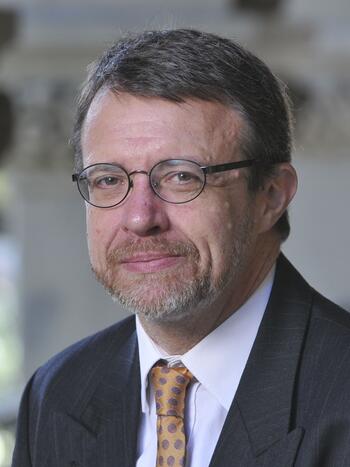
Joon Nak Choi will be the 2015-16 Koret Fellow in the Korea Program at Stanford University’s Walter H. Shorenstein Asia-Pacific Research Center (APARC), effective Jan. 1, 2016.

A sociologist by training, Choi is an assistant professor at Hong Kong University of Science and Technology. His research and teaching areas include economic development, social networks, organizational theory, and global and transnational sociology, within the Korean context.

Choi, a Stanford graduate, has worked jointly with Stanford professor Gi-Wook Shin to analyze the transnational bridges linking Asia and the United States. The research project explores how economic development links to foreign skilled workers and diaspora communities.

Most recently, Choi coauthored Global Talent: Skilled Labor as Social Capital in Korea with Shin, who is also the director of the Korea Program. From 2010-11, Choi developed the manuscript while he was a postdoctoral fellow at Shorenstein APARC.

Mark Granovetter, a professor and chair of Stanford’s sociology department, praised Choi for his work in academia.

“Joon Nak’s dissertation on social influences on hedge fund managers’ success broke important ground in our understanding of financial markets. His recent book Global Talent sheds critical new light on the challenges of Korea and other economies facing high-level labor shortages, and the potential of foreign workers to meet them. As the 2015-16 Koret Fellow, he will bring his considerable talents to bear on the study of Korean society,” Granovetter said.

During his fellowship, Choi will study the challenges of diversity in South Korea and teach a class for Stanford students. Choi’s research will buttress efforts to understand the shifting social and economic patterns in Korea, a now democratic nation seeking to join the ranks of the world’s most advanced countries.

Supported by the Koret Foundation, the fellowship brings leading professionals to Stanford to conduct research on contemporary Korean affairs with the broad aim of strengthening ties between the United States and Korea. The fellowship has expanded its focus to include social, cultural and educational issues in Korea, and aims to identify young promising scholars working on these areas.

“It will be my pleasure and honor to spend the next year at Shorenstein APARC, and have the opportunity to engage in the vibrant research community there," Choi said.

Choi holds a bachelor’s degree in economics, international relations and urban studies from Brown University, and a master’s degree and doctorate in sociology from Stanford University.

Hero Image
joon nak choi Rod Searcey
All News button
1
Authors
News Type
News
Date
Paragraphs

The United Nations has thus far fulfilled its charter to prevent a third world war, but with 60 million refugees, continued bloodshed with unresolved civil conflicts and terrorism spreading like cancer, the world's leading peacekeeping organization must spearhead global action, U.N. Secretary-General Ban Ki-moon said Friday at Stanford on the 70th anniversary of the international organization.

Ban, the U.N.'s eighth secretary-general, did not rest on any laurels during his speech at a public event sponsored by the Walter H. Shorenstein Asia-Pacific Research Center (APARC). "I humbly accept criticism that the U.N. is not doing enough," he said. 

However, the situation could have been worse if not for the United Nations, he continued. "Without peacekeepers, or without the U.N.'s continued humanitarian assistance and advocacy of human rights, I'm afraid to tell you that this world would have been poorer, more dangerous and even bloodier without the United Nations."

Ban's visit to Stanford – his second to the university in less than three years – was part of a trip to the Bay Area to commemorate the signing of the U.N. charter. In 1945, representatives from 50 nations gathered in San Francisco to create the United Nations – an international organization aimed at saving future generations from the "scourge of war."

Today, the United Nations has grown to 193 member nations. Its challenges – from climate change and poverty to civil wars and terrorism – have never been greater, Ban said.

"This is a critical year; 2015 is a year of global action," he said. "The U.N. cannot do it alone. We need strong solidarity among government, business communities and civil societies, from each and every citizen."

The fact that so many young people around the globe are drawn to violent narratives is worrisome, Ban said. "Violent terrorism is spreading like cancer around the world."

The rise in terrorist activities stems from "a failure of leadership," he said. That's why the United Nations needs to develop a comprehensive plan of action to address extremism, he maintained.

The U.N.'s 70th anniversary coincidentally fell on a momentous day of tragedy and celebration around the world. Dozens were killed when terrorists launched horrific attacks across three continents – in France, Tunisia and Kuwait – fueling anger, sadness and fear of more violence.

But in the United States, celebrations rang out in response to a landmark U.S. Supreme Court ruling that legalizes same-sex marriages nationwide.

Ban, who has long advocated for equality and last year pushed the United Nations to recognize same-sex marriages of its staff, drew a round of applause when he heralded the court ruling as "a great step forward for human rights."

The June 26 event was co-sponsored by Shorenstein APARC and the Freeman Spogli Institute for International Studies at Stanford University, with promotional co-sponsors Asia Society, Asia Foundation and the World Affairs Council of Northern California

May Wong is a freelance writer for the Stanford News Service.

Coverage and related multimedia links:

Remarks at Stanford University by Ban Ki-moon (U.N. News Centre, 6/26/15)

Photos of Ban Ki-moon at Stanford University (U.N. Photo, 6/26/15)

At Stanford University, Ban says U.N. ready to build a better future for all (U.N. News Centre, 6/27/2015)

U.N. Secretary-General Ban Ki-moon welcomes growing engagement of India, China (NDTV, 6/27/2015)

U.N. Secretary-General Ban Ki-moon speaks at Stanford, celebrates U.N.'s 70th anniversary (Stanford Daily, 6/29/15)

Hoover archival photographs featured at lecture delivered by U.N. Secretary-General Ban Ki-moon (Hoover Institution, 6/29/2015)

Hero Image
636086
Ban Ki-moon, the eighth secretary-general of the United Nations, urged the audience to see 2015 as a year of global action.
UN/Mark Garten
All News button
1
Authors
News Type
Q&As
Date
Paragraphs

This week the World Education Forum convenes in Incheon, South Korea. Drawing leaders from UNESCO member states and heads of international organizations and NGOs, the 4-day gathering will examine global education priorities and discuss a framework for action and implementation of shared goals and targets.

The Forum, which last met in Dakar in 2000, will explore five major themes: equity, inclusion, quality education and lifelong learning, and also set out an agenda on global citizenship education—how to cultivate in youth the attitudes, values and skills needed in today’s world.

As the Forum approaches, the Walter H. Shorenstein Asia-Pacific Research Center asked Stanford professor Gi-Wook Shin to offer his perspectives on global education and his vision for South Korea. He is Korean and an expert on South Korea’s higher-education system, politics and society. He also advises some universities in Asia such as the Center for Asia-Pacific Future Studies at Kyushu University in Japan.

Shin leads two multi-year research projects—one focused on diversity and tolerance in Asia, and another on global social capital, delving into the linkages between innovation, economic globalization and diaspora communities. He recently published key findings in Global Talent with coauthor Joon Nak Choi, a Stanford graduate now professor at Hong Kong University of Science and Technology.

Education has played an important role in the social and economic development of South Korea. Can you explain?

Over the past fifty years, South Korea has gone from being one of the least developed countries to one of the most developed—an “economic miracle,” as it is often referred. The country rose from periods of wartime, poverty and social unrest to become a stable high-income developed country, all in an incredibly short time span. Education has played a substantial role in South Korea’s emergence. Nearly 70 percent of Koreans between the ages of 25 and 34 years of age hold an equivalent of a bachelors degree. This is the highest ranking in all Organization for Economic Co-operation and Development (OECD) countries. Investment in its own people, as well as areas of technology and the sciences, catapulted South Korea toward such success. Its education system is lauded globally. President Obama has referred to its system on multiple occasions, saying the respect and level of support given to teachers there helps to empower student learning. Teaching is a very highly respected profession in South Korea.

In pursuit of the “creative economy,” South Korea has sought to capitalize on the knowledge value of its population. How does diversity fit into this context?

South Korea, like many advanced nations, is driving toward a “creative economy,” a policy objective that President Park Geun-hye set out in Feb. 2013. It’s a strategy to move South Korea away from its manufacturing past toward a future of a service-oriented economy. The latter requires greater creative thinking, and human and social capital are necessary ingredients in that process. Many people look to Silicon Valley as a model of success, a place that continues to harness ideas and investment in those ideas. As I say, there is one known “secret” that has contributed to Silicon Valley’s success, and that’s cultural diversity. In fact Japanese Prime Minister Shinzo Abe visited Stanford recently on his state visit to the United States in a bid to underscore his commitment to building a creative economy in Japan. He convened with leaders of major technology firms like Apple and Twitter, and one of the main messages shared with Abe was the scale to which immigrants contributed to the workforce here. So, South Korea, like many Asian nations, would benefit from recognizing the connection between diversity and the economy, and take it one step further and actively encourage a society who accepts foreigners—this, of course, comes with inherent hurdles in any ethnically homogeneous country like South Korea.

How can a society cultivate globally responsible citizens?

Shifting a society to truly respect and value diversity can be an especially difficult task for countries steeped in nationalism and traditional values. In the case of South Korea, policies supporting values of diversity are just starting to appear, but full social integration of minorities remains a distant future. If the government acts to support diversity over the long-term, though, hopefully change is in the closer future. The challenge is for South Korea to strike the right balance between embracing the nation’s historical legacy, while also recognizing what it means to be a “global citizen” in today’s world. I’ve been working with Rennie Moon, a professor at Yonsei University, on this research question. Teachers play a definitive role in the development of students. Providing curriculum that is balanced is an important factor. This means teaching materials—from textbooks to videos—must provide a neutral stance, or even better, show information in a comparative perspective. Teachers themselves must also commit to being facilitators. Encouraging pride in one’s own country, while also showing respect and value toward others’ is a key message that teachers can help reinforce.

Why do foreign students in Korea matter? And, what role can Korean students have when abroad?

Foreign students in Korea represent a positive-sum game. For one, foreign students diversify Korea, and also help fill the national labor shortfall. In my study with Choi, we found that three groups of students prove to be more beneficial to Korean society. “Focused instrumentalists,” students who are pursuing advanced degrees in technical subjects, “focused Koreaphiles,” students who view Korea as special but focus mainly on their studies, and “youthful Koreaphiles,” students who view Korea as special but focus mainly on exploring their social environments. Instrumentalists grow an affinity to Korea by likely working for a firm in Korea upon graduation. Someone who is a Koreaphile will show affinity for Korea because of an admiration for pop culture and other aspects of Korean society—K-pop, hallyu, Korean dramas and so forth.

Increasingly, Korean students are choosing to study abroad. Just over 123,000 Korean students pursued an undergraduate degree abroad in year 2011; 29% of whom studied in the United States. We see chogi yuhak, a trend of Koreans sending their children overseas to avoid the secondary education system, which is often cited for its rigor and stressful entrance exams. Yet, even if Korean students do not return home, they still have an opportunity to contribute back to South Korea. They form a global network and serve as “transnational bridges” between South Korea and their host countries. As a result, information, innovation and other opportunities bounce between and among people on both sides. This same lesson could be applied to any country really.

What policy implications will transnational bridges have in South Korea?

The affects on policy are largely two-fold. First, South Korean universities, companies and the government must seek to promote values of diversity. The Korean government has taken steps to recognize the strategic value of recruiting foreigners. But, the push isn’t big enough yet. For example, we hosted former Seoul National University President Yeon-Cheon Oh as a visiting fellow this year. He voiced that while Korean universities are orienting some of their policies toward ‘internationalization,’ they still aren’t totally committed to the idea. Better support systems should be developed for foreign students, and tenure should be more accessible to foreign faculty members. Second, for Koreans overseas, diaspora networks could be strengthened. About 10 percent of all ethnic Koreans live outside the Korean Peninsula. Creating codified social and cultural forums for diasporans will help instill a sense of the homeland, so that they want to stay engaged.

Are aspects of South Korea’s model translatable in neighboring countries in Asia and elsewhere?

The Korean model is relevant in other developed, nonimmigrant societies. Different from settler societies like the United States or Canada, for instance, who have heterogeneous populations. Germany and Japan provide the closest comparison study; both their national identities are based on shared ethnicity. Japan has in many ways successfully leveraged its diaspora. Ethnic Japanese who left have been recruited back, and foreign unskilled workers, particularly from Asia, infuse the labor market. A large number of foreign students study in Japan. Germany also sees an substantial amount of foreign students each year. Japan now allows students to stay up to one year to search for a job after graduation, and in Germany, the same for six months. But both countries have trouble retaining graduates. Applying the case of South Korea, seeking benefits from transnational bridges could also benefit both societies. Assimilation of diasporans—like ethnic Koreans in Japan and Turkish people in Germany—should be a long-term goal.

Gi-Wook Shin wrote in Nikkei Asian Review about aspects of Silicon Valley that Asian countries should consider adopting to emulate its success, and how foreign skilled workers can provide social capital. He also contributed a post to Stanford University Press blog about steps South Korea could take to counter the "brain drain" phenomenon. Later, Shin and Rennie Moon wrote a piece for The Conversation, expanding upon the challenges that foreign faculty and students face in South Korea and other Asian nations.

All News button
1
Paragraphs

This paper examines how education policy generates residential sorting and changes residential land price inequality within a city. In 1974, Seoul shifted away from an exam based high school admission system, created high school districts and randomly allocated students to schools within each district. Furthermore, the city government relocated South Korea’s then most prestigious high school from the city center to the city periphery in order to reduce central city congestion. I examine how residential land prices change across school districts using a first differenced boundary discontinuity design. By focusing on the immediate years before and after the creation of school districts and using general functional forms in distance, I find that residential land prices increase by about 13% points more on average and by about 26% points across boundaries in the better school district. Furthermore, there is evidence of dynamic sorting whereby the increase in neighborhood income attracts other high schools to relocate in the following years.

All Publications button
1
Publication Type
Journal Articles
Publication Date
Journal Publisher
Journal of Housing Economics
Authors
Yong Suk Lee
Paragraphs

"'Critical Engagement': British Policy toward the DPRK" examines the United Kingdom's policy toward the Democratic People's Republic of Korea (DPRK). The policy known as "critical engagement" has been applied for over 14 years. 

"UK efforts are not going to have the immediate result we all want. However, they do show...that it is possible to carry out engagement and hopefully reduce the chasm between DPRK thinking and the rest of the world," author Mike Cowin writes. He suggests that the British approach is similar to that advised by a Stanford research team in Tailored Engagement.

Cowin wrote an earlier policy paper on relations between the DPRK and the European Union in March 2015.

Mike Cowin is the 2014-15 Pantech Fellow in the Korea Program at the Walter H. Shorenstein Asia-Pacific Research Center. Before coming to Stanford, he served as the deputy head of mission at the British Embassy in Pyongyang, North Korea. He has also served in the British embassies in Seoul from 2003 to 2007, and in Tokyo from 1992 to 1997.

All Publications button
1
Publication Type
Policy Briefs
Publication Date
Authors
Mike Cowin
News Type
News
Date
Paragraphs

North Korea fired off short-range missiles last Tuesday close to the arrival of U.S. Secretary of Defense Ashton Carter to the region. Carter, who was on his inaugural trip to Asia as the newly confirmed Secretary of Defense, said the launch was a sign of the region’s continued tensions.

The United States consistently expresses concern over North Korea’s nuclear and missile capabilities, yet attempts to resume the Six-Party Talks, the negotiations to denuclearize North Korea which began in 2003, have been unsuccessful. The United Kingdom, although not an official participant in the Talks, has had diplomatic relations with North Korea since 2000, setting itself apart from many in the West, and from Japan which do not have formal diplomatic ties with the country. 

In a new policy brief, Mike Cowin, the 2014-15 Pantech Fellow at the Walter H. Shorenstein Asia-Pacific Research Center (APARC), discusses lesser-known channels of engagement between the United Kingdom and North Korea. 

Image

Cowin is the former deputy head of mission at the British Embassy Pyongyang, and implemented many of the programs he describes in the paper, "Critical Engagement": British Policy Towards the DPRK.

Typically small-scale and led largely in collaboration with European NGOs, the Embassy’s initiatives span from humanitarian aid – providing water supplies and sewage systems – to exchanges – hosting visiting delegations of North Korean paralympic athletes and English teachers.

The Embassy also works to build a stronger understanding of modern Britain in North Korea. They have shown films such as Wallace and Grommit and Philomena at the Pyongyang International Film Festival, and supplemented reading materials in the Grand People’s Study House, a central library in Pyongyang.

Cowin says that it’s not easy to construct these exchanges, but if established, they provide small steps in the right direction, and help set the stage for critical engagement in the future. The United Kingdom’s approach shares commonalities with the suggestions made by a Stanford research team in Tailored Engagement, he says.

“The United Kingdom’s efforts are not going to have the immediate result we all want. However, they do show that the DPRK is not completely isolated from the Western world and that it is possible to carry out engagement,” he says.

Cowin is also the author of an earlier policy brief on relations between North Korea and the European Union.

Hero Image
pyongyang international film festival
Presenters on stage at the 13th annual Pyongyang International Film Festival in North Korea.
Mike Cowin
All News button
1
News Type
News
Date
Paragraphs

Gi-Wook Shin, director of Stanford’s Shorenstein Asia-Pacific Research Center, presented the policy report Tailored Engagement at the Korea Foundation for Advanced Studies in late March. The event in Seoul coincided with the public release of the report in Korean.

Shin delivered a keynote lecture on the study which offers steps that South Korea can take to establish sustainable dialogue with North Korea. The report is an outcome of a longstanding research project seeking to understand the future domestic and global implications of North Korea’s situation.

Shin’s lecture was followed by remarks from Korea Program Associate Director David Straub and a panel discussion among four other experts. The panelists shared their observations on the current political climate in and around the Korean Peninsula.

Video from the event is available below:

Gi-Wook Shin’s lecture (in Korean)

David Straub’s remarks (in English)

Panel discussion (in Korean)

More than 320 people attended the event including students, policymakers and academics. The event marked the second occasion in Seoul where the Stanford team presented the report. In late 2014, they briefed the Special Committee on Inter-Korean Relations, Exchange and Cooperation of the South Korean National Assembly. An article about the briefing can be accessed here.

Shin is a professor of sociology, director of Shorenstein APARC, and a senior fellow at the Freeman Spogli Institute for International Studies. Straub is the associate director of the Korea Program at Shorenstein APARC.

Hero Image
profile shin Korea Foundation for Advanced Studies
All News button
1
Paragraphs

"North Korean Human Rights: A Long Journey with Little Progress" examines human rights in the Democratic People's Republic of Korea (DPRK, or North Korea) and the approaches that the European Union has taken to address the situation. In this paper, Mike Cowin provides perspective on EU-DPRK engagement; the two sides officially established diplomatic relations in May 2001. The EU and its members have continued to raise the human rights issue during bilateral meetings. But, North Korea says it will continue to refuse dialogue if the EU continues to sponsor resolutions against North Korea at the UN Human Rights Commission/Council. The EU has rejected this as a precondition. "The EU has had no incentive or justifiable reason to take the initiative to break out of this chicken-and-egg dilemma...The DPRK has also maintained its position. The gap between the two sides has therefore widened," he writes. Cowin suggests the EU could take additional steps to restart EU-DPRK engagement.

Mike Cowin is the 2014-15 Pantech Fellow in the Korea Program at the Walter H. Shorenstein Asia-Pacific Research Center. Before coming to Stanford, he served as the deputy head of mission at the British Embassy in Pyongyang, North Korea. He has also served in the British embassies in Seoul from 2003 to 2007, and in Tokyo from 1992 to 1997.

All Publications button
1
Publication Type
Policy Briefs
Publication Date
Journal Publisher
Shorenstein Asia-Pacific Research Center
Authors
Mike Cowin
Paragraphs

Global Talent seeks to examine the utility of skilled foreigners beyond their human capital value by focusing on their social capital potential, especially their role as transnational bridges between host and home countries. Gi-Wook Shin (Stanford University) and Joon Nak Choi (Hong Kong University of Science and Technology) build on an emerging stream of research that conceptualizes global labor mobility as a positive-sum game in which countries and businesses benefit from building ties across geographic space, rather than the zero-sum game implied by the "global war for talent" and "brain drain" metaphors.

"Advanced economies like Korea face a growing mismatch between low birth rates and increasing demand for skilled labor. Shin and Choi use original, comprehensive data and a global outlook to provide careful, accessible and persuasive analysis. Their prescriptions for Korea and other economies challenged by high-level labor shortages will amply reward readers of this landmark study."  —Mark Granovetter, Professor of Sociology, Stanford University

The book empirically demonstrates its thesis by examination of the case of Korea: a state archetypical of those that have been embracing economic globalization while facing a demographic crisis—and one where the dominant narrative on the recruitment of skilled foreigners is largely negative. It reveals the unique benefits that foreign students and professionals can provide to Korea, by enhancing Korean firms' competitiveness in the global marketplace and by generating new jobs for Korean citizens rather than taking them away. As this research and its key findings are relevant to other advanced societies that seek to utilize skilled foreigners for economic development, the arguments made in this book offer insights that extend well beyond the Korean experience.

Media coverage related to the research project:  

Dong-A Ilbo, January 27, 2016

Interiew with Arirang TV, March 10, 2016 (Upfront Ep101 - "Significance of attacting global talent," interview with Arirang)

All Publications button
1
Publication Type
Books
Publication Date
Journal Publisher
Stanford University Press
Authors
Gi-Wook Shin
Subscribe to International Development