International Development

FSI researchers consider international development from a variety of angles. They analyze ideas such as how public action and good governance are cornerstones of economic prosperity in Mexico and how investments in high school education will improve China’s economy.

They are looking at novel technological interventions to improve rural livelihoods, like the development implications of solar power-generated crop growing in Northern Benin.

FSI academics also assess which political processes yield better access to public services, particularly in developing countries. With a focus on health care, researchers have studied the political incentives to embrace UNICEF’s child survival efforts and how a well-run anti-alcohol policy in Russia affected mortality rates.

FSI’s work on international development also includes training the next generation of leaders through pre- and post-doctoral fellowships as well as the Draper Hills Summer Fellows Program.

Authors
News Type
News
Date
Paragraphs

The Walter H. Shorenstein Asia-Pacific Research Center (APARC) condemns the systemic nature and brutal expression of racism in the United States, and we stand in full support of protestors and civil rights organizations in their calls for social justice, equal access to basic rights, and accountability. Beyond reaffirming our commitment to these values, we recognize the imperative to do better as an institution and the urgent need to take concrete action to build a more inclusive community here at our Stanford home. We have joined our colleagues at the Freeman Spogli Institute for International Studies in developing specific steps towards that goal. But we also want to take initial, immediate action in moving from protest to progress.

That’s why we are announcing today a new diversity grant to support Stanford students from underrepresented minorities with an interest in studying issues related to contemporary Asia. The field of Asian studies suffers from an extreme paucity of students, scholars, and experts who self-identify as Black/African American or as affiliated with other underrepresented minority groups. “The path towards a more diverse and inclusive field isn’t easy or straightforward, but we must get on it,” says APARC Director and FSI Senior Fellow Gi-Wook Shin. “We believe that we can tackle the existing disparity if relevant stakeholders across institutes of higher learning all work together. APARC is looking to start this change at Stanford.”

Lowering Barriers to Diversity in Asian Studies

The purpose of the APARC Diversity Grant is to encourage Stanford students from underrepresented minorities (URM) to engage in study and research of topics related to contemporary Asia and U.S.-Asia relations, including economic, health, foreign policy, social, political, and security issues. We follow the University’s definition of the URM category as encompassing “all U.S. citizens and permanent residents who have self-identified as American Indian/Alaska Native, Black/African American, Hispanic/Latino, Native Hawaiian/Other Pacific Islander.” This grant opportunity is open to current Stanford undergraduate and graduate students in the URM category from any major or discipline. “This is just a small step to start lowering disciplinary, cultural, and funding barriers that hinder broader student participation in Asian studies,” notes Shin.

APARC will award a maximum of $10,000 per grant to support a wide range of research expenses such as travel to/from research sites, academic conferences, and workshops (dependent on COVID-19 restrictions); conference registration fees; professional development training programs; purchase of physical and digital books or other required materials; and access to relevant online resources. APARC will review grant applications for projects taking place in winter/spring 2021 on a rolling basis starting on September 1, 2020. Reviews of the second round of applications, for projects taking place in summer/fall 2021, will begin on April 1, 2021.

Examples of research topics, in addition to those that Asia scholars typically study, could include China’s growing activities in Africa; understanding the evolving relations between Asian Americans and African Americans in the United States; and comparative examinations of issues such as the treatment of minorities in Asia and the United States or policies that promote anti-discriminatory practices in schools, the workplace, and other settings in Asian countries and the United States.

Application Guidelines

  • Complete the application form and submit it along with these three (3) attachments:
    • A statement (no more than three pages) describing the proposed research activity or project;
    • A current CV;
    • An itemized budget request explaining research expense needs.
  • Arrange for a letter of recommendation from a faculty to be sent directly to APARC. Please note: the faculty members should email their letters directly to Kristen Lee at kllee@stanford.edu.

We will consider only applications that include all supporting documents.

Read More

Hero Image
A look at the front of Encina Hall, Stanford
All News button
1
Subtitle

To encourage Stanford students from underrepresented minorities to engage in study and research of topics related to contemporary Asia, the Shorenstein Asia-Pacific Research Center is offering a new Diversity Grant opportunity. Application reviews begin on September 1, 2020.

News Type
News
Date
Paragraphs

To support Stanford students working in the area of contemporary Asia, the Shorenstein Asia-Pacific Research Center is offering up to ten research assistant internships for summer 2020 and up to three predoctoral fellowships for the 2020-21 academic year. The Center will review applications starting April 15 and expects to fill the positions by April 30, 2020. 

Amid the fallout of the COVID-19 pandemic, students are facing summer internship cancelations and hiring freezes. They are left wondering about the long-term implications of the current crisis for their academic careers and their access to future jobs and valuable work experience.

At Shorenstein APARC, we want to do all we can to support Stanford students. That’s why we are announcing new internship and fellowship opportunities for current students working in the area of contemporary Asia: research assistant internships for the summer quarter of 2020 and predoctoral fellowships for the 2020-21 academic year.

The summer internships are all remote: research assistants will work as telecommuters. Regarding the predoctoral fellowships, we hope we can all have a normal 2020-21 academic year, in which case we expect the fellows to be in residence, but we will reassess the evolving COVID-19 situation closer to the appointment start dates and shift to flexible, online options as needed.

APARC will review applications for both opportunities on a rolling basis starting April 15, 2020. The Center will select up to ten research assistants and up to three predoctoral fellows by April 30, 2020.

Read on to learn more about these offerings and the application requirements, and follow the guidelines below to submit your candidacy.

Summer 2020 APARC Research Assistant Internships

Shorenstein APARC is seeking highly motivated and dedicated undergraduate and graduate students to join our team as paid research assistant interns for the summer quarter of 2020. Research assistants will work with assigned APARC faculty members on projects focused on contemporary Asia, studying varied issues related to the politics, economies, populations, security, foreign policies, and international relations of the countries of the Asia-Pacific region.

All positions will be for eight weeks starting late June or early July 2020. The hourly pay rate is $17 for undergraduate students, $25 for graduate students.

Research assistant positions are open to current Stanford students only. Undergraduate- and graduate-level students are eligible to apply.

Apply Now

  • Complete the application form and submit it along with these two (2) required attachments:
    • CV;
    • A cover letter (up to 1 page).
  • Arrange for a letter of recommendation from a faculty to be sent directly to APARC. Please note: the faculty members should email their letters directly to Kristen Lee at kllee@stanford.edu.

We will consider only complete applications that include all the abovementioned supporting documents.  

2020-21 Shorenstein APARC Predoctoral Fellowships

APARC is inviting applications from current Stanford students for the 2020-21 Shorenstein APARC Predoctoral Fellowship. The fellowship supports predoctoral students working within a broad range of topics related to contemporary Asia. 

Up to three fellowships are available to Ph.D. candidates who have completed all fieldwork and are nearing the completion of their dissertation. The Center will give priority to candidates who are prepared to finish their degree by the end of the 2020-21 academic year.

Shorenstein APARC offers a stipend of $36,075 for the 2020-21 academic year, plus Stanford's Terminal Graduate Registration (TGR) fee for three quarters. We expect fellows to remain in residence at the Center throughout the year and to participate in Center activities.

Apply Now

  • Complete the application form and submit it along with these three (3) required attachments:
    • CV;
    • A cover letter including a brief description of your dissertation (up to 5 double-spaced pages);
    • A copy of your transcripts. Transcripts should cover all graduate work and include evidence of recently-completed work.
  • Arrange for two (2) letters of recommendation from members of your dissertation committee to be sent directly to Shorenstein APARC. Please note: the faculty/advisors should email their letters directly to Kristen Lee at kllee@stanford.edu.

We will consider only complete applications that include all the abovementioned supporting documents. 

Hero Image
Architectural detail on Stanford colonnade with palm trees in the background L.A. Cicero
All News button
1
Authors
News Type
News
Date
Paragraphs

On the centennial of the March First Independence Movement of Korea, APARC Director Gi-Wook Shin and Rennie Moon, associate professor at Yonsei University’s Underwood International College and former Koret fellow in Korean studies at APARC, discuss the origins of the movement and its impact and legacy for anti-imperialist movements in Asia and beyond.

The year 2019 is the centennial of several anti-colonialist movements that emerged in Asia, including the March First Movement of Korea. On that day a century ago, protesters shouting “Mansei!” (“Long live Korean independence!”) gathered in Seoul and formed what would become the first nationwide political protest in Korea under Japanese colonial rule. Although the movement failed to achieve national sovereignty, it left important legacies for Korea and other parts of Asia under foreign dominance.

In a new essay for The Journal of Asian Studies,1919 in Korea: National Resistance and Contending Legacies,” APARC Director Gi-Wook Shin and Rennie Moon, associate professor at Yonsei University’s Underwood International College and former Koret fellow in Korean studies at APARC, discuss the origins of the March First Movement, its impact on colonial Korea and other parts of Asia that fought against imperialist dominance, and its implications for postcolonial and contemporary Korea, North and South. Their essay is part of the journal’s special forum entitled “Anti-colonialism in Asia: The Centenary of 1919,” which explains why 1919 was not only a single year of important events in Asia, but also a center point for the larger movements of anti-colonialism that emerged globally in the early decades of the twentieth century.

Korea became Japan's protectorate in 1905 and was “annexed” to Imperial Japan five years later. Soon after, Koreans experienced a decade of severe suppression and minimal rights under a brutal military colonial regime. In the aftermath of World War I, however, Shin and Moon write, the international geopolitical climate began to shift. Inspired by the Russian revolution of 1917 and by Wilsonian ideals of national self-determination, Korean intellectuals and leaders began secretly collaborating both inside Korea and abroad, with support from religious leaders and their nationwide mobilizing networks.

On March 1, 1919, twenty-nine leaders gathered in downtown Seoul and read aloud a declaration for Korean independence, sparking a movement that spread quickly from Seoul and Pyongyang throughout the country, with more than one million people protesting. The Japanese, who were caught by surprise, responded with brutal crackdown on protestors.

The March First Movement eventually did not achieve national independence from Japanese rule, but it forced Japan to shift from the earlier military rule to a colonial policy known as bunka seiji (cultural rule), which selectively accommodated Korean demands in nonpolitical spheres and gave rise to many cultural, educational, and media organizations and activities.

It also left Korean leaders divided over what to do next, leading to a schism between moderates, who were willing to work with the new cultural policy in preparation for future national independence, and the socialist radicals, who rejected compromise and went on to establish the Korean Communist Party in 1925. This bifurcation, note Shin and Moon, is seen by many scholars “as the primary origin of the postcolonial national division that would incite a civil war in 1950.”

South Korea recognizes the March First Movement as the basis of the founding of the republic, though conservatives and progressives still disagree about its founding date. When the Democratic People's Republic of Korea was established in the North, however, it downgraded and rewrote the movement in various ways to fit it into its own version of history that traces the legitimacy of the regime to an anti-imperialist, democratic revolution spearheaded by Kim Il-Sung, who became the leader of the DPRK after 1945.

Beyond Korea, explain Shin and Moon, the March First Movement influenced the rise of the anti-imperialist May Fourth Movement in China two months later, inspired the 1919 anti-imperialist resistance that took place in the Philippines and Egypt, and was an impetus that can be seen in the Satyagraha, or nonviolent resistance in India. “By considering the March First and other political movements of 1919 in other Asian countries from a comparative, transnational perspective,” Shin and Moon say, “we can recognize interrelationships and diffusion processes traditionally ignored in historical writings prior to the ‘historiographic revolution’ in the 1990s.”

Read the full article in The Journal of Asian Studies >>


Hero Image
Children look around cells at Seodaemun Prison, the former prison used to lock Independent fighters from 1908, on August 15, 2016 in Seoul, South Korea.
Children look around cells at Seodaemun Prison, the former prison used to lock Independent fighters from 1908, on August 15, 2016 in Seoul, South Korea. Korea was liberated from Japan's 35-year colonial rule on August 15, 1945 at the end of World War II.
Woohae Cho/Getty Images
All News button
1
Authors
News Type
News
Date
Paragraphs

We are happy to share that FSI’s SK Center Fellow and APARC's Korea Program Deputy Director Yong Suk Lee is the recipient of the 2018 Urban Land Institute United Kingdom Academic Prize for his paper “Entrepreneurship, small business and economic growth in cities.”

The winner of the Urban Land Institute Prize is selected by The Journal of Economic Geography (JoEG) Editors, Oxford University Press, and the Urban Land Institute. The prize is awarded annually to the author(s) of the best JoEG paper published online in the previous calendar year. Papers are evaluated on the basis of their creativity, quality of scholarship, and contribution to advancing understanding of the geographic nature of economic systems and global economic change.

Lee’s paper investigates whether entrepreneurship causes local employment and wage growth, and if so, how large the impact is. Empirical analysis of this question is difficult due to the joint determination of entrepreneurship and economic growth. Lee’s article uses two different sets of variables—the homestead exemption levels in state bankruptcy laws from 1975 and the share of metropolitan statistical area (MSA) overlaying aquifers—to instrument for entrepreneurship and examine urban employment and wage growth between 1993 and 2002. Lee’s research shows that the creation of small businesses indeed causes substantial employment and payroll growth in cities.

Download Lee’s paper >>

Hero Image
Portrait of Yong Suk Lee
All News button
1
News Type
Q&As
Date
Paragraphs

We sat down with our 2018-19 Koret Fellow in Korean Studies Andray Abrahamian to discuss North Korea denuclearization and the approaching Trump-Kim second summit in Hanoi; Abrahamian's work with the nonprofit organization Choson Exchange that took him to North Korea nearly thirty times; his book that compares North Korea and Myanmar; and his fellowship experience. Watch: 


Hero Image
Andray Abrahamian sitting down for an interview at Stanford.
All News button
1
-

Asia has achieved remarkable progress on economic development and poverty reduction over the past decades. It is now considered as the main driver of global economic growth and we are witnessing the shift of economic center of gravity toward Asia. Continued success is, however, not preordained or guaranteed. More specifically, the region has to manage several mega-challenges to realize the "Asian Century." These include remaining poverty incidence and increasing inequality, demographic changes, growing environmental pressure, climate change and disaster risk, rapid urbanization, and governance and institutional capacity concern. These increasingly complex challenges pressure Asian countries to take a more sustainable development path, moving away from more traditional development patterns. 

The world is experiencing various technological advancement —including digital and cloud technologies, big data, robotics, artificial intelligence, the internet of things, 3-D printing, blockchain, energy storage, and autonomous vehicles. These technologies will significantly change the way people live and also bring very broad and deep impact on economic and social development landscape. The progress and impacts of technological advancement may be different between developed and developing countries. Will disruptive technologies help developing countries in Asia and the Pacific to solve development challenges or harm their catch-up momentum? What are opportunities and risks posed by emerging technological changes to developing countries in that region? How will developing countries and the international development community prepare to fully harness technological advancements for sustainable development? These are some of the areas to be explored in this seminar.

Image
gilhong kim
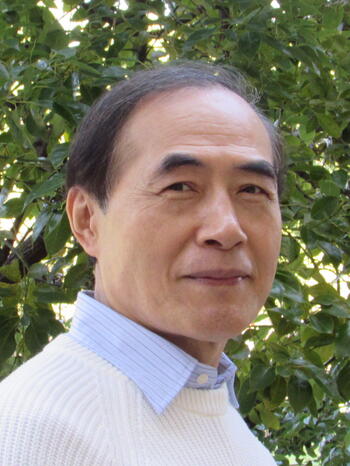
Gilhong Kim is currently a visiting scholar in the Korea Program at Shorenstein APARC for the 2018 calendar year. Previously, he was Senior Director concurrently Chief Sector Officer of the Sustainable Development and Climate Change Department in Asian Development Bank (ADB). His research interests encompass technological development and impact on developing countries in Asia and the Pacific. Dr. Kim has more than 33 years of research and operational experience in country and regional development, sectoral strategies and operations covering clean energy, transport, water supply and sanitation, urban development, education, health and finance. Since 1996, Dr. Kim has worked for ADB in the areas of country economic assessment and country operational program development, corporate strategy and policy development, country field office head (in Lao PDR), sector operational strategy development, operational knowledge management, and promoted technology application and innovative approach.  Before joining ADB, he worked for Ministry of Finance in Korea for about 12 years in the areas of economic cooperation and international finance. He holds a PhD in economics from the University of Texas, Austin, and a BA in economics from Korea University in Korea. 

Philippines Conference Room Encina Hall, 3rd Floor 616 Serra Mall, Stanford, CA 94305


616 Serra StreetEncina Hall E301Stanford, CA94305-6055
0
gilhong_kim.jpg Ph.D.

Dr. Gilhong Kim joins the Walter H. Shorenstein Asia-Pacific Research Center for the 2018 year as visiting scholar.  He currently serves as the Senior Director and Chief Sector Officer of the Sustainable Development and Climate Change Department at the Asian Development Bank.  He will be conducting research on technological development and impact in the Asia-Pacific.

Visiting Scholar at APARC
<i>Visiting Scholar, Shorenstein APARC, Stanford University</i>
Seminars
Authors
News Type
News
Date
Paragraphs

"Although peace was the prevailing theme of the opening night at the Pyeongchang Winter Olympics, the air in the VIP box was charged with awkwardness and intimidation," said researchers at the Shorenstein Asia-Pacific Research Center in a recently published article. "The real test for Moon's leadership begins now."

The full article in East Asia Forum is available here.

Hero Image
korea winter olympics flickr
2018 PyeongChang Winter Olympic Games Opening Ceremony
flickr.com: Presidential Security Service(eng.pss.go.kr/) Hyoja-dong Studio(open.pss.go.kr/)
All News button
1
News Type
News
Date
Paragraphs

The Shorenstein Asia-Pacific Research Center (APARC) at Stanford is now accepting applications for the Shorenstein Postdoctoral Fellowship in Contemporary Asia, an opportunity made available to two junior scholars for research and writing on Asia.

Fellows conduct research on contemporary political, economic or social change in the Asia-Pacific region, and contribute to Shorenstein APARC’s publications, conferences and related activities. To read about this year’s fellows, please click here.

The fellowship is a 10-mo. appointment during the 2018-19 academic year, and carries a salary rate of $52,000 plus $2,000 for research expenses.

For further information and to apply, please click here. The application deadline is Dec. 20, 2017.

Hero Image
sb background encina
All News button
1
Paragraphs

The most dangerous impact of North Korea’s long-range missile test this past week may not have been the one in the Sea of Japan, felt in Washington, Seoul and Tokyo. It was in Moscow where Chinese leader Xi Jinping and Russian President Vladimir Putin locked arms in a united front on how to respond to the growing North Korea crisis. The target of this front was not, however, North Korea. It was the United States, who the Sino-Russian axis accused of pursuing a military “buildup” in the region.

All Publications button
1
Publication Type
Commentary
Publication Date
Journal Publisher
Tokyo Business Today
Authors
Subscribe to International Development