
 FSI researchers consider international development from a variety of angles. They analyze ideas such as how public action and good governance are cornerstones of economic prosperity in Mexico and how investments in high school education will improve China’s economy.
They are looking at novel technological interventions to improve rural livelihoods, like the development implications of solar power-generated crop growing in Northern Benin.
FSI academics also assess which political processes yield better access to public services, particularly in developing countries. With a focus on health care, researchers have studied the political incentives to embrace UNICEF’s child survival efforts and how a well-run anti-alcohol policy in Russia affected mortality rates.
FSI’s work on international development also includes training the next generation of leaders through pre- and post-doctoral fellowships as well as the Draper Hills Summer Fellows Program.


Surviving the Trump-Moon Summit
Paragraphs
In the days leading up to the Washington summit between South Korean President Moon Jae-in and U.S. President Donald Trump, the tension in Seoul was hard to escape. Fears of an open clash between the two leaders, of a handshake that went on too long, or of a hostile early morning tweet directed at Moon were widespread. But when a senior national security advisor to Moon met a group of American visitors after the first day of talks, he was visibly relieved. The dinner between Moon and U.S. President Donald Trump went so well, he recounted with a slight smile, that it was extended 35 minutes.
All Publications button
1
Publication Type
Commentary
Publication Date
Journal Publisher
Toyo Keizai Online (Tokyo Business Today)
High expectations for Moon amid mounting challenges
News Type
Commentary
Date
Paragraphs
As expected, Moon Jae-in has been elected as South Korea’s 19th president. In a five-way contest, Moon garnered 41.1 percent of the vote, with strong support from those in their 20s to 50s, winning most of the regions in the country.
South Koreans’ longing for change had been expressed through the now-famous candlelight demonstrations that lasted for almost twenty consecutive weekends culminating in the impeachment of now former president Park Geun-hye. It was also reflected in the highest voter turnout in two decades, at 77.2 percent.
Just hours after his decisive victory, Moon began his five-year term without the usual practice of a transition team. Moreover, he took office during turbulent times — domestically and internationally — perhaps even more so than when former president Kim Dae-jung took office in 1998 when the nation was struggling with the Asian financial crisis.
First and foremost, Moon must deal with the mounting social and economic challenges that the country is facing. Having entered a period of low-growth coupled with an aging population, the economy confronts a host of difficult issues, including high levels of youth unemployment, income inequality, household debt, elderly poverty and rising social welfare expenditures.
The Moon administration immediately established a ‘job creation committee’ and pledged to create 810,000 jobs in the public sector. But it will not be easy to amass the financial resources needed by a government already struggling with serious budget deficits. Most agree that ‘economic democratisation’ is needed, but the details of how to achieve that — including reforming the chaebol — remain unclear.
Economic uncertainties have been a key factor contributing to social unrest. Words in vogue among South Koreans in their 20s and 30s reflect the social discontent with youth unemployment and inequality that ultimately erupted in the demonstrations.
‘Hell Joseon’ captures a sentiment of what it means to live in South Korea’s hellish reality. ‘Golden Spoons Dirt Spoons’ levels the charge that one’s life course is decided for good by one’s family background. ‘Gapjil’ refers to acts of impunity by the powerful against the weak, while the ‘Sampo generation’ is a generation forced to give up three things: courtship, marriage and children. If Moon fails to live up to the expectations of the country’s youth, a bloc that widely supported him, social discontent and symptoms of unrest will likely return.
Moon also faces daunting tasks in national security matters. North Korea has continued to develop weapons of mass destruction and relations have been all but completely severed. As controversy over the deployment of THAAD (Terminal High Altitude Area Defense) has shown, South Korea remains caught in the middle of a hegemonic struggle between the United States and China.
If that wasn’t enough, South Korea made a deal with Japan on the comfort women issue in late 2015 but the public now demands its renegotiation. South Korean–Russian relations are also at their grimmest. To top it all off, Moon must deal with a formidable set of nationalist and populist leaders — Donald Trump, Xi Jinping, Shinzo Abe, Kim Jong-un and Vladimir Putin — all known for their very strong characters, in stark contrast to Moon’s nice-guy, everyman personality.
The most urgent but also most challenging task is managing inter-Korean relations. As Pyongyang steps up its nuclear and missile programs, Seoul must reaffirm to the international community that it will continue its efforts to denuclearise the North. At the same time, relations between the two Koreas must be improved to strengthen South Korea’s strategic position in the region as well as reduce tensions on the peninsula.
Trump has been sending out confusing messages probably because he has no suitable plan to deal with Pyongyang. As such, if Seoul were to bring to the table a persuasive policy of engagement, Washington would be receptive unless it weakens US efforts towards denuclearisation. Both Beijing (pressured by Washington to solve the North Korean nuclear issue) and Pyongyang (concerned about becoming overly dependent on China) would welcome Seoul taking the initiative to improve inter-Korean relations.
Some pundits at home and abroad worry that the Moon administration might follow in the footsteps of the Roh administration (2003–2008), whose outcomes lagged too far behind its good will to bring about reform. Moon served as Roh’s chief of staff and the two administrations overlap in manpower. But Moon and his team have also learned many lessons from the trial and error of the Roh administration, preparing themselves over the past ten years of conservative rule.
With the new administration in place, political turmoil over the last six months has finally ended. Moon’s first moves as president, including key appointments in the Blue House and opening up communication channels with the public, have been well received. A public poll conducted by Gallup Korea one week after the inauguration showed that 87 percent of the respondents expected him to do well. Despite mounting challenges, South Koreans remain hopeful that their new leader can take the nation to the next level.
This piece was originally carried by East Asia Forum on May 23, 2017, and reposted with permission.
Hero Image

All News button
1
Wind of Change? South Korea under the New Administration
Related Multimedia

Shorenstein APARC Director Gi-Wook Shin comments on North Korea to Yonhap News
News Type
Commentary
Date
Paragraphs
Shorenstein Asia-Pacific Research Center (APARC) Director Gi-Wook Shin spoke with Yonhap News about the situation on the Korean Peninsula, following a visit to U.S. Pacific Command with a delegation of scholars from the Freeman Spogli Institute for International Studies.
While there, U.S. officials conveyed that the United States has the capability to strike North Korea should the president make that call.
U.S. officials said that North Korea had already moved into the “red zone,” and that the Trump administration has the view that it cannot miss a window of opportunity to stop the nuclear and missile program before it advances further.
Shin also said he believed that the Trump administration holds a view that the policy of “strategic patience” failed under the Obama administration, and that growing tensions on the Peninsula have compelled the Trump administration to consider – with greater plausibility – the option of a preemptive military strike.
Regional tensions have risen in the midst of impending political shifts in South Korea, where a new president will assume office following a snap election this May, and in China, where the Party Congress will meet to appoint new senior leadership of the Chinese Communist Party this fall.
Whoever becomes president in South Korea should place relations with North Korea at the top of the agenda and consider sending an envoy early on to meet its leader Kim Jong-un in-person, Shin said.
The Yonhap interview can be viewed in Korean, and a shorter version, in English. A related analysis piece is also available on MK News (in Korean).
Hero Image

All News button
1
Changing attitudes toward diversity in South Korea
News Type
Commentary
Date
Paragraphs
South Korean culture has long held ethnic homogeneity as an integral part of national identity, but attitudes toward multiculturalism are slowly beginning to change amid the country’s shifting demographics, Gi-Wook Shin, professor of sociology and director of the Shorenstein Asia-Pacific Research Center, said in an interview with Al Jazeera English. Read the article.
Hero Image

All News button
1
Shorenstein APARC experts offer analysis, insights on Xi-Trump summit
News Type
Commentary
Date
Paragraphs
President Trump hosted Chinese President Xi Jinping last week at Mar-a-Lago for their first meeting which set out to address economic, trade and security challenges shared between the two countries. Shorenstein Asia-Pacific Research Center (APARC) experts offered analysis of the summit to various media outlets.
In advance of the summit, Donald K. Emmerson, an FSI senior fellow emeritus and director of the Southeast Asia Program, wrote a commentary piece urging the two leaders to prioritize the territorial disputes in the South China Sea in their discussions. He also suggested they consider the idea of additional “cooperative missions” among China, the United States and other countries in that maritime area.
“A consensus to discuss the idea at that summit may be unreachable,” Emmerson recognized in The Diplomat Magazine. “But merely proposing it should trigger some reactions, pro or con. The airing of the idea would at least incentivize attention to the need for joint activities based on international law and discourage complacency in the face of unilateral coercion in violation of international law.”
Kathleen Stephens, the William J. Perry Fellow in Shorenstein APARC’s Korea Program, spoke to the Boston Herald about U.S. policy toward North Korea and a potential role for China in pressuring North Korea to hold talks about denuclearization. She addressed the purported reports that the National Security Council is considering as options placing nuclear weapons in South Korea and forcibly removing North Korean leader Kim Jong-un from power.
“The two options have been on the long list of possible options for a long time and they have generally been found to have far too many downsides,” Stephens said in the interview.
Writing for Tokyo Business Today, Daniel Sneider, the associate director for research at Shorenstein APARC, offered an assessment of the summit. He argued that two events - the U.S. airstrike on an airbase in Syria following the regime's chemical weapons attack and the leaked reports about tensions between White House staff - shifted the summit agenda and sidelined, at least for now, talk of a trade war between China and the United States.
“Instead of a bang, the Mar-a-Lago summit ended with a whimper,” Sneider wrote in the analysis piece (available in English and Japanese). “On the economy, the summit conversation was remarkably business-as-usual, with President Trump calling for China to ‘level the playing field’ and a vague commitment to speed up the pace of trade talks. When it came to North Korea…the two leaders reiterated long-standing goals of denuclearization but ‘there was no kind of a package arrangement discussed to resolve this.”
Hero Image

All News button
1
PBS NewsHour interviews Kathleen Stephens about North Korea
News Type
Commentary
Date
Paragraphs
U.S. Secretary of State Rex Tillerson announced in Seoul “the policy of strategic patience has ended” and “all options were on the table” regarding the United States’ efforts to address the North Korean nuclear threat. Kathleen Stephens, the William J. Perry Fellow in Shorenstein APARC’s Korea Program, spoke on PBS NewsHour about Tillerson’s remarks, the viability of tougher sanctions against North Korea, and deployment of the U.S. ballistic missile defense system (THAAD) to South Korea.
Watch and read about the interview here.
Hero Image

All News button
1
Reflections on Journalism Across Asia
News Type
News
Date
Paragraphs
Emerging technologies, stemming from the heart of Silicon Valley and extending to Asia and beyond, have pushed the bounds of how stories are told by journalists and the way in which readers interact with them. The Shorenstein Journalism Award, an annual prize given by the Shorenstein Asia-Pacific Research Center (APARC), celebrates 15 years of recognizing distinguished journalists for their innovative and responsible journalism amid social and technological change.
The prize began with “the idea of a media award for a person who has the most significant impact on the relationship with Asia-Pacific nations in the United States,” according to Walter H. Shorenstein, who spoke about his twin interests of Asia and the press in a 2010 oral history project interview and was the benefactor after whom the center is named.
Shorenstein APARC and Harvard’s Shorenstein Center on Media, Politics and Public Policy jointly presented the award for six years. Shorenstein APARC has continued the initiative, and each year, brings the award winner to Stanford to talk with the broader campus community, and since 2011, has alternated between a recipient from the West, who has mainly addressed an American audience, and a recipient from Asia.
The prize seeks to inspire the next generation of U.S. journalists focused on Asia, as well as Asian journalists, who pave the way for press freedom in their countries.
Award winners have explored a multitude of topics over the years, from human rights in North Korea to the rise of democracy in Indonesia and from the U.S.-Japan alliance to gender equality in India. And this year adds an additional view on China; veteran journalist Ian Johnson will address religion and value systems in a panel discussion on May 1 with Xueguang Zhou, Stanford professor of sociology, and Orville Schell, director of the Asia Society's Center on U.S.-China Relations, moderated by Daniel C. Sneider, Shorenstein APARC associate director for research.
To mark the award’s tenure, Shorenstein APARC asked award alumni to answer the question, “What do you think the future holds for journalism in/about Asia?” Their responses are below.
Image

Barbara Crossette is the U.N. correspondent for The Nation and a columnist for India Abroad. She received the Shorenstein Journalism Award in 2010.
Image
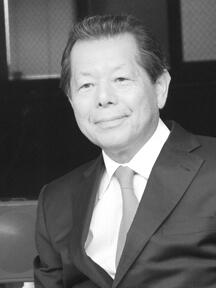
Journalism in Asia has had a long history of covering revolutions and wars. However, peace has reigned over Asia for near on 40 years. Yet, the peace and stability in Asia looks increasingly precarious. Asia too is not immune to populist nationalism. In this climate, Asia could yet again become the battleground for dislocation, revolution and war. Journalism, on top of reacting to potential crises, will be critical for proactively finding ways to prevent and defuse crises in the region.
Yoichi Funabashi is the chairman of the Rebuild Japan Initiative Foundation. He received the Shorenstein Journalism Award in 2015.
Image

Ian Buruma is a writer and the Paul W. Williams Professor of Democracy, Human Rights, and Journalism at Bard College. He received the Shorenstein Journalism Award in 2008.
Image
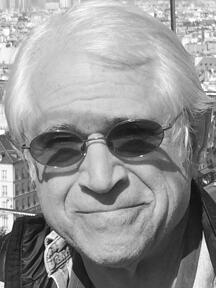
Seth Mydans is a contributing writer for the New York Times. He received the Shorenstein Journalism Award in 2009.
Image
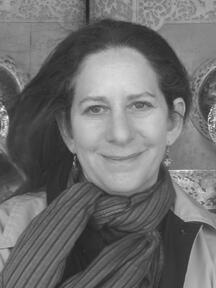
Barbara Demick is the Los Angeles Times’ bureau chief in New York and was formerly bureau chief in Beijing and in Seoul. She is the author of Nothing to Envy: Ordinary Lives in North Korea and Logavina Street: Life and death in a Sarajevo Neighborhood. She received the Shorenstein Journalism Award in 2012.
Image

Aung Zaw is the founder and editor-in-chief of The Irrawaddy. He received the Shorenstein Journalism Award in 2013.
Image
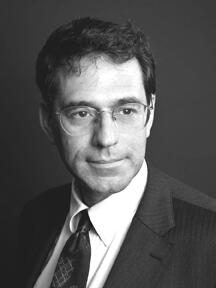
Jacob Schlesinger is a senior Washington correspondent for the Wall Street Journal. He received the Shorenstein Journalism Award in 2014.
Image

Orville Schell is the Arthur Ross Director of the Center on U.S.-China Relations at the Asia Society in New York, and former dean of the School of Journalism at the University of California, Berkeley. He received the Shorenstein Journalism Award in 2003.
Image

John Pomfret was a foreign correspondent with the Washington Post for many years. He is the author of The Beautiful Country and the Middle Kingdom: America and China from 1776 to the Present. He received the Shorenstein Journalism Award in 2007.
Hero Image

All News button
1