Energy

This image is having trouble loading!FSI researchers examine the role of energy sources from regulatory, economic and societal angles. The Program on Energy and Sustainable Development (PESD) investigates how the production and consumption of energy affect human welfare and environmental quality. Professors assess natural gas and coal markets, as well as the smart energy grid and how to create effective climate policy in an imperfect world. This includes how state-owned enterprises – like oil companies – affect energy markets around the world. Regulatory barriers are examined for understanding obstacles to lowering carbon in energy services. Realistic cap and trade policies in California are studied, as is the creation of a giant coal market in China.

Paragraphs

Shorenstein APARC's annual report for the academic year 2023-24 is now available.

Learn about the research, publications, and events produced by the Center and its programs over the last academic year. Read the feature sections, which look at the historic meeting at Stanford between the leaders of Korea and Japan and the launch of the Center's new Taiwan Program; learn about the research our faculty and postdoctoral fellows engaged in, including a study on China's integration of urban-rural health insurance and the policy work done by the Stanford Next Asia Policy Lab (SNAPL); and catch up on the Center's policy work, education initiatives, publications, and policy outreach. Download your copy or read it online below.

All Publications button
1
Publication Type
Annual Reports
Publication Date
Authors
Authors
News Type
News
Date
Paragraphs

As nations implement clean energy solutions to combat climate change, multilateral institutions like the Asia-Pacific Economic Cooperation (APEC) remain an important tool in facilitating regional collaboration. On November 1, Shorenstein APARC presented a panel discussion on Asia-Pacific Energy Challenges and the Role of APEC. It was the third installment in the Center's autumn 2023 seminar series on APEC, complementing the forum's summit in San Francisco.

The panelists included Larry Goulder, Professor in Environmental and Resource Economics and Director of the Stanford Center for Environmental and Energy Policy Analysis; Larry Greenwood, Chairman of the Board of the Japan Society of Northern California, Senior Adviser at BowerGroupAsia, and U.S. Ambassador to APEC from 2000-2003; Gita Wirjawan, Former Minister of Trade and former Chairman of the Investment Coordinating Board of the Republic of Indonesia and Visiting Scholar at Shorenstein APARC. Shorenstein APARC Fellow Thomas Fingar moderated the conversation.

Goulder opened the discussion with an analysis of energy supply and use in China, what the Chinese government is doing on the climate front, and how the nation’s infrastructure projects connect with its energy use and consumption. He reminded the audience that China has emerged as the largest emitter of carbon dioxide for greenhouse gases and indicated that “if we're going to make a significant dent in dealing with climate change, China's action is going to be indispensable.”

Goulder noted that although China’s growth has slowed in recent years, its energy demands continue to grow, as does its reliance on coal-fired power plants. Coal still represents about 50% of the country’s total energy mix, whereas the other 50% is from non-fossil power, namely, wind, solar, hydroelectric, and nuclear. According to Goulder, the current energy mix is “good news for those concerned about climate change, the share of renewable energy is increasing.”

To help meet UN emissions commitments, China has implemented a nationwide emissions trading system, a market-based approach to controlling pollution by providing economic incentives for reducing the emissions of pollutants. The system is expected to more than double the CO2-covered emissions worldwide by the time it is fully implemented. "By 2026, [the system] is expected to contribute to about half of the reductions of CO2-acid, which would be needed for China to meet its pledge of net zero by 2060,” said Goulder. He advocated for linking China's emissions trading system to emissions trading in a multinational market.

Greenwood then outlined some of APEC’s history as it relates to energy issues and indicated that energy was an early and enduring focus of the forum. In 1990, a time of fluctuations in the global oil market, APEC founded its Energy Working Group. Since then, the group's scope has expanded to address renewable energy needs. According to Greenwood, the working group is responsible for conducting workshops, seminars, studies, and creating discussion venues to facilitate exchange between working-level officials — something APEC does more broadly.

Greenwood discussed the voluntary emissions targets of the working group, in which APEC members set targets and then monitor them and “use peer pressure to drive or to encourage compliance and action to make those targets.” Member nations are largely focused on energy intensity targets, he explained. In addition, APEC has maintained a target to double renewable energy generation between 2010 and 2030. “Mainly because of China, APEC is easily on track to meet that goal,” said Greenwood.

For Greenwood, energy security and climate change are the two prevailing interests of the APEC working group, but another area the forum is increasingly interested in is energy emissions trading and carbon capture. “According to the studies, it looks like we're not going to reach carbon zero, so we need to find ways, not only natural change but technology, to capture carbon and store it.”

Wirjawan proceeded to discuss energy security in the context of global development. He highlighted a paradox of the sustainability narrative, namely, that the aspiration to attain carbon neutrality by 2050 can seem too elitist because it resonates with the 15 to 20 percent of the world’s population living in developed countries. The remaining 80 to 85 percent of the global population, however, “are still concerned about putting food on the table, irrespective of how energy is sourced.”

Wirjawan also illustrated how large developing economies like Indonesia and India struggle to increase electrification on a per capita basis and argued that “it's probably going to take around 90 to 100 years. This duration is significantly irreconcilable with the 27 years left until 2050, when and where we have to attain carbon neutrality. So the question is, how do we narrow the gap?”

Wirjawan noted that “on the demand side, it is a lot easier to socially re-engineer, socially re-architect somebody's behavior in a developing economy so that he or she would stop using fossil fuel. The million dollar question is whether the alternatives will be as affordable.”

From a technological standpoint, said Wirjawan, we have all the necessary solutions to decarbonize. ”The problem for many developing economies is the economics of what it would take for all of us to bring down the cost from 20 cents per kilowatt to 5 cents.”

To achieve such goals, massive amounts of capital and organization are required, concluded Wirjawan. APEC's value, he said, is its ability to facilitate and accelerate information sharing and organization and reduce the win-lose dimension between environment and economic development.

The panel highlighted the need for multilateral cooperation in addressing climate change and energy security issues. The participants agreed that APEC has a significant role in bridging the divide between different constituent groups in the Asia-Pacific region and directing energy and economic policy that may accelerate the pace towards a more sustainable future. 

Read More

Prime Minister of Japan, Kishida Fumio (right), and the President of the Republic of Korea, Yoon Suk Yeol (left)
News

Korea, Japan Leaders Call for Global Cooperation in Advancing New Technologies, Clean Energy at Summit Discussion

At a historic meeting held at Stanford, the leaders of Japan and Korea discussed the perils and promises of new innovations and the importance of collaboration.
Korea, Japan Leaders Call for Global Cooperation in Advancing New Technologies, Clean Energy at Summit Discussion
Panelists gather to discuss APEC
News

Trade Experts Gather to Discuss APEC’s Role and Relevance

Ahead of the 2023 Asia-Pacific Economic Cooperation (APEC) convening in San Francisco, APARC kicked off its fall seminar series, Exploring APEC’s Role in Facilitating Regional Cooperation, with a panel discussion that examined APEC’s role and continued relevance in a rapidly-evolving Asia-Pacific region.
Trade Experts Gather to Discuss APEC’s Role and Relevance
Hero Image
Larry Greenwood, Larry Goulder, Thomas Fingar
Left to right: Larry Greenwood, Larry Goulder, and Thomas Fingar.
Michael Breger
All News button
1
Subtitle

The third installment of Shorenstein APARC’s fall seminar series examined energy challenges in the Asia-Pacific region and the role of the Asia-Pacific Economic Cooperation in facilitating collaborative clean energy solutions.

Authors
News Type
News
Date
Paragraphs

The Walter H. Shorenstein Asia-Pacific Research Center (APARC) at Stanford University and the Ban Ki-moon Foundation For a Better Future are pleased to announce the second annual Trans-Pacific Sustainability Dialogue (TPSD) in Seoul, Republic of Korea, set to take place on September 12-14, 2023. This convening, designed to accelerate progress on achieving the United Nations-adopted 2030 Agenda for Sustainable Development, will focus on energy security, the seventh of the Agenda’s underlying 17 Sustainable Development Goals (SDGs).

APARC and the Ban Ki-moon Foundation launched the dialogue initiative to spur new research and policy collaborations between experts from the United States and Asia to expedite the implementation of the SDGs by governments and non-state actors. This year’s event builds upon the success of the inaugural Tran-Pacific Sustainability Dialogue, held in Seoul in October 2022, and the continued momentum generated through its resultant regional convening, the Trans-Altai Sustainability Dialogue, which took place earlier this summer in Mongolia.  

The Korea Environment Institute, Korea Energy Economics Institute, Korea Environmental Industry & Technology Institute, K-water, and Ewha Womans University will co-host the second annual Trans-Pacific Sustainability Dialogue. The event’s supporters include the Ministry of Foreign Affairs of the Republic of Korea, the Graduate School of International Studies at Yonsei University, and the Asian Development Bank. Award-winning Korean actor and director Cha In-pyo has been named honorary ambassador of the TPSD. Mr. Cha will deliver remarks at the opening session of the dialogue. 

At the core of the 2023 TPSD is the pivotal theme of energy security, SDG7, which proposes to ensure access to affordable, reliable, and sustainable energy for all. The challenge of energy production, transportation, and security poses a critical barrier to a shared sustainable future. Despite ongoing progress toward sustainable energy targets on a global scale, recent data indicates that the pace of advancements is insufficient to meet the SDG7 targets by 2030 and varies significantly across different regions. The latest report from the SDG7 Indicator Custodian Agencies also finds that the policy measures required to tackle the global energy crisis, exacerbated by the war in Ukraine, continue to lag and that international public financial support for clean energy in low and middle-income countries has been declining since before the onset of the COVID-19 pandemic.

By extending a platform for leading experts to combine rigorous scientific research, policy analysis, and industry insights, I am confident in our ability to advance tangible solutions and real-world action to propel us forward in pursuit of a decarbonized world.
Gi-Wook Shin
Director, Shorenstein APARC

“Energy security is pivotal to the SDGs. Without securing clean energy, the climate crisis remains insurmountable. However, the clean energy future is under serious threat from the war in Ukraine sparked by Russia,” says Mr. Ban Ki-moon, the 8th Secretary-General of the United Nations. “In this regard, I expect the second annual Trans-Pacific Sustainability Dialogue to play an important role in convening world-renowned researchers, policymakers, and students to address energy security and advance clean energy technologies,” he adds.

In pursuit of genuine progress, the second annual TPSD will convene esteemed academics, government officials, industry experts, and leading professionals from Stanford University and across Asia. Together, they will interact in dynamic discussions that bridge multiple disciplines and climate science, exploring technological and policy solutions to expedite the transition toward a future free from fossil fuels and other unsustainable energy practices.

“As we approach the 2023 TPSD, we find ourselves at a crucial juncture, crossing the mid-point of the implementation of the UN 2030 Agenda for Sustainable Development with mixed results,” notes Gi-Wook Shin, the William J. Perry Professor of Contemporary Korea at Stanford and director of APARC. “By extending a platform for leading experts to combine rigorous scientific research, policy analysis, and industry insights, I am confident in our ability to advance tangible solutions and real-world action to propel us forward in pursuit of a decarbonized world.”

The first day of the dialogue, co-hosted by the Korea Environment Institute and the Korea Energy and Economics Institute, will convene at The Plaza Seoul. A World Leaders Session will kick off the event, headlined by Mr. Ban Ki-moon; Chairman of the State Great Hural (Parliament) of Mongolia Zandanshatar Gombojav; former U.S. Secretary of Energy and Nobel Prize Laureate in Physics, Stanford Professor Steven Chu; and Managing Director General of the Asian Development Bank Woochong Um. The following plenary sessions will examine the intersections of energy security, sustainability, and issues such as geopolitics, green technologies, and clean energy co-benefits.

The second day will be held at Ewha Womans University and hosted by Ewha’s Center for Climate/Environmental Change Prediction Research. The day’s discussion topics will include, among others, energy-efficient technologies and principles for energy security education. With the mission of empowering young leaders to drive the climate change and sustainable development agenda, the second day will offer opportunities for emerging scholars and young professionals to present their research and applied work in championing progress toward energy security.

The 2023 TPSD underscores APARC’s and the Ban Ki-moon Foundation's shared commitment to fostering ambitious action toward delivering the 2030 Agenda and its Sustainable Development Goals. APARC and our partners, co-hosts, and supporters warmly invite scholars, students, policy experts, and professionals to join us at the TPSD and get involved with our efforts to shape a sustainable and resilient future for the Asia-Pacific region and beyond.

Visit the 2023 TPSD page to register to attend the event in person and access the complete program agenda and list of speakers.


About the Walter H. Shorenstein Asia-Pacific Research Center
The Walter H. Shorenstein Asia-Pacific Research Center (Shorenstein APARC) is Stanford University's esteemed institute dedicated to addressing critical issues impacting Asia and its relations with the United States. Through interdisciplinary research, education, and dialogue, APARC seeks to shape innovative policy solutions and enhance collaboration among countries in the Asia-Pacific region. For more information, visit aparc.stanford.edu.

About the Ban Ki-moon Foundation For a Better Future
The Ban Ki-moon Foundation For a Better Future upholds the legacy and vision of Ban Ki-moon, the 8th Secretary-General of the United Nations. Guided by the principles of unification, communication, co-existence, and dedication, the Foundation works tirelessly towards achieving peace, security, development, and human rights. Collaborating with international organizations and stakeholders, the Foundation actively supports the UN's Sustainable Development Goals and the 2050 carbon net-zero target set by the Paris Climate Accord. For more information, visit eng.bf4bf.or.kr.

Contact

For further information on the Trans-Pacific Sustainability Dialogue, contact Cheryll Alipio, Shorenstein APARC’s Associate Director for Program and Policy at calipio@stanford.edu.

Read More

Participants from the Inaugural Trans-Pacific Sustainability Dialogue
News

Inaugural Trans-Pacific Sustainability Dialogue Spotlights Climate Finance Mobilization and Green Innovation Strategies

Co-organized by Stanford’s Walter H. Shorenstein Asia-Pacific Research Center and the Ban Ki-moon Foundation for a Better Future, the inaugural Trans-Pacific Sustainability Dialogue brought together a new network of social science researchers, scientists, policymakers, and practitioners from Stanford University and across the Asia-Pacific region to accelerate action on the United Nations-adopted Sustainable Development Goals (SDGs).
Inaugural Trans-Pacific Sustainability Dialogue Spotlights Climate Finance Mobilization and Green Innovation Strategies
Hero Image
Flyer for the 2023 Trans-Pacific Sustainability Dialogue
All News button
1
Subtitle

The second annual convening of the Trans-Pacific Sustainability Dialogue will gather social science researchers and scientists from Stanford University and across the Asia-Pacific region alongside young leaders, policymakers, and practitioners, to expedite energy security solutions, investment, and policy support. Held in Seoul, Republic of Korea, on September 12-14, 2023, the dialogue features award-winning actor and director Cha In-pyo as honorary ambassador.

-

The Trans-Pacific Sustainability Dialogue convenes social science researchers and scientists from Stanford University and across the Asia-Pacific region, alongside student leaders, policymakers, and practitioners, to accelerate progress on achieving the United Nations-adopted 2030 Agenda for Sustainable Development. The conference aims to generate new research and policy partnerships to expedite the implementation of the Agenda's underlying framework of 17 Sustainable Development Goals.

The two-day event is held in Seoul, South Korea, on October 27 and 28, 2022 Korea Standard Time, and is free and open to the public.

Registration is now open for in-person attendees. The conference is also offered online. Watch the live webcast from this page below (session available in English and Korean) and follow the conversation on Twitter: @StanfordSAPARC #AsiaSDGs2022.

The Dialogue's main hosts and organizers are Stanford's Walter H. Shorenstein Asia-Pacific Research Center (APARC) and the Ban Ki-moon Foundation For a Better Future. The co-hosts are the Korea Environment Institute (KEI) and Ewha Womans University. The co-organizers include the Natural Capital Project (NatCap) of Stanford University, the Ministry of Foreign Affairs of the Republic of Korea, Korea Environmental Industry and Technology Institute (KEITI), Korea Environment Corporation (K-eco), and Korea Water Resources Corporation (K-water).

Day 1 Livestream (English)

Day 1 Livestream (Korean)

Day 2 Livestream: Expert Panel (English)

Day 2 Livestream: Expert Panel (Korean)

Day 2 Livestream: Student Panel (English)

NOTE: The times below are all in Korean Standard Time.

DAY 1: THURSDAY, OCTOBER 27, 2022

Hosted by the Korea Environment Institute

Grand Ballroom​, The Plaza Seoul
119 Sogong-Ro, Jung-gu, Seoul


9:00 – 9:30 AM
Opening Session
Welcome remarks:
Ban Ki-moon, the 8th Secretary-General of the United Nations and Chairman of the Ban Ki-moon Foundation For a Better Future
Gi-Wook Shin, Director of the Shorenstein Asia-Pacific Research Center and Korea Program, Professor of Sociology, William J. Perry Professor of Contemporary Korea, and Senior Fellow at the Freeman Spogli Institute for International Studies, Stanford University

Congratulatory remarks:
Kevin Rudd, former Prime Minister of Australia and Chief Executive Officer and President of the Asia Society (pre-recorded video message)
Han Duck-soo, Prime Minister of the Republic of Korea


Plenary 1
9:45 – 10:45 AM
World Leaders Session

Keynotes:
Ban Ki-moon, the 8th Secretary-General of the United Nations and Chairman of the Ban Ki-moon Foundation For a Better Future
Iván Duque, former President of the Republic of Colombia (live video link)
Gombojav Zandanshatar, Chairman of the State Great Hural (Parliament) of Mongolia

Moderator:
Gi-Wook Shin, Director of the Shorenstein Asia-Pacific Research Center and Korea Program, Professor of Sociology, William J. Perry Professor of Contemporary Korea, and Senior Fellow at the Freeman Spogli Institute for International Studies, Stanford University


Plenary 2
11:00 AM – 12:15 PM
Climate Change Session

Organized by the Climate Change, Energy, Environment and Scientific Affairs Bureau of the Ministry of Foreign Affairs, Republic of Korea

Keynote: 
Henry Gonzalez, Deputy Executive Director of Green Climate Fund

Panelists: 
Nabeel Munir, Ambassador of the Islamic Republic of Pakistan to the Republic of Korea and Chair of the G77 at the United Nations
Hyoeun Jenny Kim, Ambassador and Deputy Minister for Climate Change, Ministry of Foreign Affairs of the Republic of Korea
Oyun Sanjaasuren, Director of External Affairs of Green Climate Fund

Moderator:
Tae Yong Jung, Professor of Sustainable Development at the Graduate School of International Studies, Yonsei University


12:15 – 1:30 PM

Lunch 
Hosted by the Korea Environment Institute

Welcome remarks:
Chang Hoon Lee, President of the Korea Environment Institute

Congratulatory remarks:
Kim Sang-Hyup, Co-Chairperson of the 2050 Carbon Neutrality and Green Growth Commission
Eun Mee Kim, President of Ewha Womans University, Professor at the Graduate School of International Studies, and Director of the Ewha Global Health Institute for Girls and Women, Ewha Womans University


Plenary 3
1:30 – 2:45 PM
Multilateralism for a Resilient and Inclusive Recovery Towards the Achievement of the SDGs

Organized by the Development Cooperation Bureau of the Ministry of Foreign Affairs, Republic of Korea

Keynote: 
Hidehiko Yuzaki, Governor of Hiroshima Prefectural Government, Japan

Panelists:
Kaveh Zahedi, Deputy Executive Secretary, United Nations Economic and Social Commission for Asia and the Pacific (UN ESCAP) (live video link)
Kim Sook, Executive Director of the Ban Ki-moon Foundation For a Better Future and former Ambassador and Permanent Representative of the Republic of Korea to the United Nations
Won Doyeon, Director-General of the Development Cooperation Bureau, Ministry of Foreign Affairs of the Republic of Korea 

Moderator:
Eun Mee Kim, President of Ewha Womans University, Professor at the Graduate School of International Studies, and Director of the Ewha Global Health Institute for Girls and Women, Ewha Womans University


Plenary 4
3:00 – 4:15 PM
KEI Green Korea: SDGs in North Korea

Organized by the Korea Environment Institute

Keynote: 
Sung Jin Kang, Professor of the Department of Economics and the Graduate School of Energy and Environment, Korea University

Panelists:
Habil Bernhard Seliger, Representative of Hanns Seidel Stiftung - Seoul Office, Republic of Korea (pre-recorded video message)
Ganbold Baasanjav, Head of Subregional Office for East and North-East Asia, United Nations Economic and Social Commission for Asia and the Pacific (UN ESCAP)
Haiwon Lee, Emeritus Professor of Hanyang University and President of Asian Research Network for Global Partnership

Moderator:
Chang Hoon Lee, President of the Korea Environment Institute


Plenary 5
4:30 – 5:30 PM
Valuing Nature to Achieve the SDGs

Organized by the Natural Capital Project of Stanford University

Keynote:
Gretchen Daily, Bing Professor of Environmental Science in the Department of Biology, Faculty Director of the Natural Capital Project, Director of the Center for Conservation Biology, and Senior Fellow at the Woods Institute for the Environment, Stanford University

Panelists:
Juan Pablo Bonilla, Manager of the Climate Change and Sustainable Development Sector, Inter-American Development Bank
Choong Ki Kim, Senior Research Fellow, Korea Environment Institute

Moderator:
Nicole Ardoin, Emmett Faculty Scholar and Associate Professor in the Stanford Doerr School of Sustainability, Sykes Family Director of the Emmett Interdisciplinary Program in Environment and Resources, and Senior Fellow at the Woods Institute for the Environment, Stanford University


DAY 2: FRIDAY, OCTOBER 28, 2022

Hosted by Ewha Womans University 
52 Ewhayeodae-gil, Seodaemun-gu, Seoul


Expert panels are held in Room B412
Student panels (see below) are held in Room B143
ECC, Ewha Womans University


9:00 – 9:15 AM
Opening Session for Expert Panels

Welcome remarks:
Eun Mee Kim, President of Ewha Womans University, Professor at the Graduate School of International Studies, and Director of the Ewha Global Health Institute for Girls and Women, Ewha Womans University
Gretchen Daily, Bing Professor of Environmental Science in the Department of Biology, Faculty Director of the Natural Capital Project, Director of the Center for Conservation Biology, and Senior Fellow at the Woods Institute for the Environment, Stanford University


Expert Panel 1
9:15 – 10:30 AM
Livable, Sustainable Cities

Organized by the Walter H. Shorenstein Asia-Pacific Research Center of Stanford University

Keynotes:
Park Heong-joon, Mayor of Busan Metropolitan City, Republic of Korea
Khurelbaatar Bulgantuya, Member of the State Great Hural (Parliament) of Mongolia and Chair of Sustainable Development Goals Sub-Committee of Parliament

Panelists:
Anne Guerry, Chief Strategy Officer and Lead Scientist at the Natural Capital Project, Stanford University
Perrine Hamel, Assistant Professor at the Asian School of the Environment, Nanyang Technological University

Moderator:
Kiyoteru Tsutsui, Deputy Director of the Shorenstein Asia-Pacific Research Center and Director of the Japan Program, Professor of Sociology, Henri H. and Tomoye Takahashi Professor of Japanese Studies, Senior Fellow at the Freeman Spogli Institute for International Studies, and Director of the Center for Human Rights and International Justice, Stanford University


Expert Panel 2
11: 00 AM – 12:15 PM
Climate Change, Disaster Risks, and Human Security in Asia

Organized by Ewha Womans University

Panelists:
Juan M. Pulhin, Professor, Scientist, and former Dean of the College of Forestry and Natural Resources, University of the Philippines, Los Baños (live video link)
Rajib Shaw, Professor in the Graduate School of Media and Governance, Keio University
Brendan M. Howe, Professor and Dean of the Graduate School of International Studies, Ewha Womans University
Rafael Schmitt, Lead Scientist at the Natural Capital Project, Stanford University

Moderator:
Jaehyun Jung, Assistant Professor at the Graduate School of International Studies, Ewha Womans University


12:15 – 1:30 PM
Lunch 

Hosted by Ewha Womans University

Welcome remarks:
Eun Mee Kim, President of Ewha Womans University, Professor at the Graduate School of International Studies, and Director of the Ewha Global Health Institute for Girls and Women, Ewha Womans University


Expert Panel 3
1:30 – 2:45 PM
Valuing Nature in Finance for Systems Transformation


Organized by the Natural Capital Project of Stanford University

Keynote:
Elías Albagli, Director of the Monetary Policy Division of the Central Bank of Chile

Panelists:
Qingfeng Zhang, Chief of Rural Development and Food Security (Agriculture) Thematic Group and Chief of Environment Thematic Group of the Sustainable Development and Climate Change Department, Asian Development Bank (live video link)
Tong Wu, Senior Scientist and Associate Director of the China Program at the Natural Capital Project, Stanford University

Moderator:
Chung Suh-Yong, Professor at the Division of International Studies of Korea University and Director of the Center for Climate and Sustainable Development Law and Policy of Seoul International Law Academy


Expert Panel 4
3:15 – 4:30 PM
Valuing Nature to Achieve Sustainable Development


Organized by the Natural Capital Project of Stanford University

Keynote:
Mary Ruckelshaus
, Director at the Natural Capital Project, Stanford University

Panelists:
James Salzman, Donald Bren Distinguished Professor of Environmental Law at the Bren School of Environmental Science & Management at the University of California, Santa Barbara and the School of Law at the University of California, Los Angeles
Yong-Deok Cho, General Director at K-water and Secretary General of the Asia Water Council

Moderator:
Alejandra Echeverri, Senior Scientist at the Natural Capital Project, Stanford University


9:00 – 9:15 AM
Opening Session for Student Panels

Welcome remarks:
Brendan M. Howe, Professor and Dean of the Graduate School of International Studies, Ewha Womans University
Nicole Ardoin, Emmett Faculty Scholar and Associate Professor in the Stanford Doerr School of Sustainability, Sykes Family Director of the Emmett Interdisciplinary Program in Environment and Resources, and Senior Fellow at the Woods Institute for the Environment, Stanford University


Student Panel 1
9:15 – 10:30 AM
Green Financing and Sustainable Investments

Organized by Ewha Womans University

Panelists:
Assia Baric, PhD student, Graduate School of International Studies, Ewha Womans University
Siddharth Sachdeva, PhD student, Emmett Interdisciplinary Program in Environment and Resources, Stanford University
Sevde Arpaci Ayhan, PhD candidate, Graduate School of International Studies, Seoul National University 
Mae Luky Iriani, Master’s student, Department of International Relations, Universitas Katolik Parahyangan
Wu Qichun, PhD candidate, Asia-Europe Institute, University of Malaya

Moderator:
Hannah Jun
, Assistant Professor at the Graduate School of International Studies, Ewha Womans University


Student Panel 2
11:00 AM – 12:15 PM
Gender Mainstreaming and Climate Governance

Organized by Ewha Womans University

Panelists:
Vimala Asty Fitra Tunggal Jaya, PhD student, Graduate School of International Studies, Ewha Womans University 
Liza Goldberg, Undergraduate student, Computer Science Department and Earth Systems Program of the Doerr School of Sustainability, Stanford University
Gahyung Kim, PhD candidate, Global Education Cooperation Program, Seoul National University
Maria Golda Hilario, Master’s student, College of Liberal Arts, De La Salle University 
Putri Ananda, Master’s student, Osaka School of International Public Policy, Osaka University

Moderator:
Minah Kang, Professor at the Department of Public Administration, Bioethics Policy Studies, and Department of International Studies, Ewha Womans University


Student Panel 3
1:30 – 2:45 PM
Development Cooperation for Sustainable Governance

Organized by Ewha Womans University

Panelists:
Elham Bokhari, PhD student, Graduate School of International Studies, Ewha Womans University 
Suzanne Xianran Ou, PhD candidate, Department of Biology, Stanford University
So Yeon Park, PhD student, Global Education Cooperation Program, Seoul National University 
Emmanuel O. Balogun, PhD candidate, Department of Mechanical Engineering, Stanford University
Darren Mangado, PhD student, Osaka School of International Public Policy, Osaka University
 
Moderator:
Jinhwan Oh, Professor of the Graduate School of International Studies, Ewha Womans University


Student Panel 4
3:15 – 4:45 PM
Bringing Environmental Solutions to Scale Through a Business and Social Justice Lens

Organized by the Walter H. Shorenstein Asia-Pacific Research Center of Stanford University

Panelists:
Patricia Aguado Gamero, PhD candidate, Graduate School of International Studies, Ewha Womans University
Sergio Sánchez López, PhD student, Emmett Interdisciplinary Program in Environment and Resources, Stanford University
Felicia Istad, PhD candidate in Public Policy, Department of Public Administration, Korea University 
Sardar Ahmed Shah, PhD student, Osaka School of International Public Policy, Osaka University 
Ma. Ella Calaor Oplas, PhD student in Development Studies and Faculty Member, School of Economics, De La Salle University
Shiina Tsuyuki, Undergraduate student, Keio University

Moderator:
Cheryll Alipio, Associate Director for Program and Policy of the Shorenstein Asia-Pacific Research Center, Stanford University


Closing Session 
5:00 – 5:30 PM
Readying Human Capital for Sustainable Development

Organized by the Walter H. Shorenstein Asia-Pacific Research Center of Stanford University

Closing remarks:
Nicole Ardoin, Emmett Faculty Scholar and Associate Professor in the Stanford Doerr School of Sustainability, Sykes Family Director of the Emmett Interdisciplinary Program in Environment and Resources, and Senior Fellow at the Woods Institute for the Environment, Stanford University
Gi-Wook Shin, Director of the Shorenstein Asia-Pacific Research Center and Korea Program, Professor of Sociology, William J. Perry Professor of Contemporary Korea, and Senior Fellow at the Freeman Spogli Institute for International Studies, Stanford University
Brendan M. Howe, Professor and Dean of the Graduate School of International Studies, Ewha Womans University
Kim Bong-hyun, former Ambassador of the Republic of Korea to Australia, former President of Jeju Peace Institute, and Advisor to Mr. Ban Ki-moon, the 8th Secretary General of the United Nations at the Ban Ki-moon Foundation for a Better Future

Offered online via live webcast and in-person in Seoul, South Korea.

Day 1: October 27, 9 AM - 5:30 PM KST | Grand Ballroom, The Plaza Hotel, Seoul
Day 2: October 28, 9 AM - 5:30 PM KST | Room B412 (Expert Panels), Room B143 (Student Panels), ECC, Ewha Womans University

SCROLL DOWN TO WATCH THE LIVE WEBCAST

Conferences
Authors
News Type
News
Date
Paragraphs

The Walter H. Shorenstein Asia-Pacific Research Center (APARC) at Stanford University and the Ban Ki-moon Foundation For a Better Future announced today the launch of an annual Trans-Pacific Sustainability Dialogue in Asia to accelerate progress on achieving the United Nations-adopted 2030 Agenda for Sustainable Development. The joint project will spur new research and policy partnerships between experts from the United States and Asia to expedite the implementation of the Agenda’s underlying 17 Sustainable Development Goals (SDGs) by governments and non-state actors. The two-day inaugural Dialogue will be held in Seoul, Republic of Korea, on October 27 and 28, 2022, and will be free and open to the public.

The Dialogue’s co-organizers include the Natural Capital Project (NatCap) of Stanford University, the Ministry of Foreign Affairs of the Republic of Korea, Korea Environmental Industry and Technology Institute (KEITI), Korea Environment Corporation (K-eco), and Korea Water Resources Corporation (K-water). 

The first day will take place at The Plaza Seoul and will be co-hosted by the Korea Environment Institute. It will include a series of public sessions headlined by Ban Ki-moon, the eighth secretary-general of the UN, who will join a lineup of world leaders including Kevin Rudd, former prime minister of Australia and chief executive officer and president of the Asia Society; Iván Duque, former president of the Republic of Colombia; and Gombojav Zandanshatar, chairman of the State Great Hural (Parliament) of Mongolia.

“This Dialogue is very timely and relevant as the climate crisis is deepening in the aftermath of the Russian invasion of Ukraine and the Sustainable Development Goals are becoming more difficult to achieve in the midst of the Coronavirus pandemic,” says Mr. Ban Ki-moon. “Asia-Pacific countries should be more aggressive in the fight against climate change and more audacious in the role they play toward achieving the SDGs,” he noted.

In this spirit, expert discussions on the second day will bring together social science researchers and scientists from across the Asia-Pacific region, alongside policymakers and practitioners, to share local and global nature-positive solutions and new pathways of meaningful SDG acceleration actions. Co-hosted by and held at Ewha Womans University, the panel discussions will explore the making of livable, sustainable cities, such as Busan Metropolitan City, and the threats to them by climate change, disasters, and human security issues. To achieve systems transformation and sustainable development, discussions will turn to the need to value and invest in nature.

“Climate and sustainability solutions span disciplines and sectors and require collaboration with partners worldwide,” says Gi-Wook Shin, the William J. Perry Professor of Contemporary Korea at Stanford and director of APARC. “The launch of the Stanford Doerr School of Sustainability marks an opportune moment to scale up SDGs implementation by leveraging knowledge and expertise from across Stanford and the Asia-Pacific and engaging the next generation of scholars and experts,” Shin adds. “We are honored to join in this effort with Mr. Ban and his team, with whom APARC has an established relationship.”

Highlighting the role of youth in achieving the SDGs, the Dialogue includes student panels that feature young leaders from Stanford University, Ewha Womans University, Osaka University, and De La Salle University, among other Asian universities. Students’ research, applied work, and entrepreneurial endeavors across the region showcase innovations and transformations in green financing and sustainable investments, gender mainstreaming and climate governance, development cooperation for sustainable governance, and scaling environmental solutions through a business and social justice lens.

The Seoul Trans-Pacific Sustainability Dialogue is the inaugural event in APARC and the Ban Ki-moon Foundation’s joint effort to stimulate ambitious action to deliver the 2030 Agenda and SDGs. The annual Dialogue may rotate among different host cities in Asia to address different themes selected from the SDGs framework spearheaded by Mr. Ban Ki-moon during his term as the UN Secretary-General. 

Visit the event page to register to attend the Trans-Pacific Sustainability Dialogue in person in Seoul, as well as for the full program agenda and speaker list.

The event is also offered online via a live webcast: watch the live-streamed sessions on the event page or via the Ban Ki-moon Foundation’s YouTube channel.

About the Walter H. Shorenstein Asia-Pacific Research Center

The Walter H. Shorenstein Asia-Pacific Research Center (Shorenstein APARC) addresses critical issues affecting the countries of Asia, their regional and global affairs, and U.S.-Asia relations. As Stanford University’s hub for the interdisciplinary study of contemporary Asia, APARC produces policy-relevant research, provides education and training to students, scholars, and practitioners, and strengthens dialogue and cooperation between counterparts in the Asia-Pacific and the United States. Founded in 1983, APARC today is home to a scholar community of distinguished academics and practitioners in government, business, and civil society, who specialize in trends that cut across the entire Asia-Pacific region. For more, visit aparc.stanford.edu.

About the Ban Ki-moon Foundation For a Better Future

The Ban Ki-moon Foundation For a Better Future follows and further develops the achievement and philosophy of Ban Ki-moon, the 8th Secretary General of the United Nations through upholding the values of unification, communication and co-existence, and dedication. It promotes three pillars of the UN including peace and security, development, and human rights and contributes to making a better future devoid of conflict and deficiency. In particular, the Ban Ki-moon Foundation actively collaborates with the UN, international organizations, and stakeholders toward achieving the 2030 Sustainable Development Goals and realizing the 2050 carbon net-zero of all state parties of the Paris Climate Accord of 2015. For more, visit http://eng.bf4bf.or.kr/

Media Contact

Journalists interested in covering the event should contact Shorenstein APARC’s Communications Manager, Michael Breger at mbreger@stanford.edu. For further information on the Trans-Pacific Sustainability Dialogue, please contact Cheryll Alipio, Shorenstein APARC’s Associate Director for Program and Policy at calipio@stanford.edu.

Hero Image
Trans-Pacific Sustainability Dialogue flyer.
All News button
1
Subtitle

The Trans-Pacific Sustainability Dialogue convenes social science researchers and scientists from Stanford University and across the Asia-Pacific region, alongside student leaders, policymakers, and practitioners, to generate new research and policy partnerships to accelerate the implementation of the United Nations-adopted Sustainable Development Goals. The inaugural Dialogue will be held in Seoul, Republic of Korea, on October 27 and 28, 2022.

-

This event will offer simultaneous translation between Japanese and English. 
当イベントは日本語と英語の同時通訳がついています。

This is a virtual event. Please click here to register and generate a link to the talk. 
The link will be unique to you; please save it and do not share with others.
当イベントはZoomウェビナーで行われます。ウェビナーに参加するためには、こちらのリンクをクリックし、事前登録をして下さい。

March 1, 5-6:30 p.m. California time/ March 2, 10-11:30 a.m. Japan time

This event is part of the 2022 Japan Program Winter webinar series, The Future of Social Tech: U.S.-Japan Partnership in Advancing Technology and Innovation with Social Impact


The challenges of climate change require solutions on multiple fronts, one of which is technological innovation. Attempts for innovation for new energy sources have been ongoing in many parts of the world, and Japan has produced a number of new technologies. This session will focus on two of the most promising innovations coming out of Japan, biofuel and hydrogen energy, and assess their promises and challenges, highlighting technological, regulatory, and business aspects of developing new technologies. Where do these technologies fit in the energy portfolio that would address the issues of climate change and what can Japan and the United States do to collaboratively solve the key problems in advancing these technologies further? Three leading experts in the field will discuss these questions that would shape the future of climate change. 


Panelists

Image
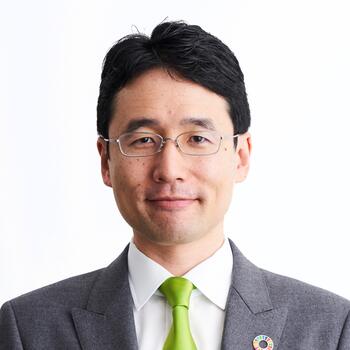
Headshot photo of Mitsuru Izumo
Mitsuru Izumo is a graduate of the University of Tokyo, having specialised in agricultural structural
management. In 2005, he established Euglena Co., Ltd. to harness the properties of microalgae
Euglena. Euglena Co., Ltd. became the world’s first biotechnology company that succeeded in the
outdoor mass cultivation of Euglena. Currently, Euglena Co., Ltd upholds “Sustainability First” as
their philosophy and has developed the manufacture and sale of foods and cosmetics as the
healthcare domain, the biofuel business, the bioinformatics business, and the social business in
Bangladesh by leveraging Euglena and other advanced technologies.


Image
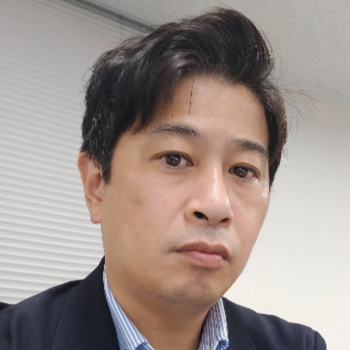
Headshot photo of Eiji Ohira
Eiji Ohira is the Director General of the New Energy and Industrial Technology Development Organization (NEDO)’s Fuel Cell and Hydrogen Technology Office In this capacity, he is responsible for the overall strategy, execution and coordination of NEDO’s research, development and demonstration project on fuel cell and hydrogen.

He has also coordinated fuel cell and hydrogen activities with international stakeholders, through International Energy Agency’s Technology Collaboration Program (IEA TCP: Advanced Fuel Cell & Hydrogen), and International Partnership for Hydrogen and Fuel Cells in the Economy (IPHE). 

He joined the NEDO in 1992, just after graduation from the Tokyo University of Science. He served as a visiting scholar at the Massachusetts Institute of Technology in 1997-1998.


Moderator

Image
Headshot photo of Kate Hardin
Kate Hardin, Deloitte Executive Director for Energy and Industrials Research, has worked in the energy industry for 25 years.  She currently leads Deloitte research on the impact of the energy transition on the energy and industrial manufacturing sectors. Before that, Kate led integrated coverage of transportation decarbonization and the implications for the oil, gas, and power sectors.  Kate has also developed global energy research for institutional investors and has led analysis of Russian and European energy developments.  Kate recently served as an expert in residence at Yale’s Center for Business and Environment, and she is also a member of the Council on Foreign Relations.  


Image
Shorenstein APARC Winter 2022 Speaker Series Icon with text "New Frontiers: Technology, Politics, and Society in the Asia-Pacific"
This event is part of the 2022 Winter webinar series, New Frontiers: Technology, Politics, and Society in the Asia-Pacific, sponsored by the Walter H. Shorenstein Asia-Pacific Research Center.

Via Zoom Webinar
Register:  https://bit.ly/3LuNa94


Mitsuru Izumo <br>Founder and President, Euglena Co Ltd.<br><br>
Eiji Ohira <br>Director General of Fuel Cell and Hydrogen Technology Office, Japan New Energy and Industrial Technology Development Organization (NEDO) <br><br>
Kate Hardin <br>Executive Director, Deloitte Research Center for Energy & Industrials
Panel Discussions
-

Second Conference on "The Political Economy of Japan under the Abe Government"

March 1 - 2, 2019

Philippines Conference Room

Sponsored by: Japan Society for Promotion of Science, Japan Foundation Center for Global Partnership, and Freeman Spogli Institute for International Studies (Stanford University)

Organizers: Takeo Hoshi and Phillip Lipscy


Program

3/1/2019

8:45am   Breakfast

9:05am    Welcome Remark     Toru Tamiya (JSPS San Francisco Office)
                                                   Osamu Honda (Japan Foundation Center for Global Partnership)

9:15am  "Abenomics and Japan's Entrepreneurship and Innovation: Is the Third Arrow Pointed in the Right Direction for Global Competition in the Silicon Valley Era?", Kenji Kushida (Stanford University)

Discussant:
Yong Suk Lee (Stanford University)

10:15am  Break

10:30am  "Abe’s Womanomics Policy: Did it have Effect on the closing of Gender Gap in Managers?", Nobuko Nagase (Ochanomizu University)

Discussant:
Curtis Milhaupt (Stanford University)

11:30am  Move to SIEPR Building for Lunch and Keynote Speech

11:45am  Lunch to conference participants

12:15pm  Lunch and Panel Discussion on Abenomics at SIEPR Building

Moderator: Takeo Hoshi
Panelists: Joshua Hausman
                   Takatoshi Ito
                  Nobuko Nagase
                  Steve Vogel

1:45pm   Panel ends and walk back to Encina Hall

2:00pm    "Abenomics, the Exchange Rate, and Markup Dynamics in Japanese Industries", Kyoji Fukao (Hitotsubashi University) and Shuichiro Nishioka (West Virginia University)

Discussant:
Yuhei Miyauchi (Stanford University and Boston University)

3:00pm  Break

3:30pm   "Abe's Reverse Course: How a Labor Shortage Transformed Labor Politics and Policy", Steven Vogel (University of California, Berkeley)

Discussant:
Kenji Kushida (Stanford University)


4:30pm   "The Crisis that Wasn’t: How Japan Has Avoided a Bond Market Panic", Mark T. Bamba and David E. Weinstein (Columbia University)

Discussant:
Johannes Wieland (University of California, San Diego)

5:30pm     Adjourn


3/2/2019

8:30am   Breakfast

9:00am   Welcome Remark
                 Moto Ono (Japan Foundation Center for Global Partnership)

9:10am   "The Enduring Challenges of History Issues", Mary McCarthy (Drake Univesity)

Discussant:
Phillip Lipscy (Stanford University)

10:10am  Break

10:25am "Expansion of the Prime Minister's Power in the Japanese Parliamentary System", Harukata Takenaka (National Graduate Institute for Policy Studies)

Discussants:
Patricia Maclachlan (University of Texas)

11:25pm  "Abenomics: Est. in 2013, or 2007?", Takatoshi Ito (Columbia University)

                   Discussants:
                  Takeo Hoshi (Stanford University)

12:25pm  Lunch

1:30pm  "Abenomics, Monetary Policy, and Consumption", Joshua Hausman (University of Michigan), Takashi Unayama (Hitotsubashi University), and Johannes Wieland (University of California, San Diego)

Discussant:
Thuy Lan Nguyen (Santa Clara University)

2:30pm   "The Great Disconnect: The Decoupling of Wage and Price Inflation in Japan", Takeo Hoshi (Stanford University) and Anil Kashyap (University of Chicago)

Discussant:
Takashi Unayama (Hitotsubashi University)

3:30pm  Break

4:00pm   "Introduction", Takeo Hoshi (Stanford University) and Phillip Lipscy (Stanford University)

5:30pm  Adjourn


Conferences
-

The event is sponsored by the Japan Society for Promotion of Science and
the Japan Foundation Center for Global Partnership.


abe 6364 Japanese Prime Minister Shinzo Abe speaks at Stanford about innovation in Japan and Silicon Valley. He was also joined on stage by Stanford President John Hennessy and George Shultz, the former U.S. Secretary of State and a distinguished fellow at the Hoover Institution (below).
When the Liberal Democratic Party in Japan regained the power led by Prime Minister Shinzo Abe in December 2012, Japan’s government embarked on a set of economic policies dubbed “Abenomics.” Abenomics aimed at bringing Japan back from stagnation and restoring its growth potential.  The Abe administration entered its 7th year and Prime Minister Abe looks most likely to become the prime minister with the longest reign in the post war era.  Abenomics looks seemingly successful as well.  Japan’s economy has been in the longest expansion phase in the post war era.  The unemployment rate is so low that many employers claim they cannot find workers.  Yet, the major goals of Abenomics set at the beginning, such as 2% inflation rate and 2% real economic growth, have not been achieved.  Has Abenomics really succeeded?

This panel features four experts who have been closely watching Abenomics’s impacts on the Japanese economy.  They evaluate what Abenomics has accomplished so far in various areas.


Panelists:

Joshua Hausman, Assistant Professor of Public Policy; Assistant Professor of Economics, University of Michigan

Takatoshi Ito, Professor of International and Public Affairs, Columbia University

Nobuko Nagase, Professor of Labor Economics and Social Policy, Ochanomizu University, Japan

Steven Vogel, Professor of Asian Studies; Professor of Political Science; Chair of the Political Economy Program, University of California, Berkeley

Takeo Hoshi (moderator), Director of the Japan Program at the Shorenstein Asia Pacific Research Center, Stanford University


Koret-Taube Conference Center
Gunn-SIEPR Building
366 Galvez Street, Stanford University

Panel Discussions
-

Plese note: we're no longer accepting RSVPs for this event.


Eight years have passed since the Great East Japan Earthquake and subsequent Fukushima Daiichi Nuclear Power Plant accident. Steady progress has been made towards the reconstruction of Fukushima, repopulation of surrounding areas, and the decommissioning of the plant, of which Tokyo Electric Power Company Holdings (TEPCO) must shoulder 16 trillion yen of the 22 trillion yen, the total estimated cost of the accident. Meanwhile, with Japan having fully liberalized its electricity and gas retail market, the business environment surrounding TEPCO is undergoing a major change. In the long term, TEPCO foresees a decrease in demand for their power service and increased competition among utility companies. In this program, Naomi Hirose, who endeavored to manage the Fukushima incident spearhead reforming the company as President of TEPCO from 2012 to 2017, shares his insights on the current situation in Fukushima, lessons learned and implications from the accident.


Image
naomi hirose photo
Naomi Hirose is senior executive whose service at the Tokyo Electric Power Company (TEPCO) spans four decades.  He joined the company in 1976, having gained an appreciation for the energy industry following the 1973 Oil Shock, and worked in a number of management positions from 1992 to 2005, including corporate planning, sales, marketing, and customer relations.  Mr. Hirose became an executive officer in 2006, and in 2008, conceived and spearheaded a campaign promoting the economic and environmental benefits of electrification, called “Switch” that was a Japan-first. In 2010, he re-energized the company vision for global expansion.  Immediately after the 3.11 Fukushima Accident, Mr. Hirose dedicated himself to create the system for Nuclear Damage Compensation. After becoming President and CEO in 2012, he led the company in addressing a number of highly complex issues such as water management and decommissioning plans for the Fukushima Daiichi Nuclear Power Station, compensation for the accident and Fukushima revitalization, and keeping TEPCO competitive while facing the deregulation of Japan’s electricity market.  He currently serves as Executive Vice Chairman, Fukushima Affairs, overseeing the utility’s passionate and steadfast efforts to reconstruct and revitalize Fukushima Prefecture.  Mr. Hirose received his B.A. in Sociology from Hitotsubashi University in 1976,and his MBA from Yale School of Management in 1983.

Naomi Hirose, Vice Chairman, Tokyo Electric Power Company Holdings, Inc. (TEPCO)
Seminars
Paragraphs

Under what we call Abenergynomics, Japanese Prime Minister Abe Shinzō has used energy policy to support the growth objectives of Abenomics, even when the associated policies are publicly unpopular, opposed by utility companies, or harmful to the environment. We show how Abenergynomics has shaped Japanese policy on nuclear power, electricity deregulation, renewable energy, and climate change.

All Publications button
1
Publication Type
Journal Articles
Publication Date
Journal Publisher
Asian Survey
Authors
Phillip Lipscy
Number
4
Subscribe to Energy