
Trans-Pacific Sustainability Dialogue 2026: Responsible Consumption and Production
Trans-Pacific Sustainability Dialogue 2026: Responsible Consumption and Production
Saturday, October 24, 2026 | 5:00 PM - Monday, October 26, 2026 | 3:10 AM
(Pacific)
This event is held in Singapore. All times referenced in the program agenda below are in Singapore Time (SGT).
Day 1: Sunday, October 25, 8:40 a.m.-5:15 p.m. SGT
Singapore Management University
School of Accountancy, Ngee Ann Kongsi Auditorium, 2nd Floor
Day 2: Monday, October 26, 9:15 a.m.-6:10 p.m. SGT
Shangri-La Singapore
Tower Ballroom, Ground Floor

The Trans-Pacific Sustainability Dialogue convenes social science researchers and scientists from Stanford University and across the Asia-Pacific region, alongside policymakers, private and public sector experts, and emerging leaders to accelerate progress on achieving the United Nations-adopted 2030 Agenda for Sustainable Development. The Dialogue aims to generate new research and policy partnerships to expedite the implementation of the Agenda's underlying framework of 17 Sustainable Development Goals (SDGs).
The 2026 Dialogue focuses on advancing SDG 12: Ensure responsible and sustainable consumption and production patterns. It will be held in Singapore on October 25-26, 2026 (Singapore Time), and is free and open to the public.
Use the tabs below to learn more about the 2026 Dialogue's theme, explore the complete program agenda, and view speaker biographies. On mobile, toggle the dropdown menu to access these sections.
The fifth annual 2026 Trans-Pacific Sustainability Dialogue will explore a roadmap for bridging gaps in achieving SDG 12-related targets. It will include a Student Innovation Showcase on the first day and plenaries featuring prominent leaders, including Mr. Ban Ki-moon, the 8th Secretary-General of the United Nations, on the second day. The Dialogue will examine policies and financial practices that advance responsible consumption and production; explore pathways to circular economies, responsible supply chains, and stronger corporate accountability; assess strategies for shifting consumption behavior and expanding access to sustainable products and services; identify policy gaps across nations at different stages of development; examine how global trade, economic integration, and critical mineral use shape patterns of resource extraction across the region; and evaluate approaches to scale solutions for the targets of SDG 12.
Founding Hosts and Organizers
- Stanford University’s Walter H. Shorenstein Asia-Pacific Research Center (APARC)
- Ban Ki-moon Foundation for a Better Future (BKMF)
Co-Host
- Singapore Management University
Co-Sponsors
- Asian Development Bank’s Energy Sector Cluster
- Economic Research Institute for ASEAN and East Asia
- The University of Melbourne’s Melbourne Business School
- Singapore Management University’s Urban Institute
- Sino Group
- Stanford University's Center for Sustainability in Southeast Asia at the Doerr School of Sustainability’s Precourt Institute for Energy
- Stanford University’s Natural Capital Alliance
- Stanford University’s Center for Sustainable Development and Global Competitiveness at the School of Engineering
SUNDAY, OCTOBER 25
Student Innovation Showcase: Integrative Design Solutions for Advancing SDG 12
Organized by Stanford University’s Walter H. Shorenstein Asia-Pacific Research Center and the Ban Ki-moon Foundation for a Better Future, and Co-Hosted by Singapore Management University.
Singapore Management University
School of Accountancy, Ngee Ann Kongsi Auditorium, 2nd Floor
Master of Ceremonies: Cheryll Alipio
Associate Director for Program and Policy of the Walter H. Shorenstein Asia-Pacific Research Center, Stanford University
8-8:40 a.m.
Registration
8:40-8:55 a.m.
Welcome Remarks
Kiyoteru Tsutsui
Director of the Walter H. Shorenstein Asia-Pacific Research Center, Director of the Japan Program, Senior Fellow at the Freeman Spogli Institute for International Studies, Professor of Sociology, and the Henri H. and Tomoye Takahashi Professor and Senior Fellow in Japanese Studies, Stanford University
Kim Sook
Executive Director of the Ban Ki-moon Foundation for a Better Future and former Ambassador and Permanent Representative of the Republic of Korea to the United Nations
Cheong Wei Yang
Vice Provost for Strategic Research Partnerships and Interim Co-Director of the Longevity Societies and Economies Institute, Singapore Management University
8:55-9 a.m.
Showcase Introduction
Kiyoteru Tsutsui
Director of the Walter H. Shorenstein Asia-Pacific Research Center, Director of the Japan Program, Senior Fellow at the Freeman Spogli Institute for International Studies, Professor of Sociology, and the Henri H. and Tomoye Takahashi Professor and Senior Fellow in Japanese Studies, Stanford University
9-10:20 a.m.
Student Innovation Showcase Part I
9-9:20 a.m. – Team 1: AquaSite
Nirupama Sakthi Prasad and Sanvee Sharda
National University of Singapore
9:20-9:40 a.m. – Team 2: Campus Flex
Jun Chen
Hong Kong University of Science and Technology (Guangzhou)
9:40-10 a.m. – Team 3: EcoSpool
Adam Ho Tze-An and Srinivasan Karthik
National University of Singapore
10-10:20 a.m. – Team 4: ECOVAL
Lê Nhật Huy and Phạm Lê Thanh An
Ho Chi Minh City University of Technology - Vietnam National University Ho Chi Minh (VNU-HCMC)
10:20-10:40 a.m.
Break
10:40 a.m.-12 p.m.
Student Innovation Showcase Part II
10:40-11 a.m. – Team 5: GreenDNA
Lee Jia-Wen and Tan Sheng Yao
Universiti Teknologi Malaysia
11-11:20 a.m. – Team 6: GREENHUN
Hoàng Mai and Lê Xuân Tùng
Foreign Trade University
11:20-11:40 a.m. – Team 7: Material Commons
Canxin Liu
The Hong Kong Polytechnic University
11:40 a.m.-12 p.m. – Team 8: Mycelia
Takahiro Akimoto and Ikuto Nakaya
The University of Tokyo
12-1 p.m.
Public Luncheon
Hosted by Singapore Management University
1-2:20 p.m.
Student Innovation Showcase Part III
1-1:20 p.m. – Team 9: Nutrient Loop Kyoto
Reo Owatari and Zhang Yixuan
Kyoto University
1:20-1:40 p.m. – Team 10: ReRooT
Terry Phua Cheng Hong
Singapore Management University
1:40-2 p.m. – Team 11: Sen Bao
Tran Tin Dung and Huynh Ngoc Ngan
Foreign Trade University - Ho Chi Minh City Branch
2-2:20 p.m. – Team 12: Still Useful
Gayeong Tae
Yonsei University
2:20-2:40 p.m.
Break
2:40-3:40 p.m.
Student Innovation Showcase Part IV
2:40-3 p.m. – Team 13: Whole-Life Carbon (WLC)-Shift
Izzah Hassan and Hamizah Abas
Universiti Teknologi Malaysia
3-3:20 p.m. – Team 14: Y-Kenistik
Dana Yeleussiz
Stanford University
3:20-3:40 p.m. – Team 15: Industrial Energy Intelligence
Jai Mohanka
Singapore Management University
3:40-4:40 p.m.
Break & Judging of Showcase
Judging Panel
Tae Yong Jung
Professor at the Graduate School of International Studies, Yonsei University
Sanjeev Khagram
Distinguished Research Fellow at the Hoover Institution, Stanford University, and Professor of Global Leadership at Melbourne Business School
Tsogtbilguundari Khishigbat
Founder and Managing Director of Not So Boring LLC
Rony J. Palathinkal
Head of Urban SustaInnovator at the Institute of Innovation & Entrepreneurship, Singapore Management University
Yasmin Wirjawan
Fellow at Stanford University’s Center for Human Rights and International Justice and CEO of Ancora Foundation
4:40-4:45 p.m.
Congratulatory Remarks
Ban Ki-moon
The 8th Secretary-General of the United Nations
4:45-5 p.m.
Award Ceremony
Ban Ki-moon
The 8th Secretary-General of the United Nations
Kim Sook
Executive Director of the Ban Ki-moon Foundation for a Better Future and former Ambassador and Permanent Representative of the Republic of Korea to the United Nations
Kiyoteru Tsutsui
Director of the Walter H. Shorenstein Asia-Pacific Research Center, Stanford University
Kim Bong-hyun
Advisor to Mr. Ban Ki-moon and former Ambassador of the Republic of Korea to Australia
Cheong Wei Yang
Vice Provost for Strategic Research Partnerships and Interim Co-Director of the Longevity Societies and Economies Institute, Singapore Management University
Sanjeev Khagram
Distinguished Research Fellow at the Hoover Institution, Stanford University
5-5:10 p.m.
Closing Remarks
Gita Wirjawan
Former Minister of Trade of the Republic of Indonesia and Visiting Scholar at Stanford University’s Precourt Institute for Energy
MONDAY, OCTOBER 26
Trans-Pacific Sustainability Dialogue: Scaling Responsible Production & Consumption
Organized by Stanford University’s Walter H. Shorenstein Asia-Pacific Research Center and the Ban Ki-moon Foundation for a Better Future.
Shangri-La Singapore
Tower Ballroom, Ground Floor
Master of Ceremonies: Cheryll Alipio
Associate Director for Program and Policy of the Walter H. Shorenstein Asia-Pacific Research Center, Stanford University
8-9:15 a.m.
Registration
9:15-9:25 a.m.
Opening Session
Welcome Remarks
Kiyoteru Tsutsui
Director of the Walter H. Shorenstein Asia-Pacific Research Center, Director of the Japan Program, Senior Fellow at the Freeman Spogli Institute for International Studies, Professor of Sociology, and the Henri H. and Tomoye Takahashi Professor and Senior Fellow in Japanese Studies, Stanford University
Ban Ki-moon
The 8th Secretary-General of the United Nations
9:25-10:10 a.m.
World Leaders Session: Accelerating Action on SDG 12 (SDG Target 12.1)
Sponsored by the Ban Ki-moon Foundation for a Better Future
Keynote Speeches
Zandanshatar Gombojav
The 34th Prime Minister of Mongolia
Shasha Kartini binti Mohd Ridzam Deva
Director of Sustainability, Bank Negara Malaysia
Moderator: Kim Sook
Executive Director of the Ban Ki-moon Foundation for a Better Future and former Ambassador and Permanent Representative of the Republic of Korea to the United Nations
10:10-10:50 a.m.
Fireside Chat: Powering Asia-Pacific’s Energy Transition Through Technology and Trade (SDG Target 12.a)
Sponsored by Stanford Doerr School of Sustainability’s Center for Sustainability in Southeast Asia at the Precourt Institute for Energy
William Chueh
Director of the Precourt Institute for Energy at the Doerr School of Sustainability, Stanford University
Gita Wirjawan
Former Minister of Trade of the Republic of Indonesia and Visiting Scholar at the Precourt Institute for Energy, Stanford University
10:50-11 a.m.
Break
11 a.m.-12 p.m.
Plenary 1: Driving Corporate Sustainability in Clean Energy Through Investment (SDG Target 12.6)
Sponsored by the Asian Development Bank’s Energy Sector Cluster
Priyantha Wijayatunga
Deputy Director General of Sectors Department 1 (Energy and Transport Sectors), Asian Development Bank
Udayanga Hempala
Vice-Chancellor of the University of Moratuwa, Sri Lanka
Yejin Ha
Economic Affairs Officer, United Nations Economic and Social Commission for Asia and the Pacific (UNESCAP)
Seok Hui Lim
Lead for International Affairs, Temasek Trust
Moderator: Kee-Yung Nam
Senior Advisor of Nuclear Energy and Energy Sector Strategy and former Principal Energy Economist of the Energy Sector Office, Asian Development Bank
12-1:15 p.m.
Public Luncheon for Attendees
Hosted by Stanford University’s Walter H. Shorenstein Asia-Pacific Research Center
Tower Ballroom, Ground Floor
1:15-2:15 p.m.
Plenary 2: Managing Critical Minerals and Regional Security (SDG Target 12.2)
Sponsored by the Economic Research Institute for ASEAN and East Asia and Stanford University’s Natural Capital Alliance
Dionisius Narjoko
Senior Economist, Economic Research Institute for ASEAN and East Asia
Mengye Zhu
Senior Scientist, Natural Capital Alliance, Stanford University
Reza Rahmaditio
Managing Director, Energy Shift Institute
Sudirman Said
Former Minister of Energy and Mineral Resources of the Republic of Indonesia
Tong Wu
Senior Scientist and Associate Director of the NatCap China Program, Natural Capital Alliance, Stanford University
Moderator: Nobuhiro Aizawa
Dean and Managing Director of the ERIA School of Government, Economic Research Institute for ASEAN and East Asia
2:15-2:30 p.m.
Break
2:30-3:30 p.m.
Plenary 3: Rethinking Urban Consumption and Climate Resilience (SDG Target 12.8)
Sponsored by Singapore Management University’s Urban Institute
Winston Chow
Lee Kong Chian Professor of Urban Climate at the College of Integrative Studies and Research Pillar Lead for Urban Systems at the Urban Institute, Singapore Management University
Perrine Hamel
Associate Professor at the Asian School of the Environment, Nanyang Technological University
Tae Yong Jung
Professor of Sustainable Development, Graduate School of International Studies, Yonsei University
Yasmin Wirjawan
Fellow at Stanford University’s Center for Human Rights and International Justice and CEO of Ancora Foundation
Moderator: Orlando Woods
Associate Provost (Research Strategy), Director of the SMU Urban Institute, and Professor of Geography, Singapore Management University
3:30-3:45 p.m.
Break
3:45-4:45 p.m.
Plenary 4: The Sustainable Production and Consumption of Artificial Intelligence (Target 12.7)
Sponsored by Stanford University’s Center for Sustainable Development and Global Competitiveness and the University of Melbourne
Cheong Wei Yang
Vice Provost for Strategic Research Partnerships and Interim Co-Director of the Longevity Societies and Economies Institute, Singapore Management University
Sorouch Kheradmand
Global Head of Sustainability, Schneider Electric
Abraham Wu
Chief Technology Officer and Co-Founder, Alpha GEO
Diana Bowman
Dean of Law, College of Business and Law, Royal Melbourne Institute of Technology
Can Cui
Presidential Assistant Professor of Environmental Science, College of Integrative Studies, Singapore Management University
Moderator: Sanjeev Khagram
Distinguished Research Fellow at Stanford University’s Hoover Institution, Executive Director of the RISEAi Initiative at Stanford University’s Center for Sustainable Development and Global Competitiveness and Hoover Institution, and Professor of Global Leadership at Melbourne Business School
4:45-5 p.m.
Break
5-6 p.m.
Industry Leaders Session: Transforming Circular Economy and Material Innovation (SDG Target 12.5)
Sponsored by Stanford University’s Walter H. Shorenstein Asia-Pacific Research Center
Nagasaka Mago
Contemporary Artist, Representative Director of MAGO CREATION, CEO of MAGO MOTORS, and Global Affiliate Visiting Scholar of the Walter H. Shorenstein Asia-Pacific Research Center, Stanford University
Dicky Yordan
President Director and CEO of PT TBS Energi Utama Tbk and Director of Cora Environment
Karen Cheah
Founder and CEO of AlterPacks
Discussant Remarks: Jooyoung Park
Associate Professor, Department of Civil, Urban, and Environmental Engineering, Seoul National University
Moderator: David Cohen
Co-Director of the Southeast Asia Program at the Walter H. Shorenstein Asia-Pacific Research Center and Director of the Center for Sustainability in Southeast Asia at Precourt Institute for Energy, Stanford University
6-6:10 p.m.
Closing Session
Kim Bong-hyun
Advisor to Mr. Ban Ki-moon and former Ambassador of the Republic of Korea to Australia
Kiyoteru Tsutsui
Director of the Walter H. Shorenstein Asia-Pacific Research Center, Director of the Japan Program, Senior Fellow at the Freeman Spogli Institute for International Studies, Professor of Sociology, and the Henri H. and Tomoye Takahashi Professor and Senior Fellow in Japanese Studies, Stanford University
Nobuhiro Aizawa
Dean and Managing Director of the ERIA School of Government, Economic Research Institute for ASEAN and East Asia
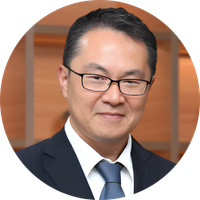
Nobuhiro Aizawa serves as the Dean and Managing Director of the newly established ERIA School of Government. He brings years of experience as a lecturer and researcher. He is a Professor at the Graduate School of Social and Cultural Studies, Kyushu University, and holds a PhD in Southeast Asia Area Studies from Kyoto University.
His research focuses on Southeast Asian politics and the international relations of East Asia, with current projects examining the international politics of digital infrastructure and the emerging Southeast Asian elite network. Aizawa has been a Wilson Center Japan Scholar (2019-2021) and a Visiting Scholar at Thammasat University, Chulalongkorn University, Cornell University, and LIPI (currently BRIN) of Indonesia. He has also worked as a Research Associate at the Institute of Developing Economies-JETRO and the National Graduate Institute of Policy Studies in Tokyo.
Aizawa’s past projects include an analysis of the political economy dynamics in post-1997/1998 economic crisis Southeast Asia, focusing on the Philippines, Indonesia, Malaysia, and Thailand through the perspectives of elite circulation. His edited volume, Japan and Southeast Asia in the Indo-Pacific Era, explores these themes in depth.
His latest co-edited work, Standing Firm for Indonesia's Democracy: An Oral History of President Susilo Bambang Yudhoyono, highlights Yudhoyono's crucial role in Indonesia's democratisation.
Cheryll Alipio
Associate Director for Program and Policy, Walter H. Shorenstein Asia-Pacific Research Center, Stanford University
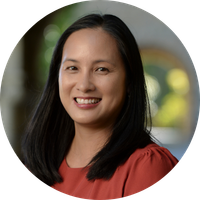
Before joining Stanford’s Shorenstein APARC in 2022 as Associate Director for Program and Policy, Cheryll was Program Director for Government Services and Engagement at the University of Maryland, College Park's Institute for Governmental Service and Research, and Assistant Research Professor of Anthropology. An economic and medical anthropologist, she also previously held roles with York University in Canada, the University of Queensland in Australia, and the Asia Research Institute of the National University of Singapore, among others.
Cheryll has extensive experience conducting and administering qualitative, mixed- methods, applied, and community-based research on contemporary Southeast Asia, Inter-Asia engagements, and Asia-U.S. relations. She has also international and interdisciplinary research expertise and public service experience with nonprofits and NGOs. She holds a Ph.D. and M.A. in Anthropology from the University of Washington and a B.A. in Anthropology and Psychology from the University of California, Davis.
She is the co-editor of Money and Moralities in Contemporary Asia (Amsterdam University Press, 2019), and has co-edited and authored articles, book chapters, and special journal issues on migration and development, transnationalism and diaspora, labor and governance, care work and health, and children and youth.
BAN Ki-moon
The 8th Secretary-General of the United Nations
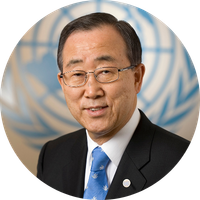
As the 8th Secretary-General of the United Nations, Mr. Ban has prioritized mobilizing world leaders around global challenges, from climate change and economic upheaval to pandemics and increasing pressures involving food, energy and water. He has sought to act as a bridge-builder, to give voice to the world’s poorest and most vulnerable people, and to strengthen the Organization itself.
One of the Secretary-General’s first major initiatives was the 2007 Climate Change Summit, followed by extensive diplomatic efforts that have helped put the issue at the forefront of the global agenda. Subsequent efforts to focus on the world’s main anti-poverty targets, the Millennium Development Goals, have generated more than $60 billion in pledges, with a special emphasis on Africa and the new Global Strategy on Women’s and Children’s Health. He also successfully pressed for the creation of UN Women, strengthened UN peace efforts, and worked to rejuvenate the disarmament agenda.
The Secretary-General received a bachelor's degree in international relations from Seoul National University and a master's degree in public administration from Harvard University’s Kennedy School of Government.
Before he was appointed Secretary-General, Mr. Ban was South Korea’s Minister of Foreign Affairs and Trade. Her served with the Ministry for 37 years, including postings in New Delhi, Washington, D.C., and Vienna, and responsibility for a variety of portfolios.
Diana Bowman
Dean of Law, College of Business and Law, Royal Melbourne Institute of Technology

Professor Diana Bowman is the inaugural Dean of Law at the College of Business and Law, Royal Melbourne Institute of Technology. Previously, she served as Associate Dean of Applied Research and Partnerships at Arizona State University's Sandra Day O'Connor College of Law, where she also co-directed the Center for Smart Cities and Regions and was a professor in the School of Technology for Public Health.
In 2025, Professor Bowman was appointed Honorary Consul for Australia in Arizona, and is a PLuS Alliance Fellow and senior sustainability scientist with the Julie Ann Wrigley Global Institute of Sustainability.
Professor Bowman’s extensive research has focused on the governance of emerging technologies and public health law. She has published more than 150 peer-reviewed journal articles and chapters and is the co-editor of 11 books, including Reproduction Report. In 2018, she was named an Andrew Carnegie Fellow in recognition of the impact of her research.
Karen Cheah
Founder and CEO of AlterPacks

Karen Cheah channels her 20+ years as an international award-winning journalist and creative strategist into revolutionizing sustainable materials. Driven by a passion to alleviate waste-burdened communities, she leveraged her extensive network to pioneer AlterPacks, a Singapore-based startup transforming food by-products and agricultural waste to replace unsustainable materials such as plastics and aluminium.
A National University of Singapore alumna with degrees in Mathematics and History, and a Dean’s List MSc (Innovation) graduate from Singapore Management University, Karen’s unique blend of analytical and creative expertise fuels AlterPacks’ mission to create impactful, eco-friendly solutions.
CHEONG Wei Yang
Vice Provost for Strategic Research Partnerships and Interim Co-Director of the Longevity Societies and Economies Institute, Singapore Management University
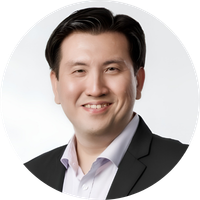
In his current role at Singapore Management University, Cheong Wei Yang develops research initiatives in partnership with government and industry. He also serves as Senior Adviser for Health Economics at Singapore’s Ministry of Health, building economic models to assess new health technologies.
From 2020 to 2023, he was Singapore’s Deputy Secretary at the Ministry of Health. He led the ministry’s technology response to COVID-19, including vaccines, therapeutics, testing, and the TraceTogether contact-tracing program, and oversaw research, IT, cybersecurity, and data strategy. Before that, he spent five years as Deputy CEO of the National Research Foundation in the Prime Minister’s Office. In that role, he directed policy, strategy, and governance for Singapore’s national research, innovation, and enterprise plans (RIE2020 and RIE2025). Earlier in his career in the Singapore Administrative Service, he held senior posts in the Ministries of Education, Trade and Industry, and Finance, including leading the secretariat of the Economic Strategies Committee. He received the Public Administration Medal (Gold) for his COVID-19 work.
A Rhodes Scholar, Dr. Cheong holds an MPhil and a DPhil in economics from the University of Oxford, and bachelor’s degrees in chemical engineering and economics from the Massachusetts Institute of Technology.
Winston Chow
Lee Kong Chian Professor of Urban Climate at the College of Integrative Studies and Research Pillar Lead for Urban Systems at the Urban Institute, Singapore Management University
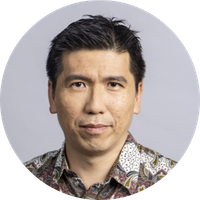
Winston Chow is Co-Chair of the IPCC Working Group II and Lee Kong Chian Professor of Urban Climate at SMU’s College of Integrative Studies. He was elected as Co-Chair in July 2023, and is helping to lead the global assessment of climate impacts, adaptation and vulnerability during a critical decade of climate action.
His research work focuses on urban climate change risk and vulnerability, urban resilience, and climate adaptation and mitigation, with particular emphasis on the challenges faced by cities in a changing climate. He was Co-Lead Principal Investigator of Cooling Singapore, a major multidisciplinary research initiative developing solutions to address urban heat and improve Singapore’s climate resilience from 2017 to 2026. Through his IPCC leadership, SMU research, teaching, and advisory work, Prof. Chow engages with cities and international partners on practical approaches to climate adaptation, urban sustainability, and resilience.
Prof. Chow holds a Ph.D. in Geography from Arizona State University, as well as two bachelor's degrees and a master's degree in Geography from the National University of Singapore.
William Chueh
Director of the Precourt Institute for Energy, Doerr School of Sustainability, Stanford University
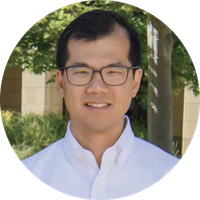
At Stanford, William Chueh is Kimmelman Professor, Professor of Materials Science and Engineering, of Energy Science and Engineering, of Photon Science, and Senior Fellow at the Precourt Institute for Energy.
Chueh's research focuses on understanding the fundamental chemistry, materials, and physics that underpin the development of better batteries, fuel cells, and other energy technologies and on decarbonizing various energy transformation pathways. He holds a BS in applied physics and a PhD in materials science from the California Institute of Technology.
Before joining Stanford in 2012, he was a Distinguished Truman Fellow at Sandia National Laboratories. Chueh has received numerous honors, including the David A. Shirley Award (2023), Friedrich Wilhelm Bessel Research Award (2022), MRS Outstanding Young Investigator Award (2018), Volkswagen/BASF Science Award Electrochemistry (2016), Camille Dreyfus Teacher-Scholar Award (2016), Sloan Research Fellowship (2016), NSF CAREER Award (2015), Solid State Ionics Young Scientist Award (2013), and Caltech Demetriades-Tsafka-Kokkalis Prize in Energy (2012).
David Cohen
Co-Director of the Southeast Asia Program at the Walter H. Shorenstein Asia-Pacific Research Center and Director of the Center for Sustainability in Southeast Asia at Precourt Institute for Energy, Stanford University
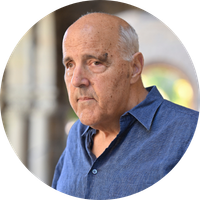
David Cohen is a leading expert in the fields of human rights, international law, and transitional justice, as well as one of the world's leading social and legal historians of ancient Greece. Cohen taught at UC Berkeley from 1979-2012 as the Ancker Distinguished Professor for the Humanities, and served as the founding Director of the Berkeley War Crimes Studies Center, which moved to Stanford in 2013 and became the Center for Human Rights and International Justice. He now serves as the Center's faculty co-director. Cohen holds the WSD-HANDA Professorship in Human Rights and International Justice and is appointed in Stanford’s Classics department. He is also appointed as Professor of Integrated Socio-Environmental Systems in the Department of Environmental Behavior Sciences at Stanford's Doerr School of Sustainability.
Professor Cohen received his J.D. at UCLA’s School of Law, his Ph.D. in Classics and Ancient History from Cambridge University, and an Honorary Doctorate in Law from the University of Zurich. He has also been a Fellow at the Hoover Institution at Stanford University since 2009.
Can Cui
Presidential Assistant Professor of Environmental Science, Singapore Management University
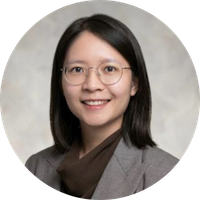
Can Cui is a Presidential Assistant Professor of Environmental Science at Singapore Management University’s (SMU) College of Integrative Studies (CIS) and a Researcher at the Singapore Green Finance Centre. Before joining SMU, she was a postdoctoral researcher at ETH Zurich.
Her research examines how economies can support a resilient and sustainable transition toward a net-zero system, with a focus on the roles of different actors in this transition. She studies material and energy flows associated with the low-carbon transition, including critical minerals and renewable energy technologies, and the implications of related dependencies for developing and emerging economies. At CIS, she teaches undergraduate courses on energy and sustainability and mentors students on climate and energy issues. Her research on emerging emitters and clean energy supply chains has been published in journals including Nature Communications and National Science Review.
Shasha Kartini binti Mohd Ridzam Deva
Director of Sustainability, Bank Negara Malaysia

Shasha Kartini binti Mohd Ridzam Deva leads the Sustainability department in Bank Negara Malaysia (BNM). Before assuming this role, she was the Director of the Strategic Communications department in BNM. Prior to this, she was the Group Head in charge of Global Affairs, Government Relations, Sustainability and Communications at AirAsia Group.
Shasha started her career as an economist in BNM with a focus on economic development, international economics and financial stability. Her career in the central bank also included a stint as a core member of the team that formulated Malaysia’s 2010-2020 Financial Sector Blueprint. At the international level, she spent two years representing Southeast Asia at the International Monetary Fund (IMF) in Washington, D.C.
Shasha is an Obama Foundation Leader, an Edward S. Mason Fellow, and graduated from Harvard University and the University of Nottingham, United Kingdom.
Yejin Ha
Economic Affairs Officer, United Nations Economic and Social Commission for Asia and the Pacific (UNESCAP)
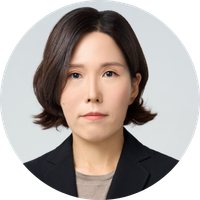
Ms. Yejin Ha's work supports energy transition and the achievement of the Sustainable Development Goals in member countries through power system interconnections. Current projects include the ASEAN Power Grid Advancement Program and capacity building for ASEAN regulators.
Before joining the Energy Division, Yejin worked with the Subregional Office for East and North-East Asia of ESCAP, focusing on power system interconnections in North-East Asia, and served as the coordinator of the North-East Asia Power Interconnection and Cooperation Forum (NEARPIC).
Perrine Hamel
Associate Professor at the Asian School of the Environment, Nanyang Technological University

Perrine Hamel’s research examines how nature-based solutions can make cities more resilient and inclusive. In 2020, she received the Singapore National Research Foundation Fellowship to study urban resilience in Southeast Asia.
Before joining NTU, Hamel was a senior scientist with the Natural Capital Project, a global partnership that integrates nature’s benefits into major societal decisions. She led the Livable Cities program, an initiative aiming to understand and elevate nature’s role in urban environments.
Previously, Hamel worked as an environmental engineer in Phnom Penh, Cambodia, and conducted her PhD research in integrated urban water management. She holds a PhD from Monash University, Australia, and a Master of Civil and Environmental Engineering from École Centrale Nantes, France.
Udayanga Hempala
Vice-Chancellor of the University of Moratuwa, Sri Lanka
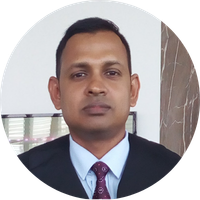
Udayanga Hemapala is Vice-Chancellor of the University of Moratuwa, Sri Lanka, and Professor in the Department of Electrical Engineering. Before his current position, he served as Secretary in Sri Lanka's Ministry of Energy. Previously, he was Dean of the Faculty of Engineering and Head of the Department of Electrical Engineering, also at the University of Moratuwa.
He holds a BSc from the University of Moratuwa and a PhD from the University of Genova, Italy.
Tae Yong Jung
Professor at the Graduate School of International Studies, Yonsei University
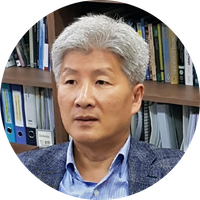
A professor at Yonsei University, Tae Yong Jung is a visiting professor at the Hong Kong University of Science and Technology, Guangzhou, China, and serves as the director of the Sustainable Development Program of the Ban Ki-moon Foundation for a Better Future. He is a board member of the World Wild Fund, Korea, and of UNESCO Korea, and a member of the ESG Committee of the Korea EXIM Bank.
He was a member of the Presidential Council on Carbon Neutrality and Green Growth and the International Cooperation Committee of the National Council on Climate and Air Quality. He was appointed as the Coordinating Lead Author for the Climate Investment and Finance chapter of the IPCC’s 6th Assessment Report (AR6, WG3). Before GSIS, he was a professor at the KDI School of Public Policy & Management, among other roles.
Dr. Jung holds a BA from Seoul National University and an MA and Ph.D. from Rutgers, The State University of New Jersey. He has been a Visiting Researcher at the U.S. National Energy Laboratory, the Joint Global Change Research Institute (JGCRI) at the University of Maryland, a Joint Research Fellow at the National Institute for Environmental Studies (NIES) in Japan, and a Visiting Fellow at Kyoto University, Japan.
Sanjeev Khagram
Distinguished Research Fellow at Stanford University’s Hoover Institution, Executive Director of the RISEAi Initiative at Stanford University’s Center for Sustainable Development and Global Competitiveness and Hoover Institution, and Professor of Global Leadership at Melbourne Business School
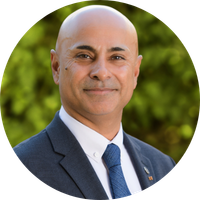
From 2018 to 2024, Khagram was dean and director general of the Thunderbird School of Global Management at Arizona State University. Previously, he was the inaugural Young Professor of Global Political Economy at Occidental College, founding director of the Lindenberg Center for International Development at the University of Washington, and associate professor at Harvard’s Kennedy School of Government. Outside academia, he was a senior adviser to UN Secretary-General Ban Ki-moon. He also helped establish several global initiatives, including the Global Partnership for Sustainable Development Data and the World Commission on Dams. He has published widely, including the award-winning Dams and Development (Cornell University Press).
Khagram holds bachelor’s, master’s, and doctoral degrees from Stanford University.
Sorouch Kheradmand
Global Head of Sustainability, Schneider Electric
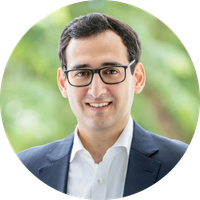
Sorouch Kheradmand is Global Head / Partner for Sustainability at Schneider Electric, based in Singapore. He also co-leads the AI transformation for its largest division, helping shape its shift towards an AI-native organisation. His work rests on one argument: sustainability pays now. Acknowledging that reality is the fastest way to get businesses to act and to build the momentum the transition needs. AI can remove the bottlenecks toward that work, provided it is used proactively and responsibly.
He began as an engineer at Mitsubishi Heavy Industries in Japan, then joined Schneider Electric, where he led global commercial teams and strategic projects, including M&A. During COVID-19, he moved into sustainability. Soon after, he took the lead on part of Schneider Electric’s global sustainability portfolio, which was recognised at COP30 for its innovation and business-friendly approach. His AI role extends that work: he looks for ways AI can accelerate what the sustainability community does.
He holds an INSEAD MBA and advises several startups at the intersection of sustainability and AI. He teaches executive education on AI and sustainability at SMU, INSEAD, and NUS. His book, Good Business with AI, will be published by World Scientific in April 2027.
KIM Bong-hyun
Advisor to Mr. Ban Ki-moon and former Ambassador of the Republic of Korea to Australia
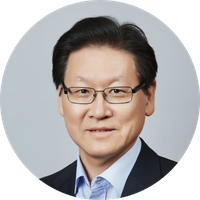
Bong-hyun Kim is an Advisor to the Ban Ki-moon Foundation for a Better Future and former Ambassador of the Republic of Korea to Australia. From 2018 to 2020, he served as the sixth president of the Jeju Peace Institute.
Kim's previous positions include Deputy Minister for Multilateral and Global Affairs, Minister of the Ministry of Foreign Affairs and Trade (MOFAT); Ambassador and Deputy Permanent Representative of the Korean Permanent Mission to the United Nations; Director-General of the Overseas Koreans and Consular Affairs Bureau; and Advisor to Mr. Ban Ki-moon, Minister of MOFAT.
In 2007, the President of South Korea honored Kim with the Order of Service Merit in recognition of his dedication to his work and achievements during his tenure as the Director-General of the United Nations Division, MOFAT.
KIM Sook
Executive Director of the Ban Ki-moon Foundation for a Better Future and former Ambassador and Permanent Representative of the Republic of Korea to the United Nations
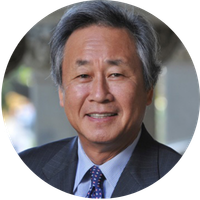
A specialist in Korea-US relations, inter-Korean relations, and the North Korean nuclear issue, Kim Sook spent more than 35 years in Korea’s foreign and intelligence services.
As permanent representative from 2011 to 2013, Kim led Korea’s successful campaign for a non-permanent seat on the UN Security Council for 2013-14. As Council President in February 2013, he oversaw its response to North Korea’s ballistic missile launch and third nuclear test. In 2012, he also co-chaired the bureau of the preparatory process for the UN Conference on Sustainable Development (Rio+20) and served as president of the UN Women Executive Board. Earlier, he was first deputy director of Korea’s National Intelligence Service (2009). Before that, he served as Special Representative for Korean Peninsula Peace and Security Affairs at the Ministry of Foreign Affairs and Trade, and in 2008 he led Korea’s delegation to the Six-Party Talks. Since joining the diplomatic service in 1978, he has held postings in Washington, New York, New Delhi, San Francisco, and Toronto.
Kim was a visiting fellow at Stanford’s Shorenstein Asia-Pacific Research Center in 2014-15. He is a graduate of Seoul National University.
Seok Hui Lim
Lead for International Affairs, Temasek Trust

Seok Hui currently leads international engagement across the Temasek Trust ecosystem, deepening partnerships with multilateral organisations and advancing collaboration and innovative financing across thematic priorities, including the ASEAN Power grid and the clean energy transition. She previously served as founding CEO of the Philanthropy Asia Alliance, a Temasek Trust collaborative philanthropy initiative advancing solutions to global environmental and social challenges in Asia.
Before joining Temasek Trust, she was CEO of the Singapore International Arbitration Centre. For part of her tenure at SIAC, she concurrently served as founding CEO of the Singapore International Mediation Centre.
She began her career as a corporate, mergers and acquisitions, and securities lawyer in Singapore and Hong Kong, and later moved in-house as General Counsel. She is a graduate of the London School of Economics, qualified as a barrister, and is admitted as a solicitor in Singapore, Hong Kong SAR, and England and Wales.
MAGO Nagasaka
Contemporary Artist, Representative Director of MAGO CREATION, CEO of MAGO MOTORS, and Global Affiliate Visiting Scholar of the Walter H. Shorenstein Asia-Pacific Research Center, Stanford University
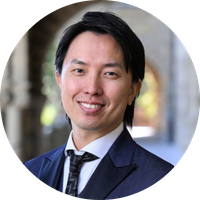
Shingo “Mago” Nagasaka, CEO of MAGO MOTORS and Representative Director of MAGO CREATION, is a Japanese contemporary artist and social entrepreneur. Through his concept of "Sustainable Capitalism", he transforms discarded materials, including e-waste from Ghana, into work while reinvesting proceeds into social and environmental initiatives. His work bridges art, business, and sustainability, aiming to create a more sustainable and inclusive future.
Nagasaka is a 2026-27 global affiliate visiting scholar at Stanford University's Walter H. Shorenstein Asia-Pacific Research Center.
Kee-Yung Nam
Senior Advisor of Nuclear Energy and Energy Sector Strategy and former Principal Energy Economist of the Energy Sector Office, Asian Development Bank
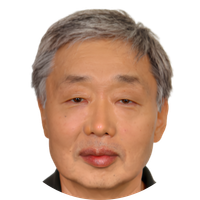
Dr. Kee-Yung Nam conceptualizes the development of energy sector strategies and policies and advises on the formulation of the energy sector lending and non-lending pipeline of projects. He is also responsible for ADB’s Energy Sector Trust Funds and undertakes analysis and assessment of key energy sector issues, particularly in clean energy technologies.
Previously, he was Principal Economist in the Economic Research and Regional Cooperation Department, where he provided contributions in analytical research and technical advice on multiple disciplines, including power sector development and reforms, renewable energy, fossil fuel subsidies, transport, impact evaluation, country diagnostic studies, and issues related to economic analysis of investment projects, particularly in the energy, infrastructure, and environment sectors.
Before joining ADB, he worked in the International Atomic Energy Agency (IAEA), the International Institute for Applied Systems Analysis (IIASA), and the United Nations Industrial Development Organization (UNIDO).
Dionisius Narjoko
Senior Economist, Economic Research Institute for ASEAN and East Asia
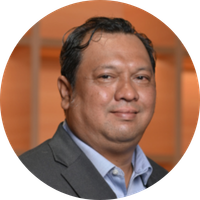
Dionisius Narjoko is a Senior Economist at the Economic Research Institute for ASEAN and East Asia (ERIA). He received his PhD in economics from the Australian National University. His dissertation was awarded the Ann Bates Postgraduate Prize for Indonesian Studies 2006. His research covers industrialization in Indonesia and Southeast Asia, economic integration in ASEAN and East Asia (focusing on the ASEAN Economic Community (AEC) Blueprint and regional economic architecture), and issues in economic development such as small and medium enterprises and the interrelationship between human capital and economic growth.
As part of his role at ERIA, Narjoko provides evidence-based policy recommendations to several ASEAN Member States on AEC and regional integration. He is also active in “second-track” policy discussions relevant to his previous affiliation with the Jakarta-based think tank Centre for Strategic and International Studies. Narjoko also once taught at the Faculty of Economics, University of Indonesia. He has co-authored and co-edited books and published book chapters, policy papers, and articles in peer-reviewed journals. He also serves as Associate Editor of Asian Economic Journal and Jurnal Ekonomi Pembangunan Indonesia.
Jooyoung Park
Associate Professor, Department of Civil, Urban, and Environmental Engineering, Seoul National University
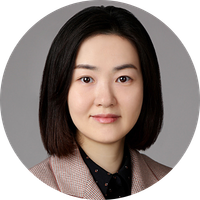
Jooyoung Park specializes in industrial ecology and sustainable engineering. Her research applies material flow analysis and life cycle assessment to circular economy and net-zero transitions, covering buildings, plastics, timber, photovoltaics, and batteries.
She has served on advisory committees of the Ministry of Environment, the Seoul Metropolitan Government, and the Korea Forest Service, and is a member of the Young Korean Academy of Science and Technology (YKAST) and an Associate Member of the National Academy of Engineering of Korea (NAEK). Before joining SNU, she held faculty positions at Korea University and Universidad de los Andes, following her Ph.D. in Environmental Studies from Yale University.
Reza Rahmaditio
Analyst, Energy Shift Institute
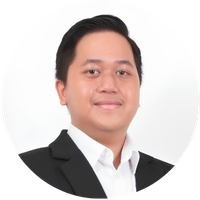
Reza Rahmaditio brings expertise in sustainability and policy to the transition minerals sector. He previously worked at the World Resources Institute, where he led the development of a decarbonization roadmap for Indonesia’s nickel industry and an equivalency benchmark on ESG standards for the minerals sector.
He works at the intersection of engineering and economics to help heavy industries develop manageable transition pathways towards sustainability. His experience spans low-carbon strategy, ESG performance, and policy analysis across mining and mineral value chains.
Reza applies a systems approach to unpack complex sustainability challenges and translate them into clear, practical options for decision-makers. He combines this analytical lens with strong communication and facilitation skills, helping diverse mining and policy stakeholders work together on effective sustainability strategies.
Sudirman Said
Former Minister of Energy and Mineral Resources of the Republic of Indonesia
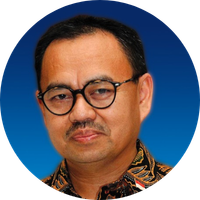
Sudirman Said is a former Minister of Energy and Mineral Resources of Indonesia. He served in President Joko Widodo’s Working Cabinet from October 2014 to July 2016.
Before joining the cabinet, Sudirman was president director of the state-owned defense manufacturer PT Pindad in 2014. Before that, he was vice director of the mining contractor PT Petrosea, part of the Indika Energy Group. Widely known as an anti-corruption figure, he co-founded the Indonesian Transparency Society (Masyarakat Transparansi Indonesia), which pushes for greater government transparency.
Sudirman holds a bachelor’s degree in accounting from the Indonesian State College of Accountancy (STAN) and an MBA from George Washington University.
Kiyoteru Tsutsui
Henri H. and Tomoye Takahashi Professor of Japanese Studies, Director of the Shorenstein Asia Pacific Research Center (APARC), Director of the Japan Program, Co-Director of the Southeast Asia Program, Senior Fellow of the Freeman Spogli Institute for International Studies, Co-Director of the Center for Human Rights and International Justice, Executive Director of the Inter-University Center for Japanese Language Studies (IUC), and Professor of Sociology, Stanford University
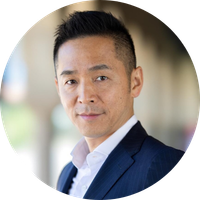
Kiyoteru Tsutsui’s research on the globalization of human rights and its impact on local politics has appeared in American Sociological Review, American Journal of Sociology, American Political Science Review, Social Forces, Social Problems, Journal of Peace Research, Journal of Conflict Resolution, and other social science journals.
His book publications include Rights Make Might: Global Human Rights and Minority Social Movements in Japan (Oxford University Press 2018), which received three awards from the American Sociological Association (Distinguished Contribution to Scholarship Book Award from the Section on Political Sociology, Gordon Hirabayashi Human Rights Book Award from the Section on Sociology of Human Rights, and the Most Outstanding Asia/Transnational Book Award from the Section on Asia and Asian America), and Human Rights and the State: The Power of the Ideal and the Reality of International Politics (人権と国家:理念の力と国際政治の現実) (Iwanami Shoten 2022), which received the 43rd Ishibashi Tanzan Book Award and the 44th Suntory Prize for Social Sciences and Humanities.
Priyantha Wijayatunga
Deputy Director General of Sectors Department 1 (Energy and Transport Sectors), Asian Development Bank
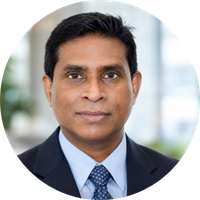
Priyantha Wijayatunga is Deputy Director General of Sectors Department 1 (Energy and Transport Sectors) at the Asian Development Bank. Previously, he served as the Senior Director, Energy; Chief of Energy Sector Group; and Director, South Asia Energy Division. Prior to ADB, he served as the founding Director General of the Public Utilities Commission of Sri Lanka, a Senior Professor of Electrical Engineering, and founding Dean of the Faculty of Information Technology at the University of Moratuwa. He has published widely in the fields of energy policy and regulation, energy planning, and clean energy development. He is currently an adjunct Professor of Electrical Engineering at the University of Moratuwa. He oversees ADB’s energy sector portfolio of about $18 billion and an annual lending program of about $3 billion.
Wijayatunga holds a PhD in power systems economics from Imperial College London. He was Chairman of the South Asia Forum for Infrastructure Regulators and a member of the Board of Directors of the Ceylon Electricity Board and Sri Lanka Sustainable Energy Authority. He was also an Advisory Board member of the Melbourne Energy Institute at the University of Melbourne.
He is a Fellow of the Institution of Engineers Sri Lanka, a Senior Member of the Institute of Electrical and Electronic Engineers, a Chartered Electrical Engineer and a Member of the Institute of Engineering Technology, UK.
Gita Wirjawan
Former Minister of Trade of the Republic of Indonesia and Visiting Scholar at the Precourt Institute for Energy, Stanford University
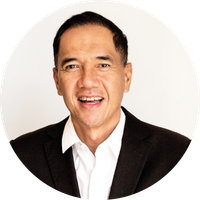
Gita Wirjawan is a former Minister of Trade of the Republic of Indonesia and Visiting Scholar at the Precourt Institute for Energy at Stanford University. He is the chairman and founder of Ancora Group and Ancora Foundation, as well as the host of the podcast "Endgame." Wirjawan is also the founding partner of Ikhlas Capital. He was a Visiting Scholar at the Walter H. Shorenstein Asia-Pacific Research Center during the 2022-23 and 2023-2024 academic years. While at APARC, he researched the directionality of nation-building in Southeast Asia and sustainability and sustainable development in the U.S. and Southeast Asia.
Yasmin Wirjawan
Fellow at Stanford University’s Center for Human Rights and International Justice and CEO of Ancora Foundation
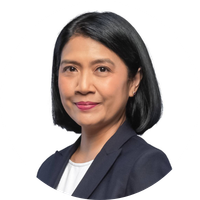
Yasmin Wirjawan is a Fellow at Stanford University’s Center for Human Rights and International Justice and CEO of Ancora Foundation. She brings over 20 years of experience serving on corporate and nonprofit boards across diverse industries. She serves as an Independent Commissioner and ESG Committee Chair of TBS Energi Utama, Advisor to the Ancora group and Sweef Capital, and leads the Ancora Foundation. Her research examines economic participation and climate change resilience among women and youth in Southeast Asia through inclusive digital solutions and sustainable finance. She was a visiting scholar at the Walter H. Shorenstein Asia-Pacific Research Center from 2024 to 2026.
Wirjawan received a Doctor of Education in leadership and innovation and an MS in management and systems from New York University. She also earned an MS in finance from Brandeis University and a BA in international business from The American University of Paris.
Orlando Woods
Associate Provost (Research Strategy), Director of the SMU Urban Institute, and Professor of Geography, Singapore Management University

Professor Orlando Woods' interdisciplinary research agenda spans social, cultural, and political geography; urban studies; new media and communications; and critical infrastructure studies. Empirically, his work focuses on South and Southeast Asia. Since 2023, he has been listed in Stanford University’s World Top 2% of Scientists.
He holds BA (First Class Honours) and PhD degrees in Geography from University College London and the National University of Singapore, respectively.
Abraham Wu
Chief Technology Officer and Co-Founder, Alpha GEO

Dr. Wu’s work explores how artificial intelligence is reshaping the mechanisms through which urban value is produced, captured, and spatially distributed. He is the founding CTO of AlphaGeo, a company that applies AI and geospatial analytics to climate resilience and investment, where he developed climate and geospatial intelligence systems used by institutional investors including EQT, Oaktree Capital Management, Abu Dhabi Investment Authority, and the Teacher Retirement System of Texas. He is also an adjunct lecturer at the National University of Singapore (NUS), where he teaches spatial data science and GIS.
Before joining AlphaGeo, Wu was head of data science at FutureMap. As a researcher at the NUS Urban Analytics Lab, he worked on large-scale 3D city modeling and developed Roofpedia, an automated method for mapping solar and green roofs in cities worldwide.
Wu holds a PhD, bachelor’s, and master’s degrees in architecture and urban studies from the National University of Singapore. His research on AI, climate risk, and urban systems has been published in journals including Nature Communications and Nature Sustainability. At the center of his work is a broader question: how should cities and real assets be valued in the age of AI?
Tong Wu
Senior Scientist and Associate Director of the NatCap China Program, Natural Capital Alliance, Stanford University
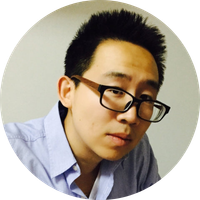
A native of Inner Mongolia who grew up in Arizona, Tong Wu's research centers on the challenges and prospects of sustainable development in China. Topics he has worked on include the mainstreaming of ecosystem services in management and planning, the role of nature in improving public health outcomes, and strategies for climate change mitigation and adaptation. Currently, a major research focus is the development of gross ecosystem product as a policy instrument for aligning environmental and socio-economic imperatives.
Wu received a bachelor’s degree from the University of California, Berkeley, a master’s degree from Northern Arizona University, and a PhD from Arizona State University.
Dicky Yordan
President Director and CEO of PT TBS Energi Utama Tbk and Director of Cora Environment
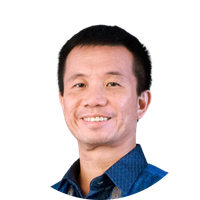
As CEO of TBS, Dicky Yordan plays a central role in steering strategic direction, business transformation, and growth into sustainable and future-oriented sectors. Since 2021, he has spearheaded the company’s strategic shift from fossil-based operations toward a diversified portfolio anchored in sustainable solutions: waste management, renewable energy, and electric mobility.
Yordan began his career as Senior Consultant at PAC Project Advisor in Ann Arbor, Michigan. He then served as Associate at Byun & Co., Singapore, followed by Associate roles at PT Anugra Capital Indonesia and in the Investment Banking Division of Merrill Lynch in Jakarta. He held increasingly senior positions at Deutsche Bank in Indonesia and Singapore, with his last role there as Director and Co-Head Global Capital Markets. He then served as Managing Director, Joint Head Investment Banking and Financing at Nomura Singapore Limited. In the energy sector, he later assumed several leadership roles within the TBS Group, including Director of PT TBS Energi Utama Tbk, Director of PT Karya Baru TBS, Commissioner of PT Toba Bumi Energi, and President Commissioner of PT Adimitra Baratama Nusantara.
Yordan earned a BS in civil and environmental engineering from the University of Michigan, Ann Arbor, and an MS in financial engineering from Columbia University.
ZANDANSHATAR Gombojav
The 34th Prime Minister of Mongolia
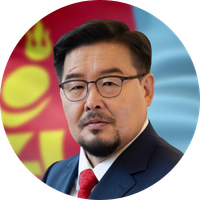
H.E. Gombojav Zandanshatar, the 34th Prime Minister of Mongolia, has built a distinguished career in public service, finance, and democratic governance spanning over three decades.
He holds a B.Sc. in Finance and Economics from the State University of Natural Resources and Law, and a Master’s Degree in Economics. He was a Visiting Scholar at Stanford University’s Center on Democracy, Development, and the Rule of Law (2013–2015), where he deepened his engagement with deliberative democracy and institutional reforms.
H.E. Gombojav Zandanshatar was elected four times to the State Great Hural (Parliament) of Mongolia in 2004, 2008, 2016, and 2020. He held several key national leadership roles, including Minister of Foreign Affairs (2009–2012), Secretary General of the MPP (2012-2013), and Minister and Chief Cabinet Secretary of the Government of Mongolia (2017-2019). H.E. Zandanshatar served two terms as Chairman of the State Great Hural (Parliament) of Mongolia (2019-2020 and 2020-2024). He was instrumental in increasing transparency, public engagement, strengthening parliamentary checks and balances, and constitutional amendments. He served as the Chief of Staff to the Office of the President of Mongolia in 2025 and as the 34th Prime Minister of Mongolia.
Mengye Zhu
Senior Scientist, Natural Capital Alliance, Stanford University

Mengye Zhu is a Senior Scientist with the Natural Capital Alliance and a Social Science Research Scholar at Stanford Doerr School of Sustainability, Stanford University. She specializes in climate and environmental policy research, focusing on key climate discourses, including energy transitions and methane mitigation, with particular attention to the roles of “keystone actors”, such as state-owned enterprises. Her work also combines policy analysis with sectoral technical assessments, including leading the development of Global Methane Abatement Solutions Tracker (G-MAST). Zhu brings extensive policy engagement experience, supporting high-level climate and environmental dialogues and advancing international collaboration. Before joining Stanford, Zhu worked as an Assistant Research Professor and China Program Co-Director at the Center for Global Sustainability, University of Maryland.
For inquiries about the Trans-Pacific Sustainability Dialogue, contact Cheryll Alipio, Shorenstein APARC’s Associate Director for Program and Policy: calipio@stanford.edu.
For press inquiries, contact Noa Ronkin, Shorenstein APARC’s Associate Director for Communications and External Relations: noa.ronkin@stanford.edu.