Aging
Authors
News Type
News
Date
Paragraphs

Friction between machines and humans has existed since the beginning of the automated industry and machine-assisted work. It’s a trend that fuels the imaginations of pop culture and political debates alike as people voice worries about the roles increasingly sophisticated robots and technology are taking in society and workplaces.

But is this concern warranted? According to APARC’s Yong Suk Lee, the deputy director of the Korea Program and the SK Center Fellow at FSI, and Karen Eggleston, the deputy director of APARC and the director of the Asia Health Policy Program, perhaps not. A recent article published by the Stanford Institute for Human-Centered Artificial Intelligence (HAI) highlights Lee and Eggleston’s ongoing research into innovative uses of technology across industries, particularly in healthcare. Their findings indicate that the adoption of robotics ultimately does more to augment and adjust, rather than outrightly replace, the role of human labor in the workplace.

What will ultimately matter is whether there will be entirely new occupations, what economists call the ‘reinstatement effect.’ Simply saying that robots lead to permanent job reductions isn’t the end of the story.
Yong Suk Lee
Deputy Director of the Korea Program

[Subscribe to our newsletters to stay up-to-date with the latest from our researchers.]

Lee studies the impacts of AI and robotics across multiple industries, including manufacturing, retail banking, and nursing homes. A trend he sees across most sectors following the adoption of robotics or AI is a positive increase in productivity. This has impacts for both the short-term and long-term relationships between humans and their robot coworkers, or “co-bots.” While it is true that the introduction of automation and robots initially replaces a significant number of workers in sectors such as manufacturing, over time, that impact reverses and there are job gains in many cases.

“The impact of robots often evolves over time from replacing human workers to augmenting them,” Lee explains, “and productivity gains [can] create opportunities for existing and new occupations.” This happens in a variety of ways. In some cases, the use of robotics and automation in one area frees up time, labor, and resources to employ more people in other, higher-skilled areas. In another situation, increases in productivity brought on by automation allow for greater company growth than would not have been possible otherwise. This, in turn, spurs the need to expand the workforce.

Alternatively, supplementing the labor of a small workforce with robotics and AI can also spread limited resources much farther. Lee and Eggleston’s studies of the impacts of robots on nursing home care in Japan repeatedly show that the use of robots positively increases the quality of service that oftentimes-understaffed care facilities can provide to the elderly and infirm. This can range from monitoring the physical condition of patients and reliably delivering medications to providing mental and emotional support to elderly residents through the use of robotic humanoid companions. Such innovative use of tech fills critical gaps that a human-only workforce would struggle to meet in a staffing shortage like Japan faces.

Looking to the future, Lee shares this perspective: “When the automobile was invented, we suddenly had a new demand for drivers. Now we’ll have to see if [automation] creates demand for other new occupations.” It’s an area of innovation and research he, Dr. Eggleston, and other Stanford researchers will be closely watching with their human eyes in the years to come.

Read the original article by Stanford HAI here >>

Read More

A communications robot named Pepper by Softbank
Q&As

Robots May Be the Right Prescription for Struggling Nursing Homes

Karen Eggleston and Yong Suk Lee speak to the Oliver Wyman Forum on how robotics and advancing technologies are helping staff in Japanese nursing homes provide better and safer care to their patients.
Robots May Be the Right Prescription for Struggling Nursing Homes
Cover image of the book "Healthy Aging in Asia", showing a smiling elderly Chinese woman with a cane standing in a small village.
News

New Book Highlights Policy Initiatives and Economic Research on Healthy Longevity Across Asia

Asia health policy expert Karen Eggleston’s new volume, ‘Healthy Aging in Asia,’ examines how diverse Asian economies – from Singapore and Hong Kong to Japan, India, and China – are preparing for older population age structures and transforming health systems to support patients who will live with chronic disease for decades.
New Book Highlights Policy Initiatives and Economic Research on Healthy Longevity Across Asia
Encina Courtyard
News

Call for Stanford Student Applications: APARC Hiring 2020-21 Research Assistants

To support Stanford students working in the area of contemporary Asia, the Shorenstein Asia-Pacific Center is offering research assistant positions for the fall, winter, and spring quarters of the 2020-21 academic year.
Call for Stanford Student Applications: APARC Hiring 2020-21 Research Assistants
Hero Image
A man with interacts with 'Emiew,' a humanoid robot.
A man with interacts with 'Emiew,' a humanoid robot made by Hitachi. | Koichi Kamoshida, Getty Images
All News button
1
Subtitle

Yong Suk Lee and Karen Eggleston’s ongoing research into the impact of robotics and AI in different industries indicates that integrating tech into labor markets adjusts, but doesn’t replace, the long-term roles of humans and robots.

Date Label
Authors
News Type
News
Date
Paragraphs

The world’s population is aging at a faster rate and in larger cohorts than ever before. In countries like Japan that have low fertility rates and high life expectancy, population aging is a risk to social sustainability. Developing policies and healthcare infrastructure to support aging populations is now critical to the social, economic, and developmental wellbeing of all nations. As the COVID-19 pandemic has repeatedly shown, accurate projections of future population health status are crucial for designing sustainable healthcare services and social security systems.

Such projections necessitate models that incorporate the diverse and dynamic associations between health, economic, and social conditions among older people. However, the currently available models – known as multistate transition microsimulation models – require high-quality panel data for calibration and meaningful estimates. Now a group of researchers, including APARC Deputy Director and Asia Health Policy Program Director Karen Eggleston, has developed an alternative method that relaxes this data requirement.

In a newly published paper in Health Economics, Eggleston and her colleagues describe their study that proposes a novel approach using more readily-available data in many countries, thus promising more accurate projections of the future health and functional status of elderly and aging populations. This alternative method uses cross‐sectional representative surveys to estimate multistate‐transition contingency tables applied to Japan's population. When combined with estimated comorbidity prevalence and death record information, this method can determine the transition probabilities of health statuses among aging cohorts.

In comparing the results of their projections against a control, Eggleston and her colleagues show that traditional static models do not always accurately forecast the prevalence of some comorbid conditions such as cancer, heart disease, and stroke. While the sample sets used to test the new methodology originate in Japan, the proposed multistate transition contingency table method has important applications for aging societies worldwide. As rapid population aging becomes a global trend, the ability to produce robust forecasts of population health and functional status to guide policy is a universal need.

Read the full paper in Health Economics.

Learn more about Eggleston’s research projects >>

Read More

A communications robot named Pepper by Softbank
Q&As

Robots May Be the Right Prescription for Struggling Nursing Homes

Karen Eggleston and Yong Suk Lee speak to the Oliver Wyman Forum on how robotics and advancing technologies are helping staff in Japanese nursing homes provide better and safer care to their patients.
Robots May Be the Right Prescription for Struggling Nursing Homes
Portrait of Young Kyung Do, Winner of the 2020 Rothman Epidemiology Prize
News

Asia Health Policy Program Alum Wins Rothman Epidemiology Prize

Dr. Young Kyung Do, an expert in health policy and management at the Seoul National University College of Healthy Policy and the inaugural postdoctoral fellow in Asia health policy at APARC, has been awarded the 2020 prize for his outstanding publication in the journal Epidemiology last year.
Asia Health Policy Program Alum Wins Rothman Epidemiology Prize
Cover image of the book "Healthy Aging in Asia", showing a smiling elderly Chinese woman with a cane standing in a small village.
News

New Book Highlights Policy Initiatives and Economic Research on Healthy Longevity Across Asia

Asia health policy expert Karen Eggleston’s new volume, ‘Healthy Aging in Asia,’ examines how diverse Asian economies – from Singapore and Hong Kong to Japan, India, and China – are preparing for older population age structures and transforming health systems to support patients who will live with chronic disease for decades.
New Book Highlights Policy Initiatives and Economic Research on Healthy Longevity Across Asia
Hero Image
An elderly individual travels in a cart up a street.
An elderly individual travels in a cart up a street. | Galen Crout, Unsplash
All News button
1
Subtitle

Asia Health Policy Director Karen Eggleston and her colleagues unveil a multistate transition microsimulation model that produces rigorous projections of the health and functional status of older people from widely available datasets.

Paragraphs

Accurate future projections of population health are imperative to plan for the future healthcare needs of a rapidly aging population. Multistate‐transition microsimulation models, such as the U.S. Future Elderly Model, address this need but require high‐quality panel data for calibration. We develop an alternative method that relaxes this data requirement, using repeated cross‐sectional representative surveys to estimate multistate‐transition contingency tables applied to Japan's population. We calculate the birth cohort sex‐specific prevalence of comorbidities using five waves of the governmental health surveys. Combining estimated comorbidity prevalence with death record information, we determine the transition probabilities of health statuses.

We then construct a virtual Japanese population aged 60 and older as of 2013 and perform a microsimulation to project disease distributions to 2046. Our estimates replicate governmental projections of population pyramids and match the actual prevalence trends of comorbidities and the disease incidence rates reported in epidemiological studies in the past decade. Our future projections of cardiovascular diseases indicate lower prevalence than expected from static models, reflecting recent declining trends in disease incidence and fatality.

All Publications button
1
Publication Type
Journal Articles
Publication Date
Journal Publisher
Health Economics
Authors
Karen Eggleston
News Type
Q&As
Date
Paragraphs

This interview was originally produced by the Oliver Wyman Forum.

Coronavirus has dramatically increased the use of technology as governments, healthcare providers, and businesses tackle the pandemic and its devastation. But even before the crisis, Japan, a country long at the forefront of robot production and usage, had begun to use this technology in many of its nursing homes.

About 60 percent of the country’s nursing facilities now use robots. The proliferation of machines has had a relatively minor impact on turnover or wages of caregivers because of strong demand for care, an aging working population, and government subsidies for robot implementation, according to research by Karen Eggleston, the deputy director of the Shorenstein Asia-Pacific Research Center and director of the Asia Health Policy Program (AHPP), Yong Suk Lee, a center fellow and the deputy director of the Korea Program, and Toshi Iizuka, professor at the University of Tokyo and former visiting scholar with AHPP. Robot-adopting nursing homes, the researchers found, had between eight to 11 percent more staff than those who didn't adopt robots.

Caregiving is a physically demanding task. Staff frequently lift residents in and out of bed, and many suffer from back pain. Many of the robots deployed in Japan either help caregivers perform physical tasks or facilitate movement by the residents themselves.

The research couldn’t be timelier. Nursing homes have taken a heavy toll from the coronavirus. The disease has claimed the lives of more than 28,000 residents and workers of care facilities in the United States – approximately 35 percent of all deaths in the nation as of May 11. By contrast, Japan’s overall death toll stands at a little over 900 in early June.

Professors Eggleston and Lee discussed the implications of their research in a Zoom interview with Partha Bose, a partner at Oliver Wyman and a leader of the Oliver Wyman Forum, as well as Jilian Mincer, managing editor of the Oliver Wyman Forum, and Dan Kleinman, the Forum’s digital editor.

[Like what you're reading? Sign up for our newsletters to get content like this delivered directly to your inbox.]

From a labor economics point of view, Japan has been struggling with staffing in these care facilities. What made it much more acceptable for robots to be used in their situation versus other sectors?

Karen Eggleston: Japan has an extreme demography that it’s dealing with. The demand for long-term care is going up quite a bit while the overall population is declining. Although they're relaxing some immigration, there are issues with that. Some of the policy goals were to support robotics and to understand how it complements or substitutes for specific tasks in long-term care — to bring down back pain among care workers, for example — and to explicitly set a target for percentage of healthcare providers and long-term care clients who say it's acceptable to have a robot involved in their care.

They went into it well aware that robots weren't going to completely push out the workforce, but it's all a question of what type of tasks they can be involved with and how they can get an early read on that and start developing appropriate robots and re-engineering the care processes to meet that surge in demand.

What kinds of tasks are robots being used for in Japan right now?

Yong Suk Lee: There are these wearable transfer-aid robots that can actually help care workers lift persons and move around. There are similar types of robots that are non-wearable. And there are robots that directly assist the elderly in their care: They can use these to move around, and related to that, bathing activities, going to the bathroom, and so on.

The main type of robots are monitoring robots. They’re basically a camera system. They signal to the nurses or caregivers in an aid station if there seems to be abnormal movement so that they can actually go there — especially during the night when there's less staffing to actually go and check how the residents are doing. Those are the highest in terms of rate of adoption. And then there are those cute communication types of robots to help patients with dementia communicate with their families and caregivers.
 
What sort of facilities are using these robots? Do they tend to be urban facilities, or can they be anywhere in the country, like rural areas?

Lee: Based on preliminary results, adoption is higher in urban areas, but it's not significantly different. In China, it could differ drastically because there's a huge urban-rural divide in China of public health systems or public service in general. Robots are capital intensive. In South Korea, there are private homes that are wealthier and those could adopt new technologies earlier, but still, adoption in general is not widespread due to sufficient immigrant labor providing care. There could be an urban-rural divide for sure. Because of government subsidies in Japan, it equalizes distribution across regions.
 
Eggleston: We find more part-time or irregular nurses in urban areas. That may seem counterintuitive, but when you think about it, having that concentration of human capital in urban areas might facilitate that kind of part-time work and so on. There are differences we can see in our data between urban and rural homes, but we don't see large differences in terms of robot adoption and use.

Are there kinds of conditions that robots are better suited for than others?

Lee: In general, most robots are related to mobility issues. The biggest consequences of the elderly staying in homes are pressure ulcers on their skin because of their extended time in bed and low levels of mobility. Robots could provide a major contribution if they help residents move about and reduce pressure ulcers.

Communication robots are helpful for patients with dementia. The adoption of those isn't high compared to monitoring robots, but I think it's becoming more accepted and especially helpful for certain types of patients.
 
Do you think robots will be helpful for medical care?

Eggleston: That's the hope. For example, night monitoring reduces the probability of a severe fall which requires hospitalization and so on. There are contentious issues with nursing homes about physical restraints for patients, which are not allowed. And so, adding robots might deal with some of the outcomes. Both the producers and users of robots are hoping this will have a significant impact on the quality of care. 

As you look at how the coronavirus has affected long-term care facilities, do you wonder what the outcomes might've been had some of these facilities had robots?

Lee: Yes. What our findings indicate is that robots are not replacing workers in Japan. They're allowing firms to adopt more nurses — the skilled type of caregivers, which is an important finding directly related to the quality of care. Allowing critical personnel to actually focus more on patients. If there were certain technologies in place, caregivers could have spent their time more efficiently. I believe that's going to be a discussion going forward in the US and in many other countries that have suffered drastically. 

Eggleston: Particularly the communication and monitoring robots would help to some extent. They can save caregivers from having to go room-to-room and enable communication between people at the facility, and also with their households.

We do know that there's a potential there, and it might affect future adoption in nursing homes in the US and elsewhere. But given the huge financial hit the industry has taken as a whole, it might be a while before that plays out.

Given the coronavirus’s prevalence in nursing homes, people may be wary of taking jobs there. Can these robots be used in a recruiting capacity for nursing homes?

Lee: Certified nursing assistants in the US are not well-paid and it’s a physically demanding job. Now there's an extra concern of, "What will happen to me when I work here?" A lot of nursing homes had enormous difficulty recruiting people. They were paying extra for nurse aids, but they weren't able to recruit given the situation.

Potentially, nursing home facilities that have the capacity to adopt robots may be able to advertise this as not only being able to improve the quality of care for the residents but providing better work conditions for the caregivers. What we're finding in our research is those that adopt these robots tend to have better management practices.

What has surprised you most in your research?

Lee: We didn't find that robots replaced care workers. They’re being used to supplement the workers and maybe have better outcomes in quality of care. This is having an overall net positive effect both on jobs and productivity.

Read More

Cover image of the book "Healthy Aging in Asia", showing a smiling elderly Chinese woman with a cane standing in a small village.
News

New Book Highlights Policy Initiatives and Economic Research on Healthy Longevity Across Asia

Asia health policy expert Karen Eggleston’s new volume, ‘Healthy Aging in Asia,’ examines how diverse Asian economies – from Singapore and Hong Kong to Japan, India, and China – are preparing for older population age structures and transforming health systems to support patients who will live with chronic disease for decades.
New Book Highlights Policy Initiatives and Economic Research on Healthy Longevity Across Asia
Michael McFaul, Xueguang Zhou, Karen Eggleston, Gi-Wook Shin, Don Emmerson, and Yong Suk Lee
News

FSI Hosts APARC Panel on COVID-19 Impacts in Asia

Scholars from each of APARC's programs offer insights on policy responses to COVID-19 throughout Asia.
FSI Hosts APARC Panel on COVID-19 Impacts in Asia
Hero Image
A robot names Pepper
Courtesy of Alex Knight, Unsplash
All News button
1
Subtitle

Karen Eggleston and Yong Suk Lee speak to the Oliver Wyman Forum on how robotics and advancing technologies are helping staff in Japanese nursing homes provide better and safer care to their patients.

Paragraphs
Cover of Healthy Aging in Asia that shows an elderly woman in a Chinese village.
Life expectancy in Japan, South Korea, and much of urban China has now outpaced that of the United States and other high-income countries. With this triumph of longevity, however, comes a rise in the burden of noncommunicable diseases (NCDs) like diabetes and hypertension, reducing healthy life years for individuals in these aging populations, as well as challenging the healthcare systems they rely on for appropriate care.  
 
The challenges and disparities are even more pressing in low- and middle-income economies, such as rural China and India. Moreover, the COVID-19 pandemic has underscored the vulnerability to newly emerging pathogens of older adults suffering from NCDs, and the importance of building long-term, resilient health systems. 
 
What strategies have been tried to prevent NCDs—the primary cause of morbidity and mortality — as well as to screen for early detection, raise the quality of care, improve medication adherence, reduce unnecessary hospitalizations and increase “value for money” in health spending? 
 
Fourteen concise chapters cover multiple aspects of policy initiatives for healthy aging and economic research on chronic disease control in diverse health systems — from cities such as Singapore and Hong Kong to large economies such as Japan, India, and China. 
 

Desk, examination, or review copies can be requested through Stanford University Press.

All Publications button
1
Publication Type
Books
Publication Date
Authors
Karen Eggleston
Book Publisher
Shorenstein APARC
Authors
News Type
News
Date
Paragraphs

Southeast Asia, home to over 640 million people across 10 countries, is one of the world’s most dynamic and fastest growing regions. APARC just concluded the year 2019 with a Center delegation visit to two Southeast Asian capital cities, Hanoi and Bangkok, where we spent an engaging week with stakeholders in the academic, policy, business, and Stanford alumni communities.

Led by APARC Director Gi-Wook Shin, the delegation included APARC Deputy Director and Asia Health Policy Program Director Karen Eggleston, Southeast Asia Program Director Donald Emmerson, and APARC Associate Director for Communications and External Relations Noa Ronkin. Visiting Scholar Andrew Kim joined the delegation in Bangkok.

With a focus on health policy, our first day in Hanoi included a visit to Thai Nguyen University, a meeting with government representatives at the Vietnam Ministry of Health, and a seminar on healthy aging and innovation jointly with Hanoi Medical University.

Image
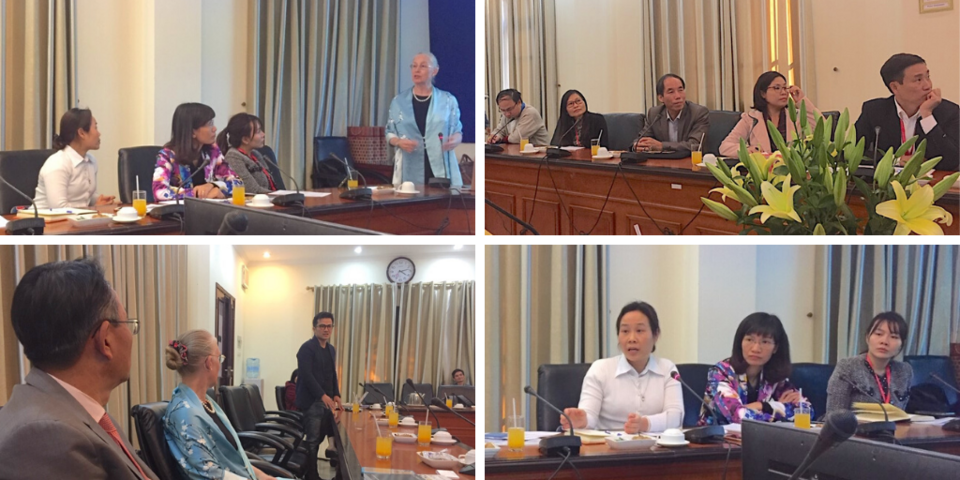
Collage of four images showing participants at a roundtable held at Hanoi Medical University with APARC delegation members

Karen Eggleston and participants at the roundtable held at Hanoi Medical University, December 9, 2019.

Throughout the day, Eggleston presented some of her collaborative research that is part of two projects involving international research teams: one that assesses public-private roles and institutional innovation for healthy aging and another that examines the economics of caring for patients with chronic diseases across diverse health systems in Asia and other parts of the world. We appreciated learning from our counterparts about the health care system and health care delivery in Vietnam.

Shifting focus to international relations and regional security, day 2 in Hanoi opened with a roundtable, “The Rise of the Indo-Pacific and Vietnam-U.S. Relations,” held jointly with the East Sea Institute (ESI) of the Diplomatic Academy of Vietnam (DAV). Following a welcome by ESI Director General Nguyen Hung Son, the program continued with remarks by Shin, Emmerson, ESI Deputy Director General To Anh Tuan, and Assistant Director General Do Thanh Hai.

Image
Participants at a roundtable held at the Diplomatic Academy of Vietnam with APARC delegation members

Roundtable at the Diplomatic Academy of Vietnam, December 10, 2019.

The long-ranging conversation with DAV members included issues such as the future of the international order in Asia; the U.S. withdrawal from multilateralism; the concern about a lack of U.S. engagement in Southeast Asia, sparked by President Trump’s absence from the November 2019 summit of the Association of Southeast Asian Nations (ASEAN) at a time when China is bolstering its influence in the region and when ASEAN hopes to set a code of conduct with China regarding disputed waters in the South China Sea; the priorities for Vietnam as it assumes the role of ASEAN chair in 2020; and the challenges for the Vietnam-U.S. bilateral relationship amid the changing strategic environment in Southeast Asia.

In the afternoon we were joined by members of the American Chamber of Commerce in Hanoi at an AmCham-hosted Lunch ‘n’ Learn session on Vietnam's challenges and opportunities amid the U.S.-China rivalry. The event featured Emmerson in conversation with AmCham Hanoi Executive Director Adam Sitkoff.

Image
Two men in conversation seated on stage and a man speaking at a podium

(Left) Donald Emmerson in conversation with Adam Sitkoff; (right) Gi-Wook Shin welcomes AmCham Hanoi members; December 10, 2019. 

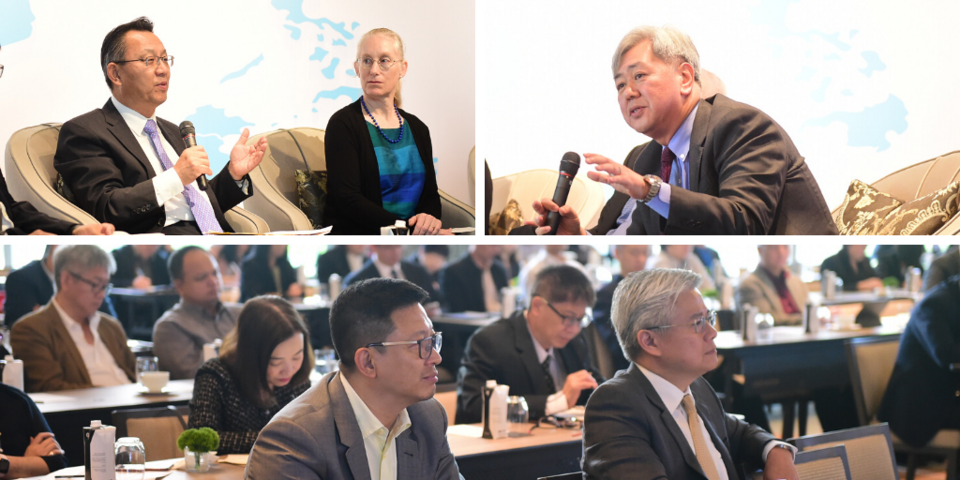
Moving to Bangkok, delegation members Shin, Eggleston, Emmerson, and Kim spoke on a panel for executives of the Charoen Pokphand Group (C.P. Group), one of Thailand’s largest private conglomerates, addressing some of the core issues that lie ahead for Southeast Asia in 2020 and beyond in the areas of geopolitics, innovation, and health.

Image
Participants at a panel discussion with APARC delegation hosted by the C.P. Group, Thailand

Top, from left to right: Gi-Wook Shin, Karen Eggleston, Andrew Kim; bottom: C.P. Group executive listening to the panel, December 12, 2019.

We also enjoyed a tour at True Digital Park, Thailand’s first startup and tech entrepreneur’s campus. Developed by the C.P. Group, True Digital Park aspires to be an open startup ecosystem that powers Thailand to become a global hub for digital innovation.

The following day, Shin and Emmerson participated in a public forum hosted by Chulalongkorn University’s Institute of Security and International Studies (ISIS Thailand), "Where Northeast Asia Meets Southeast Asia: The Great Powers, Global Disorder and Asia’s Future.” They were joined by ISIS Thailand Director Thitinan Pongsudhirak and Chulalongkorn University Faculty of Political Science Associate Dean for International Affairs and Graduate Studies Kasira Cheeppensook. The panel was moderated by Ms. Gwen Robinson, ISIS Thailand senior fellow and editor-at-large of the Nikkei Asian Review.

Image
Panelists and participants at a public forum held at Chulalongkorn University

ISIS Thailand forum participants and panelists, from left: Pngsukdhirak, Shin, Robinson, Emmerson, Cheeppensook; December 13, 2019.

As part of that discussion, Emmerson speculated that – driven by deepening Chinese economic and migrational involvement in Southeast Asia’s northern tier – Cambodia and Laos, less conceivably Myanmar, and still less conceivably Thailand could become incorporated de facto into an economically integrated “greater China” that could eventually reduce ASEAN to a more-or-less maritime membership in the region’s southern tier. Emmerson’s speculation was made in the context of his critique of ASEAN’s emphasis on its own “centrality” to the neglect of its lack of the proactivity that would serve as evidence of centrality and of a desire not to be rendered peripheral by the growing centrality-cum-proactivity of China. The event was covered by the Bangkok Post (although that report’s headline and quote of Emmerson are inaccurate, as neither the panel nor Emmerson predicted the “break-up of ASEAN.”)

Our delegation visit in Bangkok concluded with a buffet dinner reception and panel discussion jointly with the Stanford Club of Thailand.

Image
alumni event

Stanford and IvyPlus alumni listening to the panel, December 13, 2019.

Moderated by Mr. Suthichai Yoon, a veteran journalist and founder of digital media outlet Kafedam Group, the conversation focused on the changing geopolitics of Southeast Asia, innovation and health in the region, and the opportunities and challenges facing Thailand-U.S. relations. It was a pleasure to meet many new and old friends from the Stanford and IvyPlus alumni communities.

APARC would like to thank our partners and hosts in Hanoi and Bangkok for their hospitality, collaboration, and the stimulating discussions throughout our visit. We look forward to keeping in touch!

Hero Image
APARC delegation speaking to Stanford and IvyPlus alumni, Bangkok
All News button
1
Authors
News Type
News
Date
Paragraphs

The world is “graying” at an unprecedented rate. According to the UN’s World Population Prospects 2019, the number of persons over the age of 65 is growing the fastest and expected to more than double by 2050, then triple in another 50 years’ time.

Some Asian countries in particular, plagued by population aging, declining fertility, and gender imbalance, are facing a grim outlook for a demographic crisis. In Japan, one in five people is now 70 or older, birthrate has dropped to a historic level, and the population declined by more than a quarter of a million last year. Meanwhile, South Korea is aging more quickly than any other developed country: with seniors on the verge of making up 14% of the population, the country is on the cusp of becoming an “aged society.” The potential impact of population aging on the labor market and the fiscal pressures on the public systems of healthcare, pensions, and social protection schemes for older adults are some of the many problems that these and other countries must tackle.

Against this background, Shorenstein APARC recently held the third annual gathering of the Stanford Asia-Pacific Innovation project, a Center-led initiative that produces academic and policy-relevant research to promote innovation and entrepreneurship in East Asia. Held in Chuncheon, South Korea and organized jointly with Hallym University’s Institute for Communication Arts and Technology, this year’s conference focused on the intersection of aging, technological development, and innovation in the region.
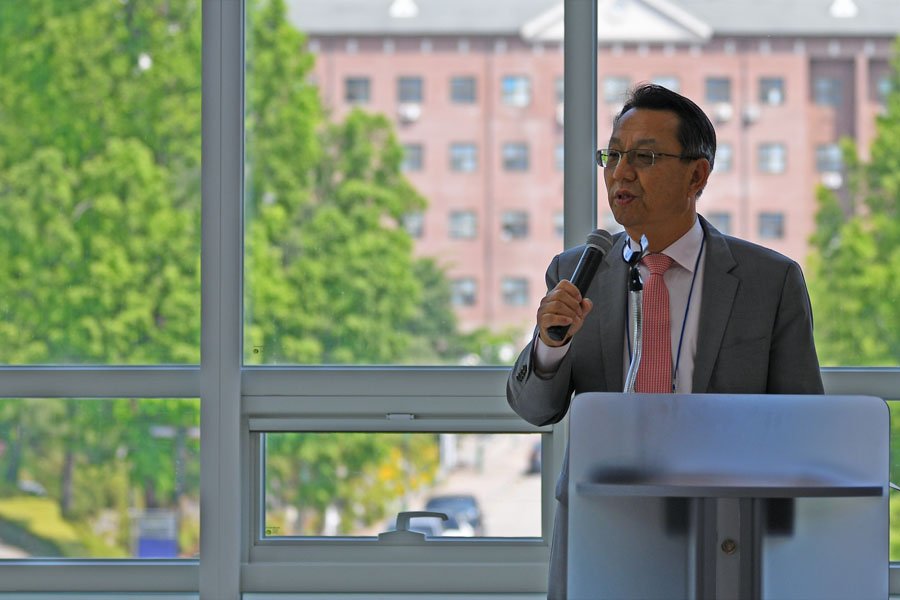
Gi-Wook Shin stans at a podium

(Gi-Wook Shin)

APARC Director Gi-Wook Shin opened the two-day session, introducing the conference’s themes. “What policies can promote innovation and entrepreneurship in aging populations?” Shin asked. “What opportunities do new technologies offer for addressing challenges posed by East Asia’s demographic shifts, and what are the threats involved in the adoption of these new technologies?”

Joon-Shik Park, vice president of the Office of Vision and Cooperation at Hallym University,  the conference host, noted that “East Asian countries are the most important testbeds on issues related to aging and innovation,” and that sharing meaningful research and implications from the region “will provide invaluable insights for all the societies around us.”
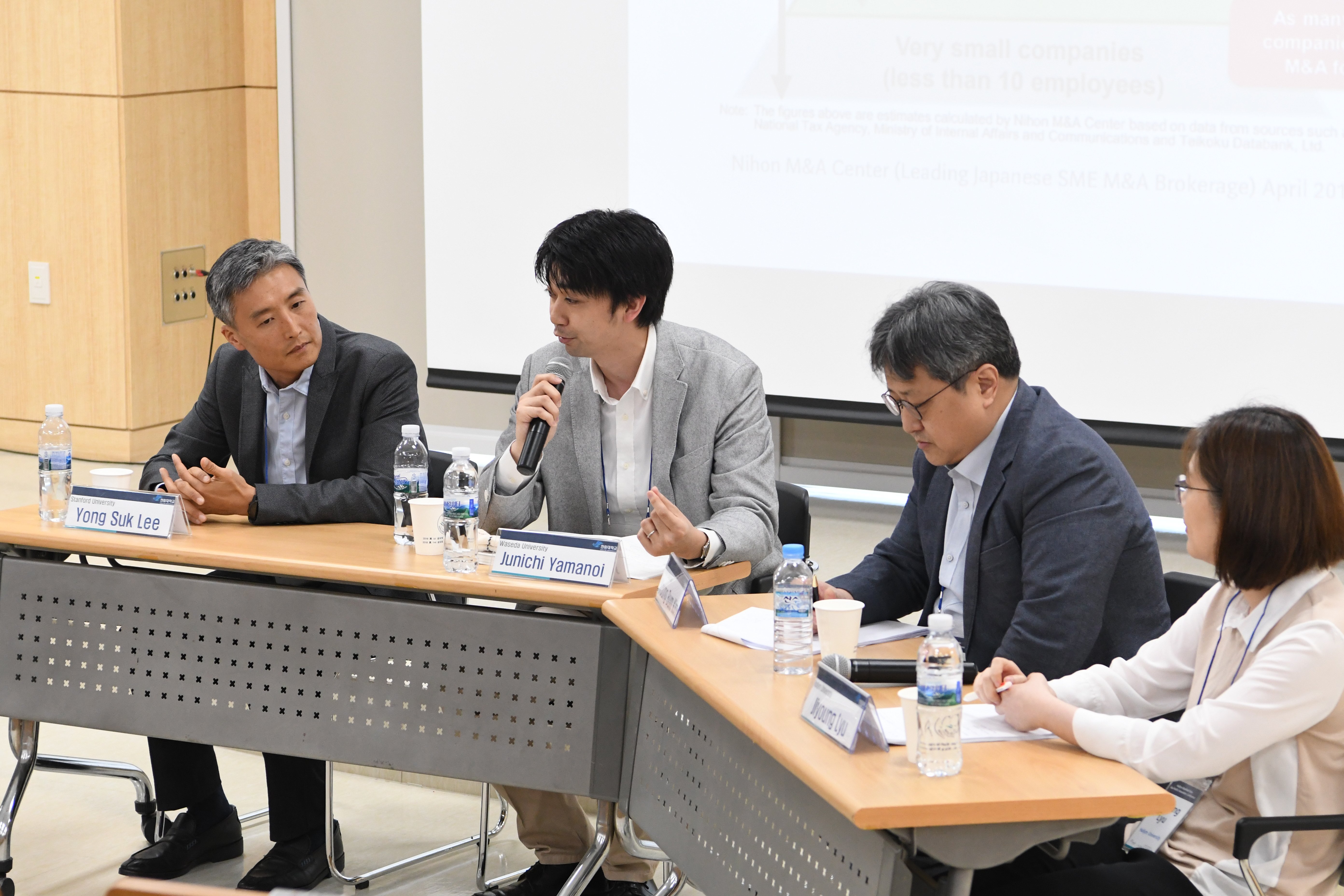
 Yong Suk Lee , Junichi Yamanoi , Young-Bum Kim, and Jiyoung Liu seated at a table

(From left to right, Yong Suk Lee , Junichi Yamanoi , Young-Bum Kim, and Jiyoung Liu)

Family Business Succession

Demographic forces and population aging at the macro level are altering family structures and assumptions at the micro level. For example, Junichi Yamanoi of Waseda University presented a study that examined how expectations around managerial succession at family firms had a significant impact on a firm’s long-term investments.

The study surveyed over 15,000 small and medium enterprises (SMEs) in the Tokyo metropolitan area. The participants were initially asked about their firm’s attributes, CEO demographics, and succession expectations. More than a year later (a time lag that eliminated reverse causality), a sampling of respondents was then asked about their current long-term investments (e.g., R&D, new product development, and internationalization activities).

Yamanoi and his coauthors found that, when a family business’ CEO was confident that a successor would follow, their firm was more likely to engage in long-term investment. Additionally, a CEO’s expectations that the successor would be someone other than their child resulted in an even greater likelihood of long-term investment.

As part of its policy propositions, the study recommends that government agencies and SME officers eager to increase investments by SMEs introduce external candidates to such firms. Moreover, family CEOs should be cautioned against investment decisions that are too short-term in orientation, as, due to inherent aversion to losses of socioemotional wealth for the family, they may unconsciously avoid long-term investments.
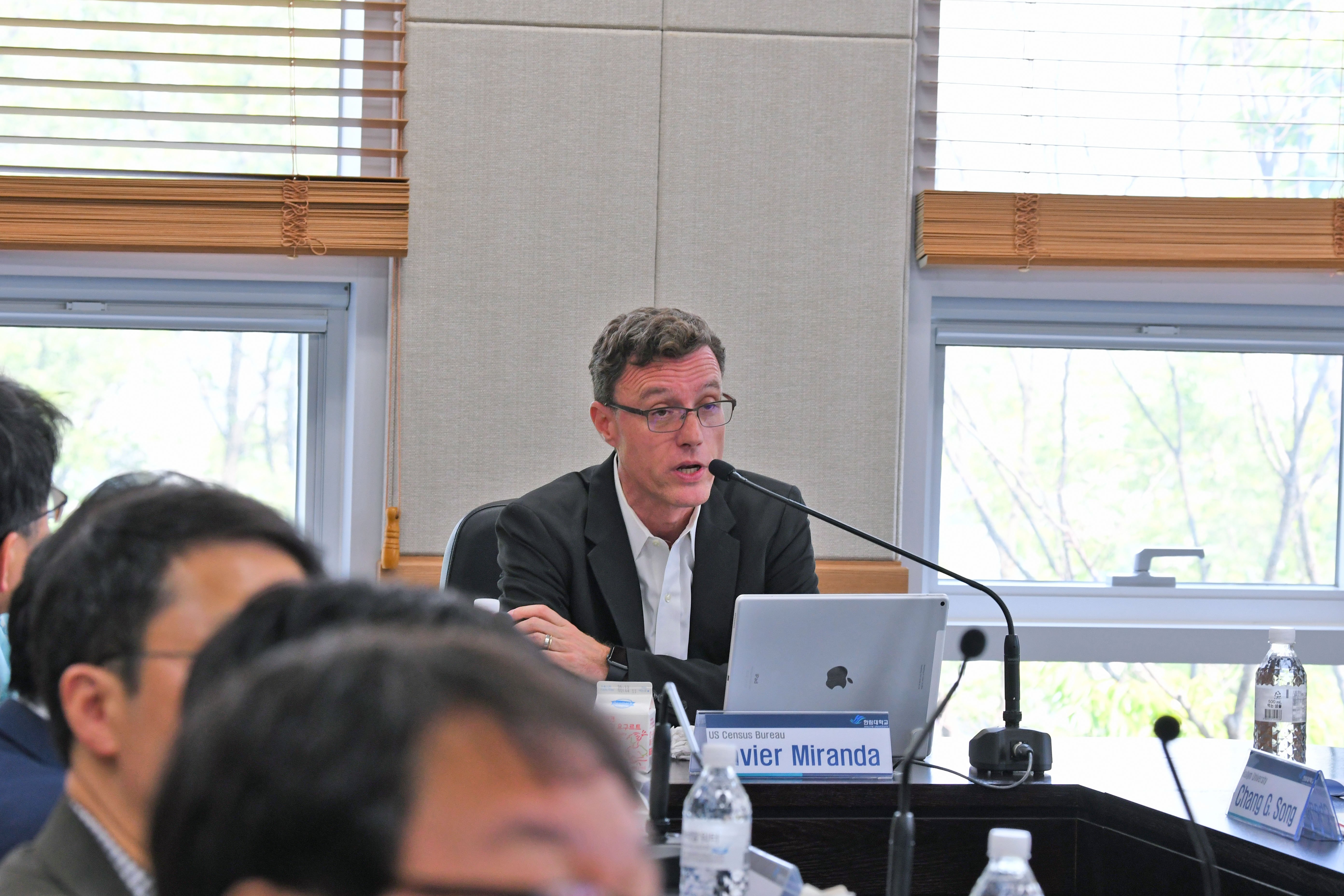
Javier Miranda presents at table

(Javier Miranda)

Rethinking Age and Entrepreneurship

At a luncheon keynote address, Javier Miranda, principal economist at the U.S. Census Bureau,  shared insights into the correlations between age and high-growth entrepreneurship, considering when in life people start firms and when they start the most successful firms.

Miranda acknowledged that youth is often perceived as being crucial to entrepreneurial success, referring to Mark Zuckerberg’s dictum, “Young people are just smarter.” Venture capitalist (VC) activity seems to support this notion, said Miranda, citing a sample of 35 VC-backed “unicorns” that resulted in a mean founder age of 31. He explained that VCs' high regard of young entrepreneurs may be attributed to a belief in young people's greater deductive reasoning, transformative thinking, and higher energy, optimism, and confidence.

But does the statistical evidence support such a view? It would seem not. Miranda’s data showed that the mean age for founders of any type of firm is 41.9. Furthermore, the mean age for founders of the most successful firms (those ready for Initial Public Offering market) was 45, and a founder at age 50 was approximately twice as likely to experience successful exit or high growth compared to a founder 20 years their junior.

In fact, dependent on the starting of a firm, the probability of a founder’s success peaked in the age range of 45-59. Pointing directly to entrepreneurs like Jobs and Bezos, Miranda conceded that even extremely talented people, who may be talented enough to succeed when young, peaked in middle age.

The results of Miranda’s study seem at odds with VC attraction to younger entrepreneurs. Experience, Miranda concluded, appeared to overwhelm any potential age advantage, but more research was needed to unpack the underlying predictors of entrepreneurial success over one’s life cycle.

Role of Technology in an Aging Populace

Day two of the conference focused on the promising role technology may play as populations age. APARC Research Scholar Kenji Kushida detailed both the current and impending problems Japan faces as its population both ages and shrinks in size, and the solutions possible through technological advancement like robotics, AI, and wearable devices.

For example, Japan’s demographic shift has had a double knock-on effect on agriculture, with the percentage of farm workers age 65 or older steadily rising over the last five years and the total cultivated agricultural land decreasing each passing year. Kushida described how ICT-enabled bulldozers allow farm owners to more precisely flatten the ground in rice paddies, resulting in both greater yields and cost savings as much as 40%.

Healthcare is another significant area of concern in Japan, as healthcare costs for people over 65 are four times that of younger people and medical costs as a proportion of GDP have been increasing sharply, especially in rural areas. Shortage of physicians and diagnostic technicians is another challenge. Kushida gave an example of a technology healthcare resource that enables clinics and hospitals to upload patient medical images which are then diagnosed by medical doctors affiliated with the tool's startup developer. This low-cost solution allows smaller, rural hospitals to tap into a larger network of physicians and specialists online.

While Japan’s technological trajectory has been driven primarily by the private sector, Kushida pointed out the important role played by government actors. Specifically, within the “Abenomics” reforms of Prime Minister Shinzo Abe, several key performance indicators include support for digitizing medical records, adoption of robotics in nursing care, and extending “healthy” life expectancy.

Edited volumes collecting the papers from the annual Stanford Asia-Pacific Innovation conferences are forthcoming. These will serve as valuable references for scholars and policymakers. The first conference was held at Stanford in 2017, and examined the industrial organization of businesses and innovation clusters and how such environments affect entrepreneurship. The second conference, held in September of 2018 in Beijing, analyzed the impact of public education and financial policies pursued by East Asian countries to promote entrepreneurship.

Presenters gathered on stage


Hero Image
Gi-Wook Shin standing at Podium at Innovation Conference
All News button
1
Authors
News Type
News
Date
Paragraphs

People today can generally expect to live longer and, in some parts of the world, healthier lives. The substantial increases in life expectancy underlying these global demographic shifts represent a human triumph over disease, hunger, and deprivation, but also pose difficult challenges across multiple sectors. Population aging will have dramatic effects on labor supply, patterns of work and retirement, family and social structures, healthcare services, savings, and, of course, pension systems and other social support programs used by older adults. Individuals, communities, and nations around the world must adapt quickly to the demographic reality facing us and design new approaches to financing the many needs that come with longer lives.

This imperative is the focus of a newly published special issue of The Journal of the Economics of Ageing, entitled Financing Longevity: The Economics of Pensions, Health and Long-term Care. The special issue collects articles originally written for and discussed at a conference that was dedicated to the same topic and held at Stanford in April 2017 to mark the tenth anniversary of APARC’s Asia Health Policy Program (AHPP). The conference convened top experts in health economics and policy to examine empirical and theoretical research on a range of problems pertinent to the economics of aging from the perspective of sustainable financing for long lives. The economics of the demographic transition is one of the research areas that Karen Eggleston, APARC’s deputy director and AHPP director, studies. She co-edited the special issue with Anita Mukherjee, a Stanford graduate now assistant professor in the Department of Risk and Insurance at the Wisconsin School of Business, University of Wisconsin-Madison.

The Financing Longevity conference was organized by The Next World Program, a Consortium composed of partners from Harvard University, Fudan University, Stanford University, and the World Demographic and Aging Forum, and was cosponsored by AHPP, the Stanford Institute for Economic Policy Research, and the Stanford Center on the Demography and Economics of Aging.

The contributions that originated from the conference and are collected in the Journal’s special issue cover comparative research on more than 30 European countries and 17 Latin American countries, as well as studies on Australia, the United States, India, China, and Japan. They analyze a variety of questions pertinent to financing longevity, including how pension structures may exacerbate existing social inequalities; how formal and informal insurance interact in securing long-term care needs; the ways in which the elderly cope with caregiving and cognitive decline; and what new approaches might help extend old-age financial security to those working outside the formal sector, which is a major concern in low-income countries.

Another challenge of utmost importance is the global pension crisis, caused due to committed payments that far exceed the saved resources. It is a problem that Eggleston and Mukherjee highlight in their introduction to the special issue. By 2050, they note, the pension gap facing the world’s eight largest pension systems is expected to reach nearly US $400 trillion. The problem cannot be ignored, as “the financial security of people leading longer lives is in serious jeopardy.” Indeed four of the eight research papers in the special issue shed light on pensions and inequality in income support for older adults. The other four research papers focus on health and its interaction with labor force participation, savings, and long-term care.

The issue also features two special contributions. The first is an interview with Olivia S. Mitchell, a professor at the University of Pennsylvania’s Wharton School and worldwide expert on pensions and ageing. Mitchell explains the areas offering the most promise and excitement in her field; discusses ways to encourage delayed retirement and spur more saving; and suggests several priority areas for future research. The latter include applying behavioral insights to questions about retirement planning, improving financial literacy, and advancing innovations to help people imagine themselves at older ages and save more for their future selves.

The second unique contribution is a perspective on the challenges of financing longevity in Japan, based on the keynote address delivered at the 2017 Stanford conference by Mr. Hirotaka Unami, then senior Director for policy planning and research of the Minister’s secretariat of the Japan Ministry of Finance and currently deputy director general with the Ministry’s Budget Bureau.

In Japan, decades of improving life expectancy and falling birth rates have produced a rapidly aging and now shrinking population. Data released by Japan’s Statistics Bureau ahead of Children's Day on May 5, 2019 reveal that Japan’s child population (those younger than 15) ranks lowest among countries with a total population exceeding 40 million. In his piece, Unami focuses on the difficult tradeoffs Japan faces in responding to the increase in oldest-old population (people aged 75 and over) and the overall population decline. Japan aspires to do so through policies that are designed to restore financial sustainability for the country’s social security system, including the medical care and long-term care insurance systems.

Unami argues that Japan must simultaneously pursue a combination of increased tax revenues, reduced benefit growth, and accelerated economic growth. He notes that these three-pronged efforts require action in five areas: review Japan’s pension policies; reduce the scope of insurance coverage in low-risk areas; increase the effectiveness of health service providers; increase a beneficiary’s burden according to their means; and enhance policies for preventive health care for the elderly.

The aging of our world’s population is a defining issue of our time and there is pressing need for research to inform policies intended to improve the financial well-being of present and future generations. The articles collected in the Financing Longevity special issue and the ongoing work by APARC’s Asia Health Policy Program point to multiple areas ripe for such future research.

View the complete special issue >>

Learn more about Dr. Karen Eggleston’s work in the area of innovation for healthy aging >>


Hero Image
Medical doctor chats with local residents while making housecalls
SCHWEDT, GERMANY: Medical doctor Amin Ballouz chats with local residents while making housecalls on April 30, 2013 in the village of Gartz an der Oder near Schwedt, Germany. Ballouz was born in Lebanon and moved to Germany as a child, and has had a general practitioner's practice in the small, east German town of Schwedt since 2010. Many of his patients are elderly and live in small villages in the region around Schwedt and Ballouz travels daily in one of his five Trabant cars to pay housecalls. Eastern Germany faces a chronic shortage of country doctors to serve rural communities. | Getty Images — Theo Heimann / Stringer
All News button
1
Authors
News Type
News
Date
Paragraphs

In Beijing’s bustling Chaoyang District stands a multi-story building known as the Gonghe Senior Apartments: a 400-bed nursing home for middle-income seniors who are disabled or suffer from dementia. Why is Gonghe unique and why is it worth considering? Because Gonghe is a public-private partnership (PPP), a collaborative organizational structure supported by the District Civil Affairs Bureau Welfare Division that donated the land and building and the nonprofit Yuecheng Senior Living that operates the facility. And because PPPs like Gonghe might just be the right model to address the challenges surrounding elderly care in China as well as in other nations that face a looming burden of population aging.

This was a core message shared by Alan Trager, founder and president of the PPP Initiative Ltd., who spoke at a special workshop organized by Shorenstein APARC’s Asia Health Policy Program (AHPP). Focused on PPPs in health and long-term care in China, the workshop was part of a two-day convening related to the Innovation for Healthy Aging project, a collaborative research project led by APARC Deputy Director and AHPP Director Karen Eggleston that identifies and analyzes productive public-private partnerships advancing healthy aging solutions in East Asia and other regions.

The Innovation for Healthy Aging project is driven by the imperative to respond to a world that is aging rapidly. This demographic transition, reminded Trager at the opening of his talk, is a defining issue of our time, as aging is a multisectoral issue that increases the demand for health care, long-term care, and a large number of other social services. The aging challenge is exacerbated by its convergence with the rising prevalence of non-communicable diseases (NCDs), also known as chronic diseases. For while NCDs affect all age groups, they account for the highest burden among the elderly.

China: Ground Zero for Global Aging

Alan Trager in Highly Immersive Classroom Alan Trager discusses health and long-term care in China in the GSB's Highly Immersive Classroom
Alan Trager discusses health and long-term care in China in the GSB's Highly Immersive Classroom (Photo: Noa Ronkin)


The need to advance healthy aging and NCD prevention is a matter of grave concern in China, whose older population is larger than in any other country. Moreover, the aging challenge in China is interwoven with unique social trends. In particular, filial piety—which, for thousands of years, has been a fundamental family value and a mainstay of health and elder care—is under pressure, as young people strive to balance the demands of careers, fewer children per family, and migrating to cities for school and work, without affordable housing or long-term care financing support for their parents and other elderly relatives, who often stay in rural areas.

China’s health system is yet to adapt to the shift in the disease burden and health care needs driven by the aging population. Its existing health insurance programs are insufficient for outpatient management and care of chronic conditions, and as Trager emphasized, there is a lack of investment in training geriatric medicine professionals and incorporating geriatric principles into clinical practice.

How can China meet the high demand for elder care, increase workforce capacity, and promote healthy aging?

The answer, claims Trager, lies in developing multisector, integrated solutions to the challenges posed by population aging. While system-level efforts, such as building the social protection system and sustaining universal health coverage, continue to be led by the government, PPPs can play a major role in capacity building to ensure the sustainability of such systems through the advancement of technology, human resources, and innovation. Trager shared PPP Initiative Ltd.’s recent efforts to develop PPP solutions for aging populations in China and elsewhere. The workshop was held on October 10 at the Stanford GSB’s Highly Immersive Classroom, which is equipped with advanced video conferencing technology that allows participants in Palo Alto and at the Stanford Center at Peking University to collaborate in real-time. Experts from Beijing joined the discussion and followed Trager’s presentation with comments on how to move from awareness to action.

Private Efforts, Public Value

Image
John Donahue, Karen Eggleston, and Richard Zeckhauser in conversation at the entrance to Encina Hall, Stanford.

From left to right: John Donahue, Karen Eggleston, Richard Zeckhauser. (Photo: Thom Holme)

Public-private collaborations—or rather collaborative governance–in China as well as in the United States is the subject of an upcoming volume co-authored by Eggleston with Harvard scholars Richard Zeckhauser and John Donahue. Both Zeckhauser and Donahue joined Eggleston the following day, October 11, at an AHPP-hosted seminar to discuss this upcoming publication, titled Private Roles for Public Goals in China and the United States: Contracting, Collaboration, and Delegation.

Eggleston, Donahue, and Zeckhauser define collaborative governance as private engagement in public tasks on terms of shared discretion, where each partner bears responsibilities for certain areas. Their upcoming book explores public-private collaborations in China and the United States, two countries where public needs require solutions that far outstrip the capacities of their governments alone. Beyond considering merely health and elderly care, the book features research into public and private roles in the governance of multiple other sectors, including education, transport infrastructure, affordable housing, social services, and civil society.

At the seminar, the three scholars reviewed different models of private efforts providing public value, outlined the justifications for collaborative governance, and explained some of the conditions that make such collaborative partnerships productive and valuable. They emphasized the need to account for the unique contexts in China and the United States and to steer clear of one-size-fits-all solutions.

Imperative for the Young Generation

One thing, they all agree, applies to both countries: government collaboration with private entities is inevitable if China and the United States are to achieve their articulated goals and meet rapidly increasing demand for high-end public services.

This sentiment echoed a claim Trager made the preceding day: a tidal wave of noncommunicable diseases in an aging world is approaching us quickly and governments cannot handle it alone. Young people must care about advancing creative solutions to this pressing problem because they will be the ones who will pay for the consequences if we get it wrong.

Hero Image
Four elderly Chinese people sitting outdoors.
Senior citizens relax on the Duolun Road in Shanghai, China. | Getty Images
All News button
1
News Type
News
Date
Paragraphs

A new book published by the Shorenstein Asia-Pacific Research Center (APARC) explores the future of China’s urbanization. Addressing the complex challenges facing Chinese cities will require updated institutions and unparalleled innovation, researchers say.

China’s growth in cities has been unprecedented over the past decade, and the urbanization policies the government put in place, while achieving notable successes, continue to face systemic obstacles that challenge the effectiveness of central and local governments. How the government will resolve the complex sets of conflicting interests will considerably shape Chinese society and politics for decades.
 
That is the premise of a new book co-edited by Karen Eggleston, senior fellow in Stanford’s Freeman Spogli Institute for International Studies; Jean C. Oi, the William Haas Professor in Chinese Politics; and Yiming Wang, deputy director general and senior research fellow at the State Council Development and Research Center.
 
In the book Challenges in the Process of China’s Urbanization, eleven chapters authored by 21 authors feature urbanization challenges ranging from property rights and affordable housing to food security and the environment.

[[{"fid":"225386","view_mode":"crop_870xauto","fields":{"format":"crop_870xauto","field_file_image_description[und][0][value]":"","field_file_image_alt_text[und][0][value]":false,"field_file_image_title_text[und][0][value]":false,"field_credit[und][0][value]":"","field_caption[und][0][value]":"","thumbnails":"crop_870xauto"},"type":"media","field_deltas":{"1":{"format":"crop_870xauto","field_file_image_description[und][0][value]":"","field_file_image_alt_text[und][0][value]":false,"field_file_image_title_text[und][0][value]":false,"field_credit[und][0][value]":"","field_caption[und][0][value]":"","thumbnails":"crop_870xauto"}},"link_text":null,"attributes":{"style":"margin-left: 15px; padding: 5px; font-size: 13.008px; float: right; width: 350px; height: 525px;","class":"media-element file-crop-870xauto","data-delta":"1"}}]]

“Urbanization is not merely a process of financial engineering or rational decision-making, but a complicated ‘dance’ of power and politics,” the editors write in the introductory chapter.
 
The book is one of two publications that emerged from a conference in May 2014 at the Stanford Center at Peking University, that was part of a joint five-year research initiative between the Shorenstein Asia-Pacific Research Center and the National Development and Reform Commission (NDRC) – a government agency in China that formulates and implements strategies of national economic and social development.  
 
Wang, who was the deputy chief of staff at the NDRC and executive director of its Institute of Macroeconomic Research, facilitated ongoing scholarly exchanges, including workshops and conferences as well as joint fieldwork in China. At one point, the NDRC came to the Bay Area to interview local government officials about urbanization and affordable housing policies.  
 
Eggleston and Oi responded to a few questions about the book.
 
What patterns are shaping urbanization in China?
Oi: A primary pattern shaping China’s urbanization is the movement of people from rural areas to megacities – Beijing, Shanghai and elsewhere.  There also is movement from poorer to richer areas within the countryside. Rural to urban migration has been taking place in China since the 1970s, but the difference now is that the government is encouraging it. The Chinese government has an officially sanctioned program that is advocating migration. A second pattern shaping China’s urbanization is administrative redistricting. Redistricting is a government-led process that changes the administrative makeup of a municipality. For example, areas originally designated as ‘rural’ can be redistricted to qualify as ‘urban.’ Additionally, smaller cities can become larger by absorbing surrounding areas. Counties can also be combined into districts.
 
Why are cities and counties pursuing redistricting?
Oi: One of the main factors driving redistricting in China is the perks and power that are linked to the size of an administrative unit. Government officials in charge of smaller cities or counties have incentives to become larger. The larger the municipality, the more power and resources the municipality has. Smaller cities that become larger cities gain resources; yet on the other hand, counties that become part of a district lose certain local-level rights. Municipalities are essentially competing with each other. The book dives into the incentive structures at play and other political economy issues embedded in the urbanization process.
 
What kind of disciplinary approaches are undertaken in the book?
Eggleston: One of the book’s strengths is its array of disciplinary approaches. Drawn primarily from the social sciences, the book includes theoretical and empirical analyses of evidence gathered from case studies and fieldwork. 
 
Oi: The book is a true collaboration of scholars from the United States and China. About half of the chapter authors are officials from the National Development and Reform Commission (NDRC), including our co-editor, Yiming Wang, who was NDRC deputy-secretary when we did the work for the volume. Each chapter attempts to offer a balanced perspective of the policy implications of China’s urbanization experience at both national and local levels.

Image
urbanization embed image 1

Karen Eggleston, FSI senior fellow and director of the Asia Health Policy Program, speaks on a panel about demographic change and health at the conference, "Challenges in Process of Urbanization: China in Comparative Perspective," Stanford Center at Peking University, May 2014.


What do you hope the book will achieve?

Oi: The book offers an analysis of the intricacies of and potential solutions to problems related to the process of China’s urbanization. We hope the book taken as a whole gives a sense of the magnitude of these problems, why there are no easy solutions, as well as what will be needed to address them going forward.  Some of the solutions are not just about money. 
 
Eggleston: The book aims to sketch an interesting picture of the varied aspects of China’s urbanization. Each chapter looks at a select issue, for example, land financing, spatial growth and housing security, and sets it in the broader context of urbanization. We purposely decided not to cover everything that falls under the banner of urbanization. Most of the topics could very well be made into a whole book alone. We hope the book will enliven conversation amongst scholars, policy influencers and China and urbanization enthusiasts.
 

What do “people-centered” solutions to urbanization challenges in China include?

Eggleston: “People-centered” is the term used in China’s official urbanization plan, the New National Urbanization Plan, published in 2014. We defined the term “people-centered” to include what makes life in urban areas attractive. “People-centered” urbanization emphasizes well-being and the factors that lead to a good livelihood, including access to public goods. For example, from a health perspective, cities around the world were historically less healthy locations to live in during the industrial revolution, before basic knowledge of how to control infectious disease with clean water and other population health measures. Now, cities can be healthier places to live in compared to rural areas. The Chinese government has a successful record of building basic infrastructure, but faces many challenges in harnessing the requisite resources to innovate and truly achieve people-centered development.


"In trying to reach a public goal like low-income housing, the Chinese government is trying to set up an incentive system so that the goal can be reached not just with taxpayer money but also by bringing in the private sector to build housing in a way that includes affordable units and doesn’t lead to segregation."  

     — Karen Eggleston; FSI senior fellow, Asia Health Policy Program director

 
An issue highlighted in the book is China’s household registration system. Why is it an issue and what is being done to address it?
Oi: Because China’s urbanization has been so rapid, institutions have not yet fully caught-up. There is a disjuncture between the institutions that exist and those that are actually necessary. One pressing example is the household registration system. Citizens who live in rural areas have a different kind of residency status than citizens in urban areas. Everyone has rights, but rights differ depending on where primary residence was originally listed. A Chinese citizen is only able to enjoy all of his or her rights where he or she is registered. So migrants tend to lose out as soon as they move away from their home locality. However, the central government has started to make changes to this system. For example, children of migrants now have access to public services such as primary education. Some localities have begun to implement a points-based system wherein families accumulate points over time and, after reaching a certain level, become eligible for citizenship in that place of residence.
 
Can you describe the state of housing in Chinese cities?
Eggleston: Affordable housing is a key issue of urbanization across the world, not just in China. So, the glass is half-full or half-empty depending on how you look at it. China has been remarkably successful in avoiding the development of large urban slums common in lower income countries with rapid urbanization. That said, problems associated with housing are not going to go away quickly. The macro nature of China’s population amplifies the problem, and coincides with a dramatic increase in housing prices. Continued government investment in affordable housing will help address scarcity, and could help tackle interrelated problems such as assisted living for the elderly population in China.
 
Oi: The central government began to offer affordable housing in 2007 with the intention of providing housing for the neediest portion of the population. In theory, it works, but in reality, it has faults. Supply and demand sometimes isn’t in sync. For example, quotas were used as a way to decide the location of its affordable housing, but some cities found that housing units remain unused. The local government builds a number of affordable housing units but then discovers no one wants them because commercial housing is less expensive or factories provide dormitory space. Part of this mismatch in supply and demand is rooted in the issue of resident permits. In most cases, the neediest portion of the population is typically migrants but they are not eligible for affordable housing in the cities where there is most need for low cost housing such as Beijing or Shanghai. As a result, migrants often live in inadequate housing in city centers – small, windowless spaces with many people living together in one room. 
 
One of the chapters in the book focuses on food security. As Chinese migrants continue to move from rural to urban areas, are fears of declining food security founded?
Eggleston: Food security is an important issue. In the book, one chapter written by 9 co-authors applies rigorous methods to understand whether urbanization threatens food security in China. They found that fear of declining food security is mostly overblown. Continued government investment in agricultural production such as irrigation systems can help address those fears, and help enable sustainable food production.

Image
urbanization embed image 2

Jean Oi, FSI senior fellow and director of the China Program, (Center), and Xueguang Zhou, FSI senior fellow and professor of sociology, (Left of Center), take a tour of housing developments during fieldwork with the National Development and Reform Commission in August 2012. Oi is speaking with one of the village leaders about a "new rural community" concept developed in a housing development in Chengdu, where this photo was taken.


Another chapter in the book references pollution. Beijing has faced unprecedented levels of air pollution lately. Does it coincide with urbanization?

Eggleston: Although issues of pollution and “green growth” merit separate book-length treatment and are not central to this book, pollution illustrates the broader issue of concentrations of industry and people living in one area. Everyone has to share public space. Both a migrant and someone working at the top levels of government in Beijing breathe the same air. Things that are less visible like water quality are avoidable by some of the population, but air pollution is not, and therefore, quickly reveals how hard it is for the government to efficiently fix a problem. Policies to mitigate pollution often take awhile to have an effect, and in the mean time, people begin to doubt government accountability. Local governments have made strides within the past few years in revising evaluation structures so that officials are incentivized to react to public problems like air pollution. Historically, an official’s performance was based largely if not solely on GDP growth of his or her municipality, but it has since expanded to include other factors such as health insurance enrollment.
 
Infrastructure spending has been a driver of China’s economic growth. Has China’s rush to build quickly come at the expense of safety?
Oi: Economic growth is intimately tied to the process of China’s urbanization. Growth of cities has been driven by the ambitions of local officials who want to see their municipalities expand. But the question remains over how they’re going to finance rising needs for and costs of public goods. Each municipality receives funding from the central government and it’s based on the quantity of citizens – a number that excludes migrants. Any migrant is then – administratively speaking – a burden on the system. Municipalities have to determine how they’re going to fund public goods. This is where fiscal politics comes in. China’s fiscal system is really the most important institution in need of reform. Each chapter of the book touches upon the issue of public funding in some way.
 
Eggleston: China is generally known for its investment in infrastructure projects, but the goal of rapid growth can seemingly clash with a concern for safety. One of the main themes of the book is to think carefully about the incentives that govern the process. I think that theme certainly rings true with regard to infrastructure and safety. Put simply: if officials and contractors do not have incentive to prioritize safety, then safety problems are going to arise. The Chinese government efforts to develop and improve specific regulatory structures should continue, as several authors point out in different chapters of the book.


"Economic growth is intimately tied to the process of China’s urbanization. Growth of cities has been driven by the ambitions of local officials who want to see their municipalities expand. But the question remains over how they’re going to finance rising needs for and costs of public goods."  

     — Jean C. Oi; Stanford professor of political science, China Program director

 
How can a balance be struck between public and private sector led projects that address urbanization challenges?
Oi: The Chinese government is increasingly looking to establish public-private partnerships as a way to deal with urbanization challenges. Affordable housing is one area that could experiment further with the public-private model. Instead of going to local governments, the central government is now talking directly with housing developers. They say to the developers “we’ll give you permission to develop a housing estate, but within that housing estate, you’re going to have to set aside ‘X’ number of units for affordable housing.” Depending on the city, this approach has had mixed effects. Some high-end housing developers don’t want to include affordable housing because the price per unit could drop as a result.
 
Eggleston: It’s critical to think about public-private partnerships in the context of urbanization-related policy goals. I think we’re bound to see them grow. The government has an opportunity to harness the innovation of the private sector through such partnerships.
Hero Image
beijing urbanization
A man pushes his bicycle past a construction site in the Central Business District in Beijing, China. | China Photos/Stringer
All News button
1
Subscribe to Aging