Democracy
-

Image
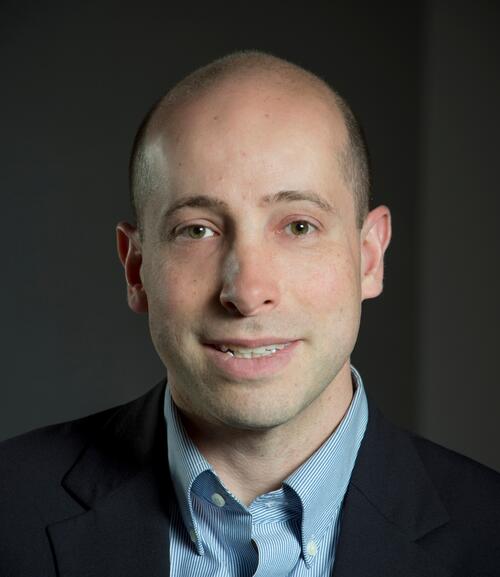
Michael Chase

This event is co-sponsored by the Taiwan Democracy Project and the U.S.-Asia Security Initiative.


Abstract

Taiwan's defense policy faces several daunting challenges. President Tsai has inherited a complex security situation from her predecessors. The DPP's defense policy blue papers, published prior to Taiwan's January 2016 election, and Taiwan's newly published Quadrennial Defense Review (QDR) outline President Tsai's plans for Taiwan's defense policy. Some of the major defense policy issues Taiwan must face under President Tsai include uncertainties about US Asia policy and Trump's approach to handling relations with China, growing Chinese military capabilities and increasing Chinese air and naval activities around Taiwan, defense budget constraints, and problems associated with Taiwan's attempt to transition to an all-volunteer military. Taiwan's proposed responses as outlined in the 2017 QDR include a defense strategy of "Resolute defense, multi-domain deterrence" and strengthening the island's domestic defense industries, a project that has both defense policy and economic implications. This presentation will assess Taiwan's approach and consider the implications for US policy in Asia.


Bio

Michael S. Chase is a senior political scientist at RAND, a professor at the Pardee RAND Graduate School, and an adjunct professor in the China Studies and Strategic Studies Departments at Johns Hopkins University's School of Advanced International Studies (SAIS) in Washington, D.C.

A specialist in China and Asia-Pacific security issues, he was previously an associate professor at the U.S. Naval War College (NWC) in Newport, Rhode Island, where he served as director of the strategic deterrence group in the Warfare Analysis and Research Department and taught in the Strategy and Policy Department. Prior to joining the faculty at NWC, he was a research analyst at Defense Group Inc. and an associate international policy analyst at RAND. He is the author of the book Taiwan's Security Policy and numerous chapters and articles on China and Asia-Pacific security issues. His work has appeared in journals such as Asia Policy, Asian Security, China Brief, Survival, and the Journal of Strategic Studies.

His current research focuses on Chinese military modernization, China's nuclear policy and strategy and nuclear force modernization, Taiwan's defense policy, and Asia-Pacific security issues. Chase holds a Ph.D. in international affairs and M.A. in China Studies from SAIS and a B.A. in politics from Brandeis University. In addition, he studied Chinese at the Hopkins-Nanjing Center in Nanjing, China.

Goldman Room, 4th Floor

Encina Hall

616 Serra St.

Michael S. Chase Professor Pardee RAND Graduate School
Lectures
News Type
News
Date
Paragraphs
South Korea’s Constitutional Court upheld a parliamentary decision to impeach President Park Geun-hye on Friday. She becomes the country’s first democratically elected leader to be forcibly removed from power, following allegations of corruption that have incited widespread protests for months.
 
Gi-Wook Shin, director of the Shorenstein Asia-Pacific Research Center, answers some questions about the impact of Park’s impeachment and path ahead for South Korea.
 
What happens next?
 
The ruling declares that President Park is no longer president and that she must vacate Blue House, the official residence of the South Korean head of state. Indeed, she returned to the residence where she had lived before assuming the presidency. A presidential election will be held within 60 days, most likely on May 9. In the meantime, South Korean Prime Minister Hwang Kyo-ahn, who was appointed as acting president, will continue in that role until the election. 
 
The decision made by the court was only one part of the investigation into Park’s political scandals and alleged corruption. The verdict delivered on March 10 states that Park committed a grave violation of constitutional law. Park could still face charges for corruption and cronyism, as a separate legal process is ongoing, and she could be put into jail.
 
How are people in South Korea responding to the ruling so far?
 
Most people are accepting the ruling. The decision to confirm Park’s impeachment was largely expected. One noteworthy aspect of the ruling, though, was its unanimity – all eight judges on the court voted to confirm her impeachment. This collective stance aimed to message an agreement that ‘it’s time to move on’ and to minimize the potential for discord in government and society.
 
Following months of protests in Seoul, the reactions on the streets have been fairly restrained. However, there is a contingent that supported Park throughout the trial and they still refuse to accept the ruling. Park herself also expressed defiance, rather than accepting the verdict, reportedly saying, “It will take time, but the truth will eventually be revealed.” Political tensions will continue, perhaps even after the upcoming election.
 
What motivated the protests and impeachment process, and what does it represent?
 
Beyond the political scandals, the protests are more broadly an expression of popular discontent over a range of issues. Following two decades of rapid modernization, South Koreans are experiencing growing inequality, high youth unemployment, and fatigue over two presidential terms by conservative parties. Civic participation was a main driver behind the protests. The protests were large scale and prolonged but certainly not unusual for South Korea. Historically speaking, South Korea has a pattern of a strong state setting itself against a contentious civil society. As was evident in 2016-17, political parties, instead of addressing the issues and public opinion, were being led by the movements themselves.
 
The impeachment trial and civic activism represent neither a crisis of politics nor a crisis of democracy for South Korea. Rather, it shows that Korean democracy has progressed since it accelerated its democratic transition in the late 1980s. Throughout Park’s case, democratic procedures were followed by the National Assembly, special prosecutor and the Constitutional Court – and that’s a good sign. Nonetheless the real test for Korean democracy may yet have to come, as some supporters of Park and perhaps she herself have indicated that the verdict is unfair and unconstitutional. Going forward, I am still optimistic that these events will encourage the government to be more careful with exercise of power and more attentive to societal issues.
 
What are the main issues that the government now faces?
 
National unity and stability will be the main priorities of the next president of South Korea. He or she will have to find a way to bridge the deep divide between progressives and conservatives, and work on the issues that have motivated such wide unrest across the country. An orderly presidential election and transfer of power from the Park administration to the next are equally essential. The next president faces a unique circumstance, however, in that the new administration will begin its work the day following the election, without the typical transition period.
 
These events also underscore the limitations of the current single five-year term presidential system in South Korea. While the Korean presidency is still powerful, the current system has proved to be ineffective as the president becomes a 'lame duck' after 3 or 4 years into office, making it difficult to pursue any long-term policy agenda. Korea needs constitutional reform to enact a greater balance of power and policy continuity.

Read more about this topic in a paper featured in the academic journal Asian Survey and an analysis piece in The Diplomat by Gi-Wook Shin and Rennie J. Moon, or watch a video featuring a panel discussion from earlier this year.


Hero Image
seoul protest candle
Activists of all ages gather in Seoul city center for a candlelight rally on Dec. 10, 2016. | Chung Sung-Jun/Getty Images
All News button
1
Paragraphs

South Korean President Park Geun-hye faced a leadership crisis after revelations that she relied on a confidant with no official position for key decision-making in state affairs. Heavy industry met with serious financial difficulties, and a strong anti-corruption law was enacted. North Korea tested more nuclear weapons and missiles. Controversy over the deployment of Terminal High Altitude Area Defense strained South Korea’s relations with China.

All Publications button
1
Publication Type
Journal Articles
Publication Date
Journal Publisher
Asian Survey
Authors
Gi-Wook Shin
Rennie Moon
Number
1
Authors
Lisa Griswold
News Type
News
Date
Paragraphs
The future of relations between China and the United States depends on the readiness of both governments to focus on resolving shared challenges, longtime journalist John Pomfret said at the Shorenstein Asia-Pacific Research Center (APARC) last Wednesday.
 
“The reality of the U.S.-China relationship is collaboration and competition,” said Pomfret, who served for 15 years as a foreign correspondent, describing the nature of interaction between the two countries that began to normalize relations in 1972.
 
Pomfret's remarks were delivered at a colloquium entitled, “The United States and China in the Era of Donald Trump,” which explored the unorthodox approach Donald Trump took during his campaign on a range of issues related to China, and implications for the bilateral relationship now that Trump has assumed the U.S. presidency.
 
Pomfret over the course of his journalism career spent seven years covering China, including during the 1989 Tiananmen Square protests and from 1998 through 2003 as the bureau chief for the Washington Post in Beijing, and recently authored the book, The Beautiful Country and the Middle Kingdom, which examines U.S.-China relations from 1776 to the present. He won the 2007 Shorenstein Journalism Award, an annual honor conferred to a journalist who produces outstanding reporting on Asia.
 
“It’s clear that a new type of reciprocity is needed to right the balance in the U.S.-China relationship, but just whether Trump and his team have the wherewithal to do it…is very much an open question,” he said.
 
Trump continues to promise to restore manufacturing jobs in the United States, but fulfillment of that promise could come in conflict with its trade relationship with China, where much manufacturing of U.S. products takes place, he said.
 
Equally important in the U.S.-China relationship is how to address North Korea and its nuclear weapons and ballistic missiles program, which remains an “extremely complicated” and pressing situation, he said.
 
Pomfret expressed uncertainty about the Trump administration’s capacity to change China’s position from the status quo, which has long supported the North Korean regime by way of trade and relaxed implementation of U.N. sanctions despite repeated provocations.
 
Yet, amidst the vague foreign policy positions projected by Trump toward China, “there is one positive, and that is that he has the Chinese off-balance,” Pomfret admitted.
 
For Pomfret, his appearance at Stanford was a bit of a homecoming; he spoke to an audience of 200 faculty, students and community members at the colloquium sponsored by the China Program and Center for East Asian Studies, the center from which he received his master’s degree in 1984.
 
Asked about the future of China and its governance, he noted that today’s China is markedly different than when he was there in the 1980s studying as a student, and later, working as a journalist. The generational changes are stark, said Pomfret, relaying a sense of optimism that the country would become more democratic over time.
 
“The amount of personal freedoms that the average Chinese person has has expanded exponentially. I think the desire of Chinese people to have more agency over their lives will continue to grow – that’s clear.”
 
Innovation will be a determinant of China’s future growth, said Pomfret, coupling the idea that societies that have knowledge-driven economies typically demand more freedoms. Without innovation, China will fall into the middle-income trap, he said, “I don’t think they want to be there; they are an incredibly proud nation.”
 
Hero Image
china uscapital reuters
Reuters/Hyungwon Kang
All News button
1
-

Co-sponsored by the Taiwan Democracy Project at the Center on Democracy, Development, and the Rule of Law, and the China Program at the Shorenstein Asia-Pacific Research Center (APARC)


Abstract

As President Trump assumes office, it is timely to consider the state of US-People's Republic of China (PRC)-Taiwan relations and how they might evolve in the coming years. Uncertainty regarding US-PRC-Taiwan relations is running high—it is far greater than eight years ago when Barack Obama assumed office. Trump’s phone call with Taiwan’s President Tsai Ing-wen shortly after winning the election and his subsequent suggestion that Taiwan could be used as a bargaining chip to extract trade concessions from China have alarmed Beijing and created anxiety in Taipei. In Washington, Trump’s actions and statements have fueled policy debates about whether to abandon the “one China” policy which has been a mainstay of US policy for 37 years.  How the Trump administration will adjust relations with Beijing and Taipei is unknown. In the months ahead, a new dynamic may be created in the US-PRC-Taiwan triangular relationship in which the source of instability is neither China nor Taiwan, but rather is the United States. 


Biography

Bonnie S. Glaser is a senior adviser for Asia and the director of the China Power Project at CSIS, where she works on issues related to Chinese foreign and security policy. She is concomitantly a non-resident fellow with the Lowy Institute in Sydney, a senior associate with CSIS Pacific Forum and a consultant for the U.S. government on East Asia. From 2008 – mid-2015 Ms. Glaser was a Senior Adviser with the Freeman Chair in China Studies, and from 2003 to 2008, she was a senior associate in the CSIS International Security Program. Prior to joining CSIS, she served as a consultant for various U.S. government offices, including the Departments of Defense and State.

Ms. Glaser has written extensively on various aspects of Chinese foreign policy, including Sino-U.S. relations, U.S.-China military ties, cross-Strait relations, China’s relations with Japan and Korea, and Chinese perspectives on missile defense and multilateral security in Asia. Her writings have been published in the Washington Quarterly, China Quarterly, Asian Survey, International Security, Problems of Communism, Contemporary Southeast Asia, American Foreign Policy Interests, Far Eastern Economic Review, Korean Journal of Defense Analysis, New York Times, and International Herald Tribune, as well as various edited volumes on Asian security. Ms. Glaser is a regular contributor to the Pacific Forum quarterly Web journal Comparative Connections. She is currently a board member of the U.S. Committee of the Council for Security Cooperation in the Asia Pacific, and a member of both the Council on Foreign Relations and the Institute of International Strategic Studies. She served as a member of the Defense Department’s Defense Policy Board China Panel in 1997. Ms. Glaser received her B.A. in political science from Boston University and her M.A. with concentrations in international economics and Chinese studies from the Johns Hopkins School of Advanced International Studies.


Philippines Conference Room

Encina Hall, 3rd Floor

Bonnie Glaser Director of the China Power Project and Senior Advisor for Asia Center for Strategic and International Studies
Lectures
News Type
Commentary
Date
Paragraphs

Stanford professor Gi-Wook Shin and Rennie J. Moon compare the political protests in South Korea of today to that of 1987 in an editorial for the Diplomat. The recent demonstrations are an illustration of “a distinctive Korean political culture that prioritizes elements of virtue, shame and saving face,” they wrote.

Shin, who is the Korea Program director at the Shorenstein Asia-Pacific Research Center, and Moon were both in Seoul on Nov. 12 and were observers of the crowd of one million people who gathered to protest South Korean President Park Geun-hye’s administration. He also spoke to the Economist earlier about the likelihood of the president’s resignation or impeachment.

Read the Diplomat editorial here and the Economist article here.

Shin and Moon have since co-authored a paper on the topic in volume 57 of Asian Survey, titled "South Korea in 2016: Political Leadership in Crisis," which can be viewed here.

Hero Image
candle light flickr michael kay park
Flickr/Michael-kay Park
All News button
1
Date Label
News Type
Commentary
Date
Paragraphs

Stanford economist Takeo Hoshi joined Nikkei CNBC’s television program “Night Express” in Tokyo to discuss what a U.S. presidency under Donald Trump holds for trade policy, U.S.-Japan relations and the global economy.
 
Hoshi, who is also the Japan Program director at the Shorenstein Asia-Pacific Research Center, said that, while many of the next administration’s plans remain uncertain, the president-elect's first task would be to bridge divisions among Republicans so it can move ahead on policy decision-making.
 
The television segment can be viewed in Japanese here.


Hero Image
takeo cnbc
All News button
1
Paragraphs

Prime Minister Shinzo Abe has apparently decided to hold an urgent meeting with U.S. President-elect Donald Trump in New York, on his way to the Asia Pacific Economic summit in Peru. It is far from clear what the Prime Minister hopes to accomplish, or whether such a meeting will even be a good idea, so early in the transition process. But one thing is surely true – the Prime Minister needs to go into that meeting with a clear understanding of what has happened in the U.S. and what it could mean for U.S.-Japan relations, Sneider writes.

All Publications button
1
Publication Type
Commentary
Publication Date
Journal Publisher
Toyo Keizai Online
Authors
Subscribe to Democracy