Environment

FSI scholars approach their research on the environment from regulatory, economic and societal angles. The Center on Food Security and the Environment weighs the connection between climate change and agriculture; the impact of biofuel expansion on land and food supply; how to increase crop yields without expanding agricultural lands; and the trends in aquaculture. FSE’s research spans the globe – from the potential of smallholder irrigation to reduce hunger and improve development in sub-Saharan Africa to the devastation of drought on Iowa farms. David Lobell, a senior fellow at FSI and a recipient of a MacArthur “genius” grant, has looked at the impacts of increasing wheat and corn crops in Africa, South Asia, Mexico and the United States; and has studied the effects of extreme heat on the world’s staple crops.

News Type
News
Date
Paragraphs

The Shorenstein Asia-Pacific Research Center (APARC) at Stanford is now accepting applications for the Shorenstein Postdoctoral Fellowship in Contemporary Asia, an opportunity made available to two junior scholars for research and writing on Asia.

Fellows conduct research on contemporary political, economic or social change in the Asia-Pacific region, and contribute to Shorenstein APARC’s publications, conferences and related activities. To read about this year’s fellows, please click here.

The fellowship is a 10-mo. appointment during the 2018-19 academic year, and carries a salary rate of $52,000 plus $2,000 for research expenses.

For further information and to apply, please click here. The application deadline is Dec. 20, 2017.

Hero Image
sb background encina
All News button
1
-

Hurricane Harvey and Irma have brought home to everyone the impact of climate change on our economy, our society, and our daily lives. Curtailing climate change is an urgent issue, one that requires international cooperation. In this session experts from Japan and the United States discuss some of the lessons that have been learned from Asia’s experiences. In the case of Japan, following the period of high growth (1960s-1980) which made Japan an economic power house, the government took strong steps to clean up polluted air and water. The Fukushima nuclear power plant disaster in 2011 forced Japan to take even more aggressive action to reduce energy consumption and lessen its impact on the global environment. In contrast, the United States, the world’s largest economy, is one of the world’s largest polluters and recently made headlines when it withdrew from the Paris Agreement negotiated at the 2015 United Nations Climate Change Conference (COP2). California, and other state and municipal governments, are now taking the lead in US efforts to deal with climate change. Speakers will address questions on strategies for limiting carbon emissions and possibilities for future international cooperation on climate change.

Shorenstein APARC is pleased to host the Abe Fellows Global Forum (Abe Global) inaugural season’s flagship event. A new initiative of the Abe Fellowship Program, Abe Global brings the research and expertise of Abe Fellows on issues of global concern to broader audiences. The event is co-organized with the Social Science Research Council, in collaboration with the Center for Global Partnership of the Japan Foundation, which funds the Abe Fellowship Program


Abe Fellows Global Forum
Confronting Climate Change:
What Can the U.S. and Japan Contribute to Creating Sustainable Societies?


Conference Program

13:30-14:00     Registration

14:00-14:20     Welcome remarks

       Takeo Hoshi, Director, Japan Program, Shorenstein APARC, Stanford University

       Junichi Chano, Executive Director, CGP

       Opening Remarks

       George P. Shultz, Thomas W. and Susan B. Ford Distinguished Fellow, Hoover Institution,

        Stanford University

14:20-14:45     Keynote Speech

                             Michael Armacost, Shorenstein APARC Fellow, APARC, Stanford University

14:45-15:00     Break

15:00-17:00     Panel Discussion “What Can the US and Japan Contribute to Creating Sustainable Societies?”

                  Moderator:      Takeo Hoshi

       Presenters:      Toshi H. Arimura,  Waseda Univeristy

                              Janelle Knox-Hayes, Massachusetts Institute of Technology

                               Phillip Lipscy, Stanford University

                               Dana Buntrock, University of California, Berkeley

                               Michael Armacost, Stanford University

16:55                 Closing Remarks

                               Linda Grove, Consulting Director, SSRC 

17:00-18:00     Cocktail Reception

Conferences
-
This event is co-sponsored by the Stanford Silicon Valley-New Japan Project and the Japan Society of Northern California.

When the Fukushima Daiichi Nuclear Power Plant experienced a meltdown after the Great East Japan Earthquake in March 2011, people scrambled to get accurate data on radiation. Geiger counters were suddenly a hot commodity. In that moment of crisis, a group of global citizens rose to the occasion to launch Safecast, an open data platform to track, monitor and share data on the radiation levels in Fukushima and throughout Japan. Safecast, a Japan Earthquake Relief Fund grantee, enlisted the help of volunteers who collected the data from all over Japan, and even built its own DIY Geiger counter kit. The Japan Society of Northern California and the Stanford Silicon Valley-New Japan Project are proud to present a program with Pieter Franken, the Co-Founder of Safecast, will look back at Safecast’s evolution—a prime example of citizen science embracing open data and open source—over the last six years and their plans to expand their data gathering efforts to take on new environmental challenges. 

Bio

Image
Pieter Franken's career spans over 25 years in Financial Services, specializing in O&T, Fintech, innovation and large-scale transformations. He has held C-level and executive positions with industry leaders such as Citigroup, Shinsei Bank, Aplus, Monex Securities and Monex Group. His hallmark is pioneering innovative services by implementing bleeding edge technologies while minimizing time-to-market and dramatically reducing costs. Versed in large scale IT transformation, bi-modal management, innovation, software development, datacenter operations, financial operations and FinTech, he is a much looked after advisor and speaker on a wide range of topics and is known for providing deep insights pulling from is wide experience in IT, financial services and innovation management. 

Pieter currently is Senior Advisor at Monex Group (a leading online securities and financial services company in Japan) where he focuses on the Future of Financial Services, Group IT Strategy, Fintech, and Blockchain. 

He is also a member of Monetary Authority of Singapore (MAS) International Technology Advisory Panel (ITAP) where he contributes in the transformation of Singapore as a leading Fintech Hub. In 2011 Pieter co-founded Safecast.org - a global volunteer initiative to collect citizen sourced environmental data. Pieter also advises startups, such as ModuleQ, an AI startup based in Silicon Valley. Pieter holds a MSc in Computer Science from Delft University (The Netherlands) and currently is a researcher with MIT Media Lab (US) and Keio University (Japan) where he contributes to the advancement in IoT, Digital Currencies, Block-chain technologies and Citizen Science. Pieter is based in Japan and frequently travels across Asia, North America and Europe.

Agenda

4:15pm: Doors open
4:30pm-5:30pm: Talk and Discussion
5:30pm-6:00pm: Networking

RSVP Required

 
For more information about the Silicon Valley-New Japan Project please visit: http://www.stanford-svnj.org/


Pieter Franken, Senior Advisor, Monex Group
Seminars
-
The "Workshop of young leaders in Asia health policy" will take place at SCPKU on June 21, 2017, just prior to the annual primary care Forum. This special event convened in honor of the Stanford Asia Health Policy Program's 10th anniversary. It will feature short research panels by a dozen young health policy experts from Cambodia, China, Indonesia, Korea, Mongolia, Myanmar, Nepal, the Philippines, Thailand, the United States, and Vietnam. The luncheon colloquium will feature comparative perspectives on the major health policy challenges facing Asia as well as specific examples of how evidence-based policymaking can improve lives throughout the Asia-Pacific region.


Stanford Center at Peking University

Encina Hall E301616 Serra StreetStanford, CA94305-6055
(650) 724-5321 (650) 723-6530
0
darika_saingam.jpg Ph.D.

Darika Saingam joins the Walter H. Shorenstein Asia-Pacific Research Center as the Developing Asia Health Policy Postdoctoral Fellow for the 2015-16 year.  Saingam’s research interests are public health, substance abuse, drug policy and Southeast Asia. While at Shorenstein APARC, she will research the evolution of substance-abuse control measures and related policy in Thailand.  Saingam seeks to identify potentially effective policy directions suitable for Thailand, and other developing countries in Southeast and East Asia.

Saingam completed her doctorate in epidemiology at the Prince of Songkla University in 2012, and has served as a researcher at the University’s epidemiology unit since, as well as a researcher at the Thailand Substance Abuse Academic Network since 2014.

2015-16 Developing Asia Health Policy Postdoctoral Fellow
Faculty of Medicine Prince of Songkla University, Thailand
Ngoc Minh Pham Visiting research fellow at Curtin University, Australia
0
2011-12 Developing Asia Health Policy Fellow
YiSiyan_Profile.jpg MD, PhD

Dr. Siyan Yi joined the Walter H. Shorenstein Asia-Pacific Research Center (Shorenstein APARC) as a 2011-12 Developing Asia Health Policy Postdoctoral Fellow from the National Center of Global Health and Medicine and the University of Tokyo, Japan, where he jointly served as a research fellow and lecturer. He also served as an adjunct faculty member at Cambodia’s School of Public Health, the National Institute of Public Health, and the School of International Studies at the Royal University of Phnom Penh. He is currently an Associate Professor and UHS-SPH Integrated Research Programme Leader at NUS Saw Swee Hock School of Public Health (profile page here).

Yi’s research has centered largely on epidemiological methods. This has included, for example, work on surveys in Cambodia on adolescent risky sexual behaviors, substance abuse, and depression; a health promotion project in primary schools; sexual behaviors among people living with HIV/AIDS; and HIV risky behaviors among tuberculosis patients. Currently, he is involved in hospital- and community-based research projects in several developing countries as well as in Japan. He has published several papers in these research areas in international journals. His selected publications include:

  • Siyan Yi, Akiko Nanri, Kalpana Poudel, Daisuke Nonaka, Hori Ai, Tetsuya Mizoue. “Association between serum ferritin and depressive symptoms in Japanese municipal employees.” Psychiatry Research, 2011. 189: 368-372.
  • Siyan Yi, Daisuke Nonaka, Marino Nomoto, Jun Kobayashi, and Tetsuya Mizoue. “Predictors of the uptake of A (H1N1) influenza vaccine: Findings from a population-based longitudinal study in Tokyo.” PLoS One, 2011. 6: e18893.
  • Siyan Yi, Krishna C. Poudel, Junko Yasuoka, Paula H. Palmer, Songky Yi, and Masamine Jimba. “Risk vs. protective factors for substance use among adolescent students in Cambodia.” Journal of Substance Use, 2011. 16:14-26.
  • Siyan Yi, Krishna C. Poudel, Junko Yasuoka, Paula H. Palmer, Songky Yi, and Masamine Jimba. “Role of risk and protective factors for risky sexual behaviors among high school students in Cambodia.” BMC Public Health, 2010. 10: 477.
  • Siyan Yi, Krishna C. Poudel, Junko Yasuoka, Masao Ichikawa, Vutha Tan, and Masamine Jimba. “Influencing factors for seeking HIV voluntary counseling and testing among tuberculosis patients in Cambodia.” AIDS Care, 2009. 21: 529-534.

Yi holds an MHSc (2007) and a PhD (2010) in international health sciences from the School of International Health at the University of Tokyo’s Graduate School of Medicine. He also earned an MD in general medicine from the University of Health Sciences, Cambodia (2001). Yi has won research awards, including: the Young Investigator Award from the Asia Pacific Academic Consortium for Public Health (2008), the Montreux Prize from the Swiss Association for Adolescent Health and the International Association for Adolescent Health (2009), and the Scientific Research Award from the University of Tokyo (2009).

Date Label
Director of KHANA Center for Population Health Research, Cambodia

Shorenstein APARC
Encina Hall E332
616 Serra Street
Stanford, CA 94305-6055

(650) 724-5710 (510) 705-2049 (650) 723-6530
0
Developing Asia Health Policy Fellow
IMG_4537.jpg MD

Gendengarjaa Baigalimaa joins the Walter H. Shorenstein Asia-Pacific Research Center (Shorenstein APARC) during the 2013-2014 acedemic year as the Asia Health Policy Program Fellow. She joins APARC from the Mongolian National Cancer Center, where she serves as a Gynecological Oncologist.

During her appointment as Health Policy Fellow, she will conduct a comparative study of how knowledge of cervical cancer risk factors has influenced behavior changes in Mongolia before and after the introduction of the National Cervical Cancer Program.

Baigalimaa is the Executive Director of Mongolian Society of Gynecological Oncologists and is also a member of the International Gynecological Cancer Society (IGCS) in Mongolia, Russia, and France.

Baigalimaa holds a MD from Minsk Belarussia Medical University. She also received a Masters in Health Science from Mongolian Medical University. She is fluent in both Russian and English.

Gynecological Oncologist at ''Mungun Guur'' hospital, Mongolia

Shorenstein APARC
Encina Hall C331
616 Serra Street
Stanford, CA 94305-6055

(650) 724-5656 (650) 723-6530
0
2013-2014 Asia Health Policy Postdoctoral Fellow
triyana_photo.jpg PhD

Margaret (Maggie) Triyana’s main research interests are inequality and human capital investments in developing countries. In particular, she is interested in the effects social policy changes on children’s health outcomes. As a Postdoctoral Fellow, she will analyze the effects of rural-urban migration in Indonesia and China, as well as the impact of health insurance expansion in Indonesia and Vietnam.

Triyana received a PhD in Public Policy from the University of Chicago in 2013.


Working Papers

“Do Health Care Providers Respond to Demand-Side Incentives? Evidence from Indonesia“

“The Effects of Community and Household Interventions on Birth Outcomes: Evidence from Indonesia”

“The Longer Term Effects of the ‘Midwife in the Village’ Program in Indonesia”

“The Sources of Wage Growth in a Developing Country” (with Ioana Marinescu)

2016-17 Kellogg visiting fellow; Assistant Professor of Economics at Nanyang Technological University, Singapore
0
Visiting Scholar at APARC, 2026
Asia Health Policy Postdoctoral Fellow in Developing Asia, 2012-2013
PajaronMarjorie_WEB.jpg Ph.D.

Marjorie Pajaron joins the Walter H. Shorenstein Asia-Pacific Research Center as Visiting Scholar for the spring quarter of 2026 from the University of the Philippines Diliman (UPSE), where she serves as Associate Professor in the School of Economics. She was previously at APARC as Asia Health Policy Postdoctoral Fellow during the 2012–13 academic year.

While at APARC, she will be conducting research on the migration of healthcare workers from the Philippines and the nexus with climate change.

Pajaron received a PhD in economics from the University of Hawai’i at Manoa.

Publications:

Ramel, R. C. D., Legaspi, J. D., & Pajaron, M. C. (2026). Illuminating the land: the effects of nighttime lights on land values in the Philippines. Remote Sensing Letters, 17(5), 465–477. https://doi.org/10.1080/2150704X.2026.2650396

Pajaron M, Vasquez GN. (2023). Weather, Lockdown, and the Pandemic: Evidence from the Philippines. Philipp J Sci 152(S1): 47–62. https://doi.org/10.56899/152.S1.04

Pajaron, M.C., Vasquez, G.N.A. (2020). Weathering the storm: weather shocks and international labor migration from the Philippines. Journal of Population Economics 33, 1419–1461. https://doi.org/10.1007/s00148-020-00779-1

Pajaron, M. (2017). “The Role of Remittances as a Risk-Coping Mechanism: Evidence from Agricultural Households in the Philippines.” Asian and Pacific Migration Journal 26 (1): 3–30. https://doi.org/10.1177/01171968166806

Pajaron, M. (2016). “Heterogeneity in the Intrahousehold Allocation of International Remittances: Evidence from Philippine Households.” Journal of Development Studies 52 (6): 854–875. https://doi.org/10.1080/00220388.2015.1113261


Date Label
Assistant Professor at the School of Economics, University of the Philippines, Diliman

Walter H. Shorenstein
Asia-Pacific Research Center
616 Serra St C335
Stanford University
Stanford, CA 94305-6055

(650) 724-5668 (650) 723-6530
0
2011-12 Asia Health Policy Fellow
SunAng_Profile.jpg MA, PhD

Ang Sun joins the Walter H. Shorenstein Asia-Pacific Research Center (Shorenstein APARC) from Brown University’s department of economics where she recently received her PhD.

Sun’s research interests encompass development economics, labor and demographic economics, and health economics. She focuses on intra-household allocations, gender differences, and household formation. In particular, she studies how a combination of different forces in China—including traditional values, rapid growth, and the population structure—is affecting Chinese families. During her time at Shorenstein APARC, Sun will participate in an interdisciplinary study of the impact of the aging process in Asia on economic growth.

Sun holds a PhD and an MA in economics from Brown University, and an MA from the China Center of Economic Research. She also received a BA in economics and a BS in information and computer science from Beijing University.

Central University of Finance and Economics, Beijing, China

Shorenstein APARC
Stanford University
Encina Hall, Room C335
Stanford, CA 94305-6055

(650) 736-0771 (650) 723-6530
0
2011 Shorenstein-Spolgi Fellow in Comparative Health Policy
Qiulin_Chen3x4.jpg MA, PhD

Qiulin Chen is a postdoctoral fellow of Shorenstein APARC and a member of the center's Asia Health Policy Program. His main interest of research is health economics and public finance, focusing on policy and outcome comparison of health care systems and Chinese health reform. His dissertation focused on performance comparison between public (or governmental) and private health care financing, between local and central government responsibility on health care, between contracted and integrated health care system. In particular, his dissertation examined under Chinese-style decentralization, known as fiscal decentralization with political centralization, how economic competition affect local government's behaviour on health investment, and why public contracted system obstructs health performance and provides one channel of such effects in terms of preventive care and public health. He is currently involved in a comparative research project on demographic change in East Asia based on the National Transfer Accounts data and analysis.

Chen's recent publication is "The changing pattern of China's public services" (with Ling Li and Yu Jiang) in Population Aging and the Generational Economy: A Global Perspective (Ronald Lee and Andrew Mason, editors), forthcoming 2011. Before studying in Stanford, he has published more than 10 papers in academic journals in Chinese, such as Jing Ji Yan Jiu (Economic Research) and Zhong Guo Wei Sheng Jing Ji (Chinese Health Economics), and 5 book chapters. He has participated in about 20 research projects, such as A Design of Framework for Healthcare Reform in China which is commissioned by the State Council Working Party on Health Reform, Strategy Planning Study of "Healthy China 2020" which is commissioned by the Minister of Health, and Health Challenge in the Aging Society and It's Policy Implication funded by Chinese National Natural Science Foundation.

Chen earned his Ph.D. in Economics from Peking University in 2010, and earned a B.A. in Business Administration from Nanjing University in 2001. From 2004 through 2008, he was Executive Assistant of the Director of the China Centre for Economic Research at Peking University (CCER). He is also a postdoctoral fellow of National School of Development at Peking University (Its predecessor is CCER).

CV
China Academy of Social Sciences, China
0
Postdoctoral Fellow in Asia Health Policy Program, 2008-09
Do.JPG MD, PhD

Young Kyung Do is the inaugural Postdoctoral Fellow in the Asia Health Policy Program at the Walter H. Shorenstein Asia-Pacific Research Center. He completed his Ph.D. in health policy and administration at the University of North Carolina at Chapel Hill School of Public Health in August 2008. He has also earned M.D. and Master of Public Health degrees from Seoul National University (in 1997 and 2003, respectively). He earned board certification in preventive medicine from the Korean Medical Association in 2004. His research interests include population aging and health care, comparative health policy, health and development, quality of care, program evaluation, and quantitative methods in health research.

He received the First Prize Award in the Graduate Student Paper Competition in the Korea Labor and Income Panel Study Conference in 2007. He also is the recipient of the Harry T. Phillips Award for Outstanding Teaching by a Doctoral Student from the UNC Department of Health Policy and Administration in 2007. In May 2008, he was selected as a New Investigator in Global Health by the Global Health Council.

Date Label
Associate Professor in the Department of Health Policy and Management at Seoul National University College of Medicine, Seoul, South Korea
Seminars
-

Image

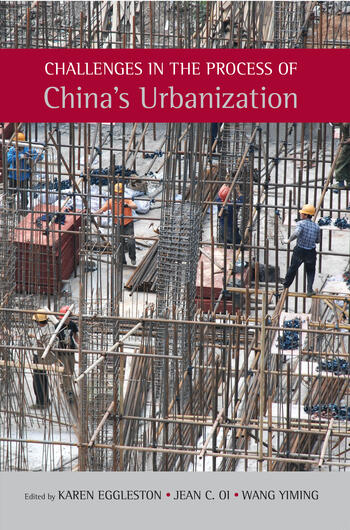
The same institutions that enabled China’s massive urbanization and spurred its economic growth now require further reform and innovation.

To address the issues facing the next phase of the nation’s transformation, the National New Urbanization Plan (2014–20) set ambitious targets for sustainable, human-centered, and environmentally friendly urbanization. This volume explores the key institutional and governance challenges China will face in reaching those goals. Its policy-focused contributions from leading social scientists in the United States and China explore aspects of urbanization ranging from migration and labor markets to agglomeration economies, land finance, affordable housing, and education policy. Subjects covered in the eleven chapters include:


    * Institutional problems leading to fiscal pressures on local governments and unequal provision of social    services to migrant families   

   * The history of land financing and threats to its sustainability

    * The difficulty of sorting out property rights in rural China

    * How administrative redistricting has allowed the urbanization of geographical administrative places to     outpace the urbanization of populations within those areas

    * How the hukou system may not be the sole, or even primary, mechanism restricting migrants from      public goods, such as their childrens’ education

    * Whether the nation’s food security is threatened by its ongoing urbanization

    * The current state of the provision of low-income housing, and future challenges

Professor Jean Oi is Director of the China Program, William Haas Professor of Chinese Politics, Stanford University; Lee Shau Kee Director of the Stanford Center, Peking University. Her work focuses on comparative politics, with special expertise on political economy and the process of reform in transitional systems.  Oi has written extensively on China's rural politics and political economy. Her State and Peasant in Contemporary China (University of California Press, 1989) examined the core of rural politics in the Mao period—the struggle over the distribution of the grain harvest—and the clientelistic politics that ensued. Her Rural China Takes Off (University of California Press, 1999) examined the property rights necessary for development and showed how "local state corporatism" facilitated rapid growth of rural industry.  Recent publications include Growing Pains: Tensions and Opportunity in China's Transformation (Brookings Institution Press, 2010), co-edited with Scott Rozelle and Xueguang Zhou; and “Development Strategies and Poverty Reduction in China,” in Yusuf Bangura, ed., The Developmental Road to Poverty Reduction, (2015); and “Rural Development,” in David S. Goodman, ed., Handbook of the Politics of China (Edward Elgar Publishing, 2015).

Professor Karen Eggleston is Director of the Asia Health Policy Program; Deputy Director, Shorenstein Asia-Pacific Research Center. She joined the Walter H. Shorenstein Asia-Pacific Research Center (APARC) in the summer of 2007. She is also a fellow at Stanford's Center for Health Policy/Primary Care and Outcomes Research (CHP/PCOR), and a Faculty Research Fellow of the National Bureau of Economic Research (NBER). Her research focuses on comparative healthcare systems and health reform in Asia, especially China; government and market roles in the health sector; payment incentives; healthcare productivity; and the economics of the demographic transition. Eggleston teaches through Stanford's East Asian studies program and is also affiliated with Stanford's public policy program.

Professor Klaus Desmet is Altshuler Centennial Interdisciplinary Professor at Southern Methodist University; Research Fellow at the Centre for Economic Policy Research. He holds an MSc in Business and Engineering from the Université Catholique de Louvain and a Ph.D. in Economics from Stanford University. He previously was professor at Universidad Carlos III de Madrid and has held visiting positions at a number of institutions, including the University of Illinois, Stanford University and the Bank of Spain. His research focuses on regional economics, international trade, economic growth and diversity.

Books will be available for sale. Cash or check only.


Department of Political Science
Stanford University
616 Serra Street
Stanford, CA 94305-26044

(650) 723-2843 (650) 725-9401
0
Senior Fellow at the Freeman Spogli Institute for International Studies
William Haas Professor in Chinese Politics
jean_oi_headshot.jpg PhD

Jean C. Oi is the William Haas Professor of Chinese Politics in the department of political science and a Senior Fellow of the Freeman Spogli Institute for International Studies at Stanford University. She is the founding director of the Stanford China Program at the Walter H. Shorenstein Asia-Pacific Research Center. Professor Oi is also the founding Lee Shau Kee Director of the Stanford Center at Peking University.

A PhD in political science from the University of Michigan, Oi first taught at Lehigh University and later in the Department of Government at Harvard University before joining the Stanford faculty in 1997.

Her work focuses on comparative politics, with special expertise on political economy and the process of reform in transitional systems. Oi has written extensively on China's rural politics and political economy. Her State and Peasant in Contemporary China (University of California Press, 1989) examined the core of rural politics in the Mao period—the struggle over the distribution of the grain harvest—and the clientelistic politics that ensued. Her Rural China Takes Off (University of California Press, 1999 and Choice Outstanding Academic Title, 1999) examines the property rights necessary for growth and coined the term “local state corporatism" to describe local-state-led growth that has been the cornerstone of China’s development model. 

She has edited a number of conference volumes on key issues in China’s reforms. The first was Growing Pains: Tensions and Opportunity in China's Transformation (Brookings Institution Press, 2010), co-edited with Scott Rozelle and Xueguang Zhou, which examined the earlier phases of reform. Most recently, she co-edited with Thomas Fingar, Fateful Decisions: Choices That Will Shape China’s Future (Stanford University Press, 2020). The volume examines the difficult choices and tradeoffs that China leaders face after forty years of reform, when the economy has slowed and the population is aging, and with increasing demand for and costs of education, healthcare, elder care, and other social benefits.

Oi also works on the politics of corporate restructuring, with a focus on the incentives and institutional constraints of state actors. She has published three edited volumes related to this topic: one on China, Going Private in China: The Politics of Corporate Restructuring and System Reform (Shorenstein APARC, 2011); one on Korea, co-edited with Byung-Kook Kim and Eun Mee Kim, Adapt, Fragment, Transform: Corporate Restructuring and System Reform in Korea (Shorenstein APARC, 2012); and a third on Japan, Syncretism: The Politics of Economic Restructuring and System Reform in Japan, co-edited with Kenji E. Kushida and Kay Shimizu (Brookings Institution, 2013). Other more recent articles include “Creating Corporate Groups to Strengthen China’s State-Owned Enterprises,” with Zhang Xiaowen, in Kjeld Erik Brodsgard, ed., Globalization and Public Sector Reform in China (Routledge, 2014) and "Unpacking the Patterns of Corporate Restructuring during China's SOE Reform," co-authored with Xiaojun Li, Economic and Political Studies, Vol. 6, No. 2, 2018.

Oi continues her research on rural finance and local governance in China. She has done collaborative work with scholars in China, including conducting fieldwork on the organization of rural communities, the provision of public goods, and the fiscal pressures of rapid urbanization. This research is brought together in a co-edited volume, Challenges in the Process of China’s Urbanization (Brookings Institution Shorenstein APARC Series, 2017), with Karen Eggleston and Wang Yiming. Included in this volume is her “Institutional Challenges in Providing Affordable Housing in the People’s Republic of China,” with Niny Khor. 

As a member of the research team who began studying in the late 1980s one county in China, Oi with Steven Goldstein provides a window on China’s dramatic change over the decades in Zouping Revisited: Adaptive Governance in a Chinese County (Stanford University Press, 2018). This volume assesses the later phases of reform and asks how this rural county has been able to manage governance with seemingly unchanged political institutions when the economy and society have transformed beyond recognition. The findings reveal a process of adaptive governance and institutional agility in the way that institutions actually operate, even as their outward appearances remain seemingly unchanged.

Selected Multimedia

Director of the China Program
Lee Shau Kee Director of the Stanford Center at Peking University
Faculty Affiliate at the Stanford Center on China's Economy and Institutions
Date Label
<i>Stanford University</i>

Shorenstein APARC
Stanford University
Encina Hall E301
Stanford, CA 94305-6055

(650) 723-9072 (650) 723-6530
0
Senior Fellow at the Freeman Spogli Institute for International Studies
Center Fellow at the Center for Health Policy and the Center for Primary Care and Outcomes Research
Faculty Research Fellow of the National Bureau of Economic Research
Faculty Affiliate at the Stanford Center on China's Economy and Institutions
karen-0320_cropprd.jpg PhD

Karen Eggleston is a Senior Fellow at the Freeman Spogli Institute for International Studies (FSI) at Stanford University and Director of the Stanford Asia Health Policy Program at the Shorenstein Asia-Pacific Research Center at FSI. She is also a Fellow with the Center for Innovation in Global Health at Stanford University School of Medicine, and a Faculty Research Fellow of the National Bureau of Economic Research (NBER). Her research focuses on government and market roles in the health sector and Asia health policy, especially in China, India, Japan, and Korea; healthcare productivity; and the economics of the demographic transition.

Eggleston earned her PhD in public policy from Harvard University and has MA degrees in economics and Asian studies from the University of Hawaii and a BA in Asian studies summa cum laude (valedictorian) from Dartmouth College. Eggleston studied in China for two years and was a Fulbright scholar in Korea. She served on the Strategic Technical Advisory Committee for the Asia Pacific Observatory on Health Systems and Policies and has been a consultant to the World Bank, the Asian Development Bank, and the WHO regarding health system reforms in the PRC.

Director of the Asia Health Policy Program, Shorenstein Asia-Pacific Research Center
Stanford Health Policy Associate
Faculty Fellow at the Stanford Center at Peking University, June and August of 2016
CV
Date Label
<i>Stanford University</i>
Klaus Desmet <i>Southern Methodist University</i>
Seminars
News Type
News
Date
Paragraphs

The Shorenstein Asia-Pacific Research Center (APARC), in pursuit of training the next generation of scholars on contemporary Asia, has selected two postdoctoral fellows for the 2017-18 academic year. The fellows will begin their year of academic study and research at Stanford this fall.

Shorenstein APARC has for more than a decade sponsored numerous junior scholars who come to the university to work closely with Stanford faculty, develop their dissertations for publication, participate in workshops and seminars, and present their research to the broader community.

The 2017-18 cohort includes two Shorenstein Postdoctoral Fellows; they carry a broad range of interests from labor migration policy in China to regional institutions in East Asia. Their bios and research plans are listed below:


Image
hyun seung cho
H. Seung Cho is completing his doctorate at Columbia University’s Department of Political Science. He researches U.S. and Chinese foreign policy toward East Asia’s regional institutions with a broader interest in U.S.-China relations, the political economy of East Asia and qualitative research methods. His dissertation probes the popular narrative that United States and China are competing over East Asia’s regional architecture, arguing that mutual misperception and security dilemma dynamics also play out in the politics of regional institution building. To explore this phenomenon, Seung has conducted extensive fieldwork in Beijing, Jakarta, Seoul and Washington, D.C. At Shorenstein APARC, Seung will be developing his dissertation into a book manuscript while looking to further examine the relationship between the politics of East Asia’s multilateral security institutions and their perceived lack of effectiveness. Previously, Seung was a predoctoral fellow at Peking University’s School of International Studies from 2014-16. Prior to starting his doctoral studies, he also served in South Korean military intelligence as part of the two-year national service. Seung holds a Bachelor of Science in government and economics and Master of Science in international relations from the London School of Economics and Political Science (LSE).


Image
samantha vortherms
Samantha Vortherms is a doctoral candidate in the University of Wisconsin – Madison Department of Political Science. Her research focuses on comparative political economy, development, social welfare and research methodology. Her dissertation examines subnational variation in access to citizenship rights in China through the household registration system. Her research has been supported by the National Science Foundation, the U.S. Department of Education through the Fulbright-Hays Doctoral Dissertation Research Abroad and the Social Science Research Council's Dissertation Proposal Development Fellowship, among others. At Shorenstein APARC, Sam will work on converting her dissertation to a book manuscript and advance her post-dissertation project on the role of the firm in labor migration policies. Before going to Wisconsin, Sam received her Master of Arts in international relations at the University of Chicago, Artium Magister in public policy from University of Chicago's Harris School of Public Policy, and a Bachelor of Arts from the University of Richmond. From 2014-16, she was a visiting research fellow at the National School of Development's China Center for Health Economics Research at Peking University.

Hero Image
encina hall
All News button
1
News Type
News
Date
Paragraphs

India is a focus of colloquia at the Shorenstein Asia-Pacific Research Center during the next few months. A seminar series entitled “A New India? The Impact of 25 Years of Reform” will explore the country’s economic growth and efforts to revitalize its foreign relations.

The colloquia, co-sponsored by Stanford’s Center for South Asia, will include lectures from scholars, policymakers and other thought leaders on India’s democratic system and society, and provide a forum to discuss how the country can overcome obstacles to long-term prosperity.

Kathleen Stephens, the William J. Perry Fellow at Shorenstein APARC and former U.S. ambassador to the Republic of Korea, has organized and will moderate the colloquia. She served as the chargé d'affaires at the U.S. Embassy in New Delhi in 2014.

Stephens said, “Now is the right time and Stanford is the right place for a renewed focus on India, its daunting challenges and its extraordinary potential. This series will consider the strategic bet U.S. policymakers have made on India's rise, and India's own aspirations to play a bigger global role, particularly in Asia.

“In this series and beyond, we want to knit together the expertise and resources at Stanford and in Silicon Valley with policy leaders from India and elsewhere to expand our understanding of India in all its contemporary complexity and importance.”

From 1999 to 2013, Shorenstein APARC had a prolific initiative that supported scholarly work related to South Asia. The center envisions the colloquia will be some of many activities about the region going forward.

A listing of the seminars and related multimedia can be accessed here; more information will be added as it becomes available.

Hero Image
ellis bridge gujarat india
A rickshaw is driven across Ellis Bridge in Ahmedabad, Gujarat, India.
siraanamwong/Getty Images
All News button
1
News Type
News
Date
Paragraphs

As 2017 approaches, the Shorenstein Asia-Pacific Research Center documents highlights from the 2015-16 academic year. The latest edition of the Center Overview, entitled "Challenges to Globalization," includes research, people, events and outreach features, and is now available for download online.

Hero Image
containers port singapore
A container is loaded onto a ship docked at the terminal port in Singapore, June 2016.
ROSLAN RAHMAN/AFP/Getty Images
All News button
1
-

Image
Due to an overwhelming response, we have reached venue capacity and are no longer accepting RSVPs. 


On November 8, the American electorate chose Donald Trump as their next President. Mr. Trump comes to office with a declared intent to drastically change U.S. trade policy and to reassess U.S. alliances, including in Asia. Faced with the realities of governing, however, how will the new administration shape its policies toward Asia? How will it tackle both economic and security challenges in the region, and globally?

A panel of Stanford experts, just returned from South Korea and Japan and discussions there with Asian policy makers, will discuss these questions.

The panelists:

Gi-Wook Shin, Senior Fellow, Freeman Spogli Institute for International Studies; Professor of Sociology; Director, Shorenstein Asia-Pacific Research Center; Director, Korea Program, Shorenstein Asia-Pacific Research Center

Michael Armacost, Shorenstein APARC Distinguished Fellow; Former U.S. Ambassador to Japan

Takeo Hoshi, Henri H. and Tomoye Takahashi Senior Fellow in Japanese Studies, Freeman Spogli Institute for International Studies; Director, Japan Program, Shorenstein Asia-Pacific Research Center

Kathleen Stephens, William J. Perry Distinguished Fellow; Former U.S. Ambassador to Korea

Panel Discussions
-

Tokyo Foundation - Shorenstein APARC Joint Symposium


RSVP required: send name & affiliation with the subject line “TF-APARC Symposium” to info@tkfd.or.jp
 

On November 8, Americans will go to the polls to choose their new president. How will the new administration tackle pressing issues confronting the United States and the world? For clues on the kind of policies the White House is likely to pursue starting next January to power the US economy and address foreign and security priorities, the Tokyo Foundation will host a symposium inviting top US and Japanese experts on November 17--less than 10 days following the election.

Organized jointly with the Shorenstein Asia-Pacific Research Center at Stanford University, the symposium will feature such experts on the Stanford faculty as Edward Lazear, former chairman of the President’s Council of Economic Advisers, and former US Ambassador to Japan Michael Armacost. Japanese panelists will include former World Bank economist and now Waseda University professor Shujiro Urata and Tokyo Foundation director of policy research Bonji Ohara.

To be conducted in English and Japanese (with simultaneous interpretation), the event will examine the direction of US policy, its impact on Japan, and the future of Japan-US relations.
 

Program

9:30     Opening Remarks

Gi-Wook Shin (Director, Shorenstein APARC, Stanford University)
Takeo Hoshi (Chair of the Board, Tokyo Foundation; Director, Japan Program, Shorenstein APARC, Stanford University)

9:40     Keynote Address

Edward Lazear (Professor, Graduate School of Business, and Senior Fellow, Hoover Institution, Stanford University; former Chairman of the President’s Council of Economic Advisers)

10:00   Panel Discussion: “Economic and Trade Policies under the New Administration”

Panelists
Shujiro Urata (Professor, Graduate School of Asia-Pacific Studies, Waseda University)
Edward Lazear
Kathleen Stephens
(Distinguished Fellow, Shorenstein APARC, Stanford University; former US Ambassador to South Korea)
Kenji Kushida (Research Associate, Japan Program, Shorenstein APARC, Stanford University)

Moderator
Takeo Hoshi

10:45   Q&A

11:00   Panel Discussion: “Foreign and Security Policies under the New Administration”

Panelists

Michael Armacost (Distinguished Fellow, Shorenstein APARC, Stanford University; former US Ambassador to Japan)
Karl Eikenberry (Distinguished Fellow, Shorenstein APARC, Stanford University; former US Ambassador to Afghanistan)
Bonji Ohara (Director of Policy Research, Tokyo Foundation)

Moderator
Gi-Wook Shin

11:45   Q&A


Event Link and RSVP


2nd Floor Meeting Room, Nippon Foundation Building (1-2-2 Akasaka, Minato-ku, Tokyo)

Symposiums
Subscribe to Environment