Health and Medicine

FSI’s researchers assess health and medicine through the lenses of economics, nutrition and politics. They’re studying and influencing public health policies of local and national governments and the roles that corporations and nongovernmental organizations play in providing health care around the world. Scholars look at how governance affects citizens’ health, how children’s health care access affects the aging process and how to improve children’s health in Guatemala and rural China. They want to know what it will take for people to cook more safely and breathe more easily in developing countries.

FSI professors investigate how lifestyles affect health. What good does gardening do for older Americans? What are the benefits of eating organic food or growing genetically modified rice in China? They study cost-effectiveness by examining programs like those aimed at preventing the spread of tuberculosis in Russian prisons. Policies that impact obesity and undernutrition are examined; as are the public health implications of limiting salt in processed foods and the role of smoking among men who work in Chinese factories. FSI health research looks at sweeping domestic policies like the Affordable Care Act and the role of foreign aid in affecting the price of HIV drugs in Africa.

-

The venue of this event has been moved to the Okimoto Conference room.

Dr. Ruger, a leading scholar of global and domestic health policy and public health, will speak about global and national health inequities, drawing from her research in Asia --including India, Indonesia, Malaysia, South Korea, Vietnam -- and Africa. With training in political economy, health policy, international relations, comparative social research and law, Dr. Ruger crosses disciplines to reexamine the principles and values that underlie health policy and public health and apply these principles empirically.  She created the health capability paradigm, challenging existing approaches and illuminating optimal health policies and she has developed an empirical approach to evaluate public health programs and health policies as they measure up to that paradigm.  Dr. Ruger’s scholarship has critically scrutinized the existing global health architecture in order to identify more effective global health policy responses linking public policy and law to global health theory at the global and national levels.  Dr. Ruger studies critical health policy and public health problems such as the equity and efficiency of health system access, financing, resource allocation, policy reform and the social determinants of health.  Her forthcoming book, Global Health Justice and Governance (OUP, in press), advances a theory of global health justice and governance called provincial globalism.

Image
jennifer prah ruger
Dr. Ruger received a bachelor’s degree in the honors program in political economy from the University of California-Berkeley, master’s degrees from Oxford University, the Fletcher School of Law and Diplomacy and Yale University, a doctoral degree from Harvard University, and completed a post-doctoral fellowship at Harvard's Center for Population and Development. Dr. Ruger has authored over 100 publications and is internationally recognized for her leadership and work, which has been cited by the United Nations, World Bank, World Health Organization and United States Government.  She has been Principal Investigator and Co-Investigator on awards from the National Institutes of Health, Fogarty International Center, Hewlett Foundation, Henry J. Kaiser Family Foundation and she was awarded a Guggenheim Fellowship to complete Global Health Justice and Governance (OUP, in press).

Other papers:

1. Coping with Health Care Expenses Among Poor Households: Evidence from a Rural Commune in Vietnam: https://papers.ssrn.com/sol3/papers.cfm?abstract_id=1435832

2. Impact of Health Insurance on Health Care Treatment and Cost in Vietnam: A Health Capability Approach to Financial Protection: https://papers.ssrn.com/sol3/papers.cfm?abstract_id=1515733

3. Effect of Health Expenses on Household Capabilities and Resource Allocation in a Rural Commune in Vietnam: https://papers.ssrn.com/sol3/papers.cfm?abstract_id=1435820

4. The Changing Donor Landscape in Health Sector Aid to Vietnam: A Qualitative Case Study: http://www.sciencedirect.com/science/article/pii/S0277953615001719

5. An Alternative Framework for Analyzing Financial Protection in Health: https://papers.ssrn.com/sol3/papers.cfm?abstract_id=2139693

Jennifer Prah Ruger Amartya Sen Professor of Health Equity, Economics, and Policy, School of Social Policy and Practice, University of Pennsylvania
Seminars
News Type
News
Date
Paragraphs

The Shorenstein Asia-Pacific Research Center (APARC), in pursuit of training the next generation of scholars on contemporary Asia, has selected two postdoctoral fellows for the 2017-18 academic year. The fellows will begin their year of academic study and research at Stanford this fall.

Shorenstein APARC has for more than a decade sponsored numerous junior scholars who come to the university to work closely with Stanford faculty, develop their dissertations for publication, participate in workshops and seminars, and present their research to the broader community.

The 2017-18 cohort includes two Shorenstein Postdoctoral Fellows; they carry a broad range of interests from labor migration policy in China to regional institutions in East Asia. Their bios and research plans are listed below:


Image
hyun seung cho
H. Seung Cho is completing his doctorate at Columbia University’s Department of Political Science. He researches U.S. and Chinese foreign policy toward East Asia’s regional institutions with a broader interest in U.S.-China relations, the political economy of East Asia and qualitative research methods. His dissertation probes the popular narrative that United States and China are competing over East Asia’s regional architecture, arguing that mutual misperception and security dilemma dynamics also play out in the politics of regional institution building. To explore this phenomenon, Seung has conducted extensive fieldwork in Beijing, Jakarta, Seoul and Washington, D.C. At Shorenstein APARC, Seung will be developing his dissertation into a book manuscript while looking to further examine the relationship between the politics of East Asia’s multilateral security institutions and their perceived lack of effectiveness. Previously, Seung was a predoctoral fellow at Peking University’s School of International Studies from 2014-16. Prior to starting his doctoral studies, he also served in South Korean military intelligence as part of the two-year national service. Seung holds a Bachelor of Science in government and economics and Master of Science in international relations from the London School of Economics and Political Science (LSE).


Image
samantha vortherms
Samantha Vortherms is a doctoral candidate in the University of Wisconsin – Madison Department of Political Science. Her research focuses on comparative political economy, development, social welfare and research methodology. Her dissertation examines subnational variation in access to citizenship rights in China through the household registration system. Her research has been supported by the National Science Foundation, the U.S. Department of Education through the Fulbright-Hays Doctoral Dissertation Research Abroad and the Social Science Research Council's Dissertation Proposal Development Fellowship, among others. At Shorenstein APARC, Sam will work on converting her dissertation to a book manuscript and advance her post-dissertation project on the role of the firm in labor migration policies. Before going to Wisconsin, Sam received her Master of Arts in international relations at the University of Chicago, Artium Magister in public policy from University of Chicago's Harris School of Public Policy, and a Bachelor of Arts from the University of Richmond. From 2014-16, she was a visiting research fellow at the National School of Development's China Center for Health Economics Research at Peking University.

Hero Image
encina hall
All News button
1
-
The benefits of screening depend on whether information changes individual behaviors. We study the National Health Screening Program in Korea which provides free general health screening to individuals aged over 40. We apply a regression discontinuity design to estimate behavioral responses to information about one’s risk classifications for diabetes, obesity, and high cholesterol. We find evidence of weight loss around the high risk threshold for diabetes, where risk information is combined with prompting for a secondary examination and medical treatment. However, we find no differences around other risk classification thresholds, where risk information is not combined with such prompting.
 
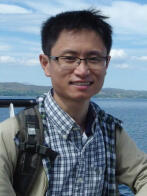
Image
kim portrait
Hyuncheol Bryant Kim
is an applied micro-economist with broad interests in  health economics, development economics, public economics, education economics, and labor economics. The main goal of Prof.Kim's research is to understand the impact and behavioral responses to the public intervention programs in both developed and developing countries. Prof.Kim has been investigating various public intervention programs such as cancer screening, general health screening, long-term care insurance, girls' education support program, HIV/AIDS prevention programs such as male circumcision and HIV testing, mother and child health program as well as job opportunity and internship program on employment.


Hyuncheol Bryant Kim Lois and Mel Tukman Assistant Professor, Department of Policy Analysis and Management (PAM), Cornell University
Seminars
News Type
News
Date
Paragraphs

India is a focus of colloquia at the Shorenstein Asia-Pacific Research Center during the next few months. A seminar series entitled “A New India? The Impact of 25 Years of Reform” will explore the country’s economic growth and efforts to revitalize its foreign relations.

The colloquia, co-sponsored by Stanford’s Center for South Asia, will include lectures from scholars, policymakers and other thought leaders on India’s democratic system and society, and provide a forum to discuss how the country can overcome obstacles to long-term prosperity.

Kathleen Stephens, the William J. Perry Fellow at Shorenstein APARC and former U.S. ambassador to the Republic of Korea, has organized and will moderate the colloquia. She served as the chargé d'affaires at the U.S. Embassy in New Delhi in 2014.

Stephens said, “Now is the right time and Stanford is the right place for a renewed focus on India, its daunting challenges and its extraordinary potential. This series will consider the strategic bet U.S. policymakers have made on India's rise, and India's own aspirations to play a bigger global role, particularly in Asia.

“In this series and beyond, we want to knit together the expertise and resources at Stanford and in Silicon Valley with policy leaders from India and elsewhere to expand our understanding of India in all its contemporary complexity and importance.”

From 1999 to 2013, Shorenstein APARC had a prolific initiative that supported scholarly work related to South Asia. The center envisions the colloquia will be some of many activities about the region going forward.

A listing of the seminars and related multimedia can be accessed here; more information will be added as it becomes available.

Hero Image
ellis bridge gujarat india
A rickshaw is driven across Ellis Bridge in Ahmedabad, Gujarat, India.
siraanamwong/Getty Images
All News button
1
-

South Korea, the most rapidly aging society in the world, introduced a public long-term care insurance (LTCI) program with universal coverage in 2008. This presentation will begin with the socioeconomic and political context of the introduction of the LTCI and explain the finance and provision of LTCI in Korea, compared to the LTCIs of Germany and Japan. It will provide recent evidence on the performance of the LTCI along with its prospects and lessons for other countries.

Image
hongsookim photo
Hongsoo Kim is an associate professor at the Graduate School of Public Health at Seoul National University (SNU), South Korea, and a 2016-2017 Fulbright Visiting Scholar & Takemi Fellow in International Health at Harvard School of Public Health, United States. Her research areas include aging and health policy, long-term care systems, and health system performance assessment. She is currently involved the Comparative Diabetes Net Value Project led by Dr. Karen Eggleston at Stanford University. She was formerly the scientific committee chair of the Korean Academy of Long-term Care, the Korean Gerontological Society, and the Korean Society of Health Policy and Administration. She received her PhD from New York University, where she worked as assistant professor before she joined SNU. 


Hongsoo Kim Fulbright Scholar & Takemi Fellow at Harvard School of Public Health, U.S.; Associate Professor at Seoul National University Graduate School of Public Health, South Korea
Seminars
-

This seminar will discuss the marriage distortion and the associated welfare loss caused by the One-Child Policy (OCP) in China. Using the variation in the ethnicity-specific assigned birth quotas and different fertility penalties across provinces over time, we first show that the OCP induced a significantly higher unmarried rate and more interethnic marriages. Using sufficient statistics approach, we then derive a formula for the social welfare loss caused by the OCPinduced lower fertility and marriage distortion, and it only depends on the estimated reducedform elasticities. Our estimates suggest that the associated welfare loss is around 3.7 percent of annual household income, with marriage distortion contributing 30 percent of this. These findings highlight the unintended behavioral responses to public policies and corresponding social consequences.

Image
yi zhou crop
Yi Zhou is a PhD candidate in Demography at University of California – Berkeley. His research interests include Economic Demography, Formal Demography and Health Economics. He received a M.A. in Economics and a B.B.A. in Accounting from Peking University."

 
Presentation
Download pdf
Yi Zhou Department of Demography, University of California, Berkeley
Seminars
News Type
News
Date
Paragraphs

As 2017 approaches, the Shorenstein Asia-Pacific Research Center documents highlights from the 2015-16 academic year. The latest edition of the Center Overview, entitled "Challenges to Globalization," includes research, people, events and outreach features, and is now available for download online.

Hero Image
containers port singapore
A container is loaded onto a ship docked at the terminal port in Singapore, June 2016.
ROSLAN RAHMAN/AFP/Getty Images
All News button
1
News Type
News
Date
Paragraphs

The Japan Program held the fourth annual Stanford Juku on Japanese Political Economy from September 29 – October 1. Over 40 scholars from various parts of the US and Japan participated in the conference, which took place at the Oksenberg Conference Center at Encina Hall. The first portion of the program (9/29 and morning of 9/30) focused on research in political science/political economy and international relations, and the latter portion of the program (afternoon of 9/30 and 10/1) focused on research in economics.

The main goal of the program is to attract young researchers who will go on to become leaders in the study of Japanese politics and Japanese economy in the near future.  Distinctive features of the Juku are the long times allotted to each paper to allow for two in-depth discussants and discussion among participants, as well as ample time for informal discussions and interactions among participants allowing for collaborations and expansion of the network of researchers on Japan in political science and economics. We received a large volume of quality paper submissions this year, which made the selection process very competitive. 

The first day included four papers in political science/political economy and international relations. Daniel Smith from Harvard University presented a paper co-authored by Yusaku Horiuchi (Dartmouth College) and Teppei Yamamoto (Massachusetts Institute Technology) entitled, "Identifying Voter Preferences for Politicians' Personal Attributes: A Conjoint Experiment in Japan," with discussants Ethan Scheiner (University of California, Davis) and Mike Tomz (Stanford University).

Amy Catalinac (New York University) presented a paper co-authored by Frances Rosenbluth (Yale University) and Hikaru Yamagishi (Yale University) entitled "Party Strategies and Foreign Policy in Post-Electoral Reform Japan." The Discussants for the paper were Gary Cox (Stanford) and Teppei Yamamoto (MIT).

Jacques Hymans from University of Southern California presented his paper on “The Limits of Japan's Energy Angst: The Case of Geothermal Power.” Mark Thurber (Stanford) and Steve Vogel (University of California, Berkeley) were the discussants.

The fourth paper was “Democratic Community and Its Consequences: Evidence from Japan” by Jonathan Chu (Stanford), discussed by Christina Davis (Princeton University) and Megumi Naoi (University of California, San Diego).

Christina Davis (Princeton) started off the second day by presenting her paper “Joining the Club: Accession to the GATT/WTO." Discussants were Jonathan Chu (Stanford) and Phillip Lipscy (Stanford).

The political science/political economy section ended with Megumi Naoi (UC, San Diego) presenting a paper co-authored by Chun-Fang Chiang (National Taiwan University), Jason Kuo (Post-doc, Georgetown University), Jing-tan Liu (National Taiwan University) entitled, "What Do Voters Learn from Foreign News? Experimental Evidence on PTA Diffusion in Japan and Taiwan." Discussants were Kenji Kushida (Stanford) and Yuki Takagi (Stanford). 

After lunch, two economics papers were presented.  Wataru Miyamoto (Bank of Canada) presented a paper co-authored by Thuy Lan Ngyuen (Santa Clara University) and Dmitriy Sergeyev (Bocconi University) entitled, "Government Spending Multipliers under the Zero Lower Bound: Evidence from Japan" with discussants Yuriy Gordonichenko (UC, Berkeley) and Johannes Wieland (UC, San Diego).

The second paper was “Government Spending Multipliers under the Zero Lower Bound: Evidence from Japan”, by Robert Dekle (USC), Nobuhiko Kiyotaki (Princeton) and Tsutomu Miyagawa (Gakushuin University).  Huiyu Li (Federal Bank of San Francisco) and Shuichiro Nishioka (West Virgina University) were the discussants.  A group dinner followed the second day.

The final day included four papers in economics.  The first was “Will the Sun Also Rise? Five Growth Strategies for Japan by Yoko Takeda (Mitsubishi Research Insitute).  Discussants were Michael Hutchison (US, Santa Cruz) and Ryo Kambayashi (Hitotsubashi University).

The second paper was "Natural Disaster and Natural Selection" by Hirofumi Uchida (Kobe University), Daisuke Miyakawa (Hitotsubashi), Kaoru Hosono (Gakushuin), Arito Ono (Chuo University), Taisuke Uchino (Daito Bunka University) and Iichiro Uesugi (Hitotsubashi).  Discussants were Nobuhiko Hibara (Waseda University) and Johannes Wieland (UC, San Diego).

Koichiro Ito (University of Chicago) presented a paper co-authored by Takanori Ida (Kyoto University) and Makoto Tanaka (GRIPS) entitled “Information Frictions, Switching Costs, and Selection on Elasticity: A Field Experiment on Electricity Tariff Choice.”  Karen Eggleston (Stanford) and Hitoshi Shigeoka (Simon Fraser University) were the discussants.

The final paper was “Good Jobs and Bad Jobs in Japan: 1982-2007” by Ryo Kambayashi (Hitotsubashi) and Takao Kato (Colegate University), discussed by Takeo Hoshi (Stanford) and David Vera (California State University, Fresno).

Hero Image
photo juku 2016
All News button
1
-

Stanford Juku on Japanese Political Economy 2016

September 29 - October 1, 2016

Oksenberg Conference Room

Stanford Japan Program at Shorenstein Asia-Pacific Research Center

The Japan Program at the Walter H. Shorenstein Asia-Pacific Research Center (S-APARC) at Stanford University started Stanford Summer Juku (SSJ) in 2013.  In SSJ, researchers on Japanese politics and Japanese economy get together and discuss their research in a relaxed setting. The fourth annual meeting is held at Stanford on September 29 - October 1, 2016.  The first portion of the program focuses on research in political science/polilitcal economy and international relations, and the latter portion of the program focuses on research in economics.

Takeo Hoshi, Kenji E. Kushida, Phillip Lipscy


Report - Stanford Juku 2016


Program

9/29/2016

8:30-9:00    Breakfast

9:00-10:15  Session I:

"Identifying Voter Preferences for Politicians' Personal Attributes: A Conjoint Experiment in Japan", Yusaku Horiuchi (Dartmouth College), Daniel Smith (Harvard University) and Teppei Yamamoto (Massachusetts Institute of Technology)

Discussants:
Ethan Scheiner (University of California, Davis)
Mike Tomz (Stanford University)
 

10:15-10:45  Break

10:45-12:00  Session II:

Party Strategies and Foreign Policy in Post-Electoral Reform Japan, Amy Catalinac (New York University), Frances Rosenbluth (Yale University), Hikaru Yamagishi (Yale University)

Discussants:
Gary Cox (Stanford University)
Teppei Yamamoto (Massachusetts Institute of Technology)
 

12:00-1:00  Lunch

1:00-2:15    Session III:

The Limits of Japan's Energy Angst: The Case of Geothermal Power, Jacques Hymans (University of Southern Califorrnia) and Fumiya Uchikoshi, Ph.D. (University of Tokyo)

Discussants:
Mark Thurber (Stanford University)
Steve Vogel (University of California, Berkeley)
 

2:15- 3:30   Session IV:

Democratic Community and Its Consequences: Evidence from Japan, Jonathan Chu (Stanford University)

Discussants:
Christina Davis (Princeton University)
Megumi Naoi (University of California, San Diego)


9/30/2016

8:30-9:00   Breakfast

9:00-10:15 Session I:

“Joining the Club: Accession to the GATT/WTO”, Christina Davis (Princeton University) and Meredith Wilf (University of Pittsburgh)

Discussants:
Jonathan Chu (Stanford University)
Phillip Lipscy (Stanford University)
 

10:15-10:45  Break

10:45-12:00  Session II:

What Do Voters Learn from Foreign News? Experimental Evidence on PTA Diffusion in Japan and Taiwan”, Chun-Fang Chiang (National Taiwan University), Jason Kuo (Post-doc, Georgetown University), Jin-tan Liu (National Taiwan University), and Megumi Naoi (University of California, San Diego)

Discussants:
Kenji Kushida (Stanford University)
Yuki Takagi (Stanford University)
 

12:00-1:00  Lunch

1:00-2:15    Session III:

Government Spending Multipliers under the Zero Lower Bound: Evidence from Japan”, Wataru Miyamoto  (Bank of Canada), Thuy Lan Ngyuen (Santa Clara University) and Dmitriy Sergeyev (Bocconi University)

Discussants:
Yuriy Gordonichenko (University of California, Berkeley)
Johannes Wieland (University of California, San Diego)
 

2:15-3:30    Session IV:

Product Dynamics and Aggregate Shocks: Evidence from Japanese product and firm level data”, Robert Dekle (University of Southern California), Atsushi Kawakami (Teikyo University), Nobuhiro Kiyotaki (Princeton University) and Tsutomu Miyagawa (Gakushuin University)

Discussants:
Huiyu Li (Federal Reserve Bank of San Francisco)
Shuichiro Nishioka (West Virginia University)
 

6:30        Group Dinner at Tacolicious


10/1/2016

8:30-9:00    Breakfast

9:00-10:15  Session I:

Will the Sun Also Rise? Five Growth Strategies for Japan”, Yoko Takeda (Mitsubishi Research Institute)

Discussants:
Michael Hutchison (University of California, Santa Cruz)
Ryo Kambayashi (Hitotsubashi University)
 

10:15-10:45  Break

10:45-12:00  Session II:

Natural Disaster and Natural Selection”, Hirofumi Uchida (Kobe University), Daisuke Miyakawa (Hitotsubashi University), Kaoru Hosono (Gakushuin University), Arito Ono (Chuo University), Taisuke Uchino (Daito Bunka University) and Iichiro Uesugi (Hitotsubashi University)

Discussants:
Nobuhiko Hibara (Waseda University)
Johannes Wieland (University of California, San Diego)
 

12:00-1:00  Lunch

1:00-2:15    Session III:

Information Frictions, Switching Costs, and Selection on Elasticity: A Field Experiment on Electricity Tariff Choice”, Koichiro Ito (University of Chicago), Takanori Ida (Kyoto University) and Makoto Tanaka (GRIPS)

Discussants:
Karen Eggleston (Stanford University)
Hitoshi Shigeoka (Simon Fraser University)
 

2:15-3:30    Session IV:

Good Jobs and Bad Jobs in Japan: 1982-2007”, Ryo Kambayashi (Hitotsubashi University) and Takao Kato (Colegate University)

Discussants:
Takeo Hoshi (Stanford University)
David Vera (California State University, Fresno)


Subscribe to Health and Medicine