


How Censorship in China Allows Government Criticism but Silences Collective Expression
-
We offer the first large scale, multiple source analysis of the outcome of what may be the most extensive effort to selectively censor human expression ever implemented. To do this, we have devised a system to locate, download, and analyze the content of millions of social media posts originating from nearly 1,400 different social media services all over China before the Chinese government is able to find, evaluate, and censor (i.e., remove from the Internet) the large subset they deem objectionable. Using modern computer-assisted text analytic methods that we adapt and validate in the Chinese language, we compare the substantive content of posts censored to those not censored over time in each of 95 issue areas. Contrary to previous understandings, posts with negative, even vitriolic, criticism of the state, its leaders, and its policies are not more likely to be censored. Instead, we show that the censorship program is aimed at curtailing collective action by silencing comments that represent, reinforce, or spur social mobilization, regardless of content. Censorship is oriented toward attempting to forestall collective activities that are occurring now or may occur in the future -- and, as such, seem to clearly expose government intent, such as examples we offer where sharp increases in censorship presage government action outside the Internet. This is joint work with Jennifer Pan and Molly Roberts.
Gary King is the Albert J. Weatherhead III University Professor at Harvard University -- one of 24 with the title of University Professor, Harvard's most distinguished faculty position. He is based in the Department of Government (in the Faculty of Arts and Sciences) and serves as director of the Institute for Quantitative Social Science. King develops and applies empirical methods in many areas of social science research, focusing on innovations that span the range from statistical theory to practical application.
King received a B.A. from SUNY New Paltz (1980) and a Ph.D. from the University of Wisconsin-Madison (1984). His research has been supported by the National Science Foundation, the Centers for Disease Control and Prevention, the World Health Organization, the National Institute of Aging, the Global Forum for Health Research, and centers, corporations, foundations, and other federal agencies.
Philippines Conference Room
Gary King
Albert J. Weatherhead III University Professor
Speaker
Department of Government, Harvard University
Seminars
Education And Employment Among Muslims In India - An Analysis Of Patterns And Trends
Related Multimedia

The Next Phase of China’s Health System Reforms
-
In spring 2009, China’s leadership announced ambitious national health reforms. Have the five stated goals of the first three years of reform been met? What policies will China pursue in the next phase? As a prominent advisor to China's State Council Health Reform Office, Liu will discuss progress and prospects for reforms—especially the role of the private sector within the health system—within the context of China’s 2012 leadership transition.
Gordon Liu is a professor of economics at Peking University's (PKU) Guanghua School of Management, and director of PKU's China Center for Health Economic Research. Previously, he served as a tenured associate professor at the University of North Carolina at Chapel Hill (2000–2006), and as an assistant professor at the University of Southern California (1994–2000).
Liu's primary research interests include health and development economics, health policy and reform, and pharmaceutical economics. His current research is funded by the State Council Health Reform Office, the National Science Foundation, UNICEF, and the China Medical Board.
Liu currently serves on the State Council Health Reform Advisory Commission, and the Expert Panel for the State Ministry of Human Resource and Social Security. He serves as co-editor for the journal Value in Health, and as editor-in-chief for China Journal of Pharmaceutical Economics. He sits on the editorial boards for the European Health Economic Review, Global Handbook for Health Economics, and Chinese Journal of Health Economics.
He received his PhD in Economics from the City University of New York Graduate School while working as a graduate research fellow at the National Bureau of Economic Research under the supervision of Michael Grossman (1986–1991). He obtained post-doctoral training at Harvard University with William Hsiao (1992–1993). Liu has served as the president for the Chinese Economists Society, and chair for the Asian Consortium for the International Society for Pharmacoeconomics and Outcomes Research.
Philippines Conference Room
Gordon Liu
Professor of Economics
Speaker
Peking University Guanghua School of Management
Seminars
Patterns of Elderly Life Expectancy in Three Chinese Cities: Hong Kong, Shanghai and Taipei
Related Multimedia
Patterns of Elderly Life Expectancy in Three Chinese Cities: Hong Kong, Shanghai and Taipei
Related Multimedia
The Fallout From the Bo Xilai Affair
-
The fall of Bo Xilai is the most serious political crisis in China since Tiananmen in 1989. The leadership succession process was nearly derailed and a deep rift has opened up at the top of the Communist Party. While many critical details of this power struggle remain unknown, the effects of this incident are certain to be far-reaching. Many key questions have been raised, including: How will the fall of Bo affect the new leadership line-up and its policies? How will the rift affect the party's ability to maintain control over a society showing growing signs of defiance and tensions? What does the incident tell us about the systemic corruption at the core of the party's leadership? Professor Minxin Pei will address these and other issues during this timely seminar.
About the Speaker
Minxin Pei joined Claremont McKenna College in 2009. Prior to that he was a senior associate and the director of the China Program at the Carnegie Endowment for International Peace in Washington, DC.Image
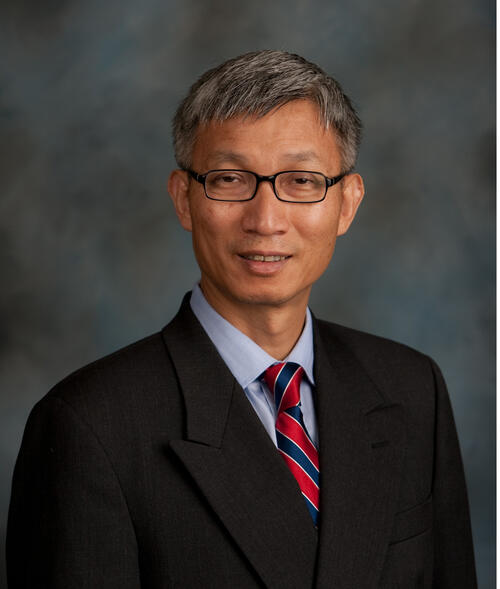
Pei's research focuses on democratization in developing countries, economic reform and governance in China, and U.S.-China relations. He is the author of From Reform to Revolution: The Demise of Communism in China and the Soviet Union (Harvard University Press, 1994) and China’s Trapped Transition: The Limits of Developmental Autocracy (Harvard University Press, 2006). Pei’s research has been published in Foreign Policy, Foreign Affairs, The National Interest, Modern China, China Quarterly, Journal of Democracy, and many edited books.
He is a frequent commentator for BBC World News, Voice of America, and National Public Radio; his op-eds have appeared in the Financial Times, the New York Times, the Washington Post, Newsweek International, the International Herald Tribune, and other major newspapers.
Pei received his PhD in political science from Harvard University. He was on the faculty at Princeton University from 1992 to 1998, and he has received numerous prestigious fellowships, including the National Fellowship at the Hoover Institution at Stanford University, the McNamara Fellowship at the World Bank, and the Olin Faculty Fellowship of the Olin Foundation.
Philippines Conference Room
Minxin Pei
Tom and Margot Pritzker ’72 Professor of Government and Director of the Keck Center for International and Strategic Studies
Speaker
Claremont McKenna College
Xueguang Zhou
Shorenstein APARC
Stanford University
Encina Hall, E301
Stanford, CA 94305-6055
0
xgzhou@stanford.edu
Senior Fellow at the Freeman Spogli Institute for International Studies
Kwoh-Ting Li Professor in Economic Development
Professor of Sociology
Faculty Affiliate at the Stanford Center on China's Economy and Institutions
Xueguang Zhou is the Kwoh-Ting Li Professor in Economic Development, a professor of sociology, and a Freeman Spogli Institute for International Studies senior fellow. His main area of research is on institutional changes in contemporary Chinese society, focusing on Chinese organizations and management, social inequality, and state-society relationships.
One of Zhou's current research projects is a study of the rise of the bureaucratic state in China. He works with students and colleagues to conduct participatory observations of government behaviors in the areas of environmental regulation enforcement, in policy implementation, in bureaucratic bargaining, and in incentive designs. He also studies patterns of career mobility and personnel flow among different government offices to understand intra-organizational relationships in the Chinese bureaucracy.
Another ongoing project is an ethnographic study of rural governance in China. Zhou adopts a microscopic approach to understand how peasants, village cadres, and local governments encounter and search for solutions to emerging problems and challenges in their everyday lives, and how institutions are created, reinforced, altered, and recombined in response to these problems. Research topics are related to the making of markets, village elections, and local government behaviors.
His recent publications examine the role of bureaucracy in public goods provision in rural China (Modern China, 2011); interactions among peasants, markets, and capital (China Quarterly, 2011); access to financial resources in Chinese enterprises (Chinese Sociological Review, 2011, with Lulu Li); multiple logics in village elections (Social Sciences in China, 2010, with Ai Yun); and collusion among local governments in policy implementation (Research in the Sociology of Organizations, 2011, with Ai Yun and Lian Hong; and Modern China, 2010).
Before joining Stanford in 2006, Zhou taught at Cornell University, Duke University, and Hong Kong University of Science and Technology. He is a guest professor at Peking University, Tsinghua University, and the People's University of China. Zhou received his Ph.D. in sociology from Stanford University in 1991.
The Institutional Foundations of the Chinese Bureaucratic State
Learn moreCV
Document
zhou_cv2020_aparc.pdf
(226.36 KB)
Hide publication sections
Off
Seminars