International Development

FSI researchers consider international development from a variety of angles. They analyze ideas such as how public action and good governance are cornerstones of economic prosperity in Mexico and how investments in high school education will improve China’s economy.

They are looking at novel technological interventions to improve rural livelihoods, like the development implications of solar power-generated crop growing in Northern Benin.

FSI academics also assess which political processes yield better access to public services, particularly in developing countries. With a focus on health care, researchers have studied the political incentives to embrace UNICEF’s child survival efforts and how a well-run anti-alcohol policy in Russia affected mortality rates.

FSI’s work on international development also includes training the next generation of leaders through pre- and post-doctoral fellowships as well as the Draper Hills Summer Fellows Program.

Authors
Callista Wells
News Type
News
Date
Paragraphs

On February 10, 2021, the China Program at Shorenstein APARC hosted Professor Oriana Skylar Mastro, Center Fellow at the Freeman Spogli Institute for International Studies​ for the virtual program "Military Competition with China: Harder to Win Than During the Cold War?" Professor Jean Oi, William Haas Professor of Chinese Politics and director of the APARC China Program, moderated the event.

As US-China competition intensifies, experts debate the degree to which the current strategic environment resembles that of the Cold War. Those that argue against the analogy often highlight how China is deeply integrated into the US-led world order. They also point out that, while tense, US-China relations have not turned overtly adversarial. But there is another, less optimistic reason the comparison is unhelpful: deterring and defeating Chinese aggression is harder now than it was against the Soviet Union. In her talk, Dr. Mastro analyzed how technology, geography, relative resources and the alliance system complicate U.S. efforts to enhance the credibility of its deterrence posture and, in a crisis, form any sort of coalition. Mastro and Oi's thought-provoking discussion ranged from the topic of why even US allies are hesitant to take a strong stance against China to whether or not Taiwan could be a catalyst for military conflict. Watch now: 

Read More

Min Ye speaking
News

Domestic or International? The Belt and Road Initiative Is More Internally Focused Than We Think, Says Expert Min Ye

Domestic or International? The Belt and Road Initiative Is More Internally Focused Than We Think, Says Expert Min Ye
Concept of U,S.-China technology competition: brain-shaped boxing gloves covered in U.S. and China flags facing against each other on a background of a motherboard
News

Caught in the Crossfire: The Future Of U.S.-China Science Collaboration and Its Impact on University Education

Caught in the Crossfire: The Future Of U.S.-China Science Collaboration and Its Impact on University Education
Banner of Hau L. Lee
News

The Pandemic, U.S.-China Tensions and Redesigning the Global Supply Chain

The Pandemic, U.S.-China Tensions and Redesigning the Global Supply Chain
Hero Image
Photograph of Xi Jinping and Vladmir Putin walking in front of two lines of armed Chinese soldiers Getty Images
All News button
1
Subtitle

On February 10th, the APARC China Program hosted Professor Oriana Mastro to discuss military relations between the US and China, and why deterrence might be even more difficult than during the Cold War.

Authors
Callista Wells
News Type
News
Date
Paragraphs

On January 27, 2021, the China Program at Shorenstein APARC hosted Professor Hau L. Lee, The Thoma Professor of Operations, Information & Technology at the Stanford Graduate School of Business for the virtual program “The Pandemic, U.S-China Tensions and Redesigning the Global Supply Chain.” Professor Jean Oi, William Haas Professor of Chinese Politics and director of the APARC China Program, moderated the event.

Professor Lee focused on an important question that has only become more pressing due to the COVID-19 pandemic: How, if at all, should businesses redesign their supply chains? Since the beginning of the pandemic, explains Lee, there has been an increase in calls for “redundancy” in supply chains in order to protect them from the problems they faced early in the pandemic, when China was first hit by shut downs and slowed productivity. Advice has been varied, ranging from the “China Plus One” strategy in which businesses simply add a secondary production location, to completely domesticating supply chains.

Lee warns, however, of the perils of overreaction. There are numerous risks that come along with a fully domestic supply chain, not least the danger of “having all of your eggs in one basket.” Instead, says Lee, businesses should move cautiously and, instead of fully divesting from China, should use the country intelligently. 

Professor Lee’s “In and Out Design” encourages businesses to work from the inside out, securing and strengthening their supply chains by starting at home. Companies must first build “internal supply chain excellence,” after which they can move on to making sure their strategic partners are equally strong and can work to their advantage. Eventually, companies can move on to strengthening the extended value chain and, ultimately, their entire ecosystem. Using strategies like dual response, leveraging “lubricants,” and bolstering capacity-building capabilities, businesses can create a more stable future. 

The session concluded with a fruitful Q&A between Professor Lee and the audience, moderated by Professor Oi.

A video recording of this program is available upon request. Please contact Callista Wells, China Program Coordinator at cvwells@stanford.edu with any inquiries.

Read More

Min Ye speaking
News

Domestic or International? The Belt and Road Initiative Is More Internally Focused Than We Think, Says Expert Min Ye

Domestic or International? The Belt and Road Initiative Is More Internally Focused Than We Think, Says Expert Min Ye
Concept of U,S.-China technology competition: brain-shaped boxing gloves covered in U.S. and China flags facing against each other on a background of a motherboard
News

Caught in the Crossfire: The Future Of U.S.-China Science Collaboration and Its Impact on University Education

Caught in the Crossfire: The Future Of U.S.-China Science Collaboration and Its Impact on University Education
Photograph of the UN building in Geneva, Switzerland
News

Rebuilding International Institutions Will be Tough but Necessary, Say Stanford Experts Thomas Fingar and Stephen Stedman

Fingar and Stedman spoke as part of the APARC program “Rebuilding International Institutions,” which examined the future of international institutions such as the United Nations (UN), World Trade Organization (WTO), and World Health Organization (WHO) in our evolving global political landscape.
Rebuilding International Institutions Will be Tough but Necessary, Say Stanford Experts Thomas Fingar and Stephen Stedman
Hero Image
Banner of Hau L. Lee
All News button
1
-


4:00-5:00pm California, 18-February 2021
7:00-8:00pm Washington DC, 18-February 2021
3:00-4:00am  Kenya, 19-February 2021
11:00am-12:00pm Sydney, Australia 19-February 2021


The Bay of Bengal, while split by national boundaries and even our concepts of distinct South and Southeast Asian regions, is re-emerging as a connected geographic and demographic space. Some of Asia’s most consequential transnational policy challenges will be most starkly presented here, across the borders of India, Bangladesh, and Burma – and traditional policy-making structures are already struggling to cope with environmental disasters, the mass movement of people, and the yawning need for economic connectivity. This webinar will examine these policy challenges, from the fragility of the Sundarbans ecosystem to the transnational implications of the Burma coup, and whether existing state and multilateral institutions are capable of addressing them.

SPEAKERS:

Image
Kelley Eckels Currie
Kelley Eckels Currie served as U.S. Ambassador-at-Large for Global Women’s Issues and the U.S. Representative at the United Nations Commission on the Status of Women.  Prior to her appointment, she led the Department of State’s Office of Global Criminal Justice (2019) and served under Ambassador Nikki Haley as the United States’ Representative to the UN Economic and Social Council and Alternative Representative to the UN General Assembly (2017-2018).  Throughout her career, Ambassador Currie has specialized in human rights, political reform, development and humanitarian issues, with a focus on the Asia-Pacific region. She has held senior policy positions with the Department of State, the U.S. Congress, the Project 2049 Institute, and several international and non-governmental human rights and humanitarian organizations.  Ambassador Currie holds a Juris Doctor from Georgetown University Law Center.

Image
Tanaya D Gupta
Tanaya Dutta Gupta is a PhD Candidate in Sociology at the University of California, Davis. Tanaya’s dissertation research focuses on climate change, (im)mobilities and borders in the Bengal delta region of Bangladesh and India. Her educational background includes MA in Sociology and Geography. As visiting researcher with the International Centre for Climate Change and Development and collaborator with the Observer Research Foundation, Tanaya participates in policy conversations through her research. Her research has been funded by the National Geographic Society and UC Davis Graduate Program Fellowships. 

Image
Constantin Xavier
Constantino Xavier is a Fellow in Foreign Policy and Security Studies at the Centre for Social and Economic Progress, in New Delhi, where he leads the Sambandh Initiative on regional connectivity. He is also a non-resident fellow in the Foreign Policy program at the Brookings Institution. His research and publications focus on India’s changing role as a regional power, and the challenges of security, connectivity and democracy across South Asia and the Indian Ocean. Dr. Xavier regularly lectures at various Indian, European and American universities, as well as at civilian and military training institutions in India. He holds a Ph.D. in South Asian studies from the Johns Hopkins University, School of Advanced International Studies, and an M.A. and M.Phil. from Jawaharlal Nehru University.  

MODERATOR:

Image
Arzan Tarapore
Arzan Tarapore is the South Asia research scholar at the Shorenstein Asia-Pacific Research Center at Stanford University, where he leads the newly-restarted South Asia research initiative. He is also a senior nonresident fellow at the National Bureau of Asian Research. His research focuses on Indian military strategy and contemporary Indo-Pacific security issues. He previously held research positions at the RAND Corporation, the Observer Research Foundation, and the East-West Center in Washington. Prior to his scholarly career, he served as an analyst in the Australian Defence Department, which included operational deployments as well as a diplomatic posting to Washington, DC. Arzan holds a PhD in war studies from King’s College London.


This event is co-sponsored by: Center for South Asia 


This is a virtual event via Zoom.  Please  Register at: https://bit.ly/3txBBVq
Kelley Eckels Currie former Ambassador-at-Large for Global Women's Issues
Tanaya Dutta Gupta University of California, Davis
Constantino Xavier Centre for Social and Economic Progress- New Delhi
Seminars
-

Few American diplomats can match the years of experience in multiple Southeast Asian countries that Ambassador Scot Marciel has accumulated during his career in the US Foreign Service. The book he is writing at Stanford will interpret the region and its relations with the United States historically and now. Policy questions from the manuscript that the webinar will address include: Can America’s relations with Thailand be reinvigorated, and if so, how? Why have US-Vietnam relations prospered, and with what prospects going forward? Realistically, what can be expected from relations between the US and Indonesia? How should the recent coup in Myanmar be understood and how does it challenge US foreign policy? More broadly, in the near term, what priority ends and means should inform US engagement with Southeast Asia? In exploring answers to these and other questions, Amb. Marciel will interact with a second distinguished speaker, Catharin Dalpino, who is uniquely well qualified to discuss these matters based on her extensive experience in US policymaking positions, academic institutions, and nongovernmental organizations related to Southeast Asia.

Image
Scott Marciel
Scot Marciel is a career US Foreign Service Officer. He served as America’s Ambassador to Myanmar in 2016-2020 when thousands of ethnic Rohingya were killed, expelled, or emigrated from the country—a challenging time for its democratic transition and for US-Myanmar relations. Earlier assignments included tours as Ambassador to Indonesia, Ambassador for ASEAN Affairs, and Principal Deputy Assistant Secretary and Deputy Assistant Secretary of State for East Asian and Pacific Affairs. Prior to joining the Foreign Service, he worked as an editor of publications at the National Center for Export-Import Studies at Georgetown University. Ambassador Marciel’s more than 35 years of experience as a diplomat in Asia and around the world have also included assignments in Vietnam, the Philippines, and Hong Kong. His degrees are an MA from the Fletcher School of Law and Diplomacy and a BA in International Relations from the University of California, Davis.

Image
catharin dalphino
Catharin Dalpino’s remarkable career has encompassed academe, government, and NGOs. At Georgetown University she taught Southeast Asian Studies and launched and led the university’s Thai Studies Program. Other institutions in which she has lectured, researched, administered, or advised include The Asia Foundation, the Aspen Institute, the Atlantic Council, the Brookings Institution, the Carnegie Endowment for International Peace, George Washington University, and the Johns Hopkins School of Advanced International Studies. She was Deputy Assistant Secretary of State for Democracy in the State Department’s Bureau of Democracy, Human Rights, and Labor and has held positions at the World Bank and the United Nations in Geneva. The author of many articles and three books on US-Asian relations, she has testified on that topic before the Senate and the House of Representatives more than a dozen times. Her degrees are an MA from the University of California, Berkeley, and a BA from Barnard College.

Image
Donald K. Emmerson
Donald K. Emmerson, in addition to heading the Southeast Asia Program, is affiliated with Stanford’s Center on Democracy, Development, and the Rule of Law and its Abbasi Program in Islamic Studies. Recent writings relevant to US-Southeast Asia relations include articles in December 2020 in The Diplomat and East Asia Forum and an edited volume, The Deer and the Dragon: Southeast Asia and China in the 21st Century (2020). Before moving to Stanford in 1999, he taught at the University of Wisconsin-Madison where he headed its Center for Southeast Asian Studies.  He has held visiting positions at the Institute for Advanced Studies and the Australian National University, among other institutions. His degrees are from Yale (PhD) and Princeton (BA).

Via Zoom Webinar
Register: https://bit.ly/2Yz9ZB3

Scot Marciel Visiting Scholar and Practitioner Fellow, Shorenstein Asia-Pacific Research Center, Stanford University
Catherin Dalpino Professor Emeritus, Edmund A. Walsh School of Foreign Service, Georgetown University
0
Senior Fellow Emeritus at the Freeman Spogli Institute for International Studies
Affiliated Faculty, CDDRL
Affiliated Scholar, Abbasi Program in Islamic Studies
aparc_dke.jpg PhD

At Stanford, in addition to his work for the Southeast Asia Program and his affiliations with CDDRL and the Abbasi Program in Islamic Studies, Donald Emmerson has taught courses on Southeast Asia in East Asian Studies, International Policy Studies, and Political Science. He is active as an analyst of current policy issues involving Asia. In 2010 the National Bureau of Asian Research and the Woodrow Wilson International Center for Scholars awarded him a two-year Research Associateship given to “top scholars from across the United States” who “have successfully bridged the gap between the academy and policy.”

Emmerson’s research interests include Southeast Asia-China-US relations, the South China Sea, and the future of ASEAN. His publications, authored or edited, span more than a dozen books and monographs and some 200 articles, chapters, and shorter pieces.  Recent writings include The Deer and the Dragon: Southeast Asia and China in the 21st Century (ed., 2020); “‘No Sole Control’ in the South China Sea,” in Asia Policy  (2019); ASEAN @ 50, Southeast Asia @ Risk: What Should Be Done? (ed., 2018); “Singapore and Goliath?,” in Journal of Democracy (2018); “Mapping ASEAN’s Futures,” in Contemporary Southeast Asia (2017); and “ASEAN Between China and America: Is It Time to Try Horsing the Cow?,” in Trans-Regional and –National Studies of Southeast Asia (2017).

Earlier work includes “Sunnylands or Rancho Mirage? ASEAN and the South China Sea,” in YaleGlobal (2016); “The Spectrum of Comparisons: A Discussion,” in Pacific Affairs (2014); “Facts, Minds, and Formats: Scholarship and Political Change in Indonesia” in Indonesian Studies: The State of the Field (2013); “Is Indonesia Rising? It Depends” in Indonesia Rising (2012); “Southeast Asia: Minding the Gap between Democracy and Governance,” in Journal of Democracy (April 2012); “The Problem and Promise of Focality in World Affairs,” in Strategic Review (August 2011); An American Place at an Asian Table? Regionalism and Its Reasons (2011); Asian Regionalism and US Policy: The Case for Creative Adaptation (2010); “The Useful Diversity of ‘Islamism’” and “Islamism: Pros, Cons, and Contexts” in Islamism: Conflicting Perspectives on Political Islam (2009); “Crisis and Consensus: America and ASEAN in a New Global Context” in Refreshing U.S.-Thai Relations (2009); and Hard Choices: Security, Democracy, and Regionalism in Southeast Asia (edited, 2008).

Prior to moving to Stanford in 1999, Emmerson was a professor of political science at the University of Wisconsin-Madison, where he won a campus-wide teaching award. That same year he helped monitor voting in Indonesia and East Timor for the National Democratic Institute and the Carter Center. In the course of his career, he has taken part in numerous policy-related working groups focused on topics related to Southeast Asia; has testified before House and Senate committees on Asian affairs; and been a regular at gatherings such as the Asia Pacific Roundtable (Kuala Lumpur), the Bali Democracy Forum (Nusa Dua), and the Shangri-La Dialogue (Singapore). Places where he has held various visiting fellowships, including the Institute for Advanced Study and the Woodrow Wilson International Center for Scholars. 


Emmerson has a Ph.D. in political science from Yale and a BA in international affairs from Princeton. He is fluent in Indonesian, was fluent in French, and has lectured and written in both languages. He has lesser competence in Dutch, Javanese, and Russian. A former slam poet in English, he enjoys the spoken word and reads occasionally under a nom de plume with the Not Yet Dead Poets Society in Redwood City, CA. He and his wife Carolyn met in high school in Lebanon. They have two children. He was born in Tokyo, the son of U.S. Foreign Service Officer John K. Emmerson, who wrote the Japanese Thread among other books.

Selected Multimedia

Date Label
Donald K. Emmerson, Director, Southeast Asia Program, Shorenstein Asia-Pacific Research Center, Stanford University
Seminars
-

This event is part of Shorenstein APARC's winter webinar series "Asian Politics and Policy in a Time of Uncertainty."

In the 2010s, amid signs of rising illiberalism around the world, Indonesia seemed exceptional—an established democracy bucking the trend.  In 2019, however, at a conference in Canberra, experts on Indonesia from Australia, Asia, and the United States argued otherwise. Their variously skeptical views were recently published in a book alarmingly entitled Democracy in Indonesia: From Stagnation to Recession?  In this webinar, a co-editor of the volume will discuss its subtitle with an analyst of Indonesian politics who did not contribute to the book.

Panelists:

Image
Eve Warburton 4X4
Eve Warburton is a Postdoctoral Fellow in the Asia Research Institute at the National University of Singapore. Her research interests include democratic representation, identity, and the political economy of policymaking in young democracies, with a focus on Southeast Asia and especially Indonesia. In addition to Democracy in Indonesia (2020), her work has appeared in the Bulletin of Indonesian Economic Studies, Contemporary Southeast Asia, Democratization, Electoral Studies, Pacific Affairs, the Journal of East Asian Studies, and as chapters in several books. She is currently working on her first book manuscript, Reclaiming What's Ours: The Business and Politics of Resource Nationalism in Indonesia. She received her doctorate in international studies from the Australian National University’s Coral Bell School of Asia and Pacific Affairs in 2018.  Her master’s and undergraduate degrees are respectively from Columbia University and the University of Sydney.

Image
Tom Pepinsky 4X4
Tom Pepinsky is Tisch University Professor in the Department of Government at Cornell University and a Nonresident Senior Fellow at the Brookings Institution. His fields are comparative politics and international political economy, with a focus on emerging markets and a special interest in Southeast Asia. His work on Indonesia includes, as co-editor, Piety and Public Opinion: Understanding Indonesian Islam (2018). He has been published in the American Journal of Political Science, the Journal of Democracy, Perspectives on Politics, and World Politics, among other venues, including an online platform, New Mandala: New Perspectives on Southeast Asia. He is an active co-founder of the Southeast Asia Research Group (seareg.org), which showcases new research by young scholars on Southeast Asian politics, and he serves on the steering committee of the Association for Analytical Learning on Islam and Muslim Societies (aalims.org).  His PhD in political science is from Yale University.

Southeast Asia Program Director Don Emmerson, who has also worked on Indonesia, will moderate the discussion.

Via Zoom Webinar
Register: https://bit.ly/39mafJU

Eve Warburton Postdoctoral Fellow in the Asia Research Institute, the National University of Singapore.
Tom Pepinsky Tisch University Professor in the Department of Government, Cornell University and a Nonresident Senior Fellow, the Brookings Institution.
Seminars
-

This is a virtual event. Please click here to register and generate a link to the talk. 
The link will be unique to you; please save it and do not share with others.

As US-China competition intensifies, experts debate the degree to which the current strategic environment resembles that of the Cold War. Those that argue against the analogy often highlight how China is deeply integrated into the US-led world order. They also point out that, while tense, US-China relations have not turned overtly adversarial. But there is another, less optimistic reason the comparison is unhelpful: deterring and defeating Chinese aggression is harder now than it was against the Soviet Union. In this talk, Dr. Mastro analyzes how technology, geography, relative resources and the alliance system complicate U.S. efforts to enhance the credibility of its deterrence posture and, in a crisis, form any sort of coalition.


Photo of Oriana MastroOriana Skylar Mastro is a Center Fellow at Stanford University’s Freeman Spogli Institute for International Studies (FSI). Within FSI, she works primarily in the Shorenstein Asia-Pacific Research Center (APARC) and the Center for International Security and Cooperation (CISAC) as well. She is also a fellow in Foreign and Defense Policy Studies at the American Enterprise Institute and an inaugural Wilson Center China Fellow.

Mastro is an international security expert with a focus on Chinese military and security policy issues, Asia-Pacific security issues, war termination, and coercive diplomacy. Her research addresses critical questions at the intersection of interstate conflict, great power relations, and the challenge of rising powers. She has published widely, including in Foreign Affairs, International Security, International Studies Review, Journal of Strategic Studies, The Washington Quarterly, The National Interest, Survival, and Asian Security, and is the author of The Costs of Conversation: Obstacles to Peace Talks in Wartime (Cornell University Press, 2019).

She also continues to serve in the United States Air Force Reserve, for which she works as a Strategic Planner at INDOPACOM. Prior to her appointment at Stanford in August 2020, Mastro was an assistant professor of security studies at the Edmund A. Walsh School of Foreign Service at Georgetown University. She holds a B.A. in East Asian Studies from Stanford University and an M.A. and Ph.D. in Politics from Princeton University.


Image
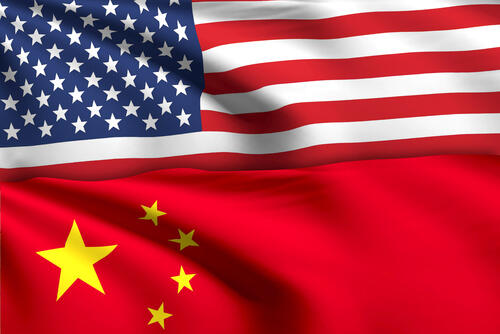
American and Chinese flags
This event is part of the 2021 Winter/Spring Colloquia series, Biden’s America, Xi’s China: What’s Now & What’s Next?, sponsored by APARC's China Program.


Via Zoom Webinar. Register at: bit.ly/2MYJAdw

Oriana Skylar Mastro Center Fellow at the Freeman Spogli Institute for International Studies
Seminars
-

This is a virtual event. Please click here to register and generate a link to the talk. 
The link will be unique to you; please save it and do not share with others.

The past decade has witnessed a great digital transformation in China. In 2006, China’s online retail sales were merely 3% of U.S. sales. China now hosts the world’s largest e-commerce retail market with a 40% share of global sales. Mobile pay has taken the country by storm so that even beggars are accepting alms through QR codes. What accounts for the leapfrog development in China’s e-commerce market? What are the larger implications of the rise of this 700-million-user online market? This talk will discuss the institutional foundation of China's giant e-commerce market, as well as its political and economic effects.

This event is part of Shorenstein APARC's winter webinar series "Asian Politics and Policy in a Time of Uncertainty."


Image
Portrait of Lizhi Liu
Lizhi Liu is an Assistant Professor in the McDonough School of Business and a faculty affiliate of the Department of Government. Her research specializes in the politics of trade, technology and innovation, and the political economy of China. Her work has been published by American Economic Review: Insights and Minnesota Law Review, and has been funded by numerous institutions, including the Bill and Melinda Gates Foundation, Weiss Family Program Fund, and the Stanford Institute for Innovation in Developing Economies. She received the 2020 Ronald H. Coase Best Dissertation Award from the Society for Institutional and Organizational Economics (SIOE), and the 2019 Best Dissertation Award in the area of Information Technology and Politics by American Political Science Association (APSA). 

Via Zoom Webinar. Register at: https://bit.ly/38yUFdn

Lizhi Liu Assistant Professor, McDonough School of Business, Georgetown University
Seminars
-

Co-sponsored by the Japan Program and the Southeast Asia Program

When Yoshihide Suga recently took over as prime minister of Japan, he tellingly focused his first trip abroad on Southeast Asia. The region has long been crucial to Japan’s foreign policy, and Japan has long been a key external partner to ASEAN and its constitutive states and societies. Japan’s engagement in Southeast Asia has become even more important in the era of the “Free and Open Indo-Pacific,” as the region confronts new economic, political and security challenges against the backdrop of waxing Sino-American rivalry and now a global pandemic. This webinar will examine Japan’s role in Southeast Asia in the recent past and the going forward. Drawing on the findings of a collaborative research project involving scholars from Southeast Asia, Japan, and North America – to be published as an edited volume from the University of Michigan Press – the panel will discuss Japan’s engagement in key areas such as infrastructure investment, maritime security assistance, and multilateral diplomacy, as well as Southeast Asian responses to its initiatives. They will also discuss the important roles played by non-state actors in mediating Japanese ties to Southeast Asia, and review key elements of continuity and change likely to extend into the Suga administration and beyond.   

Panelists

Image
John D Ciociari 120820 crop 4X4
John Ciorciari is Associate Professor and Director of the Weiser Diplomacy Center and International Policy Center at the Gerald R. Ford School of Public Policy, University of Michigan. He is the author of Sovereignty Sharing in Fragile States (Stanford University Press, forthcoming 2021), The Limits of Alignment: Southeast Asia and the Great Powers since 1975 (Georgetown University Press, 2010), co-author of Hybrid Justice: The Extraordinary Chambers in the Courts of Cambodia (University of Michigan Press, 2014), and co-editor of The Courteous Power: Japan and Southeast Asia in the Indo-Pacific Era (University of Michigan Press, forthcoming 2021).


Image
chanlett-avery-emma-120820_crop_4x4
Emma Chanlett-Avery is a Specialist in Asian Affairs at the Congressional Research Service. She focuses on U.S. relations with Japan, the Korean Peninsula, Thailand, and Singapore. Ms. Chanlett-Avery joined CRS in 2003 through the Presidential Management Fellowship, with rotations in the State Department on the Korea Desk and at the Joint U.S. Military Advisory Group in Bangkok, Thailand. She also worked in the Office of Policy Planning as a Harold Rosenthal Fellow. She is a member of the Mansfield Foundation U.S. – Japan Network for the Future, Vice-Chair of the Board of Trustees of the Japan America Society of Washington, and the 2016 recipient of the Kato Prize. Ms. Chanlett-Avery received an MA in international security policy from the School of International and Public Affairs at Columbia University and her BA in Russian studies from Amherst College.

Image
don emmerson 2
Donald K. Emmerson heads the Southeast Asia Program at Stanford University where he is also a faculty affiliate of the Center on Democracy, Development, and the Rule of Law and the Abbasi Program in Islamic Studies.  His new book is The Deer and the Dragon: Southeast Asia and China in the 21st Century (ed., August 2020).  Other recent publications include “Biden in Asia: America Together?,” East Asia Forum, 8 November 2020; “Donald Emmerson on Southeast Asia’s Approach to China” (interview, The Diplomat, Aug. 2020); “‘No Sole Control’ in the South China Sea,” Asia Policy (2019); ASEAN @ 50, Southeast Asia @ Risk: What Should Be Done? (ed., 2018); and “ASEAN Between China and America: Is It Time to Try Horsing the Cow?,” Trans-Regional and -National Studies of Southeast Asia (2017).  He has traveled and lectured widely in Southeast Asia, most recently in Singapore, Thailand, and Vietnam (Dec. 2019). Indonesia figured prominently in earlier fieldwork and writing. Before moving to Stanford in 1999, he taught political science at the University of Wisconsin-Madison.  He has held visiting positions at the Institute for Advanced Studies and the Australian National University, among other institutions.  His doctorate in political science is from Yale. 

Moderator

Image
Kiyoteru Tsutsui 120820 crop 4X4
Kiyoteru Tsutsui is Henri H. and Tomoye Takahashi Professor and Senior Fellow in Japanese Studies at the Walter H. Shorenstein Asia-Pacific Research Center at Stanford University, where he is also Director of the Japan Program, a Senior Fellow of the Freeman Spogli Institute for International Studies, and a Professor of Sociology. He is the author of Rights Make Might: Global Human Rights and Minority Social Movements in Japan (Oxford University Press, 2018), co-editor of Corporate Responsibility in a Globalizing World (Oxford University Press, 2016) and co-editor of The Courteous Power: Japan and Southeast Asia in the Indo-Pacific Era (University of Michigan Press, forthcoming 2021). 

Via Zoom Webinar.
Register: https://bit.ly/2HnCz3u

John Ciorciari Associate Professor and Director of the Weiser Diplomacy Center and International Policy Center, the Gerald R. Ford School of Public Policy, University of Michigan
Emma Chanlett-Avery Specialist in Asian Affairs, the Congressional Research Service
0
Senior Fellow Emeritus at the Freeman Spogli Institute for International Studies
Affiliated Faculty, CDDRL
Affiliated Scholar, Abbasi Program in Islamic Studies
aparc_dke.jpg PhD

At Stanford, in addition to his work for the Southeast Asia Program and his affiliations with CDDRL and the Abbasi Program in Islamic Studies, Donald Emmerson has taught courses on Southeast Asia in East Asian Studies, International Policy Studies, and Political Science. He is active as an analyst of current policy issues involving Asia. In 2010 the National Bureau of Asian Research and the Woodrow Wilson International Center for Scholars awarded him a two-year Research Associateship given to “top scholars from across the United States” who “have successfully bridged the gap between the academy and policy.”

Emmerson’s research interests include Southeast Asia-China-US relations, the South China Sea, and the future of ASEAN. His publications, authored or edited, span more than a dozen books and monographs and some 200 articles, chapters, and shorter pieces.  Recent writings include The Deer and the Dragon: Southeast Asia and China in the 21st Century (ed., 2020); “‘No Sole Control’ in the South China Sea,” in Asia Policy  (2019); ASEAN @ 50, Southeast Asia @ Risk: What Should Be Done? (ed., 2018); “Singapore and Goliath?,” in Journal of Democracy (2018); “Mapping ASEAN’s Futures,” in Contemporary Southeast Asia (2017); and “ASEAN Between China and America: Is It Time to Try Horsing the Cow?,” in Trans-Regional and –National Studies of Southeast Asia (2017).

Earlier work includes “Sunnylands or Rancho Mirage? ASEAN and the South China Sea,” in YaleGlobal (2016); “The Spectrum of Comparisons: A Discussion,” in Pacific Affairs (2014); “Facts, Minds, and Formats: Scholarship and Political Change in Indonesia” in Indonesian Studies: The State of the Field (2013); “Is Indonesia Rising? It Depends” in Indonesia Rising (2012); “Southeast Asia: Minding the Gap between Democracy and Governance,” in Journal of Democracy (April 2012); “The Problem and Promise of Focality in World Affairs,” in Strategic Review (August 2011); An American Place at an Asian Table? Regionalism and Its Reasons (2011); Asian Regionalism and US Policy: The Case for Creative Adaptation (2010); “The Useful Diversity of ‘Islamism’” and “Islamism: Pros, Cons, and Contexts” in Islamism: Conflicting Perspectives on Political Islam (2009); “Crisis and Consensus: America and ASEAN in a New Global Context” in Refreshing U.S.-Thai Relations (2009); and Hard Choices: Security, Democracy, and Regionalism in Southeast Asia (edited, 2008).

Prior to moving to Stanford in 1999, Emmerson was a professor of political science at the University of Wisconsin-Madison, where he won a campus-wide teaching award. That same year he helped monitor voting in Indonesia and East Timor for the National Democratic Institute and the Carter Center. In the course of his career, he has taken part in numerous policy-related working groups focused on topics related to Southeast Asia; has testified before House and Senate committees on Asian affairs; and been a regular at gatherings such as the Asia Pacific Roundtable (Kuala Lumpur), the Bali Democracy Forum (Nusa Dua), and the Shangri-La Dialogue (Singapore). Places where he has held various visiting fellowships, including the Institute for Advanced Study and the Woodrow Wilson International Center for Scholars. 


Emmerson has a Ph.D. in political science from Yale and a BA in international affairs from Princeton. He is fluent in Indonesian, was fluent in French, and has lectured and written in both languages. He has lesser competence in Dutch, Javanese, and Russian. A former slam poet in English, he enjoys the spoken word and reads occasionally under a nom de plume with the Not Yet Dead Poets Society in Redwood City, CA. He and his wife Carolyn met in high school in Lebanon. They have two children. He was born in Tokyo, the son of U.S. Foreign Service Officer John K. Emmerson, who wrote the Japanese Thread among other books.

Selected Multimedia

Date Label
Director, the Southeast Asia Program, Stanford University

Shorenstein APARC
Encina Hall
616 Jane Stanford way
Stanford, CA 94305-6055

(650) 723-2408
0
Senior Fellow at the Freeman Spogli Institute for International Studies
Professor of Sociology
Henri H. and Tomoye Takahashi Professor and Senior Fellow in Japanese Studies at the Shorenstein Asia-Pacific Research Center
Kiyo Tsutsui1_0.jpg PhD

Kiyoteru Tsutsui is the Henri H. and Tomoye Takahashi Professor and Senior Fellow in Japanese Studies at the Walter H. Shorenstein Asia-Pacific Research Center (APARC), the director of APARC and of the Japan Program at APARC, co-director of the Southeast Asia Program at APARC, executive director of the Inter-University Center for Japanese Language Studies, co-director of the Center for Human Rights and International Justice, senior fellow at the Freeman Spogli Institute for International Studies, and professor of sociology, all at Stanford University.

Prior to his appointment at Stanford in July 2020, Tsutsui was professor of sociology, director of the Center for Japanese Studies, and director of the Donia Human Rights Center at the University of Michigan, Ann Arbor.

Tsutsui’s research interests lie in political/comparative sociology, social movements, globalization, human rights, and Japanese society. More specifically, he has conducted (1) cross-national quantitative analyses on how human rights ideas and instruments have expanded globally and impacted local politics and (2) qualitative case studies of the impact of global human rights on Japanese politics. His current projects examine (a) changing conceptions of nationhood and minority rights in national constitutions and in practice, (b) populism and the future of democracy, (c) experimental surveys on public understanding about human rights, (d) campus policies and practices around human rights, (e) global expansion of corporate social responsibility and its impact on corporate behavior, and (f) Japan’s public diplomacy and perceptions about Japan in the world.

His research on the globalization of human rights and its impact on local politics has appeared in American Sociological Review, American Journal of Sociology, Social Forces, Social Problems, Journal of Peace Research, Journal of Conflict Resolution, and other social science journals. His book publications include Rights Make Might: Global Human Rights and Minority Social Movements in Japan (Oxford University Press 2018), and two co-edited volumes Corporate Social Responsibility in a Globalizing World (with Alwyn Lim, Cambridge University Press 2015) and The Courteous Power: Japan and Southeast Asia in the Indo-Pacific Era (with John Ciorciari, University of Michigan Press forthcoming). He has been a recipient of National Endowment for the Humanities Fellowship, National Science Foundation grants, the SSRC/CGP Abe Fellowship, Stanford Japan Studies Postdoctoral Fellowship, and other grants as well as awards from American Sociological Association sections on Global and Transnational Sociology (2010, 2013, 2019), Human Rights (2017, 2019), Asia and Asian America (2018, 2019), Collective Behavior and Social Movements (2018), and Political Sociology (2019). 

Tsutsui received his bachelor’s and master’s degrees from Kyoto University and earned an additional master’s degree and Ph.D. from Stanford’s sociology department in 2002.

Director, Shorenstein Asia-Pacific Research Center (APARC)
Director, Japan Program at Shorenstein APARC
Co-Director, Southeast Asia Program at Shorenstein APARC
Executive Director, Inter-University Center for Japanese Language Studies
Co-Director, Center for Human Rights and International Justice
CV
Date Label
Director, the Japan Program, Stanford University
Seminars
Authors
Callista Wells
News Type
News
Date
Paragraphs

The China Program at Shorenstein APARC had the pleasure of hosting Professor Min Ye of Boston University’s Pardee School of Global Studies on October 14, 2020. Her program, moderated by China Program Director Jean Oi, focused on the much-discussed but poorly-understood Belt and Road Initiative (BRI), announced in 2013 by President Xi Jinping. While it is not widely known exactly what the BRI is or what Beijing hopes it will accomplish, it has been described as something of a modern silk road, connecting China to dozens of other countries through trade and extensive infrastructure projects. Based on research conducted for her recently published book, The Belt Road and Beyond: State-Mobilized Globalization in China: 1998-2018, Professor Ye enlightened the audience on a surprisingly critical element of this global program: the domestic component.

While Ye began her research with the assumption that many hold about the BRI—that it is primarily a global, internationally-focused initiative—as she continued her research, she found that many, if not most, BRI projects are either entirely domestic or have strong ties to domestic programs. To this end, she posed three questions during her program: Why did Chinese leadership launch the BRI in 2013? How did the Chinese state and businesses implement the BRI? and, What are the internal and external outcomes of the BRI?

To answer these questions, Ye explained the theoretical frameworks she used to understand both the BRI and China's "state-mobilized globalization." Firstly, Ye's "Chinese-State Framework" breaks the Chinese governmental system into three parts: Party Leadership, State Bureaucracy, and Subnational Actors. Each of these elements affect the others, as well as policy surrounding the BRI. However, this division also creates fragmentation in authority and ideology. Secondly, her “State-Mobilized Globalization” framework explains the process surrounding Chinese national strategy. Ye posits that national strategies are generally prompted by crises faced at lower levels of government, particularly when a lack of efficiency or communication is causing “state paralysis.” Once the strategy is announced in order to coordinate efforts and solve the crisis, it enters a feedback loop in which plans are adjusted and changed according to ground-level conditions. These frameworks informed the empirical studies used to answer Ye’s research questions.

The drivers of the BRI, argues Ye, were threefold: strategic, diplomatic, and economic. It was believed by interested parties within China that such an international initiative could ease tensions related to the United States and maritime Asia, as well as generally improve diplomatic relations for the country. China’s industries were also facing problems related to overcapacity, and economic and financial groups wished to use their excess capital to invest abroad. Actors from several different levels in China, including national agencies, local governments, and private entrepreneurs, were involved in executing BRI projects intended to alleviate these tensions. Different cities saw different sides of this implementation: Chongqing, one of China’s largest cities, is heavily dominated by state capital, with its main BRI actors being State-Owned Enterprises (SOEs). Wenzhou, a port city in Zhejiang province, is by contrast dominated by private entrepreneurs.

With diverse implementation comes diverse outcomes. Ye argues that some BRI projects have been helpful in reforming cities’ structural economy, while others have helped upgrade industry. The BRI has managed to alleviate some of the tensions listed above, but at the same time, it has created its own problems. While there has been a massive internal mobilization effort for BRI projects, there exists a disconnect between the domestic situation and demands for transparency from outside actors.

Ye concluded her talk by tying her research to current developments related to COVID-19. While one might imagine that a global pandemic would be a significant inhibitor to an international trade and infrastructure project, Ye finds just the opposite. Because the BRI is, in fact, quite domestically focused, many BRI projects are continuing at a rapid pace, albeit with digital adjustments. Some projects, such as the New Infrastructure Plan, were actually fast-tracked in the wake of the pandemic outbreak. Ye predicts that as COVID-19 restrictions ease and the world returns to “normal,” these domestic and digital elements will be combined with the BRI’s original projects.

An audio recording of this program is available at the link below, and a video recording is available upon request. Please contact Callista Wells, China Program Coordinator at cvwells@stanford.edu with any inquiries.

Read More

Concept of U,S.-China technology competition: brain-shaped boxing gloves covered in U.S. and China flags facing against each other on a background of a motherboard
News

Caught in the Crossfire: The Future Of U.S.-China Science Collaboration and Its Impact on University Education

Caught in the Crossfire: The Future Of U.S.-China Science Collaboration and Its Impact on University Education
Photograph of the UN building in Geneva, Switzerland
News

Rebuilding International Institutions Will be Tough but Necessary, Say Stanford Experts Thomas Fingar and Stephen Stedman

Fingar and Stedman spoke as part of the APARC program “Rebuilding International Institutions,” which examined the future of international institutions such as the United Nations (UN), World Trade Organization (WTO), and World Health Organization (WHO) in our evolving global political landscape.
Rebuilding International Institutions Will be Tough but Necessary, Say Stanford Experts Thomas Fingar and Stephen Stedman
Cover of the book Fateful Decisions: Choices That Will Shape China's Future
News

Thomas Fingar and Jean Oi Analyze the Choices and Challenges Facing China’s Leaders

Fingar and Oi joined the National Committee on U.S.-China Relations to discuss their edited volume, ‘Fateful Decisions: Choices that Will Shape China’s Future.’
Thomas Fingar and Jean Oi Analyze the Choices and Challenges Facing China’s Leaders
Hero Image
Min Ye speaking
All News button
1
Subscribe to International Development