International Development

FSI researchers consider international development from a variety of angles. They analyze ideas such as how public action and good governance are cornerstones of economic prosperity in Mexico and how investments in high school education will improve China’s economy.

They are looking at novel technological interventions to improve rural livelihoods, like the development implications of solar power-generated crop growing in Northern Benin.

FSI academics also assess which political processes yield better access to public services, particularly in developing countries. With a focus on health care, researchers have studied the political incentives to embrace UNICEF’s child survival efforts and how a well-run anti-alcohol policy in Russia affected mortality rates.

FSI’s work on international development also includes training the next generation of leaders through pre- and post-doctoral fellowships as well as the Draper Hills Summer Fellows Program.

History Textbooks and the War in Asia is the first phase of the Divided Memories and Reconciliation project.  It carries out a comparative examination of the high school history textbooks in those five societies, focusing on the period from the beginning of the Sino-Japanese war in 1931 until the formal conclusion of the Pacific war with the San Francisco Peace Treaty in 1951.

Paragraphs

Will China come to dominate global high-tech innovation?

In the future, perhaps. Today, however, Greater China—Mainland China, Taiwan, and Hong Kong—is focused on the quest for innovation. The dominant paradigm on the Mainland is one of execution, not innovation. Beijing now aims to turn China—historically an adopter of technologies from elsewhere—into a major technology creator. Self-reliance has become the government’s watchword and its ultimate goal.

The talents and resources available are impressive. More Chinese young people are well-educated, international patents and research and development (R&D) spending are on the rise, and China boasts a growing presence in world scientific literature.

Still, negatives remain. China must overcome the legacies of a top-down, state-run research system that is largely disconnected from commerce, and an academic system not always supportive of independent scholarly inquiry. The government is working to change these outdated institutions, but such shifts do not occur overnight.

Taiwan and Hong Kong have followed different paths to high-tech innovation. Taiwan’s route has been dominated by government but implemented by mostly small- and medium-sized firms, with help from its Industrial Technology Research Institute (ITRI), a model for moving concepts to commerce. Significantly, Taiwan’s companies maintain strong links to multinational firms both in the United States and in Mainland China. Taiwan’s Hsinchu Science-based Park is seen as a model high-tech cluster throughout Asia and beyond.

Hong Kong has taken another road. While its formal R&D activity is small, it innovates in business models, particularly in logistics chains that reach into the Mainland and globally. It is a (largely unheralded) story of great success.

The big question is: When will Greater China’s high-tech innovation have a major impact on the world economy?

Examination copies: Desk, examination, or review copies can be requested through Stanford University Press.

All Publications button
1
Publication Type
Books
Publication Date
Authors
Henry S. Rowen
Book Publisher
Shorenstein APARC
-

Capital in its many facets is variable.  Like quicksilver, it can divide, reunite, and metamorphose seamlessly across a spectrum of ownerships by foreigners, the state, and domestic private
entrepreneurs.  

What does variable capital mean in and for Vietnam?  Who are the different investors?  How do they respond to state efforts to attract investments from overseas Vietnamese?  How do global supply chains—corporate buyers, contract factories, and subcontractors—shape the changing nature and impacts of capital in Vietnam?  How does a self-described socialist state use policies on investment, employment, and the privatization of state-owned factories to control the relations between workers and owners?  What roles in this mix are played by journalists who can ignore neither the party line nor the workers who protest in spite of it?  

In addition to addressing these questions, Prof. Tran will argue that workers in Vietnam are not resigned to being squeezed between morphing capital and state control.  They defend their interests flexibly in diverse forms of protest, overt and covert, including appeals to the state’s own socialist vision.  Fresh from extensive fieldwork in labor-intensive industries such as textiles, garments, and footwear, Prof. Tran will show how Vietnamese workers use origin, class, gender, and ethnicity to mobilize collective action against morphing capital in a one-party state.

Angie Ngoc Tran is a professor of political economy at California State University, Monterey Bay.  Her latest publications include articles in the Labor Studies Journal (2007) on labor media and labor-management-state relations in Vietnam.  Her PhD is from the University of Southern California (1996).

Philippines Conference Room

Shorenstein APARC
Stanford University
Encina Hall E301
Stanford, CA 94305-6055

(831) 582-3753 (650) 723-6530
0
Lee Kong Chian NUS-Stanford Distinguished Fellow on Southeast Asia
Angie_BioPhoto_Adjusted.jpg MA, PhD

Angie Ngoc Trần is a professor in the Division of Social and Behavioral Sciences and Global Studies at California State University, Monterey Bay (CSUMB).  Her plan as the 2008 Lee Kong Chian National University of Singapore-Stanford University Distinguished Fellow is to complete a book manuscript on labor-capital relations in Vietnam that highlights how different identities of investors and owners—shaped by government policies, ethnicity, characteristics of investment, and the role they played in global flexible production—affect workers’ conditions, consciousness, and collective action differently.

Tran spent May-July 2008 at Stanford and will return to campus for the second half of November 2008.  She will share the results of her project in a public seminar at Stanford under SEAF auspices on November 17 2008.

Prof. Trần’s many publications include “Contesting ‘Flexibility’:  Networks of Place, Gender, and Class in Vietnamese Workers’ Resistance,” in Taking Southeast Asia to Market (2008); “Alternatives to ‘Race to the Bottom’ in Vietnam:  Minimum Wage Strikes and Their Aftermath,” Labor Studies Journal (December 2007); “The Third Sleeve: Emerging Labor Newspapers and the Response of Labor Unions and the State to Workers’ Resistance in Vietnam,” Labor Studies Journal (September 2007); and (as co-editor and author) Reaching for the Dream:  Challenges of Sustainable Development in Vietnam (2004).  She received her Ph.D. in Political Economy and Public Policy at the University of Southern California in 1996 and an M.A. in Developmental Economics at USC in 1991.

Angie Ngoc Tran 2008 Lee Kong Chian NUS-Stanford Distinguished Fellow Speaker
Lectures
-

In addition to Iraq, Afghanistan, Pakistan, the financial crisis, and the housing crisis (as if that were not enough!), the next American president will have his hands full with matters on the Korean peninsula.  What will be the future of Six Party talks?  What is the status of the leadership in Pyongyang?  How do changes in leadership in Washington (and potentially in Pyongyang) affect outcomes?  What are the prospects for US-ROK relations?  And what of the KORUS FTA?  Victor Cha, former director of Asian affairs at the White House, will lead a discussion on these issues.

Professor Cha is director of Asian Studies and holds the D.S. Song Chair in the Department of Government and School of Foreign Service at Georgetown University.  He left the White House in May 2007 after serving since 2004 as Director for Asian Affairs at the National Security Council.  At the White House, he was responsible primarily for Japan, the Korean peninsula, Australia/New Zealand and Pacific Island nation affairs.   Dr. Cha was also the Deputy Head of Delegation for the United States at the Six Party Talks in Beijing, and received two Outstanding Service commendations during his tenure at the NSC.  

He is the award-winning author of Alignment Despite Antagonism: The United States-Korea-Japan Security Triangle (Stanford University Press) (winner of the 2000 Ohira Book Prize) and co-author of Nuclear North Korea: A Debate on Engagement Strategies (Columbia University Press, 2004).  He has written articles on international relations and East Asia in journals including Foreign Affairs, International Security, Political Science Quarterly, Survival, International Studies Quarterly, and Asian Survey.   Professor Cha is a former John M. Olin National Security Fellow at Harvard University, two-time Fulbright Scholar, and Hoover National Fellow,  CISAC Fellow, and William J. Perry Fellow at Stanford University.

Image
beyond the final score
He serves as an independent consultant, and has testified before Congress on Asian security issues.  He has been a guest analyst for various media including CNN, ABC Nightline, NBC Today Show, CBS Morning Show, Fox News, MSNBC, CNBC, BBC, ESPN, Sports Illustrated, and National Public Radio.

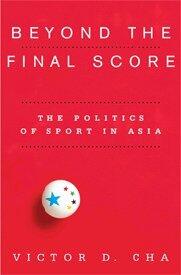
His new book Beyond the Final Score: The Politics of Sport in Asia (Columbia University Press, 2008) looks at the politics of sports and the Beijing Olympics. Cha holds a BA and Ph.D. from Columbia University, MA from University of Oxford.

This event is sponsored by the Pantech Group in Korea.

Philippines Conference Room

Victor D. Cha Director of Asian Studies Speaker Georgetown University
Seminars

An international conference will be convened on February 11-12, 2008 at Stanford University at the Walter H. Shorenstein Asia-Pacific Research Center to examine the role of high school history textbooks in the formation of historical memory regarding the events of the Sino-Japanese and Pacific wars and their outcome. Shorenstein APARC researchers have looked at the treatment of those events, in the period from 1931-1951, in the most widely circulated high school history textbooks (national and world history), including those used in college preparatory course, in China, Japan, South Korea, Taiwan and the United States. Translations of those textbooks into English have been prepared for use by historians and other scholars, allowing a comparative study of how historical memory is being shaped in the school systems.

The conference will have three main goals: first it will ask historians to comment and analyze the treatment of history in those textbooks, comparing it to accepted historical understanding. Second, it will look at the process of textbook writing and revision – in some cases (China and Taiwan particularly), the main textbooks have undergone significant revision recently and our data set includes the old and new versions of history textbooks in use in schools. Third, the conference will examine how the formation of divided memories impacts international relations in East Asia and between the United States and Asia and how this effort to understand this process may aid the goal of reconciliation.

The proceedings of this conference will be the basis of an edited volume, including comparative excerpts from the textbooks themselves, to be published by an academic press in the United States and hopefully in Asia as well. Participants will be asked to prepare a written paper for presentation and for publication.

Daniel and Nancy Okimoto Conference Room

Shorenstein APARC
Encina Hall E301
616 Jane Stanford Way
Stanford, CA 94305-6055
(650) 724-8480 (650) 723-6530
0
Senior Fellow at the Freeman Spogli Institute for International Studies
Professor of Sociology
William J. Perry Professor of Contemporary Korea
Professor, by Courtesy, of East Asian Languages & Cultures
Gi-Wook Shin_0.jpg PhD

Gi-Wook Shin is the William J. Perry Professor of Contemporary Korea in the Department of Sociology, senior fellow at the Freeman Spogli Institute for International Studies, and the founding director of the Korea Program at the Walter H. Shorenstein Asia-Pacific Research Center (APARC) since 2001, all at Stanford University. In May 2024, Shin also launched the Taiwan Program at APARC. He served as director of APARC for two decades (2005-2025). As a historical-comparative and political sociologist, his research has concentrated on social movements, nationalism, development, democracy, migration, and international relations.

In Summer 2023, Shin launched the Stanford Next Asia Policy Lab (SNAPL), which is a new research initiative committed to addressing emergent social, cultural, economic, and political challenges in Asia. Across four research themes– “Talent Flows and Development,” “Nationalism and Racism,” “U.S.-Asia Relations,” and “Democratic Crisis and Reform”–the lab brings scholars and students to produce interdisciplinary, problem-oriented, policy-relevant, and comparative studies and publications. Shin’s latest book, The Four Talent Giants, a comparative study of talent strategies of Japan, Australia, China, and India to be published by Stanford University Press in the summer of 2025, is an outcome of SNAPL.

Shin is also the author/editor of twenty-seven books and numerous articles. His books include The Four Talent Giants: National Strategies for Human Resource Development Across Japan, Australia, China, and India (2025)Korean Democracy in Crisis: The Threat of Illiberalism, Populism, and Polarization (2022); The North Korean Conundrum: Balancing Human Rights and Nuclear Security (2021); Superficial Korea (2017); Divergent Memories: Opinion Leaders and the Asia-Pacific War (2016); Global Talent: Skilled Labor as Social Capital in Korea (2015); Criminality, Collaboration, and Reconciliation: Europe and Asia Confronts the Memory of World War II (2014); New Challenges for Maturing Democracies in Korea and Taiwan (2014); History Textbooks and the Wars in Asia: Divided Memories (2011); South Korean Social Movements: From Democracy to Civil Society (2011); One Alliance, Two Lenses: U.S.-Korea Relations in a New Era (2010); Cross Currents: Regionalism and Nationalism in Northeast Asia (2007);  and Ethnic Nationalism in Korea: Genealogy, Politics, and Legacy (2006). Due to the wide popularity of his publications, many have been translated and distributed to Korean audiences. His articles have appeared in academic and policy journals, including American Journal of SociologyWorld DevelopmentComparative Studies in Society and HistoryPolitical Science QuarterlyJournal of Asian StudiesComparative EducationInternational SociologyNations and NationalismPacific AffairsAsian SurveyJournal of Democracy, and Foreign Affairs.

Shin is not only the recipient of numerous grants and fellowships, but also continues to actively raise funds for Korean/Asian studies at Stanford. He gives frequent lectures and seminars on topics ranging from Korean nationalism and politics to Korea's foreign relations, historical reconciliation in Northeast Asia, and talent strategies. He serves on councils and advisory boards in the United States and South Korea and promotes policy dialogue between the two allies. He regularly writes op-eds and gives interviews to the media in both Korean and English.

Before joining Stanford in 2001, Shin taught at the University of Iowa (1991-94) and the University of California, Los Angeles (1994-2001). After receiving his BA from Yonsei University in Korea, he was awarded his MA and PhD from the University of Washington in 1991.

Selected Multimedia

Director of the Korea Program and the Taiwan Program, Shorenstein Asia-Pacific Research Center
Director of Stanford Next Asia Policy Lab, APARC
Date Label
Gi-Wook Shin Speaker
0
Visiting Scholar
Peattie_web.jpg PhD

Mark R. Peattie was a visiting scholar at the Walter H. Shorenstein Asia-Pacific Research Center and a research fellow at the Hoover Institution. He was a professor of history emeritus at the University of Massachusetts at Boston, and was the John A. Burns Distinguished Visiting Professor of History at the University of Hawai'i in 1995.

Peattie was a specialist in modern Japanese military, naval, and imperial history. His current research focused on the historical context of Japanese-Southeast Asian relations. He was also directing a pioneering and international collaborative effort of the military history of the study of the Sino-Japanese war of 1937–45 being sponsored by the Asia Center at Harvard University.

He is editor, with Peter Duus and Ramon H. Myers, of the Japanese Wartime Empire, 1937–1945 (Princeton University Press, 1996). Peattie is the author of the Japanese Colonial Empire: The Vicissitudes of Its Fifty-Year History (Tokyo: Yomiuri Press, 1996).

He coauthored, with David Evans, Kaigun: Strategy, Tactics and Technology in the Imperial Japanese Navy, 1887–1941 (Naval Institute Press, 1997), winner of a 1999 Distinguished Book Award of the Society for Military History. A sequel, Sunburst: The Rise of Japanese Naval Air Power, 1909–1941, was published by the Naval Institute Press in 2001.

Peattie is also the author of the monograph A Historian Looks at the Pacific War (Hoover Essays in Public Policy, 1995).

Peattie was a reader for Columbia University, University of California, University of Hawai'i, Stanford University, University of Michigan, and U.S. Naval Institute Presses.

Peattie frequently served as lecturer in the Stanford University Continuing Studies Program and in the Stanford Alumni Travel Program.

He was named an associate in research at the Edwin O. Reischauer Institute of Japanese Studies at Harvard University from 1982 to 1993.

He was a member of the U.S. Information Agency from 1955 to 1968 with service in Cambodia (1955–57), in Japan (Sendai, Tokyo, Kyoto, 1958–67), and in Washington, D.C. (1967–68).

Peattie held a PhD in Japanese history from Princeton University.

Mark Peattie Speaker
Li Weike Director, History Department Speaker People's Education Press, Beijing
Hsin-Huan Michael Hsaio Center for Asia-Pacific Area Studies Speaker Academica Sinica
Peter Duus Department of History Speaker Stanford University
Tohmatsu Haruo Speaker Tamagawa University
Chung Jae-Jung Speaker City University of Seoul
Mitani Hiroshi Speaker Tokyo University
Chen Qi Speaker People's Education Publishing House, China
Chou Liang-kai Speaker Feng Chia University, Taiwan
Kim Do-Hyung Speaker Yonsei University
Bert Bower Speaker Teachers' Curriculum Institute, California
Daniel C. Sneider Speaker
Daniel Chirot Speaker University of Washington
Park Soon-Won Speaker George Mason University
Gary Mukai Speaker
Conferences
-

Dr. Forsberg will present findings from studies in China and Vietnam and put those findings into a broader comparative perspective regarding the future role of the private sector in improving health service delivery and population health.

Image
IMG 4267
Birger Carl Forsberg is a public health specialist and lecturer in International Health at the Karolinska Institute in Stockholm, Sweden from where he holds an MD and a PhD. He is also trained in economics and has health economics as one of his areas of work. Dr Forsberg has more than 20 years experience from international health from around 25 low- and middle-income countries as an adviser to bilateral donors and international organisations. Since 2002 he has been a consultant to the World Bank on public private sector collaboration in health. He is also coordinator since 2002 of a joint Harvard-Karolinska research programme called Private Sector Programme in Health (PSP). The programme has coordinated studies of the private health sector in five countries in Asia and Africa. In his talk Dr Forsberg will present findings from PSP studies in China and Vietnam and put those findings into a broader perspective on the future role of the private sector in health service delivery for increased access to health services and improved health.

Philippines Conference Room

Birger Carl Forsberg, MD Private Sector Program in Health Coordinator Speaker Karolinska Institutet, Sweden
Seminars
-

The next U.S. president will face major science and technology challenges and opportunities. These, in turn, will have a significant influence on the nation's future standing. Unfortunately, he is likely to have limited financial resources with which to address them. This talk will discuss options for moving forward. The details will depend on who wins the election. This talk is presented by Media X and co-sponsored by SPRIE.

Arthur Bienenstock is Special Assistant to the President for Federal Research Policy and Director of the Wallenberg Research Link at Stanford University, where he also is a professor at the Stanford Synchrotron Radiation Laboratory and in the Departments of Applied Physics and Materials Science & Engineering. He is president of the American Physical Society. From November, 1997 through January, 2001, he was the Associate Director for Science of the White House Office and Science and Technology Policy (OSTP). He has also served Stanford as Vice Provost and Dean of Research and Graduate Policy (2003-6), Director of the Stanford Synchrotron Radiation Laboratory (1978-97) and Vice Provost for Faculty Affairs and Faculty Affirmative Action Officer (1972-77).

A video of Dr. Bienenstock's presentation is available courtesy of Media X.

Wallenberg Hall, Room 124

Arthur Bienenstock Special Assistant to the President for Federal Research Policy Speaker Stanford University
Seminars
Subscribe to International Development