
FSI scholars produce research aimed at creating a safer world and examing the consequences of security policies on institutions and society. They look at longstanding issues including nuclear nonproliferation and the conflicts between countries like North and South Korea. But their research also examines new and emerging areas that transcend traditional borders – the drug war in Mexico and expanding terrorism networks. FSI researchers look at the changing methods of warfare with a focus on biosecurity and nuclear risk. They tackle cybersecurity with an eye toward privacy concerns and explore the implications of new actors like hackers.
Along with the changing face of conflict, terrorism and crime, FSI researchers study food security. They tackle the global problems of hunger, poverty and environmental degradation by generating knowledge and policy-relevant solutions.


Bo Xilai affair a turning point for China's top leadership
News Type
News
Date
Paragraphs
A revelatory story emerged in China this spring: Bo Xilai, Chongqing’s powerful Communist Party head, was stripped of both his post and party membership and accused of shocking abuses of power, including covering up his wife’s alleged involvement in the death of a shadowy British businessman.
On May 2, the Shorenstein Asia-Pacific Research Center held a special seminar to make sense of what this unusual high-level scandal could mean for the future of China’s current political system, erupting just months ahead of a once-in-a-generation leadership transition.
Minxin Pei, director of the Keck Center for International and Strategic Studies at Claremont McKenna College, said the scandal is a severe test for the Chinese Communist Party (CCP), which balances on a knife’s edge as it prepares to replace the majority of its Politburo members—the highest CCP echelon. The Bo affair has exposed the existence of serious corruption at a very high level of government, calling into question the party’s image and credibility.
“This is the biggest threat to party unity since 1989,” he said.
More potentially damaging still, however, is the negative light it has cast on China’s overall political system. The scandal has revealed weaknesses and loopholes in the power structure, and the government’s poor crisis management skills.
“The Bo Xilai affair is the beginning of the end of the Tiananmen era,” Pei said. “Twenty years from now, historians will make this point.”
Xueguang Zhou, a professor of sociology and Freeman Spogli Institute senior fellow, agreed with Pei’s analysis that Bo’s fall from power has tarnished the party’s image and deeply disrupted the cohesiveness of its upper leadership.He spoke also of the outpouring of criticism on social media sites for the government’s inability to reign in corruption—so much so that censors have not been able to keep up.
“These voices have been so fierce in criticizing the top leadership that it has huge implications for the emergence of China’s civil society,” Zhou said.
He expressed his concern for the future of local politics after the smoke from the Bo affair has cleared. Although it is widely acknowledged in China that shady political dealings go hand-in-hand with local-level politics, positive innovations in governance also frequently occur at the city and county level.
“I hope that local governments will still have the power to experiment,” he said.
After all is said and done, China’s top leadership is at a major turning point. Only time will tell the full impact of the fall of Bo Xilai, both during this year’s power transition and the evolution of China’s government structure in the coming decades.
Hero Image

All News button
1
Graham Brown
Walter H. Shorenstein
Asia-Pacific Research Center
616 Serra St., Encina Hall E310
Stanford University
Stanford, CA 94305-6055
0
gkbrown@stanford.edu
Lee Kong Chian NUS-Stanford Distinguished Fellow on Southeast Asia
Graham K. Brown directs the Centre for Development Studies at the University of Bath. He has held research positions with Oxford University, and with the Consumers Association of Penang, Malaysia. His many publications include a chapter on Malaysia in The Political Function of Education in Deeply Divided Societies (2011). His current work focuses on the interactions between inequality, identity, and security, with particular reference to Southeast Asia.
Global Dynamics of Culturalized Conflict in Southeast Asia: Postcards from Eurabia
-
In popular discourse, variations on Samuel Huntington’s “clash of civilizations” thesis have cited cultural differences to explain conflicts ranging from Hindu-Muslim violence in India to the Rwandan genocide. Few scholars take these accounts seriously. Culture differences are multiple and ubiquitous. Were they sufficient causes of conflict, the world would have undergone far more inter-group violence than has in fact occurred. Social scientists have instead focused on a far wider range of reasons, including skewed distributions of material resources and the political mobilization of group identities by rival elites.
Yet those who are involved in or affected by such conflicts often describe or explain them in cultural terms, and this affects how the conflicts evolve. The empirical divisions expressed by a supposedly “ethnic” conflict can also change, as can the material issues involved, such that whatever first led to the conflict may no longer be relevant. In this process, global and local fears and narratives can intersect. Drawing on quantitative evidence and case studies from Southeast Asia, Graham K. Brown will explore how and why these shifts occur.
Graham K. Brown directs the Centre for Development Studies at the University of Bath. He has held research positions with Oxford University, and with the Consumers Association of Penang, Malaysia. His many publications include a chapter on Malaysia in The Political Function of Education in Deeply Divided Societies (2011). His current work focuses on the interactions between inequality, identity, and security, with particular reference to Southeast Asia.
Daniel and Nancy Okimoto Conference Room
Graham Brown
Walter H. Shorenstein
Asia-Pacific Research Center
616 Serra St., Encina Hall E310
Stanford University
Stanford, CA 94305-6055
0
gkbrown@stanford.edu
Lee Kong Chian NUS-Stanford Distinguished Fellow on Southeast Asia
Graham K. Brown directs the Centre for Development Studies at the University of Bath. He has held research positions with Oxford University, and with the Consumers Association of Penang, Malaysia. His many publications include a chapter on Malaysia in The Political Function of Education in Deeply Divided Societies (2011). His current work focuses on the interactions between inequality, identity, and security, with particular reference to Southeast Asia.
Seminars
The Next Phase of China’s Health System Reforms
-
In spring 2009, China’s leadership announced ambitious national health reforms. Have the five stated goals of the first three years of reform been met? What policies will China pursue in the next phase? As a prominent advisor to China's State Council Health Reform Office, Liu will discuss progress and prospects for reforms—especially the role of the private sector within the health system—within the context of China’s 2012 leadership transition.
Gordon Liu is a professor of economics at Peking University's (PKU) Guanghua School of Management, and director of PKU's China Center for Health Economic Research. Previously, he served as a tenured associate professor at the University of North Carolina at Chapel Hill (2000–2006), and as an assistant professor at the University of Southern California (1994–2000).
Liu's primary research interests include health and development economics, health policy and reform, and pharmaceutical economics. His current research is funded by the State Council Health Reform Office, the National Science Foundation, UNICEF, and the China Medical Board.
Liu currently serves on the State Council Health Reform Advisory Commission, and the Expert Panel for the State Ministry of Human Resource and Social Security. He serves as co-editor for the journal Value in Health, and as editor-in-chief for China Journal of Pharmaceutical Economics. He sits on the editorial boards for the European Health Economic Review, Global Handbook for Health Economics, and Chinese Journal of Health Economics.
He received his PhD in Economics from the City University of New York Graduate School while working as a graduate research fellow at the National Bureau of Economic Research under the supervision of Michael Grossman (1986–1991). He obtained post-doctoral training at Harvard University with William Hsiao (1992–1993). Liu has served as the president for the Chinese Economists Society, and chair for the Asian Consortium for the International Society for Pharmacoeconomics and Outcomes Research.
Philippines Conference Room
Gordon Liu
Professor of Economics
Speaker
Peking University Guanghua School of Management
Seminars

The Fallout From the Bo Xilai Affair
-
The fall of Bo Xilai is the most serious political crisis in China since Tiananmen in 1989. The leadership succession process was nearly derailed and a deep rift has opened up at the top of the Communist Party. While many critical details of this power struggle remain unknown, the effects of this incident are certain to be far-reaching. Many key questions have been raised, including: How will the fall of Bo affect the new leadership line-up and its policies? How will the rift affect the party's ability to maintain control over a society showing growing signs of defiance and tensions? What does the incident tell us about the systemic corruption at the core of the party's leadership? Professor Minxin Pei will address these and other issues during this timely seminar.
About the Speaker
Minxin Pei joined Claremont McKenna College in 2009. Prior to that he was a senior associate and the director of the China Program at the Carnegie Endowment for International Peace in Washington, DC.Image
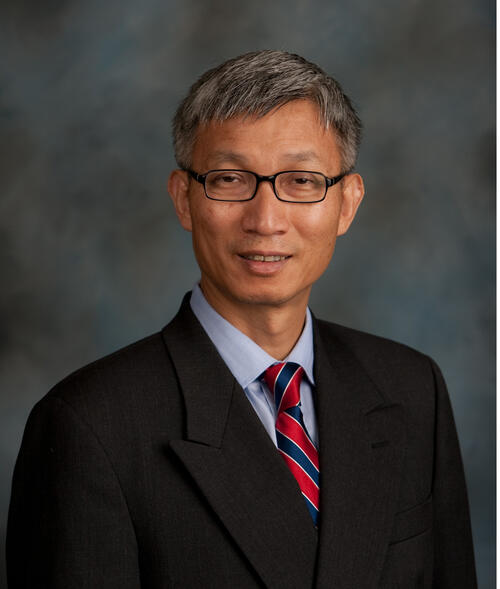
Pei's research focuses on democratization in developing countries, economic reform and governance in China, and U.S.-China relations. He is the author of From Reform to Revolution: The Demise of Communism in China and the Soviet Union (Harvard University Press, 1994) and China’s Trapped Transition: The Limits of Developmental Autocracy (Harvard University Press, 2006). Pei’s research has been published in Foreign Policy, Foreign Affairs, The National Interest, Modern China, China Quarterly, Journal of Democracy, and many edited books.
He is a frequent commentator for BBC World News, Voice of America, and National Public Radio; his op-eds have appeared in the Financial Times, the New York Times, the Washington Post, Newsweek International, the International Herald Tribune, and other major newspapers.
Pei received his PhD in political science from Harvard University. He was on the faculty at Princeton University from 1992 to 1998, and he has received numerous prestigious fellowships, including the National Fellowship at the Hoover Institution at Stanford University, the McNamara Fellowship at the World Bank, and the Olin Faculty Fellowship of the Olin Foundation.
Philippines Conference Room
Minxin Pei
Tom and Margot Pritzker ’72 Professor of Government and Director of the Keck Center for International and Strategic Studies
Speaker
Claremont McKenna College
Xueguang Zhou
Shorenstein APARC
Stanford University
Encina Hall, E301
Stanford, CA 94305-6055
0
xgzhou@stanford.edu
Senior Fellow at the Freeman Spogli Institute for International Studies
Kwoh-Ting Li Professor in Economic Development
Professor of Sociology
Faculty Affiliate at the Stanford Center on China's Economy and Institutions
Xueguang Zhou is the Kwoh-Ting Li Professor in Economic Development, a professor of sociology, and a Freeman Spogli Institute for International Studies senior fellow. His main area of research is on institutional changes in contemporary Chinese society, focusing on Chinese organizations and management, social inequality, and state-society relationships.
One of Zhou's current research projects is a study of the rise of the bureaucratic state in China. He works with students and colleagues to conduct participatory observations of government behaviors in the areas of environmental regulation enforcement, in policy implementation, in bureaucratic bargaining, and in incentive designs. He also studies patterns of career mobility and personnel flow among different government offices to understand intra-organizational relationships in the Chinese bureaucracy.
Another ongoing project is an ethnographic study of rural governance in China. Zhou adopts a microscopic approach to understand how peasants, village cadres, and local governments encounter and search for solutions to emerging problems and challenges in their everyday lives, and how institutions are created, reinforced, altered, and recombined in response to these problems. Research topics are related to the making of markets, village elections, and local government behaviors.
His recent publications examine the role of bureaucracy in public goods provision in rural China (Modern China, 2011); interactions among peasants, markets, and capital (China Quarterly, 2011); access to financial resources in Chinese enterprises (Chinese Sociological Review, 2011, with Lulu Li); multiple logics in village elections (Social Sciences in China, 2010, with Ai Yun); and collusion among local governments in policy implementation (Research in the Sociology of Organizations, 2011, with Ai Yun and Lian Hong; and Modern China, 2010).
Before joining Stanford in 2006, Zhou taught at Cornell University, Duke University, and Hong Kong University of Science and Technology. He is a guest professor at Peking University, Tsinghua University, and the People's University of China. Zhou received his Ph.D. in sociology from Stanford University in 1991.
The Institutional Foundations of the Chinese Bureaucratic State
Learn moreCV
Document
zhou_cv2020_aparc.pdf
(226.36 KB)
Hide publication sections
Off
Seminars
Obama’s Pivot toward Asia: Implications, Repercussions, Complications
-
So much has been written and said about the Obama administration’s “pivot” toward Asia that one might think diplomacy has become ballet. More than three years have passed since February 2009 when Hillary Clinton broke a 48-year-old precedent at the State Department by choosing Asia as the destination for her first trip abroad as secretary of state. “As the war in Iraq winds down and America begins to withdraw its forces from Afghanistan,” she wrote in November in Foreign Affairs, “the United States stands at a pivot point.” A skeptic might have stressed the negative: a pivot away from failure in the Middle East. She preferred the positive: a pivot towards greater “investment—diplomatic, economic, strategic, and otherwise—in the Asia-Pacific region,” itself the designated pivot of “America’s Pacific century.”
How much of this pivot talk is hype, and how much is real? How have Asians responded to this apparent turn toward them? What global and regional scenarios and strategies could it imply? Will future historians remember the pivot as the start of a Sino-American cold war, or the requisite of a realistic entente? Does the pivot illustrate renewed American leadership in foreign affairs, or belated American acquiescence in a multi-polar world? Is Washington being implicated in conflict over the South China Sea? Even if Obama is re-elected this November, will Clinton’s replacement continue to pivot? Or is it time for the pivot’s critics to do some pivoting of their own—to stop worrying about the downside, start acknowledging the upside, and help make the ballet a constructive performance for all concerned?
Donald K. Emmerson has discussed the pivot recently with analysts in Asia, Canada, and the United States. “America Pivots toward ASEAN” and “US, China Role Play for ASEAN,” datelined November 2011 in Asia Times Online, reflect his impressions of the East Asia Summit that President Obama and Secretary Clinton attended that month in Bali. Forthcoming work includes an essay on Southeast Asia in the Journal of Democracy and a chapter in Indonesia Rising: The Repositioning of Asia’s Third Giant.
Daniel and Nancy Okimoto Conference Room
Donald K. Emmerson
0
emmerson@stanford.edu
Senior Fellow Emeritus at the Freeman Spogli Institute for International Studies
Affiliated Faculty, CDDRL
Affiliated Scholar, Abbasi Program in Islamic Studies
At Stanford, in addition to his work for the Southeast Asia Program and his affiliations with CDDRL and the Abbasi Program in Islamic Studies, Donald Emmerson has taught courses on Southeast Asia in East Asian Studies, International Policy Studies, and Political Science. He is active as an analyst of current policy issues involving Asia. In 2010 the National Bureau of Asian Research and the Woodrow Wilson International Center for Scholars awarded him a two-year Research Associateship given to “top scholars from across the United States” who “have successfully bridged the gap between the academy and policy.”
Emmerson’s research interests include Southeast Asia-China-US relations, the South China Sea, and the future of ASEAN. His publications, authored or edited, span more than a dozen books and monographs and some 200 articles, chapters, and shorter pieces. Recent writings include The Deer and the Dragon: Southeast Asia and China in the 21st Century (ed., 2020); “‘No Sole Control’ in the South China Sea,” in Asia Policy (2019); ASEAN @ 50, Southeast Asia @ Risk: What Should Be Done? (ed., 2018); “Singapore and Goliath?,” in Journal of Democracy (2018); “Mapping ASEAN’s Futures,” in Contemporary Southeast Asia (2017); and “ASEAN Between China and America: Is It Time to Try Horsing the Cow?,” in Trans-Regional and –National Studies of Southeast Asia (2017).
Earlier work includes “Sunnylands or Rancho Mirage? ASEAN and the South China Sea,” in YaleGlobal (2016); “The Spectrum of Comparisons: A Discussion,” in Pacific Affairs (2014); “Facts, Minds, and Formats: Scholarship and Political Change in Indonesia” in Indonesian Studies: The State of the Field (2013); “Is Indonesia Rising? It Depends” in Indonesia Rising (2012); “Southeast Asia: Minding the Gap between Democracy and Governance,” in Journal of Democracy (April 2012); “The Problem and Promise of Focality in World Affairs,” in Strategic Review (August 2011); An American Place at an Asian Table? Regionalism and Its Reasons (2011); Asian Regionalism and US Policy: The Case for Creative Adaptation (2010); “The Useful Diversity of ‘Islamism’” and “Islamism: Pros, Cons, and Contexts” in Islamism: Conflicting Perspectives on Political Islam (2009); “Crisis and Consensus: America and ASEAN in a New Global Context” in Refreshing U.S.-Thai Relations (2009); and Hard Choices: Security, Democracy, and Regionalism in Southeast Asia (edited, 2008).
Prior to moving to Stanford in 1999, Emmerson was a professor of political science at the University of Wisconsin-Madison, where he won a campus-wide teaching award. That same year he helped monitor voting in Indonesia and East Timor for the National Democratic Institute and the Carter Center. In the course of his career, he has taken part in numerous policy-related working groups focused on topics related to Southeast Asia; has testified before House and Senate committees on Asian affairs; and been a regular at gatherings such as the Asia Pacific Roundtable (Kuala Lumpur), the Bali Democracy Forum (Nusa Dua), and the Shangri-La Dialogue (Singapore). Places where he has held various visiting fellowships, including the Institute for Advanced Study and the Woodrow Wilson International Center for Scholars.
Emmerson has a Ph.D. in political science from Yale and a BA in international affairs from Princeton. He is fluent in Indonesian, was fluent in French, and has lectured and written in both languages. He has lesser competence in Dutch, Javanese, and Russian. A former slam poet in English, he enjoys the spoken word and reads occasionally under a nom de plume with the Not Yet Dead Poets Society in Redwood City, CA. He and his wife Carolyn met in high school in Lebanon. They have two children. He was born in Tokyo, the son of U.S. Foreign Service Officer John K. Emmerson, who wrote the Japanese Thread among other books.
China and the World
Learn morePolicy Perspectives on the South China Sea
Learn moreHide publication sections
Off
Seminars