Security

FSI scholars produce research aimed at creating a safer world and examing the consequences of security policies on institutions and society. They look at longstanding issues including nuclear nonproliferation and the conflicts between countries like North and South Korea. But their research also examines new and emerging areas that transcend traditional borders – the drug war in Mexico and expanding terrorism networks. FSI researchers look at the changing methods of warfare with a focus on biosecurity and nuclear risk. They tackle cybersecurity with an eye toward privacy concerns and explore the implications of new actors like hackers.

Along with the changing face of conflict, terrorism and crime, FSI researchers study food security. They tackle the global problems of hunger, poverty and environmental degradation by generating knowledge and policy-relevant solutions. 

-

The opening up of Myanmar (Burma) and the steps undertaken taken toward political reform in that formerly isolated dictatorship have been among Asia's most dramatic and least expected events.  But the establishment of full democracy is still on the agenda and faces many challenges.  How willing is the current government in Burma to allow a full and free exercise of political rights, including media freedom?  A panel of experts, including Aung Zaw, the editor and founder of The Irrawaddy and this year's recipient of the Shorenstein Award for Journalism in Asia, will address that question in discussing "Burma's Democracy:  How Real?"

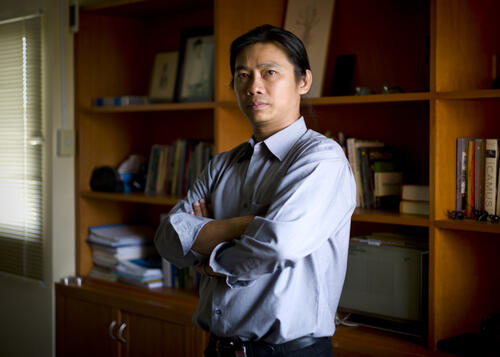
Stanford University’s Walter H. Shorenstein Asia-Pacific Research Center (Shorenstein APARC) is pleased to announce Aung Zaw as the 2013 recipient of the Shorenstein Journalism Award. Zaw has been selected for his leadership in establishing independent media in Myanmar (Burma) and his dedication to integrity in reporting on Southeast Asia.

Image
 Aung Zaw

Aung Zaw is the founding editor-in-chief and executive director of The Irrawaddy, an independent Burmese media organization operating in Myanmar and northern Thailand. Zaw has been an active campaigner for democratic reform in Burma/Myanmar over the last two decades. He was awarded the 2010 Prince Claus Fund Award for journalism along with two journalists from Iran and Cuba – and is recognized for his active dedication to achieving democratic governance in Burma and his work to uphold press freedom.

Zaw studied Botany at Rangoon University. As a student activist in Burma, he was part of the 1988 protests in Rangoon against the Burmese military regime of General Ne Win. He was arrested and detained for a week in Rangoon’s notorious Insein prison where he was severely tortured during interrogation about his pro-democracy activities. Upon release Aung Zaw continued to work with the resistance movement until the military staged a coup in September that year and he was forced to leave the country for neighboring Thailand.

Two years later, Aung Zaw founded the Burma Information Group (BIG) in Bangkok, to document human rights violations in Burma. He began to write political commentaries for national newspapers in Thailand and internationally, and in late 1993 launched The Irrawaddy News Magazine in Bangkok, covering Burma affairs. He worked in Bangkok for two years producing The Irrawaddy Magazine until relocating to the more secure position in Chiang Mai in the north of Thailand.

In February 2012, Aung Zaw was able to return to his homeland for the first time in more than 20 years for a temporary visit as an independent journalist. By the end of 2012, The Irrawaddy was able to establish a media and news office in central Yangon, returning to Burma/Myanmar to practice independent journalism, whilst retaining a regional office in Thailand.

In 2013, the government lifted ban on The Irrawaddy and other exiled websites, the Irrawaddy English magazine and the Irrawaddy Dateline Current Affairs TV program is available for audiences in Myanmar. Aung Zaw writes for New York Times, International Herald Tribune, Time, The Guardian, Bangkok Post, The Nation and several publications in the Europe. His interviews have also appeared on CN, BBC and Al Jazeera. He is the author of the Face of Resistance and is a recent Visiting Scholar at UC Berkeley, School of Journalism.

Bechtel Conference Center

Aung Zaw 2013 Journalism Prize Winner and Founder and Editor, The Irrawaddy News Magazine Panelist
Nayan Chanda Director of Publications and the Editor of YaleGlobal Online Magazine Panelist Yale Center for the Study of Globalization
0
Senior Fellow Emeritus at the Freeman Spogli Institute for International Studies
Affiliated Faculty, CDDRL
Affiliated Scholar, Abbasi Program in Islamic Studies
aparc_dke.jpg PhD

At Stanford, in addition to his work for the Southeast Asia Program and his affiliations with CDDRL and the Abbasi Program in Islamic Studies, Donald Emmerson has taught courses on Southeast Asia in East Asian Studies, International Policy Studies, and Political Science. He is active as an analyst of current policy issues involving Asia. In 2010 the National Bureau of Asian Research and the Woodrow Wilson International Center for Scholars awarded him a two-year Research Associateship given to “top scholars from across the United States” who “have successfully bridged the gap between the academy and policy.”

Emmerson’s research interests include Southeast Asia-China-US relations, the South China Sea, and the future of ASEAN. His publications, authored or edited, span more than a dozen books and monographs and some 200 articles, chapters, and shorter pieces.  Recent writings include The Deer and the Dragon: Southeast Asia and China in the 21st Century (ed., 2020); “‘No Sole Control’ in the South China Sea,” in Asia Policy  (2019); ASEAN @ 50, Southeast Asia @ Risk: What Should Be Done? (ed., 2018); “Singapore and Goliath?,” in Journal of Democracy (2018); “Mapping ASEAN’s Futures,” in Contemporary Southeast Asia (2017); and “ASEAN Between China and America: Is It Time to Try Horsing the Cow?,” in Trans-Regional and –National Studies of Southeast Asia (2017).

Earlier work includes “Sunnylands or Rancho Mirage? ASEAN and the South China Sea,” in YaleGlobal (2016); “The Spectrum of Comparisons: A Discussion,” in Pacific Affairs (2014); “Facts, Minds, and Formats: Scholarship and Political Change in Indonesia” in Indonesian Studies: The State of the Field (2013); “Is Indonesia Rising? It Depends” in Indonesia Rising (2012); “Southeast Asia: Minding the Gap between Democracy and Governance,” in Journal of Democracy (April 2012); “The Problem and Promise of Focality in World Affairs,” in Strategic Review (August 2011); An American Place at an Asian Table? Regionalism and Its Reasons (2011); Asian Regionalism and US Policy: The Case for Creative Adaptation (2010); “The Useful Diversity of ‘Islamism’” and “Islamism: Pros, Cons, and Contexts” in Islamism: Conflicting Perspectives on Political Islam (2009); “Crisis and Consensus: America and ASEAN in a New Global Context” in Refreshing U.S.-Thai Relations (2009); and Hard Choices: Security, Democracy, and Regionalism in Southeast Asia (edited, 2008).

Prior to moving to Stanford in 1999, Emmerson was a professor of political science at the University of Wisconsin-Madison, where he won a campus-wide teaching award. That same year he helped monitor voting in Indonesia and East Timor for the National Democratic Institute and the Carter Center. In the course of his career, he has taken part in numerous policy-related working groups focused on topics related to Southeast Asia; has testified before House and Senate committees on Asian affairs; and been a regular at gatherings such as the Asia Pacific Roundtable (Kuala Lumpur), the Bali Democracy Forum (Nusa Dua), and the Shangri-La Dialogue (Singapore). Places where he has held various visiting fellowships, including the Institute for Advanced Study and the Woodrow Wilson International Center for Scholars. 


Emmerson has a Ph.D. in political science from Yale and a BA in international affairs from Princeton. He is fluent in Indonesian, was fluent in French, and has lectured and written in both languages. He has lesser competence in Dutch, Javanese, and Russian. A former slam poet in English, he enjoys the spoken word and reads occasionally under a nom de plume with the Not Yet Dead Poets Society in Redwood City, CA. He and his wife Carolyn met in high school in Lebanon. They have two children. He was born in Tokyo, the son of U.S. Foreign Service Officer John K. Emmerson, who wrote the Japanese Thread among other books.

Selected Multimedia

Date Label
Donald K. Emmerson Senior Fellow at FSI, Emeritus; Affiliated Faculty, CDDRL; Affiliated Scholar, Abbasi Program in Islamic Studies and Director, Southeast Asia Forum Panelist Stanford University
Daniel C. Sneider Associate Director for Research, Shorenstein Asia-Pacific Research Center Moderator Stanford University
Panel Discussions
News Type
News
Date
Paragraphs

Stanford-Sasakawa Peace Foundation New Channels Dialogue 2014

Energy Challenge and Opportunities for the United States and Japan


February 13, 2014

Bechtel Conference Center, Encina Hall, Stanford University

Sponsored and Organized by Sasakawa Peace Foundation (SPF) and Shorenstein Asia-Pacific Research Center (S-APARC) in Association with U.S.-Japan Council


Japan Studies Program at Shorenstein APARC, Stanford University has launched a three-year project from 2013 to create new channels of dialogue between experts and leaders of younger generations from the United States, mostly from the West Coast, and Japan under a name of "New Channels: Reinvigorating U.S.-Japan Relations," with the goal of reinvigorating the bilateral relationship through the dialogue on 21st century challenges faced by both nations, with a grant received from the Sasakawa Peace Foundation.

Hero Image
logo
All News button
1
-

This talk explores the work of Swiss diplomats and Red Cross delegates to explain the experience of Allied POWs and civilian internees in the Pacific War. As the only foreigners allowed into both POW and internee camps, and the only ones to work in Japan as well as Allied countries, they were uniquely positioned to record the flow of information between the two sides, the attempts to deliver material and financial aid, and the intensifying exchange of recrimination and threats. Washington and Tokyo made claims and counter-claims about the observance or non-observance of the Geneva Conventions. Both sides threatened and carried out reprisals and made their observance of international law conditional on the conduct of the enemy. While life was far worse for Allied captives than for their Japanese counterparts, it was not because of a deliberate policy of cruelty. Instead, senior Japanese officials never developed clear policy guidance for POWs and failed to provide adequate logistical and administrative support. The few Japanese officials who oversaw the camp system lacked any authority over individual commanders. Even so, the Swiss may well have helped prevent a bad situation from becoming even worse.


Sarah Kovner is a graduate of Princeton University (A.B.) and Columbia University (Ph.D), associate professor of history at the University of Florida, and is currently a Chauncey Fellow in International Security Studies at Yale. She works on modern Japanese history, international history, and the history of war and society. Kovner's first book, Occupying Power: Sex Workers and Servicemen in Postwar Japan, won the Southeast Conference Association for Asian Studies book prize. It is available in paperback from Stanford University Press. She is now writing a history of Allied prisoners in the Pacific War.


Philippines Conference Room

Sarah Kovner Associate Professor of History Speaker University of Florida
Seminars
Date Label
-

By any measure, China’s economy and defense budget are second only to those of the United States. Yet tremendous uncertainties persist concerning China’s military development and national trajectory, and areas with greater information available often conflated misleadingly. Fortunately, larger dynamics elucidate both areas. Particularly since the 1995-96 Taiwan Strait Crisis, China has made rapid progress in aerospace and maritime development, greatly facilitating its military modernization. The weapons and systems that China is developing and deploying fit well with Beijing’s geostrategic priorities. Here, distance matters greatly: after domestic stability and border control, Beijing worries most about its immediate periphery, where its unresolved disputes with neighbors and outstanding claims lie primarily in the maritime direction. Accordingly, while it would vastly prefer pressuring concessions to waging war, China is already capable of threatening potential opponents’ military forces should they intervene in crises over islands and maritime claims in the Yellow, East, and South China Seas and the waterspace and airspace around them. Far from mainland China, by contrast, it remains ill-prepared to protect its own forces from robust attack. Fortunately for Beijing, the non-traditional security focus of its distant operations makes conflict unlikely; remedying their vulnerabilities would be difficult and expensive. Despite these larger patterns, critical unknowns remain concerning China’s economic development, societal priorities, industrial efficiency, and innovation capability. Dr. Erickson will examine these and related issues to probe China’s development trajectory and future place in the international system. 


The views expressed by Dr. Erickson are his alone, and do not represent the policies or estimates of any organization with which he is affiliated.


Dr. Andrew S. Erickson is an Associate Professor in the Strategic Research Department at the U.S. Naval War College and a core founding member of the department’s China Maritime Studies Institute (CMSI). He is an Associate in Research at Harvard University’s John King Fairbank Center for Chinese Studies (2008-). Erickson also serves as an expert contributor to the Wall Street Journal’s China Real Time Report (中国实时报), for which he has authored or coauthored 25 articles. In spring 2013, he deployed in the Pacific as a Regional Security Education Program scholar aboard USS Nimitz (CVN68), Carrier Strike Group 11.

Erickson received his Ph.D. and M.A. in international relations and comparative politics from Princeton University and graduated magna cum laude from Amherst College with a B.A. in history and political science. He has studied Mandarin in the Princeton in Beijing program at Beijing Normal University’s College of Chinese Language and Culture and Japanese language, politics, and economics in the year-long Associated Kyoto Program at Doshisha University.

Erickson’s research, which focuses on Asia-Pacific defense, international relations, technology, and resource issues, has been published widely in English- and Chinese-language edited volumes and in such peer-reviewed journals as China QuarterlyAsian SecurityJournal of Strategic StudiesOrbisAsia Policy (forthcoming January 2014), and China Security; as well as in Foreign Affairs, The National InterestThe American InterestForeign PolicyJoint Force QuarterlyChina International Strategy Review (published in Chinese-language edition, forthcoming in English-language edition January 2014), and International and Strategic Studies Report (Center for International and Strategic Studies, Peking University). Erickson has also published annotated translations of several Chinese articles on maritime strategy. His publications are available at <www.andrewerickson.com> and <www.chinasignpost.com>.

This event is co-sponsored with CEAS and is part of the China under Xi Jinping series.

Philippines Conference Room

Andrew Erickson Associate in Research Speaker John King Fairbank Center for Chinese Studies, Harvard University
Seminars
-

Over the past 35 years of the reform period Beijing has tried to make its state-owned enterprises more efficient and competitive. In the early 1990s it adopted a strategy modeled closely on the Western corporation and the equity and debt capital markets that support its operations. But China's big SOEs have demonstrated more and more independence despite outright economic and ownership control by the government and the Communist Party. And this independence has not led to greater efficiencies or, arguably, even competitiveness. Instead the National Champions represent monopolistic economic and political power. Today China's new leadership confronts the National Champions seeking to regain control over the state's principal assets. How did this happen and what can be done to reassert Beijing's rights?  

Carl E. Walter worked in China and its financial sector for over 20 years and actively participated in many of the country’s financial reform efforts. While at Credit Suisse First Boston he played a major role in China’s groundbreaking first overseas IPO in 1992. Later at Morgan Stanley he was a member of senior management at China International Capital Corporation, China’s first and most successful investment bank. While there he supported a number of groundbreaking domestic and international stock and bond underwritings for major Chinese corporations. More recently at JPMorgan he was China Chief Operating Officer and Chief Executive Officer of its China banking subsidiary. During this time Carl helped build a pioneering domestic security, risk and currency trading operation. In his spare time he enjoyed driving his Jeep to distant provinces.

A long time resident of Beijing before his recent return to the United States, Carl is fluent in Mandarin and holds a PhD from Stanford University and a graduate certificate from Peking University. In Spring 2013, Carl returned to Stanford as a visiting scholar at the Shorenstein-Asia Pacific Research Center, FSI. He is the co-author of Red Capitalism: the fragile financial foundations of China’s extraordinary rise, which has been published in Chinese in China. His earlier book, Privatizing China: inside China’s stock markets, was also published in China and, like Red Capitalism, contributed to the government’s policy debate.

This event is co-sponsored with CEAS and is part of the China under Xi Jinping series.

Philippines Conference Room

Carl E. Walter Former CEO Speaker JPMorgan Chase Bank China Co Ltd.
Seminars
-

Stanford-Sasakawa Peace Foundation New Channels Dialogue 2014

Energy Challenge and Opportunities for the United States and Japan


February 13, 2014

Bechtel Conference Center, Encina Hall, Stanford University

Sponsored and Organized by Sasakawa Peace Foundation (SPF) and Shorenstein Asia-Pacific Research Center (S-APARC) in Association with U.S.-Japan Council


Japan Studies Program at Shorenstein APARC, Stanford University has launched a three-year project from 2013 to create new channels of dialogue between experts and leaders of younger generations from the United States, mostly from the West Coast, and Japan under a name of "New Channels: Reinvigorating U.S.-Japan Relations," with the goal of reinvigorating the bilateral relationship through the dialogue on 21st century challenges faced by both nations, with a grant received from the Sasakawa Peace Foundation.

The dialogue would be structured to examine the new challenges of the 21st century, in particular, economic growth and employment creation; innovation and entrepreneurship; energy; and East Asian regionalism, including regional security issues, with the aim of developing mutual understanding and constructing a new relationship for cooperation in dealing with 21st century challenges through the dialogue between scholars, entrepreneurs, and policy makers from the two countries. We are hoping that this multi-year initiative will generate a network of trans-Pacific expertise as a vital supplement to existing avenue of communications.

Given the recent dramatic changes in energy environments in both countries, such as shale gas developments in the U.S, and after Fukushima challenges in Japan, this year, as an inaugural year, we will be examining energy issues. Panel discussions open to the public, with the title of "Energy Challenges and Opportunities for the U.S. and Japan," will be held on February 13th, followed by a dialogue among invited participants on 14th, at Stanford University with the participation of policy makers, business leaders, scholars, and experts from both countries.

In the panel discussions we will examine following issues:

  1. Discovery of shale gas deposits in various parts of the world has drastically changed the geopolitics of energy.
  2. New technologies for energy production have been creating various challenges to the existing system of energy supply.
  3. As emerging economies grow rapidly, they will demand increasing amount of energy. They face a challenge of creating a sustainable and secure energy supply system.
  4. After the Fukushima Daiichi nuclear disaster, the call for enhancing safety of nuclear power plants has intensified. While public’s trust in nuclear technology wanes, increasing number of nuclear power plants are built in emerging countries. Nuclear energy policy has become politically contentious.
  5. Use of information technology, such as smart grid, is likely to change the ways energy is supplied and distributed.
  6. The world has not found an effective international framework for slowing the global warming and securing reliable energy supply to support economic growth.

We are very pleased that we were able to invite quite impressive participants, policy makers, business leaders, scholars and experts from the two countries, who would appear as panelists in the panel discussions on February 13th.

We expect that through this panel discussion we would be able to define the challenges we are facing, indicate the pathways we should proceed to, and identify the areas for cooperation.

On the following day, February 14th, we will have the dialogue closed to the public discussing issues and possible cooperation between the U.S. and Japan on energy among invited participants.

We hope to publish a summary of conference presentations and the dialogue discussion after the conference.

Bechtel Conference Center

Conferences
Paragraphs

This volume collects 22 articles by Masahiko Aoki, selected from writings published over the course of his 45-year academic career. These fascinating essays cover a range of issues, including mechanism design, comparative governance, corporate governance, institutions and institutional change, but are tied together by a focus on East Asia and a comparative institutional framework.

Specific topics include the early stages of mechanism design theory, comparative analysis of vertical, horizontal and modular industrial coordination and its applications, cooperative game-theoretic approaches to the diversity of corporate government structure, the endogenous nature of institutions, and comparative and historical analysis of institutions in Japan, China and Korea.

Students, professors and scholars with an interest in comparative institutional studies and East Asian studies will find this book a useful and illuminating resource.

All Publications button
1
Publication Type
Books
Publication Date
Journal Publisher
Edward Elgar Pub
Authors
Masahiko Aoki
Number
978 1 78254 839 3
Paragraphs

The Tenth Korea-U.S. West Coast Strategic Forum was held at Stanford University on June 28, 2013. Established in 2006 by Stanford University’s Walter H. Shorenstein Asia-Pacific Center (Shorenstein APARC), and now convening twice annually and alternating in venue between Stanford and Seoul, the forum brings together distinguished South Korean (Republic of Korea, or ROK) and U.S. West Coast–based American scholars, experts, and former military and civilian officials to discuss North Korea, the U.S.-ROK alliance, and regional dynamics in Northeast Asia. The Sejong Institute of Korea is co-organizer of the forum. Operating as a closed workshop under the Chatham House Rule of individual confidentiality, the forum allows participants to engage in candid, in-depth discussion of current issues of vital national interest to both countries. Participants constitute a standing network of experts interested in strengthening and continuously adapting the alliance to best serve the interests of both countries. Organizers and participants hope that the publication of their discussions at the semi-annual workshops will contribute to the policy debate about the alliance in both countries and throughout Northeast Asia.

All Publications button
1
Publication Type
Policy Briefs
Publication Date
Journal Publisher
Shorenstein APARC
Paragraphs
Image
AsiaMiddlePowersCover front

South Korea and Vietnam established diplomatic relations only twenty years ago. Today these former adversaries enjoy unexpectedly cordial and rapidly expanding bilateral ties. Leaders of the two nations—perceiving broadly shared interests and no fundamental conflicts—seek to leverage their subregional influence on behalf of common or complementary policy goals. Today they often profess a “middle power” identity as they explain their foreign policy in terms of such classical middle power goals as regional peace, integration, and common goods.

Broadly similar in many respects, South Korea and Vietnam are nonetheless sufficiently different that a comparison can yield interesting insights—yet there is a dearth of systematic comparative work on the two. While holding a range of views on the contentious concepts of middle power and national identity, the contributors to Asia’s Middle Powers? help readers, both academic and policy practitioners, to gain an enhanced appreciation of South Korea and Vietnam’s regional behavior and international strategies

The publication of Asia's Middle Powers was made possible by the generosity of the Koret Foundation of San Francisco, CA.

Desk, examination, or review copies can be requested through Stanford University Press.


All Publications button
1
Publication Type
Books
Publication Date
Subtitle

The Identity and Regional Policy of South Korea and Vietnam

Authors
Joon-woo Park
Gi-Wook Shin
Don Keyser
Book Publisher
Shorenstein APARC
-

Part II: Asia in the World Series

The causes and moral implications of genocidal mass killings have, in the past couple of decades, become a major area of scholarly as well as popular debate and political contention. But in the process questions of definition, guilt, compensation, and of reconciliation have become muddled and been subject to political and ideological bias. While many of these issues remain controversial and even unresolvable, a clearer exposition of causes, consequences, and debates about major examples can help us reach more objective judgments and improve our understanding of these terrible events. Many, though not all of the examples used to discuss this will come from an edited book due to appear in March 2014 entitled Confronting Memories of World War II.  This volume is a joint Stanford University Shorenstein Asia-Pacific Research Center and University of Washington Jackson School endeavor.  Discussing this topic with a broad set of historical examples is far from merely being an academic exercise as it directly touches important contemporary political controversies.

Dan Chirot has authored books about social change, ethnic and nationalist conflicts, Eastern Europe, and tyranny. He co-authored Why Not Kill Them All? (Princeton Univeristy Press), about political mass murder and most recently he wrote a completely new, very revised edition of his book How Societies Change (Sage Publications).  He has edited or co-edited books on Leninism’s decline, entrepreneurial ethnic minorities, ethnopolitical warfare, the economic history of Eastern Europe, and memories of World War II.  He founded the journal East European Politics and Societies and has received help from, among others, the John Simon Guggenheim, Rockefeller, and Mellon Foundations and from the US State Department. He has consulted for the US Government, the Ford Foundation, CARE, and other NGOs. In 2004/05 he was a Senior Fellow at the United States Institute of Peace working on African conflicts. He earned his BA from Harvard and his PhD from Columbia.

Philippines Conference Room

Dan Chirot Herbert J. Ellison Professor of Russian and Eurasian Studies Speaker University of Washington’s Henry M. Jackson School of International Studies
Seminars
Date Label
Subscribe to Security