Security

FSI scholars produce research aimed at creating a safer world and examing the consequences of security policies on institutions and society. They look at longstanding issues including nuclear nonproliferation and the conflicts between countries like North and South Korea. But their research also examines new and emerging areas that transcend traditional borders – the drug war in Mexico and expanding terrorism networks. FSI researchers look at the changing methods of warfare with a focus on biosecurity and nuclear risk. They tackle cybersecurity with an eye toward privacy concerns and explore the implications of new actors like hackers.

Along with the changing face of conflict, terrorism and crime, FSI researchers study food security. They tackle the global problems of hunger, poverty and environmental degradation by generating knowledge and policy-relevant solutions. 

-

Image
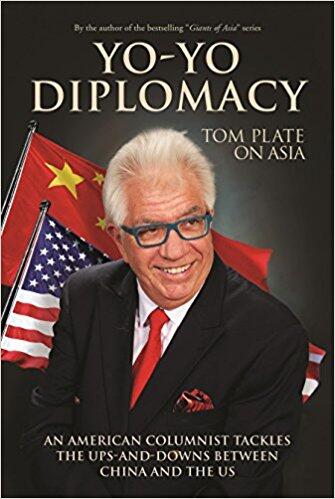
The third of the “Tom Plate on Asia” series, Yo-Yo Diplomacy compiles the compelling and insightful columns on Asia by award-winning journalist Tom Plate over the past two years. From tensions in the South China Sea to China’s stock market turbulence and Hong Kong’s bookseller saga, the veteran columnist continues to examine the rise of Asia and the role of America in this dynamic and diverse region.

The collection is enlivened with thoughtful retrospectives and personal comments providing vivid backstories. The result is an informative and readable anthology that would prove valuable not only political and current affairs commentators, but also to the layperson wishing to learn more about pivotal developments in the Asia-Pacific region.

Tom Plate is a university professor, a veteran columnist focused on Asia and America, and an educational innovator. A Los Angeles resident, this full-time Clinical Professor and Distinguished Scholar of Asian and Pacific Studies at Loyola Marymount University has orchestrated live interactive seminars with major universities across Asia, as part of LMU’s path-finding Asia Media International Center. He teaches courses on the United Nations, and on Asia and on its media, and is the author of 13 books, including the bestsellers Confessions of an American Media Man (2007) and four volumes in the ‘Giants of Asia’ series; and The Fine Art of the Political Interview (2015), all published by Marshall Cavendish Editions. 


Born in New York, he was educated at Amherst College, where he was Phi Beta Kappa, and Princeton University, where he was awarded his professional degree in public and international affairs. He has received a number of major journalistic recognitions, including from the American Society of Newspaper Editors its annual Deadline Writing Award.


Books will be available for sale at the event


Philippines Conference Room

Encina Hall, 3rd Floor, Central

Professor Tom Plate <i>Asian and Pacific Studies, Loyola Marymount University</i>
Seminars
Date Label
-

Image
Soon after the American Revolution, certain of the founders began to recognize the strategic significance of Asia and the Pacific and the vast material and cultural resources at stake there. Over the coming generations, the United States continued to ask how best to expand trade with the region and whether to partner with China, at the center of the continent, or Japan, looking toward the Pacific. Where should the United States draw its defensive line, and how should it export democratic principles? In a history that spans the eighteenth century to the present, Michael J. Green follows the development of U.S. strategic thinking toward East Asia, identifying recurring themes in American statecraft that reflect the nation's political philosophy and material realities.


Drawing on archives, interviews, and his own experience in the Pentagon and White House, Green finds one overarching concern driving U.S. policy toward East Asia: a fear that a rival power might use the Pacific to isolate and threaten the United States and prevent the ocean from becoming a conduit for the westward free flow of trade, values, and forward defense. By More Than Providence works through these problems from the perspective of history's major strategists and statesmen, from Thomas Jefferson to Alfred Thayer Mahan and Henry Kissinger. It records the fate of their ideas as they collided with the realities of the Far East and adds clarity to America's stakes in the region, especially when compared with those of Europe and the Middle East.


Image
Michael Jonathan Green is senior vice president for Asia and Japan Chair at the Center for Strategic and International Studies (CSIS) and chair in modern and contemporary Japanese politics and foreign policy at the Edmund A. Walsh School of Foreign Service at Georgetown University. He served on the staff of the National Security Council (NSC) from 2001 through 2005, first as director for Asian affairs with responsibility for Japan, Korea, Australia, and New Zealand, and then as special assistant to the president for national security affairs and senior director for Asia, with responsibility for East Asia and South Asia. Before joining the NSC staff, he was a senior fellow for East Asian security at the Council on Foreign Relations, director of the Edwin O. Reischauer Center and the Foreign Policy Institute and an assistant professor at the School of Advanced International Studies (SAIS) at Johns Hopkins University, research staff member at the Institute for Defense Analyses, and senior adviser on Asia in the Office of the Secretary of Defense. He also worked in Japan on the staff of a member of the National Diet.


Dr. Green is also a nonresident fellow at the Lowy Institute in Sydney, Australia, and a distinguished scholar at the Asia Pacific Institute in Tokyo. He is a member of the Council on Foreign Relations, the Aspen Strategy Group, the America Australia Leadership Dialogue, the advisory boards of Radio Free Asia, Center for a New American Security, and the editorial boards of the Washington Quarterly and the Journal of Unification Studies in Korea. He also serves as a trustee at The Asia Foundation, senior adviser at the Asia Group, and as an associate of the U.S. Intelligence Community. Dr. Green has authored numerous books and articles on East Asian security, including most recently, By More Than Providence: Grand Strategy and American Power in the Asia Pacific Since 1783 . He received his master’s and doctoral degrees from SAIS and did additional graduate and postgraduate research at Tokyo University and the Massachusetts Institute of Technology. He received his bachelor’s degree in history from Kenyon College with highest honors. He holds a black belt in Iaido (sword) and has won international prizes on the great highland bagpipe.


Books will be available for sale at the event

Philippines Conference Room

Encina Hall, 3rd floor, Central

Michael J. Green <i>Senior Vice President for Asia; Japan Chair, Center for Strategic International Studies</i>
Seminars
Date Label
-

Co-sponsored by the Center on Democracy, Development, and the Rule of Law, Center for East Asian Studies, and the Southeast Asia Program

Who is Rodrigo Duterte?  How did he become president of the Philippines?  How has his rule impacted Philippine democracy and society?  Is his ascent part of a broader “Duterte wave” of strongman leadership in Russia, Turkey, India, China, and Southeast Asia?  What is his foreign policy?  How has it affected Sino-US rivalry in Asia including the situation in the South China Sea?  Richard Heydarian will address these and other questions drawing on field research for his latest book, The Rise of Duterte.  Regarding China, he will argue that Duterte’s willingness to realign Manila with Beijing at Washington’s expense offers a glimpse of what China’s rise could imply for nations around the world.  The book will be available for sale at his talk. 

Image
javad richard heydarian
Richard Javad Heydarian is the most prolific and interviewed geopolitical analyst currently writing and speaking not only in the Philippines but arguably in Southeast Asia as well. Outlets for his articles and remarks have included Aljazeera English, The Atlantic, BBC, Bloomberg, The Economist, The Financial Times, Foreign Affairs, The Guardian, The New York Times, Nikkei Asian Review, South China Morning Post, The Straits Times, The Wall Street Journal, and The Washington Post. In addition to the 2017 book that entitles his talk, he has written two others: Asia's New Battlefield: US, China, and the Struggle for Western Pacific (2015) and How Capitalism Failed the Arab World (2014). He lectures widely; has taught political science at Ateneo de Manila University and De La Salle University in the Philippines; has published in leading scholarly journals on Asian politics and security; and is a regular contributor to the Center for Strategic and International Studies and the Council on Foreign Relations. 


Richard Javad Heydarian Resident Political Analyst, GMA Network, and Non-resident Fellow, Stratbase-ADR Institute, Manila
Seminars
-

- To RSVP please click here -

Please note that this event will take place in Beijing, P.R.C. at the Stanford Center at Peking University.


Some of the world’s most critical flashpoints are concentrated in the Asia-Pacific today. The 2017 Lee Shau Kee World Leaders Forum will examine East Asia’s geopolitical volatilities in the context of China’s rapid rise while assessing the evolving role of the United States in the region. The Forum will first include remarks by the Director of FSI and former U.S. Ambassador to the Russian Federation, Michael A. McFaul, on the historical origins and contemporary consequences of President Trump’s worldview. A panel discussion will follow with leading policy experts, including the Director of the U.S.-Asia Security Initiative, Shorenstein APARC, and former U.S. Ambassador to Afghanistan, Karl Eikenberry; Associate Professor and Vice President of the Institute of International and Strategic Studies at Peking University, Yu Tiejun; William J. Perry Fellow in the Korea Program at Shorenstein APARC and former U.S. Ambassador to South Korea, Kathleen Stephens; Executive Director of the China Center for Collaborative Studies of the South China Sea and Dean of the School of International Relations at Nanjing University, Zhu Feng; and Shorenstein APARC Fellow at FSI and former chairman of the National Intelligence Council and Assistant Secretary of State of Intelligence and Research, Thomas Fingar.  The expert panel will examine the current state of U.S.-China relations in this increasingly turbulent region.


The Lee Shau Kee World Leaders Forum is an annual event established to raise public understanding of the complex issues China and other countries face in the course of rapid development. The purpose of the Lee Shau Kee World Leaders Forum is to foster engagement among government, academic, private sector and civil society leaders on pressing challenges of global importance that demand creative and innovative solutions.

This year’s event also marks the Tenth Anniversary of the China Program and the Fifth Anniversary of the Stanford Center at Peking University.


Agenda


2:00-2:15 PM                     Welcome remarks

2:15-3:15 PM                     Keynote Address: The Historical Origins and Contemporary Consequences of

                                               President Trump's Worldview, Ambassador Michael A. McFaul

3:15-3:30 PM                     Break

3:30-5:30 PM                     Panel Discussion: The United States, China, and the Asia-Pacific Region

                                                Amb. Karl Eikenberry

                                                Dr. Yu Tiejun

                                                Amb. Kathleen Stephens

                                                Dr. Zhu Feng

                                                Dr. Thomas Fingar


Please note that this event will take place in Beijing, P.R.C. at the Stanford Center at Peking University.

Stanford Center at Peking University (SCPKU),

The Lee Jung Sen Building,

Langrun Yuan, Peking University, Beijing, P.R.C.

<br><a href="https://fsi.stanford.edu/people/karl_eikenberry">Karl Eikenberry</a> <br><i>Former U.S. Ambassador to Afghanistan (2009-2011); Lt. Gen. of U.S. Army (retired); Director, U.S.-Asia Security Initiative, Shorenstein APARC</i>
<br><a href="https://aparc.fsi.stanford.edu/people/kathleen_stephens">Kathleen Stephens</a> <br><i>Former U.S. Ambassador to the Republic of Korea (2008-2011); William J. Perry Fellow, Shorenstein APARC</i>
<br>Yu Tiejun <br><i>Associate Professor and Vice President of the Institute of International and Strategic Studies, Peking University</i>
<br><a href="https://aparc.fsi.stanford.edu/people/thomas_fingar">Thomas Fingar</a> <br><i>Former chairman, National Intelligence Council; Former Assistant Secretary of State for Intelligence and Research; Shorenstein APARC Fellow</i>
<br>Zhu Feng <br><i>Executive Director, China Center for Collaborative Studies of the South China Sea; Director, Institute of International Studies, Nanjing University</i>
<br><a href="http://cddrl.fsi.stanford.edu/people/michael_a_mcfaul">Michael McFaul</a> <br><i>Former U.S. Ambassador to the Russian Federation (2012-2014); Director of FSI</i>
Panel Discussions
-

Indonesia has not signed the 1951 Refugee Convention and does not offer legal pathways for the permanent integration of refugees into its society. Rohingya refugees fleeing Myanmar across the Andaman Sea to Aceh in 2015 did, nevertheless, receive “hospitality” in the form of a humanitarian welcome by local non-state actors. Indonesian authorities have argued that this “Aceh model” deserves emulation by other countries experiencing emergency in-migrations. Since the crisis, academics and policymakers in Indonesia and elsewhere have debated the merits of the model compared with state-funded refugee-protection schemes.

Dr. Missbach will examine the reactions of the Indonesian hosts towards the Rohingya through the conceptual lens of “hospitality.” The diverging motivations of the different stakeholders and groups who provided hospitality, she will argue, were not always as altruistic as claimed. By documenting the tensions inherent in hospitality practices, Dr. Missbach will reveal a subtle instrumentalization of hospitality by non-state actors for non-refugee related purposes, and thus question the effectiveness of such ad hoc approaches when it comes to ensuring basic refugee rights. Privately offered hospitality alone, traditional or religious, cannot resolve migration crises in ways that respect those rights. Accordingly, in Indonesia and Southeast Asia generally, the state should take more responsibility for helping refugees seeking safety.

Image
antje missbach
Antje Missbach is a senior lecturer and research fellow at the School of Social Sciences in Monash University (Melbourne). Among her books are Troubled Transit: Asylum Seekers Stuck in Indonesia (2015) and Politics and Conflict in Indonesia: The Role of the Acehnese Diaspora (2011). Her many other writings include a prize-winning piece on people-smuggling, fishermen, and poverty on Rote island in eastern Indonesia (“Perilous Waters”) that appeared in the Dec. 2016 Pacific Affairs. In addition to migration, her research interests include irregular migration, anti-trafficking efforts, diaspora politics, and long-distance nationalism. She obtained her PhD from the Australian National University in 2010.

Antje Missbach 2017-18 Lee Kong Chian NUS-Stanford Fellow on Contemporary Southeast Asia
Seminars
-

Abstract 

Scholars have credited a model of state-led capitalism called the developmental state with producing the first wave of the East Asian economic miracle. Using historical evidence based on original archival research, this talk offers a geopolitical explanation for the origins of the developmental state. In contrast to previous studies that have emphasized colonial legacies or domestic political factors, I argue that the developmental state was the legacy of the rivalry between the United States and Communist China during the Cold War. Responding to the acute tensions in Northeast Asia in the early postwar years, the United States supported emergency economic controls in Japan, South Korea, and Taiwan to enforce political stability. In response to the belief that the Communist threat would persist over the long term, the U.S. strengthened its clients by laying the foundations of a capitalist, export-oriented economy under bureaucratic guidance. The result of these interventions was a distinctive model of state-directed capitalism that scholars would later characterize as a developmental state.

I verify this claim by examining the rivalry between the United States and the Chinese Communists and demonstrating that American threat perceptions caused the U.S. to promote unorthodox economic policies among its clients in Northeast Asia. In particular, I examine U.S. relations with the Chinese Nationalists on Taiwan, where American efforts to create a bulwark against Communism led to the creation of an elite economic bureaucracy for administering U.S. economic aid. In contrast, the United States decided not to create a developmental state in the Philippines because the Philippine state was not threatened by the Chinese Communists. Instead, the Philippines faced a domestic insurgency that was weaker and comparatively short-lived. As a result, the U.S. pursued a limited goal of maintaining economic stability instead of promoting rapid industrialization. These findings shed new light on the legacy of statism in American foreign economic policy and highlight the importance of geopolitics in international development.


Bio

Image
James Lee

James Lee is a Ph.D. Candidate in the Department of Politics at Princeton University. He specializes in International Relations with a focus on U.S. foreign policy in East Asia and relations across the Taiwan Strait. James also serves as the Senior Editor for Taiwan Security Research, an academic website that aggregates news and commentary on the economic and political dimensions of Taiwan's security.


This event is co-sponsored by the Taiwan Democracy Project in the Center on Democracy, Development, and the Rule of Law (CDDRL) and the U.S.-Asia Security Initiative in the Shorenstein Asia-Pacific Research Center (APARC), both part of the Freeman Spogli Institute for International Studies.

James Lee Ph.D. Candidate Princeton University
Lectures
-

Image
sook kim copy
North Korean leader Kim Jong-un now boasts that his country is in the final stages of completing a nuclear weapons development program, one capable of loading nuclear warheads on an ICBM that can reach the mainland United States.

Six years after his succession to power, Kim has continued to defy international pressure, conducting four nuclear tests and firing eighty-five ballistic missiles. Recently, the world has witnessed an extraordinary, high-intensity war of words between President Trump and the North Korean leader. Military tension mounts higher than ever as we enter a new phase, arguably the most serious one in decades, in dealing with a dangerous and bellicose North Korea.

There are many questions: Will North Korea conduct an atmospheric nuclear test? When will their weapons program really be capable of hitting the continental United States? How will the U.S. government respond to that capability? Will the likely result be war on the Korean Peninsula? What about the China factor?

Ambassador Kim will discuss some of these questions through his personal experiences at the Six-Party Talks, the UN Security Council and through his contacts with North Korean officials.

Philippines Conference Room
Encina Hall, 3rd Floor
616 Serra Street
Stanford, CA 94305
Directions

Kim Sook former South Korean Ambassador to U.N; 2014-15 Pantech Fellow at APARC, Stanford University <i>former South Korean Ambassador to U.N; 2014-15 Pantech Fellow at APARC, Stanford University</i>
Seminars
News Type
News
Date
Paragraphs

In association with the Sejong Institute, a think tank in South Korea, Shorenstein APARC published a report from the seventeenth session of the semiannual Korea-U.S. West Coast Strategic Forum held on June 29, 2017. The forum continued its focus on Northeast Asian regional dynamics, the North Korea problem, and the state of the U.S.-Republic of Korea alliance. Participants engaged in candid, productive discussion about issues relating to these topics.

All News button
1
News Type
News
Date
Paragraphs

In Superficial Korea, a book recently published in South Korea, Shorenstein APARC director Gi-Wook Shin shares his observations on and provides recommendations for social maladies currently affecting Korean society. Shin sees a problematic level of superficiality in a number of aspects of today's Korea: its interpersonal relations, policies and social systems, and rules and regulations. After explaining his diagnosis in the first part of the book, Shin goes on to offer a prescription in the form of lessons that can be learned from Silicon Valley’s culture. The final section of the book touches on issues in which he specializes as an academic—and which have been of the utmost interest to Koreans in recent days—that is, South Korea’s relations with North Korea and other players on the global stage.

Superficial Korea is in Korean; interviews with Dr. Shin and reviews of the book can be found below:

Stanford Daily (interview, in English)

Korea Herald (Op-Ed, in English)

Korea Daily (interview, in Korean)

Sisa Journal (interview, in Korean)

Munwha Ilbo (interview, in Korean)

Yonhap News (book review, in Korean)

Munwha Ilbo (book review, in Korean)

Kyunghyang Shinmun (book review, in Korean)


All News button
1
News Type
Commentary
Date
Paragraphs

A recently published book in Korean by Shorenstein Asia-Pacific Research Center (APARC) director Gi-Wook Shin has been featured in various media in South Korea. In this book, Superficial Koreathe author discussed the importance of inter-Korea dialogue in dealing with North Korea issues.

The interviews and comments can be viewed in the following links:

Munwha Ilbo (interview in Korean)

Yonhap News (book review in Korean)

Munwha Ilbo (book review in Korean)

Kyunghyang Shinmun (book review in Korean)

All News button
1
Subscribe to Security