Security

FSI scholars produce research aimed at creating a safer world and examing the consequences of security policies on institutions and society. They look at longstanding issues including nuclear nonproliferation and the conflicts between countries like North and South Korea. But their research also examines new and emerging areas that transcend traditional borders – the drug war in Mexico and expanding terrorism networks. FSI researchers look at the changing methods of warfare with a focus on biosecurity and nuclear risk. They tackle cybersecurity with an eye toward privacy concerns and explore the implications of new actors like hackers.

Along with the changing face of conflict, terrorism and crime, FSI researchers study food security. They tackle the global problems of hunger, poverty and environmental degradation by generating knowledge and policy-relevant solutions. 

-

This is a virtual event. Please click here to register and generate a link to the talk. 
The link will be unique to you; please save it and do not share with others.

The strategic competition between India and China has turned deadly in the Himalayas, but the stakes may be higher elsewhere, in the Bay of Bengal. While India gradually fortifies its island outposts in the Bay, China is preparing for a long-term naval presence there. Both countries are scrambling to build security cooperation with littoral states, especially Bangladesh and Myanmar. This webinar will explore what makes the Bay of Bengal a particularly important sub-region of the Indo-Pacific. It will consider how China’s growing political and military influence poses security risks for India, and how India and its partners – including the United States and the Quad – can build resilience and deterrence in the Bay of Bengal.  

Speakers:
Image
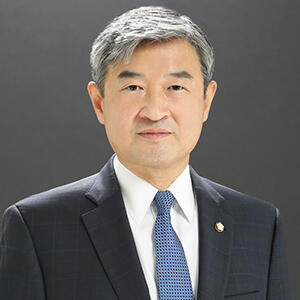
Raja Mohan
Professor C Raja Mohan is the Director of the Institute of South Asian Studies at the National University of Singapore. Professor Mohan is one of India’s leading commentators on India’s foreign policy. He has been associated with a number of think tanks in New Delhi, including the Institute of Defence Studies and Analyses, the Centre for Policy Research and the Observer Research Foundation. He was also the founding director of Carnegie India.  He served on India’s National Security Advisory Board, and led the Indian Chapter of the Pugwash Conferences on Science and World Affairs from 1999 to 2006. He writes a regular column for the Indian Express and was earlier the Strategic Affairs Editor for The Hindu newspaper. Professor Mohan has a Master’s degree in nuclear physics and a PhD in international relations. Among his recent books are Samudra Manthan: Sino-Indian Rivalry in the Indo-Pacific (2013) and Modi’s World: Expanding India’s Sphere of Influence (2015).
 
Image
Nilanthi Samaranayake
Ms. Nilanthi Samaranayake directs the Strategy and Policy Analysis Program at CNA. She focuses on the study of US alliances and partnerships globally and led several studies on Indian Ocean security. Her work has examined U.S.-India naval cooperation, water resource competition in the Brahmaputra River, and Sri Lankan foreign policy. She also has conducted research on the navies of Bangladesh and Pakistan, the Maldives Coast Guard, security threats in the Bay of Bengal, and relations between smaller South Asian countries and China, India and the United States. Prior to joining CNA, Samaranayake held positions at the National Bureau of Asian Research and the Pew Research Center. Samaranayake holds an M.Sc. in International Relations from the London School of Economics and Political Science and a B.A. in International Studies from American University.
 
Moderator:
Image
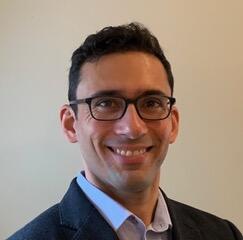
Arzan Tarapore
Dr. Arzan Tarapore is the South Asia research scholar at the Shorenstein Asia-Pacific Research Center at Stanford University, where he leads the newly-restarted South Asia research initiative. He is also a senior nonresident fellow at the National Bureau of Asian Research. His research focuses on Indian military strategy and contemporary Indo-Pacific security issues. He previously held research positions at the RAND Corporation, the Observer Research Foundation, and the East-West Center in Washington. Prior to his scholarly career, he served in the Australian Defence Department. Arzan holds a PhD in war studies from King’s College London.

This event is co-sponsored by: The Center for South Asia

Via Zoom webinar.
Please register at:  https://bit.ly/2P4CllG

Seminars
Authors
Callista Wells
News Type
News
Date
Paragraphs

The China Program at Shorenstein APARC had the pleasure of hosting Ryan Hass, Michael H. Armacost Chair in Foreign Policy Studies at the Brookings Institution for the program "Partner, Competitor, and Challenger: Thoughts on the Future of America’s China Strategy." Hass explored cooperation and competition between the United States and China before engaging in a lively Q&A session with the audience. Professor Jean Oi, William Haas Professor of Chinese Politics and director of the APARC China Program, moderated the event.

Presently, China is at once a major and increasingly hostile competitor to the U.S., a formidable challenger to U.S. regional and global leadership, and an important partner on a range of transnational challenges. An important and pressing question for many is whether or not it will be possible for both sides to coexist amidst intensifying competition. In his talk, Ryan Hass explored this question by delving into the present and future of US-China relations, as well as the discourse that shapes and is shaped by that relationship. He also discussed the likelihood of conflict between the two countries, particularly surrounding Taiwan, suggesting that it might not be as likely as many of us fear. Listen now: 

Read More

National Emblem of the People's Republic of China on the Great Hall of the People
News

What’s ‘Communist’ about the Communist Party of China?

Is the Chinese Communist Party really communist at all? Expert Jude Blanchette, Freeman Chair in China Studies at the Center for Strategic and International Studies, weighs in.
What’s ‘Communist’ about the Communist Party of China?
Banner of Hau L. Lee
News

The Pandemic, U.S.-China Tensions and Redesigning the Global Supply Chain

The Pandemic, U.S.-China Tensions and Redesigning the Global Supply Chain
American and Chinese flags
News

U.S.-China Relations in the Biden Era

Dr. Thomas Wright examines the recent history of US-China relations and what that might mean for the new administration.
U.S.-China Relations in the Biden Era
Hero Image
Paper boats with Chinese and American flags pengpeng on Getty Images
All News button
1
Subtitle

Ryan Hass, Michael H. Armacost Chair in Foreign Policy Studies at the Brookings Institution, discusses the future of US-China relations. Can we find room for cooperation in this contentious relationship?

-

This event is part of Shorenstein APARC's spring webinar series "The United States in the Biden Era: Views from Asia."

When this webinar is held, Joe Biden’s presidency will be exactly three months old. Enough time to allow for the evaluation of his administration, its policies, and his country by observers around the world, including in Southeast Asia. Ms. Ha will share and interpret the findings of the ISEAS-Yusof Ishak Institute’s latest annual survey of elite Southeast Asian opinions regarding the United States and other nations, which she co-led and co-wrote up with ISEAS colleagues.  Professor Liow will will share some observations on regional views on the Biden administration thus far, focusing on its evolving approach to the region .  Regional impressions and judgments of America now and prior to Biden’s term will also be contrasted, alongside the changing reputations of other countries such as China and Japan.  Policy implications will be drawn as well, especially in light of the unfolding political crisis in Myanmar.

Image
Hoang Thi Ha 4X4
Hoang Thi HA is Fellow and Lead Researcher on Political-Security Affairs at the ASEAN Studies Centre of ISEAS-Yusof Ishak Institute. Her research focuses on political-security issues within ASEAN, including the South China Sea disputes, ASEAN human rights cooperation, ASEAN's relations with the major powers and ASEAN's institutional building. Ms. Hoang worked at the ASEAN Department of the Ministry of Foreign Affairs of Viet Nam and the ASEAN Secretariat before joining ISEAS. She holds an MA in International Relations from the Diplomatic Academy of Vietnam.

Image
Joseph Liow 4X4
Joseph Chinyong Liow is Dean of College of Humanities, Arts, and Social Sciences, Nanyang Technological University, Singapore, where he is also Tan Kah Kee Chair in Comparative and International Politics, and Research Advisor and former Dean at the S. Rajaratnam School of International Studies. He held the inaugural Lee Kuan Yew Chair in Southeast Asia Studies at the Brookings Institution, Washington DC, where he was also a Senior Fellow in the Foreign Policy Program.

Joseph’s research interests encompass Muslim politics and social movements in Southeast Asia and the geopolitics and geoeconomics of the Asia-Pacific region.

Joseph is the author, co-author, or editor of 14 books, has testified before the U.S. Congress, and has extensive teaching and consultancy experience. He sits on several editorial boards and governing boards of think tanks, and on the Social Science Research Council of Singapore.


Via Zoom Webinar
Register: https://bit.ly/2PWPv4z

Hoang Thi HA Fellow and Lead Researcher on Political-Security Affairs at the ASEAN Studies Centre of ISEAS-Yusof Ishak Institute, Singapore
Joseph Chinyong Liow Tan Kah Kee Chair Professor and Dean, College of Humanities, Arts, and Social Sciences, Nanyang Technological University and Research Advisor, Rajaratnam School of International Studies, Singapore
Seminars
-
 
This is a virtual event. Please click here to register and generate a link to the talk. 
The link will be unique to you; please save it and do not share with others.
 
ABSTRACT:
Despite major international conferences and milestones fast approaching, the peace process in Afghanistan is unlikely to end soon. Referring to the many interdependent and intractable issues to negotiate, the lead U.S. negotiator conceded that “nothing is agreed until everything is agreed.” Even if ongoing diplomatic efforts yield agreements, such deals – like the February 2020 U.S.-Taliban agreement – will likely be difficult to implement, verify, and enforce. Underlying core concerns, like the presence of transnational terrorist networks and Kabul’s weak institutional capacity, will persist regardless of the diplomatic process. This event will explore the status and prospects of the current peace process and its implications for U.S. policy. It will consider the long-term political competition between the Taliban and the Kabul government, the role of U.S. forces, and the constructive and disruptive roles that regional actors may play.

SPEAKERS:
Image
Asfandyar Mir
Dr. Asfandyar Mir is a postdoctoral fellow at the Center for International Security and Cooperation at Stanford University. His research is on the international security of South Asia, US counterterrorism policy, and al-Qaeda, with a regional focus on Afghanistan, Pakistan, and India. Some of his research has appeared in peer-reviewed journals, such as International Security, International Studies Quarterly, and Security Studies, and his commentary has appeared in Foreign Affairs, Foreign Policy, H-Diplo, Lawfare, and the Washington Post Monkey Cage. He holds a Ph.D. in Political Science from the University of Chicago and a BA and MA from Stanford University.
Image
Dipali Mukhopadhyav
Dr. Dipali Mukhopadhyay is an associate professor at the Humphrey School of Public Affairs at the University of Minnesota. Her research focuses on the relationships between political violence, state building, and governance during and after war. She is currently serving as senior expert on the Afghanistan peace process for the U.S. Institute of Peace. She is the author of Good Rebel Governance: Revolutionary Politics and Western Intervention in Syria (Cambridge University Press, forthcoming) with Kimberly Howe, and Warlords, Strongman Governors and State Building in Afghanistan(Cambridge University Press, 2014). Prior to joining the Humphrey School, Mukhopadhyay was on the faculty at Columbia University's School of International and Public Affairs from 2012 to 2020. She holds a PhD from Tufts University and a BA from Yale University.
 
MODERATOR:
Image
Arzan Tarapore
Dr. Arzan Tarapore is the South Asia research scholar at the Shorenstein Asia-Pacific Research Center at Stanford University, where he leads the newly-restarted South Asia research initiative. He is also a senior nonresident fellow at the National Bureau of Asian Research. His research focuses on Indian military strategy and contemporary Indo-Pacific security issues. He previously held research positions at the RAND Corporation, the Observer Research Foundation, and the East-West Center in Washington. Prior to his scholarly career, he served as an analyst in the Australian Defence Department, which included an operational deployments to Afghanistan. Arzan holds a PhD in war studies from King’s College London.

This event is co-sponsored by: The Center for South Asia
Via Zoom webinar. Please register at:  https://bit.ly/3cOcabZ
Seminars
-

Co-sponsored by the Southeast Asia Program, Shorenstein Asia Pacific Research Center, Stanford University, with the Center for Southeast Asian Studies, University of Michigan

Shocking events obliterate context.  The coup in Myanmar on 1 February 2021 is a case in point.  Who could imagine the cruelty of the Burmese generals who on February 1st 2021 grabbed power and proceeded to retain it by arresting thousands and murdering hundreds of its local opponents?  Who expected that on February 2nd the country’s youth would launch a nonviolent Civil Disobedience Movement (CDM) and keep it going and growing against such massively intimidating odds?  In this webinar, two experts will provide the essential but all too often missing contexts—current and historical, domestic and foreign, political and socioeconomic—within which the crisis can be understood, its future projected, and its implications assessed.  To those ends, the on-the-ground knowledge, personal experience, and close observer’s insights of Burmese scholar Moe Thuzar will interact with the insights of American professor David Steinberg based on his Burmese experiences and scholarship dating back into the 20th century.

The webinar will consider in particular what the coup and its aftermath may imply for Southeast Asia and its relations with China.  Relevant in that regard is the involvement of all four panel members in a recent collection, The Deer and the Dragon: Southeast Asia and China in the 21st Century—Steinberg and Ciorciari as authors, Emmerson as editor, and ­­Thuzar as an analyst who is using the book in her own research. 

Image
David I Steinberg 4X4
David I. Steinberg is Distinguished Professor of Asian Studies Emeritus, Georgetown University, where he directed its Asian studies program (1997-2007). Other positions he has held include the presidency of the Mansfield Center for Pacific Affairs and Southeast Asia-related US foreign-policy posts as a member of the Senior Foreign Service. He has also represented The Asia Foundation in South Korea, Burma, Hong Kong, and Washington, D.C.  His 15 books and monographs include one translation, more than 150 articles, and several hundred op-eds.. Among these books are: Myanmar: The Dynamics of an Evolving Polity (ed., 2015); Burma/Myanmar: What Everyone Needs to Know (2013, 2nd edition); Modern China-Myanmar Relations: Dilemmas of Mutual Dependence (with Fan Hongwei, 2012); Turmoil in Burma: Contested Legitimacies in Myanmar (2006); Burma: The State of Myanmar (2001); and Burma’s Road to Development (1981). His expertise includes the two Koreas, about which he has written widely. Professor Steinberg was educated at the University of London’s School of Oriental and African Studies, Harvard University, Darmouth College, and Lingnan University in Canton (now Guangzhou), China.

Image
Moe Thuzar 4X4
Moe Thuzar joined the Institute of Southeast Asian Studies in Singapore in 2008. Her responsibilities there have included managing or co-managing its Myanmar Studies Programme, serving as a lead researcher in its ASEAN Studies Centre, and helping the Centre engage with Myanmar regarding its turn to chair ASEAN in 2014. She spent the 2019-2020 academic year as a Fox International Fellow at Yale University's MacMillan Center researching the socio-cultural underpinnings of Burma’s Cold War foreign policy for her National University of Singapore PhD. Earlier she worked for a decade at the ASEAN Secretariat, where she headed its Human Development Unit. Her many publications include, as co-author, the 2020 and 2019 editions of ISEAS’s widely read State of Southeast Asia: Survey Report. Other recent writing includes chapters and articles in ASEAN-EU Partnerships: The Untold Story (ed., 2020); the Journal of Southeast Asian Economies (2019); Southeast Asian Affairs (ed., 2019); Human Security Norms in East Asia (ed., 2019); and, as co-author, ASEAN’s Myanmar Dilemma (with Lex Rieffel, 2018). Earlier works include Myanmar: Life After Nargis (with Pavin Chachavalpongpun, 2009).

Co-moderated by John Ciorciari, Director, Weiser Diplomacy Center, University of Michigan, and Donald K. Emmerson, Director, Southeast Asia Program, Stanford University

Via Zoom Webinar
Register: https://bit.ly/3mdiwEY

David I. Steinberg Distinguished Professor of Asian Studies Emeritus, Georgetown University, Washington, DC
Moe Thuzar Fellow and Co-coordinator, Myanmar Studies Programme, ISEAS-Yusof Ishak Institute, Singapore
John Ciorciari Moderator Director, Weiser Diplomacy Center, University of Michigan
0
Senior Fellow Emeritus at the Freeman Spogli Institute for International Studies
Affiliated Faculty, CDDRL
Affiliated Scholar, Abbasi Program in Islamic Studies
aparc_dke.jpg PhD

At Stanford, in addition to his work for the Southeast Asia Program and his affiliations with CDDRL and the Abbasi Program in Islamic Studies, Donald Emmerson has taught courses on Southeast Asia in East Asian Studies, International Policy Studies, and Political Science. He is active as an analyst of current policy issues involving Asia. In 2010 the National Bureau of Asian Research and the Woodrow Wilson International Center for Scholars awarded him a two-year Research Associateship given to “top scholars from across the United States” who “have successfully bridged the gap between the academy and policy.”

Emmerson’s research interests include Southeast Asia-China-US relations, the South China Sea, and the future of ASEAN. His publications, authored or edited, span more than a dozen books and monographs and some 200 articles, chapters, and shorter pieces.  Recent writings include The Deer and the Dragon: Southeast Asia and China in the 21st Century (ed., 2020); “‘No Sole Control’ in the South China Sea,” in Asia Policy  (2019); ASEAN @ 50, Southeast Asia @ Risk: What Should Be Done? (ed., 2018); “Singapore and Goliath?,” in Journal of Democracy (2018); “Mapping ASEAN’s Futures,” in Contemporary Southeast Asia (2017); and “ASEAN Between China and America: Is It Time to Try Horsing the Cow?,” in Trans-Regional and –National Studies of Southeast Asia (2017).

Earlier work includes “Sunnylands or Rancho Mirage? ASEAN and the South China Sea,” in YaleGlobal (2016); “The Spectrum of Comparisons: A Discussion,” in Pacific Affairs (2014); “Facts, Minds, and Formats: Scholarship and Political Change in Indonesia” in Indonesian Studies: The State of the Field (2013); “Is Indonesia Rising? It Depends” in Indonesia Rising (2012); “Southeast Asia: Minding the Gap between Democracy and Governance,” in Journal of Democracy (April 2012); “The Problem and Promise of Focality in World Affairs,” in Strategic Review (August 2011); An American Place at an Asian Table? Regionalism and Its Reasons (2011); Asian Regionalism and US Policy: The Case for Creative Adaptation (2010); “The Useful Diversity of ‘Islamism’” and “Islamism: Pros, Cons, and Contexts” in Islamism: Conflicting Perspectives on Political Islam (2009); “Crisis and Consensus: America and ASEAN in a New Global Context” in Refreshing U.S.-Thai Relations (2009); and Hard Choices: Security, Democracy, and Regionalism in Southeast Asia (edited, 2008).

Prior to moving to Stanford in 1999, Emmerson was a professor of political science at the University of Wisconsin-Madison, where he won a campus-wide teaching award. That same year he helped monitor voting in Indonesia and East Timor for the National Democratic Institute and the Carter Center. In the course of his career, he has taken part in numerous policy-related working groups focused on topics related to Southeast Asia; has testified before House and Senate committees on Asian affairs; and been a regular at gatherings such as the Asia Pacific Roundtable (Kuala Lumpur), the Bali Democracy Forum (Nusa Dua), and the Shangri-La Dialogue (Singapore). Places where he has held various visiting fellowships, including the Institute for Advanced Study and the Woodrow Wilson International Center for Scholars. 


Emmerson has a Ph.D. in political science from Yale and a BA in international affairs from Princeton. He is fluent in Indonesian, was fluent in French, and has lectured and written in both languages. He has lesser competence in Dutch, Javanese, and Russian. A former slam poet in English, he enjoys the spoken word and reads occasionally under a nom de plume with the Not Yet Dead Poets Society in Redwood City, CA. He and his wife Carolyn met in high school in Lebanon. They have two children. He was born in Tokyo, the son of U.S. Foreign Service Officer John K. Emmerson, who wrote the Japanese Thread among other books.

Selected Multimedia

Date Label
Moderator Director, Southeast Asia Program, Stanford University
Seminars
Authors
Callista Wells
News Type
News
Date
Paragraphs

The China Program at Shorenstein APARC had the privilege of hosting Jude Blanchette, the Freeman Chair in China Studies at the Center for Strategic and International Studies (CSIS). The program, entitled "What’s ‘Communist’ about the Communist Party of China?," explored the goals and ideology of the Chinese Communist Party (CCP), as well as what they might mean for the future of China in the global community. Professor Jean Oi, William Haas Professor of Chinese Politics and director of the APARC China Program, moderated the event.

After the death of Mao Zedong in 1976, the goals of the CCP became less clear. As the country began to adopt market reforms in the 1980s and 1990s, CCP theorists were forced into contortions providing ideological justifications for policies that appeared overtly capitalist. Deng Xiaoping’s concept of “Socialism with Chinese characteristics” came to be seen as a theoretical fig leaf rather than a description of an egalitarian economic system, and by the 2000s, a consensus emerged that the CCP had completely abandoned any pretense of pursuing the Marxist vision it purported to hold. With the rise of Xi Jinping, however, the Party talks with renewed vigor about Marxism-Leninism and the goal of achieving actual, existing socialism. Has the CCP re-discovered communism?  In his talk, Blanchette discussed the abandoned and existing legacies of Mao Zedong, Marxism-Leninism, and the CCP’s vision of socialism. Watch now: 

Read More

Min Ye speaking
News

Domestic or International? The Belt and Road Initiative Is More Internally Focused Than We Think, Says Expert Min Ye

Domestic or International? The Belt and Road Initiative Is More Internally Focused Than We Think, Says Expert Min Ye
Banner of Hau L. Lee
News

The Pandemic, U.S.-China Tensions and Redesigning the Global Supply Chain

The Pandemic, U.S.-China Tensions and Redesigning the Global Supply Chain
American and Chinese flags
News

U.S.-China Relations in the Biden Era

Dr. Thomas Wright examines the recent history of US-China relations and what that might mean for the new administration.
U.S.-China Relations in the Biden Era
Hero Image
National Emblem of the People's Republic of China on the Great Hall of the People
All News button
1
Subtitle

Is the Chinese Communist Party really communist at all? Expert Jude Blanchette, Freeman Chair in China Studies at the Center for Strategic and International Studies, weighs in.

Authors
Callista Wells
News Type
News
Date
Paragraphs

On February 24, 2021, the China Program at Shorenstein APARC hosted Dr. Thomas Wright, director of the Center on the United States and Europe and a senior fellow in the Project on International Order and Strategy at the Brookings Institution. Professor Jean Oi, William Haas Professor of Chinese Politics and director of the APARC China Program, moderated the event.

The program, entitled "U.S.-China Relations in the Biden Era," explored the future of US-China relations based on experience from past administrations. Under former President Trump, U.S. relations with China evolved into outright rivalry. In his talk, Dr. Wright discussed whether this rivalry will continue and evolve during a Biden administration by analyzing the roots of strategic competition between the two countries and various strands of thinking within the Biden team. According to Wright, the most likely outcome is that the competition between the two countries will evolve into a clash of governance systems and the emergence of two interdependent blocs where ideological differences become a significant driver of geopolitics. Cooperation is possible but it will be significantly shaped by conditions of rivalry. Watch now:

Read More

Min Ye speaking
News

Domestic or International? The Belt and Road Initiative Is More Internally Focused Than We Think, Says Expert Min Ye

Domestic or International? The Belt and Road Initiative Is More Internally Focused Than We Think, Says Expert Min Ye
Banner of Hau L. Lee
News

The Pandemic, U.S.-China Tensions and Redesigning the Global Supply Chain

The Pandemic, U.S.-China Tensions and Redesigning the Global Supply Chain
Photograph of Xi Jinping and Vladmir Putin walking in front of two lines of armed Chinese soldiers
News

Military Competition with China: Harder to Win Than During the Cold War?

On February 10th, the APARC China Program hosted Professor Oriana Mastro to discuss military relations between the US and China, and why deterrence might be even more difficult than during the Cold War.
Military Competition with China: Harder to Win Than During the Cold War?
Hero Image
American and Chinese flags
All News button
1
Subtitle

Dr. Thomas Wright examines the recent history of US-China relations and what that might mean for the new administration.

-

This is a virtual event. Please click here to register and generate a link to the talk. 
The link will be unique to you; please save it and do not share with others.


This event is co-sponsored by the Center on Democracy, Development, and the Rule of Law.

How does autocratic lobbying affect political outcomes and media coverage in democracies? This talk focuses on a dataset drawn from the public records of the US Foreign Agents Registration Act. It includes over 10,000 lobbying activities undertaken by the Chinese government between 2005 and 2019. The evidence suggests that Chinese government lobbying makes legislators at least twice as likely to sponsor legislation that is favorable to Chinese interests. Moreover, US media outlets that participated in Chinese-government sponsored trips subsequently covered China as less threatening. Coverage pivoted away from US-China military rivalry and the CCP’s persecution of religious minorities and toward US-China economic cooperation. These results suggest that autocratic lobbying poses an important challenge to democratic integrity.


Portrait of Erin Baggott CarterErin Baggott Carter is an Assistant Professor at the Department of Political Science and International Relations at the University of Southern California. There, she is also a Co-PI at the Lab on Non-Democratic Politics. She received a Ph.D. in Government from Harvard University, is currently a visiting scholar at the Stanford Center on Democracy, Development and the Rule of Law, and was previously a Fellow at the Stanford Center for International Security and Cooperation.
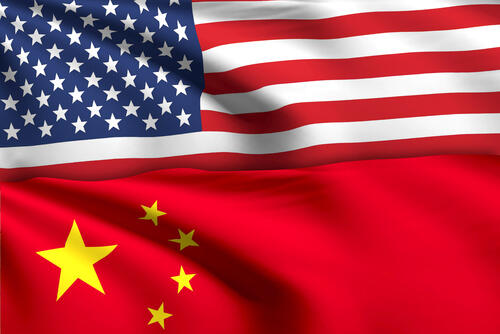
Dr. Carter's research focuses on Chinese politics and propaganda. She recently completed a book on autocratic propaganda based on an original dataset of eight million articles in Arabic, Chinese, English, French, Russian, and Spanish drawn from state-run newspapers in nearly 70 countries. She is currently working on a book on how domestic politics influence US-China relations. Her other work has appeared or is forthcoming in the British Journal of Political ScienceJournal of Conflict Resolution, and International Interactions. Her work has been featured by the New York Times, the Brookings Institution, and the Washington Post Monkeycage Blog.


Image
American and Chinese flags
This event is part of the 2021 Winter/Spring Colloquia series, Biden’s America, Xi’s China: What’s Now & What’s Next?, sponsored by APARC's China Program.


Via Zoom Webinar. Register at: https://bit.ly/3beG7Qz

Erin Baggott Carter Assistant Professor, Department of Political Science and International Relations, University of Southern California; Visiting Scholar, Center on Democracy, Development and the Rule of Law, Stanford University
Seminars
Authors
Oriana Skylar Mastro
News Type
Commentary
Date
Paragraphs

This article by Oriana Skylar Mastro was originally published by the Lowy Institute.

Chinese exercises in the South China Sea last month, and the strong US response, show these disputed waters will not soon be calm. While the focus has largely been on military maneuvers, competition in legal positions has also been heating up. Last year, both the United States and Australia risked China’s wrath by officially stating that China’s claims in the South China Sea are unlawful. Other claimants were pleased by this change of policy, but none voiced it prominently.

The issue, however, is not that China flagrantly violates international law – it is that it does so while simultaneously creating a veneer of legal legitimacy for its position.

The conventional wisdom is that China claims sovereignty over “virtually all South China Sea islands and their adjacent waters.” Its claims are “sweeping” and more expansive than those of any other rival claimant. In 2009, Dai Bingguo, then a top Chinese official, first referred to the South China Sea as a “core interest”, a term often used for Taiwan, Xinjiang, and Tibet. While China has not been specific about the extent of its claims, it uses a “nine-dash line” which “swoops down past Vietnam and the Philippines, and towards Indonesia, encompassing virtually all of the South China Sea”, to delineate its claims.

[Subscribe to APARC's newsletters to stay current on our scholars' research.]

On the surface, it appears that Chinese leaders are relying on a historical argument to buttress their claims – China traces its interaction with the South China Sea back to the Western Han Dynasty. Thus, Beijing’s narrative about its claims begins as early as the 2nd century BCE, when Chinese people sailed in the South China Sea and discovered some of the region’s land features.

Scholars have meticulously cataloged the dubious nature of this history. And besides, the UN Convention for the Law of the Sea (UNCLOS) does not grant signatories the right make claims based on historical legacy, and the concept of “historic claims” lacks a clear basis in international law.

But this is not actually how China lays claim to 90% of the South China Sea. China’s abuse and misapplication of international law is a bit more complex. There are four levels that build on one another.

First, China claims it has the same rights as archipelagic states, those countries mainly made up of islands. One of the benefits of archipelagic status is that the waters between islands are considered internal waters, like rivers inside a country. Other countries have no right to transit these waters without permission. This archipelagic status is conferred through the UN, and only 22 nations claim it.

Spoiler alert: China is not one of them.

China is undeniably a continental country, but nevertheless, it drew straight baselines around the Paracel Islands and claimed the waters between the islands to be internal waters. Beijing has not done this explicitly for the Spratly islands area, but its reaction to the activities of other countries suggests that is its interpretation. My discussions with Chinese strategists reveal that China will likely explicitly draw baselines to claim internal waters between the Spratly Islands once it has the military capabilities in place to enforce it. (This is not an easy task, as the Spratlys’ sea zone is 12 times that of the Paracels, covering 160,000 to 180,000 square kilometers of water.)

While international law may support the position of the US and Australia on legal behavior within the EEZs, countries need to work harder to solidify this norm more broadly.
Oriana Skylar Mastro
FSI Center Fellow

China then claims a 12 nautical mile (nm) territorial sea from the Paracel baseline, not from the individual islands, and in the Spratlys from many features that under international law are not awarded this right, such as artificial islands. Moreover, China’s interpretation of the territorial sea is that the state has the exclusive right to make, apply and execute its own laws in that space without foreign interference. But according to UNCLOS, all ships, civilian or military, enjoy the right of innocent passage through other states’ territorial seas. Moreover, the contiguous zone is considered part of international waters, and states do not have the right to limit navigation or exercise any control for security purposes.

Lastly, China claims 200 nm from the end of the territorial sea as its exclusive economic zone (EEZ), where it claims to have the right to regulate military activity. The US insists that freedom of navigation of military vessels is a universally established and accepted practice enshrined in international law – in other words, states do not have the right to limit navigation or exercise any control for security purposes in EEZs. Australia shares this view, but not all countries accept this interpretation. Argentina, Brazil, India, Indonesia, Iran, Malaysia, the Maldives, Oman, and Vietnam agree with China that warships have no automatic right of innocent passage in their territorial seas. Twenty other developing countries (including Brazil, India, Malaysia, and Vietnam) insist that military activities such as close-in surveillance and reconnaissance by a country in another country’s EEZ infringe on coastal states’ security interests and therefore are not protected under freedom of navigation.

In other words, while international law may support the position of the US and Australia on legal behavior within the EEZs, countries need to work harder to solidify this norm more broadly.

Through these three positions alone on internal waters, territorial seas and EEZs, China lays claim to approximately 80% of the South China Sea. Then China uses the nine-dash line to cover the remaining territory and provide redundancy by claiming “historic waters” – i.e., that China has historically controlled this maritime environment – again, a view that has no basis in international law.

Image
Table comparing the practices of China in the South China Sea verus the norms of international laws

The US has taken steps to challenge the false legal basis of China’s claims. This is the main purpose behind freedom-of-navigation operations, or FONOPS – to demonstrate through action that the US does not accept China’s position that areas are not international waters but internal or territorial waters. In other instances, the US is signaling that it does not accept an area to be in China’s EEZ, although China would not have the right to regulate military activity there anyway.

But undermining China’s false legal claims will take more than military operations and harsh statements. In 2016, the Hague Tribunal ruled that China’s claims of historic rights in the South China Sea lacked legal foundation, China’s actions in the region infringed on the rights of the Philippines, and features in the Spratlys are not entitled to EEZs or territorial zones. Yet Washington’s ongoing refusal itself to ratify UNCLOS undermines the general effectiveness of pushing back against Beijing with legal tools of statecraft. Additionally, Washington squandered an opportunity to support the Philippines in enforcing the international legal tribunal’s 2016 ruling in its favor, further reducing the attractiveness for other claimants to challenge Beijing on legal grounds.

The US should not make the same mistake twice. It should support other claimants that may want to pursue legal action against China (Vietnam is currently considering this course of action). Then, when the tribunal rules once more against China, the US should lead the charge to enforce the ruling.

China is using all the tools of statecraft at its disposal to gain control over this vital strategic waterway. The US and its allies should do the same.

Read More

Photograph of Xi Jinping and Vladmir Putin walking in front of two lines of armed Chinese soldiers
News

Military Competition with China: Harder to Win Than During the Cold War?

On February 10th, the APARC China Program hosted Professor Oriana Mastro to discuss military relations between the US and China, and why deterrence might be even more difficult than during the Cold War.
Military Competition with China: Harder to Win Than During the Cold War?
A warship sailing in the South China Sea and a photo of three soldiers standing guard in front of a Chinese traditional building
News

China’s South China Sea Strategy Prioritizes Deterrence Against the US, Says Stanford Expert

Analysis by FSI Center Fellow Oriana Skylar Mastro reveals that the Chinese military has taken a more active role in China’s South China Sea strategy, but not necessarily a more aggressive one.
China’s South China Sea Strategy Prioritizes Deterrence Against the US, Says Stanford Expert
Battleships patrolling in the open ocean.
Commentary

Beijing’s Line on the South China Sea: “Nothing to See Here”

China’s official denials of growing military capability in the region look a lot like gaslighting.
Beijing’s Line on the South China Sea: “Nothing to See Here”
Hero Image
Aircraft assigned to the Theodore Roosevelt Carrier Strike Group fly over the South China Sea
Aircraft assigned to the Theodore Roosevelt Carrier Strike Group fly over the South China Sea.
U.S. Indo-Pacific Command, Flickr
All News button
1
Subtitle

Beijing’s misapplication of international law in the disputed waters is more complex than it seems on the surface.

-

To watch the recording of the event, click here.

The Biden administration has yet to announce its North Korea policy, and it remains unclear whether it will try to forge a new path in U.S. dealings with North Korea or retread the steps of previous administrations. In this webinar, four experts with extensive experience with North Korea will assess the current situation on the Korean Peninsula and provide recommendations to the new administration.

Gi-Wook Shin, director of the Shorenstein Asia-Pacific Research Center and Korea Program, will moderate the conversation with panelists Robert Carlin, a visiting scholar at the Center for International Security and Cooperation, Victor Cha, professor of government at Georgetown University and Korea Chair at the Center for Strategic and International Studies, Siegfried Hecker, senior fellow emeritus at FSI and professor emeritus in the Department of Management Science and Engineering, and Oriana Mastro, an FSI Center Fellow.

Via Zoom: Register at https://bit.ly/3tPcfml

Panel Discussions
Subscribe to Security