Security

FSI scholars produce research aimed at creating a safer world and examing the consequences of security policies on institutions and society. They look at longstanding issues including nuclear nonproliferation and the conflicts between countries like North and South Korea. But their research also examines new and emerging areas that transcend traditional borders – the drug war in Mexico and expanding terrorism networks. FSI researchers look at the changing methods of warfare with a focus on biosecurity and nuclear risk. They tackle cybersecurity with an eye toward privacy concerns and explore the implications of new actors like hackers.

Along with the changing face of conflict, terrorism and crime, FSI researchers study food security. They tackle the global problems of hunger, poverty and environmental degradation by generating knowledge and policy-relevant solutions. 

-

In addition to Iraq, Afghanistan, Pakistan, the financial crisis, and the housing crisis (as if that were not enough!), the next American president will have his hands full with matters on the Korean peninsula.  What will be the future of Six Party talks?  What is the status of the leadership in Pyongyang?  How do changes in leadership in Washington (and potentially in Pyongyang) affect outcomes?  What are the prospects for US-ROK relations?  And what of the KORUS FTA?  Victor Cha, former director of Asian affairs at the White House, will lead a discussion on these issues.

Professor Cha is director of Asian Studies and holds the D.S. Song Chair in the Department of Government and School of Foreign Service at Georgetown University.  He left the White House in May 2007 after serving since 2004 as Director for Asian Affairs at the National Security Council.  At the White House, he was responsible primarily for Japan, the Korean peninsula, Australia/New Zealand and Pacific Island nation affairs.   Dr. Cha was also the Deputy Head of Delegation for the United States at the Six Party Talks in Beijing, and received two Outstanding Service commendations during his tenure at the NSC.  

He is the award-winning author of Alignment Despite Antagonism: The United States-Korea-Japan Security Triangle (Stanford University Press) (winner of the 2000 Ohira Book Prize) and co-author of Nuclear North Korea: A Debate on Engagement Strategies (Columbia University Press, 2004).  He has written articles on international relations and East Asia in journals including Foreign Affairs, International Security, Political Science Quarterly, Survival, International Studies Quarterly, and Asian Survey.   Professor Cha is a former John M. Olin National Security Fellow at Harvard University, two-time Fulbright Scholar, and Hoover National Fellow,  CISAC Fellow, and William J. Perry Fellow at Stanford University.

Image
beyond the final score
He serves as an independent consultant, and has testified before Congress on Asian security issues.  He has been a guest analyst for various media including CNN, ABC Nightline, NBC Today Show, CBS Morning Show, Fox News, MSNBC, CNBC, BBC, ESPN, Sports Illustrated, and National Public Radio.

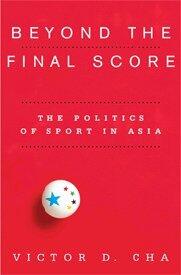
His new book Beyond the Final Score: The Politics of Sport in Asia (Columbia University Press, 2008) looks at the politics of sports and the Beijing Olympics. Cha holds a BA and Ph.D. from Columbia University, MA from University of Oxford.

This event is sponsored by the Pantech Group in Korea.

Philippines Conference Room

Victor D. Cha Director of Asian Studies Speaker Georgetown University
Seminars
Authors
News Type
Commentary
Date
Paragraphs

In the waning days of the Clinton administration, the momentum for engagement with North Korea, building from the earlier agreement to freeze its nuclear program and a moratorium on ballistic missile launches, accelerated to the brink of full-scale normalization of relations. The U.S. presidential election in 2000 brought that diplomatic freight train to an abrupt halt.

Will the 2008 election bring yet another dramatic change in U.S. Korea policy?

The answer, based on the published positions of the two candidates and conversations with his senior Asia policy advisors, seems to be NO. There are important differences of emphasis in the approaches of both candidates, which I will discuss, but the bottom line is that both men are likely to pick up where President George W. Bush leaves off.

There are two fundamental reasons why U.S. policy toward Korea – and more broadly in Northeast Asia --- will not change dramatically. First, Asia will continue to suffer from a deficit of presidential attention. The arc of crisis – Iraq, Iran, Afghanistan and Pakistan -- will necessarily still command, as it has for almost 8 years, the attention of senior American policymakers. Even that will have to fight for space with the growing global financial crisis.

Second, both candidates agree on the broad outlines of an Asia policy, one that does not depart radically from the one pursued by the Bush administration. As a senior McCain advisor put it to me: “There is not a huge difference on Asia between Obama and McCain.” Privately, Obama advisors also stress that there will not be a huge break with current U.S. policy.

Both campaigns are critical of the lack of attention paid to Asia and the need for the U.S. to be more proactive to strengthen existing alliances and to join the discussion about new forms of regional integration. Both candidates support the need to engage, rather than confront, a rising China. Both men call for the U.S. to pay more attention to management of our alliances with South Korea and Japan. And both Obama and McCain support the North Korean nuclear negotiations carried out by President Bush in his second term, although privately both campaigns are critical of the deal that has been struck.

If there are differences, they can be found in two areas – support for the Korea US free trade agreement and the willingness to directly engage North Korea and its regime.

Free Trade and the KORUS Free Trade Agreement

If there is one single issue regarding Korea on which Senators Obama and McCain clearly part company, it is the future of the free trade agreement negotiated with the Bush administration. Senator McCain is an unambiguous supporter of the FTA, not only as a trade pact but also as a symbol of the broader partnership between the U.S. and South Korea.

Senator Obama also supports free trade but is critical of this and other agreements, such as NAFTA, for failing to ensure market access and the protection of labor rights and the environment. Privately, Obama’s advisors understand the symbolic value of the FTA to the alliance, but they plan to ask Seoul to reopen talks on market access, particularly for the automobile industry. Their position reflects the importance of trade unions and the role of some key states – Michigan most of all – in the election outcome. Even if Obama loses, the Democrats are likely to strengthen their control of Congress, making approval of the FTA difficult under any circumstances.

Negotiating with Pyongyang: Back to the Future?

Both the McCain and the Obama camps publicly back the Bush administration’s negotiations with Pyongyang, but both are also privately critical, though for different reasons.

The Obama team is heavily populated by former Clinton administration officials who were involved in the negotiation of the 1994 Agreed Framework with North Korea. They see the current deal as an inevitably flawed bargain, the result of the refusal of the administration to seriously engage the North directly until it had crossed the red line of nuclear weapons testing. With little leverage, not least the credible threat of coercion, we are left with containing the plutonium production of the North, and hoping that a grand bargain down the line can yield full denuclearization.

Obama recognizes the need for “close coordination and consultation with our allies South Korea and Japan,” as one of his advisors put it in a published interview, and supports continuing the Six Party Talks. But the emphasis is clearly on direct talks with North Korea, though conducted with a principled toughness that the Bush administration has not exhibited in its final months in office.

That readiness to conduct direct negotiations, up to conclusion of a peace treaty with Pyongyang and full normalization of relations, is where the two candidates part company. The Republican nominee is clearly uncomfortable with direct dealings with Pyongyang – his position resembles the first term of the Bush administration more than the second in that respect. His advisory team combines realists, mainly veterans of the Powell State Department, and neoconservatives, reproducing the divisions that thwarted coherent policy-making in that first Bush term.

In the end, the views of McCain himself may be decisive. He was an opponent of the Agreed Framework, an agreement he characterized as “appeasement.” He maintained this stance into the Bush administration, vocally opposing any direct negotiations with the North Koreans as long as they maintained the right to develop nuclear weapons. He has been critical as well of the main deal struck by President Bush in his second term – “I didn’t believe in the KEDO agreement that President Clinton made and I don’t believe in this one,” he said in January.

McCain, according to an interview with one of his senior Asia advisors, would “seek a return to the core principles of denuclearization known as CVID, or complete, verifiable, irreversible, dismantlement.” The demand for CVID was the watchword of the Bush administration’s earlier stance, in effect a call for Pyongyang to abandon its nuclear option as a first step. But that demand was dropped after Pyongyang called the Bush administration’s bluff by exploding a nuclear device in October, 2006.

McCain also wants to “broaden our policy goals related to North Korea” beyond nuclear issues, to including human rights, economic and political reform, and reduction of the conventional military threat from North Korea, goals also set out at the outset of the Bush administration. McCain has repeatedly referred to the North Korean regime, and its leader, Kim Jong Il, in harsh terms and embraced a policy of “rogue state rollback.”

Realistically, however, McCain offers no credible, practical means to reach these goals. He reserves, as does Obama, the option to use force. But concretely he comes back to the strategy of pressing China to bring North Korea to heel. Unfortunately the Bush administration also relied on China and found there were clear limits to Beijing’s ability to control or its willingness to press its North Korean client. In the end, McCain may have little option but to follow Bush to Pyongyang’s doorstep.

One Caveat – Events Matter

Despite the powerful impetus to maintain continuity in U.S. policy toward the Korean peninsula, no matter whom is elected in November, there is one important caveat to keep in mind – events matter. Unplanned, and unforeseen, developments could force Korea to the top of the President’s agenda. Already we have seen the reports of Kim Jong Il’s serious illness trigger fresh concerns about a possible collapse of political authority in Pyongyang. A simultaneous rush by China, South Korea and the United States to fill a vacuum of power in the North could upset all calculations. For South Korea, and President Lee Myung-bak, it is always best to prepare for the unexpected.

Hero Image
sneider
All News button
1
-

The inauguration of Lee Myung-bak as president in February represented a significant shift in South Korea's foreign policy. After ten years of "progressive" rule in Seoul, Lee's skepticism about North Korean intentions and his unambiguous support for the U.S. alliance stand out in great contrast. Prof. Paik will analyze President Lee's foreign policy and its implications for dealing with North Korea and for relations with the United States, including in view of the upcoming change in U.S. administration.

Jin-Hyun Paik is a professor at the Graduate School of International Studies (GSIS), Seoul National University (SNU). He is also director of its Institute of International Affairs (IIA), which publishes, among others, the Journal of International and Area Studies (formerly Asia Journal). He specializes in Korea’s foreign and security policy, international security and conflict management, and international law and organization. Educated at Seoul National University (LL.B.), Columbia Law School (LL.M.), and Cambridge University (Ph.D.), Prof. Paik has been a research associate at the Hague Academy of International Law; a visiting fellow at the Rand Corporation and the Hoover Institution, Stanford; and a visiting professor at Johns Hopkins University’s School of Advanced International Studies (SAIS). He was a member of the Presidential Commission on Policy Planning, Korea, and of official advisory committees to a number of Korean government agencies, including the Ministry of Foreign Affairs and Trade and the National Security Council. Prof. Paik has edited six books and written over 100 articles in his fields of interest, in both English and Korean. He is also a frequent contributor and commentator on international affairs to major Korean newspapers and international media. Prof. Paik is an attorney-at-law (a member of the New York Bar). He is currently president of the Korean Academic Council on the United Nations System (KACUNS).

Daniel and Nancy Okimoto Conference Room

Jin-Hyun Paik Professor, Seoul National University Speaker
Conferences
-

A dialogue with Amb. Jeffrey Bader and Dan Blumenthal, senior advisors on Asia policy to Senators Barack Obama and John McCain.

The November 4th U.S. presidential election is certain to bring major changes in American domestic and foreign policy. Will Asia witness such change? How will the next President deal with the challenges of North Korea's nuclear program and China's rise as a regional and global power? How will the new administration manage the U.S. security alliances with Japan and South Korea? Will Asia get more attention after November?

These and other questions will be addressed by senior advisors on Asia policy to the two major candidates for President, in a panel discussion moderated by Shorenstein APARC's Acting Director Ambassador Michael Armacost.

Jeffrey Bader worked at the State Department, the National Security Council, and the United States Trade Representative’s office during his 27-year career with the U.S. Government. He is an expert on U.S.-China relations and director of the John L. Thornton China Center.

Dan Blumenthal joined AEI in November 2004 as a resident fellow in Asian studies. He has served on the U.S.-China Economic and Security Commission since 2005, serving as vice chairman in 2007, and as a member of the Academic Advisory Board for the Congressional U.S.-China Working Group. Previously, Mr. Blumenthal was senior director for China, Taiwan, and Mongolia in the Office of the Secretary of Defense for International Security Affairs during the first George W. Bush administration. In addition to writing for AEI’s Asian Outlook series, he has written articles and op-eds for the Washington Post, the Wall Street Journal, The Weekly Standard, National Review, and numerous edited volumes. He is currently working on a monograph that will examine divides within the China policymaking community.

Philippines Conference Room

Amb. Jeffrey Bader Senior Advisor on Asia Policy to Barack Obama Speaker
Dan Blumenthal Senior Advisor on Asia Policy to John McCain Speaker
Seminars
Date Label
Paragraphs

The world economy is entering a period of instability unseen since the 1930s, with important consequences for international peace and security. Banking crises increase in frequency with global capital flows, and such flows have recently exceeded the previous peak attained in the early twentieth century.

Furthermore, the international financial system faces new, destabilizing challenges. The Japanese-style economic crisis has called into doubt the efficacy of conventional economic policy tools. In addition, the economic balance of power is shifting decisively away from the United States and toward broader East Asia. In the past, such power transitions have proved destabilizing to the world economy and international peace.

Existing international institutions and arrangements are ill-equipped to handle these monumental shifts, and international cooperation within the G-20 has thus far failed to produce effective solutions. This article by Phillip Lipscy considers innovative reforms.

All Publications button
1
Publication Type
Journal Articles
Publication Date
Journal Publisher
Center for Strategic and International Studies
Authors
Phillip Lipscy

Shorenstein APARC
Stanford University
Encina Hall E301
Stanford, CA 94305-6055

(650) 723-6530
0
Visiting Scholar, 2008-09
Tchoe.JPG

Byongho Tchoe is a 2008-09 visiting scholar at Stanford University. He began his research career at the KDI (Korea Development Institute) which is a topnotch government think tank in Korea and served from 1983 to 1995. After earning his PhD in economics, he continued his research career at KIHASA (Korea Institute for Health and Social Affairs) from 1995 up to now. 

He has always been an influential resource in formulating health and social policy in Korea, and served as an advisor to the minister of health and social welfare in 2000. He participated as a member of many task forces and committees for health and social policy making. He was awarded a National Medal for contributing 30 years achievement of National Health Insurance in 2007. 

He was also active in academic society. He published many articles and books. He served as a president of Korean Association of Health Economics and Policy and a vice president of Korea Association of Social Security. He holds a master's degree in public policy from Seoul National University and a PhD in economics from the University of Georgia. 

Shorenstein APARC
Encina Hall, Room E301
Stanford University
Stanford, CA 94305-6055

(650) 725-6445 (650) 723-6530
0
Ben_Self.JPG MA

Ben Self is the inaugural Takahashi Fellow in Japanese Studies at the Walter H. Shorenstein Asia-Pacific Research Center. Prior to joining the Center in September 2008, Self was at the Henry L. Stimson Center as a Senior Associate working on Japanese security policy beginning in 1998. While at the Stimson Center, he directed projects on Japan-China relations, fostering security cooperation between the U.S.-Japan Alliance and the PRC, Japan’s Nuclear Option, and Confidence-Building Measures. Self has also carried out research and writing in areas such as nuclear non-proliferation and disarmament, ballistic missile defense, Taiwan’s security, Northeast Asian security dynamics, the domestic politics of Japanese defense policy, and Japan’s global security role. 

From 2003 until 2008, Ben was living in Africa—in Malawi and Tanzania—and is now studying the role of Japan in Africa, including in humanitarian relief, economic development, conflict prevention, and resource extraction. 

Self earned his undergraduate degree in Political Science at Stanford in 1988, and an M.A. in Japan Studies and International Economics from Johns Hopkins University Paul H. Nitze School of Advanced International Studies. While there, he was a Reischauer Center Summer Intern at the Research Institute for Peace and Security (RIPS) in Tokyo. He later worked in the Asia Program at the Woodrow Wilson International Center for Scholars, and was a Visiting Research Fellow at Keio University on a Fulbright grant from 1996 until 1998.

Takahashi Fellow in Japanese Studies
-

The election of a new American president is an event of great importance to the entire world, not just the United States. From Japan to Afghanistan, the United States plays a crucial role in the security, political, and economic affairs of the region. America's 44th president will face many challenges once in office including rebuilding trust in America, reviving the American economy without protectionism, and how to combat terrorism. Ultimately, the United States must effectively utilize and support multilateral institutions to uphold international law and foster the common interests such as international justice. Future relations with Northeast, Southeast, and South Asia depend on how these efforts unfold. 

Levinthal Hall

The Honorable Karl F. Inderfurth Former Assistant Secretary of State for South Asian Affairs and U.S. Representative for Special Political Affairs to the United Nations Speaker
The Honorable Teresita Schaffer Former U.S. Ambassador to Sri Lanka and Former Deputy Assistant Secretary of State for South Asian Affairs Speaker
The Honorable Theodore L. Eliot, Jr. Former U.S. Ambassador to Afghanistan and Former Executive Secretary and Inspector General of the State Department Speaker
Seminars

Kim argues anti-Americanism belongs to a category of political opposition which may be divided into orthodox dissent and unorthodox dissent: the former involving "efforts to improve the existing system in keeping with its underlying ideological values," while the latter is mainly concerned with the change in political and socioeconomic structures.

In the South Korean context, orthodox dissent is the conservative-rightist whereas unorthodox dissent the progressive-leftist. While sometimes criticizing the U.S. on selected issues, the conservative-rightist accounts cooperation with the U.S. crucial for keeping North Korea from provoking military actions against the South. On the other hand, the progressive-leftist regards the North Korean regime a partner to live together and unification with the North most valuable, transcending ideologies and systems. The progressive-leftist naturally regards "dependence" on the U.S. being against its national autonomy, and in the extreme, the U.S. an obstacle to its unification with the North.

This talk brings its focus on anti-Americanism derived from the progressive-leftist or unorthodox dissenting argument, and its influence on the ROK-U.S relations.

Hakjoon Kim is a visiting scholar at Center for East Asian Studies at Stanford and is the Chairman of Dong-a Il Bo, South Korean newspaper.  He was the President of Korea Political Science Association and Korean Federation of Teachers' Associations.  Kim was Scholar at the Alexander-von-Humboldt Foundation in Germany, and Guest Scholar at the Woodrow Wilson International Center for Scholars in Washington, D.C.

Philippines Conference Room

Hakjoon Kim Visiting Scholar, CEAS Speaker
Seminars

Shorenstein APARC
Stanford University
Encina Hall E301
Stanford, CA 94305-6055

(650) 725-2703 (650) 723-6530
0
Pantech Fellow, 2008-09
Keyser,_Don.jpg

Donald W. Keyser retired from the U.S. Department of State in September 2004 after a 32-year career.  He had been a member of the Senior Foreign Service since 1990, and held Washington-based ambassadorial-level assignments 1998-2004.  Throughout his career he focused on U.S. policy toward East Asia, particularly China, Taiwan, Hong Kong, Japan and the Korean Peninsula. Fluent in Chinese and professionally conversant in Japanese, Russian and French, he served three tours at the American Embassy in Beijing, two tours at the American Embassy in Tokyo, and almost a dozen years in relevant domestic assignments.  In the course of his career, Keyser logged extensive domestic and foreign experience in senior management operations, conflict resolution, intelligence operations and analysis, and law enforcement programs and operations.  A Russian language major in college and a Soviet/Russian area studies specialist through M.A. work, Keyser served 1998-99 as Special Negotiator and Ambassador for Regional Conflicts in the Former USSR.   He sought to develop policy initiatives and strategies to resolve three principal conflicts, leading the U.S. delegation in negotiations with four national leaders and three separatist leaders in the Caucasus region.

Keyser earned his B.A. degree, Summa Cum Laude, with a dual major in Political Science and Russian Area Studies, from the University of Maryland.  He pursued graduate studies at The George Washington University, Washington, D.C., from 1965-67 (Russian area and language focus) and 1970-72 (Chinese area and language focus).   He attended the National War College, Fort McNair, Washington (1988-89), earning a certificate equivalent to an M.S., Military Science; and the National Defense University Capstone Program (summer 1995) for flag-rank military officers and civilians.

Subscribe to Security