-

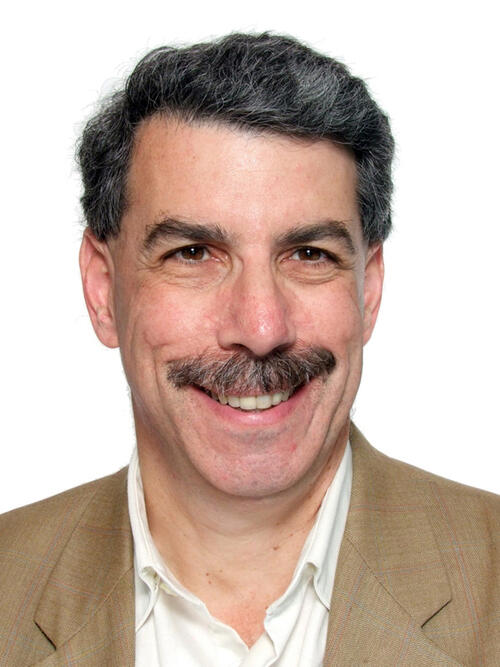
While Chernobyl, and now Fukushima, are household words, far fewer people have heard of Maiak in the southern Urals and Hanford in eastern Washington State where Soviet and American engineers built plutonium plants to fuel the Cold War nuclear arsenal. Within nuclear "buffer zones," plant managers, who were pushed to produce as much plutonium as quickly as possible, polluted freely, liberally and disastrously. During the plutonium disasters that ensued, each plant issued over 200 million curies of radioactive isotopes into the surrounding environment, at least twice the amount released at Chernobyl. Under cover of nuclear security and powered by generous corporate welfare, plant managers employed influential public relations campaigns, restricted medical research, deployed temporary, migrant workers as ‘"jumpers" for the dirtiest work, and generally denied the existence and hazards of radioactive contamination. This was the house plutonium built. Kate Brown argues these histories are important because they supplied models, staff, blueprints and subsequent ready-made disasters for Chernobyl and Fukushima.

Kate Brown is an associate professor of history at the University of Maryland, Baltimore County. She is the author of a Biography of No Place: From Ethnic Borderland to Soviet Heartland (Harvard 2004), which won the American Historical Association’s George Louis Beer Prize for the Best Book in International European History. Brown is a 2009 Guggenheim Fellow and is working on a book called Plutopolia, a tandem history of the world’s first plutonium cities, to be published by Oxford University Press in 2012.

---------

Special Japan Studies Program and CEAS Series: Winter-Spring 2011-12

Looking Back, Looking Forward: Japan's March 11 Disasters One Year Later

The earthquake, tsunami, and nuclear disaster that hit Japan in March 2011 had both immediate catastrophic consequences and long term repercussions. Fundamental areas of Japan’s environment, economy, society, and collective national psyche were deeply affected, giving rise to a broad range of urgent issues. These include economic debates about how to meet the country’s energy demands with nuclear power plants offline, and what path to take for the country’s energy future; political crises, including criticism of the government’s disaster response; the psychological challenges of coping with trauma and grief; a daunting environmental clean-up; and social developments, including a new wave of civil society activism. This series brings together scholars and activists from a wide range of specialties to take stock of how the Japanese have been affected by the disasters, and to assess the efforts of residents, volunteers, and policy makers to recover and move forward.

Philippines Conference Room

Kate Brown Associate Professor of History Speaker University of Maryland, Baltimore County (UMBC)
Seminars
-

PLEASE NOTE: VENUE CHANGED TO THE

OKSENBERG CONFERENCE ROOM, ENCINA HALL 3RD FLOOR

Kim Jong Il’s sudden death December 17, 2011 has prompted wildly varied speculation that the anachronistic North Korean state may collapse, reform, lash out at the South, or reunify with it. What does the dynastic leadership change to Kim’s young son Kim Jong Un really portend? Will the succession proceed smoothly? Will the new leadership undertake changes or reforms? Will ordinary North Koreans fare better? What about the prospects for inter-Korean relations and denuclearization? And how should the United States and other members of the international community respond? Walter H. Shorenstein Asia-Pacific Research Center experts will tackle these and other questions that bear not only on the future of the Korean Peninsula but on peace and stability in all of Northeast Asia.


Image

Oksenberg Conference Room

Shorenstein APARC
Encina Hall E301
616 Jane Stanford Way
Stanford, CA 94305-6055
(650) 724-8480 (650) 723-6530
0
Senior Fellow at the Freeman Spogli Institute for International Studies
Professor of Sociology
William J. Perry Professor of Contemporary Korea
Professor, by Courtesy, of East Asian Languages & Cultures
Gi-Wook Shin_0.jpg PhD

Gi-Wook Shin is the William J. Perry Professor of Contemporary Korea in the Department of Sociology, senior fellow at the Freeman Spogli Institute for International Studies, and the founding director of the Korea Program at the Walter H. Shorenstein Asia-Pacific Research Center (APARC) since 2001, all at Stanford University. In May 2024, Shin also launched the Taiwan Program at APARC. He served as director of APARC for two decades (2005-2025). As a historical-comparative and political sociologist, his research has concentrated on social movements, nationalism, development, democracy, migration, and international relations.

In Summer 2023, Shin launched the Stanford Next Asia Policy Lab (SNAPL), which is a new research initiative committed to addressing emergent social, cultural, economic, and political challenges in Asia. Across four research themes– “Talent Flows and Development,” “Nationalism and Racism,” “U.S.-Asia Relations,” and “Democratic Crisis and Reform”–the lab brings scholars and students to produce interdisciplinary, problem-oriented, policy-relevant, and comparative studies and publications. Shin’s latest book, The Four Talent Giants, a comparative study of talent strategies of Japan, Australia, China, and India to be published by Stanford University Press in the summer of 2025, is an outcome of SNAPL.

Shin is also the author/editor of twenty-seven books and numerous articles. His books include The Four Talent Giants: National Strategies for Human Resource Development Across Japan, Australia, China, and India (2025)Korean Democracy in Crisis: The Threat of Illiberalism, Populism, and Polarization (2022); The North Korean Conundrum: Balancing Human Rights and Nuclear Security (2021); Superficial Korea (2017); Divergent Memories: Opinion Leaders and the Asia-Pacific War (2016); Global Talent: Skilled Labor as Social Capital in Korea (2015); Criminality, Collaboration, and Reconciliation: Europe and Asia Confronts the Memory of World War II (2014); New Challenges for Maturing Democracies in Korea and Taiwan (2014); History Textbooks and the Wars in Asia: Divided Memories (2011); South Korean Social Movements: From Democracy to Civil Society (2011); One Alliance, Two Lenses: U.S.-Korea Relations in a New Era (2010); Cross Currents: Regionalism and Nationalism in Northeast Asia (2007);  and Ethnic Nationalism in Korea: Genealogy, Politics, and Legacy (2006). Due to the wide popularity of his publications, many have been translated and distributed to Korean audiences. His articles have appeared in academic and policy journals, including American Journal of SociologyWorld DevelopmentComparative Studies in Society and HistoryPolitical Science QuarterlyJournal of Asian StudiesComparative EducationInternational SociologyNations and NationalismPacific AffairsAsian SurveyJournal of Democracy, and Foreign Affairs.

Shin is not only the recipient of numerous grants and fellowships, but also continues to actively raise funds for Korean/Asian studies at Stanford. He gives frequent lectures and seminars on topics ranging from Korean nationalism and politics to Korea's foreign relations, historical reconciliation in Northeast Asia, and talent strategies. He serves on councils and advisory boards in the United States and South Korea and promotes policy dialogue between the two allies. He regularly writes op-eds and gives interviews to the media in both Korean and English.

Before joining Stanford in 2001, Shin taught at the University of Iowa (1991-94) and the University of California, Los Angeles (1994-2001). After receiving his BA from Yonsei University in Korea, he was awarded his MA and PhD from the University of Washington in 1991.

Selected Multimedia

Director of the Korea Program and the Taiwan Program, Shorenstein Asia-Pacific Research Center
Director of Stanford Next Asia Policy Lab, APARC
Date Label
Gi-Wook Shin Speaker

Shorenstein APARC
Encina Hall C324
616 Serra Street
Stanford University
Stanford, CA 94305-6055

(650) 724-6404 (650) 723-6530
0
2011-2012 Koret Fellow
ParkJoonWoo_Web.jpg

Joon-woo Park, a former senior diplomat from Korea, is the 2011–12 Koret Fellow with the Korean Studies Program (KSP).

Park brings over 30 years of foreign policy experience to Stanford, including a deep understanding of the U.S.-Korea relationship, bilateral relations, and major Northeast Asian regional issues. In view of Korea’s increasingly important presence as a global economic and political leader, Park will explore foreign policy strategies for furthering this presence. In addition, he will consider possibilities for increased U.S.-Korea collaboration in their relations with China, as well as prospects for East Asian regional integration based on the European Union (EU) model. He will also teach a course during the winter quarter, entitled Korea's Foreign Policy in Transition.

In 2010, while serving as ambassador to the EU, Park signed the EU-South Korea Free Trade Agreement (FTA) in Brussels. That same year he also completed the Framework Agreement, strengthening EU-South Korea collaboration on significant global issues, such as human rights, the non-proliferation of nuclear weapons, and climate change. Park’s experience with such major bilateral agreements comes as the proposed Korea-U.S. FTA is nearing ratification.

Park holds a BA and an MA in law from Seoul National University.

The Koret Fellowship was established in 2008 through the generosity of the Koret Foundation to promote intellectual diversity and breadth in KSP, bringing leading professionals in Asia and the United States to Stanford to study U.S.-Korea relations. The fellows conduct their own research on the bilateral relationship, with an emphasis on contemporary relations, with the broad aim of fostering greater understanding and closer ties between the two countries.

Joon-woo Park Speaker
Katharina Zellweger Speaker

No longer in residence.

0
Associate Director of the Korea Program
david_straub_cropped.jpg

David Straub was named associate director of the Korea Program at the Walter H. Shorenstein Asia-Pacific Research Center (Shorenstein APARC) on July 1, 2008. Prior to that he was a 2007–08 Pantech Fellow at the Center. Straub is the author of the book, Anti-Americanism in Democratizing South Korea, published in 2015.

An educator and commentator on current Northeast Asian affairs, Straub retired in 2006 from his role as a U.S. Department of State senior foreign service officer after a 30-year career focused on Northeast Asian affairs. He worked over 12 years on Korean affairs, first arriving in Seoul in 1979.

Straub served as head of the political section at the U.S. embassy in Seoul from 1999 to 2002 during popular protests against the United States, and he played a key working-level role in the Six-Party Talks on North Korea's nuclear program as the State Department's Korea country desk director from 2002 to 2004. He also served eight years at the U.S. embassy in Japan. His final assignment was as the State Department's Japan country desk director from 2004 to 2006, when he was co-leader of the U.S. delegation to talks with Japan on the realignment of the U.S.-Japan alliance and of U.S. military bases in Japan.

After leaving the Department of State, Straub taught U.S.-Korean relations at the Johns Hopkins University's School of Advanced International Studies in the fall of 2006 and at the Graduate School of International Studies of Seoul National University in spring 2007. He has published a number of papers on U.S.-Korean relations. His foreign languages are Korean, Japanese, and German.

David Straub Speaker
Daniel C. Sneider Moderator
Panel Discussions
Date Label
Paragraphs

The sixth session of the Korea-U.S. West Coast Strategic Forum was held in the Bechtel Conference Center at Stanford University on June 8, 2011. Established in 2006 by Stanford University and now convening semi-annually alternating between Stanford and Seoul, the Forum brings together distinguished South Korean (Republic of Korea, or ROK) and American scholars, experts, and former military and civilian officials to discuss North Korea, the U.S.-ROK alliance, and regional dynamics in Northeast Asia. Stanford University’s Walter H. Shorenstein Asia-Pacific Research Center is co-organizer of the Forum with the Sejong Institute of Korea. Operating as a closed workshop under the Chatham House Rule of individual confidentiality, the Forum allows participants to engage in candid, in-depth discussion of current issues of vital national interest to both countries.

All Publications button
1
Publication Type
Policy Briefs
Publication Date
Journal Publisher
Shorenstein APARC
Paragraphs

The fifth session of the Korea-U.S. West Coast Strategic Forum, held at the Lotte Hotel in Seoul, South Korea (Republic of Korea, or ROK), on December 1, 2010, brought together distinguished Korean and American scholars, experts, and former diplomats to discuss North Korea, the U.S.-ROK alliance, and regional dynamics in Northeast Asia. The Sejong Institute organized the Forum in association with Stanford University’s Walter H. Shorenstein Asia-Pacific Research Center. Operating as a closed workshop under the Chatham House Rule, the Forum allowed participants to engage in candid, in-depth discussions on salient and sensitive current issues.

All Publications button
1
Publication Type
Policy Briefs
Publication Date
Journal Publisher
Shorenstein APARC
Paragraphs

"Whether China and the United States maintain basically cooperative or fundamentally antagonistic relations obviously has very different implications for the region and for the prospects and policies of others in—and beyond—NEA," states Thomas Fingar in the chapter "Alternate Trajectories of the Roles and Influence of China and the United States in Northeast Asia and the Implications for Future Power Configurations" (One Step Back? Reassessing an Ideal Security State for Asia 2025, 2011). Fingar examines several key factors and interactions between countries that he predicts are likely to play a role in configuring the security structure of Northeast Asia between now and 2025.

Edited by L. Gordon Flake, executive director of the Maureen and Mike Mansfield Foundation, One Step Back? Reassessing an Ideal Security State for Asia 2025 is the second collection of papers published as a part of a research project to identify and refine the "ideal" state of peace and security in Northeast Asia in 2025. Full-length versions of the two publications are available for download, free of charge, at the Foundation website.

All Publications button
1
Publication Type
Books
Publication Date
Journal Publisher
Maureen and Mike Mansfield Foundation, in One Step Back? Reassessing an Ideal Security State for Asia 2025
Authors
Thomas Fingar
Paragraphs

Although there are no formal diplomatic relations between the United States and the Democratic People's Republic of Korea (DPRK), nonetheless there have been constant attempts by U.S. academia, friendship organizations, and NGOs to develop and promote educational interaction and exchanges between the citizens of these two countries. Have these attempts found success? What lessons can be learned from these experiences?

The essays in this volume originated from a conference held in November 2010 at the Walter H. Shorenstein Asia-Pacific Research Center (APARC) at Stanford University. The conference papers and case studies evaluated past educational exchanges between the United States and the DPRK, in the hope that through such discussions and self-assessments, effective strategies for future international educational exchanges can be developed.

This book is being distributed as a free PDF downloadable from the Shorenstein APARC website.

All Publications button
1
Publication Type
Books
Publication Date
Journal Publisher
Shorenstein APARC
Authors
Gi-Wook Shin
Number
978-1-931368-24-7
Paragraphs

Over the past fifteen years Northeast Asia has witnessed growing intraregional exchanges and interactions, especially in the realms of culture and economy. Still, the region cannot escape from the burden of history.

This book examines the formation of historical memory in four Northeast Asian societies (China, Japan, South Korea, and Taiwan) and the United States focusing on the period from the beginning of the Sino-Japanese war in 1931 until the formal conclusion of the Pacific War with the San Francisco Peace Treaty of 1951.

The contributors analyse the recent efforts of Korean, Japanese, and Chinese scholars to write a ‘common history' of Northeast Asia and question the underlying motivations for their efforts and subsequent achievements. In doing so, they contend that the greatest obstacle to reconciliation in Northeast Asia lies in the existence of divided, and often conflicting, historical memories. The book argues that a more fruitful approach lies in understanding how historical memory has evolved in each country and been incorporated into respective master narratives. Through uncovering the existence of different master narratives, it is hoped, citizens will develop a more self-critical, self-reflective approach to their own history and that such an introspective effort has the potential to lay the foundation for greater self- and mutual understanding and eventual historical reconciliation in the region.

This book will be essential reading for students and scholars of Asian history, Asian education and international relations in East Asia.

All Publications button
1
Publication Type
Books
Publication Date
Journal Publisher
Routledge
Authors
Gi-Wook Shin
Number
978-0-415-60303-4
News Type
Commentary
Date
Paragraphs

Since news broke of North Korean leader Kim Jong Il's death, the world is waiting to see what will happen next with the country's leadership, policy toward the United States and South Korea, and nuclear program. Shorenstein APARC Korea experts Gi-Wook Shin, Daniel C. Sneider, and David Straub weigh in.

Hero Image
kimgjongiil photo
All News button
1
Authors
News Type
Q&As
Date
Paragraphs

As the world reacts to the death of Kim Jong Il, Stanford’s Gi-Wook Shin talks about the transition of power in North Korea. He discusses what’s in store for relations between Pyongyang and Washington, and what to expect of what is perhaps Kim’s most troubling legacy: his nuclear weapons program.

Shin is a senior fellow at Stanford's Freeman Spogli Institute for International Studies, and director of FSI's Shorenstein Asia-Pacific Research Center and its Korean Studies Program. The sociology professor is also the Tong Yang, Korea Foundation, and Korea Stanford Alumni Chair of Korean Studies.

Kim Jong Il’s son, Jong Un, is set to take over North Korea’s leadership. What do we know about him, and what can we expect from his leadership?

Unlike his father, who had been groomed as a successor for many years, Kim Jong Un was designated as a successor only recently. As a result, it is questionable whether he is ready to take over the failing regime. Kim Jong Il’s death was not entirely unexpected, but still came sooner than many experts had thought.

Jong Un is only 28 years old without much experience in politics and governance and has not yet been able to consolidate his power. Although his status as a new leader is not likely to be challenged, it won’t be easy at all to establish himself as a strong leader like his father, let alone like his grandfather, Kim Il Song. 

In the years to come, his in-laws—such as Jang Seong Taek—will play an important role behind Kim. The military will also be a key player in the post-Kim Jong Il era.

You were in South Korea when Kim Jong Il died. What was the mood and reaction to the news?

People were taken by surprise but there was no panic. The government is handling the situation well, while many citizens wonder what will happen to North Korea with the passing of Kim Jong Il.

How can the United States deal with this transition in power? Will there be any change in relations between Washington and Pyongyang?

Representatives of North Korea and the U.S. recently met in Beijing to discuss food aid and nuclear issues. There was some optimism with the prospect to improve the bilateral relations. However, any direct talks between the two countries to discuss major issues will be on hold for a while as the northern regime mourns the loss of its leader and focuses on internal stability. The U.S. should pay keen attention to the transitional process and needs to support a smooth transition in power. That should entail close collaboration with neighboring countries, especially South Korea and China. And it should include providing food aid that the U.S. has been considering.

How does Kim Jong Il's death fit in with other key political transitions happening throughout the world in the coming year?

There is a great deal of uncertainty on the Korean peninsula. Besides this transition in power in North Korea, there will also be power transitions in China and Russia next year. And there will also be presidential elections in the U.S., South Korea, and Taiwan in 2012. Japan may have a new prime minister too, adding more uncertainty to the situation. 

On the other hand, uncertainty does not necessarily mean a crisis—it is unlikely that the North will provoke tensions on the peninsula. The coming year is a very important one for North Korea as it celebrates itself as a “mighty, prosperous nation.” But it faces many challenges.

I don’t expect any significant change in inter-Korean relations until perhaps 2013, when South Korea elects a new administration and North Korea is stabilized with a new political leadership. 

What does Kim Jong Il’s death mean for North Korea’s nuclear program?

North Korea has nuclear weapons and an enriched uranium program that could produce nuclear bombs. Very few expect the North to give up its nuclear bombs. Added uncertainty over the transition of power and heightened concern about regime survival will only increase the value that North Korea sees in possessing nuclear weapons. 

Hero Image
RTR2VFWS
People read an extra edition of a newspaper reporting the death of North Korean leader Kim Jong Il in Seoul.
Reuters
All News button
1
Subscribe to United States