Authors
Noa Ronkin
News Type
News
Date
Paragraphs


By 1978, after the “epic impoverishment” borne of Mao’s non-market, ideologically-driven economy, China was almost like “a hot air balloon [that had been held] ten feet underwater” and suddenly let go, described Daniel Rosen, founding partner of the Rhodium Group, before an audience at a recent colloquium organized by Shorenstein APARC’s China Program.

Rosen—who leads the Rhodium Group’s work in China, India, and Asia—drew on his 26 years of professional experience analyzing China’s economy, commercial sector, and external interactions, to share his insights on the implications of China’s recent divergence from liberal market norms even as the U.S. and China are trying to reach an agreement that could end a protracted trade war.

With its explosive rise, increasing U.S.-China economic tensions, argued Rosen, were inevitable. By reverting to non-market principles under Xi Jinping, however, China’s divergence from advanced economic norms has triggered a hostile reaction from the United States.  He acknowledged that China has “the sovereign right to choose the system it thinks best for itself,” including reverting to non-market principles.  But, he noted, “as an old adage goes, paraphrased, China’s freedom to swing its fists stops where other noses begin.”

China, with its thirteen trillion-dollar economy is now the world’s second largest economy.  China’s economic footprint, too—as trader, foreign investor, and lender, among others—is enormous around the world.  Thus, Rosen pointed out, now when “China sneezes, the rest of the world can catch a cold or pneumonia.”  By disavowing the primacy of market principles, furthermore, China’s decisions will now have spillover consequences for not only the way the rest of the global economy functions but also for economic prospects of the United States.

Rosen highlighted, in particular, three aspects of China’s divergence from market norms:  its financial markets, competitive regimes; and IP protection rules.  China’s capital markets give preferential treatment to its domestic state firms and discriminates against not only foreign firms but also its private firms.  He also stressed China’s uneven competition policies—as most dramatically epitomized in its “Made in 2025” policy—that establish asymmetric market access for foreign firms in China versus Chinese firms abroad; China’s state and sub-state financial subsidies set up to advantage domestic firms; and China’s domestic control of intellectual property in large swathes of critical industries.  China’s “Made in 2025” policy thereby, for example, distorts the innovation ecosystem of the world and the United States.  As Rosen asserted, “We depend for our vitality on structural conditions that non-market policy choices by a systemically important national could disrupt.”

In Rosen’s assessment, President Xi Jinping had begun his tenure with a far-reaching set of economic reforms called the “60 Decisions” of the Third Plenum Resolution in 2013.  But these market-centered initiatives, many of which Xi’s administration did push initially, led to “mini” (and “many”) crises, he stated.  These reforms, therefore, have stalled.  “The shadow over U.S.-China economic engagement comes not because China refused to reform in the Xi Jinping years,” Rosen asserted, “but because lately it has stumbled in attempting to do so.”

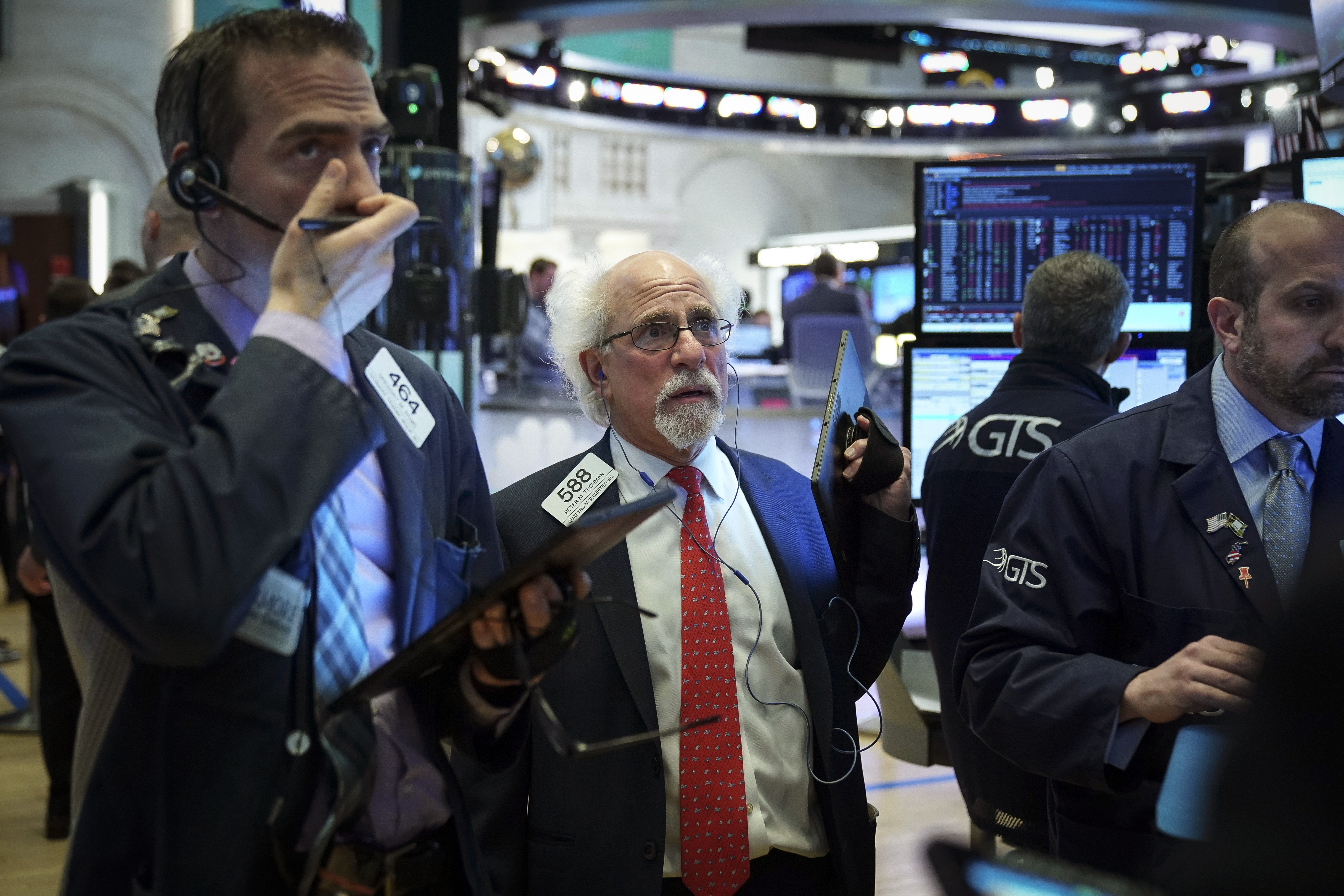
NEW YORK, NY - MAY 6: Traders and financial professionals work at the opening bell on the floor of the New York Stock Exchange (NYSE), May 6, 2019 in New York City. The Dow Jones Industrial Average dropped over 360 points at the open on Monday morning after U.S. President Donald Trump said that the U.S. will raise tariffs on goods imported from China. China also threatened to skip upcoming trade talks following tariff threats from President Trump.

According to Rosen, hardening U.S. approach to Chinese trade policy and the current discussion of possible “disengagement” with China are the result of U.S. recognition that China had changed course away from convergence with the liberal international economic order.  It, in fact, stems from the U.S.’s valid need to protect its economic welfare and the welfare of other market economies from the deleterious effects of China’s illiberal policies.  In the same way, he claimed, that the U.S. is not as deeply engaged with Italy as it is with Germany, and that we are not as deeply engaged with Germany as we are with Great Britain, it is not “heresy” to say that nations that do not share the same basic economic framework cannot be as engaged together—or as interoperable—as nations that do.  

But, Rosen predicted, China’s own turn away from market principles is bound to fail.  Liberal market reforms delivered double-digit growth for China since Deng Xiaoping’s Opening and Reform.  And “[u]nless everything we think we know about the relative efficiency and dynamism of free markets over politically controlled economies is wrong, the present Chinese policy turn will be, in the end, a dead-end,” Rosen remarked.  According to his prediction, therefore, we will either see a weakened China that poses less of an economic and national security threat to the U.S. or a China that eventually returns to market norms (i.e., “a reversion back to what will work.”).

In the meantime, therefore, he suggested that the American response must be “provisional,” “partial,” and “peaceful.”  American policy must be adaptable and readily reversible such that our ability to reengage to the maximum with China is carefully protected.  Secondly, it must be “partial” rather than absolute.  And, lastly, it must be “peaceful.”  When Beijing’s non-market policies fail, as it will, Rosen averred, and China re-orients itself towards economic convergence with advanced economy norms once more, we must ensure a “foundation of good will” between the U.S. and China to which China can return.

Rosen also cautioned against the U.S. abandoning its own source of national strength—i.e., its openness.  Arguing that economic protectionism has too often been confused with national security, Rosen argued that primary threats to U.S. national security now stem more from new causes like climate change, pandemics, migration pressures and access to weapons of mass destruction.  “Economic protection will do little to nothing to address those risks,” Rosen pointed out.

Rosen spoke at Shorenstein APARC as part of the China Program’s Colloquia Series “A New Cold War?: Sharp Power, Strategic Competition, and the Future of U.S.-China Relations.”  The series continues on May 3 with Ambassador Chas W. Freeman, Jr.’s seminar “On Hostile Coexistence with China.”

Hero Image
Traders and financial professionals work at the opening bell on the floor of the New York Stock Exchange (NYSE), May 6, 2019
NEW YORK, NY - MAY 6: Traders and financial professionals work at the opening bell on the floor of the New York Stock Exchange (NYSE), May 6, 2019 in New York City. The Dow Jones Industrial Average dropped over 360 points at the open on Monday morning after U.S. President Donald Trump said that the U.S. will raise tariffs on goods imported from China. China also threatened to skip upcoming trade talks following tariff threats from President Trump.
Getty Images / Drew Angerer
All News button
1
News Type
News
Date
Paragraphs

On Thursday, the third Asia-Pacific Geo-Economic Strategy Forum (APGEO) saw discussion on issues of international strategic cooperation in the Asia-Pacific with a particular focus on the U.S.-Japan relationship. Speakers included experts on defense and foreign affairs, including former U.S. National Security Advisor H.R. McMaster and former Japanese Ministers of Defense.

Organized by the Hoover Institution, Nikkei Inc. and the Freeman Spogli Institute of International Studies (FSI), the talks occurred within the context of the United State’s Free and Open Indo-Pacific Strategy (FOIP) and Japan’s Medium Term Defense Program, both recently updated to outline the U.S. and Japan’s respective regional commitments.

The forum’s speakers focused on the rise of China as a common theme underscoring the importance of the U.S.-Japan alliance. Particularly, the speakers shared a general consensus that China’s attempts to increase its economic and political influence and its initiatives to drive progress on technological frontiers such as 5G networks and artificial intelligence pose a threat to the current international order...

Read the full article in The Stanford Daily

Hero Image
Gen H.R. McMaster at podium, delivering speech
Gen. H.R. McMaster, Hoover Institution, addresses the 3rd Asia-Pacific Geo-Economic Strategy Forum
Thom Holme, APARC
All News button
1
0
patricia_robinson.jpg Ph.D.

Patricia (Tish) Robinson joined the Walter H. Shorenstein Asia-Pacific Research Center as a visiting scholar from Hitotsubashi University in Tokyo, Japan from May 2019 - April 2020.

Robinson’s research and teaching focus on managerial mediation and managerial coaching. She has published in Administrative Science Quarterly, Academy of Management Perspectives, and Human Resource Management Review, among others, and her research has received the Academy of International Business Farmer Award and the Academy of Management Richman Award. Other awards include a Fulbright Fellowship, a Fulbright Hayes Fellowship, a Fulbright Faculty Fellowship, a Carnegie Bosch grant, a Japan Foundation Faculty Fellowship, and a Shintaro Abe Fellowship, among others.

Robinson has served on the faculty at UC Berkeley, the NYU Stern School of Business and Harvard University, as well as at the Japan Institute of Labor Policy and Training.  She was appointed a Commissioner on the Fulbright Japan-US Educational Commission by Ambassador Caroline Kennedy, was an outside board director to Eisai Pharmaceuticals, elected an elected Governor to the American Chamber of Commerce Board of Governors, and served as a Founding Director of the Society of Organizational Learning Japan under the auspices of Peter Senge.

Robinson received her MBA and Ph.D. from the MIT Sloan School of Management at the Massachusetts Institute of Technology and her BA from Pomona College.

Visiting Scholar, May 2019-April 2020
Authors
Ketian Zhang
News Type
Commentary
Date
Paragraphs

On March 31, Taiwan’s Ministry of Foreign Affairs reported that two Chinese Air Force (PLAAF) J-11 jets crossed the median line of the Taiwan Strait. This violated the long-held tacit agreement between China and Taiwan that neither side should cross the median line.

Taiwan deemed this “an intentional, reckless & provocative action,” which triggered “a 10-minute standoff” in the air. As Asia security expert Bonnie S. Glaser notes that, if intentional, this would be the first PLAAF crossing of the median line in about 20 years. In this case, it’s likely that Taiwan, not the South China Sea, prompted Beijing’s actions.

An unresolved issue from the Chinese civil war, Taiwan has always been a “core interest” to party leaders in Beijing. Here are some key takeaways from my research on China-Taiwan relations…

Read the full article in The Washington Post.


To hear more from Ketian, don't miss her recently posted video Q&A. In addition, be sure to RSVP for her April 16 seminar "Killing the Chicken to Scare the Monkey: Explaining Coercion by China in the South China Sea."

Hero Image
The marines of China navy participate in the annual military training on January 3, 2018 in Zhanjiang,
ZHANJIANG, CHINA - JANUARY 03: The marines of China navy participate in the annual military training on January 3, 2018 in Zhanjiang, Guangdong Province of China.
Pu Haiyang/VCG via Getty Images
All News button
1
-

Image
sagan 3x2 copy
The volatile relationship between the United States and North Korea has left the American public questioning whether North Korea is a threat or not. Existing polls suffer from poor design and, thus, provide a confusing and often contradictory narrative of U.S. public opinion on North Korea. As a result, a number of critical questions remain unanswered: Are Americans willing to live with the North Korean nuclear threat? Under what conditions would the public support using military force to accomplish what sanctions and diplomacy have not? What are the characteristics of the individuals willing to risk war against North Korea today? Professor Scott D. Sagan will discuss the findings of a recent survey experiment and offer a unique perspective to the ongoing public debate.

Scott D. Sagan is the Caroline S.G. Munro Professor of Political Science, the Mimi and Peter Haas University Fellow in Undergraduate Education, and Senior Fellow at the Center for International Security and Cooperation and the Freeman Spogli Institute at Stanford University. Before joining the Stanford faculty, Sagan was a lecturer in the Department of Government at Harvard University. From 1984 to 1985, he served as special assistant to the director of the Organization of the Joint Chiefs of Staff in the Pentagon. Sagan has also served as a consultant to the office of the Secretary of Defense and at the Sandia National Laboratory and the Los Alamos National Laboratory. In 2017, he received the International Studies Association’s Susan Strange Award which recognizes the scholar whose “singular intellect, assertiveness, and insight most challenge conventional wisdom and intellectual and organizational complacency" in the international studies community. Sagan was also the recipient of the National Academy of Sciences William and Katherine Estes Award in 2015, for his pioneering work addressing the risks of nuclear weapons accidents and the causes of nuclear proliferation.     


Okimoto Conference Room
Encina Hall, 3rd Floor
616 Serra Street, Stanford

Scott D. Sagan <i>Caroline S.G. Munro Professor of Political Science, Stanford University</i>
Seminars
News Type
News
Date
Paragraphs

On March 4, Brent Christensen, Director of the American Institute in Taiwan’s Taipei office, delivered the keynote speech at the Taiwan Democracy and Security Project's annual workshop. A video recording of the event is available below for 30 days (additionally, a transcript of Mr. Christensen's prepared remarks is available on the American Institute in Taiwan website).


Hero Image
irector of the American Institute in Taiwan, Brent Christensen Speaking to Stanford Audience
Director of the American Institute in Taiwan Brent Christensen speaks before a Stanford Audience.
Thom Holme, APARC
All News button
1
Authors
News Type
Commentary
Date
Paragraphs

Three years into the Trump administration, “the United States and the People’s Republic of China find their bilateral relationship at a dangerous crossroads,” write Orville Schell of the Asia Society and Susan Shirk of the University of California San Diego (UCSD), co-chairs of the Task Force on U.S.-China Policy, at the opening of a recently published report, Course Correction: Toward an Effective and Sustainable China Policy. The report features the second set of findings issued by the Task Force, a group comprising China specialists from around the United States, which is convened by Asia Society’s Center on U.S.-China Relations and UCSD’s 21st Century China Center and which includes Karl Eikenberry, director of APARC’s U.S.-Asia Security Initiative.

In its first report, issued in 2017, the Task Force identified the fundamental interests of the United States in its relationship with China. Since then, more stresses and strains have beset the bilateral relations between the two countries. But while “Beijing’s recent policies under Xi Jinping’s leadership are primarily driving this negative dynamic” and the “Trump administration is justified in pushing back harder against China’s actions, note Schell and Shirk, “pushback alone isn’t a strategy. It must be accompanied by the articulation of specific goals and how they can be achieved.” The new report propose a strategy to that end, which the Task Force calls “smart competition.”

APARC caught up with Ambassador Eikenberry to learn more about the report and its recommendations.

Note: the following has been edited for clarity.

How does the February 2019 report by the Task Force on U.S.-China Policy differ from its 2017 report? 

Since our Task Force’s first report was published in February 2017, the Trump Administration’s China policy has developed significantly, its defining characteristics being demonstrated in trade and economic policy and in security strategy. Our new Task Force study takes stock of the current state of U.S.-China relations and focuses on policy analysis and policy prescription. It seems clear that President Trump’s shift from a strategy of engagement to one of more explicit competition was overdue. This report suggests the best organizing principles for the management of what will likely be an increasingly competitive U.S.-China relationship in the coming years.

How does this report frame Sino-American relations?

The report underscores the fact that this is not a zero-sum game. Emphasis is placed on finding ways and means to cooperate with China when mutually advantageous—and there are many issue areas where this is or might be possible, such as climate change and denuclearization of the Korean Peninsula. But the report also makes clear that in the domains of economic exchange, security, and political values—such as individual freedom and the primacy of the rule of law—America needs to work with like-minded allies and partners to ensure the global system that has benefitted all for over seven decades is not overturned by those seeking unilateral advantage.

Several of the report’s Task Force members were also involved in the recent China report from the Hoover Institution, Chinese Influence and American Interests: Promoting Constructive Vigilance. Where do you think these two publications intersect and part ways?

There was some overlap among the contributors to the two reports—full disclosure, I had the opportunity to participate in both projects. I think the studies are actually complementary—the portion of Course Correction devoted to PRC overseas influence activities drew upon the findings published in Chinese Influence and American Interests.

What development is of greatest concern to you as you think about the future of Sino-American relations?

I’m most concerned about the blurring of the management of economic exchange (trade and investment issues) and security competition (which includes maintaining a technological advantage over one’s competitors). The proliferation of technologies with military applications is complicating efforts of those trying to maintain robust economic relations between China and the United States. If our economies decouple, we will have a new Cold War


Hero Image
U.S. Secretary Of State Mike Pompeo Meets with Chinese Foreign Minister Wang Yi
Daisuke Suzuki /Pool/Getty Images
All News button
1
616 Serra MallEncina Hall E301Stanford, CA 94305-6055
0
nan_jia.jpg Ph.D.

Nan Jia joined the Walter H. Shorenstein Asia-Pacific Research Center (Shorenstein APARC) during the 2019-2020 academic year as a visiting scholar, from the University of Southern California, where she serves as Associate Professor of Strategic Management at the Marshall School of Business. She obtained her Ph.D. in Strategic Management from the University of Toronto's Joseph L. Rotman School of Management.

Visiting Scholar at APARC
Authors
News Type
News
Date
Paragraphs

An air of uncertainty remains prevalent in the Indo-Pacific region. The South China Sea continues to be in contention, with six governments exerting claims on overlapping areas. The threat of a full-blown trade war between China and the United States puts the stability of the regional (and global) economy in question. Meanwhile, the Korean peninsula appears to swing between the brink of conflict to the possibility of dramatic diplomatic breakthroughs. It was in the midst of this precarious period for the region that the third annual gathering of the U.S.-Japan Security and Defense Dialogue Series took place in Tokyo from January 30 to February 1.

The 2019 meeting was co-sponsored by the Sasakawa Peace Foundation and APARC’s U.S.-Asia Security Initiative (USASI). For the past three years, the series has convened senior Japanese and American policymakers, military leaders, scholars, and regional experts to discuss Japan's security strategy and the alliance between Japan and the United States. Support for the workshop came from the Carnegie Corporation of New York.

Since its inception in 2016, the dialogue series has provided a venue for in-depth discourse on contemporary Asia-Pacific security issues, and has helped build bridges between American and Asian academics, government and military officials, and other defense and security policy specialists. “We have continued to expand the range of attendees from the Japanese and U.S. government and military,” said USASI Director Karl Eikenberry. “This has ensured for our dialogue even greater policy relevance with each iteration.”

“The U.S.-Japan security dialogue is unique because it combines civilians and military officers, both retired and serving, which simply does not take place elsewhere,” observed Stanford Lecturer in International Policy Daniel Sneider, a regular participant. “It also avoids the sometimes-empty rhetoric about our alliance in favor of an operational, but strategically informed, approach that gets at not only what is being accomplished, but where the gaps exist in our alliance.”

Threats, Challenges, and the Appropriate Responses

L to R: Amb. Karl Eikenberry and Lt. General Noboru Yamaguchi (Workshop Co-Chairs)

The 2019 dialogue opened with a day of discussions on many of the challenges facing the U.S.-Japan security alliance, including an assessment of the latest security trends in the Indo-Pacific, as well as Japan’s new National Defense Program Guidelines (NDPG). Passed by the Japanese Cabinet only a month earlier, the NDPG was the focus of two sessions on day one, including a discussion of its implications for Indo-Pacific security, as well as a session on the guideline’s ramifications for concepts of Integrated Air and Missile Defense and Archipelagic Defense

“Unsurprisingly, the global rise of China—along with the U.S. and Japan’s separate and combined responses to PRC strategy in the Indo-Pacific Region—helped shape both our agenda and the selection of participants,” observed Eikenberry. “We were specifically interested in the implications for the maritime domain and certain operational aspects of the U.S.-Japan security alliance.”

The day one closing ceremony featured remarks from the U.S. Ambassador to Japan, the Honorable William Hagerty.


L to R: Dan Sneider, Amb. William Hagerty, and Lt. General Noboru Yamaguchi
 

Developing Policy Recommendations, Meeting with Policymakers

L to R: Major Rodger Welding and Colonel Daniel Munter (United States Pacific Air Forces), and Lt. Colonel Yuka Nakazato, (Japan Air Self-Defense Force)

Days two and three were designed for small group sessions. Referred to as “Core Group”, its U.S. and Japanese members met the morning of January 31 to review the preceding day’s workshop and develop corresponding policy recommendations. The quality and depth of the conversations underscored just how great an impact the expanded range of participants had on the resulting policy.

“Participants weren't afraid to address sensitive, big-picture questions,” said Phillip Lipscy, a Center Fellow at the Freeman Spogli Institute for International Studies at Stanford, “like the slow growth of Japanese military spending in the face of increasing regional threats and the challenges posed by unpredictable US administration policies.”

“Even as an expert of Japanese politics, I found the dialogue extremely informative and stimulating,” shared Lipscy.

Sneider agreed as well. “One thing that stood out this year, in contrast to the previous years, was a greater willingness on the part of our Japanese colleagues to air their sense of unease about and even opposition to the direction of American foreign and security policy under the Trump administration,” he said. “In the past, the American participants were much more open about their criticism of their own government, the Japanese tended to be polite—not so much this year, which made for a lively exchange on many issues.”

In the afternoon, core U.S. participants again met with the US Ambassador, along with his embassy team, as well as with senior Cabinet Office officials from the government of Japan.

Field Testing Ideas

During the second annual gathering in 2018, the dialogue began including a visit by the core workshop participants to a combined U.S. military—Japanese Self Defense facility. As part of the 2019 dialogue, the Core Group spent their third and final day visiting Yokota Air Base, the headquarters of both United States Forces Japan and Japan Air Self Defense Force Air Defense Command.

“These visits allow us to better understand Alliance operational challenges in the field,” noted Eikenberry. “Just as importantly, it affords us an immediate opportunity to test out some of the very ideas discussed during the preceding days.”

http://www.japantimes.co.jp/wp-content/uploads/2015/05/n-yokota-a-20150514.jpg

Yokota Air Base, Japan

Chatham House Rules applied to the dialogue, but a workshop report is forthcoming.

View the reports from the first and second annual workshops.

The U.S.-Asia Security Initiative is part of Stanford University’s Walter H. Shorenstein Asia-Pacific Research Center (APARC). Led by former U.S. Ambassador and Lieutenant General (Retired) Karl Eikenberry, USASI seeks to further research, education, and policy relevant dialogues at Stanford University on contemporary Asia-Pacific security issues.

(L to R: Karl Eikenberry, Michael McFaul, Major Marcus Morgan (U.S. Army LNO to Japan Ground Self Defense Force Northern Army and Stanford University Center for East Asian Studies MA ’18), Phillip Lipscy, Daniel Sneider)


Hero Image
2019 US Japan Defense and Security dialogue 4 1
All News button
1
Subscribe to United States