-

Sixty years have passed since the signing and enactment of the San Francisco Peace Treaty. Prepared against the background of the intensifying Cold War and signed by forty-nine countries (but not by the USSR, China, nor Korea), this multilateral treaty fell far short of settling outstanding issues at the end of World War II or facilitating a clean start for the “postwar” period. Rather, various aspects of the settlement were left equivocal.

In East Asian nations, the time span of sixty years (“kanreki” in Japanese) has special meaning, signifying the end of one historical cycle and the beginning of a new spirit and a new era in time. In reality, however, the major destabilizing factors in this region are still the old lingering WWII/Cold War regional conflicts, such as the territorial disputes between Japan and its neighbors, the tensions in the Korean peninsula, and the Taiwan Strait problem. This presentation will focus on these unresolved problems in terms of their treatment in the San Francisco Peace Treaty, and consider their contemporary status and future trajectories in East Asia.

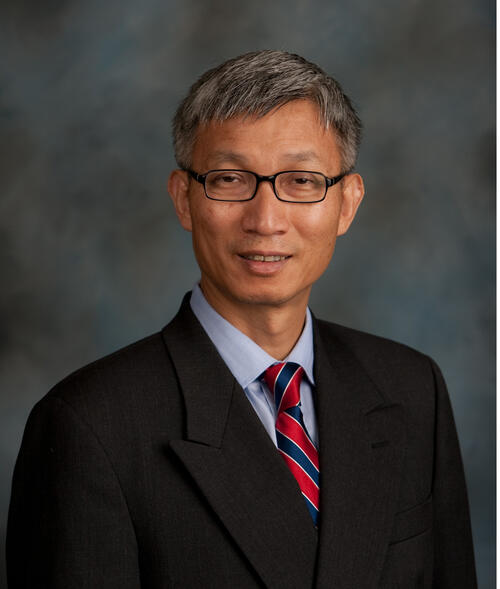
Kimie Hara specializes in modern and contemporary international relations of the Asia-Pacific region. Her books include Cold War Frontiers in the Asia-Pacific: Divided Territories in the San Francisco System (2007, 2012), Japanese Diplomacy through the Eyes of Japanese Scholars Overseas (2009, edited in Japanese), Northern Territories, Asia-Pacific Regional Conflicts and the Åland Experience: Untying the Kurillian Knot (2009, edited with Geoffrey Jukes), and Japanese-Soviet/Russian Relations since 1945: A Difficult Peace (1998). She received her Ph.D. from the Australian National University and held visiting fellowships/professorships at the Kyoto University, the University of Tokyo, the International Institute for Asian Studies/University of Amsterdam, the East-West Center, Stockholm University, and the Institute of Oriental Studies of the Russian Academy of Science.

Philippines Conference Room

Kimie Hara Renison Research Professor, and the Director of East Asian Studies Speaker Renison University College, University of Waterloo, Canada
Seminars
Date Label
Paragraphs

This year is one of elections and leadership changes throughout the Asia-Pacific region.
Earlier in 2012, Taiwan reelected President Ma Ying-jeou to a second term. North Korea and
Russia have already seen transfers of power this year; it will be China’s turn in the fall. The United States holds its presidential election in November. And South Korea will elect a president in December. Individually and collectively, these leadership changes hold crucial implications for Northeast Asian nations as well as the United States.

In this article, Gi-Wook Shin explores the possible implications of South Korea's upcoming presidential election.

All Publications button
1
Publication Type
Journal Articles
Publication Date
Journal Publisher
Current History
Authors
Gi-Wook Shin
0
Corporate Affiliate Visiting Fellow
RSD12_065_0081a.jpg MBA

Guoqiang Zhao is a corporate affiliate visiting fellow at the Walter H. Shorenstein Asia-Pacific Research Center for 2012-13.  Zhao has been working for the Industrial and Commercial Bank of China Limited (ICBC) since 1990.  He previously worked as deputy general manager of ICBC’s Seoul branch for four years, as general manager of its Busan branch for seven years, and then as general manager of its Almaty (Kazakhstan) branch for six years.  Prior to joining Shorenstein APARC, he served as a senior specialist on risk management for ICBC.  Zhao received his bachelor's degree in science from Hebei Normal University and his master's degree in economics from Nankai University. 

Authors
News Type
News
Date
Paragraphs

Returning to her office in Pyongyang from a site visit to an agricultural development project one day last year, Katharina Zellweger had a revelation to share with her colleagues:

“I saw trees, bushes, upland rice, maize, berries, and all kinds of other crops planted on the hillsides!” she said.

Life in North Korea today is much more vibrant than the stark slopes and muted grey concrete buildings Zellweger encountered when she began traveling to North Korea in the mid-1990s. Day-to-day existence is still a struggle for many people, especially in the countryside, but Zellweger, who is the 2011–12 Pantech Fellow with Stanford’s Korean Studies Program, has watched positive change slowly ripple throughout the country for 17 years.

“If you have the patience and perseverance, and try to understand the country as well as you can, it is possible to do work there that is meaningful for the survival of the people and for the future of the country,” she said during a recent interview. 

Zellweger’s projects in North Korea began in 1995 while she worked for the Hong Kong office of Caritas Internationalis, a Catholic network of humanitarian organizations, and continued when she moved to Pyongyang to lead the efforts of the Swiss Agency for Development and Cooperation, a part of Switzerland’s Federal Department of Foreign Affairs. She lived in Pyongyang and interacted with North Koreans on a daily basis for five years until coming to Stanford in October 2011.

Since her earliest visits to North Korea, Zellweger has introduced ways to help alleviate the formidable problem of food scarcity and hunger. North Korea has always been a country of urban dwellers, she said, and the 60 percent of North Koreans who live in cities drain the countryside of its crops. In an effort to carve out new places to grow food during the toughest years, farmers have resorted to stripping hillsides of their trees. The solution is short-term and unsustainable, though, as the denuded slopes can only be planted for a few years, and it leads to soil erosion and flooding.

“If you do not have enough to eat and you are hungry, that is what people do,” Zellweger said. 

She and her team tackled the problem in one province with a simple solution. They taught rural housewives to plant bands of deep-root vegetation every 10 meters along cleared hillsides. The slopes are a “no man’s land” outside of the commune system, and the women have official permission to either keep what they harvest or sell it in the market for extra income. The environment also reaps big benefits from this sustainable agricultural method, which is catching on in more provinces.

“The last time I visited the project, the women told me that they now grow about 15 species of crops, whereas previously they only had one or two,” Zellweger said. “It has brought biodiversity back to those areas.”

Along with receptiveness to new farming techniques, North Koreans have also embraced certain technological developments. Even though the city and countryside are relatively cut off from one another, for example, cell phone tower transmissions now crisscross most of North Korea. Already one million of North Korea’s 24 million citizens own cell phones, and can find coverage in 75 percent of the country.

“Mobile telephones are not just in the big cities—even farm managers have them,” Zellweger said. “With that, communication has improved a lot among the North Korean people.” 

Some ripples of change have also penetrated North Korea’s educational system. English replaced Russian a few years ago as the main foreign language taught in school, Zellweger said, who smiled as she described the warbling greetings of school children who would sometimes approach her to test out their language skills.

“Years ago, I would not even have eye contact with people,” she said. “People would simply look down, and I would feel like thin air, as if I did not exist. That has gone—there is now a certain amount of natural curiosity.”

When she first began visiting North Korea, the Pyongyang Business School, a professional development project close to Zellweger’s heart, did not exist yet. Under her leadership, several groups of 30 to 35 mid-level managers and government officials had the opportunity to participate in a special diploma program. During each 12-month program cycle, lecturers from the Hong Kong Management Association flew monthly to Pyongyang to teach an intensive three-day seminar on subjects ranging from finance to management.

“The Hong Kong lecturers would say, ‘We could not have more diligent students,’” Zellweger said. “The feedback from the students was also very, very positive.”  

As Zellweger experienced during her 17 years working in North Korea, change may unfold gradually there but it does come. And for the positive development to grow even more transformative, she said, the basic needs of everyday North Koreans must be met. 

“When basic needs like food and medical care are covered, I believe things will start moving forward at a different pace,” Zellweger said. “There are 24 million people in North Korea who just want to lead a decent life, and who have the same dreams and hopes as we all have. That goes beyond any political issue.” 

Zellweger will give a talk on May 11 about her work and the change she witnessed in North Korea.

Photo Gallery
View images in large gallery for captions.

Hero Image
ChildrenFlagLOGO
Katharina Zellweger, 2011-12 Pantech Fellow, holds a drawing she has been presented with by a child at a North Korean school.
Courtesy Katharina Zellweger
All News button
1
-

The fall of Bo Xilai is the most serious political crisis in China since Tiananmen in 1989. The leadership succession process was nearly derailed and a deep rift has opened up at the top of the Communist Party. While many critical details of this power struggle remain unknown, the effects of this incident are certain to be far-reaching. Many key questions have been raised, including: How will the fall of Bo affect the new leadership line-up and its policies? How will the rift affect the party's ability to maintain control over a society showing growing signs of defiance and tensions? What does the incident tell us about the systemic corruption at the core of the party's leadership? Professor Minxin Pei will address these and other issues during this timely seminar.

About the Speaker

Image
Minxin Pei
Minxin Pei joined Claremont McKenna College in 2009. Prior to that he was a senior associate and the director of the China Program at the Carnegie Endowment for International Peace in Washington, DC.

Pei's research focuses on democratization in developing countries, economic reform and governance in China, and U.S.-China relations. He is the author of From Reform to Revolution: The Demise of Communism in China and the Soviet Union (Harvard University Press, 1994) and China’s Trapped Transition: The Limits of Developmental Autocracy (Harvard University Press, 2006). Pei’s research has been published in Foreign Policy, Foreign Affairs, The National Interest, Modern China, China Quarterly, Journal of Democracy, and many edited books.

He is a frequent commentator for BBC World News, Voice of America, and National Public Radio; his op-eds have appeared in the Financial Times, the New York Times, the Washington Post, Newsweek International, the International Herald Tribune, and other major newspapers.

Pei received his PhD in political science from Harvard University. He was on the faculty at Princeton University from 1992 to 1998, and he has received numerous prestigious fellowships, including the National Fellowship at the Hoover Institution at Stanford University, the McNamara Fellowship at the World Bank, and the Olin Faculty Fellowship of the Olin Foundation.


Philippines Conference Room

Minxin Pei Tom and Margot Pritzker ’72 Professor of Government and Director of the Keck Center for International and Strategic Studies Speaker Claremont McKenna College

Shorenstein APARC
Stanford University
Encina Hall, E301
Stanford, CA 94305-6055

(650) 725-6392 (650) 723-6530
0
Senior Fellow at the Freeman Spogli Institute for International Studies
Kwoh-Ting Li Professor in Economic Development
Professor of Sociology
Graduate Seminar Professor at the Stanford Center at Peking University, June and July of 2014
Faculty Affiliate at the Stanford Center on China's Economy and Institutions
Xueguang Zhou_0.jpg PhD

Xueguang Zhou is the Kwoh-Ting Li Professor in Economic Development, a professor of sociology, and a Freeman Spogli Institute for International Studies senior fellow. His main area of research is on institutional changes in contemporary Chinese society, focusing on Chinese organizations and management, social inequality, and state-society relationships.

One of Zhou's current research projects is a study of the rise of the bureaucratic state in China. He works with students and colleagues to conduct participatory observations of government behaviors in the areas of environmental regulation enforcement, in policy implementation, in bureaucratic bargaining, and in incentive designs. He also studies patterns of career mobility and personnel flow among different government offices to understand intra-organizational relationships in the Chinese bureaucracy.

Another ongoing project is an ethnographic study of rural governance in China. Zhou adopts a microscopic approach to understand how peasants, village cadres, and local governments encounter and search for solutions to emerging problems and challenges in their everyday lives, and how institutions are created, reinforced, altered, and recombined in response to these problems. Research topics are related to the making of markets, village elections, and local government behaviors.

His recent publications examine the role of bureaucracy in public goods provision in rural China (Modern China, 2011); interactions among peasants, markets, and capital (China Quarterly, 2011); access to financial resources in Chinese enterprises (Chinese Sociological Review, 2011, with Lulu Li); multiple logics in village elections (Social Sciences in China, 2010, with Ai Yun); and collusion among local governments in policy implementation (Research in the Sociology of Organizations, 2011, with Ai Yun and Lian Hong; and Modern China, 2010).

Before joining Stanford in 2006, Zhou taught at Cornell University, Duke University, and Hong Kong University of Science and Technology. He is a guest professor at Peking University, Tsinghua University, and the People's University of China. Zhou received his Ph.D. in sociology from Stanford University in 1991.

CV
Date Label
Xueguang Zhou Kwoh-Ting Li Professor in Economic Development; Professor of Sociology; and Freeman Spogli Institute for International Studies Senior Fellow Commentator Stanford University
Seminars
Date Label
News Type
News
Date
Paragraphs
Engineering education in Brazil, Russia, India, and China -- the "BRIC countries" -- is the subject of a groundbreaking recent study and a forthcoming book co-authored by Rafiq Dossani. He has written a working paper focusing on India, and took part in a related conference at FSI on Apr. 28.
Hero Image
EngineeringStudents NEWSFEED
Students listen to a lecture at the Engineering College of Bikaner in Rajasthan, India, Oct. 2009.
Flickr/Niyam Bhushan
All News button
1
Subscribe to Russia and Eurasia