Authors
Michael Breger
News Type
News
Date
Paragraphs

How do aging populations reshape health and innovation policies in Asian economies? What role can the private sector play in public health service delivery, and how do individual preferences affect the development of emerging technologies? Mai Nguyen and Jinseok Kim, the 2024-25 Asia health policy postdoctoral fellows at APARC, focus on these questions as part of their research into health care service adaptation and behavioral economics.

At a recent joint seminar, “Health, Aging, Innovation, and the Private Sector: Evidence from Vietnam and Korea,” they offered a comparative look at how Vietnam and South Korea navigate aging populations, rising healthcare demands, and rapid technological change. While Nguyen focuses on health system design in Vietnam and Kim explores innovation diffusion in Korea, they both use discrete choice modeling to understand how individuals make decisions within systems influenced by age, infrastructure, and policy.

Sign up for APARC newsletters to receive updates from our scholars >


Nguyen and Kim’s work is supported by APARC’s Asia Health Policy Program (AHPP), which offers a postdoctoral fellowship each year to an early-career scholar conducting original research on health policy in the Asia-Pacific, particularly in low- and middle-income economies across the region. The fellowship demonstrates the program’s commitment to fostering the next generation of Asia-focused health policy researchers.

Vietnam’s Mixed Health System and the Role of Patient Choice


Mai Nguyen’s research centers around the role of private healthcare providers in Vietnam, especially for patients managing chronic diseases such as diabetes. She studies how patients choose between public and private healthcare providers, and what attributes of care they value most.

To analyze these preferences, she uses a method known as the Discrete Choice Experiment, which allows her to quantify the relative importance of various service attributes — such as appointment flexibility, doctor choice, quality of care, drug diversity, and cost coverage — in influencing patients’ decisions.

Despite potential downsides, such as increased costs, equity concerns, and profit-driven service delivery, my study finds that private healthcare helps relieve pressure on the public system and meets diverse patient needs.
Mai Nguyen

Nguyen’s interest in this topic began while she worked at Vietnam’s Ministry of Health. “That earlier work highlighted the growing contribution of the private sector in filling service delivery gaps, particularly in urban areas and for non-communicable diseases such as diabetes,” she says.

Her findings suggest that Vietnam’s private sector has become a necessary complement to public healthcare. “Despite potential downsides, such as increased costs, equity concerns, and profit-driven service delivery, my study finds that private healthcare helps relieve pressure on the public system and meets diverse patient needs.”

At APARC, Nguyen has sharpened the focus of her research under the mentorship of AHPP Director Dr. Karen Eggleston, a leading expert on public and private roles in Asian health systems. Nguyen also values her collaboration with Jinseok Kim. “Dr. Kim’s expertise provides valuable insights into how Korea is addressing the challenges of a rapidly aging population through innovative policy and service delivery models,” she notes.

Her time at Stanford has also broadened Nguyen’s horizons beyond traditional health economics. “I have developed a strong interest in the application of artificial intelligence to enhance the delivery of medical services,” she says. Looking forward, she plans to expand her research to Asian American populations in the United States, exploring how AI and digital health can improve diabetes care while also addressing barriers related to equity and access.

Innovation Adoption and the Aging Consumer in South Korea


Jinseok Kim investigates how aging affects new technology adoption and consumer behavior in South Korea, a country facing one of the fastest demographic shifts in the world.

“My current research involves looking at population aging and innovation diffusion, specifically in the context of the rapid aging trend in Korea,” Kim says. He studies how age influences consumer preferences in choosing new technologies such as electric vehicles, telemedicine, and generative AI platforms like ChatGPT.

By working out the relationship between consumer choice and population aging, I forecast the effect of the population aging trend on the diffusion of innovative products and provide the potential policy and marketing implications for government policy and corporate management.
Jinseok Kim

Understanding these preferences, Kim argues, is critical for both policy and market strategy. “By working out the relationship between consumer choice and population aging, I forecast the effect of the population aging trend on the diffusion of innovative products and provide the potential policy and marketing implications for government policy and corporate management.”

The challenge, he says, lies in making sense of a wide range of behaviors across age groups and product types. “The biggest challenge I had in my studies was finding the overarching trend in the relationship between consumer choice for particular innovative products and population aging and then translating this finding into meaningful implications for society and the economy.”

Kim credits his time at APARC, especially participating in the Stanford Next Asia Policy Lab (SNAPL) meetings, with broadening his perspective. “Working as a member of SNAPL gave me insights and perspectives I didn’t have before,” he says.

SNAPL, directed by Professor Gi-Wook Shin, is an interdisciplinary research initiative housed within APARC addressing pressing social, cultural, economic, and political challenges in Asia through comparative, policy-relevant studies. The lab cultivates the next generation of researchers and policy leaders by offering mentorships and fellowship opportunities for students and emerging scholars.

Kim sees APARC’s model as effectively bridging academia and policy. “There are so many opportunities to interact with other scholars, policymakers, and practitioners,” Kim says. “Scholars here not only research and write, but they also get to share their voice and research findings in real-world policy.”

His advice to early-career researchers is straightforward. “Be more down-to-earth with your studies and thinking,” Kim says. “Sometimes scholars tend to get caught up in their way of thinking and perspective, but it may not be practical in real life. That is why I think it is important to just get outside and observe real consumer choice and behavior.”

Kim plans to continue researching questions related to innovation and demographic change to help governments and businesses adapt to aging populations and shifting consumer needs.

Ground-Level Data, Big-Picture Impact


Mai Nguyen and Jinseok Kim approach shared societal challenges through distinct yet complementary lenses. Nguyen’s research reveals how patient preferences can guide more effective public-private collaboration in healthcare, ultimately shaping systems that are more responsive to real-world needs. Meanwhile, Kim examines how patterns of technology adoption — especially among older adults — can influence the trajectory of innovation in aging societies.

Both scholars emphasize the value of ground-level data in addressing large-scale issues. By centering real behaviors and preferences, their work helps inform smarter, more adaptive policy, whether in designing patient-centered care or planning for technology's role in future societies. At APARC, their research bridges theory and practice, offering fresh insight into how Asian countries can navigate the twin forces of demographic change and rapid innovation.

Read More

Photo of Stanford Main Quad and logos of APARC and media outlet Netra News, winner of the 2025 Shorenstein Journalism Award.
News

Bangladesh-Focused Investigative Media Outlet Netra News Wins 2025 Shorenstein Journalism Award

Sponsored by Stanford University’s Shorenstein Asia-Pacific Research Center, the 24th annual Shorenstein Journalism Award honors Netra News, Bangladesh's premier independent, non-partisan media outlet, for its unflinching reportage on human rights abuses and corruption in Bangladesh and its efforts to establish and uphold fundamental freedoms in the country.
Bangladesh-Focused Investigative Media Outlet Netra News Wins 2025 Shorenstein Journalism Award
Brandon Yoder, Stanford Next Asia Policy Fellow
News

Political Signaling in an Uncertain World: Brandon Yoder’s Empirical Lens on Chinese Foreign Policy

Brandon Yoder, APARC’s 2024–25 Stanford Next Asia Policy Fellow, focuses on a central challenge in international politics: how states can credibly signal their intentions and avoid war. His work investigates this question in high-stakes contexts, such as during power shifts, amid strategic uncertainty, and in multi-actor settings where traditional signaling models often fall short.
Political Signaling in an Uncertain World: Brandon Yoder’s Empirical Lens on Chinese Foreign Policy
Shilin Jia
News

Tracking Elite Political Networks: Shorenstein Postdoctoral Fellow Shilin Jia’s Data-Driven Approach to Understanding Chinese Bureaucracy

APARC’s 2024-25 Shorenstein Postdoctoral Fellow on Contemporary Asia Shilin Jia researches the careers of high-level Chinese political elites during the economic reform period from 1978 to 2011. Using a quantitative approach, Jia explores how China's party-state orchestrated elite circulation as a governance tool during a time of significant economic and political transformation.
Tracking Elite Political Networks: Shorenstein Postdoctoral Fellow Shilin Jia’s Data-Driven Approach to Understanding Chinese Bureaucracy
Hero Image
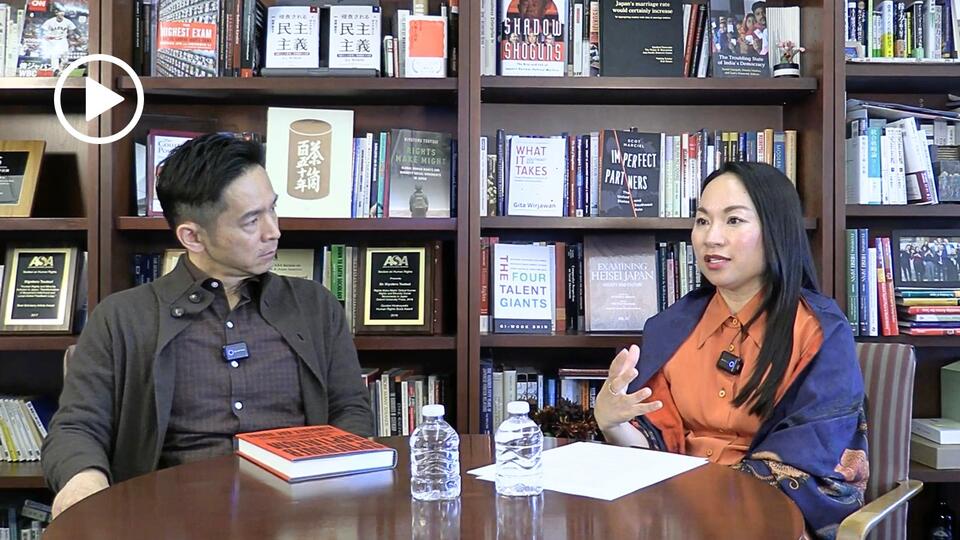
Two young scholars in conversation on a background of Encina Hall arcade.
All News button
1
Subtitle

As Asian economies grapple with aging populations, rising healthcare demands, and rapid technological change, APARC’s 2024-25 Asia Health Policy Program Postdoctoral Fellows Mai Nguyen and Jinseok Kim study large-scale health care structural and policy challenges from the lens of individual decision-making.

Date Label
Paragraphs

Shorenstein APARC's annual report for the academic year 2023-24 is now available.

Learn about the research, publications, and events produced by the Center and its programs over the last academic year. Read the feature sections, which look at the historic meeting at Stanford between the leaders of Korea and Japan and the launch of the Center's new Taiwan Program; learn about the research our faculty and postdoctoral fellows engaged in, including a study on China's integration of urban-rural health insurance and the policy work done by the Stanford Next Asia Policy Lab (SNAPL); and catch up on the Center's policy work, education initiatives, publications, and policy outreach. Download your copy or read it online below.

All Publications button
1
Publication Type
Annual Reports
Publication Date
Authors
1
Asia Health Policy Postdoctoral Fellow, 2024-2025
Mai Nguyen.JPG Ph.D.

Mai Nguyen joined the Walter H. Shorenstein Asia-Pacific Research Center (APARC) as Asia Health Policy Postdoctoral Fellow for the 2024-2025 academic year. She holds a PhD in health services and health policy from Queensland University of Technology (QUT), Australia, and a Master of Science from Heller School for Social Policy and Management, Brandeis University.

Her doctoral research focused on how the expanding private healthcare sector can be managed more effectively to better supplement public health services to achieve universal health coverage in Vietnam. The study analyzed large and complex national health datasets from two consecutive Household Living Standard Surveys, clinical hospital data at national levels and in-depth interviews with key stakeholders of Vietnam's health system to investigate consumers' choice for private and public health care services in Vietnam. Her research findings have implications for policy change in terms of harnessing and regulating private health services in Vietnam and other Asia-Pacific countries, especially low and middle-income countries.

Dr. Nguyen has worked as a senior health specialist at Vietnam Ministry of Health. Her research interest stems from her professional experience in health policy and program management, including health policy and management, health services, private healthcare and health equity. Her works have been published in many Q1-international journals such as BMC Public Health, BMC Health Services Research, Human Resources for Health and International Journal of Health Policy and Management.

At APARC, Dr. Nguyen extended her research on the roles of private healthcare to supplement the public health sector to address the growing burden of chronic diseases and conditions in Vietnam.

Date Label
Paragraphs

This report, edited by Oriana Skylar Mastro, examines how the assertiveness of the People’s Liberation Army (PLA) has escalated tensions in the Indo-Pacific, leading to dangerous encounters with key regional players, and evaluates how China’s actions have influenced countries’ strategic planning and deterrence postures.

The report includes an introduction by Mastro, titled "Close Encounters with the PLA: Regional Experiences and Implications for Deterrence."

Executive Summary
 

Military ships in the South China Sea on a cover of an NBR report.

MAIN ARGUMENT
The significant transformation of the PLA due to Chinese military modernization efforts over the past 25 years has led to a shift in the strategic environment of the Indo-Pacific region. With a 790% increase in defense spending from 1992 to 2020, the PLA has become one of the world’s most advanced militaries. Such military modernization, coupled with increasingly assertive behavior, has led to more frequent and dangerous encounters between the PLA and the militaries of countries across the Indo-Pacific. These interactions have heightened tensions, with specific incidents emphasizing the risk of miscalculations that could escalate into major conflicts. Through case studies on Australia, India, Japan, the Philippines, Taiwan, and Vietnam, this report aims to understand the PLA’s strategic calculus on escalation, assessing the potential for conflict in the region and exploring shared threat perceptions, regional responses, and implications for deterrence.

POLICY IMPLICATIONS

  • To effectively counter Chinese aggression, it is crucial that policy approaches are both clear and consistent, along with a robust active deterrence strategy across different administrations.
  • Expanding security cooperation with other nations and strengthening partnerships with the U.S. and like-minded countries are important to strengthening regional security and deterring potential threats from China.
  • Military deterrence needs to be balanced with diplomatic engagements, such as summit diplomacy, to reduce tensions and stabilize relations without compromising security.
  • Strengthening military deterrence through modernization is key, which includes focusing on asymmetric warfare, adopting a firm stance on disputes, increasing domestic defense manufacturing, and building strong international partnerships.
All Publications button
1
Publication Type
Reports
Publication Date
Subtitle

Perspectives on China’s Military and Implications for Regional Security

Journal Publisher
National Bureau of Asian Research
Authors
Oriana Skylar Mastro
Number
NBR Special Report 108
Authors
Noa Ronkin
News Type
News
Date
Paragraphs

In recent years, China's military modernization and assertive actions have led to more frequent and dangerous encounters between the People's Liberation Army (PLA) and the militaries of key regional players in the Indo-Pacific. Each encounter heightens the chance of a military conflict in the region. A new report published by the National Bureau of Asian Research (NBR) assesses the PLA’s strategic thinking on escalation control, analyzing the potential for conflict in the region and exploring regional responses and implications for deterrence.

Military ships in the South China Sea on a cover of an NBR report.

Edited by Chinese military expert Oriana Skylar Mastro, a center fellow at APARC and the Freeman Spogli Institute for International Studies, the report, "Encounters and Escalation in the Indo-Pacific: Perspectives on China’s Military and Implications for Regional Security," comprises six essays, each detailing an encounter with the PLA. These case studies include China’s maritime disputes with Japan, the Philippines, and Vietnam and its increasingly aggressive military activities vis-à-vis Australia, India, and Taiwan.

The authors of the essays are current and former practitioners with insight into their government’s experiences and thinking. Their assessments emphasize the need for Asia-Pacific countries to reevaluate their defense capabilities and adopt clear and consistent policy approaches to navigate the complex geopolitical landscape in the region.


Sign up for APARC newsletters to receive updates on our experts’ research and publications >

There is a consensus among the authors of this report that China harbors problematic intentions and is using increasingly aggressive and risk-acceptant tactics to accomplish its goals.
Oriana Skylar Mastro

Tactics, Intentions, and Shared Threat Perceptions

As the PLA adopts a more assertive approach beyond its maritime boundaries, nations across the Indo-Pacific region have increasingly experienced perilous encounters with the Chinese military. For example, the PLA's intensifying aggression around Second Thomas Shoal in the South China Sea led to several incidents of maritime tension with the Philippines. Likewise, a Chinese fighter aircraft intercepted an Australian surveillance aircraft during its routine activity in international airspace over the South China Sea, posing a safety risk to the Australian aircraft and its crew.

The authors of the six case studies in the NBR report agree "that China harbors problematic intentions and is using increasingly aggressive and risk-acceptant tactics to accomplish its goals." While they show that China uses different tactics in different situations and differ in their evaluations of the most troublesome tactics for their respective countries, their analyses share several common themes, which Mastro reviews in her introduction to the report, titled "Close Encounters with the PLA: Regional Experiences and Implications for Deterrence."

First, “China doctrinally does not take any responsibility for the deterioration in the strategic environment,” writes Mastro. “All six case studies mention China’s tendency to publicly blame the other country for whatever crisis unfolded.”

China also sees crises as opportunities, Mastro explains, and most case studies indicate that the crises at stake were deliberate acts of PLA escalation. All case studies also reflect Chinese strategic thinking on deterrence as serving dual purposes: firstly, to discourage adversaries from certain actions, and secondly, to influence their behavior in line with the deterrer's intentions, ultimately requiring them to comply with the deterrer's preferences.

Across all nations studied in this report, there is a recognized need for partnership with and support from the United States and other like-minded countries to effectively address security concerns and deter potential threats from China.
Oriana Skylar Mastro

Another common theme is that the PLA's assertive actions have prompted all six nations studied in the report to boost security cooperation with the United States and other regional powers, albeit to varying extents. For example, in addition to enhancing its strategic partnership with the United States, India has enhanced its defense ties with the two other Quad members (Japan and Australia) and regional partners such as Vietnam, Singapore, and the Philippines.

Moreover, based on their encounters with the PLA, almost all regional players have concluded that strengthening their military capabilities will discourage Chinese aggressive behavior in the future, Mastro says, noting that “changes in defense posture have perhaps been the most drastic in Japan.”

Policy Implications

The report's case studies offer policy recommendations for deterring China, emphasizing the importance of a consistent approach that includes strengthening deterrence capabilities through military modernization, firm stances on border disputes, and close security cooperation with the United States, its allies, and other like-minded nations. While there is consensus that military deterrence needs to be balanced with diplomatic engagements to reduce tensions, each regional player views the effectiveness of diplomacy and cooperation with China differently.

“Ultimately,” Mastro concludes, “the path forward for maintaining peace and stability in the Indo-Pacific region requires a cohesive strategy that prioritizes long-term security interests, demonstrating the essential role of international cooperation and the strategic interplay between military readiness and diplomatic efforts in navigating China’s aggression.”


Learn more about the report and download Mastro’s introductory essay > 

Read More

Chinese President Xi Jinping (L) accompanies Russian President Vladimir Putin (R) to view an honor guard during a welcoming ceremony outside the Great Hall of the People on June 25, 2016 in Beijing.
News

Deciphering the Nature of the Sino-Russian Military Alignment

A study by Oriana Skylar Mastro, published in the journal Security Studies, offers a novel framework for understanding great power military alignment, reveals the nuances of military cooperation between China and Russia, and dissects its implications for global security.
Deciphering the Nature of the Sino-Russian Military Alignment
Chinese President Xi Jinping and Russian President Vladimir Putin
Commentary

The Next Tripartite Pact?

China, Russia, and North Korea’s New Team Is Not Built to Last
The Next Tripartite Pact?
Conference participants gather on stage for a group photo at the Innovate Taiwan conference
News

APARC Launches New Taiwan Program, Igniting Dialogue on Taiwan’s Future

The Taiwan Program at the Shorenstein Asia-Pacific Research Center will serve as a Stanford hub and catalyst for multidisciplinary research and teaching about contemporary Taiwan. The program’s inaugural conference convened industry leaders, scholars, and students to examine Taiwan’s challenges and opportunities.
APARC Launches New Taiwan Program, Igniting Dialogue on Taiwan’s Future
Hero Image
A Chinese Coast Guard ship fires a water cannon at a Philippine Navy chartered vessel in the South China Sea
A Chinese Coast Guard ship fires a water cannon at Unaizah, a Philippine Navy chartered vessel conducting a routine resupply mission to troops stationed aboard BRP Sierra Madre, a grounded Navy ship that serves as the country's outpost in Second Thomas Shoal, on March 5, 2024, in the South China Sea. Photo credit: Ezra Acayan/ Getty Images.
All News button
1
Subtitle

Through case studies on the People's Liberation Army’s close encounters with the militaries of Australia, India, Japan, the Philippines, Taiwan, and Vietnam, a new National Bureau of Asian Research report edited by Oriana Skylar Mastro assesses the strategic calculus behind the PLA's actions and implications for regional conflict and deterrence.

Authors
News Type
News
Date
Paragraphs

During the first three years of the Vietnam War, the United States made over 2000 attempts to open negotiations with the North Vietnamese. North Vietnam ignored or denied all of these overtures to open talks. By April 1968, following repeated rebuffs, Hanoi changed its position after President Johnson announced that the U.S. would halt bombing above the 20th parallel. What explains Hanoi’s initial firm position against talks and the sudden policy change in 1968? What are the drivers behind a state’s willingness to talk with the enemy while fighting, what considerations do leaders account for when deciding when and how peace talks can begin, and why do some states reject or ignore overtures to come to the negotiating table?

In a new Journal of Theoretical Politics article, FSI Center Fellow Oriana Skylar Mastro and Duke University’s political scientist David Siegel advance a new theory of wartime diplomacy to answer these questions. Using a formal model, they find that states are inclined to initiate negotiations when two conditions are met: firstly, when their adversaries perceive escalation as excessively costly, and secondly, when there is an indication of exceptional resilience that only those possessing high resilience value. To shed light on the dynamics of the second condition, Mastro and Siegel present an in-depth case study examining the evolving negotiation approach of North Vietnam throughout the Vietnam War.


Sign up for APARC newsletters to receive our scholars' updates.


The second condition arises when the opponent does not view escalation as overly costly and when the likelihood of successful escalation is hard to assess, but there is a signal of high resilience that helps identify resilient entities. “States will choose typically open stances, potentially inviting escalation, only when they have demonstrated enough resilience to mitigate the escalation risk,” write Mastro and Siegel. This dynamics explains why North Vietnam’s diplomatic posture changed during the second phase of the Vietnam War.

Early on in the war, both the United States and North Vietnam believed that a willingness to talk would convey weakness. North Vietnam needed to sense hesitancy in U.S. confidence in the effectiveness of escalation before opening to negotiations. In 1968, the Tet Offensive allowed North Vietnam to demonstrate its resilience and constrain U.S. strategic capacity by inflicting casualties and steadily depleting its resources.

Even though North Vietnam was materially weaker and Tet failed by all operational measures, it represented a psychological shock to U.S. leadership and “finally convinced the U.S. of Hanoi’s resilience, reducing the likelihood that an open diplomatic posture would be interpreted as weakness.” North Vietnam had been reluctant to negotiate before it could adequately signal its resilience, maintaining a closed diplomatic posture for three years. But after Tet, having communicated its resilience to Washington, Hanoi “no longer viewed an open diplomatic posture as a liability in the war effort.”

The authors’ findings suggest that states are concerned about the negative material consequences that their diplomatic approach might have on the enemy. Thus, face-saving measures from the adversary are limited because the enemy would still perceive an open stance as a sign of weakness, potentially leading to further escalation. These findings are significant, as they demonstrate how counterproductive attempts to coerce opponents to negotiate can be.

At the same time, the study highlights new opportunities for external mediators “who can provide guarantees in ways that lessen the strategic costs of conversation,” Mastro and Siegel argue.

Headshot of Oriana Skylar Mastro

Oriana Skylar Mastro

Center Fellow at FSI
Profile

Read More

Oriana Skylar Mastro, Center Fellow
News

Center Fellow Oriana Skylar Mastro Named 2022 Air Force Individual Reservist of the Year

The award, established by the Air Force Headquarters Readiness and Integration Organization, recognizes Mastro’s expertise as a China scholar and foreign defense analyst, as well as her leadership, job performance, self-improvement, and base and community involvement.
Center Fellow Oriana Skylar Mastro Named 2022 Air Force Individual Reservist of the Year
Soldiers from the Madras Sappers of the Indian Army participate in a full dress rehearsal parade to celebrate India’s Republic Day on January 24, 2023 in Bengaluru, India.
Commentary

America’s Best Bet in the Indo-Pacific

How Washington and New Delhi Can Balance a Rising China
America’s Best Bet in the Indo-Pacific
Ryosei Kokubun, the Spring 2023 Payne Distinguished Fellow and panelists Oriana Skylar Mastro, Kiyoteru Tsutsui, and Thomas Fingar
News

Payne Distinguished Fellow Explores Japan’s Deterrence Dilemma Amid Rising Asia-Pacific Security Threats

As Japan looks to increase military spending to levels not seen since World War II, Professor Ryosei Kokubun, the Spring 2023 Payne Distinguished Fellow, considers Tokyo’s security policy and how it can balance deterrence and interaction to maintain stability in the era of U.S.-China strategic competition.
Payne Distinguished Fellow Explores Japan’s Deterrence Dilemma Amid Rising Asia-Pacific Security Threats
Hero Image
Overall view of members of the Four Party Joint Military delegations in a conference room
Overall view of members of the Four Party Joint Military delegations in a conference room, February 2, 1973. The South Vietnamese delegation with backs to camera, the U.S. delegation on left, the Viet Cong delegation facing the camera, and the North Vietnamese delegation on the right. The conference, held at Tan Son Nhut Airbase, finalize details on the release of prisoners of war held by the four parties.
National Archives Catalog, NAID: 6504112
All News button
1
Subtitle

In the 'Journal of Theoretical Politics,' Center Fellow Oriana Skylar Mastro and co-author David Siegel offer a new formal model of wartime negotiations to explain why states may choose to delay or avoid talks in favor of indirect forms of bargaining. They illustrate the model’s balance using case study evidence of North Vietnam’s approach during the Vietnam War and historical examples from other cases.

Paragraphs

Why are some states open to talking while fighting while others are not? The co-authors argue that a state considering opening negotiations is concerned not only with the adverse inference that the opposing state will draw but also with the actions that the opposing state might take in response to that inference. They use a formal model, with assumptions grounded in extensive historical evidence, to highlight one particular response to opening negotiations — the escalation of war efforts— and one particular characteristic of the state opening negotiations—its resilience to escalation. They find that states are willing to open negotiations under two conditions: when their opponents find escalation too costly, and when there is a signal of high resilience that only the highly resilient care to use. To illustrate the dynamics of the second condition, the co-authors offer an extended case study detailing North Vietnam’s changing approach to negotiations during the Vietnam War.

All Publications button
1
Publication Type
Journal Articles
Publication Date
Subtitle

Explaining the Emergence of Peace Talks in Interstate War

Journal Publisher
Journal of Theoretical Politics
Authors
Oriana Skylar Mastro
Number
3
Paragraphs
Book cover for "Imperfect Partners"

Watch our interview below with Scot Marciel about Imperfect Partners. You can also read a summary news article of the conversation.

Listen to a conversation with Marciel on the Insight Myanmar podcast, below.

About the book

Scot Marciel is widely considered the State Department’s top Southeast Asia hand, the result of decades of experience working in and on the region and the key role he has played in shaping and implementing U.S. policy. He was on the ground in the Philippines during the historic People Power revolt in the 1980s, became the first U.S. diplomat to serve in Hanoi in the early 1990s, was appointed the first U.S. ambassador to ASEAN in the 2000s, and spent the last 15 years twice serving as the State Department’s point person on Southeast Asia policy, and as U.S. ambassador to Indonesia and then to Myanmar during that country’s democratic experiment and its horrific ethnic cleansing of the Rohingya.

Imperfect Partners encapsulates Marciel’s experiences, providing the perspective of an American diplomat who has dealt with the dual challenges of working with foreign governments and also within the U.S. government. Noting that the United States “has a history of not quite knowing how to engage with Southeast Asia,” he highlights the ups and downs of critical U.S. relationships in the region. Marciel explores not only diplomatic successes, but challenges faced, missteps made, and opportunities missed in U.S. diplomacy with Southeast Asia. His on-the-ground witness account of the normalization of U.S.-Vietnam relations is essential reading, as is his passionate analysis of the gains and the failures of Myanmar’s decade-long opening.

While China’s rise has re-injected a long-absent strategic element into U.S. policy toward Southeast Asia, Marciel warns against making China the focus of that policy. He argues that the United States can best advance its own interests—and support the freedom of maneuver of Southeast Asia—through a strategy of consistent engagement based on a positive agenda and by focusing on the region’s dynamic younger generation.


Virtual Book Talks

"What we have in this very readable book are the reflections of an eminent American diplomat on issues of particular significance for Australia as it continues to ponder how it should be responding to China’s rise, and how those responses are likely to affect its alliance with the US." — Dr. Allan Patience

Read the complete review at the Australian Institute for International Affairs >    

Praise for the Book

"For the United States, Southeast Asia is one of the most important and least understood parts of the world. Scot Marciel draws on his vast diplomatic experience to bring a wealth of illuminating stories, hard-earned insights, and wise analysis to bear on a region that will help determine our capacity to deal with the most pressing issues of the 21st century. . . . Imperfect Partners is an indispensable resource for anyone seeking to understand Southeast Asia and America’s relationship with its countries and people."
Ben Rhodes, former deputy national security advisor and author of After the Fall

"Drawing on his 35 years of diplomatic experience, Scot Marciel has written an illuminating survey of the United States' relations with Southeast Asia. . . . This is an excellent primer on a part of the world whose significance has grown substantially in recent years with the rise of neighboring China."
John Negroponte, career diplomat, former U.S. Permanent Representative to the United Nations and the first director of national intelligence

"Ambassador Scot Marciel has written a gem of a book. His thoughtfully researched account is brought to life with fascinating insights and captivating, on-the-scene anecdotes. . . . Imperfect Partners is a must-read for U.S. policymakers, business leaders, academics, humanitarians, and everyday Americans engaging with the nations of Southeast Asia."
Kristie Kenney, former State Department counselor and U.S. ambassador to Thailand, the Philippines, and Ecuador

"A master practitioner has provided us with a ring-side view of how our diplomats pursue American interests in Southeast Asia.  This is must reading for aspiring Southeast Asia hands who want to familiarize themselves with American regional diplomacy.  It’s also indispensable reading for American strategists, who will ignore Ambassador Marciel’s policy prescriptions at their peril."
Dave Shear, former assistant secretary of defense for Asian and Pacific Security Affairs and U.S. ambassador to Vietnam

All Publications button
1
Publication Type
Books
Publication Date
Subtitle

The United States And Southeast Asia

Authors
Scot Marciel
Book Publisher
Shorenstein APARC
Authors
Noa Ronkin
News Type
News
Date
Paragraphs

As the COVID-19 pandemic remains a crucial global public health threat, pandemic control measures such as lockdowns and mobility restrictions continue to disrupt the provision of health services, leading to reduced healthcare use. Indeed, evidence shows the pandemic has emerged as a particular challenge for people with chronic conditions such as diabetes and hypertension. Yet there is limited data comparing the pandemic’s impact on access to care and the severity of chronic disease symptoms at the population level across Asia.

Now a new collaborative study, published by the Asia Pacific Journal of Public Health, addresses this limitation. The study co-authors, including APARC’s Asia Health Policy Program Director and FSI Senior Fellow Karen Eggleston, offer the first report comparing the impacts of the COVID-19 pandemic and its associated mobility restrictions on people with chronic conditions at different stages of socio-demographic and economic transitions in five Asian regions — India, China, Hong Kong, Korea, and Vietnam.

The findings show that the pandemic has disproportionately disrupted healthcare access and worsened diabetes symptoms among marginalized and rural populations in Asia. Moreover, the pandemic’s broad social and economic impact has adversely affected population health well beyond those directly suffering from COVID-19, with the resulting delayed and foregone care leading to uncertain longer-term effects.


 [Sign up for APARC newsletters to receive the latest research by our scholars]


Unintended Adverse Consequences

Routine screening, risk factor control, and continuity of care for non-communicable diseases are a global challenge. The COVID-19 pandemic has exacerbated the challenge even further. Existing reports show the pandemic has particularly adverse impacts on essential prevention and treatment services for people with chronic conditions. These reductions in health services arose from pandemic-associated factors such as mobility restrictions, lack of public transport, and lack of health workforce.

Eggleston and a group of colleagues set out to provide evidence on how the pandemic has impacted chronic disease care in diverse settings across Asia during COVID-19-related lockdowns. Using standardized questionnaires, the researchers surveyed 5672 participants aged 55.9 to 69.3 years with chronic conditions in India, China, Hong Kong, Korea, and Vietnam. The researchers collected data on participants’ demographic and socio-economic status, comorbidities, access to healthcare, employment status, difficulty in accessing medicines due to financial and nonfinancial (COVID-19 related) reasons, treatment satisfaction, and severity of their chronic condition symptoms.

If no immediate actions are taken to mitigate pandemic impacts, the Asia-Pacific region will struggle to achieve the 2030 Sustainable Development Goal target 3.4 to reduce premature mortality from non-communicable diseases […] and to promote mental health and wellbeing.
Karen Eggleston et al.

The results show that the pandemic’s broad social and economic impact has adversely affected population health well beyond those directly suffering from COVID-19. Study participants with chronic conditions faced significant challenges in managing their symptoms during the pandemic. They experienced a loss of income and difficulties in accessing healthcare or medications, with the resulting delayed and foregone care leading to uncertain longer-term effects. For a nontrivial portion of participants, these factors are associated with the worsening of diabetes symptoms. The threat is twofold among people living in rural populations with limited access, availability, and affordability of healthcare services.

A Global Health Priority

The unintended adverse consequences of the COVID-19 pandemic on chronic disease care may also further aggravate inequality in health outcomes. “If the trend continues and no immediate actions are taken to mitigate pandemic impacts,” Eggleston and her colleagues caution, then “the Asia-Pacific region will struggle to achieve the 2030 Sustainable Development Goal (SDG) target 3.4 to reduce premature mortality from non-communicable diseases by a third relative to 2015 levels and to promote mental health and wellbeing.”

Addressing the pandemic’s unintended negative social and economic impacts on chronic disease care is a global health priority, determine the researchers. They propose several measures to help provide timely care for people with chronic conditions in resource-constrained settings. These include implementing innovations in healthcare delivery models to improve the adoption of healthy lifestyle changes and self-management of chronic disease and mild COVID-19 symptoms, increasing investment in interventions to provide social and economic support to disadvantaged populations, and strengthening primary healthcare infrastructure and support of healthcare providers.

The study was supported in part by funding from Shorenstein APARC’s faculty research award, Stanford King Center for Global Development, and a seed grant from the Stanford Center for Asian Health Research and Education.

Read More

 A woman at a desk in a village medical clinic in China.
News

Strengthening the Frontline: How Primary Health Care Improves Net Value in Chronic Disease Management

Empirical evidence by Karen Eggleston and colleagues suggests that better primary health care management of chronic disease in rural China can reduce spending while contributing to better health.
Strengthening the Frontline: How Primary Health Care Improves Net Value in Chronic Disease Management
Closeup on hands holding a glucometer
News

A New Validated Tool Helps Predict Lifetime Health Outcomes for Prediabetes and Type 2 Diabetes in Chinese Populations

A research team including APARC's Karen Eggleston developed a new simulation model that supports the economic evaluation of policy guidelines and clinical treatment pathways to tackle diabetes and prediabetes among Chinese and East Asian populations, for whom existing models may not be applicable.
A New Validated Tool Helps Predict Lifetime Health Outcomes for Prediabetes and Type 2 Diabetes in Chinese Populations
money
News

Bargaining Behind Closed Doors: Why China’s Local Government Debt Is Not a Local Problem

New research in 'The China Journal' by APARC’s Jean Oi and colleagues suggests that the roots of China’s massive local government debt problem lie in secretive financing institutions offered as quid pro quo to localities to sustain their incentive for local state-led growth after 1994
Bargaining Behind Closed Doors: Why China’s Local Government Debt Is Not a Local Problem
Hero Image
A makeshift barricade is seen in front of a residential area to restrict movement and control COVID-19 spread in Hanoi, Vietnam.
A makeshift barricade is seen in front of a residential area to restrict movement and control COVID-19 spread, September 2021, Hanoi, Vietnam.
Linh Pham / Getty Images
All News button
1
Subtitle

In the first report of its kind comparing the impacts of the pandemic on people with chronic conditions in five Asian regions, researchers including APARC’s Karen Eggleston document how the pandemic’s broad social and economic consequences negatively affected population health well beyond those directly suffering from COVID-19.

News Type
Commentary
Date
Paragraphs

Vice President Kamala Harris traveled to Hanoi on Tuesday, August 24, as part of a high-stakes visit to Southeast Asia this week that aims to bolster economic and security ties with U.S. partners in Singapore and Vietnam. Ms. Harris is the first U.S. Vice President to visit Vietnam.

Vietnamese online newspaper VnExpress spoke with APARC Southeast Asia Program Director Donald K. Emmerson about the significance of Harris’ visit. The following is an expanded version of the interview.  


VnExpress: What does the visit mean to the United States, to Vietnam, and to the U.S.-Vietnam relationship?

Emmerson: U.S.-Vietnam relations have steadily and markedly improved in recent years, especially in the security realm. A case in point is the recent visit of the U.S. secretary of defense. The first-ever visit to Hanoi by a sitting American vice-president, Kamala Harris, is meant to further strengthen U.S.-Vietnam relations. Their importance will be underscored by Kamala Harris’s status in the U.S. government, second only to President Biden’s. Their scope will be advanced by the prominence of nonmilitary topics on her agenda.

The two governments have agreed to call their relations “comprehensive.” By attending to economic and social cooperation as well as security matters, the visit will better illustrate that inclusive label. It is even possible that the United States and Vietnam could, in the not too distant future, upgrade their relationship by calling it not only “comprehensive” but “strategic” as well.

VnExpress: In Hanoi, Harris will launch the U.S. Centers for Disease Control and Prevention regional office in Southeast Asia. Why did the United States choose Vietnam for the CDC regional office? And what is your assessment of the Vietnam-U.S. medical cooperation, particularly during the COVID-19 pandemic?

Emmerson: In the realm of health, Vietnam offers a record of achievement and challenge. Based on official statistics, Vietnam appears to have countered the virus more effectively than most Asian countries. Yet it still needs to deal more thoroughly with the consumption of wildlife sold in wet markets where future viruses can bridge the gap from animals to people. COVID-19, which began in neighboring China, has killed nearly 4.5 million people worldwide and worsened the lives of almost everyone on the planet. A regional office of the US Centers for Disease Control and Prevention in Vietnam could reduce the threat of future pandemics while helping to strengthen health systems and policies throughout Southeast Asia.  

VnExpress: What do you think about Vietnam's role in the region and in the world?

Emmerson: Nearly five decades have passed since the end of Vietnam’s successful “Resistance War against America” in 1975 and the failure of China’s invasion of Vietnam in 1979. The challenge for Vietnam going forward will be to maintain the resilience and autonomy that it has earned at such a high cost in lost lives. Kamala Harris’s visit can contribute to that goal. If and as inter-state peace continues to prevail in East Asia, one can also hope that Vietnam’s leaders will feel less threatened and thus possibly less obliged to curtail the rights and freedoms of their own people.  

As for Vietnam’s role in the region (and, indirectly, the world), one priority could be for Hanoi to coordinate its policies on the South China Sea with those of other Southeast Asian claimant states and possibly with other states who use the sea and also oppose China’s campaign to control its waters.

Read More

Silhouettes carrying a flag of Indonesia with a sunset or sunrise in the background
Commentary

Good News for Indonesian Studies

Good News for Indonesian Studies
Figures of Kuomintang soldiers are seen in the foreground, with the Chinese city of Xiamen in the background, on February 04, 2021 in Lieyu, an outlying island of Kinmen that is the closest point between Taiwan and China.
Commentary

Strait of Emergency?

Debating Beijing’s Threat to Taiwan
Strait of Emergency?
Flags of Asian states and text "Symposium: The Stakes in Asia"
Commentary

Talking Democracy: A Symposium on Asia

On a panel discussion hosted by the political quarterly 'Democracy,' Donald K. Emmerson joins experts to assess how the Biden administration is navigating the U.S. relationships in Asia.
Talking Democracy: A Symposium on Asia
Hero Image
SINGAPORE (Aug. 23, 2021) Vice President Kamala Harris visits combat ship USS Tulsa, part of a deployment in the U.S. 7th Fleet area of operation in support of a free and open Indo-Pacific region.
U.S. Navy photo by Mass Communication Specialist 3rd Class Richard Cho via Flickr
All News button
1
Subtitle

Emmerson talks to VnExpress about the implications of Harris’ visit to Hanoi, the first such visit by a U.S. vice president.

Subscribe to Vietnam