News Type
Commentary
Date
Paragraphs

FSI Center Fellow at APARC Oriana Skylar Mastro joins NPR's Weekend Edition host Scott Simon to discuss the rising tensions between China and Taiwan and how the United States should respond.

Listen to the complete interview below. This conversation originally appeared on NPR's website.

Read More

Logo of the Observer Research Foundation's 'Armchair Strategist' podcast with portraits of Oriana Skylar Mastro and Arzan Tarapore
Commentary

Assessing the Conventional Military Balance Between India and China

Oriana Skylar Mastro and Arzan Tarapore join the Observer Research Foundation’s ‘Armchair Strategist’ podcast to discuss how the Indian and Chinese militaries stack up as tensions between the two Asian neighbors continue to heat up.
Assessing the Conventional Military Balance Between India and China
Chinese President Xi Jinping (R) talks with India's Prime Minister Manmohan Singh (L) during a meeting at the Diaoyutai State Guesthouse in 2013.
Commentary

China-India: Talk is Cheap, But Never Free

Nations often hesitate to negotiate with opponents during conflict. But Oriana Skylar Mastro urges that this is precisely what India and China need to do in order to curb the potential for a protracted, costly war with devastating geopolitical implications.
China-India: Talk is Cheap, But Never Free
Portrait of Oriana Skylar Mastro and a 3D cover of her book, 'The Costs of Conversation: Obstacles to Peace Talks in Wartime'
News

FSI Center Fellow Wins Best Book in Security Studies Award

The American Political Science Association recognizes Oriana Skylar Mastro for her work on military strategy and mediation.
FSI Center Fellow Wins Best Book in Security Studies Award
Hero Image
NPR's audio streaming logo next to a portrait of Oriana Skylar Mastro.
All News button
1
Subtitle

"The current threat is that the CCP is running out of patience, and their military is becoming more and more capable. So for the first time in its history, there's the option of taking Taiwan by force," Mastro tells NPR's Weekend Edition host Scott Simon.

Paragraphs

Shorenstein APARC's annual overview for academic year 2018-19 is now available.

Learn about the research, events, and publications produced by the Center's programs over the last twelve months. Feature sections look at U.S.-China relations and the diplomatic impasse with North Korea, and summaries of current Center research on the socioeconomic impact of new technologies, the success of Abenomics, South Korean nationalism, and how Southeast Asian countries are navigating U.S.-China competition. Catch up on the Center's policy work, education initiatives, and outreach/events.

Read online:

All Publications button
1
Publication Type
Annual Reports
Publication Date
Shorenstein APARC Stanford University Encina Hall E301 Stanford, CA 94305-6055
0
2019-2020 Shorenstein Postdoctoral Fellow in Contemporary Asia
hannah_kim.jpg Ph.D.

Hannah June Kim joined the Walter H. Shorenstein Asia-Pacific Research Center (Shorenstein APARC) as Shorenstein Postdoctoral Fellow in Contemporary Asia for the 2019-20 academic year.  She researches public opinion, political behavior, theories of modernization, economic development, and democratic citizenship, focusing on East Asia.

Dr. Kim completed her doctorate in the Department of Political Science at the University of California, Irvine, in 2019.  Her dissertation examined how and why people view democracy in systematically different ways in six countries: China, Japan, Korea, Singapore, Taiwan, and Vietnam. Developing unique categories of democratic citizenship that measure the cognitive, affective, and behavioral patterns of individuals, she found that state-led economic development limited the growth of cultural democratization among middle class groups in all three dimensions. The results implied that the classic causality between modernization and democratization may not be universally applicable to different cultural contexts.

At Shorenstein APARC, Hannah worked on developing her dissertation into a book manuscript and making progress on her next project exploring democratization and gender empowerment in East Asia. Hannah received an MA in International Studies from Korea University and a BA from UCLA. Her work has been published, or is forthcoming, in The Journal of Politics, PS: Political Science & Politics, and the Japanese Journal of Political Science.

Authors
Ketian Zhang
News Type
Commentary
Date
Paragraphs

On March 31, Taiwan’s Ministry of Foreign Affairs reported that two Chinese Air Force (PLAAF) J-11 jets crossed the median line of the Taiwan Strait. This violated the long-held tacit agreement between China and Taiwan that neither side should cross the median line.

Taiwan deemed this “an intentional, reckless & provocative action,” which triggered “a 10-minute standoff” in the air. As Asia security expert Bonnie S. Glaser notes that, if intentional, this would be the first PLAAF crossing of the median line in about 20 years. In this case, it’s likely that Taiwan, not the South China Sea, prompted Beijing’s actions.

An unresolved issue from the Chinese civil war, Taiwan has always been a “core interest” to party leaders in Beijing. Here are some key takeaways from my research on China-Taiwan relations…

Read the full article in The Washington Post.


To hear more from Ketian, don't miss her recently posted video Q&A. In addition, be sure to RSVP for her April 16 seminar "Killing the Chicken to Scare the Monkey: Explaining Coercion by China in the South China Sea."

Hero Image
The marines of China navy participate in the annual military training on January 3, 2018 in Zhanjiang,
ZHANJIANG, CHINA - JANUARY 03: The marines of China navy participate in the annual military training on January 3, 2018 in Zhanjiang, Guangdong Province of China. | Pu Haiyang/VCG via Getty Images
All News button
1
News Type
Q&As
Date
Paragraphs

We sat down with our 2018-19 Shorenstein Postdoctoral Fellow in Contemporary Asia Ketian Zhang to discuss China's use of coercion in foreign policy; her research on  South China Sea disputes; her forthcoming articles; and the fellowship experience in general. To hear more from Ketian, RSVP for her April 16 seminar "Killing the Chicken to Scare the Monkey: Explaining Coercion by China in the South China Sea."

Hero Image
Ketian Zhang participating in Q&A
Thom Holme, APARC
All News button
1
News Type
News
Date
Paragraphs

On March 4, Brent Christensen, Director of the American Institute in Taiwan’s Taipei office, delivered the keynote speech at the Taiwan Democracy and Security Project's annual workshop. A video recording of the event is available below for 30 days (additionally, a transcript of Mr. Christensen's prepared remarks is available on the American Institute in Taiwan website).


Hero Image
irector of the American Institute in Taiwan, Brent Christensen Speaking to Stanford Audience
Director of the American Institute in Taiwan Brent Christensen speaks before a Stanford Audience. | Thom Holme, APARC
All News button
1
-
Image
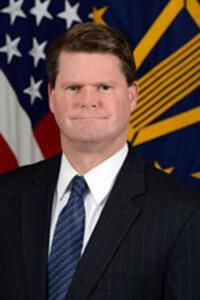
Randy Schriver
Mr. Randall Schriver
is the Assistant Secretary of Defense for Indo-Pacific Security Affairs. Mr. Schriver was appointed as Assistant Secretary of Defense by President Donald Trump on 8 January 2018. Prior to his confirmation, Mr. Schriver was one of five founding partners of Armitage International LLC, a consulting firm that specializes in international business development and strategies. He was also CEO and President of the Project 2049 Institute, a non-profit research organization dedicated to the study of security trend lines in Asia.
 
Previously, Mr. Schriver served as Deputy Assistant Secretary of State for East Asian and Pacific Affairs. He was responsible for China, Taiwan, Mongolia, Hong Kong, Australia, New Zealand, and the Pacific Islands. From 2001 to 2003, he served as Chief of Staff and Senior Policy Advisor to the Deputy Secretary of State. From 1994 to 1998, he worked in the Office of the Secretary of Defense, including as the senior official responsible for the day-to-day management of U.S. bilateral relations with the People's Liberation Army and the bilateral security and military relationships with Taiwan.
 
Prior to his civilian service, he served as an active duty Navy Intelligence Officer from 1989 to 1991, including a deployment in support of Operation Desert Shield/Desert Storm. After active duty, he served in the Navy Reserves for nine years, including as Special Assistant to the Chairman of the Joint Chiefs of Staff and an attaché at U.S. Embassy Beijing and U.S. Embassy Ulaanbaatar.
 
Mr. Schriver has won numerous military and civilian awards from the U.S. government and was presented while at the State Department with the Order of the Propitious Clouds by the President of Taiwan for service promoting U.S.-Taiwan relations. Mr. Schriver received a Bachelor of Arts degree in history from Williams College and a Master of Arts degree from Harvard University.
 

Oksenberg Conference Room
616 Serra Mall
Encina Hall, 3rd Floor, Central S350
Stanford, CA 94305

Randall Schriver Assistant Secretary of Defense for Indo-Pacific Security Affairs
Authors
News Type
News
Date
Paragraphs

An air of uncertainty remains prevalent in the Indo-Pacific region. The South China Sea continues to be in contention, with six governments exerting claims on overlapping areas. The threat of a full-blown trade war between China and the United States puts the stability of the regional (and global) economy in question. Meanwhile, the Korean peninsula appears to swing between the brink of conflict to the possibility of dramatic diplomatic breakthroughs. It was in the midst of this precarious period for the region that the third annual gathering of the U.S.-Japan Security and Defense Dialogue Series took place in Tokyo from January 30 to February 1.

The 2019 meeting was co-sponsored by the Sasakawa Peace Foundation and APARC’s U.S.-Asia Security Initiative (USASI). For the past three years, the series has convened senior Japanese and American policymakers, military leaders, scholars, and regional experts to discuss Japan's security strategy and the alliance between Japan and the United States. Support for the workshop came from the Carnegie Corporation of New York.

Since its inception in 2016, the dialogue series has provided a venue for in-depth discourse on contemporary Asia-Pacific security issues, and has helped build bridges between American and Asian academics, government and military officials, and other defense and security policy specialists. “We have continued to expand the range of attendees from the Japanese and U.S. government and military,” said USASI Director Karl Eikenberry. “This has ensured for our dialogue even greater policy relevance with each iteration.”

“The U.S.-Japan security dialogue is unique because it combines civilians and military officers, both retired and serving, which simply does not take place elsewhere,” observed Stanford Lecturer in International Policy Daniel Sneider, a regular participant. “It also avoids the sometimes-empty rhetoric about our alliance in favor of an operational, but strategically informed, approach that gets at not only what is being accomplished, but where the gaps exist in our alliance.”

Threats, Challenges, and the Appropriate Responses

L to R: Amb. Karl Eikenberry and Lt. General Noboru Yamaguchi (Workshop Co-Chairs)

The 2019 dialogue opened with a day of discussions on many of the challenges facing the U.S.-Japan security alliance, including an assessment of the latest security trends in the Indo-Pacific, as well as Japan’s new National Defense Program Guidelines (NDPG). Passed by the Japanese Cabinet only a month earlier, the NDPG was the focus of two sessions on day one, including a discussion of its implications for Indo-Pacific security, as well as a session on the guideline’s ramifications for concepts of Integrated Air and Missile Defense and Archipelagic Defense

“Unsurprisingly, the global rise of China—along with the U.S. and Japan’s separate and combined responses to PRC strategy in the Indo-Pacific Region—helped shape both our agenda and the selection of participants,” observed Eikenberry. “We were specifically interested in the implications for the maritime domain and certain operational aspects of the U.S.-Japan security alliance.”

The day one closing ceremony featured remarks from the U.S. Ambassador to Japan, the Honorable William Hagerty.


L to R: Dan Sneider, Amb. William Hagerty, and Lt. General Noboru Yamaguchi
 

Developing Policy Recommendations, Meeting with Policymakers

L to R: Major Rodger Welding and Colonel Daniel Munter (United States Pacific Air Forces), and Lt. Colonel Yuka Nakazato, (Japan Air Self-Defense Force)

Days two and three were designed for small group sessions. Referred to as “Core Group”, its U.S. and Japanese members met the morning of January 31 to review the preceding day’s workshop and develop corresponding policy recommendations. The quality and depth of the conversations underscored just how great an impact the expanded range of participants had on the resulting policy.

“Participants weren't afraid to address sensitive, big-picture questions,” said Phillip Lipscy, a Center Fellow at the Freeman Spogli Institute for International Studies at Stanford, “like the slow growth of Japanese military spending in the face of increasing regional threats and the challenges posed by unpredictable US administration policies.”

“Even as an expert of Japanese politics, I found the dialogue extremely informative and stimulating,” shared Lipscy.

Sneider agreed as well. “One thing that stood out this year, in contrast to the previous years, was a greater willingness on the part of our Japanese colleagues to air their sense of unease about and even opposition to the direction of American foreign and security policy under the Trump administration,” he said. “In the past, the American participants were much more open about their criticism of their own government, the Japanese tended to be polite—not so much this year, which made for a lively exchange on many issues.”

In the afternoon, core U.S. participants again met with the US Ambassador, along with his embassy team, as well as with senior Cabinet Office officials from the government of Japan.

Field Testing Ideas

During the second annual gathering in 2018, the dialogue began including a visit by the core workshop participants to a combined U.S. military—Japanese Self Defense facility. As part of the 2019 dialogue, the Core Group spent their third and final day visiting Yokota Air Base, the headquarters of both United States Forces Japan and Japan Air Self Defense Force Air Defense Command.

“These visits allow us to better understand Alliance operational challenges in the field,” noted Eikenberry. “Just as importantly, it affords us an immediate opportunity to test out some of the very ideas discussed during the preceding days.”

http://www.japantimes.co.jp/wp-content/uploads/2015/05/n-yokota-a-20150514.jpg

Yokota Air Base, Japan

Chatham House Rules applied to the dialogue, but a workshop report is forthcoming.

View the reports from the first and second annual workshops.

The U.S.-Asia Security Initiative is part of Stanford University’s Walter H. Shorenstein Asia-Pacific Research Center (APARC). Led by former U.S. Ambassador and Lieutenant General (Retired) Karl Eikenberry, USASI seeks to further research, education, and policy relevant dialogues at Stanford University on contemporary Asia-Pacific security issues.

(L to R: Karl Eikenberry, Michael McFaul, Major Marcus Morgan (U.S. Army LNO to Japan Ground Self Defense Force Northern Army and Stanford University Center for East Asian Studies MA ’18), Phillip Lipscy, Daniel Sneider)


Hero Image
2019 US Japan Defense and Security dialogue 4 1
All News button
1
-

We are sorry that the registration is now closed. It has reached the limit of the room capacity.

Brent Christensen is the Director of the American Institute in Taiwan’s Taipei office. Mr. Christensen has been in the United States Foreign Service for more than 29 years and has extensive experience in senior positions related to Taiwan and China.  Mr. Christensen previously served as Deputy Director of the American Institute in Taiwan’s Taipei office.  Prior to that, he was Director of the State Department’s Office of Taiwan Coordination, where he had a primary role in formulating U.S. policy toward Taiwan.  He has served three assignments at the U.S. Embassy in Beijing, the most recent being Environment, Science, Technology and Health Counselor.

Mr. Christensen has also served as a Senior Level Career Development Advisor in the State Department’s Human Resources Bureau.  Prior to that assignment, he served as the Foreign Policy Advisor at the Asia-Pacific Center for Security Studies (APCSS).  Other overseas postings include Hong Kong and South Africa.  Mr. Christensen also served as a Congressional Fellow on the staff of Senator Olympia Snowe.  Prior to joining the Foreign Service, he was a captain in the U.S. Air Force.

Mr. Christensen is a career member of the Senior Foreign Service and holds the personal rank of Minister-Counselor.  Mr. Christensen earned an M.A. in East Asian Studies from the George Washington University, a B.A. in Chinese language and literature from Brigham Young University, and a Doctor of Medical Dentistry degree from the Oregon Health and Sciences University.  Mr. Christensen is married to Brenda Barrus Christensen and has three children.  He is a native of Provo, Utah.

Oksenberg Conference Room Encina Hall, 3rd Floor 616 Serra Mall, Stanford, CA 94305
Brent Christensen Director, American Institute in Taiwan
Seminars
-

We are sorry that the registration is now closed. It has reached the limit of the room capacity.

A conversation about Taiwan’s economic future, moderated by Larry Diamond, Senior Fellow, Hoover Institution and the Freeman Spogli Institute for International Studies.

Image
eric chu chopped 2017
Eric Chu was the first Mayor of the newly-created Special Municipality of New Taipei, a position he held from 2010-2018. He has also served in several other elected offices and government posts in Taiwan during his career, including as a member of the Legislative Yuan (1999-2001), Magistrate of Taoyuan County (2001-2009), and Vice Premier of the Republic of China (2009-2010). In 2015, he became the chairman of the Chinese Nationalist Party (Kuomintang), and he was the party’s nominee in the January 2016 presidential election.

Dr. Chu holds a bachelor’s degree in management from National Taiwan University, and a master’s degree in finance and a Ph.D. in accounting from New York University. He taught as an assistant professor at City University of New York before returning to Taiwan and joining the faculty of National Taiwan University, where he was promoted with tenure in 1997.

Philippines Conference Room Encina Hall, 3rd Floor 616 Serra Mall, Stanford, CA 94305
Mayor Eric Chu
Subscribe to Taiwan