-

The 8th Annual Koret Workshop

South Korea has become an economic powerhouse, but faces multiple challenges. The conference will focus on four areas that South Korea needs to turn its attention to: 1) the higher education and development; 2) entrepreneurship and innovation; 3) global competitiveness; and 4) demographic changes and immigration policy.

During the conference, a keynote speech is open to the public. Please click here for more information about the public keynote.

The Koret Workshop is made possible through the generous support of the Koret Foundation.

Workshops
Paragraphs

Divided Lenses: Screen Memories of War in East Asia is the first attempt to explore how the tumultuous years between 1931 and 1953 have been recreated and renegotiated in cinema. This period saw traumatic conflicts such as the Sino-Japanese War, the Pacific War, and the Korean War, and pivotal events such as the Rape of Nanjing, Pearl Harbor, the Battle of Iwo Jima, and the bombings of Hiroshima and Nagasaki, all of which left a lasting imprint on East Asia and the world. By bringing together a variety of specialists in the cinemas of East Asia and offering divergent yet complementary perspectives, the book explores how the legacies of war have been reimagined through the lens of film.

This turbulent era opened with the Mukden Incident of 1931, which signaled a new page in Japanese militaristic aggression in East Asia, and culminated with the Korean War (1950–1953), a protracted conflict that broke out in the wake of Japan's post–World War II withdrawal from Korea. Divided Lenses explores how the intervening decades have continued to shape politics and popular culture throughout East Asia and the world. Essays in part I examine historical trends at work in various "national" cinemas, including China, Taiwan, Japan, Korea, and the United States. Those in part 2 focus on specific themes such as comfort women in Chinese film, the Nanjing Massacre, or nationalism, and how they have been depicted or renegotiated in contemporary films. Of particular interest are contributions drawing from other forms of screen culture, such as television and video games.

This book is an outcome of the conference, Divided Lenses: Film and War Memory in Asia, that the Shorenstein Asia-Pacific Research Center hosted in December 2008, part of the Divided Memories and Reconciliation research project.

All Publications button
1
Publication Type
Books
Publication Date
Journal Publisher
University of Hawai'i Press
Authors
-

Abstract

Taiwan’s domestic politics, particularly presidential elections, has been the main driver of the island’s relations with China for two decades. The 2016 elections, in which the Democratic Progressive Party, led by Dr. Tsai Ing-wen, won both the presidency and majority control of the Legislative elections, promises to be no exception. Although PRC intentions under President Xi Jinping are far from certain, some change from the state of play under the current Ma Ying-jeou administration seems fairly certain, with implications for U.S. policy.


Bio

Richard Bush is a Senior Fellow at the Brookings Institution and Director of its Center for Northeast Asian Policy Studies, and the Chen-Fu and Cecilia Yen Koo Chair in Taiwan Studies. He came to Brookings in July 2002 after nineteen years working in the US government, including five years as the Chairman and Managing Director of the American Institute in Taiwan. He is the author of a number of articles on U.S. relations with China and Taiwan, and of At Cross Purposes, a book of essays on the history of America’s relations with Taiwan, published in March 2004 by M. E. Sharpe. In the spring of 2005, Brookings published his study on cross-Strait relations, entitled Untying the Knot: Making Peace in the Taiwan Strait. In 2013, Brookings published his Uncharted Strait: The Future of China-Taiwan Relations.


This talk is co-sponsored by the Taiwan Democracy Project in the Center on Democracy, Development, and the Rule of Law and the U.S.-Asia Security Initiative in the Walter H. Shorenstein Asia-Pacific Research Center.

Image
richard bush taiwan talk flyer


Richard C. Bush Senior Fellow and Director, Center for East Asian Policy Studies Brookings Institution
Seminars
Authors
News Type
Q&As
Date
Paragraphs

In the wake of the recent historic meeting of the leaders of China and Taiwan, the Stanford News Service asked two of the university's Asia experts about the aftermath of that meeting and its possible effects on political relations between the two countries, the military situation and Taiwan's Jan. 16 presidential and parliamentary elections.

The first presidential meeting between the leaders of the communist mainland and the democratic island, split by civil war in 1949, was held in early November on neutral territory in Singapore.

Kharis Templeman is the Taiwan Democracy program manager at Stanford's Center on Democracy, Development, and the Rule of Law at the Freeman Spogli Institute for International Studies. He recently wrote about why Taiwan's defense spending has fallen as China's has risen. Thomas Fingar is a distinguished fellow at Stanford's Walter H. Shorenstein Asia-Pacific Research Center. He served as the chairman of the National Intelligence Council and in other key positions in Washington. 

Do you anticipate any lasting effects from the face-to-face meeting of Chinese leader Xi Jinping and Taiwanese President Ma Ying-jeou?

Thomas Fingar: At a minimum, the meeting appears intended by both sides to validate and lock in the much-improved cross-Taiwan Strait relationship that has evolved over the past several years.

Kharis Templeman: I do think the Ma-Xi meeting itself will have one lasting legacy: it has created a precedent for treating the directly elected president of the Republic of China as an equal and as the rightful representative of Taiwanese interests in cross-strait relations. From now on, leaders in Beijing are going to have a hard time arguing that a non-KMT (the Kuomintang, Taiwan's governing party,) president is illegitimate, as they did during the [former Taiwanese president] Chen Shui-Bian era, or to continue to insist on referring to Taiwan’s leaders as provincial-level officials. So, the next president will come into office somewhat strengthened by that precedent.   

Will the meeting have any effect on the January elections in Taiwan?

Templeman: I don’t think it will make much, if any, difference. Taiwanese public opinion is deeply divided about Ma Ying-Jeou’s meeting with Xi. Ma himself remains quite unpopular, the economy is barely growing, and the KMT presidential candidate remains at least 20 points behind in the polls. There’s little indication that this meeting has shaken up what has been a large and steady lead for DPP (Democratic Progressive Party) presidential candidate Tsai Ing-Wen, and I would be shocked if she didn’t win a comfortable victory in January.

Fingar: Probably not. Beijing seems to have learned that its past attempts to influence elections on Taiwan have been ineffectual or counterproductive, and the meeting is unlikely to change minds or votes on the island. 

How might the elections affect military spending on either sides, or China's aggressive island-building for military bases?

Fingar: The meeting will not have any effect on military spending or the building of artificial islands in the South China Sea, but Beijing may have hoped that agreeing to meet with Ma to demonstrate how "good" the relationship is might persuade Washington not to approve another round of arms sales to Taiwan.  Regardless of who wins the election on Taiwan, the next administration is likely to seek another round of U.S. arms sales in order to prove that it has the support of the United States.

Templeman: The meeting will have no impact on the security balance in the region. Ma reportedly raised the issue of PRC (People's Republic of China) missiles within easy range of Taiwan, but Xi claimed, implausibly, that they were not targeted at Taiwan, and that was the end of it. The broader trends are unchanged: the PRC’s military budget is growing annually by double-digit rates while Taiwan’s remains essentially flat. The consequence is that the PRC’s capacity to take coercive measures against Taiwan continues to expand, even as cross-strait cooperation has been improved and institutionalized.

Dan Stober is at the Stanford News Service.

Hero Image
22655287560 9d34c4bd69 o
Taiwanese President Ma Ying-jeou meets with Chinese President Xi Jinping in Singapore on Nov. 7, 2015.
Flickr/Office of the President Republic of China (Taiwan)
All News button
1
-

Sponsored by the Taiwan Democracy Project and the U.S. Asia Security Initiative at the Asia-Pacific Research Center (APARC)

Abstract

During the recent meeting between PRC President Xi Jinping and Taiwan President Ma Ying-jeou, the “1992 One China Consensus” served as a mutually acceptable paradigm for maintaining “peaceful and stable” conditions across the Taiwan Strait.  For Xi Jinping, the warmth of the visit thinly veiled a message to Taiwan’s leaders and electorate, as well as to onlookers in Washington.  Chinese officials and media clearly link the talks and confirmation of the 1992 Consensus to “the great rejuvenation of the Chinese nation”—a concept that is increasingly unpalatable to many in Taiwan.  Xi hopes to keep DPP presidential candidate Tsai Ing-wen (and perhaps even future KMT leaders) in the 1992 Consensus “box” and to co-opt the U.S. in this effort, but perhaps underestimates the political transformation underway on Taiwan. 

The Xi administration has also hardened its position regarding “core interests” such as Taiwan, embodied in a “bottom line principle” policy directive that eschews compromise.  Although many commentators and most officials across the region have shied away from stating that the PRC and Taiwan are at the crossroads of crisis, the collision of political transformation on Taiwan and the PRC’s “bottom line principle” will challenge the fragile foundations of peaceful cross-Strait co-existence.  Changes in the regional balance of military power brought about by a more muscular People’s Liberation Army compounds the potential for increased friction, providing Beijing with more credible options for coercion and deterrence.

This talk will consider the politics and principles involved in cross-Taiwan Strait relations in light of the upcoming 2016 Taiwan elections and the policies of the Xi Jinping administration; and will discuss some of the possible implications for China’s national security policy, regional stability, and the future of cross-Strait relations.

Bio

Image
Cortez Cooper
Mr. Cortez A. Cooper III joined RAND in April 2009, providing assessments of security challenges across political, military, economic, cultural, and informational arenas for a broad range of U.S. government clients.  Prior to joining RAND, Mr. Cooper was the Director of the East Asia Studies Center for Hicks and Associates, Inc.  He has also served in the U.S. Navy Executive Service as the Senior Analyst for the Joint Intelligence Center Pacific, U.S. Pacific Command.  As the senior intelligence analyst and Asia regional specialist in the Pacific Theater, he advised Pacific Command leadership on trends and developments in the Command’s area of responsibility.  Before his Hawaii assignment, Mr. Cooper was a Senior Analyst with CENTRA Technology, Inc., specializing in Asia-Pacific political-military affairs.  Mr. Cooper’s 20 years of military service included assignments as both an Army Signal Corps Officer and a China Foreign Area Officer.  In addition to numerous military decorations, the Secretary of Defense awarded Mr. Cooper with the Exceptional Civilian Service Award in 2001.

2016 Taiwan Elections and Implications for Cross-Strait and Regional Security
Download pdf
Cortez Cooper Senior International Policy Analyst RAND Corporation
Seminars
-

Abstract:

Both South Korea and Taiwan are considered consolidated democracies, but the two countries have developed very different sets of electoral campaign regulations. While both countries had highly restrictive election laws during their authoritarian eras, they have diverged after democratic transition. South Korea still restricts campaigning activities, including banning door-to-door canvassing, prohibiting pre-official period campaigning, and restricting the quantity and content of literature. Taiwan has removed most campaigning restrictions, except for finance regulations. This study explores the causes of these divergent trajectories through comparative historical process tracing, using both archival and secondary sources. The preliminary findings suggest that the incumbency advantage and the containment of the leftist or opposition parties were the primary causes of regulation under the soft and hard authoritarian regimes of South Korea and Taiwan. The key difference was that the main opposition party as well as the ruling party in South Korea enjoyed the incumbency advantage but that opposition forces in Taiwan did not. As a result, the opposition in Taiwan fought for liberalization of campaign regulations, but that in South Korea did not. Democratization in Taiwan was accompanied by successive liberalizations in campaign regulation, but in South Korea the incumbent legislators affiliated with the ruling and opposition parties were both interested in limiting campaigning opportunities for electoral challengers.


Bio:

Dr. Jong-sung You is a senior lecturer in the Department of Political and Social Change, Australian National University. His research interests include comparative politics and the political economy of inequality, corruption, social trust, and freedom of expression. He conducts both cross-national quantitative studies and qualitative case studies, focusing on Korea and East Asia. He recently published a book entitled Democracy, Inequality and Corruption: Korea, Taiwan and the Philippines Compared with Cambridge University Press. His publications have appeared at American Sociological Review, Political Psychology, Journal of East Asian Studies, Journal of Contemporary Asia, Asian Perspective, Trends and Prospects, and Korean Journal of International Studies. He obtained his Ph.D. in Public Policy from Harvard University and taught at UC San Diego. Before pursuing an academic career, he fought for democracy and social justice in South Korea.


Jong-sung You Senior Lecturer College of Asia and the Pacific, Australia National University
Seminars
News Type
Commentary
Date
Paragraphs

Two key challenges facing Northeast Asia are how to tame the power of nationalism and create shared memories of history, Stanford professor Gi-Wook Shin wrote in The Diplomat

Shin, director of the Shorenstein Asia-Pacific Research Center (APARC), urged action on the 70th anniversary of the end of World War II. Northeast Asians should use the commemoration as an “opportune occasion to reflect on their unfortunate past to learn lessons,” only then can the region become more peaceful and prosperous.

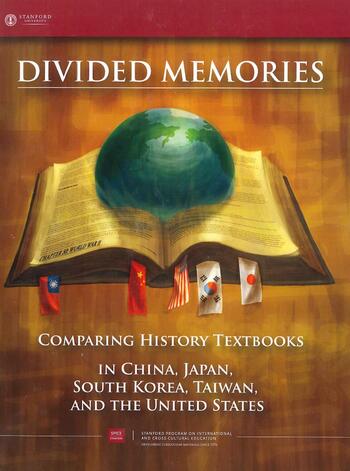
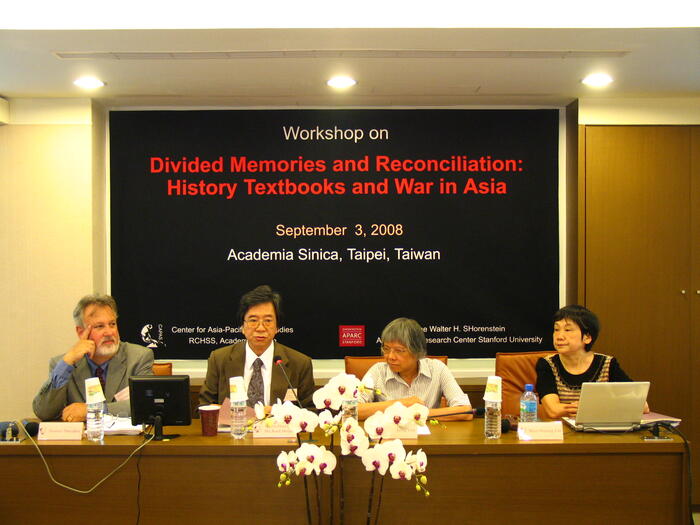
Shin and Daniel Sneider, Shorenstein APARC’s associate director for research, lead the Divided Memories and Reconciliation research project which examines memories of the wartime experience in Northeast Asia and what steps can be taken to reconcile disputes over history.

One of their latest outcomes is the book Confronting Memories of World War II: European and Asian Legacies (April 2015), edited with University of Washington professor Daniel Chirot, that studies how wartime narratives are interpreted, memorialized and used in Europe and Asia.

The full article in The Diplomat can be accessed by clicking here.

Hero Image
yasukuni reuters
Men dressed as Japanese imperial army soldiers march at the Yasukuni Shrine in August 2011, on the anniversary of the end of World War II.
Reuters/Issei Kato
All News button
1
News Type
News
Date
Paragraphs


On Tuesday, June 2, 2015, CDDRL's Taiwan Democracy Project welcomed President Ma Ying-jeou of the Republic of China (Taiwan) as he addressed a crowd of over 200 in a talk commemorating the 70th anniversary of the end of World War II and the long history of the U.S.-R.O.C. relationship. The speech was accompanied by a panel Q&A discussion with Lanhee J. Chen, former chief policy advisor to U.S. Presidential Candidate Mitt Romney; Karl Eikenberry, former U.S. Ambassador to Afghanistan; and Thomas Fingar, former chairman of the National Intelligence Council. The event was moderated by William J. Perry, senior fellow at the Hoover Institution and former U.S. Secretary of Defense. 

This special event was co-sponsored by CDDRL's Taiwan Democracy Project; the Taipei Economic and Cultural Office, San Francisco; and the Office of the President of the Republic of China (Taiwan).
 

Click here to view photos from the event via our Facebook Album: http://on.fb.me/1QxpzQp


See below for press coverage of the event:

June 3, 2015

"Taiwan President Ma Ying-Jeou Holds Teleconference on 70th Anniversary of Second World War Victory"

Pacific News Center

"President Ma talks history in video conference"

Focus Taiwan News Channel

"Ma marks sacrifices of ROC armed forces during WWII"

Taiwan Today

Hero Image
img 4584
All News button
1
Subscribe to Taiwan