-


Image
img 0049 lankov
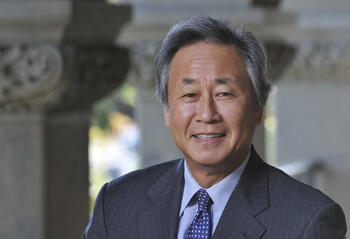
Now beginning his fourth year as North Korea’s leader, Kim Jong-un is putting his own stamp on the country, including an emerging policy of economic reform. Andrei Lankov, one of the world’s foremost experts on North Korea, will analyze Kim’s motivations, the obstacles he faces, and the likely evolution of his economic and security policies in the coming months and years. Lankov will also suggest how the international community should respond.

Andrei Lankov was born in Leningrad (now Petersburg) and completed his undergraduate and graduate studies at Leningrad State University, obtaining a PhD in 1989. He taught Korean history at the Australian National University from 1996 to 2004. Since 2004 he has been teaching at Kookmin University in Seoul where he is currently a professor at the college of social science. His major research interest is in North Korean history and society. Professor Lankov's English-language publications on North Korea include From Stalin to Kim Il Sung: The Formation of North Korea, 1945-1960 (Rutgers University Press, 2003); Crisis in North Korea: the Failure of De-Stalinization, 1956 (Universiy of Hawaii Press, 2004); North of the DMZ: Essays on Daily Life in North Korea (McFarland and Company, 2007); and The Real North Korea (Oxford University Press, 2013). He has published numerous academic articles, and contributed to major international media including the Wall Street Journal, New York Times, Financial Times, and Newsweek.

Philippines Conference Room

Encina Hall, 3rd Floor

Stanford University

Andrei Lankov <i>Professor, Kookmin University, Korea</i>
Seminars
Paragraphs

The thirteenth session of the Korea-U.S. West Coast Strategic Forum, held in Seoul on December 11, 2014, convened senior South Korean and American policymakers, scholars and regional experts to discuss North Korea policy and recent developments in the Korean peninsula. Hosted by the Korea Program at the Walter H. Shorenstein Asia-Pacific Research Center at Stanford University, the Forum is also supported by the Korea National Diplomatic Academy.

All Publications button
1
Publication Type
Policy Briefs
Publication Date
Authors
Gi-Wook Shin
News Type
Commentary
Date
Paragraphs

Last spring two North Korean defectors visited Stanford University from Seoul to share their experiences in the North. Hosted by Stanford's Korean Student Association, the event was held to increase awareness of North Korean human rights issues in the Stanford intellectual community. In fact, the Association hosts "North Korean Human Rights Night" every year. Stanford is not alone in this; many other leading American universities across the country, often also led by Korean American students, convene similar gatherings.

In the summer of 2012, Silicon Valley IT giant Google, a Stanford progeny and neighbor, hosted a conference on how technology can be used to disrupt illicit global networks, such as trafficking in human beings, human organs, and weapons. Ten North Korean defectors, ranging from former elite party members to forgotten orphans, flew in from Seoul to participate. They shared their extraordinary stories of survival amid excruciatingly painful quests for freedom.

Growing pressure on Pyongyang

These two stories are not isolated episodes. They reflect a recent trend of the international community paying dramatically more attention to North Korean human rights issues. Most notably, last month the United Nations General Assembly passed a resolution to put North Korean human rights violations on the U.N. Security Council's agenda, despite objections from China and Russia. International pressure has been intensifying on Pyongyang since the release last year of a U.N. report documenting a network of political prisons in the North and atrocities that include murder, enslavement, torture, rape and forced abortions.

While concerns about North Korean human rights are longstanding at the U.N., this was the first time the U.N. Security Council ever debated the isolated country's human rights situation. In the past the international community focused primarily on curbing North Korea's nuclear programs. Now human rights in North Korea have become a matter rivaling the nuclear issue in seriousness and global attention. Its importance appears likely to continue to grow in the coming years.

That the human rights situation in North Korea is appalling was never a secret. Defectors have produced some searing accounts of life in the North Korean gulag. Why then did the international community largely ignore it until recently?

Partly this was a product of the priority given to security issues. But it also has to do with the closed nature of the regime and Cold War dynamics that made many people in the international community doubt that the situation could be as bad as some asserted. Pyongyang made it virtually impossible for foreign journalists to report out of the country, much less obtain video that could dramatize the situation of the ordinary people of North Korea for an international audience.

Moreover, some Western observers suspected that those focusing on North Korea's human rights situation were trying to demonize the regime for political and strategic purposes. Others, such as China and Russia, stayed away from supporting international criticism of North Korea's human rights situation, apparently for fear of opening up their own human rights situation to heightened international scrutiny. In any event, with few practical means to address the North Korean human rights situation, the international community paid little heed to the problem until the end of the cold war.

Unspeakable atrocities

Then, the great famine in North Korea in the mid-1990s led to many more North Koreans leaving their country and seeking temporary relief in China. More than ever they traveled on to the South and brought their life stories with them. One consequence has been an enormous increase in the amount of information available about circumstances inside North Korea, not least due to the flow of information into the country and the use of cell phones and other technology to get reports out. Along with changing international norms about human rights, this contributed to a dramatic growth during the past decade in the number of people, organizations and states throughout the world actively focusing on human rights in North Korea. In South Korea alone, there are many NGOs, often led by North Korean refugees, that work on North Korean human rights issues.

In a logical conclusion to these developments, a special United Nations Commission of Inquiry in February 2014 published a report detailing what it called "unspeakable atrocities" in North Korea. The head of the inquiry sent a letter to Kim Jong Un, warning, in effect, that Kim himself might be brought before the International Criminal Court. While the U.N. Security Council has not yet taken concrete action, the fact that it placed North Korea's human rights record on its agenda means that, theoretically at least, it can now at any point take the next step of referring these crimes against humanity to the International Criminal Court.

How, then, should we deal with the human rights situation in North Korea? While it is not difficult to condemn the current condition on moral and ethical grounds, it is much more challenging to adequately address it in practical terms, especially when the Democratic People's Republic of Korea reacts extremely negatively on such condemnation and uses it as a reason for not engaging on this issue.

For instance, the North Korean human rights situation remains one of the most divisive issues between conservatives and progressives in South Korea. South Korean conservatives advocate a very active program of publicizing and condemning North Korea's human rights situation. Many support steps such as taking the matter before the International Court of Justice with the aim of charging North Korea's leaders with crimes against humanity. Conservatives argue not only that this is the morally correct approach but also that it would put increased pressure on the regime to reform, if not contribute to its collapse.

South Korean progressives, on the other hand, while acknowledging the seriousness of the situation, are adamant that focusing on it will not serve to improve the situation. Instead, they say, by making the regime feel even less secure, it would actually worsen the human rights situation in North Korea as well as hurt efforts to improve inter-Korean relations. Progressives therefore argue South Korea should instead focus for the time being on state-to-state dialogue while providing aid to the North. This would reassure Pyongyang, they say, and eventually contribute to its taking its own reform measures, including improving the human rights situation.

As a result of these very different views, the Republic of Korea has adopted significantly different policies depending on whether a progressive or a conservative leader occupies the Blue House. When progressives Kim Dae-jung and Roh Moo-hyun were president, the ROK often abstained on votes in UN bodies addressing North Korea's human rights situation. In contrast, conservative governments voted in favor of international criticism of North Korea's human rights situation and sometimes took the lead in raising the issue.

A coordinated effort

Meanwhile, South Korea's National Assembly has for years been unable to pass a North Korean human rights bill at all. Progressives favor "human rights" legislation that deals primarily with providing humanitarian aid to the North, consistent with their perspective on the problem's roots, while conservatives have drafted a bill that focuses on human rights along the lines of the United States' North Korea Human Rights Act, first passed in 2004.

For its part, the U.S. itself became focused on human rights only about a generation ago. It was not until the administration of President Jimmy Carter (1977-81) that the U.S. embraced an activist policy placing international human rights near the top of its foreign agenda. Before then, the U.S. fiercely criticized communist states, but mostly because of the nature of their regimes rather than their human rights practices per se.

Today democratic governments throughout the world routinely criticize aspects of the human rights situations even in friendly and allied countries, not just in those of adversaries. Actions on behalf of human rights that in earlier decades would have been deemed unacceptable "interference in domestic affairs" now enjoy international legitimacy and broad support. Concepts such as the "responsibility to protect (R2P)," which many Japanese have promoted, assert that national sovereignty is not absolute and that the international community must intervene to stop situations where the regime is unable to protect its people.

While concern is well-taken that a focus on the North Korean human rights situation would burden any engagement effort with Pyongyang and, moreover, would not improve the lives of the people of North Korea in the short- to mid-term, we cannot ignore the human rights situation. Any policy toward the North must take into account that the North Korean human rights issue has developed dramatically in recent years.

For South Korea, this requires a principled but nuanced approach. It has long been the primary center for research on North Korean human rights, with the Korea Institute for National Unification producing its annual White Paper since 1996, but it needs to establish a bipartisan body to develop programs to effectively address those areas most in need. It should also support all important and accurate criticism of North Korea's human rights situation at the United Nations and other international organizations.

However, South Korea may not take the lead in addressing North Korea's human rights abuses, while increasing the humanitarian provision of nutritional assistance and public health services in North Korea without linkage to the nuclear issue. Such an approach would deprive North Korea of the argument that South Korea is not actually concerned about human rights but is using the issue as a weapon against Pyongyang.

Like other aspects of North Korea policy, the human rights problem is extremely troubling yet enormously difficult to address effectively. The international community must share its wisdom and its resources to develop and implement principled, pragmatic, long-term approaches to the challenges that Pyongyang presents, especially the human rights situation. Leaders of the international community as a whole but above all South Korea's neighbors should support and participate in such a coordinated effort. This is in fact an area in which Japan and South Korea can easily cooperate more.


Shin recently coauthored the policy report, "Tailored Engagement: Toward an Effective and Sustainable Inter-Korean Relations Policy," released at a hearing of the Korean National Assembly's special committee on inter-Korean relations. This Nikkei Asian Review article was originally carried on Jan. 20 and reposted with permission.

Hero Image
617644 2
The United Nations Security Council met to discuss the situation in North Korea on Dec. 22, 2014.
United Nations
All News button
1
-

Image
Last year was relatively quiet in inter-Korean relations, with no further North Korean military provocations against the South and no nuclear tests conducted. Then, on New Year’s Day this year, for the first time since he came to power on his father’s death, North Korean leader Kim Jong-un publicly expressed his willingness to hold an inter-Korean summit meeting “if the atmosphere and environment are ready." At the same time, he continued to emphasize the importance of his regime’s policies of “military first” and byeongjin, the simultaneous development of nuclear weapons and pursuit of economic growth. What are Kim’s real intentions? Can inter-Korean dialogue actually resume? Can the Six Party Talks to denuclearize the North be restarted after a six-year hiatus? Sook Kim, a former South Korean nuclear negotiator with North Korea, ambassador to the United Nations, and deputy director of the National Intelligence Service, will explore what the year 2015, the seventieth anniversary of Korea’s division, may hold for inter-Korean relations and the North Korean nuclear problem.

Philippines Conference Room

Encina Hall, 3rd floor

Stanford University

Sook Kim <i>2014–15 Pantech Fellow; former ROK Ambassador to United Nations</i>
Seminars
News Type
Q&As
Date
Paragraphs

Sony Pictures Entertainment was set to release a satirical comedy, “The Interview,” in late 2014, but a cyberattack hit the organization that leaked corporate information, leading the company to initially pull the film and opening up a string of theories over who was behind the attack and how to respond.

Speculation began to mount as a clearer picture of the unprecedented hacking, both comprehensive and large in size, began to emerge. The breach is thought to be retribution for Sony’s production of the film, which carries a plot to assassinate North Korean leader Kim Jong-un.

Then, a threat was directed at movie theaters and moviegoers planning to screen and see “The Interview.” The message warned those against involvement ahead of the film’s Dec. 25 opening, indicating a “bitter fate” and alluding to the 9/11 attacks in the United States.

An unknown group, The Guardians of Peace “GOP,” claimed responsibility for the cyberattack. Media and those familiar with North Korea began to point blame on the country, which had already publicly condemned the film last June and has a history of cybercrime. Responding to accusations, top North Korean leadership rejected any involvement in the attack.

Image
rsd14 078 0248a

The White House responded as Sony canceled the film’s New York premiere and said it would discontinue distribution. Following his year-end press conference, President Barack Obama condemned the hacking, citing the Federal Bureau of Investigation’s conclusion that North Korea was behind the attack. The President said the United States would respond “proportionally,” and on Jan. 2, signed an Executive Order that put into action a series of sanctions imposed by the Department of the Treasury.

David Straub, a Korea expert at Stanford University, answered questions about the Sony hacking and its policy implications for the United States and North-South Korean relations. Straub is the associate director of the Korea Program at the Walter H. Shorenstein Asia-Pacific Research Center. He formerly served as the State Department’s Korean affairs director.

What do we know about the Sony hacking? Who’s responsible?

Based on many types of evidence, including confidential information, U.S. government officials appear to be quite confident that North Korea did in fact conduct this operation. There’s still some disagreement in the media and among tech experts over who is responsible. They’ve cited a number of reasons but the main one is that the FBI’s official statement attributing the attack to North Korea provided evidence that they believe is far from conclusive. I myself am not a technical expert, but based upon my following North Korea for many years – the attack strikes me as being very likely to have been a North Korean operation. The FBI statement noted that the Sony attack is similar to an attack that the North Koreans conducted against South Korean banks and media outlets in March 2013. In that attack, many South Korean banks had their hard drives completely wiped clean. It was a hugely destructive attack and very similar to what happened to Sony.

Does North Korea’s response to the Sony hack coincide with past behavior?

In addition to the 2013 South Korean bank cyberattack, the North Koreans apparently sank a South Korean naval vessel in 2010, killing 46 sailors. In both instances, the North Koreans denied that they did it, expressed outrage over being accused, demanded that the South Koreans produce proof, said that they could prove that they didn’t do it, and then requested that the South Koreans conduct a joint investigation. These same demands are being made in response to the U.S. blaming Pyongyang for the Sony cyberattack. It couldn’t be more similar. More generally, the North Korean regime is very calculating. They know they can’t win an outright military confrontation with South Korea, much less the United States, so what they do is try to find a weak link and go after it in a way in which they have plausible deniability – a situation where it’s very difficult for the attacked party to prove who did it.

Describe North Korea’s hacking capabilities.

North Korea is a very secretive country, so it’s hard to be completely certain of their cyber capabilities. However, according to many accounts, the North Korean government has established professional hacking schools and units over the years, resulting in hundreds if not thousands of trained hackers. North Korea has engaged in a number of attacks in the past, the most prominent one was the attack on South Korean banks in March 2013. But also, a few years ago, North Korea conducted less sophisticated attacks on major U.S. government websites.

Why would they conduct an attack?

The North Koreans appear to have both the capability and the motivation to attack Sony. The nation’s entire political system rests on a cult of personality – now a cult of family, actually – that began with the founder of the regime, Kim Il-sung, and extends to his grandson today, leader Kim Jong-un, who has been in power since Dec. 2011. It’s the only thing holding the political system together at this point. The cult of personality is so strong that any direct criticism of the top leader is something that North Koreans will compete among each other to reject. From this standpoint, it seems very likely that they would feel they had to prevent the showing of a movie that features an assassination of Kim Jong-un. And, the hackers had plenty of time to prepare for and implement the attack because everyone knew well ahead of when the movie would be released.

The United States placed new financial sanctions on North Korea. What impact will the sanctions have?

President Obama made it clear that the U.S. government would respond at a time, in a place, and in a manner of its own choosing. Not all measures taken would be made public. So far, the first publically announced measure was the President’s Executive Order on Jan. 2 imposing additional sanctions on a number of North Korean agencies and officials. This in itself is unlikely to have major consequences because most of those entities were already sanctioned. But, the Executive Order states that the sanctions are being implemented not only because of the cyberattack against Sony, but more generally because of North Korea’s actions and policies, including its serious human rights abuses. So in a sense, the North Koreans got the United States to expand its reasons for sanctioning them.


President Obama addresses the Sony hacking, saying the United States will "respond proportionally," at his year-end press briefing on Dec. 19.

President Obama addresses the Sony hacking at his year-end press briefing on Dec. 19. Photo credit: WhiteHouse.gov


What other steps will the United States likely take?

President Obama left open the possibility that North Korea might be returned to the U.S. State Sponsors of Terrorism list, from which the nation was removed in 2008. I think it was a mistake to remove North Korea from that list in the first place. It was done to promote progress on the nuclear talks, which eventually failed, and ignored a number of terroristic actions that North Korea has committed in recent years. Another possibility, which is being pushed by Republicans in Congress, is to increase financial sanctions that mirror the type that were successfully implemented in Iran.

How will the U.S. response influence cybersecurity policy going forward?

The attack on Sony is a huge wakeup call to American businesses, and even to the U.S. government. It’s the first attack of this size on a company located in the United States. It got tremendous profile in the media and the President has been personally engaged in responding. Nearly everyone has heard about it, so U.S. companies are now going to be focused much more on cybersecurity because it has exposed some potential vulnerabilities – a “if North Korea can do it, presumably others can too” mentality. Moreover, if an attack can be executed on a film company, it could also be done to other businesses and even to elements of U.S. critical infrastructure.

How do you view North Korean leader Kim Jong-un’s possible offer to meet with South Korean leadership this year?

Kim Jong-un said that he was open to the possibility of a summit with South Korea in his annual New Year’s address, although he made no specific proposal. He made clear that the summit would be conditional on actions to be taken in advance by South Korea. Among these, Kim demanded ending U.S.-South Korean military exercises and halting the flow of propaganda-filled balloons sent over the border into the North by non-governmental activist groups in the South. Moreover, North Korea has a history of expanding its conditions later, without any warning. So, I think one has to be skeptical. The signal is unfortunately less likely to be a sincere effort toward real, sustained dialogue, and more likely to be a North Korean propaganda effort devised to confuse, divert and divide international public opinion. That said, South Korea has acted entirely appropriately in welcoming the signal and reiterating its own offer of high-level talks. Let’s hope for the best.

David Straub also participated in an interview with Public Radio International on Jan. 1 about the prospect for North-South talks, the audio can be accessed on the PRI website.

Hero Image
reuters theinterview
"The Interview," a Sony Pictures film starring actors Seth Rogen and James Franco about a fictional plot to assasinate North Korean leader Kim Jong-un, releases in theaters.
Reuters/Kevork Djansezian
All News button
1
News Type
Q&As
Date
Paragraphs

A unified Korea is likely but it won’t come easily, said Stanford professor Gi-Wook Shin, in a recent interview with NK News. The most plausible scenario is reunification following a breakdown of the North Korean regime and eventual South Korean absorption of the North.

“Of course, I cannot predict the timing of such an occurrence, but it is likely that it will happen in the not-too-distant future,” said Shin, director of the Walter H. Shorenstein Asia-Pacific Research Center, in a Q&A among a panel of experts on inter-Korean relations.

In the event of unification, Shin says he is convinced it will be on South Korean terms. He said he doubts that the North Korean government, led by leader Kim Jong-Un and the ruling Worker’s Party of Korea, would find a role in South Korea’s democratic system.

Shin heads a multiyear research project focused on understanding the domestic and global implications of North Korea’s future. Earlier this year, he coauthored a policy brief assessing the situation and policy context on the Korean Peninsula. The report recommends steps that the South Korean government can take to engage North Korea toward the ultimate goal of Korean unification and a sustainable security environment in Northeast Asia.

The full Q&A can be accessed on NK News online.

Hero Image
arch of reunification flickr davidstanley
The Arch of Reunification, located outside Pyongyang, the capital of North Korea.
Flickr/David Stanley
All News button
1
Paragraphs

The Democratic People’s Republic of Korea (DPRK) remains a potentially destabilizing element of the Korean Peninsula, making it difficult to construct a regional architecture that could help preserve peace and prosperity. “Korean Reunification: An American View” suggests that transformation of the North Korean regime may be a prerequisite for Korean reunification and a key factor in building a sustainable future in Northeast Asia. The United States, the Republic of Korea, Japan and others must find ways to engage the North, without rewarding misbehavior. Two suggested approaches include pushing for Chinese-style reforms and increasing incentives for the DPRK elite.


All Publications button
1
Publication Type
Policy Briefs
Publication Date
Journal Publisher
Walter H. Shorenstein Asia-Pacific Research Center
Authors
Thomas Fingar
News Type
News
Date
Paragraphs

In conversation with Shorenstein APARC, Yong Lee, the SK Center Fellow, discusses his initial draw to architecture and urbanism, and the nexus of public policy and economics. Lee highlights some of his recent research activities focused on international sanctions on North Korea and educational policy as it relates to migration and housing patterns in South Korea. 

Your background is quite multifaceted, including years working in architecture and a master’s of public policy in addition to a doctorate in economics. How do all of these areas fit together to inform your research?

It took a while for me to figure out what I wanted to pursue as a career. As a high school student in Korea I had to choose a track that focused on either the physical sciences or the humanities/social sciences. At that age, it’s hard to know what you want to be. Simply because my father was an engineer, I chose the physical sciences track. When it was time to apply for college (one actually had to determine a major when applying for college back then), I became interested in international relations and wanted to become a diplomat. But given my training in the hard sciences and the fact that one had to choose a major when applying, I had to decide on a science or engineering major. After browsing through the library a few architecture books caught my eye, and I opted for architectural engineering as my major. 

I truly enjoyed my six years of architectural training but after working for an architectural firm for several years in Seoul, I realized I was more interested in the abstract ideas of architecture and urbanism and less of the actual design process that goes on in an architectural firm. I searched for my next career, became interested in urban and development policy, and pursued a master’s of public policy at Duke University. However, then I realized that economics would allow me to rigorously analyze the policy questions I was interested in. Fortunately, Brown University accepted me as a Ph.D. student and I eventually became an economist. It was through this search process, that I developed an interdisciplinary interest in policy relevant questions. My personal choices constrained by education policy, comparatively experiencing Korea’s transition while living between Korea and the United States each decade since the 1980s, and my interest in architecture and cities have shaped my research interest in economic development and growth with a focus on education, firms and cities.  And now being at FSI, I can immerse myself in international studies, something I had wanted to pursue all along. By joining Stanford, I think I finally discovered what I had wanted to do.

One of your research streams looks at the effects of sanctions on domestic populations, looking at the case study of North Korea. How did you derive data about the closed-off regime? What are your key findings?

Research on North Korea is challenging because of the dearth of data. I had been interested in how sanctions impact the domestic population, but to examine this question one would need regional level data within in North Korea. I decided to use the satellite night-lights data, which in recent years has been used as an alternative means to measure economic activity. I found that sanctions actually increase urban-rural inequality. An additional sanctions index increases the urban-rural luminosity gap by about 1 percent. However, if I focus on the more central urban areas the gap increases to about 2.6 percent. Since urban areas are more than ten times brighter than rural areas, the results imply that the gap further increases by 1 to 2.6 percent with additional sanctions.  Furthermore, I find that the urban areas actually get brighter while the rural areas get darker.

Another of your research focuses on the impact of 1970s education policy in South Korea on intergenerational mobility and migration. Can you explain this phenomenon? Does the case of South Korea relate to reform experiences in other countries?

Students in South Korea traditionally had to take an entrance exam to enter high schools. After the exam, high schools would choose students based on the exam scores. Given the variation in school quality, a hierarchy of high schools had existed and students who performed well would enter the top tier high schools. This system was heavily criticized since wealthier families could tutor children to prepare for the entrance exam. Eventually in the mid-1970s, the South Korean government abolished the exam-based system and moved to a school district based system where students would attend high schools based on residential location. By moving away from an exam system to a district system, policymakers hoped that educational opportunities would alleviate the persistence of inequality. However, what I find is that, to the contrary, the district system generated substantial sorting of households by income. Now wealthier households could simply move to districts and cities with the prestigious high schools. Given that the purchase of housing is purely determined by income, school quality became even more segregated by income and actually exacerbated the persistence of inequality across generations. This transition is now happening in several Chinese cities and in the United States – the sorting across school districts by educational outcome has created highly segregated towns. The Korea experiment allowed me to examine not just an equilibrium outcome, but also the transition when the policy changed.

In the coming year, you’ll be teaching courses related to the economies of East Asia. Can you provide an outlook on this?

I’ll be teaching an International Policy Studies course titled, “Economic Growth, Development, and Challenges of East Asia,” in the spring. The course will focus on China, Japan, and Korea, but also draw on Southeast Asian countries, when relevant. I will cover the rapid economic growth in recent decades and development policies pursued. However, I will also cover the current major economic challenges these countries face, some of which are rising income inequality, entrepreneurship, and an aging workforce. I hope to add to our rich set of courses by providing an economics and empirical viewpoint.

Tell us something we don’t know about you.

I sometimes split my sleep. That is, I go to bed to sleep for a few hours and then wake up in the middle of the dark, do some reading or work, and then sleep for one or two hours before I start my morning routine. It started during my high school years and it has stuck with me for quite a while now. Don’t worry, though. I sleep fine most of the time. I just sometimes enjoy the dead of the night.

Hero Image
Portrait of Yong Suk Lee Rod Searcey
All News button
1
News Type
Commentary
Date
Paragraphs

Recently, North Korea suddenly released the two remaining Americans it was holding – Kennth Bae and Matthew Todd Miller. The news made headlines internationally, and the drama of it was heightened because the United States’ top spy flew into Pyongyang and secured their release. Not surprisingly, the event raised many questions and is prompting a great deal speculation. Why did North Korea release the Americans? Why choose the U.S. Director of National Intelligence James R. Clapper to receive the handover? And, especially, what are the implications for the troubling situation on the Korean Peninsula?

David Straub, associate director of the Korea Program at Stanford University's Walter H. Shorenstein Asia-Pacific Research Center, has had direct experience with similar situations. In 2009, he accompanied former U.S. President Bill Clinton on a mission to Pyongyang to bring home two incarcerated American journalists, Laura Ling and Euna Lee. As the State Department’s Korean affairs deputy director (1996-98) and director (2002-04), he was involved in efforts to obtain the release of a number of other Americans held in North Korea. Here, Straub offers his analysis of the recent event.

Kenneth Bae was sentenced to 15 years in prison and had already been held nearly two years when he was released on Saturday, while Matthew Todd Miller was arrested in April of this year and subsequently sentenced to six years in prison. Why did you think North Korea suddenly returned them?

The surprise is not that they were released. The North Koreans have returned every American they have held during the past few decades. While some Americans have been arrested for reasons that the North Koreans themselves might have thought valid, such as the charge that Bae was seeking to bring down the regime by his Christian proselytization, in every case the North Koreans treated the Americans as pawns. In fact, in the case of these two Americans and of Jeffrey Fowle, the third incarcerated American who was released last month, the U.S. government actually publicly used the word “pawns” for the first time to describe the way Pyongyang was using them. While that risked angering the North Koreans and delaying the releases, it reflected increasing American frustration at the North Korean practice of holding American citizens hostage to force the U.S. government to send senior figures to be seen as pleading for their release. North Korea intended to release Bae all along—after it got as much as it could of what it wanted.

But why did Pyongyang release the Americans at this particular time?

The reasons for that remain unclear. Many observers have speculated that the North Koreans wanted to ease U.S. and U.N. criticism of their human rights situation. The U.N. General Assembly will soon consider a measure, based on a damning U.N. investigative report, to hold top North Korean officials accountable for crimes against humanity due to the way they treat their own people. Others have speculated that the North Koreans wanted to release the Americans before the Asia-Pacific Economic Cooperation (APEC) summit this week in Beijing, to make it easier for Chinese President Xi Jinping to press President Obama to agree to return to the Chinese-led Six Party Talks on the North Korean nuclear issue. Both of these are plausible but they are speculation –only North Korean leaders really know.

But there is also an American angle to the timing. All along, the North Koreans have been demanding that the United States send a very senior current U.S. official to receive the release of incarcerated Americans. In the past, these roles have been performed by both very senior former U.S. officials, such as Presidents Carter and Clinton, and current but relatively low-ranking American officials, such as Ambassador Robert King, the United States’ special envoy for North Korean human rights issues. Almost from the start in this case, the U.S. was prepared to send Ambassador King but the North Koreans rejected him as being too junior. Instead, the North Koreans demanded a very senior sitting U.S. official come; they stuck with that demand and ultimately were successful. After a long process of negotiations and signaling, the two sides very recently agreed that National Intelligence Director Clapper would be appropriate. U.S. officials have publicly suggested that they were the ones who nominated Clapper. They say that the choice of this non-diplomat was intended to underline to all concerned that the sole purpose was to obtain the release of the remaining Americans. I am convinced that that was in fact the case. The U.S. government is naturally loath to talk substance with the North Koreans in a situation such as this when it is in fact acting under duress.

Then why didn’t the United States send Director Clapper sooner?

The United States does not want to encourage the North Korean leaders to think that they can coerce the United States by taking American citizens hostages. That might only result in more such hostage-taking. U.S. officials thus held firm for a long time and decided to send Mr. Clapper only when they concluded there was no better way to obtain the release of our citizens. U.S. officials have suggested that the North Koreans sent a signal a few weeks ago that triggered this particular decision, but exactly what was behind this exact timing remains to be disclosed.

Does the dispatch of someone as senior as Clapper increase the likelihood of more hostage-taking?

Unfortunately, it may. From a North Korean perspective, they got their basic demand—for a very senior sitting official—and it was the Americans who blinked. They also got a letter from President Obama to North Korean leader Kim Jong Un, even if it was only “brief” and just certified that Clapper was his envoy for the purpose of retrieving the Americans. The North Koreans claim that President Obama “earnestly apologized”; the U.S. government has flatly denied making any apology. I’m sure U.S. officials weighed the concern about encouraging the North Koreans in further misbehavior against their desire to return Bae and Miller. Bae in particular had been held longer than any other American so far and he has a number of health issues. In response to the recent spate of hostage-taking, last year the State Department, for the first time, strongly warned Americans against all travel to North Korea. After the release of Bae and Miller, U.S. officials reiterated that warning.

You said that the North Koreans do this to force senior Americans to be seen as pleading for the release of incarcerated Americans. Do the North Koreans really go to so much trouble only for that?

Some observers say that the North Koreans do this because the United States refuses to talk and negotiate with them and that this is their desperate effort to try to negotiate and seek better relations with the United States. I’m afraid that is very much wishful thinking. The United States and North Korea actually communicate directly through North Korean diplomats assigned to U.N. headquarters in New York, as a North Korean ambassador there recently confirmed in an interview with Voice of America. The United States is also prepared to negotiate with North Korea, but only if it credibly signals that it is willing to negotiate an end to its nuclear weapons program. North Korea’s current stated position is that it is ready to return “unconditionally” to the Six Party Talks, but that is transparently cynical. The North Koreans have already created conditions, by using the Six Party Talks as a cover to achieve a nuclear weapons breakthrough. The North Korean now seriously say that they will not give up nuclear weapons until the United States gives up its own. Under such conditions, it would be a farce for the United States to agree to a resumption of Six Party Talks.

After accompanying President Clinton to North Korea in 2009, including sitting in on his meeting with its previous ruler, Kim Jong Il, I was even more puzzled as to why the North Koreans would go to so much trouble to force senior Americans to come to retrieve incarcerated American citizens. After much reflection, my working hypothesis is that the North Koreans must get great psychological satisfaction from forcing the U.S. government to bend to their will, even if they get nothing substantive in return—even if, in fact, they only increase the American disinclination to deal with them otherwise. In some cases, such as President Clinton’s visit, they also propagandize the event to their own people. So far, they have not yet reported to their people on Clapper’s visit. It will be interesting to see if they do.

A couple of quick final questions: do you think, as some media have suggested, that the Chinese government or private citizens played a role as intermediaries in the release of the Americans? And do you give any credence to some South Korean commentators’ belief that the timing of the release was related to the American mid-term elections?

It’s amazing to see all the people who come out of the woodwork after such an event, claiming to have played a role. Even Dennis Rodman is now saying he helped by sending a letter to Kim Jong Un. I know that many private citizens talked with North Korea officials about these cases and I would imagine that the Chinese government also urged Pyongyang to do the right thing, but I am confident that it was talks American and North Korean officials held that resulted in the release. As for speculation about the timing being connected to the American elections, that’s a common misperception in South Korea and probably North Korea as well. As any American knows, the idea that obtaining the release of these Americans from North Korea would somehow help the Democrats in the election is of course ludicrous.


David Straub also spoke with Radio Free Asia about the release of the American prisoners from North Korea. He says the release has nothing to do with North Korea's nuclear initiative, saying that issue must be addressed on its own merits. The article is in the Korean language and can be accessed by clicking here.

Hero Image
Reuters North Korea prisoner release
U.S. citizen Kenneth Bae (2nd L), who was held in North Korea since Nov. 2012, shakes hands with U.S. Air Force Colonel David Kumashiro (R) after Bae landed aboard a U.S. Air Force jet at McChord Field at Joint Base Lewis-McChord, Washington Nov. 8, 2014.
Reuters/Anthony Bolante
All News button
1
Authors
News Type
News
Date
Paragraphs

The North Korean regime has adjusted to international sanctions by shifting that economic pain away from cities to the countryside, new Stanford research using satellite night lights data shows.

U.S. policy toward North Korea has been based on the expectation that economic sanctions could deter North Korea from developing nuclear weapons or change the behavior of the regime, according to Yong Suk Lee, a Stanford economist at the Freeman Spogli Institute for International Studies.

Since 1950, both the United States and the global community have adopted a series of economic sanctions against North Korea. The latest came in 2013 when the United Nations approved restrictions on banking, travel and trade in response to North Korea's underground nuclear test and threat to launch nuclear strikes against the United States and South Korea.

In a working paper, Lee examined how North Korea's Communist rulers have adapted to the increasingly tougher sanctions through the years.

"North Korea is one of many autocratic regimes that refuse to yield to sanctions, and its isolation and hereditary dictatorship make it a particularly good example to study the impact of economic sanctions in autocratic regimes," said Lee, the SK Center Fellow and a faculty member of the Korea Program at Stanford's Walter H. Shorenstein Asia-Pacific Research Center.

North Korea is one of the poorest countries in the world, Lee noted. Its leaders follow an economic model based on a centrally planned economy and self-imposed isolation from the rest of the world.

Satellite data

Lee's research was based on nighttime views of lights from data collected by the U.S. Defense Meteorological Satellite Program. The researcher created "average luminosity" measures of lights across North Korea based on a 1-mile-by-1-mile grid for the years 1992 through 2010. Light usage was examined for brightness on one-minute intervals.

To predict the impact of sanctions on economic activity in North Korea, Lee used a formula that transformed the luminosity measures into GDP measures. For example, a 10 percent change in the satellite lights is associated with about a 3 percent change in GDP.

According to Lee, satellite data is of greatest utility in assessing the economies of cities and regions in the developing world. In a country like North Korea, a large part of economic activity happens during the evening and night and involves light. For example, lights at night are generated by peoples' consumption of goods and services as well as transportation. And some production activities happen during the evening hours.

"Economists have found that how bright night lights are can predict national and sub-national GDP quite well, especially in countries where GDP data is not reliable," he said.

Lee found that economic sanctions decreased luminosity in the hinterlands, but increased luminosity in urban areas, especially toward the centers. As for whether additional sanctions affected luminosity, he found they increased the urban-rural luminosity gap by about 1 percent. When he examined the more central urban areas, the gap increased by about 2.6 percent.

"The results suggest that the dictatorship countered the effects of sanctions by reallocating resources to the urban areas," Lee said. One could surmise that the economic sanctions do not affect the country's leadership much, he said.

The hinterlands responded to declining economic fortunes by relying more on trade with China near those border areas, Lee added. In fact, the sanctions generated more North Korean migration to China and reliance on Chinese merchants and goods. North Korea's border with China is relatively porous as opposed to its heavily militarized border with South Korea.

'Increasing inequality'

The upshot, Lee said, is that sanctions that fail to change the behavior of an autocratic regime may eventually increase urban-rural inequality.

"Sanctions will likely be inefficient as long as North Korea can maintain powerful centralized control and oppress any discontent that arises due to increasing inequality," he said.

Lee added that sanctions will most likely not deter North Korea's nuclear weapons activities. They have not done so yet, and at this point, North Korea's leaders view sanctions as inconveniences, but not regime-threatening. Plus, even the harshest sanctions would be unlikely to stem the flow of all goods, energy and money into North Korea. Not all countries would go along with draconian trade restrictions that hurt the poorest people the hardest, he said.

"Even if sanctions were imposed to full capacity, the marginalized population would suffer the most," said Lee, adding that he was actually surprised about his project's findings.

"One can always hypothesize a story but to actually find such effect in the data was quite exciting. Frankly, I pursued this project expecting that I wouldn't find any impact of sanctions on lights," he said.

Clifton Parker is a writer for the Stanford News Service.

Hero Image
12753489823 51e06b2593 o
The Korean Peninsula is pictured at night from the International Space Station in Jan. 2014. The dark area is North Korea in between well-lit China and South Korea. North Korea's capital city of Pyongyang appears like a small island, showing some light emission, otherwise surrounded by darkness.
Flickr/NASA's Marshall Space Flight Center
All News button
1
Subscribe to North Korea