


Korea and the Next American Presidency
-
In addition to Iraq, Afghanistan, Pakistan, the financial crisis, and the housing crisis (as if that were not enough!), the next American president will have his hands full with matters on the Korean peninsula. What will be the future of Six Party talks? What is the status of the leadership in Pyongyang? How do changes in leadership in Washington (and potentially in Pyongyang) affect outcomes? What are the prospects for US-ROK relations? And what of the KORUS FTA? Victor Cha, former director of Asian affairs at the White House, will lead a discussion on these issues.
Professor Cha is director of Asian Studies and holds the D.S. Song Chair in the Department of Government and School of Foreign Service at Georgetown University. He left the White House in May 2007 after serving since 2004 as Director for Asian Affairs at the National Security Council. At the White House, he was responsible primarily for Japan, the Korean peninsula, Australia/New Zealand and Pacific Island nation affairs. Dr. Cha was also the Deputy Head of Delegation for the United States at the Six Party Talks in Beijing, and received two Outstanding Service commendations during his tenure at the NSC.
He is the award-winning author of Alignment Despite Antagonism: The United States-Korea-Japan Security Triangle (Stanford University Press) (winner of the 2000 Ohira Book Prize) and co-author of Nuclear North Korea: A Debate on Engagement Strategies (Columbia University Press, 2004). He has written articles on international relations and East Asia in journals including Foreign Affairs, International Security, Political Science Quarterly, Survival, International Studies Quarterly, and Asian Survey. Professor Cha is a former John M. Olin National Security Fellow at Harvard University, two-time Fulbright Scholar, and Hoover National Fellow, CISAC Fellow, and William J. Perry Fellow at Stanford University.
Image
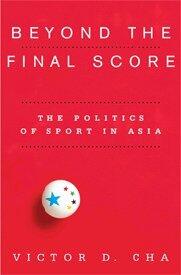
His new book Beyond the Final Score: The Politics of Sport in Asia (Columbia University Press, 2008) looks at the politics of sports and the Beijing Olympics. Cha holds a BA and Ph.D. from Columbia University, MA from University of Oxford.
This event is sponsored by the Pantech Group in Korea.
Philippines Conference Room
Victor D. Cha
Director of Asian Studies
Speaker
Georgetown University
Seminars
ASEAN's ''Black Swans''
Paragraphs
It was meant to be a celebration not a showdown, let alone a showdown that the brutal junta in Burma (Myanmar) would win. In August 2007, the Association of Southeast Asian Nations (ASEAN) turned forty. On November 20, to mark the occasion, the heads of government of the association's ten member states-Brunei, Burma, Cambodia, Indonesia, Laos, Malaysia, the Philippines, Singapore, Thailand, and Vietnam-met in Singapore for the thirteenth ASEAN Summit. A day later the heads of government from Australia, China, India, Japan, New Zealand, and South Korea joined them for the third East Asia Summit (EAS).
The summitry had three purposes. The first was to commemorate ASEAN's first forty years. From only five members at its inception in 1967, the association had by 1999 grown to encompass all of Southeast Asia's formerly quarrelsome states. For the first time in the region's history, a single indigenous organization could claim to stand for all of Southeast Asia-albeit only by overlooking just how variously accountable ASEAN's diverse regimes were to the peoples whom they presumed to represent.
But ASEAN was not content to rest on these laurels. The second reason for the summitry in Singapore was to prepare the organization for the future. The ASEAN summit's peak event was to be the unveilingand signing of a first-ever charter for the organization.
Finally, the packed schedule in Singapore was meant to project the best possible image of ASEAN to the assembled foreign guests and the wider world. By inaugurating a charter meant to enhance the association’s effectiveness, the organizers of the celebrations hoped to belie Western criticism that ASEAN was little more than a “talking shop.” They also hoped that showcasing the charter would distract attention from the presence in Singapore of ASEAN’s most widely castigated member, Burma, and thereby gain some relief from Western charges of guilt by association with that pariah state.
It was not to be. The summit was convened and the charter was signed. Plans to implement the ASEAN Economic Community were announced. But the Burmese junta stole the spotlight from these accomplishments in a way that tainted the anniversary, embarrassed the association in front of its foreign guests, and reminded analysts just how tenuously regionalism is related to democracy in Southeast Asia.
All Publications button
1
Publication Type
Journal Articles
Publication Date
Journal Publisher
Journal of Democracy
January 2008 Dispatch - South Korea's New President: An Opportunity for Closer Ties with the United States
News Type
News
Date
Paragraphs
We are pleased to bring you the first dispatch of the new year in our series of Shorenstein APARC Dispatches. This month's piece comes from David Straub, this year's Pantech Fellow. Straub served thirty years in the U.S. Department of State, specializing in Northeast Asian affairs, including as the Department's director of Korean and of Japanese affairs. Since leaving the State Department last year, he has taught U.S.-Korean relations at Johns Hopkins School of Advanced International Studies and Seoul National University's Graduate School of International Studies. At Shorenstein APARC, he is writing a book on U.S.-South Korean relations.
In December 2007, for the first time ever, South Koreans, anxious about the economy, elected a businessman as their president. Pro-growth conservative Lee Myung-bak won a resounding victory, with 49 percent of the vote, over left-center candidate Chung Dong-young, who won only 26 percent. Lee's margin would have been even greater had it not been for the late entry into the race by another conservative, Lee Hoi-chang, who finished third with 15 percent.
Korean voters had become tired of ten years of rule by the left-center, and they saw incumbent President Roh Moo-hyun as confrontational and ineffective. By contrast, Lee, a former Hyundai Engineering and Construction CEO, has a reputation for being a pragmatic, can-do leader. As mayor of Seoul (2002-2006), he beautified the city and reformed its mass transit system.
Lee is scheduled to be inaugurated on February 25 for a single five-year term, but he faces two early challenges. First, just before the election, the left-center camp passed a bill establishing a special prosecutor to investigate allegations that Lee had been involved in business fraud and other corruption. The special prosecutor is supposed to announce his findings before the inauguration. A regular prosecutor earlier found the charges to be unfounded, and most observers think that the special prosecutor will not turn up significant new information.
Second, President-elect Lee must counter centrifugal forces in the conservative party ahead of parliamentary elections on April 5. Lee Hoi-chang's defection has already split the conservative camp, and now President-elect Lee and former conservative party leader Park Geun-hye (daughter of the late President Park Chung Hee) are feuding over how much say each should have in choosing candidates for the parliamentary election.
If President-elect Lee is cleared by the special prosecutor and if he successfully manages relations with Park, Lee's party will likely win a very large majority in the parliamentary election, offering him the opportunity to be a strong and effective executive.
As president, Lee will face two long-term challenges. First, as Lee has promised Korean voters, he must strengthen the economy. While the Korean economy has been growing at a rate of about 5 percent in recent years, the average Korean has felt hard-pressed by large increases in housing and education costs. Lee plans to focus on deregulation and attracting foreign investment. He has, however, already been forced to scale back his promise of 7 percent annual growth to 6 percent at least for his first year in office.
Second, although North Korea was not a major issue in the election campaign, due to the apparent progress in Six-Party talks to end North Korea's nuclear weapons program, many experts are skeptical that North Korea will fully abandon its nuclear ambitions. Lee supports engagement of North Korea and continued humanitarian aid, but he has said he will not provide major economic aid to North Korea until it ends its nuclear weapons program. This marks a significant departure from the policy of his predecessors Roh Moo-hyun and Kim Dae-jung. A renewal of tensions with North Korea could threaten South Korean economic growth and Lee's popularity.
Lee strongly supports South Korea's alliance with the United States. He may seek talks with the United States to adjust or delay implementation of agreements reached in recent years to reduce the United States' role in South Korea's defense. Lee also supports early ratification of the U.S.-Korea Free Trade Agreement (FTA), the largest U.S. free trade agreement since NAFTA. (The U.S. Congress has not yet approved the U.S.-Korea FTA.)
Many experts believe that the near coincidence of Lee's election and the inauguration of a new U.S. administration in January 2009 offers a major opportunity to strengthen U.S.-South Korean relations. Shorenstein APARC and the New York-based Korea Society recently announced the formation of a study group of senior former U.S. officials and experts to issue a report and recommendations on how the next U.S. administration can work with President Lee. The study group will travel to Seoul in early February for meetings with President-elect Lee and his economic, foreign policy, and security advisors.
Perhaps the most remarkable aspect of the election of Lee was that Koreans did not think it remarkable. They simply took it for granted that the election would be free, fair, and peaceful. Yet it has only been twenty years since South Koreans literally forced a military-backed government to allow them to vote democratically for their chief executive. In those two decades, there have been five presidential elections, with Lee's victory making the second full-fledged transfer of power between political camps. Moreover, this election was conducted at very low cost, using public funds; companies were not "squeezed" for campaign contributions as in the past. South Korea has demonstrated itself to be, along with Australia and New Zealand, the most democratic country in East Asia and a model of political development for the entire international community.
All News button
1
Return to Southeast Asia, Lame Duck President Finding a Quiet Pond
News Type
News
Date
Paragraphs
The 14th Informal APEC Economic Leaders' Meeting concluded on Nov. 19, 2006, and the participants had their photo taken in colorful Vietnamese traditional costumes called ao dai. Still in the shadow of the congressional election failure, President George W. Bush, realizing that a stable Asia is very important for the U.S. geostrategy, took advantage of the occasion to enhance the prestige of the United States. Just as American experts said, the Bush administration has probably become a lame duck now, but even a healthy duck needs to find a quiet pond.
"APEC's uniquely trans-Pacific character is an important political reason for U.S. to strengthen the group," Donald Emmerson, director of the Southeast Asia Forum of Shorenstein APARC at Stanford University, explained. "While APEC has lagged, East Asian regionalism has boomed. That has been good for East Asia. But U.S. and East Asian interests alike could be hurt if the Pacific Ocean ends up being split between rival Chinese and American spheres of influence."
However, the U.S. effort to save the Doha Round of trade talks with the Asia-Pacific Free Trade Agreement has yielded little. The Doha Round aimed to remove trade barriers in the world but was suspended due to some countries' agriculture protection policies. Washington had wanted to model the Doha Round upon the Asia-Pacific Free Trade Agreement. But U.S. officials never expected that there would be so many differences among the Asia-Pacific leaders, and that the economic development of Pacific Rim countries differ in thousands of ways. Despite the fact that the Hanoi Statement reiterated that supporting the Doha Round was APEC's priority, no material progress has been made.
"The U.S. is urging a last ditch effort to restart the talks through APEC," Professor Charles Morrison, president of the East-West Center located in Hawaii, says. "Whether or not APEC can do more than make a rhetorical statement of support is unsure. I feel that the APEC economies should agree to prepare new offers within a short period of time -- three weeks, for example -- to challenge the Europeans, Brazilians, Indians and others."
United States Steps Out to "Please" ASEAN
Seventeen years after its establishment, APEC now plays a decisive role in the international political arena. It has 40 percent of the world's population, 48 percent of the world trade volume and 56 percent of the world GDP. Since 1989, the economy in this region has grown by 26 percent, compared to only 8 percent economic growth rate in the rest of the world. With the double advantage of economic strength and rapid growth, China, being one of APEC's main economies and its "engine," has fully taken the limelight. On the other hand, the United States has been weighed down with countering terrorism in the Middle East.
"China has done very well in enhancing its relations with Southeast Asia in recent years," Sheldon Simon, professor of the Program in Southeast Asian Studies at Arizona State University, points out. "China has not only established a free trade forum for China and ASEAN countries, but also helped and influenced the area with its economy and culture. But I think that the United States has realized the importance of this area and come back to fasten its friendly relationship with the region."
The United States coming back to Southeast Asia and repairing its relations with the ASEAN countries is partly activated by China's increasing influence in the area.
"The naissance and growth of some democratic countries in Southeast Asia has received sympathetic response of democratic values from Washington," said Simon. "With the traditional friendly relations between the area and the United States, these countries value their friendship with the United States sometimes more than the trust in their neighboring countries. Geopolitics is also very important factor. The Asia-Pacific area is a very important to the world economy and the U.S. power structure. Therefore, the United States will not easily give it up."
Another motive for the United States to foster closer relations in the area is the common interest of countering terrorism. There are still some terrorist groups in Indonesia, the Philippines and southern Thailand.
"President Bush has a perfect attendance record at APEC meetings (Clinton missed two of them), which says that he does take APEC seriously and believes Asia is important to U.S. interests," Ralph Cossa, president of the Pacific Forum Center for Strategic and International Studies, said in an interview with the Washington Observer Weekly.
Besides attending the APEC summit meetings annually, Washington has recently activated several plans to "please" the ASEAN countries, including setting up a ministerial dialogue system with them and a platform for maintaining contact at the deputy finance minister level, even increased exchanges at the deputy defense secretary level.
The extent of U.S. efforts to foster cordial relations with Southeast Asian countries can also be seen in the increasingly friendly U.S.-Vietnamese economic and trade relations. The Bush administration is not only supporting Vietnam to enter the WTO, but has even proposed giving Vietnam Permanent Normal Trade Relations (PNTR) status.
"The reason that Bush failed to bring the gift of PNTR status to the APEC Hanoi summit is that the Congress dominated by the Republicans was lacking efficiency and could not pass the proposal in time," Simon explained. "But I think that it will be passed as soon as possible in the next month or by the Democrats who begin to dominate the Congress from next January."
Simon and Cossa both admit that Burma is an unharmonious element in U.S. relations with ASEAN. The Burmese dictatorial military government is really the most typical negative example of democracy for the United States. But ASEAN countries are reluctant to see Burma "punished" by the United States for ideological reasons. So Burma has become a sensitive issue in U.S.-ASEAN relations.
"This is a good way for him to interact with ASEAN since Myanmar is not there and this issue does not have to be addressed," said Cossa.
Simon, an expert of Southeast Asia affairs, points out ASEAN countries should be happy about the advantage they have with China and the United States vying for their attention. Being able to juggle the two big powers, Southeast Asia has gained many practical interests and financial aid for its economy, trade, security, culture and education.
"In a short period, there will not be any serious interest conflicts in the triangle balance of China, the United States and ASEAN," Simon told the Washington Observer Weekly. "ASEAN countries' only worry, if there is any, is an accidental spark in the U.S.-China military interaction in Southeast Asia such as the confrontation across the Taiwan Straits."
Turning the Asia-Pacific into a "Gigantic Enterprise?"
"The United States wants to demonstrate its continuing interest in the Asia-Pacific region. It is urging for a study of an Asia Pacific free trade area and support for an APEC business card, and both shifts of approach, illustrate its interest in and support for the APEC process," said Morrison.
An important subject for the APEC Hanoi summit is the "active discussion" of establishing an APEC free trade region. Former U.S. President Bill Clinton proposed for the first time in 1993 the setting up of such an economic zone. Before Bush's visit, Deputy U.S. Trade Representative Karan Bhatia suggested that establishing an APEC free trade zone would be a subject worth serious discussion. But his proposal did not receive a warm response from the host. The Vietnamese Deputy Foreign Minister Le Cong Phung stressed that establishing a free trade zone is a long-term objective and will not affect progress of negotiations with the WTO or other bilateral trade agreements.
"Regarding the study of the Asia Pacific free trade area, a number of economies were skeptical because it would be such a large undertaking," said Morrison. A similar plan was once axed in an APEC ministerial statement and the leaders attending this summit do not seem to have much interest in it.
Simon explained Bush's thinking on the subject: "Washington reiterated its intention to establish an Asia-Pacific free trade zone in order to save the precarious WTO Doha Round. Breaking the tariff barriers in the Asia-Pacific region will help continue to press relevant countries to concede in granting agricultural tax subsidies and hopefully open the door to the Doha Round."
The five-year Doha Round was suspended in July this year because six major WTO members -- the United States, the European Union, Japan, Australia, Brazil and India -- failed to reach agreement on market access for agricultural and non-agricultural products. Given the situation, the organizer said that the informal APEC economic leaders' meeting would provide a "good opportunity" to help restore the Doha Round talks. However, the Hanoi summit joint declaration just vaguely indicated that APEC will pursue further integration on issues such as energy in 2007. It would be extremely optimistic to expect that APEC will be able to remove all the tariff barriers in the region before 2010. Although the area produces 50 percent of the world's economic value, the styles and stages of economic development, the cultural backgrounds and political systems of the countries in the region vary a great deal, making it very difficult for these Asian countries to eliminate all these discrepancies and become fully integrated.
"Out of different worries, many Southeast Asian countries are actually not interested in the proposal though they do not speak out. Or we may say that it's not time yet now to change the Asia-Pacific region into a gigantic enterprise," Simon told Washington Observer Weekly.
Quite apart from who concedes what in return for what concession over the APEC free trade mechanism, the question arises: What geographical scope should a regional trade arrangement have? Who should be a party to the agreement and who should not?
There would appear to be three different ideas on the table: (a) the APEC-wide free trade area that the United States proposed at the recent summit in Hanoi; (b) the East Asia Summit-wide framework that Japan reportedly favors, which would include ASEAN + 6 (China, Japan, South Korea, India, New Zealand, Australia) but not the United States; and (c) the ASEAN Plus Three (China, Japan, South Korea) context that China seems to prefer, in which the exact positions of Tokyo and Beijing are not entirely clear.
"Without discussing the merits or demerits of each of these arrangements, suffice it to note that since ASEAN is common to all of them, the net effect of these alternative ideas is to strengthen the negotiating position of ASEAN," said Emmerson. "Then again, ASEAN will not necessarily be unified as to its preference for the three proposals. It will be interesting to look for the positions to be taken by individual ASEAN countries and for their collective effort to arrive at a single negotiating position, e.g., in the run-up to the ASEAN summit and the second the East Asia Summit in the Philippines next month."
Cossa has hope for 2007. "The U.S. in particular would like to see APEC moving faster, and will look ahead to next year, with Australia in the chair, for some real progress."
American Public Doesn't Share Washington's Interest in Southeast Asia
The prospect of economic and strategic cooperation brought about by APEC made for a lively week in Southeast Asia. But it stirred little response in the United States. According to the interviewed experts of Southeast affairs, the American public is still haunted by the situation in Iraq and the mid-term election. Even the U.S. media framed the event as Bush's first visit to a foreign country since the Republicans were defeated in the mid-term election.
"Because of the Congressional election, President Bush will want to show leadership rather than simply respond to the new Congress. Both Doha and the nuclear proliferation issue are examples," said Morrison.
Cossa holds a different view: "I don't think the elections will have any major impact on what Bush does or how he does it during this trip. Iraq is his legacy. What he does in Asia can make things better or worse at the margins but will likely be overshadowed by Iraq."
Simon echoed the sentiment. "On one hand, the Republican Party's defeat in the election cannot directly influence Bush's trip to Asia. On the other hand, Bush's economic achievements in the Southeast region will not add to his political record. In Asia, only the North Korea issue may sway the public opinion in the United States."
Yan Li, Washington Observer weekly - Issue No. 201, November 22, 2006
Reprinted by Permission February 12, 2007.
All News button
1
APEC and the future of regionalism in Asia
News Type
News
Date
Paragraphs
"Pan-Asian regionalism remains a long-term aspiration rather than a short-term prospect, but that having been said, that was true of Europe fifty years ago." - Michael Armacost, Shorenstein Distinguished Fellow
On November 2 Stanford University's Shorenstein Asia-Pacific Research Center, in association with University of California at Berkeley's Asia-Pacific Economic Cooperation Study Center, convened regional and economic experts to discuss the role of the Asia-Pacific Economic Cooperation (APEC) group and its relationship to the future of regionalism and regional integration in East Asia.
The meeting was timely, as APEC's annual week of high-level meetings begins on November 12th in Hanoi, Vietnam. It will culminate in a summit of heads of state (and a representative from Taiwan) on November 18-19 -- a key opportunity for President Bush to talk with regional leaders about a range of issues, including North Korea. In examining APEC's agenda and its potential institutional challengers, scholars focused on how the US might get more out of the forum and how the US could alter its approach to Asian regionalism to ensure continued relevance and influence in the region.
According to Dr. Donald Emmerson, director of the Southeast Asia Forum and senior fellow at Stanford's Freeman Spogli Institute for International Studies (FSI), "Asian regionalism is at a crossroads, and it may be at a crossroads for sometime." Recent events have demonstrated that countries in the region face a crucial choice: Will they move in the direction of an East Asian identity that actively excludes the US, or more toward trans-Pacific networks such as APEC that include the US? Or both?
As Asian countries consider the merits of APEC and American inclusion, US policy on Asian regionalism has been "curiously passive," especially when juxtaposed with the positive role the US played in supporting development of the European Union, according to Ambassador Michael Armacost, who was US ambassador to Japan and the Philippines and held senior policy positions on the staff of the National Security Council and in the Departments of State and Defense.
Dr. Vinod Aggarwal, a professor of political science and director of the Berkeley Asia Pacific Economic Cooperation Study Center, pointed to the example of the European Union (of which the US is not a member), urging that the US seek compatibility among regional and trans-Pacific institutions. Armacost agreed and maintained that the US should not fear exclusion from regional forums, such as the East Asia Summit (EAS), an outgrowth of the annual dialogue between the Association of Southeast Asian Nations (ASEAN) and other powers, which held its first meeting in Malaysia last year.
North Korea has said it will rejoin the six-party talks, but a meeting will not take place until after the APEC meeting. Here is an illustration of the utility of APEC that has nothing to do with economics. There could be an informal meeting of the five parties (without North Korea) in Hanoi. And that could be quite helpful in terms of coordinating strategy, especially with China. - Donald Emmerson, director, Southeast Asia Forum, Shorenstein APARC
Armacost underlined that American participation needs to correspond with American interests. In this sense, the US should put more effort into the Asian organizations of which it is already a member, including APEC. Armacost also suggested looking to Northeast Asia --"where the interests of the great powers intersect most directly" and there is no ASEAN counterpart -- according special attention to the six-party talks convened to denuclearize North Korea. He told the group that "fortuitously in the six-power talks, one has a negotiation which could be in embryonic form a regional security institution, in which American participation is not an issue -- it's self-evident. The US should put effort into the six-power talks succeeding, not only because of the substance of those talks, but because if they do succeed, then that format can provide a basis for a sub-regional institution of great importance to us, one that will give us a continuing role in the larger institutions that may emerge in Asia."
Emmerson said that there are essentially two views in Washington on US participation in Asian regional institutions: "one is to say that if these meetings are merely 'talk shops,' then our absence doesn't matter, and the other is to say that we are being, as the phrase goes, 'absent at the creation' of regional architecture, which we will regret not having been able to influence from the beginning, the longer we stay out." He urged greater US involvement in regional organizations and more creative approaches to tackling obstacles to involvement, such as finding a way to compromise on accession to the ASEAN Treaty of Amity and Cooperation, a key criterion for membership in the EAS. Attending that summit, in Emmerson's view, "would send a clear signal to East Asians that the US does want to be involved on the ground floor in the creation of an emerging regional architecture in Asia for the 21st century."
As the panelists encouraged the US to devote greater effort to the project of Asian regionalism, they also acknowledged that President Bush and other US delegates to this year's APEC meetings would not be in a position to embark on any bold initiatives, including the talked-of Free Trade Area of the Asia-Pacific, or FTAAP. According to Aggarwal, "in the current climate, the FTAAP is a political non-starter." Preoccupied by US midterm elections and the Iraq issue, "the administration is unlikely to put a lot of political capital into pushing for something like an FTAAP," not least because of the upcoming expiration of President Bush's Trade Promotion Authority. Aggarwal said, "I just can not imagine that any congressmen or senators will advocate free trade with countries with which we have our largest trade deficits. These massive trade deficits make the issue a political hot potato and no one will touch it." Instead, he recommended a less direct approach for trade liberalization. (A spokesman for the US Trade Representative's office has said that while they are still in the process of preparing their APEC agenda, they would consider discussing the FTAAP with their regional trading partners.)
But if you're ever going to pump new life into [APEC] you've got to find some practical projects around which people can rally. I would have thought the one economic issue that seems to be very timely, although some of the timeliness is being lost as prices sink, is energy. Virtually everybody in Asia is an importer of energy, and there are a lot of consumer interests that would benefit from the kind of collaboration that you could organize at a meeting like this. I would try to get subjects like that on the agenda, maybe more than trade liberalization. - Michael Armacost, Shorenstein Distinguished Fellow
Founded in 1989, APEC has 21 member economies on both sides of the Pacific. As a trans-Pacific, network, APEC connects the US, Chile, Mexico, and Canada on one side of the Pacific with a diverse group of Asian economies including China, Japan, South Korea, Taiwan, Indonesia, Vietnam, Malaysia, Australia, and New Zealand. Aggarwal described the body as more of a "discussion forum" than an organization, as it explicitly rejects the deeply institutionalized approach taken by the European Union in Brussels - something he said should be reconsidered if it is to become more effective.
Panelists raised the paradox that APEC's agenda seems overly ambitious, yet at the same time the forum is under-utilized, in terms of addressing some pressing issues in the region, including as energy, avian flu, and maritime security.
Aggarwal acknowledged that APEC has been host to a wide range of activities, including security, environment, women's rights, finance, and technology policy. "What's striking is that these activities have been discussed in the European Union, for example, but really only in any significant way after 25 years of economic integration." In the mid-1990s, APEC set deadlines for trade liberalization -- 2010 for developed countries and 2020 for other countries. These goals will be hard to meet.
Security in the Asia-Pacific means lots of things. If we always focus on the latest American security issue, then that becomes the driving factor in Asians saying because the Americans have their own agenda, we want to have our own organization. So, yes, I think we should revitalize some of [APEC's] trade goals, we should try to work toward that, but we should be willing to address broader issues, other than only counterterrorism or only North Korea. - Vinod Aggarwal, director of the Berkeley Asia Pacific Economic Cooperation Study Center (BASC) at UC - Berkeley
Armacost compared APEC to the European Union, asserting that the EU succeeded in large part because it "started small, built gradually and focused on depth rather than breadth at outset." In addition, the European body, considered the gold standard of regional integration, concentrated on very practical projects that yielded tangible benefits and generated political support for further endeavors.
In this vein, Armacost recommended two practical purposes for the group. "Virtually everybody in Asia is an importer of energy, and there are a lot of consumer interests that would benefit from the kind of collaboration that you could organize at a meeting like this." Also, returning to one of the organization's fundamental purposes, Armacost contended that in large part, "APEC is only useful insofar as the US uses it as a place to rally support for making one last ditch effort in trying to stimulate the Doha Round."
"I don't think that these bilateral trade agreements are particularly good for American business, or in general for trade negotiations at the Doha Round." - Vinod Aggarwal, director of the Berkeley Asia Pacific Economic Cooperation Study Center (BASC) at UC - Berkeley
"If APEC members really wanted to get the Doha Round back on track, they should agree to a moratorium on preferential trade agreements for a period of one year and challenge the Europeans and other non-APEC members to match them in this moratorium on preferential trade agreements," urged Aggarwal.
Overall, the group agreed that despite inherent problems in APEC, overall participation in this trans-Pacific institution should be considered important to the United States. Armacost made the practical point that "APEC happily provides the major occasion in which the President goes out to the region. Basically, it's an opportunity to cultivate your allies, find out what your adversaries in the region may be up to, and to have a point in your schedule where you've got that agenda of Asian concerns that you are forced to wrestle with. For that reason alone it's worth keeping APEC alive."
All the panelists acknowledged Asian countries' criticisms that the US had too much control over APEC's agenda, and that Washington utilizes the forum to discuss its "issue of the day." Emmerson called on the US to remember that "from the standpoint of a number of developing Asian economies, the American emphasis on trade liberalization has been somewhat distorting. These are low-income countries; they're interested in economic cooperation that can somehow help them raise their populations above poverty levels. There's a whole agenda there that we really haven't discussed, and in a way it has been slighted in APEC by this overriding emphasis on trade liberalization. If trade liberalization turns out to be unrealistic at least in the short run, development goals are an alternative agenda that has some utility, and is worth exploring."
Similarly, Armacost stated that APEC would be a "more valuable institution to us, if we stopped talking for a while and listened a bit." Reflecting on US policy more broadly, he said he "personally regrets that in recent years the institution building instinct, or reflex, in the US has been directed at remaking other people's institutions internally. The international institution focus has been on relieving ourselves of the burdens of institutions which cramp our style or impose limits on diplomatic maneuverability."
I do believe we're not paying enough attention to a region whose importance to us will be greater than any other region ten to fifteen years from now. We should devote more attentiveness to Asia. - Michael Armacost, Shorenstein Distinguished Fellow, Shorenstein APARC
Shorenstein APARC's associate director for research Daniel Sneider moderated the panel. This seminar was an outgrowth of the center's work on the role of regionalism in East Asia. The research center will publish a book on this subject next spring, in conjunction with the Brookings Institution.
About the Panelists:
Vinod Aggarwal is professor in the Department of Political Science, affiliated professor of Business and Public Policy in the Haas School of Business, and director of the Berkeley Asia Pacific Economic Cooperation Study Center (BASC) at the University of California at Berkeley.
Michael H. Armacost has been the Shorenstein Distinguished Fellow since 2002. From 1995 to 2002, Armacost served as president of the Brookings Institution. Previously, during his twenty-four year government career, Armacost served, among other positions, as undersecretary of state for political affairs and as ambassador to Japan and the Philippines.
Donald K. Emmerson is director of the Southeast Asia Forum at Shorenstein APARC and a senior fellow at FSI. He also teaches courses on Southeast Asia in International Relations and International Policy Studies.
Daniel C. Sneider is the associate director for research at Shorenstein APARC. He was a 2005-06 Pantech Fellow at the center, and the former foreign affairs columnist of the San Jose Mercury News.
All News button
1
A Coup for Democracy in Thailand? Thaksin's Ouster and What It Means
-
Can there be such a thing as a democratic coup? Critics of the September 2006 seizure of power in Thailand say "no." To them the overthrow of an elected government has set back democracy. Others, including many inside Thailand, support the ouster of Prime Minister Thaksin Shinawatra as having ended a corrupt and authoritarian regime. Thai democracy, in their view, has been corrected not capsized. Who is right, and what does it mean for democracy in Thailand and beyond? Prof. Ockey will set the stage by reviewing and assessing five different explanations for the September event. He will stress the diversity of motives and interests among the coup's supporters. Prof. Winichakul will then offer a particular interpretation. He will portray the coup as a move by the Thai monarchy and an army general close to the palace that bodes ill for the future of democracy. SEAF Director Don Emmerson will moderate the discussion.
About the panelists:
Jim Ockey is the author of Making Democracy: Leadership, Class, Gender and Political Participation in Thailand (2004) and many articles on Thai politics. Before 2006 he taught at Canterbury University in New Zealand. His Ph.D is from Cornell University.
Thongchai Winichakul's publications include the prize-winning book, Siam Mapped: A History of the Geo-body of a Nation (1994). In 2003 he was elected a Fellow of the American Academy of Arts and Science. His Ph.D is from the University of Sydney
Philippines Conference Room
Jim Ockey
Associate Professor of Political Science
Speaker
Northern Illinois University
Thongchai Winichakul
Professor of History
Speaker
University of Wisconsin - Madison
Donald K. Emmerson
0
emmerson@stanford.edu
Senior Fellow Emeritus at the Freeman Spogli Institute for International Studies
Affiliated Faculty, CDDRL
Affiliated Scholar, Abbasi Program in Islamic Studies
At Stanford, in addition to his work for the Southeast Asia Program and his affiliations with CDDRL and the Abbasi Program in Islamic Studies, Donald Emmerson has taught courses on Southeast Asia in East Asian Studies, International Policy Studies, and Political Science. He is active as an analyst of current policy issues involving Asia. In 2010 the National Bureau of Asian Research and the Woodrow Wilson International Center for Scholars awarded him a two-year Research Associateship given to “top scholars from across the United States” who “have successfully bridged the gap between the academy and policy.”
Emmerson’s research interests include Southeast Asia-China-US relations, the South China Sea, and the future of ASEAN. His publications, authored or edited, span more than a dozen books and monographs and some 200 articles, chapters, and shorter pieces. Recent writings include The Deer and the Dragon: Southeast Asia and China in the 21st Century (ed., 2020); “‘No Sole Control’ in the South China Sea,” in Asia Policy (2019); ASEAN @ 50, Southeast Asia @ Risk: What Should Be Done? (ed., 2018); “Singapore and Goliath?,” in Journal of Democracy (2018); “Mapping ASEAN’s Futures,” in Contemporary Southeast Asia (2017); and “ASEAN Between China and America: Is It Time to Try Horsing the Cow?,” in Trans-Regional and –National Studies of Southeast Asia (2017).
Earlier work includes “Sunnylands or Rancho Mirage? ASEAN and the South China Sea,” in YaleGlobal (2016); “The Spectrum of Comparisons: A Discussion,” in Pacific Affairs (2014); “Facts, Minds, and Formats: Scholarship and Political Change in Indonesia” in Indonesian Studies: The State of the Field (2013); “Is Indonesia Rising? It Depends” in Indonesia Rising (2012); “Southeast Asia: Minding the Gap between Democracy and Governance,” in Journal of Democracy (April 2012); “The Problem and Promise of Focality in World Affairs,” in Strategic Review (August 2011); An American Place at an Asian Table? Regionalism and Its Reasons (2011); Asian Regionalism and US Policy: The Case for Creative Adaptation (2010); “The Useful Diversity of ‘Islamism’” and “Islamism: Pros, Cons, and Contexts” in Islamism: Conflicting Perspectives on Political Islam (2009); “Crisis and Consensus: America and ASEAN in a New Global Context” in Refreshing U.S.-Thai Relations (2009); and Hard Choices: Security, Democracy, and Regionalism in Southeast Asia (edited, 2008).
Prior to moving to Stanford in 1999, Emmerson was a professor of political science at the University of Wisconsin-Madison, where he won a campus-wide teaching award. That same year he helped monitor voting in Indonesia and East Timor for the National Democratic Institute and the Carter Center. In the course of his career, he has taken part in numerous policy-related working groups focused on topics related to Southeast Asia; has testified before House and Senate committees on Asian affairs; and been a regular at gatherings such as the Asia Pacific Roundtable (Kuala Lumpur), the Bali Democracy Forum (Nusa Dua), and the Shangri-La Dialogue (Singapore). Places where he has held various visiting fellowships, including the Institute for Advanced Study and the Woodrow Wilson International Center for Scholars.
Emmerson has a Ph.D. in political science from Yale and a BA in international affairs from Princeton. He is fluent in Indonesian, was fluent in French, and has lectured and written in both languages. He has lesser competence in Dutch, Javanese, and Russian. A former slam poet in English, he enjoys the spoken word and reads occasionally under a nom de plume with the Not Yet Dead Poets Society in Redwood City, CA. He and his wife Carolyn met in high school in Lebanon. They have two children. He was born in Tokyo, the son of U.S. Foreign Service Officer John K. Emmerson, who wrote the Japanese Thread among other books.
China and the World
Learn morePolicy Perspectives on the South China Sea
Learn moreHide publication sections
Off
Seminars
U.S., China eager to gloss over any disagreements, according to Pantech Fellow Daniel Sneider
News Type
Commentary
Date
Paragraphs
Despite chatter about "the Chinese threat" during Chinese President Hu Jintao's recent visit to Washington, neither China nor the United States seeks to confront the issues plaguing their complex relationship. Pantech fellow and San Jose Mercury News foreign affairs columnist Daniel Sneider considers the muscular side of "China's peaceful rise."
The visit of China's President Hu Jintao to the United States this week is yet another opportunity for chatter about the "Chinese threat.'' In the lead-up to his arrival, we have heard rising voices from Congress and from the administration on everything from China's currency manipulation and piracy of intellectual property to its military buildup.
Do not be deceived. There is no real appetite in either Washington or Beijing for confrontation over any of these issues, much less a serious exploration of the challenge that China presents to American global leadership.
Neither government can afford an escalation of tensions. Economically, we are too intertwined. Strip away the packaging on the $200 billion trade deficit with China and you will find American companies running global assembly lines that begin in Ohio, pass through Malaysia, and end up in southern China.
Strategically, the United States is painfully dependent on China to try to cope with the greatest security challenge in northeast Asia: North Korea's nuclear program.
Beijing is wedded to its doctrine of "China's peaceful rise.'' First formulated three years ago, it aims to keep things calm with the United States and most of its neighbors, buying time to manage the tightrope act of continuing high growth while preserving domestic stability.
In any case, Washington is too bogged down in the Middle East to do more than bark now and then about China.
"At the strategic level, the United States is really focused like a laser on the Middle East,'' and the Chinese like it that way, said Asian security expert Kurt Campbell. "They appreciate the fact that with the U.S. attention focused elsewhere, it allows China to play a larger role in Asia as a whole,'' he told a gathering last week at the Center for Strategic and International Studies in Washington.
Typically, while Washington is focused on Hu's visit, the Chinese defense minister is in the midst of an unprecedented Asian tour that will take him to North and South Korea and to Singapore, Malaysia and Vietnam. China's prime minister has just finished a swing through Australia, New Zealand, Fiji and Cambodia.
In my own travels through Asia recently, from South Korea and Japan in the northeast down to Singapore, Vietnam and Hong Kong in Southeast Asia, I found a stunning growth in China's influence. The question of how to deal with China's rise is high on every agenda.
Everywhere people are looking over their shoulder, worried about China's burgeoning strength and presence. They are equally fearful that the United States is abandoning the field to China. But they also don't want to choose between these two powers.
That is even true in Japan, where the popular media and politicians are full of talk about the Chinese threat. But look a little closer and you will also find a growing counter-movement, particularly in elite policy circles, warning against becoming separated from the rest of Asia. The battle for succession to Prime Minister Junichiro Koizumi, who is stepping down in the fall, is now being shaped around this issue.
The China-Japan rivalry tends to reveal the more muscular side of China's "peaceful rise,'' one that Americans rarely glimpse. In Vietnam, senior foreign policy officials recounted what happened when the Japanese came courting to gain Vietnam's backing for a resolution to give them permanent membership in the U.N. Security Council, a key goal of Japan's foreign policy. Japan is Vietnam's largest aid donor and a major source of foreign investment.
China and Vietnam have a long and stormy history as neighbors, including wars that go back centuries and -- more recently -- a brief invasion in 1979 that ended in defeat for the Chinese. Relations these days are relatively good, however, fed by growing trade, heavily in China's favor.
Hu, in his role as leader of the Chinese Communist Party, sent a special envoy to talk to the leadership of the ruling Vietnamese Communist Party. Sometimes, a Vietnamese official told me, the Chinese can be very indirect. Not this time. The message was simple: "Don't do it!'' The ``or else'' was left unspoken.
The Vietnamese compromised, supporting Japan's membership but refusing to co-sponsor the resolution. China was not pleased, but apparently accepted it.
For the Vietnamese, a senior official explained, they must engage in a "lot of fine balancing.'' Vietnam "can't stop engaging China'' but wants to make sure China becomes a "predictable'' power.
In Washington, when the cloud of rhetoric clears, that formula pretty much sums up the reality of U.S.-China relations, too.
All News button
1
Asia's Polite Reception to Bush Masks Declining U.S. Influence
News Type
Commentary
Date
Paragraphs
As President Bush continues his tour of Asia, Pantech Fellow and San Jose Mercury News columnist Daniel Sneider observes in YaleGlobal that growing regional cooperation threatens U.S. preeminence in East Asia.
On the surface, President Bush's week-long swing through Northeast Asia has been a strong contrast with his recent stormy (and, some say, stumbling) excursion into Latin America.
There was little sign of overt anti-Americanism. And no Asian leader will openly oppose American leadership in the flamboyant manner of Venezuela's Hugo Chavez. Even prickly China swallowed President Bush's barbs about lack of democratic freedom in China, quietly acknowledging the two powers' differences. In contrast to the meeting of leaders from the Americas, the annual summit of the Asia Pacific Economic Cooperation (APEC) forum in Korea will embrace the principles of free trade.
Beneath the polite appearance, however, there is no less a challenge to American leadership in Asia. While Washington fiddled, a powerful momentum has been building up in Asia toward the formation of an East Asian Free Trade Area or, more ambitiously, an East Asian Community, modeled on the European community. Led by China, the East Asian grouping pointedly excludes the United States.
The APEC agenda focuses on an initiative to counter the spread of avian flu and to offer a common push at the WTO meeting in Hong Kong next month to revive the Doha Round of global trade talks. The Bush administration has its own agenda for the APEC meeting: to reposition itself as a leader of economic growth and integration in the region. For this, APEC has the virtue of being a more open organization than those behind the disappointment at the American summit. Its 21 members span the Pacific Rim, bringing together nations from Chile and Mexico to Russia, China and Southeast Asia. But this attention to APEC may be a case of too little, too late. The momentum to give the amorphous APEC an ongoing institutional role, beyond its annual summit meetings, has slowed in recent years. Its pledges for mutual tariff reduction exist almost entirely on paper.
Until this year, the Bush administration barely addressed regional economic issues at APEC. It preferred to use the meetings to promote a post-9/11 security agenda of anti-terrorism. U.S. trade policy has focused more on reaching free trade agreements with a few selected "friends" in that war, such as Singapore and Australia.
Meanwhile a Chinese-sponsored move to hold an East Asian summit offers the most visible expression of a trend of declining American influence in Asia. That meeting will take place in Malaysia in mid-December. The gathering groups the 10-member Association of Southeast Asian Nations, Japan, China, South Korea, India, Australia and New Zealand. Pointedly not invited is the United States.
This meeting is an outgrowth of the ASEAN Plus Three (APT) process - an annual dialogue of ASEAN with China, South Korea and Japan that began in December 1997 in the midst of the Asian financial crisis. The APT has grown into an elaborate mechanism for cooperation in a range of areas from finance and agriculture to information technology. This reflects an underlying economic reality - the growth of regional and bilateral trade agreements and the rapid rise of intra-Asian trade.
Until fairly recently, foreign trade in East Asia was dominated by trans-Pacific trade with the United States. But the share of Asian exports headed to the U.S. has dropped dramatically, while those destined for other Asian nations has risen. In the two decades from 1981 to 2001, according to economist Edward Lincoln, the share of intra-regional exports has risen from 32 percent to 40 percent, and intra-regional imports from 32 percent to 50 percent.
Much of the growth of regional integration is being driven by China, which is generating enormous demand for imports of raw materials as well as for semi-finished goods that are assembled for export. China has not been hesitant to use this role to expand its influence in the region. It has embraced the APT as a road towards creation of an East Asian community. At the ASEAN summit last year, Chinese Premier Wen Jiabao declared that such a community was a "long-term strategic choice in the interests of China's development." China has also outmatched the U.S. in negotiating free trade agreements, both bilateral and regional. The most impressive is an FTA deal between China and ASEAN set to take effect in 2010. Beijing even dreams of an Asian currency, based on the Chinese yuan, to rival the dollar and the euro.
China is not the first nation to try for such East Asian economic unity. Back in the days when Japan was riding high as an economic superpower, it too talked of leading an East Asian bloc, based on a yen currency zone. As late as 1997, in response to the Asian financial crisis, Japan proposed the creation of an Asian Monetary Fund, a kind of alternate regional financial system. More recently, both South Korea and Japan offered their own visions of an East Asian community in 2001. And both countries tried to match China in the APT by offering to form free trade agreements with ASEAN.
Japan, however, was never as successful as China is likely to be. "It would seem that Japan is a natural counterweight to China, but Tokyo is generally perceived as reactive and incapable of outflanking Beijing," Brad Glosserman, director of research at the Pacific Forum of CSIS, wrote recently. "Its economic dynamism is no match for that of China."
The United States has never been friendly toward efforts to create an East Asian economic bloc, viewing them as chipping away at the global trading system and rivaling American leadership. But Asia is arguably only following in American footsteps -- witness the NAFTA deal with Canada and Mexico and the more recent trade pact with Central America.
Many American policymakers believe these developments are partly a product of the failure of the Bush administration to articulate - much less pursue - a strategy to engage East Asia.
"The United States has greater strategic interests in Asia now than it did in Europe before World War I or World War II,'' argued a recent report of the Grand Strategic Choices Working Group, co-chaired by John Hopkin's University's Francis Fukuyama and Princeton's G. John Ikenberry. "Thus," the report continued, "it is unfortunate that part of the problem, in East Asia in particular, is that America's relative lack of interest in tending to the region has caused some allies of the U.S. to doubt our resolve and question the value of resisting unfavorable developments alone."
The report echoes other policymakers in suggesting the U.S. form its own East Asian economic zone with Japan, South Korea and Australia."That's a non-starter,'' says Professor Vinod Aggarwal, director of Berkeley's APEC study center. "Nobody wants to be cut out of the China market."
Privately, Bush administration officials downplay the importance of the East Asian summit in December, pointing to the lack of any concrete agenda. The addition of India, Australia and New Zealand to the invitation list, along with Japan, should effectively counter any Chinese initiative, they believe.
But those countries also fear being left out of whatever may emerge from this process. They cannot afford to be left on the outside, looking in.
Ultimately, neither can the United States. The President's trip is a belated recognition of that fact. But to be more than a momentary gesture, the United States must give East Asia the consistent attention it deserves.
All News button
1
Rhetoric and Realism in Foreign Policy: Australia between Southeast Asia and the United States
-
Australian Prime Minister John Howard's government has strongly reaffirmed the ANZUS (Australia-New Zealand-US) alliance and his country's cultural ties to Europe. Critics have replied that these policies impede the development of Australian relations with Southeast Asia, especially now that the US is so unpopular in much of the region. How valid is the critique? And how will likely trends in Southeast Asia and the outcome of the American presidential election affect Australia's search for a balance between its proximity to Asia and its alliance with America? In addition to addressing these questions, Dr. Engel will argue that in making foreign policy, identity politics need not be sacrificed to or precluded by pragmatic interest. In Southeast Asian international relations, rhetoric and realism hardly rule each other out.
Dr. David Engel's responsibilities at the Australian Embassy in Washington include policies toward Southeast Asia. He has directed the Indonesia section of the Department of Foreign Affairs and Trade (2001-03) in Canberra, served in Jakarta (1998-2001) and Phnom Penh (1993-95), and worked on Australia's relations with Vietnam and Laos as well. He received his PhD from the University of Edinburgh in 1989.
This is the Forum's 1st seminar of the 2004-2005 Academic Year
Okimoto Conference Room
David Engel
Political Counselor
Embassy of Australia, Washington, D.C.
Seminars