
An Expanding Toolkit: The Evolution of Governance in China
Image
This talk focuses on the fundamental tensions inherent in governing China. Using examples from bureaucratic personnel management and social media controls, Prof. Zhou Xueguang will explore institutional responses and practices in state policymaking and implementation as governing entities in China have encountered changes and challenges of recent years. The talk will draw from Prof. Zhou’s recent book of the same title (published in Chinese, 中国国家治理的制度逻辑).
Xueguang Zhou is the Kwoh-Ting Li Professor in Economic Development, a professor of Sociology and a Senior Fellow at FSI, all at Stanford University. His main area of research is institutional changes in contemporary Chinese society, focusing on Chinese organizations and management, social inequality, and state-society relationships.Image

One of Zhou Xueguang's current research projects is a study of the rise of the bureaucratic state in China. He studies patterns of career mobility and personnel flow among different government offices to understand intra-organizational relationships in the Chinese bureaucracy.
His recent publications examine the role of bureaucracy in public goods provision in rural China (Modern China, 2011), interactions among peasants, markets and capital (China Quarterly, 2011), multiple logics in village elections (Chinese Social Science 2010, with Ai Yun), and collusion among local governments in policy implementation (Research in the Sociology of Organizations 2011, with Ai Yun and Lian Hong; Modern China, 2010).
China has undergone historic economic, social and cultural transformations since its Opening and Reform. Leading scholars explore expanding repertoires of control that this authoritarian regime – both central and local – are using to manage social fissures, dislocation and demands. What new strategies of governance has the Chinese state devised to manage its increasingly fractious and dynamic society? What novel mechanisms has the state innovated to pre-empt, control and de-escalate contention? China Program’s 2018 Winter Colloquia Series highlights cutting-edge research on contemporary means that various levels of the Chinese state are deploying to manage both current and potential discontent from below.
Shorenstein APARC
Stanford University
Encina Hall, E301
Stanford, CA 94305-6055
Xueguang Zhou is the Kwoh-Ting Li Professor in Economic Development, a professor of sociology, and a Freeman Spogli Institute for International Studies senior fellow. His main area of research is on institutional changes in contemporary Chinese society, focusing on Chinese organizations and management, social inequality, and state-society relationships.
One of Zhou's current research projects is a study of the rise of the bureaucratic state in China. He works with students and colleagues to conduct participatory observations of government behaviors in the areas of environmental regulation enforcement, in policy implementation, in bureaucratic bargaining, and in incentive designs. He also studies patterns of career mobility and personnel flow among different government offices to understand intra-organizational relationships in the Chinese bureaucracy.
Another ongoing project is an ethnographic study of rural governance in China. Zhou adopts a microscopic approach to understand how peasants, village cadres, and local governments encounter and search for solutions to emerging problems and challenges in their everyday lives, and how institutions are created, reinforced, altered, and recombined in response to these problems. Research topics are related to the making of markets, village elections, and local government behaviors.
His recent publications examine the role of bureaucracy in public goods provision in rural China (Modern China, 2011); interactions among peasants, markets, and capital (China Quarterly, 2011); access to financial resources in Chinese enterprises (Chinese Sociological Review, 2011, with Lulu Li); multiple logics in village elections (Social Sciences in China, 2010, with Ai Yun); and collusion among local governments in policy implementation (Research in the Sociology of Organizations, 2011, with Ai Yun and Lian Hong; and Modern China, 2010).
Before joining Stanford in 2006, Zhou taught at Cornell University, Duke University, and Hong Kong University of Science and Technology. He is a guest professor at Peking University, Tsinghua University, and the People's University of China. Zhou received his Ph.D. in sociology from Stanford University in 1991.
This study aims to investigate the developmental status of rural Chinese children, the extent of interactive parenting they receive, and the relation between the two. A sample of 448 six to eighteen-month-old children and their caregivers were randomly selected from two rural counties in Hebei and Yunnan provinces. According the third edition of the Bayley Scales of Infant and Toddler Development, 48.7% of sample children exhibited cognitive delays, 40.6% language delays, and 35% social-emotional delays. According to responses from caregivers, parenting in rural China is largely passive, lacking in interactive practices like storytelling, singing, and playing. Children-with-siblings, left-behind children, and children with less-educated mothers were even less likely to receive interactive practices. Children of caregivers who did engage in best parenting practices showed better cognitive, language, and socialemotional development; however, the public health system provides no platform for learning about optimal parenting.
Commenting on President Trump's twelve-day trip to Asia, FSI senior fellow and director of the Southeast Asia Program at Shorenstein Asia-Pacific Research Center Donald K. Emmerson noted that Trump "failed . . . to significantly alter the calculus brings to bear on North Korea."
Trump's approach to foreign policy, one based on forming personal relationships, might have caused him to get the mistaken idea "that he had made a real impact and everybody was getting along," Emmerson suggested.
Emmerson likewise questioned any substantial trade-related results coming out of the trip, saying that many touted achievements were either "already on the table" or were non-binding memoranda of understanding.
That said, Emmerson stressed that if in time President Trump were to realize the dearth of interest in bilateral trade deals, and that the "U.S. is making China great again," he could shift U.S. policy.
The full article is available from the Sinclair Broadcast Group.

The fast pace of economic growth in China is in no small part attributed to the massive movement of migrant workers from rural to urban areas. It is estimated that in 2014 more than 168 million migrants were living and working in China’s cities (NBSC 2015). In China, as elsewhere, migration imparts significant benefits to individuals through the higher returns to work; it can also have strong and transformative impacts on both the origin and destination communities (Taylor, Rozelle, and de Brauw 2003; Du, Park, and Wang 2005; Gibson and McKenzie 2012).
Former U.S. ambassador to South Korea Kathleen Stephens spoke on "Bloomberg Daybreak: Asia" about President Trump's Asia trip on the eve of his arrival in China.
Stephens noted that in canceling a trip to the DMZ--more or less a presidential tradition on visits to Korea--Trump did the "right thing" by instead focusing on the "must-do" on this first trip of reassuring South Koreans on the U.S. commitment to its alliance with the Republic of Korea.
Both North Korean and Trump administration rhetoric seems to have cooled off in recent days; Stephens noted that Trump seems to have "gotten the message" about the importance of the relationship with South Korea and the level of nervousness in the country.
Ambassador Stephens commented on the feasibility of beginning talks with North Korea and what additional pressure might be required to get the North to the table. She noted that if denuclearizing were a precondition for talks, they wouldn't happen.
She speculated on what President Trump might ask the Chinese to do to up the pressure on North Korea, for example, cutting off oil exports. She also suggested that when it comes to talking about trade, the emphasis might be on announcing deals and Trump might act as "salesman-in-chief."
The full interview is available on Bloomberg TV.
RSVPs are Closed for this Event
Sponsored by:
Center of Democracy, Development, and the Rule of Law, Center for East Asian Studies, China Program, Shorenstein APARC
Contact: Kelley Cortright
Two decades after its transformation from a British colony to become China’s Special Administrative Region, Hong Kong is an arena of tensions punctuated by local-mainland discord and mutual distrust. Highlighting the HKSAR’s “One Country, Two Systems” actualization challenges, four political leaders and six academics from Hong Kong will pinpoint the dynamics shaping their city of 7.2 million amid a contest between local liberal values and its party-state sovereign’s authoritarian orthodoxy. Anchored in multidisciplinary approaches with divergent ideo-political perspectives, this one-day seminar engages the Stanford community with Hong Kong front-liners.
Schedule:
9:00 - 9:15 am Opening Remarks:
Chaofen SUN (Professor, EALC, Stanford), Gordon CHANG (Professor, History, Stanford)
9:20 - 10:50 am Keynote Speakers:
Moderator: Ming CHAN (Distinguished Practitioner, CEAS, Stanford)
10:50 - 11:30 am Open Discussion
11:30 am - 1:00 pm Lunch Break
1:00 - 2:30 pm Academic Panel I: "HKSAR Political Dynamics"
2:30 - 4:00 pm Academic Panel II: "HKSAR Socio-Economic Dimensions"
4:15 - 5:30 pm Closing Roundtable
Lynn WHITE (Professor, Politics & International Affairs, Princeton)
Larry DIAMOND (Senior Fellow, CDDRL, Stanford)
Philipppines Conference Room
Encina Hall, 3rd Floor
616 Serra Street
Stanford, CA 94305
Drawing on his latest book, Cracking the China Conundrum: Why Conventional Economic Wisdom is Wrong (Oxford University Press, 2017), Yukon Huang will highlight the reform challenges that China's leadership, recently anointed at the 19th Party Congress, will face. These include dealing with negative global opinions of the country, surging debt levels, a prolonged growth slowdown, entrenched corruption, trade and investment tensions and pressures for political liberalization. Dr. Huang argues that many of the mainstream assumptions for addressing these issues are misguided and that the related policy prescriptions are, therefore, flawed.
A book signing will follow. Copies of Dr. Huang's book will be available for purchase
[[{"fid":"228512","view_mode":"crop_870xauto","fields":{"format":"crop_870xauto","field_file_image_description[und][0][value]":"","field_file_image_alt_text[und][0][value]":false,"field_file_image_title_text[und][0][value]":false,"field_credit[und][0][value]":"","field_caption[und][0][value]":"","thumbnails":"crop_870xauto","alt":"","title":""},"type":"media","field_deltas":{"5":{"format":"crop_870xauto","field_file_image_description[und][0][value]":"","field_file_image_alt_text[und][0][value]":false,"field_file_image_title_text[und][0][value]":false,"field_credit[und][0][value]":"","field_caption[und][0][value]":"","thumbnails":"crop_870xauto","alt":"","title":""}},"link_text":null,"attributes":{"style":"margin-left: 0px; margin-right: 15px; padding: 0px; float: left; height: 262px; width: 200px;","class":"media-element file-crop-870xauto","data-delta":"5"}}]]Yukon Huang is currently a senior fellow at the Carnegie Endowment for International Peace, Asia Program. He was formerly the World Bank’s Country Director for China. His research focuses on China’s economy and its regional and global impact. He is a featured commentator for the Financial Times on China, and his articles are seen frequently in the Wall Street Journal, Bloomberg, Foreign Affairs, National Interest and Caixin. He has authored or co-authored East Asian Visions: Perspectives on Economic Development (2006); Reshaping Economic Geography in East Asia (2009); and International Migration and Development in East Asia and the Pacific (2014). His latest book is Cracking the China Conundrum: Why Conventional Economic Wisdom is Wrong (2017). He has a Ph.D. in economics from Princeton University and a B.A. from Yale University.
Philipppines Conference Room
Encina Hall, 3rd Floor
616 Serra Street
Stanford, CA 94305
Speculation about the course of cross-Strait relations after the upcoming 19th Chinese Communist Party Congress ranges from greater PRC flexibility to substantially increased pressure on Taiwan. The Mainland’s persistent suspicion about President Tsai Ing-wen’s motives has only deepened with her appointment of avowed independence supporter Lai Ching-te as premier, especially because of the prospect that Lai could eventually become president. As a result, once the internal tugging and hauling leading up to the Party Congress has been settled, some people predict that Beijing will resort to military intimidation or even actual use of force to bring Tsai to heel. What are the PRC’s goals? What are Taipei’s? What role can and should the United States play in seeking not only to avoid conflict but to reestablish a reliable level of stability in cross-Strait relations and to prevent Taiwan from once more becoming a highly divisive issue in U.S.-PRC relations? Alan Romberg will address these issues in his talk on October 30th.
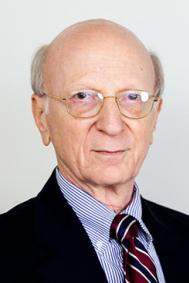
Alan Romberg is a Distinguished Fellow and the Director of the East Asia program at Stimson. Before joining Stimson in September 2000, he enjoyed a distinguished career working on Asian issues including 27 years in the State Department, with over 20 years as a U.S. Foreign Service Officer. Romberg was the Principal Deputy Director of the State Department's Policy Planning staff, Principal Deputy Assistant Secretary of State for Public Affairs and Deputy Spokesman of the department. He served in various capacities dealing with East Asia, including director of the Office of Japanese Affairs, member of the Policy Planning staff for East Asia, and staff member at the National Security Council for China. He served overseas in Hong Kong and Taiwan.
Additionally, Romberg spent almost 10 years as the CV Starr Senior Fellow for Asian Studies at the Council on Foreign Relations, and was special assistant to the secretary of the navy.
Romberg holds an M.A. from Harvard University, and a B.A. from the Woodrow Wilson School of Public and International Affairs at Princeton University.
This event is co-sponsored by the Taiwan Democracy Project in the Center on Democracy, Development, and the Rule of Law (CDDRL) and the U.S.-Asia Security Initiative in the Shorenstein Asia-Pacific Research Center (APARC), both part of the Freeman Spogli Institute for International Studies.
Scholars have credited a model of state-led capitalism called the developmental state with producing the first wave of the East Asian economic miracle. Using historical evidence based on original archival research, this talk offers a geopolitical explanation for the origins of the developmental state. In contrast to previous studies that have emphasized colonial legacies or domestic political factors, I argue that the developmental state was the legacy of the rivalry between the United States and Communist China during the Cold War. Responding to the acute tensions in Northeast Asia in the early postwar years, the United States supported emergency economic controls in Japan, South Korea, and Taiwan to enforce political stability. In response to the belief that the Communist threat would persist over the long term, the U.S. strengthened its clients by laying the foundations of a capitalist, export-oriented economy under bureaucratic guidance. The result of these interventions was a distinctive model of state-directed capitalism that scholars would later characterize as a developmental state.
I verify this claim by examining the rivalry between the United States and the Chinese Communists and demonstrating that American threat perceptions caused the U.S. to promote unorthodox economic policies among its clients in Northeast Asia. In particular, I examine U.S. relations with the Chinese Nationalists on Taiwan, where American efforts to create a bulwark against Communism led to the creation of an elite economic bureaucracy for administering U.S. economic aid. In contrast, the United States decided not to create a developmental state in the Philippines because the Philippine state was not threatened by the Chinese Communists. Instead, the Philippines faced a domestic insurgency that was weaker and comparatively short-lived. As a result, the U.S. pursued a limited goal of maintaining economic stability instead of promoting rapid industrialization. These findings shed new light on the legacy of statism in American foreign economic policy and highlight the importance of geopolitics in international development.

James Lee is a Ph.D. Candidate in the Department of Politics at Princeton University. He specializes in International Relations with a focus on U.S. foreign policy in East Asia and relations across the Taiwan Strait. James also serves as the Senior Editor for Taiwan Security Research, an academic website that aggregates news and commentary on the economic and political dimensions of Taiwan's security.
This event is co-sponsored by the Taiwan Democracy Project in the Center on Democracy, Development, and the Rule of Law (CDDRL) and the U.S.-Asia Security Initiative in the Shorenstein Asia-Pacific Research Center (APARC), both part of the Freeman Spogli Institute for International Studies.