-

In addition to Iraq, Afghanistan, Pakistan, the financial crisis, and the housing crisis (as if that were not enough!), the next American president will have his hands full with matters on the Korean peninsula.  What will be the future of Six Party talks?  What is the status of the leadership in Pyongyang?  How do changes in leadership in Washington (and potentially in Pyongyang) affect outcomes?  What are the prospects for US-ROK relations?  And what of the KORUS FTA?  Victor Cha, former director of Asian affairs at the White House, will lead a discussion on these issues.

Professor Cha is director of Asian Studies and holds the D.S. Song Chair in the Department of Government and School of Foreign Service at Georgetown University.  He left the White House in May 2007 after serving since 2004 as Director for Asian Affairs at the National Security Council.  At the White House, he was responsible primarily for Japan, the Korean peninsula, Australia/New Zealand and Pacific Island nation affairs.   Dr. Cha was also the Deputy Head of Delegation for the United States at the Six Party Talks in Beijing, and received two Outstanding Service commendations during his tenure at the NSC.  

He is the award-winning author of Alignment Despite Antagonism: The United States-Korea-Japan Security Triangle (Stanford University Press) (winner of the 2000 Ohira Book Prize) and co-author of Nuclear North Korea: A Debate on Engagement Strategies (Columbia University Press, 2004).  He has written articles on international relations and East Asia in journals including Foreign Affairs, International Security, Political Science Quarterly, Survival, International Studies Quarterly, and Asian Survey.   Professor Cha is a former John M. Olin National Security Fellow at Harvard University, two-time Fulbright Scholar, and Hoover National Fellow,  CISAC Fellow, and William J. Perry Fellow at Stanford University.
Image
beyond the final score
He serves as an independent consultant, and has testified before Congress on Asian security issues.  He has been a guest analyst for various media including CNN, ABC Nightline, NBC Today Show, CBS Morning Show, Fox News, MSNBC, CNBC, BBC, ESPN, Sports Illustrated, and National Public Radio.

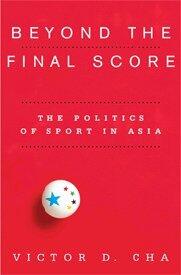
His new book Beyond the Final Score: The Politics of Sport in Asia (Columbia University Press, 2008) looks at the politics of sports and the Beijing Olympics. Cha holds a BA and Ph.D. from Columbia University, MA from University of Oxford.

This event is sponsored by the Pantech Group in Korea.

Philippines Conference Room

Victor D. Cha Director of Asian Studies Speaker Georgetown University
Seminars
-

This series of talks explore a number of issues which have arisen from a study of ethnogenesis, identity formation, state building, religious reform, and socio-economic "modernization" in selected regions of insular and peninsular Southeast Asia in the (late) modern period (late 19th century to the present).Clearly, none of these broad thematic areas can be adequately studied on its own.

The final talk examines the relationship between religion and secularisation, and specifically the implications of the so-called religious revival that is said to have taken place in different parts of Southeast Asia in recent years.  The main aim here is not, however, to engage in the normative debate over what constitutes a ‘proper’ relationship between religion and the modern (secular) state in modern societies – that is to contribute directly to current debates about the modern ‘public sphere’. Rather by focussing on the formation of alternative publics, he proposes to investigate relations between religion and secularity from a broadly phenomenological or experiential – rather than from a naturalist or socio-historical – perspective.

Among Joel S. Kahn’s many books are Other Malays (2006), Modernity and Exclusion (2001), Southeast Asian Identities (ed., 1998), Culture, Multiculture, Postculture (1995), and Constituting the Minangkabau (1993). His other writings include State, Region, and the Politics of Recognition (forthcoming in National Integration and Regionalism in Indonesia and Malaysia). He is an elected Fellow of the Academy of the Social Sciences in Australia and has held appointments at Monash University and University College London, among other institutions. He serves or has served as an editorial board member of Critique of Anthropology, Current Anthropology, and Ethnicities. His doctorate is from the London School of Economics and Political Science.

A technical problem prevented the recording of Professor Kahn's third lecture.

Philippines Conference Room

Joel Kahn 2008 NUS-Stanford Lee Kong Chian Distinguished Lecturer and Professor of Anthropology Emeritus Speaker La Trobe University, Australia
Lectures
-

This series of talks explore a number of issues which have arisen from a study of ethnogenesis, identity formation, state building, religious reform, and socio-economic "modernization" in selected regions of insular and peninsular Southeast Asia in the (late) modern period (late 19th century to the present).Clearly, none of these broad thematic areas can be adequately studied on its own.

The second is this series addresses the formation of group identities in Southeast Asia and their implication in modern processes of state formation, with a particular focus on the category ‘Malay’. In looking at the making of modern Malay-ness he will also address three areas of recent debate: firstly, over the nature and distinctiveness of so-called cultural identities in the modern period; secondly, over the (continuing) role of empire in the shaping of modern identities; and, thirdly, over the impact of cultural and religious pluralism on Southeast Asian polities.

Among Joel S. Kahn’s many books are Other Malays (2006), Modernity and Exclusion (2001), Southeast Asian Identities (ed., 1998), Culture, Multiculture, Postculture (1995), and Constituting the Minangkabau (1993). His other writings include State, Region, and the Politics of Recognition (forthcoming in National Integration and Regionalism in Indonesia and Malaysia). He is an elected Fellow of the Academy of the Social Sciences in Australia and has held appointments at Monash University and University College London, among other institutions. He serves or has served as an editorial board member of Critique of Anthropology, Current Anthropology, and Ethnicities. His doctorate is from the London School of Economics and Political Science.

Philippines Conference Room

Joel Kahn 2008 NUS-Stanford Lee Kong Chian Distinguished Lecturer and Professor of Anthropology Emeritus Speaker La Trobe University, Australia
Lectures
-

This series of talks will explore a number of issues which have arisen from a study of ethnogenesis, identity formation, state building, religious reform, and socio-economic "modernization" in selected regions of insular and peninsular Southeast Asia in the (late) modern period (late 19th century to the present).  Clearly, none of these broad thematic areas can be adequately studied on its own.

This talk is the first in a series of 3 lectures and explores the theme of modernity, specifically by asking whether we can or should speak of a distinctively Southeast Asian form, pattern, structure or trajectory of modernity - a question which arises out of the ‘revisionist' literature on so-called alternative modernities.

Among Joel S. Kahn's many books are Other Malays (2006), Modernity and Exclusion (2001), Southeast Asian Identities (ed., 1998), Culture, Multiculture, Postculture (1995), and Constituting the Minangkabau (1993). His other writings include "State, Region, and the Politics of Recognition" (forthcoming in National Integration and Regionalism in Indonesia and Malaysia). He is an elected Fellow of the Academy of the Social Sciences in Australia and has held appointments at Monash University and University College London, among other institutions. He serves or has served as an editorial board member of Critique of Anthropology, Current Anthropology, and Ethnicities. His doctorate is from the London School of Economics and Political Science.

Philippines Conference Room

Joel Kahn 2008 NUS-Stanford Lee Kong Chian Distinguished Lecturer and Professor of Anthropology Emeritus Speaker La Trobe University
Lectures
News Type
News
Date
Paragraphs

Five visiting scholars with expertise on Southeast Asia will spend varying portions of the academic year 2008-09 in residence at Stanford. Shorenstein APARC and the Southeast Asia Forum will host four of them: three were selected under the Lee Kong Chian NUS-Stanford Initiative on Southeast Asia. and one is a recipient of a 2008-09 Shorenstein Postdoctoral Fellowship. A fifth scholar will be on campus as a National Fellow of the Hoover Institution.

The five are John Ciorciari, Joel S. Kahn, Mark Thompson, Angie Ngoc Tran, and Christian von Luebke.

John Ciorciari spent the 2007-08 academic year at Stanford as a Shorenstein Postdoctoral Fellow at Shorenstein APARC. He finished a book that examines how Southeast Asian states have "hedged" their relations with the United States and China.

Dr. Ciorciari will spend upcoming academic year at Stanford as a Hoover Institution National Fellow. In that capacity he plans to expand his research to include the international relations of India.

Joel S. Kahn is a professor of anthropology (emeritus) in the School of Social Sciences at La Trobe University in Victoria, Australia. He will be at Stanford for the first half of October 2008 as the 2008 Lee Kong Chian National University of Singapore-Stanford University Distinguished Lecturer.

While at Stanford Professor Kahn will give three public lectures. Their tentative titles are: "A Southeast Asian Modernity?"; "Empires, States, and Political Identities in (Pen)insular Southeast Asia"; and "Religion, Reform, Science, and Secularity." Details including dates, times, and venues will be posted as they become known.

Mark Thompson is a professor of political science at the Friedrich-Alexander University Erlangen-Nuremberg, Germany. He will be in residence at Stanford in Winter and Spring 2009 as the 2009 Lee Kong Chian National University of Singapore-Stanford University Distinguished Fellow.

While at Stanford, Prof. Thompson will pursue a book project on "Late Democratization in Pacific Asia." The book will question the claim that democratization in Pacific Asia (including Southeast Asia) has been driven by economic growth and offer an alternative perspective. He will present the results of his project in a public lecture in the spring of 2009. Date, time, venue, and other details will be posted when known.

Angie Ngoc Trần is a professor in the Division of Social and Behavioral Sciences and Global Studies at California State University, Monterey Bay (CSUMB). She will be in residence at Stanford for the second half of November 2008 as the 2008 Lee Kong Chian National University of Singapore-Stanford University Distinguished Fellow.

In a public lecture on November 17, 2008 (Mobilized Workers vs. Morphing Capital: Challenging Global Supply Chains in Vietnam), Professor Tran will present the results of her study of labor-capital relations in Vietnam and how the different national origins of investors and owners affect workers' conditions, consciousness, and activism. Details including time and venue will be posted as they become known.

Christian von Luebke was a research fellow in Tokyo at Waseda University's Institute for Global Political Economy in 2007-08 following receipt of his 2007 PhD in public policy and governance at the Australian National University. He will be at Stanford for the 2008-09 academic year as a Walter H. Shorenstein Postdoctoral Fellow.

During his residence Dr. von Luebke will pursue a research and writing project on "Good Governance in Transition: Explaining Local Policy Variations in Indonesia, China, and the Philippines." He will give a public lecture on the results of his project in winter or spring 2009. The date, time, venue, and other details will be posted when known.

All News button
1
News Type
News
Date
Paragraphs

In 2008 an Indonesian economist, Sudarno Sumarto, was chosen to become the second Shorenstein APARC/Asia Foundation Visiting Fellow. He will be in residence at Stanford during the 2009-2010 academic year.  

An edited summary of Dr. Sumarto's proposed research and writing at Stanford follows:

Facing the major damage wreaked by the Asian financial crisis of 1997-98 on already poor and/or vulnerable Indonesians, the government in Jakarta was forced to launch a series of emergency social safety nets.  These programs targeted multiple sectors:  employment, education, health, food security, and community empowerment.  

Now that a decade has gone by since these measures were undertaken, it is time to draw policy lessons from the experience.  Special attention will be paid in this project to the dynamics of the process of deciding and delivering social protection, the difficulty of enlisting or creating appropriate targeting and implementation mechanisms, institutional enablers and impediments, the role of civil society, the impact of commodity subsidy reforms, and the relevance of good (and bad) governance.  

The study will also draw comparisons between Indonesia's record of targeted social protection and the experiences of other developing countries.  

Dr. Sumarto heads the SMERU Research Institute (Jakarta).  He also lectures at the Bandung Institute of Technology, Universitas Nusa Bangsa (Bogor), and the University of Indonesia (Jakarta).  

Dr. Sumarto has contributed to more than sixty co-authored articles, chapters, reports, and working papers, including "Agricultural Growth and Poverty Reduction in Indonesia," in Beyond Food Production (2007); "Reducing Unemployment in Indonesia," SMERU Working Paper, 2007; and "Improving Student Performance in Public Primary Schools in Developing Countries:  Evidence from Indonesia," Education Economics, December 2006.

Dr. Sumarto has spoken on poverty and development issues in Australia, Chile, China, Egypt, Ethiopia, France, Japan, Morocco, Thailand, and the United Kingdom, among other countries.  He has a PhD and an MA from Vanderbilt University and a BSc Cum Laude from Satya Wacana Christian University (Salatiga), all in economics.  He and his wife Wiwik Widowati have three children.  

All News button
1
Authors
Karen Eggleston
News Type
News
Date
Paragraphs

The July/August issue of Health Affairs, the leading U.S.-based health policy journal, focuses on China and India. The special issue includes an article on China’s pharmaceutical policy by five contributors to Prescribing Cultures and Pharmaceutical Policy in the Asia-Pacific, a book forthcoming in 2009 from the Shorenstein Asia-Pacific Research Center series with Brookings Institution Press. Chapters on Korea and Japan by Soonman Kwon (Seoul National University) and Toshiaki Iizuka (Aoyama Gakuin University) also appear in Chinese translation in the journal Bijiao (Comparative Studies), along with an overview paper (“Pharmaceutical policy reforms to separate prescribing from dispensing in Japan and South Korea: Possible implications for China”) by Karen Eggleston, Asian Health Policy Program Director.

As Eggleston writes in the introduction to Prescribing Cultures, pharmaceuticals and their regulation play an increasingly important and often contentious role in the health care systems of the Asia Pacific.  For example, some economies such as China have extraordinarily high drug spending as a percentage of total health spending; India and a few others host thriving domestic pharmaceutical industries of global importance, while controversy surrounds patents, trade-related aspects of intellectual property (TRIPS), and pharmaceutical pricing within bilateral trade agreements (Australia-US, Republic of Korea-US); nations throughout the region struggle with appropriate regulation of drugs, from patents to evidence-based purchasing (e.g., Australia’s Pharmaceuticals Benefit Scheme) and direct-to-consumer advertising; deeply-rooted traditions of indigenous medicine are modernizing and integrating into broader health care systems; and policies to separate prescribing and dispensing re-write the professional roles of physicians and pharmacists, with modifications to accommodate cultural norms and strong economic interests. Effective prescribing and pharmaceutical use will be central to controlling infectious diseases, both old and emerging; protecting the global public good of antimicrobial effectiveness; and treating the growing burden of chronic disease in the Asia Pacific.

The forthcoming book will explore these issues in detail, through a multi-disciplinary lens. The first section of the book features chapters on pharmaceutical policy within seven selected health care systems of the Asia Pacific: South Korea, Japan, Thailand, Taiwan, Australia, India, and China. The second section focuses on the cross-cutting themes of prescribing cultures and access versus innovation. Taken as a whole, the contributions aim to provide an evidence base for policy while acknowledging the historical and cultural context that makes policies distinctive.

Hero Image
Health Affairs 072008
All News button
1
News Type
News
Date
Paragraphs
South East Asia Forum Director, Donald Emmerson discusses what impact, if any, there will b e on US-North Korean relations and ASEAN-North Korean relations once Pyongyang signs the Treaty of Amity and Cooperation at next week's Southeast Asian regional security meeting in Singapore.
All News button
1
Subscribe to Oceania