


The 'Tax-Welfare Mix' : the Welfare State and Extractive Capacity in Japan and Sweden
-
The ability of governments to raise revenue to finance spending varies greatly across the industrialized democracies. Despite the prediction of the globalization thesis, variation in budget deficits and public debt has actually increased. While a developed literature has attempted to explain fiscal performance, there has been little attention to the role of that the welfare state might have. Meanwhile, the welfare state literature has focused on welfare spending with less attention to how such spending is financed. This presentation shows that the two are linked. Governments can use taxes not only as a source of revenue but also as a means to achieve redistributive goals directly by targeting tax relief to specific groups. Using quantitative data and a case study of Japan and Sweden, this study shows how governments combine welfare and tax policies, i.e., the “tax-welfare mix,” shapes their long-term extractive capacity.
Gene Park is an assistant professor in the department of political science at Loyola Marymount University (LMU). Prior to arriving at LMU, he taught at Baruch College, City University of New York. Previously, Dr. Park was Shorenstein Fellow at Stanford University’s Walter H. Shorenstein Asia-Pacific Research Center and a visiting scholar at the Japanese Ministry of Finance’s Policy Research Institute. He specializes in comparative political economy and has an area interest in Japan. His research focuses on the politics of public spending and taxation. He is the author of Spending without Taxation: FILP and the Politics of Public Finance in Japan (Stanford University Press, 2011). He is currently working on a comparative study of fiscal consolidation and a comparative study of state extractive capacity.
Philippines Conference Room
Gene Park
Shorenstein APARC
Stanford University
Encina Hall E301
Stanford, CA 94305-6055
0
genepark@stanford.edu
Shorenstein Fellow
Gene Park is a Shorenstein Postdoctoral Fellow at Shorenstein APARC for 2007-2008. Park is currently working on a book that analyzes how a large government system for mobilizing and allocating financial capital, the Fiscal Investment Loan Program, has influenced budget politics and the internal coalitional dynamics within the ruling Liberal Democratic Party (LDP).
His work has appeared in the journals Governance and Asian Survey, and he co-authored an article for the edited volume, The State after Statism (Harvard University Press). Dr. Park received a Fulbright scholarship to study in Japan. He has been a visiting scholar at the Japanese Ministry of Finance's Policy Research Institute and Sophia University in Tokyo.
Dr. Park completed his Ph.D. in 2007 in political science at University of California, Berkeley. He also holds a Masters in City and Regional Planning from Berkeley, and a B.A. in Philosophy from Swarthmore College.
Seminars
Syncretism: The Politics of Japan’s Financial Reforms
Paragraphs
This paper examines how diversely organized capitalist societies evolve by analyzing the transformation of Japan’s financial system since the 1990s. The banking, securities and insurance, as well as the postal financial institutions changed significantly, but are hardly converging to Anglo-American or ‘liberal market’ models. The authors contend that Japan’s new financial system is best characterized as syncretic, with new, traditional and hybrid forms of practices, organizations and norms coexisting. Syncretism in industry was driven by a distinctive pattern of interest group politics we call syncretization. Strong political leadership, facing serious electoral threats, shifted the policy logic from gradual incremental reforms following traditional interest group dynamics, to rapid reforms that excluded the traditionally powerful interest groups most affected by these reforms. We support the notion that diverse industry outcomes can be complementary to broader political economic reforms that take Japan away from its traditional model, part of a broader ‘convergence towards diversity.’
All Publications button
1
Publication Type
Journal Articles
Publication Date
Journal Publisher
Socio-Economic Review
Drinking from the Poisoned Well
Paragraphs
In an International Economy article, Daniel C. Sneider explores the troubling history of China-Japan tension. He concludes that China and Japan have every reason to pull back from
the brink of conflict—and most importantly, the United States serves a crucial role in reminding both nations of the need for peace and stability in this vital region. But the economics of the global supply chain cannot wipe away the cumulative effect of the “poisoned well” of a history of hostility. Japanese Premier Abe may wish to put the past aside and be, as he says, “forward looking.” But a failure to address the past is likely to lead to repeating it.
All Publications button
1
Publication Type
Journal Articles
Publication Date
Journal Publisher
The International Economy
External URL
Takeo Hoshi
0
Former Henri H. and Tomoye Takahashi Senior Fellow in Japanese Studies at the Freeman Spogli Institute for International Studies
Former Professor, by courtesy, of Finance at the Graduate School of Business
Takeo Hoshi was Henri and Tomoye Takahashi Senior Fellow at the Freeman Spogli Institute for International Studies (FSI), Professor of Finance (by courtesy) at the Graduate School of Business, and Director of the Japan Program at the Shorenstein Asia-Pacific Research Center (APARC), all at Stanford University. He served in these roles until August 2019.
Before he joined Stanford in 2012, he was Pacific Economic Cooperation Professor in International Economic Relations at the Graduate School of International Relations and Pacific Studies (IR/PS) at University of California, San Diego (UCSD), where he conducted research and taught since 1988.
Hoshi is also Visiting Scholar at Federal Reserve Bank of San Francisco, Research Associate at the National Bureau of Economic Research (NBER) and at the Tokyo Center for Economic Research (TCER), and Senior Fellow at the Asian Bureau of Finance and Economic Research (ABFER). His main research interest includes corporate finance, banking, monetary policy and the Japanese economy.
He received 2015 Japanese Bankers Academic Research Promotion Foundation Award, 2011 Reischauer International Education Award of Japan Society of San Diego and Tijuana, 2006 Enjoji Jiro Memorial Prize of Nihon Keizai Shimbun-sha, and 2005 Japan Economic Association-Nakahara Prize. His book titled Corporate Financing and Governance in Japan: The Road to the Future (MIT Press, 2001) co-authored with Anil Kashyap (Booth School of Business, University of Chicago) received the Nikkei Award for the Best Economics Books in 2002. Other publications include “Will the U.S. and Europe Avoid a Lost Decade? Lessons from Japan’s Post Crisis Experience” (Joint with Anil K Kashyap), IMF Economic Review, 2015, “Japan’s Financial Regulatory Responses to the Global Financial Crisis” (Joint with Kimie Harada, Masami Imai, Satoshi Koibuchi, and Ayako Yasuda), Journal of Financial Economic Policy, 2015, “Defying Gravity: Can Japanese sovereign debt continue to increase without a crisis?” (Joint with Takatoshi Ito) Economic Policy, 2014, “Will the U.S. Bank Recapitalization Succeed? Eight Lessons from Japan” (with Anil Kashyap), Journal of Financial Economics, 2010, and “Zombie Lending and Depressed Restructuring in Japan” (Joint with Ricardo Caballero and Anil Kashyap), American Economic Review, December 2008.
Hoshi received his B.A. in Social Sciences from the University of Tokyo in 1983, and a Ph.D. in Economics from the Massachusetts Institute of Technology in 1988.
Former Director of the Japan Program at the Shorenstein Asia-Pacific Research Center
CV
Document
hoshicv2016.pdf
(183.49 KB)
File title
hoshicv2016.pdf
The Kims' Three Bodies: Dynastic Succession and its Antecedents in the DPRK
-
North Korea has smuggled monarchy through the front door of its communist system. Korea's millennia-long history of kings and queens means that the people of the DPRK have only known monarchy or dictatorship (Japanese, 1910-45; the Kim family's, 1945--present); ordinary people frequently refer to their leader as "wang," or king. Unlike with Kim Jong Il (who resembled his mother, not his father), the regime has gone out of its way to identify Kim Jong Un with his grandfather--and the grandson, in turn, has adopted the characteristic public style of Kim Il Sung. Many American commentators mistakenly assume that when the leader dies, North Korea will be like the Soviet Union after Stalin, or China after Mao. In fact it has gone through two stable leadership transitions, in 1994 and 2011, and given Kim Jong Un's youth, there may not be another one for many years.
This event is co-sponsored by Center for East Asian Studies, Department of East Asian Languages and Cultures, Department of History and Korean Studies Program
Please register at http://ceas.stanford.edu/events/event_detail.php?id=3147.
For questions and details, please contact Ms. Marna Romanoff at romanoff@stanford.edu
Building 200 - Room 307,
Main Quad
Bruce Cumings
Gustavus F. and Ann M. Swift Distinguished Service Professor in History and the College and Chair of the Department of History
Speaker
the University of Chicago
Lectures
Crossing the Border from "Chōsen" to "Kankoku" in Japan
-
In this talk, Professor Han will examine the implications for the Zainichi (people of Korean ethnicity who have lived in Japan since the colonial period) of choosing between identifying themselves as either Chōsen or Kankoku for Japan's alien registration purposes. Chōsen is a historic name for Korea now also used by North Korea in its official name, while Kankoku, which also means Korea, refers to the Republic of Korea (South Korea).
Young-Hae Han is a visiting professor at the Walter H. Shorenstein Asia-Pacific Research Center (Shorenstein APARC) for the 2012–13 academic year. She is also a professor at the Graduate School of International Studies at Seoul National University (SNU). Her research and education focuses on contemporary Japanese society. She has conducted field research on Japanese grassroots social movements in cities such as Kawasaki, Kunidachi, Kobe, Yamagata, Kanazawa, and Oita. After the Great East Japan Earthquake in 2011, she organized a team and conducted research in the damaged area. Han is also involved in researching another topic that is of great interest to her: ethnic minorities in contemporary Japan. For this topic, her research has been focused on the identity issues of Zainichi Koreans, particularly on the changing relationship of the Zainichi with their "homeland" in the post-cold war period.
Han served as the director of the Institute for Japanese Studies at SNU from 2006 to 2012 before she joined Shorenstein APARC. She also served as the chair of the Exchange Committee of KSA-AJS at the Korean Sociological Association from 2008 to 2011.
Han is the author of numerous publications, such as the books: Understanding Contemporary Japanese Society (in Korean); Japanese Community and Grassroots Social Movements (in Korean); Multi-Cultural Japan and Identity Politics (co-author, in Korean). Her recent publications include Institutionalization of East Asian Studies and New Dilemmas: With a Focus on Japanese Studies (in English); New Relationship between Zainichi Koreans and the Homeland: Through the Journeys of the Former 'Chosen Nationals' Living in Korea (in Japanese); The Meaning of 'Seikatsu' (Life) in the Citizens' Movement in Contemporary Japan (in Korean); and The Inheritance of the Korean Dance and Identity in the Ethnic Korean Community (in Korean).
Philippines Conference Room
Younghae Han
Walter H. Shorenstein
Asia-Pacific Research Center
Encina Hall, Room E310
616 Serra St.
Stanford, CA 94305-6055
0
younghae@stanford.edu
2012-2013 Visiting Professor
Young-Hae Han is a visiting professor at the Walter H. Shorenstein Asia-Pacific Research Center (Shorenstein APARC) for the 2012–13 academic year. She is also a professor at the Graduate School of International Studies at Seoul National University (SNU). Her research and education focuses on contemporary Japanese society. She has conducted field research on Japanese local-level grassroots social movements in cities such as Kawasaki, Kunidachi, Kobe, Yamagata, Kanazawa, and Oita. After the Great East Japan Earthquake in 2011, she organized a team and conducted research in the damaged area. Han is also involved on researching another topic that is of great interest to her: ethnic minorities in contemporary Japan. For this topic, her research has been focused on identity issues of Zainichi Koreans, particularly on the new relation of Zainichi with their “homeland” in the post-cold war period.
Han served as the director of the Institute for Japanese Studies at SNU from 2006 to 2012 until just before she joined Shorenstein APARC. She also served as the chair of the Exchange Committee of KSA-AJS at the Korean Sociological Association from 2008 to 2011.
Han is the author of numerous publications, such as the books: Understanding Contemporary Japanese Society (in Korean); Japanese Community and Grassroots Social Movements (in Korean); Multi-Cultural Japan and Identity Politics (co-author, in Korean). Her recent publications include Institutionalization of East Asian Studies and New Dilemmas: With a Focus on Japanese Studies (in English); New Relationship between Zainichi Koreans and the Homeland: Through the Journeys of the Former ‘Chosen Nationals’ Living in Korea (in Japanese); The Meaning of ‘Seikatsu’ (Life) in the Citizens’ Movement in Contemporary Japan (in Korean); and The Inheritance of the Korean Dance and Identity in the Ethnic Korean Community (in Korean).
CV
Document
Younghae_Han-CV.pdf
(109.63 KB)
File title
Younghae_Han-CV.pdf
Seminars
In lead-up to election, former Japanese PM promoting revisionist agenda
News Type
News
Date
Paragraphs
Many consider Japan's former Prime Minister Shinzo Abe to have a good chance of winning the country's December 16 general election. Daniel C. Sneider spoke recently to the Telegraph about the revisionist agenda Abe has been promoting during his campaign.
All News button
1
Asia’s Role in the Global Economy and Challenges in 2013
-
Forecasting is a difficult profession. International economist David Hale and writer Lyric Hughes Hale do not claim they can foretell the future. But as veteran observers of the Asian economies, they can envision scenarios that are contrary to current conventional wisdom, and trends that deserve more attention than they are given in the media. What if China and Japan actually engage in armed conflict? Could East Asia experience its own version of the Arab Spring? What would be the consequences of another major earthquake in Japan? When the United States was the dominant power in the Pacific, security interests and economic interests were aligned in the region. Now that China has become the largest trading partner for many ASEAN countries, a new Great Divergence is emerging, with potentially destabilizing consequences. While our national attention has been dominated by the Middle East for a decade now, in the coming era of energy self-sufficiency in the United States, we must shift our focus to the Far East.
Image

Global Economist & Chairman
David Hale Global Economics, Inc.
and
Image

Independent International Affairs Professional &
Board Director, The Japan America Society of Chicago
Philippines Conference Room
Seminars
(Un)Covering North Korea
-
North Korea, arguably the most isolated country in the world, poses unique challenges for journalists. Access to the country is severely limited and even when a journalist is able to gain entry, the secretive and repressive nature of the state significantly limits what can be learned. Still, despite these difficult conditions, the realities of North Korean life are increasingly finding their way into various media, from newspaper reporting and on-line media to thinly fictionalized accounts.
This panel will take a multi-faceted look at the coverage of North Korea through the journalist (represented by 2012 Shorenstein Journalism Award winner Barbara Demick), the editor, the development/relief worker, and the novelist.
Panelists include:
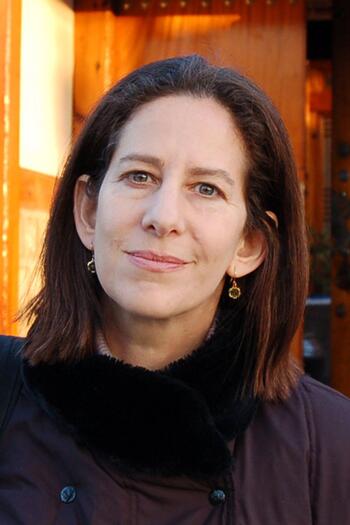
Barbara Demick, has been Beijing bureau chief for the Los Angeles Times since 2008. She has focused on human trafficking, corruption, and minorities, as well as North Korea. Demick is the author of two books -- Nothing to Envy: Ordinary Lives in North Korea and Logavina Street: Life and Death in a Sarajevo Neighborhood. Her work has won awards from the Asia Society, the Overseas Press Club, the American Academy of Diplomacy, among others. Her North Korea book, which has been translated into more than 20 languages, recently won the International Book Award on Human Rights. She is a graduate of Yale and taught a seminar on coverage of repressive regimes at Princeton University. She lives in Beijing with her son Nicholas.Image
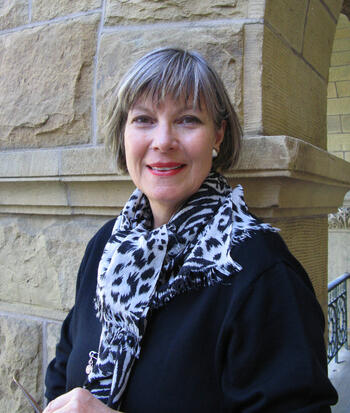
Susan Chira, was named assistant managing editor for news for the New York Times in September 2011. Previously, she had served as foreign editor (since January 2004), and as editorial director of book development (since September 2002). Before that, Chira was the editor of the "Week in Review" section at the Times (since October 1999), after having served as deputy foreign editor of the newspaper (since February 1997). Earlier, she served in a variety of reporting positions including national education correspondent, Tokyo correspondent (from October 1984 until February 1989), metropolitan reporter in the Albany and Stamford bureaus, and reporter for the "Business Day" section.Image

Image
Image
Bechtel Conference Center
Conferences