Prime Minister Abe's economic policy, called Abenomics, places policies to open up Japan as a key component. The government argues that reducing the barriers for international trade and capital flows will revitalize the Japanese economy and restore the growth in Japan. At the core of the opening up policy are efforts to establish free trade agreements (FTAs) with major trading partners. Japan joined the negotiation for TPP (Trans-Pacific Partnership), which includes the U.S., Japan's second largest trading partner, in July this year. Japan has also started negotiation for RCEP (Regional Comprehensive Economic Partnership), which includes China, Japan's largest trading partner. Will these efforts really succeed in making the Japanese economy more open? Do they lead to the recovery of Japan from two decades of stagnation? Experts from both sides of the Pacific discuss these issues.
Participants:
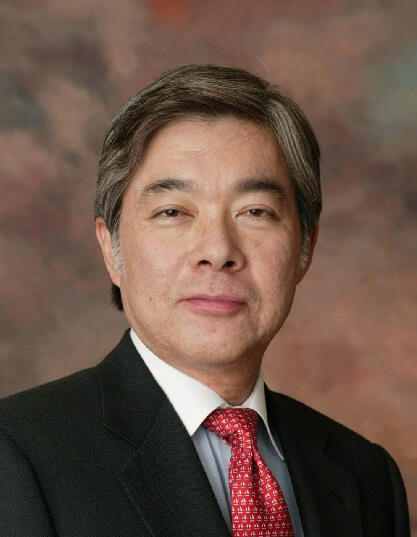
Glen S.
Fukushima is Senior Fellow at the Center for American Progress, a prominent public policy think tank headquartered in Washington, D.C. From 1990 to 2012, Mr. Fukushima was based in Tokyo as a senior executive with one European and four American multinational corporations: Vice President, AT&T Japan Ltd.; President, Arthur D. Little Japan; President & CEO, Cadence Design Systems Japan; President & CEO, NCR Japan; and President & CEO, Airbus Japan. Before embarking on his business career in 1990, he was based in Washington, D.C. as Director for Japanese Affairs (1985-1988) and Deputy Assistant United States Trade Representative for Japan and China (1988-1990) at the Office of the United States Trade Representative (USTR), Executive Office of the President. Mr. Fukushima served two terms as President of the American Chamber of Commerce in Japan, 1998-1999, and Vice President, 1993-1997. A native of California, Mr. Fukushima was educated at Deep Springs College, Stanford University, Harvard University Graduate School of Arts and Sciences, Harvard Business School, and Harvard Law School. At Harvard, he was awarded a National Science Foundation Fellowship. He has studied and worked in Japan for over 25 years, including at Keio University, a daily newspaper, an international law firm, and as a Fulbright Fellow and a Japan Foundation Fellow at the Faculty of Law, University of Tokyo.
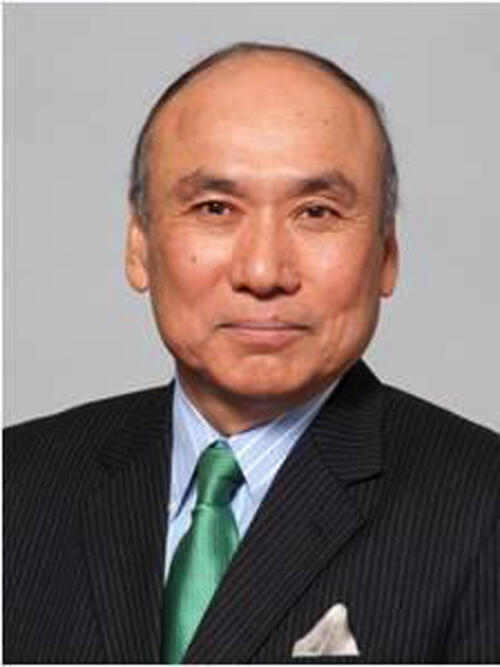
Hideichi Okada joins the Walter H. Shorenstein Asia-Pacific Research Center (Shorenstein APARC) from September, 2013 until March, 2014 as Sasakawa Peace Fellow with the Japan Studies Program (JSP). His research interests encompass energy policies and trade policies in the context of possible cooperation between Japan and the U.S. During his time at Shorenstein APARC, Okada will be working to launch New Dialogue Program for future cooperation on various areas between Japan and the U.S., and other Asia Pacific countries. Okada served as Vice Minister for International Affairs, Ministry of Economy, Trade and Industry (METI) from 2010 to 2012, where he promoted international trade and investment, and expanded industrial cooperation with various countries. He also served as Director General of Trade Policy Bureau (2008-2010) and Director General of Commerce and Information Policy Bureau of METI (2007-2008). He worked for Prime Minister Junichiro Koizumi as his executive assistant, where he dealt with policies on economy, industry, energy, science and technology, and environment, and with public relations (2001-2006). He was a professor at GRIPS (2006-2007) and a visiting scholar at Harvard Law School and IR/PS, University of California, San Diego in 2007. Okada was born in Tokyo in 1951. He received LL.M. degree from Harvard Law School (1981) and graduated from the University of Tokyo with a LL.B. (1976). Currently, he is Senior Advisor, NTT Data Institute of Management and Consulting.
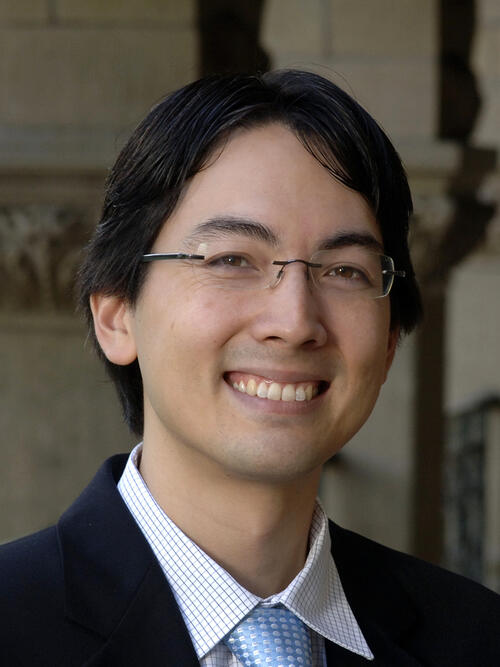
Phillip Lipscy is a center fellow at the Freeman Spogli Institute for International Studies and an assistant professor of political science at Stanford University. His fields of research include Japanese politics, U.S.-Japan relations, international and comparative political economy, international security, and regional cooperation in East and Southeast Asia. Lipscy is an expert on bargaining over unbalanced representation in international organizations such as the United Nations Security Council, International Monetary Fund, and World Bank. His existing work addresses a wide range of topics such as the use of secrecy in international policy making, the effect of domestic politics on trade, and Japanese responses to the Asian Financial Crisis. His most recent research examines the political and economic factors that facilitate energy-efficient policymaking. Lipscy obtained his PhD in political science at Harvard University. He received his MA in international policy studies and BA in economics and political science at Stanford University. Lipscy has been affiliated with the Reischauer Institute of Japanese Studies and Weatherhead Center for International Affairs at Harvard University, the Institute for Global and International Studies at George Washington University, the RAND Corporation, and the Institute for International Policy Studies in Tokyo.
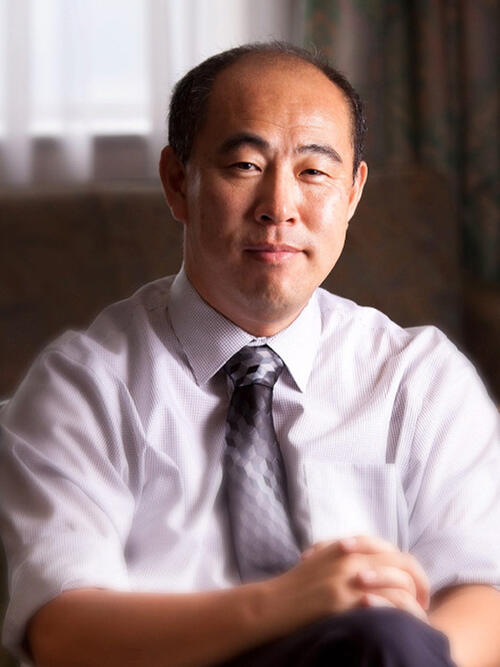
Takeo Hoshi is the Henri and Tomoye Takahashi Senior Fellow at the Walter H. Shorenstein Asia-Pacific Research Center at Stanford University, and professor of finance (by courtesy), Stanford Graduate School of Business. Prior to joining S/APARC, he was Pacific Economic Cooperation Professor in International Economic Relations at the Graduate School of International Relations and Pacific Studies (IR/PS) at the University of California, San Diego (UCSD). Hoshi also serves on the Board of Directors at Union BanCal Corporation. He is also a research associate at the National Bureau of Economic Research (NBER) and at the Tokyo Center for Economic Research (TCER). His main research interests include the study of the financial aspects of the Japanese economy, especially corporate finance, banking, and monetary policy. He received numerous awards for his publications including Corporate Financing and Governance in Japan: The Road to the Future (MIT Press, 2001), co-authored with Anil Kashyap (Graduate School of Business, University of Chicago), and his other publications include, “Japanese Government Debt and Sustainability of Fiscal Policy” (with Takero Doi and Tatsuyoshi Okimoto), Journal of the Japanese and International Economies,2011; “Corporate Restructuring in Japan during the Lost Decade” (with Satoshi Koibuchi and Ulrike Schaede), Japan’s Bubble, Deflation, and Long-term Stagnation, MIT Press, 2011 (Koichi Hamada, Anil K Kashyap, and David E. Weinstein, eds.) He has been the editor-in-chief of the Journal of the Japanese and International Economies since 1999. Hoshi received his BA in social sciences from the University of Tokyo in 1983, and a PhD in economics from the Massachusetts Institute of Technology in 1988.