


Stanford experts discuss innovation on NHK television program
News Type
News
Date
Paragraphs
Four scholars from Stanford University participated in a public panel discussion on Silicon Valley and Asian economies last month, part of a filming for an NHK Broadcasting series that aims to bring opinion leaders together to discuss issues facing contemporary Japan. The panel event will debut online this Friday.
“Silicon Valley is known worldwide as a place for many new innovative ideas, individuals and companies,” said Takeo Hoshi, director of the Japan Program at the Shorenstein Asia-Pacific Research Center (APARC). “Such economic dynamism is what many countries and regions across the world want to imitate. This is especially true for Asian economies.”
During the hour-long event, Hoshi moderates a discussion between William Barnett, a professor of business leadership, strategy and organizations at the Graduate Business School; Francis Fukuyama, the director of the Center on Democracy, Development and the Rule of Law; and Kenji Kushida, a research associate of Shorenstein APARC’s Japan Program.
The panel set out to consider how Silicon Valley realized success and its implications for Asian countries that seek to develop similar innovation-based economies. Panelists started by offering a single keyword that represents Silicon Valley in their own definition. They are: harness, social capital, and failure.
“The question that everyone is interested in is how to make use of Silicon Valley,” Kushida said. “How to ‘harness’ the innovation ecosystem that works fairly well here.”
A key component of Silicon Valley’s success is the high level of social capital found in the region, the panelists said.
“The level of informal cooperation…is higher than in other parts of the country,” Fukuyama explained. Silicon Valley has a norm of reciprocity and lacks extensive business contracts that impede fluidity of ideas, he said.
The panelists also explored the impact of government policy. They said that it provides an essential service in supplying a framework – at least initially – from which innovation-based economic activities can emerge.
“The government needs to set up a playing field upon which firms and entrepreneurs…can do the unimaginable,” Barnett said.
The U.S. government played an important role in a number of defense-related projects that led to the formation of new technologies, including the Internet. However, a government role “cannot smother and be too directive,” Fukuyama said.
Kushida notes that he leads a research project that looks at the institutional foundations of Silicon Valley and offers lessons applicable to Japan. Last year, Kushida and Hoshi authored a report with three other scholars that identifies six institutional factors that encourage innovation, and what the Japanese government can do to encourage development of a more effective innovation ecosystem.
Culture can play a powerful role, too, the panelists explained. They described how both organizational and national cultures can foster or impinge upon innovation.
Barnett said it may be “cool” to be an entrepreneur in Silicon Valley, but in Japanese culture, for example, it is the opposite. Barnett has studied entrepreneurs in Japan and has written many publications about how organizations and industries evolve globally.
Approaches to overcoming hard-fastened barriers to innovation include developing a culture of trust and acceptance toward failure, the panelists explained. Yet, they also cautioned against attempts to copy Silicon Valley too closely.
“I don’t think we should take this Silicon Valley gospel for granted – that disruption is always great and that things will always be necessarily better in social terms,” Fukuyama said.
The panelists recognize the outgrowth of high-tech areas in other areas around the world, and note that it is impossible to predict what innovations will come next and their impact on humanity.
The panel event was broadcast and live-tweeted with #SVAsia on Friday, March 4, from 4:10-5:00 p.m. (PST). The video can be viewed on demand here.
Hero Image

All News button
1
Globalization, Innovation, and Culture in Korea
-
The 8th Annual Koret Workshop
South Korea has become an economic powerhouse, but faces multiple challenges. The conference will focus on four areas that South Korea needs to turn its attention to: 1) the higher education and development; 2) entrepreneurship and innovation; 3) global competitiveness; and 4) demographic changes and immigration policy.
During the conference, a keynote speech is open to the public. Please click here for more information about the public keynote.
The Koret Workshop is made possible through the generous support of the Koret Foundation.
Workshops
Learning from a Disaster: Nuclear Safety and Security Five Years after Fukushima
-
- This event is jointly sponsored by the Center for International Security and Cooperation (CISAC) and the Walter H. Shorenstein Asia-Pacific Research Center (APARC) -
Five years to the day after a massive earthquake and ensuing tsunami caused an accident at three of the reactors of the Fukushima Daiichi nuclear power plant in Fukushima, Japan, a panel of Stanford experts will convene in Encina Hall to reflect on the lessons learned from the disaster that unfolded starting on March 11, 2011. Panelists will include:
- Steven Chu, 12th U.S. Secretary of Energy (2009-2013), Laureate of the 1997 Nobel Prize in Physics, William R. Kenan, Jr., Professor of Physics and Professor of Molecular & Cellular Physiology in the Medical School at Stanford University - Focus: Perspective from the Department of Energy on the role of the department in helping mitigate the consequences and the lessons learned
- Phillip Lipscy, Thomas Rohlen Center Fellow at the Freeman Spogli Institute for International Studies and Assistant Professor of Political Science at Stanford University - Focus: Fukushima in comparative perspective and how the Japanese nuclear power industry has reacted since the accident.
- Scott Sagan, Caroline S.G. Munro Professor of Political Science, Mimi and Peter Haas University Fellow in Undergraduate Education, and Senior Fellow at the Center for International Security and Cooperation and the Freeman Spogli Institute at Stanford University. Focus: the effects of the accident on efforts to improve nuclear safety and security, based on the upcoming book Learning from a Disaster.
- Takeo Hoshi, Senior Fellow at the Freeman Spogli Institute for International Studies (FSI) and director of APARC's Japan Program, will chair the session and act as moderator.
This event will also serve as a book launch for the book Learning from A Disaster: Improving Nuclear Safety and Security After Fukushima, co-edited by Edward Blandford, a former Stanton Nuclear Security Fellow at CISAC and Scott Sagan. the book is being published by Stanford University Press and will be available for purchase at the event. Pre-orders can be taken here.
Panel Discussions
Divided Lenses: Screen Memories of War in East Asia
Paragraphs
Divided Lenses: Screen Memories of War in East Asia is the first attempt to explore how the tumultuous years between 1931 and 1953 have been recreated and renegotiated in cinema. This period saw traumatic conflicts such as the Sino-Japanese War, the Pacific War, and the Korean War, and pivotal events such as the Rape of Nanjing, Pearl Harbor, the Battle of Iwo Jima, and the bombings of Hiroshima and Nagasaki, all of which left a lasting imprint on East Asia and the world. By bringing together a variety of specialists in the cinemas of East Asia and offering divergent yet complementary perspectives, the book explores how the legacies of war have been reimagined through the lens of film.
This turbulent era opened with the Mukden Incident of 1931, which signaled a new page in Japanese militaristic aggression in East Asia, and culminated with the Korean War (1950–1953), a protracted conflict that broke out in the wake of Japan's post–World War II withdrawal from Korea. Divided Lenses explores how the intervening decades have continued to shape politics and popular culture throughout East Asia and the world. Essays in part I examine historical trends at work in various "national" cinemas, including China, Taiwan, Japan, Korea, and the United States. Those in part 2 focus on specific themes such as comfort women in Chinese film, the Nanjing Massacre, or nationalism, and how they have been depicted or renegotiated in contemporary films. Of particular interest are contributions drawing from other forms of screen culture, such as television and video games.
This book is an outcome of the conference, Divided Lenses: Film and War Memory in Asia, that the Shorenstein Asia-Pacific Research Center hosted in December 2008, part of the Divided Memories and Reconciliation research project.
All Publications button
1
Publication Type
Books
Publication Date
Journal Publisher
University of Hawai'i Press
The Great Tohoku Earthquake & Tsunami and Fukushima Nuclear Disaster: 5 Years Later
-
It has been five years since the 2011 Great Tohoku Earthquake and Tsunami and associated nuclear meltdown at the Fukushima Daiichi nuclear power plant. Three experts will re-examine the impact of these events on Japan and the world. What was the ultimate legacy of the disaster? What was the impact on political discourse, nuclear policy, disaster response, society, and culture? What lessons have we learned?
Panelists
Image
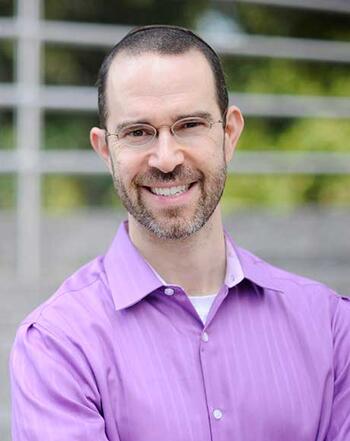
 Takahashi Research Associate in Japanese Studies,
 Shorenstein APARC
Image

Daniel Aldrich, Professor of Political Science, Public Policy and Urban Affairs and Co-Director of the Masters Program in Security and Resilience- Northeastern University
Kenji Kushida, Shorenstein Asia-Pacific Research Center Japan Program Research Associate- Stanford University
Kyoko Sato, The Program in Science, Technology, and Society Associate Director- Stanford University
Panel Discussions
Silicon Valley and Asian Economies
-
This event is co-sponsored by NHK WORLD, Global Agenda, and the Center on Democracy, Development, and the Rule of Law.
About NHK and Global Agenda
NHK WORLD is NHK's international broadcast service. NHK is Japan’s national public broadcasting corporation and operates international television, radio, and internet services; together, they are known as NHK WORLD.
The aims of NHK WORLD are:
- To provide both domestic and international news to the world accurately and promptly
- To present information on Asia from various perspectives, making the best use of NHK's global network
- To serve as a vital information lifeline in the event of major accidents and natural disasters
- To present broadcasts with great accuracy and speed on many aspects of Japanese culture and lifestyles, recent developments in society and politics, the latest scientific and industrial trends, and Japan's role and opinions regarding important global issues
- To foster mutual understanding between Japan and other countries and promote friendship and cultural exchange
“Global Agenda” is a new program within NHK WORLD TV where world opinion leaders discuss various issues facing Japan and the rest of the world today.
Symposium Overview
Innovation is essential for economic growth, especially in advanced economies. As the catch-up phase of economic growth is ending or has ended for many Asian economies, they face the challenge of transforming their economic systems to ones that encourage innovations and use those as the most important source for growth. The panel will discuss various issues surrounding the economic system that is favorable for innovations. Silicon Valley, where Stanford University is located, has an ecosystem that is conducive to innovations. The panel will pay special attention to implications for Japan and other Asian economies.
Panelists
William Barnnett, Professor of Business Leadership, Strategy, and Organizations, Stanford Graduate School of Business
Francis Fukuyama, Director, Center on Democracy, Development, and the Rule of Law, Freeman Spogli Insititute for International Studies
Takeo Hoshi, Director, Japan Program, Shorenstein Asia-Pacific Research Center
Kenji Kushida, Research Associate, Japan Program, Shorenstein Asia-Pacific Research Center
Note
This event will be recorded and broadcast worldwide. By registering to attend you hereby grant Stanford University and NHK World permission to use encode, digitize, copy, edit, excerpt, transmit, and display the audio or videotape of your participation in this event as well as use your name, voice, likeness, biographic information, and ancillary material in connection with such audio or videotape. You understand that this event will be broadcast worldwide, which will be available to the general public. This event may also be webcast over one or more websites. By registering to attend you grant, without limitations, perpetual rights for the use and transmission and display of audio or videotape of this event. This permission is irrevocable and royalty free, and you understand that the University and NHK will act in reliance on this permission.
RSVP
RSVP for this event is mandatory as seating is limited. Doors will open at 3:00pm and the event will begin promptly at 3:30pm. Since the event is being recorded, we ask that participants arrive on time.
William Barnnett
Professor of Business Leadership, Strategy, and Organizations- Graduate School of Business
Francis Fukuyama
Director, Center on Democracy, Development, and the Rule of Law- FSI
Takeo Hoshi
Director, Japan Program- Shorenstein APARC
Kenji Kushida
Research Associate, Japan Program- Shorenstein APARC
Symposiums
15th Korea-U.S. West Coast Strategic Forum
-
In this fifteenth session of the Strategic Forum, former senior American and South Korean government officials and other leading experts will discuss current developments in the Korean Peninsula and North Korea policy, the future of the U.S.-South Korean alliance, and a strategic vision for Northeast Asia. The session is hosted by the Korea Program in association with The Sejong Institute, a top South Korean think tank.
Seoul, Republic of Korea
Workshops
Capital Market Regulation in Japan after the Global Financial Crisis
Paragraphs
This paper is examines the evolution of Japan’s capital markets and the related regulatory reforms after the Global Financial Crisis. We start by looking at the importance of capital markets in the Japanese financial system. We study how the size of financial flows through capital markets relative to those through the banking sector changed since the 1980s in Section 2. Then, in Section 3, we look at how Japan’s financial system responded to the Global Financial Crisis. We find that the disruption of the financial system in Japan was small. Section 4 then surveys the financial regulatory changes in Japan since the Global Financial Crisis. While the Japanese regulators tightened the regulation to improve the financial stability as the regulators in the U.S. and Europe did, they also continued the efforts to develop capital markets in Japan. The efforts continue and receive strong endorsement from Abenomics, which put an emphasis on economic structural reform to restore growth in Japan. We examine the capital market policies in Abenomics in Section 5. Section 6 concludes.
All Publications button
1
Publication Type
Journal Articles
Publication Date
Journal Publisher
World Scientific in International Economics
How Japan and South Korea reached the "comfort women" deal
News Type
Commentary
Date
Paragraphs
Daniel Sneider, associate director for research at the Walter H. Shorenstein Asia-Pacific Research Center, provides an in-depth analysis of how the agreement on the “comfort women” issue between Japan and South Korea was reached late last year. In Japanese publication Toyo Keizai Online, Sneider writes that – after at least four years of negotiations between the two governments – political leadership in Seoul and Tokyo as well as pressure from the Obama administration can be credited for the breakthrough.
Read the article in English and Japanese.
Earlier in December, David Straub, associate director for the Korea Program, said the agreement is a sign of progress. He said it vindicates the victims and is a positive development for Korea-Japan relations.
Read his comments in reporting done by Yonhap News and Voice of America.
Hero Image

All News button
1