-

The Shorenstein Asia-Pacific Research Center at Stanford University, the Center for Pacific and Asian Studies at The University of Tokyo and the Department of Area Studies at The University of Tokyo will present a 3 part discussion comparing the formation of divided memories in Japan, China, South Korea, Taiwan and the United States.

The aim of this research is that it puts Japanese textbooks in a comparative framework, and changes the nature of the dialogue about these issues as a result. We will NOT focus on Japanese textbooks per se but rather on the comparative analysis.

Part 1. Comparative Analysis of High School History textbooks in China, Japan, South Korea, Taiwan and the United States

  • Professor Gi-Wook Shin (Director, Shorenstein APARC): an overview of our project
  • Professor Peter Duus (Stanford University): the comparative analysis of historical narratives presented in the textbooks of China, Japan and the U.S.
  • Professor Jae-Jung Chung (The University of Seoul) : the comparative analysis of textbooks in South Korea and Japan
  • Dr. Weike Li (Editor, Peoples Education Press, Beijing): on Chinese textbooks
  • Professor Haruo Tohmatsu (Tamagawa University): the comparative analysis of Japanese textbooks with other textbooks

Part 2. Textbooks as an International Relations issue

  • Dr. Daniel Sneider (Shorenstein APARC): the history of textbooks as an international issue and the different approaches to solving it
  • Professor Hiroshi Mitani (The University of Tokyo): the personal experiences with Sino-Japanese and Korean-Japanese historical Dialogue
  • Professor Shinichi Kitaoka (The University of Tokyo, former ambassador to UN): the experience of official joint committee between Japan and China

Part 3. General Discussions

  • Professor Tatsuhiko Tsukiashi (The University of Tokyo, Korean history)
  • Professor Shin Kawashima (The University of Tokyo, Chinese history)

The University of Tokyo
Komaba Hall 1F, 18th bldg.

Shorenstein APARC
Encina Hall E301
616 Jane Stanford Way
Stanford, CA 94305-6055
(650) 724-8480 (650) 723-6530
0
Senior Fellow at the Freeman Spogli Institute for International Studies
Professor of Sociology
William J. Perry Professor of Contemporary Korea
Professor, by Courtesy, of East Asian Languages & Cultures
Gi-Wook Shin_0.jpg PhD

Gi-Wook Shin is the William J. Perry Professor of Contemporary Korea in the Department of Sociology, senior fellow at the Freeman Spogli Institute for International Studies, and the founding director of the Korea Program at the Walter H. Shorenstein Asia-Pacific Research Center (APARC) since 2001, all at Stanford University. In May 2024, Shin also launched the Taiwan Program at APARC. He served as director of APARC for two decades (2005-2025). As a historical-comparative and political sociologist, his research has concentrated on social movements, nationalism, development, democracy, migration, and international relations.

In Summer 2023, Shin launched the Stanford Next Asia Policy Lab (SNAPL), which is a new research initiative committed to addressing emergent social, cultural, economic, and political challenges in Asia. Across four research themes– “Talent Flows and Development,” “Nationalism and Racism,” “U.S.-Asia Relations,” and “Democratic Crisis and Reform”–the lab brings scholars and students to produce interdisciplinary, problem-oriented, policy-relevant, and comparative studies and publications. Shin’s latest book, The Four Talent Giants, a comparative study of talent strategies of Japan, Australia, China, and India to be published by Stanford University Press in the summer of 2025, is an outcome of SNAPL.

Shin is also the author/editor of twenty-seven books and numerous articles. His books include The Four Talent Giants: National Strategies for Human Resource Development Across Japan, Australia, China, and India (2025)Korean Democracy in Crisis: The Threat of Illiberalism, Populism, and Polarization (2022); The North Korean Conundrum: Balancing Human Rights and Nuclear Security (2021); Superficial Korea (2017); Divergent Memories: Opinion Leaders and the Asia-Pacific War (2016); Global Talent: Skilled Labor as Social Capital in Korea (2015); Criminality, Collaboration, and Reconciliation: Europe and Asia Confronts the Memory of World War II (2014); New Challenges for Maturing Democracies in Korea and Taiwan (2014); History Textbooks and the Wars in Asia: Divided Memories (2011); South Korean Social Movements: From Democracy to Civil Society (2011); One Alliance, Two Lenses: U.S.-Korea Relations in a New Era (2010); Cross Currents: Regionalism and Nationalism in Northeast Asia (2007);  and Ethnic Nationalism in Korea: Genealogy, Politics, and Legacy (2006). Due to the wide popularity of his publications, many have been translated and distributed to Korean audiences. His articles have appeared in academic and policy journals, including American Journal of SociologyWorld DevelopmentComparative Studies in Society and HistoryPolitical Science QuarterlyJournal of Asian StudiesComparative EducationInternational SociologyNations and NationalismPacific AffairsAsian SurveyJournal of Democracy, and Foreign Affairs.

Shin is not only the recipient of numerous grants and fellowships, but also continues to actively raise funds for Korean/Asian studies at Stanford. He gives frequent lectures and seminars on topics ranging from Korean nationalism and politics to Korea's foreign relations, historical reconciliation in Northeast Asia, and talent strategies. He serves on councils and advisory boards in the United States and South Korea and promotes policy dialogue between the two allies. He regularly writes op-eds and gives interviews to the media in both Korean and English.

Before joining Stanford in 2001, Shin taught at the University of Iowa (1991-94) and the University of California, Los Angeles (1994-2001). After receiving his BA from Yonsei University in Korea, he was awarded his MA and PhD from the University of Washington in 1991.
Selected Multimedia

Director of the Korea Program and the Taiwan Program, Shorenstein Asia-Pacific Research Center
Director of Stanford Next Asia Policy Lab, APARC
Date Label
Gi-Wook Shin Speaker
Daniel C. Sneider Speaker
Conferences
-

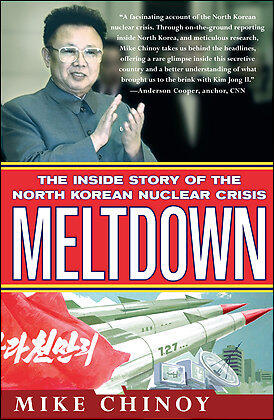
Mike Chinoy, the Pacific Council’s Edgerton Senior Fellow for Asia and author of the just-published and critically-received book, Meltdown: The Inside Story of the North Korean Nuclear Crisis will discuss the main themes in his book, update us on the recent developments in the Bush administration’s policy toward North Korea and assess what other policy options the next U.S. president might pursue.

Image
MELTDOWN The Inside Story of the North Korean Nuclear Crisis
Drawing on over 200 interviews conducted in Washington, Seoul, Tokyo and other Asian capitals – as well as insights gained from Mr. Chinoy’s 14 trips to Pyongyang – Meltdown provides a detailed account of the behind-the-scenes policy debates within the Bush administration and other governments that drove the recent confrontation over North Korea’s nuclear weapons program.  It also offers important new details of the impact the crisis had on U.S. relations with its key regional allies – Japan and South Korea – and on Washington’s fraught relationship with Beijing. 

» Washington Post’s review of the "Meltdown: The Inside Story of the North Korean Nuclear Crisis"

Mike Chinoy is one of America’s keenest observers of Asian affairs, having reported on the most important events in the region for almost thirty years. He previously served as CNN’s senior Asia correspondent (2000-06), its Hong Kong bureau chief (1996-2000), and Beijing bureau chief (1987-95).  Earlier, he spent four years as a reporter with NBC’s Hong Kong Bureau, and from 1975-78 he was a Hong Kong-based freelance reporter, contributing to CBS News as well as Newsday, The Far Eastern Economic Review and other publications.

Mr. Chinoy received an Emmy Award, an ACE Award, a Dupont Award and a Peabody Award for his coverage of the 1989 Tiananmen Square crisis.  His critically-acclaimed reporting during those weeks has been credited with strengthening CNN as an authoritative force in international news coverage. Mr. Chinoy has also covered North Korea extensively, traveling there 14 times since 1989.  In April 1994, he became the first broadcaster to file live TV reports from North Korea, and was the only journalist to travel with former U.S. President Jimmy Carter on his historic trip to Pyongyang in June of that year.

Philippines Conference Room

Mike Chinoy Edgerton Senior Fellow Speaker Pacific Council on International Policy
Seminars
-

The election of a new American president is an event of great importance to the entire world, not just the United States. From Japan to Afghanistan, the United States plays a crucial role in the security, political, and economic affairs of the region. America's 44th president will face many challenges once in office including rebuilding trust in America, reviving the American economy without protectionism, and how to combat terrorism. Ultimately, the United States must effectively utilize and support multilateral institutions to uphold international law and foster the common interests such as international justice. Future relations with Northeast, Southeast, and South Asia depend on how these efforts unfold. 

Levinthal Hall

The Honorable Karl F. Inderfurth Former Assistant Secretary of State for South Asian Affairs and U.S. Representative for Special Political Affairs to the United Nations Speaker
The Honorable Teresita Schaffer Former U.S. Ambassador to Sri Lanka and Former Deputy Assistant Secretary of State for South Asian Affairs Speaker
The Honorable Theodore L. Eliot, Jr. Former U.S. Ambassador to Afghanistan and Former Executive Secretary and Inspector General of the State Department Speaker
Seminars
Authors
News Type
News
Date
Paragraphs
Shorenstein APARC director Gi-Wook Shin offered his analysis of the possible scenarios for succession of power in North Korea in an interview with the New York Times. Shin told The Times that he thought the Kim dynasty would continue to play a role, even if symbolic in the structure, of power in North Korea. "My guess is like this: they will keep the Kim family as a social and political institution like the emperor system in Japan, offering symbolic and moral power for North Koreans, but are likely to establish a collective leadership system in which the military will play a key role. We may, then, witness some political instability in the North."
All News button
1

Shorenstein APARC
Stanford University
Encina Hall E301
Stanford, CA 94305-6055

(650) 725-2703 (650) 723-6530
0
Pantech Fellow, 2008-09
Keyser,_Don.jpg

Donald W. Keyser retired from the U.S. Department of State in September 2004 after a 32-year career.  He had been a member of the Senior Foreign Service since 1990, and held Washington-based ambassadorial-level assignments 1998-2004.  Throughout his career he focused on U.S. policy toward East Asia, particularly China, Taiwan, Hong Kong, Japan and the Korean Peninsula. Fluent in Chinese and professionally conversant in Japanese, Russian and French, he served three tours at the American Embassy in Beijing, two tours at the American Embassy in Tokyo, and almost a dozen years in relevant domestic assignments.  In the course of his career, Keyser logged extensive domestic and foreign experience in senior management operations, conflict resolution, intelligence operations and analysis, and law enforcement programs and operations.  A Russian language major in college and a Soviet/Russian area studies specialist through M.A. work, Keyser served 1998-99 as Special Negotiator and Ambassador for Regional Conflicts in the Former USSR.   He sought to develop policy initiatives and strategies to resolve three principal conflicts, leading the U.S. delegation in negotiations with four national leaders and three separatist leaders in the Caucasus region.

Keyser earned his B.A. degree, Summa Cum Laude, with a dual major in Political Science and Russian Area Studies, from the University of Maryland.  He pursued graduate studies at The George Washington University, Washington, D.C., from 1965-67 (Russian area and language focus) and 1970-72 (Chinese area and language focus).   He attended the National War College, Fort McNair, Washington (1988-89), earning a certificate equivalent to an M.S., Military Science; and the National Defense University Capstone Program (summer 1995) for flag-rank military officers and civilians.

Paragraphs

In February 2008, an international conference was convened at Stanford University at the Shorenstein Asia-Pacific Research Center to examine the role of high school history textbooks in the formation of historical memory regarding the events of the Sino-Japanese and Pacific wars and their outcome. “Divided Memories: History Textbooks and the War in Asia,” as the conference was titled, was a remarkable gathering of historians and textbook writers, along with other scholars, from China, Japan, South Korea, Taiwan and the United States.

The conference marked the culmination of the first year of Shorenstein APARC’s three-year research project on the formation of historical memory. The project flows from the understanding that unresolved historical issues continue to bedevil present relations in the region. We have seen this most recently in a revived clash between South Korea and Japan over rival claims to a group of islets, an issue left unresolved by the peace treaty that concluded the war in Asia. The United States was drawn directly into this dispute when its geographical name bureau was perceived as offering support for Japan’s territorial claim.
Beyond governments, these disputes over past wrongs continue to occupy the pages of newspapers throughout the region, show up on the screens of movie houses and shape the curriculum of school children. The question of history taps into sensitive and deeply rooted issues of national identity. And rising nationalism feeds on the unresolved problems of the past, undermining the efforts of governments to restore damaged relations.

There is recognition of the need for reconciliation and the resolution of long-standing historical injustices. But the barrier to reconciliation lies, in the view of the scholars of Shorenstein APARC, in the existence of divided, and often conflicting, historical memories. Attempts to create common histories, both through the non-government efforts of historians and through official committees formed between Japan and China and between Japan and South Korea, have had limited success, at best. The Divided Memories project aims to further reconciliation through a comparative study of how the main actors in Northeast Asia—China, Japan, South Korea and Taiwan—along with the United States, form their view of the past. Recognizing how each society selectively creates its own, divided memory can lead to mutual understanding.

All Publications button
1
Publication Type
Working Papers
Publication Date
Journal Publisher
Shorenstein APARC
Authors
Gi-Wook Shin
0
Corporate Affiliate Visiting Fellow
Toyoshima.jpg

Koji Toyoshima is a corporate affiliate visiting fellow at Shorenstein APARC for 2008-09. He received his BS and MS in mechanical engineering from The University of Tokyo and joined the Ministry of Economy, Trade and Industry (METI), government of Japan in 1995. He has experienced a variety of policy making in Japan. He engaged in policy making about global warming and recycling of home appliances and he is interested in environmental policies and energy policies. He also has experience in science and technology policy making and the execution of information disclosure law in Japan.

Date Label
0
Corporate Affiliate Visiting Fellow
Ogino.jpg MS, PhD

Tadashi Ogino is a corporate affiliate visiting fellow at Shorenstein APARC for 2008-2009.
Ogino started his career as a researcher of Mitsubishi Electric Corporation, Tokyo, Japan.
After being involved in basic software research, he designed the software architecture
of the Mitsubishi Midrange Server, which was one of the most successful computer products
in Mitsubishi. He then worked on many software projects such as wireless base stations, digital right management (DRM) systems, RF-ID systems and others. He also has experience in marketing and planning sections. Currently, he is interested in business incubation in Japan especially in the software field. He received hi BS, MS, and Ph.D in computer engineering from The University of Tokyo.

Date Label
0
Corporate Affiliate Visiting Fellow
652666220_TZoHS-L-1.jpg

Mitsue Kurihara is a corporate affiliate visiting fellow at Shorenstein APARC for 2008-09 and 2009-10. Prior to joining Shorenstein APARC, she worked at the Development Bank of Japan (DBJ) for twenty years. She has comprehensive experience in policy-based financing, in addition to having been involved in the merger of Japan Development Bank with Hokkaido-Tohoku Development Finance Public Corporation into DBJ during her term in the Treasury Department. Over the past five years, she has leveraged her wide network of regional bank and enterprise connections to provide advice on various industrial restructuring and other M&A deals. Kurihara’s latest position at the DBJ was as director in the Department for Business Development (in charge of advisory services for mergers, acquisitions, divestitures, and corporate strategy planning). 

Kurihara was also assigned for a time at the Ministry of Education, Culture, Sports, Science and Technology. She graduated from Hitotsubashi University with a BA in law.

Date Label
0
Corporate Affiliate Visiting Fellow
Kumagai.jpg

Mitsutoshi Kumagai is a corporate affiliate visiting fellow at Shorenstein APARC for 2008-09. Prior to joining Shorenstein APARC, he has worked at Sumitomo Corporation since 1993. He has been in charge of the international tradings, marketing of IT devices and developing new business as well as venture investment in the IT industry.  He received his BS in Economics at Nagoya University in Japan.

Date Label
Subscribe to Japan